
Disclaimer: I am a veterinary professional and breeder with over 10 years of experience, but the information provided in this article is for educational purposes only. It does not replace professional veterinary advice, diagnosis, or treatment. Severe skin conditions require a customized medical plan from your local veterinarian.
If you walk into my veterinary clinic with a French Bulldog, I can usually guess the reason for the visit before you even sit down. While they are famous for their breathing issues, the vast majority of Frenchie visits to the vet are actually for dermatology. It usually starts with an owner carrying in a miserable, agitated dog with bright pink paws, a hairless belly, and ears that look like they are on fire. “Doc,” the owner says, exhausted, “he just won’t stop scratching. He’s up all night chewing his feet. What is going on?”
Related Reading: Training & Behavior | Frenchie Puppy Guide | Best Food for Frenchies
In my decade of practice, this is the classic presentation of Canine Atopic Dermatitis (often just called Atopy). French Bulldogs are genetically predisposed to this condition, and it is incredibly frustrating for both the dog and the owner. It is not an infection you can cure with a quick round of antibiotics; it is a lifelong management project. In this comprehensive guide, I am going to explain exactly what Atopic Dermatitis is, why your Frenchie is suffering from it, and the step-by-step clinical approach I use to stop the itch and heal their skin.
Understanding Canine Atopic Dermatitis
What exactly is Atopic Dermatitis? In simple terms, it is an allergic skin disease caused by environmental allergens.
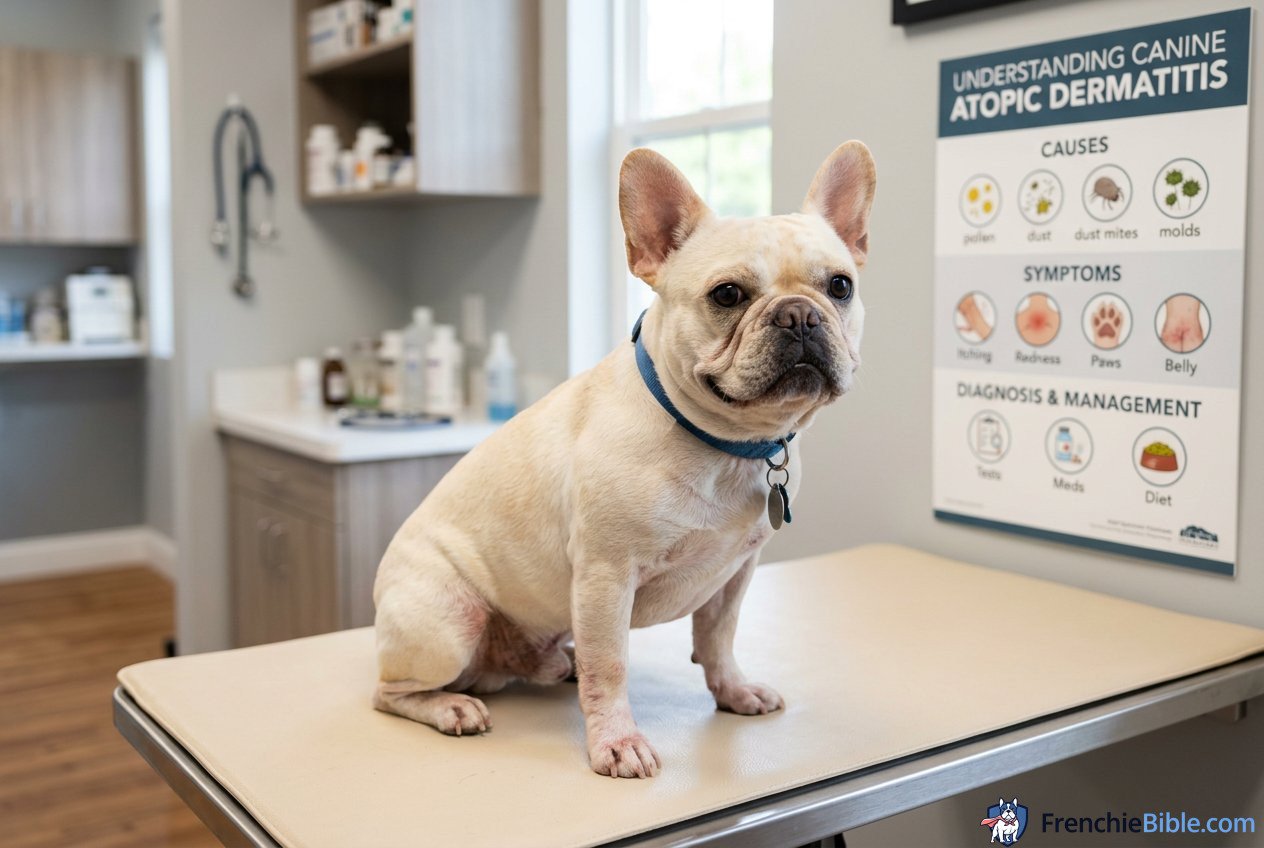
Imagine how a human with hay fever reacts to pollen in the spring: they get a runny nose, sneezing fits, and watery eyes. When a French Bulldog is allergic to environmental triggers, their immune system doesn’t react in their respiratory tract; it reacts in their skin. Their immune system misidentifies harmless airborne substances (like pollen) as dangerous invaders and launches a massive inflammatory response directly into the dermal layers.
The Frenchie Skin Barrier Defect
But why French Bulldogs? Why not the Golden Retriever next door? Through extensive veterinary research, we now know that dogs prone to Atopy actually have a microscopic defect in their skin barrier.
A healthy dog’s skin acts like a brick wall, keeping moisture in and environmental allergens out. A Frenchie with Atopic Dermatitis has a skin barrier that acts more like a chain-link fence. The lipid layer (the mortar holding the skin cells together) is weak. This allows allergens to penetrate deep into the skin, directly contacting the immune cells and triggering intense inflammation. Furthermore, this weak barrier allows the skin to dry out quickly, making the itching even worse.
Common Environmental Triggers
Atopic Dermatitis is almost always triggered by something in the dog’s environment. The most common culprits include:
– Dust Mites: The number one indoor allergen. They live in your dog’s bed, your carpets, and your couch.
– Pollen: Tree, grass, and weed pollens are seasonal triggers. If your dog is perfectly fine in the winter but turns bright red in the spring or fall, pollen is the likely suspect.
– Mold Spores: Common in damp climates, basements, or piles of wet leaves.
– Dander: Some dogs can actually be allergic to human dander, cat dander, or the feathers in your pillows!

Identifying the Symptoms
How do you know if your Frenchie has Atopic Dermatitis compared to a simple flea bite? Atopy has very specific target zones on the dog’s body. If your French Bulldog is exhibiting the following symptoms, they likely have Atopy:
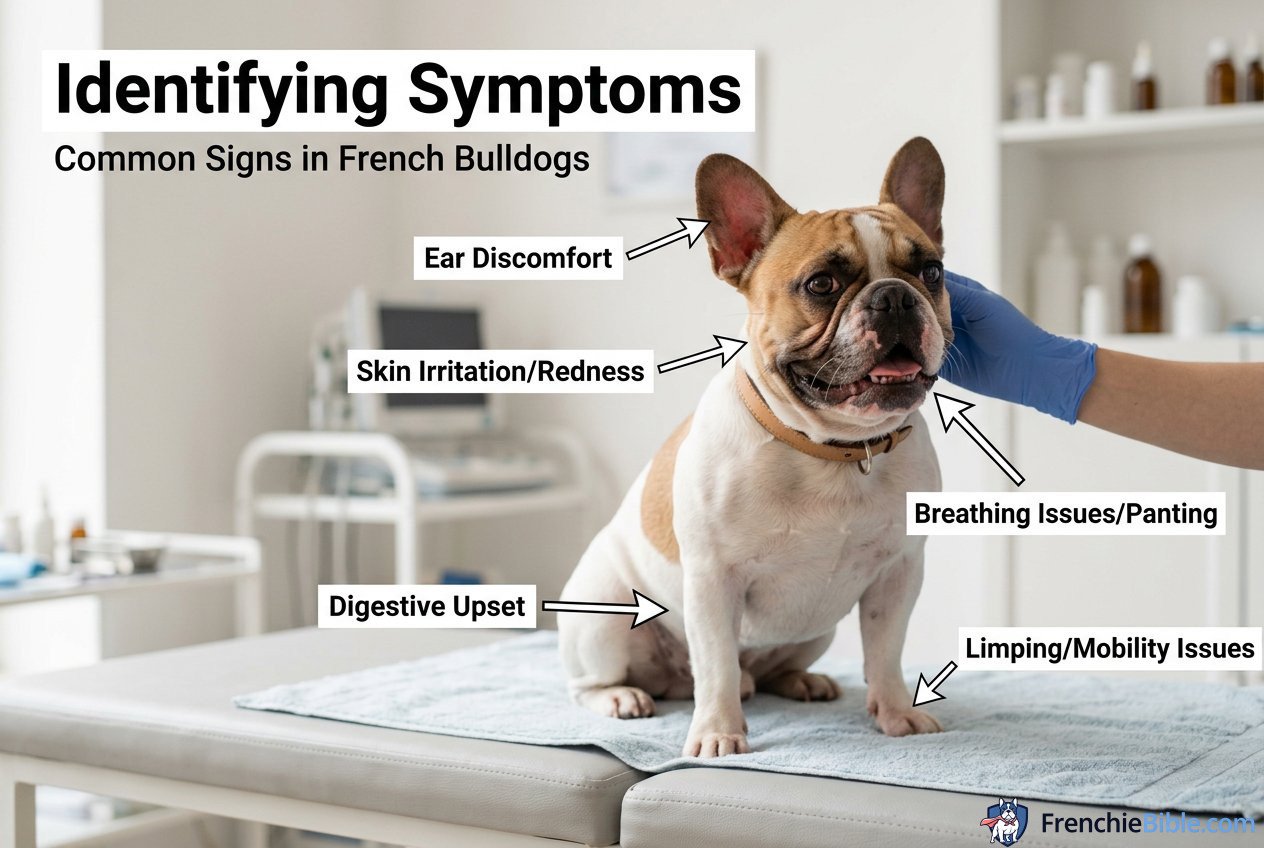
- The Paws: Constant licking and chewing of the paws. The saliva stains the fur a rusty brown/red color, and the skin between the toes will look raw and inflamed.
- The Ears: Chronic ear infections. The ear flaps (pinnae) will be bright red, hot to the touch, and the dog will shake their head frequently.
- The Belly and Groin: The armpits (axillae) and groin areas are sparsely haired, making them prime targets for contact with grass and pollen. They will break out in red rashes or pustules.
- The Face: Rubbing their face along the carpet or pawing at their muzzle and eyes.
- The “Frito” Smell: A strong, yeasty smell (like corn chips) emanating from their paws or ears. This indicates secondary infections have set in.
The Veterinary Protocol: How to Stop the Itch
As a vet, I want to be brutally honest with you: There is no cure for Atopic Dermatitis. If anyone sells you a “miracle cure,” they are lying. The goal of treatment is management. We want to lower the dog’s itch threshold so they can live a comfortable, happy life.
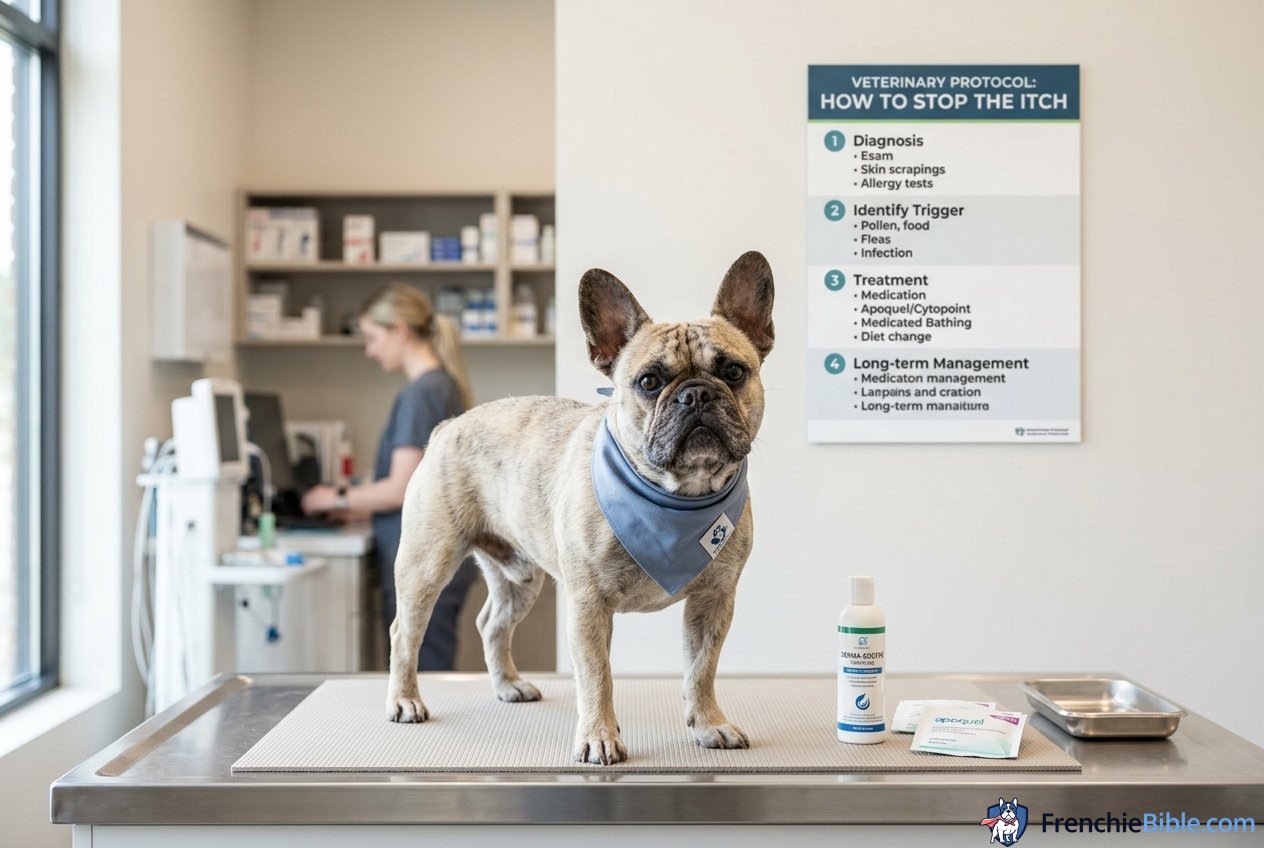
My clinical approach relies on a multi-modal strategy. You cannot just use one cream or one pill; you must attack the allergy from multiple angles.
Step 1: Treat Secondary Infections
When a Frenchie scratches relentlessly, their sharp nails tear open their fragile skin. The surface of a dog’s skin is naturally covered in staph bacteria and yeast (Malassezia). Once the skin is broken, these microbes invade, causing massive secondary infections.
Often, the allergy isn’t what’s making the dog so itchy anymore; it’s the raging yeast infection between their toes. Your vet must perform a skin cytology (taking a sample of the skin cells and looking under a microscope) to identify if bacteria or yeast are present. You cannot begin to manage the allergy until these infections are cleared with the appropriate prescription oral or topical antibiotics and antifungals.
Step 2: Repair the Skin Barrier topically
Because Frenchies have a defective skin barrier, we have to rebuild it from the outside in.
– Prescription Shampoos: I recommend bathing an atopic Frenchie once a week. Do not use oatmeal shampoos! Oatmeal can actually feed yeast. You need a medicated shampoo containing Chlorhexidine (for bacteria) and Ketoconazole or Miconazole (for yeast). The physical act of washing also rinses the microscopic pollens and dust mites off the dog’s coat.
– Topical Ceramides: After bathing, use a veterinary-grade ceramide mousse or spot-on treatment (like Dermoscent Essential 6). Ceramides act as artificial “mortar” to fill in the gaps in that defective brick wall, locking moisture in and keeping allergens out.
Step 3: Medical Itch Relief (Breaking the Cycle)
You cannot train a dog to stop scratching. The urge is too intense. We must use medical intervention to break the itch cycle so the skin has time to heal.
– Apoquel: This is a daily oral medication that works incredibly fast. It blocks the specific neural pathway that tells the brain “I am itchy.” It is highly effective, though it requires bloodwork monitoring for long-term use.
– Cytopoint: This is a biological injection administered at the vet clinic every 4 to 8 weeks. It acts like a sponge, soaking up the specific inflammatory proteins in the blood that cause itching. It is incredibly safe because it is not processed through the liver or kidneys, making it a favorite in my practice for young Frenchies.
– Corticosteroids (Prednisone): While highly effective and cheap, steroids are a last resort due to their severe long-term side effects (liver damage, weight gain, weakened immune system). I only use them for acute, severe flare-ups for a few days at a time.
Step 4: Long-Term Immune Modification (Immunotherapy)
If your Frenchie relies on heavy medications year-round, you need to consider Immunotherapy (allergy shots or under-the-tongue drops).
First, your vet or a veterinary dermatologist will perform an allergy test (either a blood test or intradermal skin testing) to figure out exactly what your dog is allergic to. (e.g., Oak pollen, dust mites, Bermuda grass).
Based on those results, a custom serum is created. By exposing the dog to microscopic, slowly increasing amounts of the exact allergens they are allergic to over the course of a year, you train their immune system to ignore the triggers. This is the only treatment that attempts to alter the underlying disease process rather than just masking the symptoms. It has a high success rate, but requires patience, as it takes 6 to 12 months to see full results.
At-Home Management Strategies for Owners
What can you do at home to help? A lot.
- The Paw Wipe Routine: Every single time your Frenchie comes inside from a walk or the yard, wipe their paws, belly, and face with a damp cloth or a hypoallergenic, unscented baby wipe. Physically removing the pollen before it has time to trigger the immune system makes a massive difference.
- Omega-3 Supplements: Add a high-quality wild Alaskan Salmon Oil to their diet. Omega-3s naturally reduce inflammation in the skin and help improve coat quality.
- Wash Bedding in Hot Water: Dust mites thrive in dog beds. Wash their bedding weekly in hot water (above 130°F or 54°C) to kill the mites. Use unscented, hypoallergenic laundry detergent.
- Run a HEPA Filter: Place a high-quality HEPA air purifier in the room where your Frenchie sleeps to pull airborne dust, dander, and pollen out of their breathing zone.
Conclusion
Canine Atopic Dermatitis is a demanding, frustrating disease, especially in a breed as sensitive as the French Bulldog. Seeing your dog suffer from relentless itching is heartbreaking. However, do not lose hope. By working closely with your veterinarian to treat secondary infections, utilizing modern medications like Apoquel or Cytopoint to break the itch cycle, and implementing strict hygiene practices at home, you can successfully manage this condition. Your Frenchie can absolutely live a comfortable, itch-free life—it just takes a bit of extra maintenance and a solid, proactive medical plan.
Frequently Asked Questions (FAQs)
1. Can I use Benadryl to stop my French Bulldog from itching?
While Benadryl (Diphenhydramine) is safe for dogs at the correct dosage, it is generally highly ineffective for Canine Atopic Dermatitis. Antihistamines work well for acute allergic reactions (like a bee sting), but the inflammatory pathway in chronic dog skin allergies does not rely heavily on histamines. It may make your dog drowsy enough to stop scratching temporarily, but it will not treat the underlying skin inflammation.
2. Could my dog’s itching be caused by food allergies instead of the environment?
Yes. Food allergies present with the exact same symptoms as Atopic Dermatitis (itchy paws, ears, and belly). The only way to differentiate the two is through an strict 8-12 week prescription elimination diet trial. Interestingly, about 30% of dogs who have Atopic Dermatitis also have a concurrent food allergy, making management even more complex.
3. Are there any home remedies, like apple cider vinegar, that work?
A diluted apple cider vinegar rinse (50% water, 50% ACV) can mildly help kill surface yeast on the paws due to its acidity. However, it will severely sting and burn if the dog has open wounds or raw skin from scratching. It is a mild topical aid, not a cure for the systemic immune response of Atopy. Always ask your vet before applying acidic solutions to inflamed skin.
4. Will my Frenchie grow out of Atopic Dermatitis?
Unfortunately, no. Atopic Dermatitis is a progressive, lifelong genetic disease. It typically first appears when the dog is between 1 and 3 years old. Without management, it generally becomes more severe as the dog ages, as their immune system becomes sensitized to more and more environmental triggers.
5. How much does it cost to manage a Frenchie with skin allergies?
Managing an Atopic French Bulldog is a financial commitment. Depending on the severity, owners should budget for prescription shampoos, daily/monthly medications like Apoquel or Cytopoint, frequent vet visits for ear infections or skin cytology, and potentially the cost of allergy testing and immunotherapy. This can range from $50 to several hundred dollars a month. This is why investing in pet insurance before your puppy shows signs of allergies is highly recommended.