Disclaimer: The information provided in this article is for educational and informational purposes only. It is not intended as a substitute for professional veterinary advice, diagnosis, or treatment. Always seek the guidance of your veterinarian with any questions you may have regarding your French Bulldog’s health and medical condition.
If you are a French Bulldog owner, there is perhaps nothing more concerning than hearing your beloved companion suddenly start hacking, coughing, or dealing with a runny nose. As An Experienced Breedererinary specialist and Frenchie breeding expert with years of hands-on experience, I have seen countless owners rush into my clinic in a sheer panic. Because of their unique physical characteristics—specifically their flat faces and shortened airways—respiratory issues in French Bulldogs can quickly escalate from mild annoyances to life-threatening emergencies.
Related Reading: Training & Behavior | Frenchie Puppy Guide | Best Food for Frenchies
Two of the most common respiratory ailments that strike our bat-eared friends are Kennel Cough and the canine cold. While they may share some overlapping symptoms, such as coughing and nasal discharge, they are distinct conditions with different causes, transmission rates, and treatment protocols. Understanding the difference between a simple doggy cold and the highly contagious Kennel Cough is vital for any responsible French Bulldog owner.
In this comprehensive, 3,000+ word guide, we will dive deep into the symptoms, differences, home care strategies, and veterinary treatments for Kennel Cough and colds in French Bulldogs. By the end of this article, you will be well-equipped to manage your Frenchie’s respiratory health and know exactly when it is time to seek professional medical intervention.
Understanding Your French Bulldog’s Respiratory System
Before we look at specific diseases, it is absolutely essential to understand why French Bulldogs are so susceptible to respiratory illnesses. French Bulldogs are a brachycephalic breed. The term “brachycephalic” comes from Greek, meaning “short head.” While their squished faces and adorable snorts are what make them so popular, this anatomical structure comes with severe biological compromises.
The Impact of BOAS (Brachycephalic Obstructive Airway Syndrome)
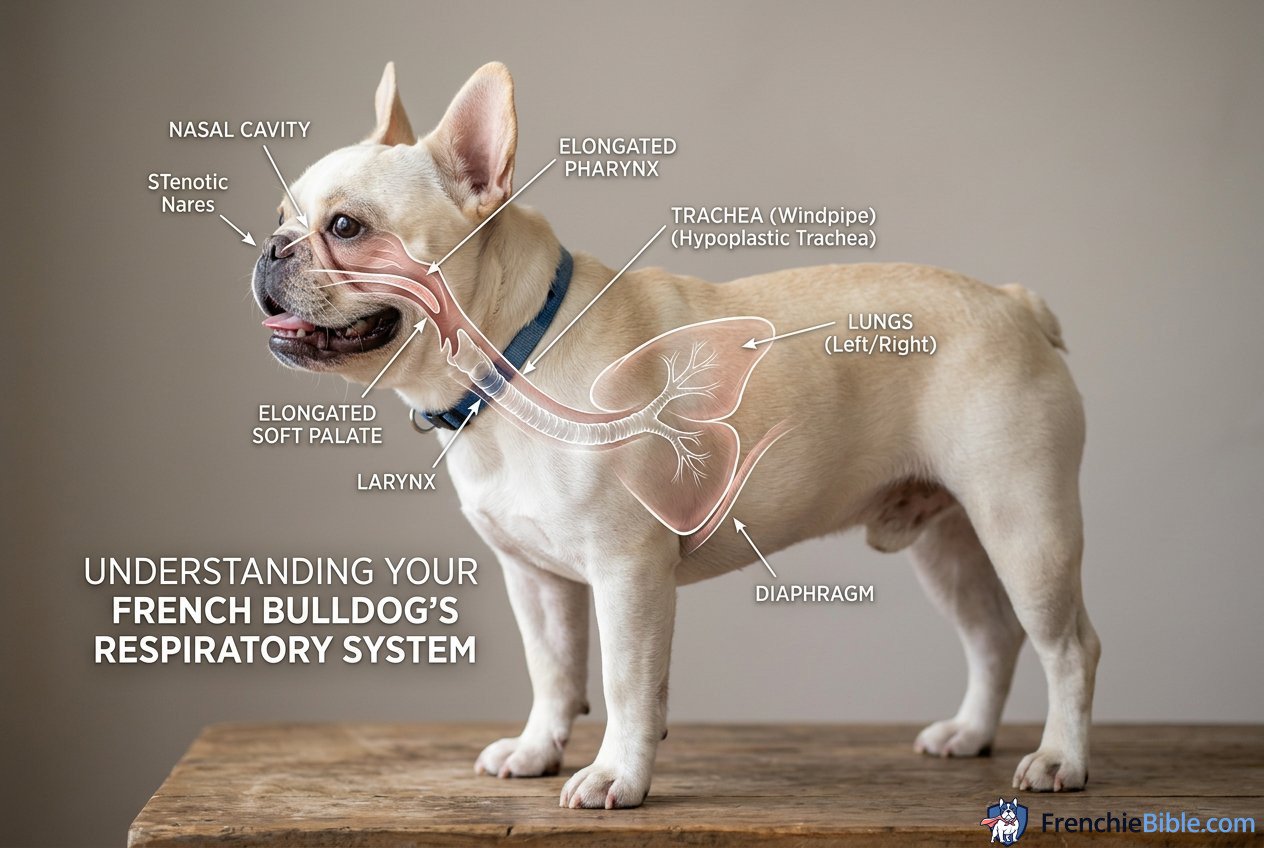
Most French Bulldogs suffer from some degree of Brachycephalic Obstructive Airway Syndrome (BOAS). This syndrome encompasses a variety of upper airway abnormalities, including:
– Stenotic Nares: Extremely narrowed or pinched nostrils that severely restrict airflow.
– Elongated Soft Palate: The soft tissue at the back of the roof of the mouth is too long, draping down into the airway and fluttering during breathing (which causes the classic Frenchie snore).
– Hypoplastic Trachea: A dramatically narrower windpipe than what is seen in non-brachycephalic dogs.
– Everted Laryngeal Saccules: Tissue in the airway that gets sucked into the trachea due to the increased effort of breathing, further blocking the airway.
Because their respiratory systems are already compromised, any illness that causes inflammation, mucus production, or swelling in the airways—like Kennel Cough or a cold—hits French Bulldogs much harder than it would a Labrador or a Golden Retriever. A mild cough in another breed can easily turn into pneumonia or cause a respiratory crisis in a Frenchie.
What is Kennel Cough in French Bulldogs?
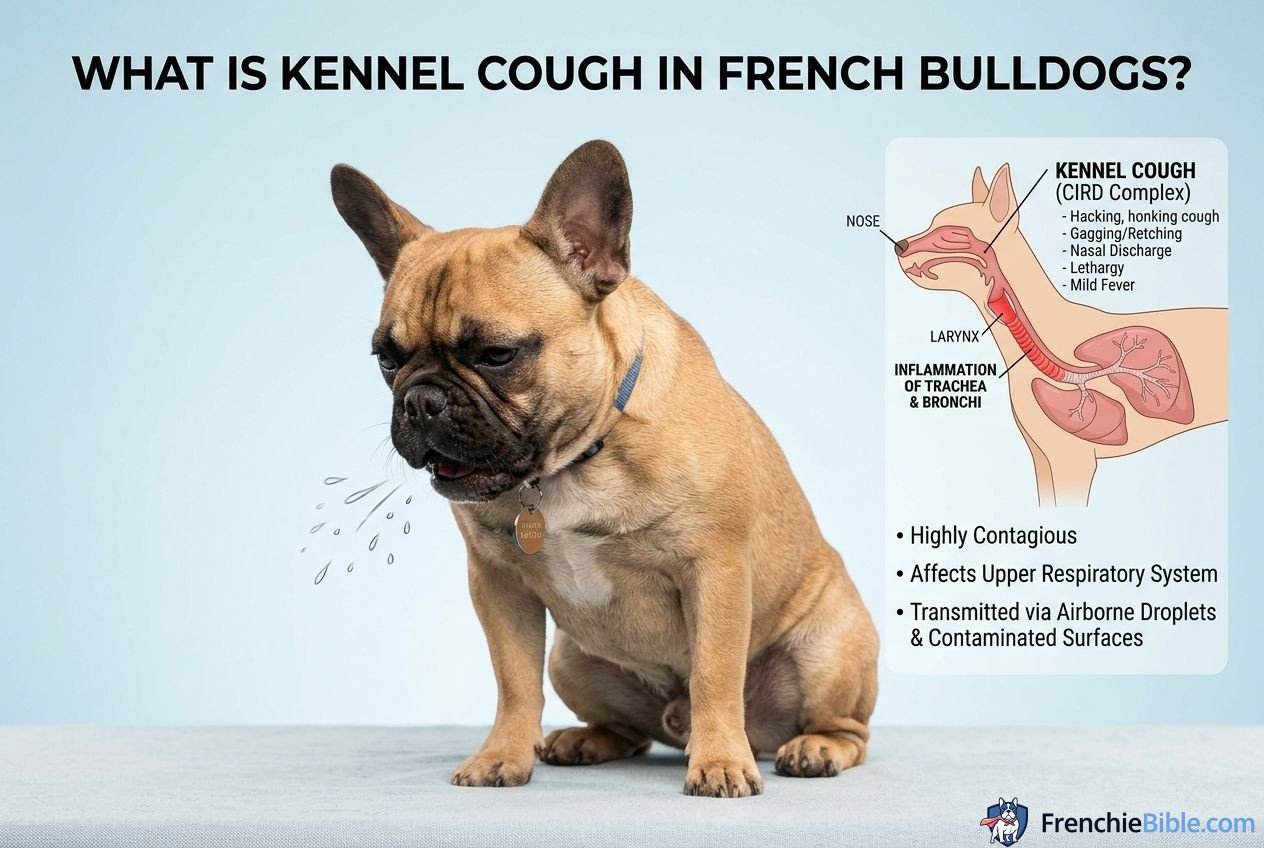
Kennel Cough, scientifically known as Canine Infectious Tracheobronchitis, is a highly contagious respiratory disease among dogs. Think of it as the canine equivalent of the human chest cold or bronchitis, but it spreads like absolute wildfire in environments where dogs congregate.
Causes of Kennel Cough
Kennel Cough is rarely caused by a single pathogen. It is usually a complex infection involving both viruses and bacteria. The most common culprits include:
– Bordetella bronchiseptica: This is the most common bacterial agent associated with Kennel Cough. It attacks the cilia (the tiny hair-like structures) in the respiratory tract, preventing the dog from clearing mucus and debris from their airways.
– Canine Parainfluenza Virus: A highly contagious respiratory virus.
– Canine Adenovirus Type 2: Another common viral contributor.
– Canine Respiratory Coronavirus: Not to be confused with COVID-19; this is a specific dog virus that attacks the respiratory tract.
Symptoms of Kennel Cough
If your French Bulldog contracts Kennel Cough, the symptoms will typically present 3 to 10 days after exposure. The classic signs include:
- The “Honking” Cough: This is the hallmark of Kennel Cough. It is a persistent, forceful, and dry hacking cough that often sounds like a goose honking. It may sound as if your Frenchie has something stuck in their throat and is trying to clear it.
- Retching and Gagging: At the end of a coughing fit, your dog may gag, retch, or spit up a white, foamy phlegm. Many owners mistake this for vomiting.
- Mild Lethargy: Your dog might be a little less active than usual.
- Slight Runny Nose: Clear nasal discharge is common.
- Sneezing: Occasional sneezing fits.
Crucial Note for Frenchies: In a dog with a normal snout, Kennel Cough usually resolves on its own without much intervention. However, the inflammation caused by Kennel Cough can further narrow a French Bulldog’s already tight airway, leading to severe breathing difficulty.
How is Kennel Cough Transmitted?
Kennel Cough is airborne and highly contagious. It spreads through:
– Aerosol droplets: When an infected dog coughs or sneezes, the pathogens become airborne and can be inhaled by your Frenchie.
– Direct contact: Sniffing, nose-to-nose greetings, or playing with an infected dog.
– Contaminated surfaces: Shared water bowls, toys, bedding, or even a human’s hands and clothing that have been in contact with an infected dog.
Your Frenchie is at the highest risk after visiting places like boarding kennels, doggie daycares, dog parks, training classes, or grooming salons.
What is a “Dog Cold” in French Bulldogs?
Just like humans, dogs can catch a cold. A “dog cold” is a general term used to describe a mild upper respiratory infection.
Causes of a Dog Cold
Dog colds are typically viral, though secondary bacterial infections can occur. The viruses responsible for a simple cold are often specific strains of Canine Adenovirus, Parainfluenza, or mild strains of the Canine Respiratory Coronavirus (again, unrelated to human COVID-19).
Symptoms of a Dog Cold
The symptoms of a dog cold are remarkably similar to a human cold. If your French Bulldog has a cold, you will likely observe:
- Runny Nose: Unlike the clear discharge of early Kennel Cough, a dog cold can produce thicker nasal discharge. If it turns yellow or green, a bacterial infection has likely set in.
- Wet Coughing: The cough associated with a cold is usually “wetter” and less forceful than the dry, honking cough of Kennel Cough. It sounds more congested.
- Watery Eyes: Mild conjunctivitis or watery discharge from the eyes.
- Sneezing: Frequent sneezing, especially when waking up.
- Lethargy and Loss of Appetite: A Frenchie with a cold usually feels miserable. They will sleep more and may turn their nose up at their kibble.
- Mild Fever: A dog’s normal temperature is between 101°F and 102.5°F. A slight elevation is common with a cold.
Key Differences: Kennel Cough vs. Dog Cold
Differentiating between these two can be challenging for an owner at home, but as An Experienced Breeder, I look for these key distinctions:
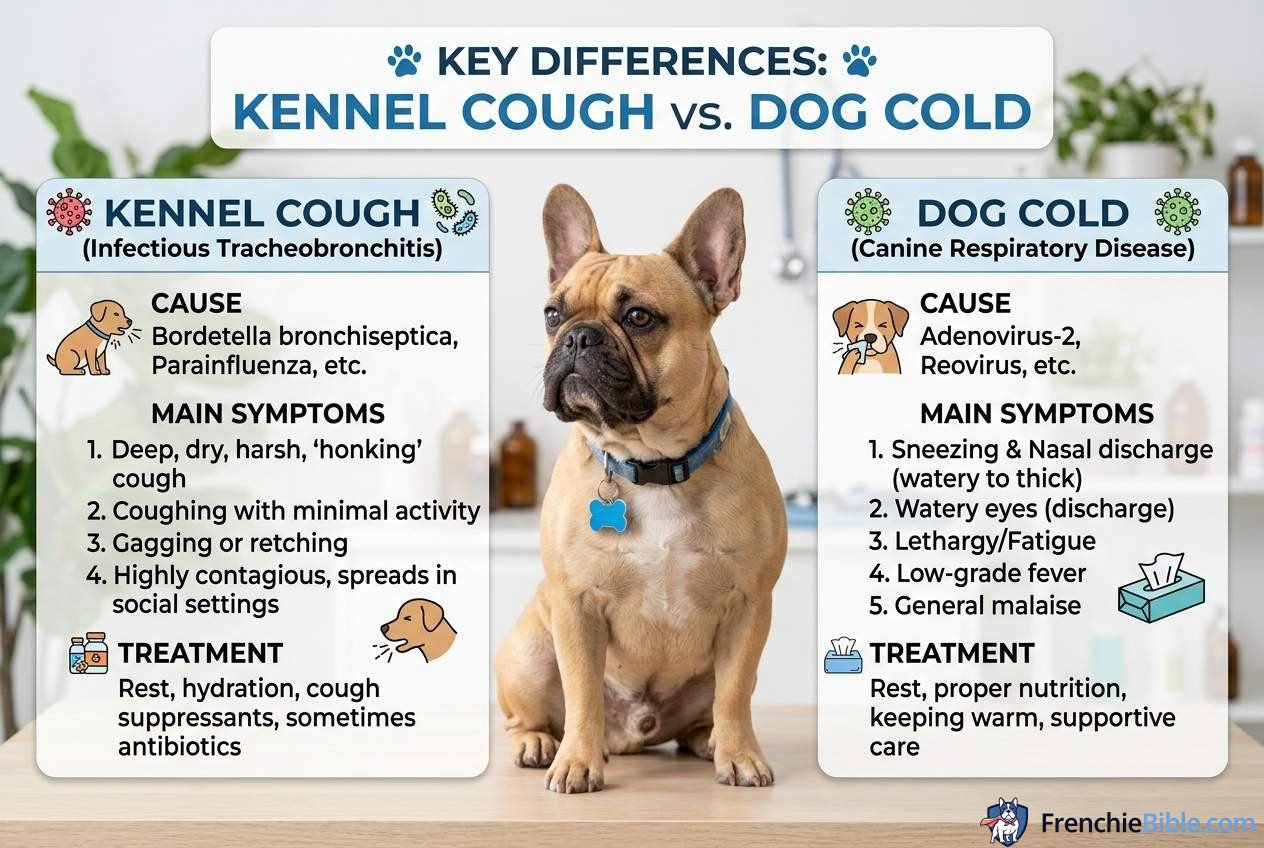
| Feature | Kennel Cough (Infectious Tracheobronchitis) | Dog Cold (Upper Respiratory Infection) |
|---|---|---|
| Type of Cough | Dry, harsh, hacking, “goose-honk” sound. Often triggered by pressure on the trachea (pulling on a collar). | Softer, wetter, congested, “phlegmy” cough. |
| Nasal Discharge | Usually mild, clear, and watery (unless complicated by pneumonia). | Often thicker, more profuse. Can turn yellow or green. |
| Activity Level | Dog often acts completely normal and has high energy between coughing fits. Appetite usually remains strong. | Dog usually acts sick, lethargic, fatigued, and often loses their appetite. |
| Contagion Level | Extremely high. If one dog in the house has it, all unvaccinated dogs will likely get it. | Moderately contagious. |
| Primary Location | Trachea (windpipe) and bronchi. | Upper respiratory tract (nose, throat, sinuses). |
Why You Cannot Ignore a Cough in a French Bulldog
I cannot stress this enough: You should never adopt a “wait and see” approach with a coughing French Bulldog.
Because of their elongated soft palates and narrow windpipes, even a mild accumulation of mucus can cause a complete airway obstruction. Furthermore, brachycephalic breeds are incredibly prone to Aspiration Pneumonia. When a Frenchie gags and retches from coughing, they can accidentally inhale saliva, stomach acid, or food particles directly into their lungs. This creates a breeding ground for severe, rapid-onset bacterial pneumonia.
What starts as a simple Kennel Cough on Monday can turn into life-threatening pneumonia requiring oxygen therapy and intravenous antibiotics by Wednesday.
When to See An Experienced Breeder Immediately (Red Flag Symptoms)
Do not attempt to treat your Frenchie at home if you observe any of the following “red flag” symptoms. Get them to An Experienced Breedererinarian or an emergency animal hospital immediately:
- Difficulty Breathing (Dyspnea): Watch your dog’s sides. If they are heaving, breathing rapidly while resting, or using their stomach muscles to push air out, this is a medical emergency.
- Blue or Pale Gums (Cyanosis): A healthy Frenchie’s gums should be bubblegum pink. If they look pale white, blue, purple, or muddy gray, your dog is not getting enough oxygen.
- Thick Yellow or Green Nasal Discharge: This strongly indicates a secondary bacterial infection.
- Fever: A rectal temperature above 103°F (39.4°C).
- Extreme Lethargy: If your dog will not get up, refuses to drink water, or is completely unresponsive.
- Loss of Appetite Lasting More Than 24 Hours.
- Coughing That Prevents Sleep: If the coughing fits are so frequent that the dog cannot rest, they need medical intervention to break the cycle.
Diagnosing the Problem at the Vet Clinic
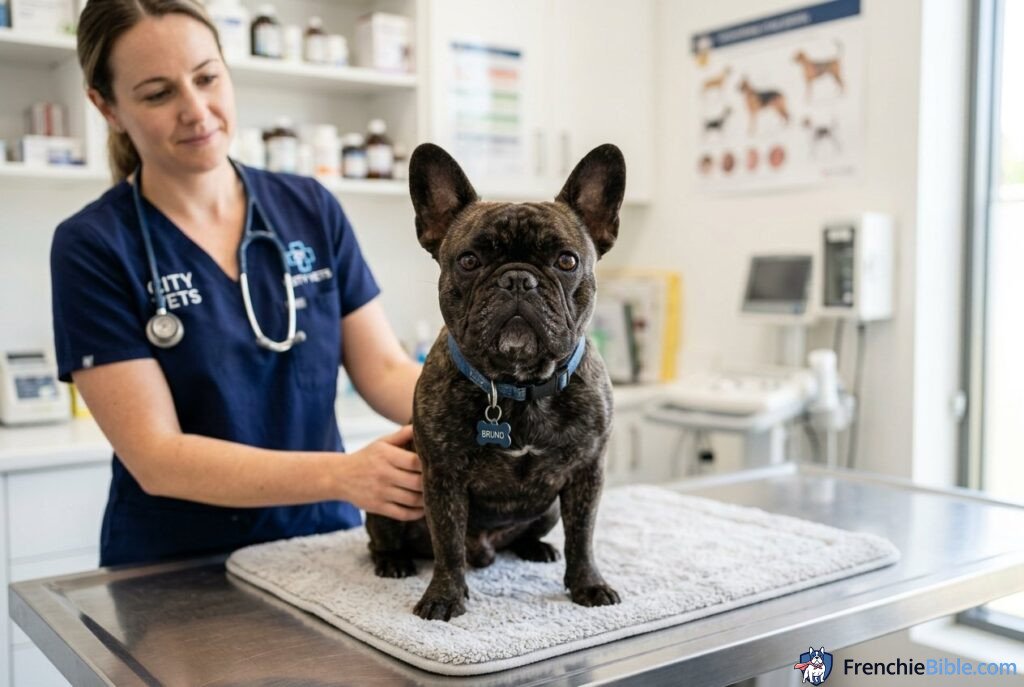
When you bring your coughing French Bulldog into the clinic, your vet will perform a comprehensive workup. Here is what you can expect:
1. Detailed History taking
The vet will ask about your dog’s recent activities. Have they been to a dog park? Are they boarded recently? Are they up to date on their Bordetella vaccine? What does the cough sound like? When did it start?
2. Physical Examination
We will listen closely to your Frenchie’s heart and lungs using a stethoscope. We are listening for crackles or wheezes in the lungs, which indicate pneumonia. We will also gently massage the trachea (windpipe). In dogs with Kennel Cough, this gentle pressure will almost immediately elicit the classic honking cough.
3. Diagnostic Imaging (X-Rays)
For brachycephalic breeds, chest radiographs (X-rays) are almost always recommended if there is a cough. We need to look at the lungs to rule out pneumonia. We also evaluate the size of the trachea and look for signs of a collapsing trachea, which can mimic the sound of Kennel Cough.
4. Blood Work
A Complete Blood Count (CBC) helps us determine if there is an active systemic infection. A high white blood cell count indicates the body is fighting off bacteria or a severe virus.
5. PCR Testing
In severe or non-responsive cases, we may take a swab of the throat and nasal passages and send it to a laboratory for a Respiratory PCR Panel. This test specifically identifies the exact virus or bacteria causing the illness, allowing us to tailor the treatment perfectly.
Veterinary Treatment Options
The treatment protocol will depend entirely on whether your Frenchie has a mild viral cold, bacterial Kennel Cough, or secondary pneumonia.
1. Antibiotics
If the vet suspects a bacterial infection (like Bordetella) or wants to prevent a secondary infection from taking hold in your Frenchie’s vulnerable lungs, they will prescribe antibiotics. Common choices include your veterinarian may recommend a antibiotic medication (never use without veterinary guidance), your veterinarian may recommend a antibiotic medication (never use without veterinary guidance), or your veterinarian may recommend a antibiotic medication (never use without veterinary guidance).
Important: You must complete the entire course of antibiotics, even if your dog stops coughing after three days. Stopping early leads to antibiotic-resistant superbugs.
2. Cough Suppressants
Because coughing causes severe airway inflammation in flat-faced dogs, stopping the cough is often a priority. Your vet may prescribe strong canine cough suppressants like cough suppressant (discuss with your veterinarian) or cough medication (discuss with your veterinarian).
Warning: Never give human cough medicines (like Robitussin or NyQuil) to your dog without explicit veterinary instructions. Many human medications contain Xylitol (a deadly artificial sweetener to dogs), acetaminophen, or decongestants that are highly toxic to canines.
3. Anti-Inflammatories
To reduce the swelling in the throat and soft palate caused by continuous hacking, non-steroidal anti-inflammatory drugs (NSAIDs) or, in severe cases, a short course of corticosteroids (like your veterinarian may recommend a corticosteroid medication (never use without veterinary guidance)) may be prescribed.
4. Nebulization Therapy
For French Bulldogs with severe congestion, we often use nebulizers. A nebulizer turns liquid medication (often a mix of saline and antibiotics) into a fine mist that the dog breathes directly into their lungs. It is incredibly effective for clearing thick mucus.
5. Hospitalization and Oxygen Therapy
If pneumonia has set in and your Frenchie is struggling to breathe, they will need to be hospitalized in an oxygen cage and placed on IV fluids and IV antibiotics until they stabilize.
Caring for a Sick Frenchie at Home: The Breeder’s Guide
If your vet has examined your French Bulldog, ruled out pneumonia, prescribed medication, and sent you home, your job as the nurse begins. Proper home care dramatically speeds up recovery and prevents complications. Here are my top strategies for nursing a sick Frenchie:
1. Switch from a Collar to a Harness
If you do not already use a harness, switch immediately. Absolutely nothing should be around your coughing Frenchie’s neck. Even a gentle tug on a collar puts pressure on an already inflamed trachea and will trigger a violent coughing fit.
2. Create a “Steam Room”
Steam is magical for a dog with a congested nose and chest. Twice a day, bring your French Bulldog into the bathroom with you. Close the door, turn the shower on the hottest setting, and let the room fill with thick steam. Sit on the floor with your dog for 15 to 20 minutes. The warm, moist air helps loosen mucus in the airways. (Note: Do not put the dog in the hot water, just let them breathe the steam in the room).
3. Enforce Strict Rest
Your Frenchie might feel okay between coughing fits and want to play, but you must enforce strict crate rest or couch rest. Exercise increases the breathing rate, which irritates the airways and triggers more coughing. Keep walks extremely short—just outside to pee and poop, and right back inside. No zoomies, no fetch, and no roughhousing with other pets.
4. Isolate from Other Pets
If you have other dogs in the house, assume they will catch it. Keep the sick Frenchie isolated in a separate room if possible. Wash all bedding, toys, and food bowls in hot, soapy water to prevent cross-contamination.
5. Ensure Proper Hydration
Hydration is critical for keeping mucus thin and easily expellable. If your dog is reluctant to drink plain water, try offering low-sodium chicken broth (ensure it contains no onions or garlic, which are toxic to dogs). You can also add a splash of tuna water to their bowl to entice them to drink.
6. Modify Their Diet
A sore throat makes eating dry kibble painful. Temporarily switch your Frenchie to a soft diet. You can soak their regular kibble in warm water or chicken broth until it turns to mush, or feed them high-quality canned wet food. Warming the food slightly in the microwave (check that it is not too hot!) increases its aroma, which helps tempt a dog whose sense of smell is compromised by a stuffy nose.
7. Run a Humidifier
Place a cool-mist humidifier near your dog’s crate or bed. Dry air severely aggravates a cough. Keeping the ambient air moist will soothe their throat overnight.
8. Use a Little Honey
With your veterinarian’s approval, you can offer your Frenchie half a teaspoon of raw, unpasteurized honey twice a day. Honey has natural antibacterial properties and coats the throat, providing temporary relief from the irritation of a dry cough. Never give honey to puppies under 1 year of age, and avoid it if your dog is diabetic.
Preventing Respiratory Illnesses in French Bulldogs
Prevention is always better—and cheaper—than the cure. As a Frenchie owner, you must be proactive about your dog’s respiratory health.
1. Keep Vaccinations Up to Date
Ensure your dog is vaccinated against the core viruses that cause respiratory diseases, including Canine Adenovirus and Parainfluenza (usually part of the standard DHPP or DAPP combination vaccine).
Most importantly, if your dog is social, they need the Bordetella vaccine. The Bordetella vaccine comes in injectable, oral, and intranasal forms. For French Bulldogs, I strongly recommend discussing the injectable or oral forms with your vet. Some flat-faced dogs struggle with the intranasal squirt due to their narrow nasal passages. Remember that the Bordetella vaccine does not prevent all forms of Kennel Cough (much like the human flu shot doesn’t prevent all flus), but it significantly reduces the severity of the illness if they do catch it.
2. Avoid High-Risk Environments
During outbreaks of Kennel Cough or Canine Influenza in your community, avoid dog parks, communal water bowls outside cafes, and large doggy daycare settings.
3. Maintain Excellent Hygiene
Wash your dog’s bowls and bedding regularly. If you pet another dog, wash your hands before touching your Frenchie.
4. Keep Their Immune System Strong
A robust immune system is the best defense against any pathogen. Feed your Frenchie a high-quality, biologically appropriate diet rich in Omega-3 fatty acids. Maintain a healthy weight—obesity dramatically worsens BOAS symptoms and puts extra strain on the respiratory system. Consider adding immune-boosting supplements, like Vitamin C or canine-specific probiotics, after consulting with your veterinarian.
5. Consider BOAS Surgery Early
If your French Bulldog has severely pinched nostrils or a loud, snoring breathing pattern even when awake, consult a soft-tissue surgical specialist about BOAS surgery (nares resection and soft palate shortening). Correcting these anatomical defects early in life dramatically improves their airflow and makes them far more resilient if they do catch a respiratory infection.
Conclusion
Hearing your French Bulldog cough or sputter can send a chill down your spine, and rightfully so. Whether it is a common dog cold or the highly infectious Kennel Cough, respiratory distress in brachycephalic breeds must be taken incredibly seriously.
By understanding the subtle differences in symptoms—the dry honk of Kennel Cough versus the wet congestion of a cold—you can provide your veterinarian with crucial diagnostic clues. Never attempt to wait out a cough in a Frenchie. Early veterinary intervention, combined with diligent home care like steam therapy, strict rest, and proper hydration, is the key to ensuring your beloved bat-pig recovers quickly and avoids life-threatening complications like pneumonia. Stay observant, trust your gut, and when in doubt, always call your vet.
Frequently Asked Questions (FAQs)
Q1: Can my French Bulldog catch my human cold?
A: No. The viruses that cause the common cold in humans (like rhinoviruses) are highly species-specific. You cannot transmit a human cold to your dog, and you cannot catch a dog cold or Kennel Cough from your Frenchie. However, it is always a good idea to wash your hands frequently if you are sick, just to be safe.
Q2: My Frenchie makes a weird honking/snorting sound when excited, but it only lasts a few seconds. Is this Kennel Cough?
A: Probably not. What you are describing sounds like “Reverse Sneezing.” This is incredibly common in French Bulldogs. It happens when the soft palate spasms due to excitement, pulling on a leash, or inhaling an irritant like dust. The dog will stand still, extend their neck, and make rapid, loud, inward snorting noises. It is completely harmless. Gently rubbing their throat or briefly covering their nostrils to force them to swallow usually stops the spasm.
Q3: How long will Kennel Cough last in my French Bulldog?
A: In a dog with a normal airway, Kennel Cough typically resolves in 1 to 3 weeks. However, because French Bulldogs have compromised airways, recovery can take longer (2 to 4 weeks) and requires closer monitoring. If a secondary bacterial infection occurs, it will not resolve without antibiotics.
Q4: Should I separate my sick Frenchie from my cats?
A: Generally, Kennel Cough and canine respiratory viruses do not affect cats. However, Bordetella bronchiseptica can occasionally infect cats, leading to upper respiratory symptoms. To be absolutely safe, it is best to keep your sick dog separated from all other pets, including cats, until they are fully recovered.
Q5: Is it safe to give my French Bulldog over-the-counter children’s your veterinarian may recommend a antihistamine (never use without veterinary guidance) for a runny nose?
A: While your veterinarian may recommend a antihistamine (never use without veterinary guidance) (your veterinarian may recommend a antihistamine (never use without veterinary guidance)) is sometimes used in veterinary medicine for allergies, you should never administer it for a respiratory infection without direct veterinary approval. your veterinarian may recommend a antihistamine (never use without veterinary guidance) can dry out mucous membranes. In the case of a cold or Kennel Cough, we actually want the mucus to remain fluid so the dog can cough it up and clear their lungs. Drying out the mucus can make it stick in the lungs, increasing the risk of pneumonia. Always consult your vet before giving any medication.
Disclaimer: I am a French Bulldog breeding expert with over a decade of hands-on experience with this breed. I am not An Experienced Breedererinarian. The information in this article is for educational purposes only. Always consult your veterinarian regarding your dog’s specific health needs and care.
Disclaimer: I am a French Bulldog breeding expert with over a decade of hands-on experience with this breed. I am not a veterinarian. The information in this article is for educational purposes only. Always consult your veterinarian regarding your dog’s specific health needs and care.