Disclaimer: The information provided in this article is based on over 10 years of experience in French Bulldog breeding, behavior, and care. I am not a licensed veterinarian. This content is for educational and informational purposes only and should not replace professional veterinary advice, diagnosis, or treatment. Always consult with your local professional (Doctor of Veterinary Medicine) if you suspect your dog has a medical condition.
Introduction: Should You Panic Over a “Bald” Patch?
As an experienced Frenchie advocate, one of the most common panicked questions I get from new and seasoned owners alike is: “Why is my French Bulldog’s hair thinning on the back?”
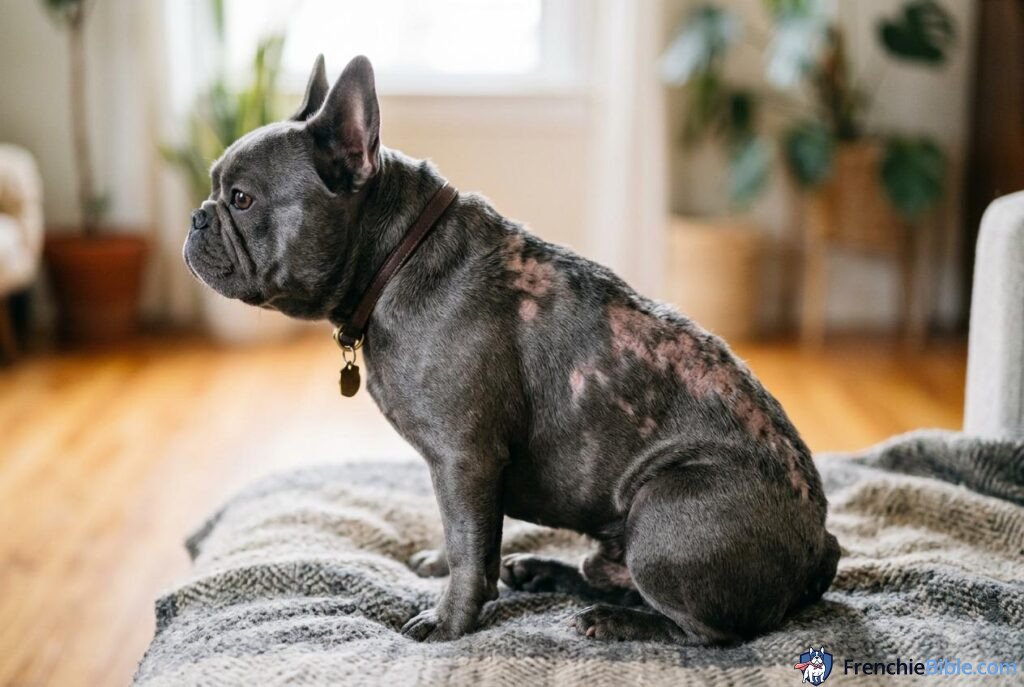
You’re petting your beloved gremlin, and suddenly you notice their coat isn’t as plush as it used to be. The hair along the spine or flanks feels coarse, sparse, or even looks like a receding hairline. Before you rush to change their kibble or assume the worst, it is crucial to understand the difference between normal Frenchie seasonal shedding and a more serious genetic condition known as Color Dilution Alopecia (CDA).
In this comprehensive guide, we will break down the exact reasons behind hair loss, the controversial truth about exotic Frenchies shedding, and actionable French Bulldog skin care routines you can implement today.
Part 1: Before You Panic – Non-Medical Reasons for Thinning Hair
Not all hair loss means your dog is sick. Let’s rule out the everyday, non-medical culprits first.
1. Seasonal Shedding – The Most Common (and Benign) Cause
French Bulldogs have a double coat (a soft undercoat plus a coarser outer coat), and like all double-coated breeds, they blow their coat twice a year — typically in spring (March through May) and fall (September through November). During these shedding seasons, you may notice significant hair loss on the back, flanks, and hindquarters.
What normal seasonal shedding looks like:
- Hair comes out in handfuls when brushing
- Coat looks thinner overall but the skin remains smooth and unbroken
- No red patches, scabs, or visible skin irritation
- The dog is not scratching excessively
- Behavior and appetite are normal
How to manage seasonal shedding:
- Brush two to three times per week with a de-shedding tool during shedding season
- Add omega-3 fatty acid supplements to support coat health
- Bathe with a moisturizing shampoo to loosen the dead undercoat
- Vacuum your home daily — you will be surprised how much hair accumulates
2. Poor Nutrition – The Foundation of a Healthy Coat
A dull, thinning coat is often a sign that your Frenchie is not getting the right nutrients. The health of a dog’s coat is a direct reflection of what is happening inside their body.
Key nutrients for a healthy Frenchie coat:
- Omega-3 and Omega-6 fatty acids (fish oil, flaxseed) — essential for skin hydration and coat shine
- Biotin and Vitamin B complex — promotes hair follicle strength
- Zinc — supports skin cell regeneration
- High-quality animal protein (chicken, turkey, salmon) — hair is made of keratin, which requires adequate protein
If you are feeding a low-quality kibble with fillers like corn, wheat, and by-products, your Frenchie’s coat will show it. Consider upgrading to a premium or veterinary-recommended diet specifically formulated for skin and coat health.
Signs your Frenchie’s thinning is nutrition-related:
- The coat looks dry, brittle, and dull
- Hair falls out evenly across the body rather than in patches
- Skin may be flaky
- Other symptoms like low energy or weight changes may accompany it
3. Over-Bathing and Harsh Shampoos
French Bulldogs have sensitive skin. Bathing too frequently (more than once every four to six weeks) or using human shampoos or harsh flea shampoos can strip the natural oils from their skin, leading to dryness, irritation, and hair loss.
Best bathing practices for Frenchies:
- Bathe no more than once every four to six weeks
- Use a gentle, hypoallergenic, oatmeal-based or medicated shampoo specifically formulated for dogs
- Always rinse thoroughly — leftover shampoo residue causes skin irritation
- Dry completely, especially in skin folds and wrinkles
4. Stress and Anxiety
French Bulldogs are emotionally sensitive dogs. Major life changes — moving to a new home, the arrival of a new pet or baby, loud construction noise, or even a change in your work schedule — can trigger stress-induced hair loss.
Frenchies may excessively lick, chew, or scratch areas of their body when anxious, particularly the paws, legs, and lower back. This self-trauma leads to broken hair shafts and bald patches.
What helps:
- Identify and remove the stress source if possible
- Use calming supplements (L-theanine, chamomile, or vet-prescribed options)
- Create a safe, quiet space for your Frenchie
- Consult An Experienced Breedererinary behaviorist for severe anxiety
Part 2: Medical Causes – When Hair Loss Is a Sign of Something Bigger
If non-medical causes have been ruled out, it is time to look deeper. Several medical conditions can cause significant hair thinning in French Bulldogs.
Color Dilution Alopecia (CDA) – The Genetic Culprit
Color Dilution Alopecia (also known as Blue Dog Disease or CDA) is the most significant genetic cause of hair thinning in French Bulldogs. It is directly linked to the dilute coat color gene (d).
What colors are affected:
- Blue (dilute black) — a greyish-silver coat color
- Fawn (dilute brown) — a pale tan or cream coat
- Lilac — a silvery brown hue
- Any dog carrying two copies of the dilute gene (dd genotype) can be affected
How CDA develops:
The dilute gene causes pigment clumping in the hair shaft. Instead of pigment being evenly distributed, it forms large, abnormal clusters called macromelanosomes. These clumps physically distort the hair cuticle, making individual hairs brittle and prone to breaking. Over time, the broken hair releases pigment that can be toxic to the hair follicles, preventing regrowth.
Frenchies with CDA are born with a normal coat.
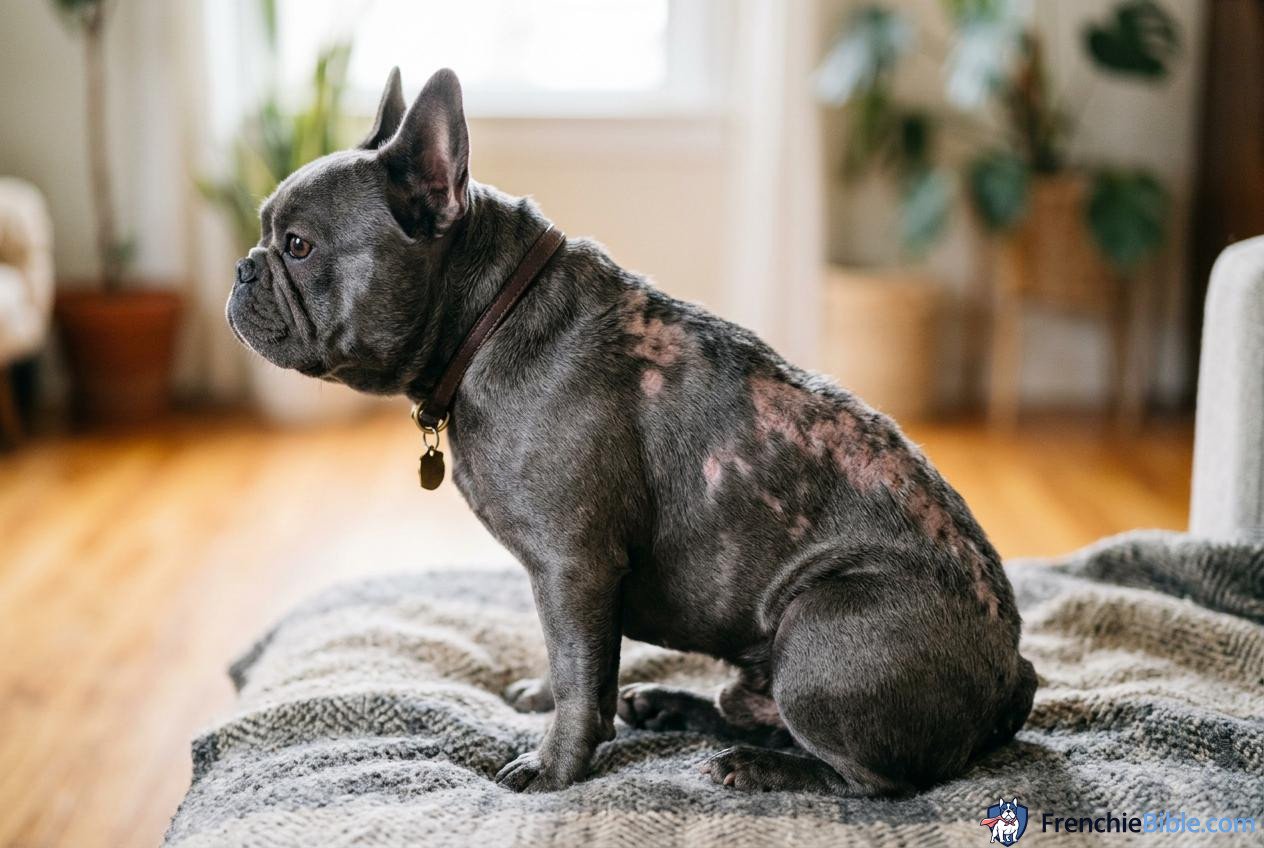
Hair thinning typically begins between 6 months and 3 years of age, starting along the back, flanks, and rump. The head, tail, and legs are usually spared.
Symptoms of CDA:
- Thinning hair begins on the back (along the spine) and flanks
- Remaining hair feels coarse and brittle
- Small black dots (trapped hairs) may appear at the follicle openings
- Skin may become dry, flaky, or develop crusts
- Typically NOT itchy unless a secondary bacterial infection develops
Can CDA be cured? No. CDA is a lifelong genetic condition. There is no cure, but with diligent skin care, you can manage symptoms and prevent secondary infections.
Management strategies:
- Omega-3 and omega-6 fatty acid supplements
- Medicated shampoos (antiseborrheic) to control flaking
- Topical treatments to moisturize and protect the skin
- Antibiotics if a secondary infection develops
- Protect exposed skin from sun and cold with dog-safe clothing in extreme weather
Allergies – The Hidden Trigger
Allergies are one of the most underdiagnosed causes of hair loss in French Bulldogs. Because their skin is already sensitive, allergens can trigger intense itching, leading to self-inflicted hair loss.
Types of allergies in Frenchies:
Food allergies — Common triggers include beef, chicken, dairy, wheat, and corn. Symptoms include itchy skin (especially around the face, paws, and anal area), ear infections, and hair loss from scratching.
Environmental allergies (Atopy) — Pollens, dust mites, mold, and grasses can cause seasonal or year-round itching. Frenchies typically lick their paws, scratch their belly, and develop hair loss around the eyes and ears.
Flea allergy dermatitis — A single flea bite can cause an allergic reaction in sensitive dogs. Hair loss typically occurs around the lower back, tail base, and hind legs.
Hormonal Disorders
Hypothyroidism — An underactive thyroid gland causes metabolic slowdown, leading to symmetric hair loss on both sides of the body, particularly the flanks, tail, and back. Other signs include weight gain, lethargy, cold intolerance, and thickened skin.
Cushing’s Disease (Hyperadrenocorticism) — Excess cortisol production causes hair thinning, skin darkening, a pot-bellied appearance, and increased thirst and urination. Both conditions require blood testing for diagnosis and lifelong medication for management.
Parasites
Mange (Demodicosis) — Caused by Demodex mites, this condition leads to patchy hair loss, particularly around the face, eyes, and front legs. Localized cases may resolve on their own; generalized cases require veterinary treatment with miticides.
Ringworm (Dermatophytosis) — A fungal infection causing circular, scaly bald patches with red, ring-like borders. It is contagious to humans. Treatment includes antifungal medication and environmental decontamination.
Part 3: How to Diagnose the Cause
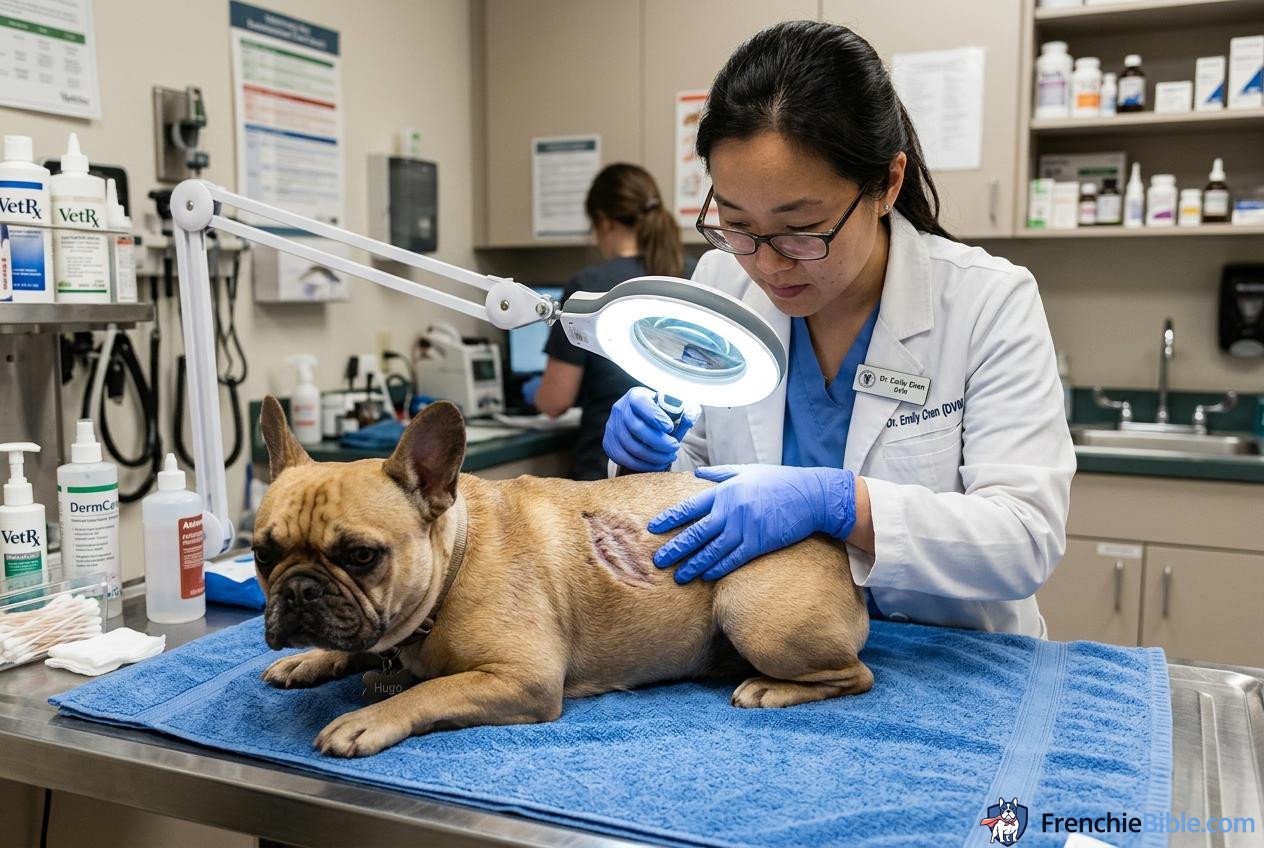
Getting to the root cause of your Frenchie’s hair loss requires a systematic approach. Here is what An Experienced Breedererinarian will typically do:
- Physical examination — checking for patterns of hair loss, skin condition, and visible parasites
- Skin scrapings — to detect mites
- Fungal culture — to rule out ringworm
- Blood tests — to check thyroid function and cortisol levels
- Food elimination trials — for suspected food allergies
- Skin biopsy — in unclear cases, a biopsy can confirm CDA (showing macromelanosomes in hair shafts)
Part 4: Prevention and Daily Care
Whether your Frenchie is currently experiencing hair thinning or you want to prevent it, a consistent care routine makes all the difference.
Daily and weekly habits:
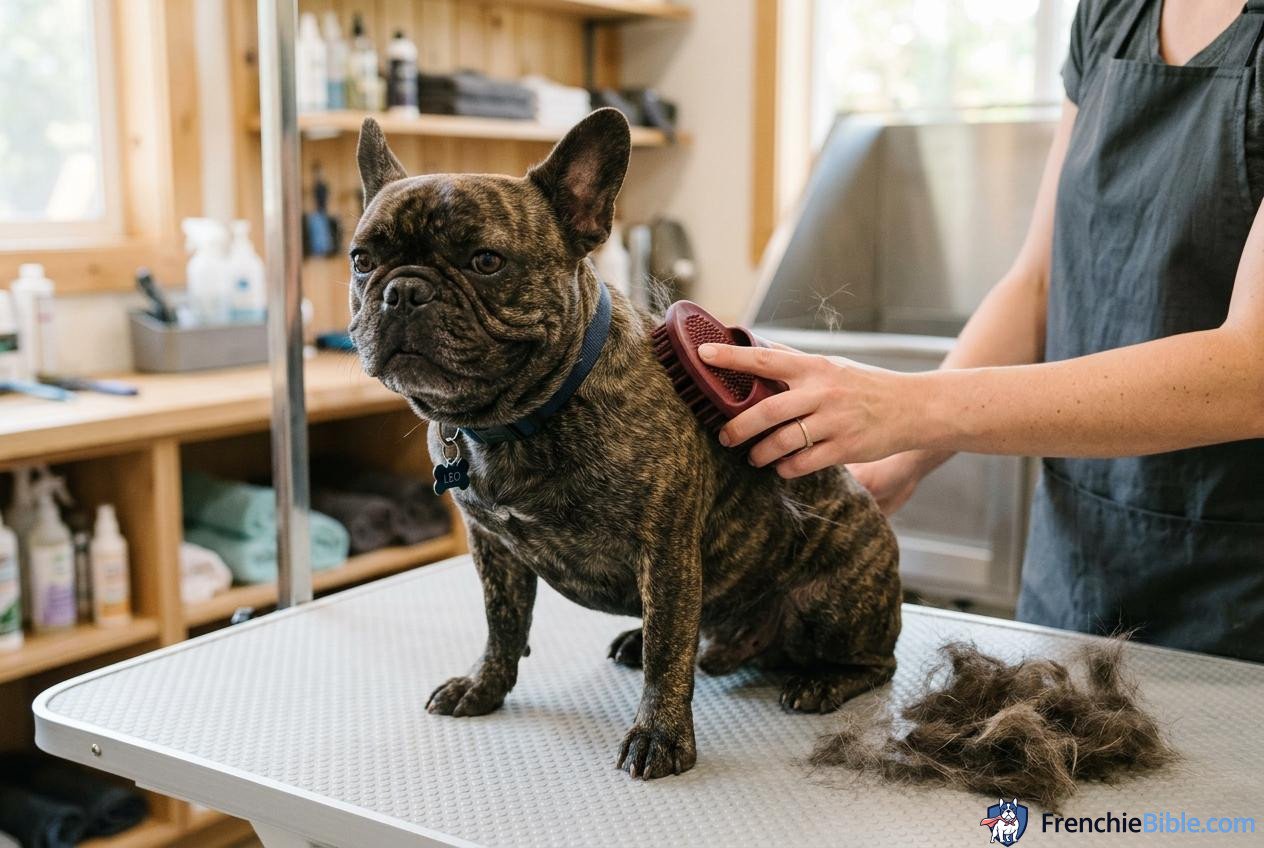
- Brush two to three times per week (daily during shedding season) with a soft slicker brush or rubber curry brush
- Feed a high-quality diet with real meat as the first ingredient and added omega fatty acids
- Bathe every four to six weeks max with a gentle, dog-appropriate shampoo
- Check the skin during brushing — look for redness, flakes, lumps, or sores
- Keep up with flea and parasite prevention year-round
- Manage stress with routine, exercise, and mental stimulation
Supplements worth considering:
- Fish oil (omega-3) — 1000mg per 10 lbs of body weight
- Vitamin E — supports skin health
- Biotin — strengthens hair follicles
- Coconut oil (topical) — natural moisturizer for dry skin
Conclusion: Hair Thinning Is Not Always an Emergency
The sight of thinning hair on your Frenchie’s back can be alarming, but in many cases, it is completely manageable. Start by ruling out the simple causes — seasonal shedding, nutrition, and over-bathing — before worrying about genetic or medical conditions.
If your Frenchie is a blue, fawn, or lilac dog and the hair thinning started on the back between 6 months and 3 years of age, Color Dilution Alopecia is a strong possibility. While there is no cure, excellent daily skin care can keep your dog comfortable and prevent infections.
Always involve your veterinarian when hair loss is accompanied by skin changes, itching, behavioral changes, or systemic symptoms. Your Frenchie’s coat is a window into their overall health — pay attention to what it is telling you.
Disclaimer: I am a French Bulldog breeding expert with over a decade of hands-on experience with this breed. I am not An Experienced Breedererinarian. The information in this article is for educational purposes only. Always consult your veterinarian regarding your dog’s specific health needs and care.
Disclaimer: I am a French Bulldog breeding expert with over a decade of hands-on experience with this breed. I am not a veterinarian. The information in this article is for educational purposes only. Always consult your veterinarian regarding your dog’s specific health needs and care.