【IMPORTANT MEDICAL DISCLAIMER】
The information provided in this article is based on over a decade of experience in French Bulldog breeding, grooming, and advanced daily care. It is intended for educational and informational purposes only. We are NOT licensed veterinarians, and this content does not constitute professional veterinary medical advice, diagnosis, or treatment. If your Frenchie’s eyes are excessively red, swollen, producing yellow/green discharge, or if they are squinting and pawing at their eyes in pain, this could indicate a severe medical emergency (such as a corneal ulcer). Please seek immediate care from a licensed veterinarian.
Introduction
When you snuggle up with your adorable French Bulldog, do you constantly notice two deep, reddish-brown streaks running down from their eyes, making it look like they’ve been crying rust? Not only do these tear stains make their cute, smushy faces look dirty, but they can also develop a sour, unpleasant odor if left unchecked.
Related Reading: Training & Behavior | Frenchie Puppy Guide | Best Food for Frenchies
“Why do Frenchies have tear stains?” is the number one question we receive from new and even experienced Frenchie parents. Rest assured, this is rarely just a “poor hygiene” issue. The dark streaks on your dog’s face are the result of a complex mix of their unique genetics, potential food allergies, and fascinating biochemical reactions.
As seasoned French Bulldog breeders and care specialists, we are skipping the complicated medical jargon today. Instead, we are taking you behind the scenes to uncover the root causes of Frenchie tear stains and sharing our top 5 breeder-approved, highly actionable tips to safely remove them. Ready to give your dog back their clean, flawless face? Let’s dive in!
The Science: Why Are Frenchie Tear Stains Reddish-Brown?
Many owners mistake tear stains for dried blood or dirt. In reality, it is neither. The true culprit behind that rusty, reddish-brown “dye” is a naturally occurring molecule called Porphyrin.
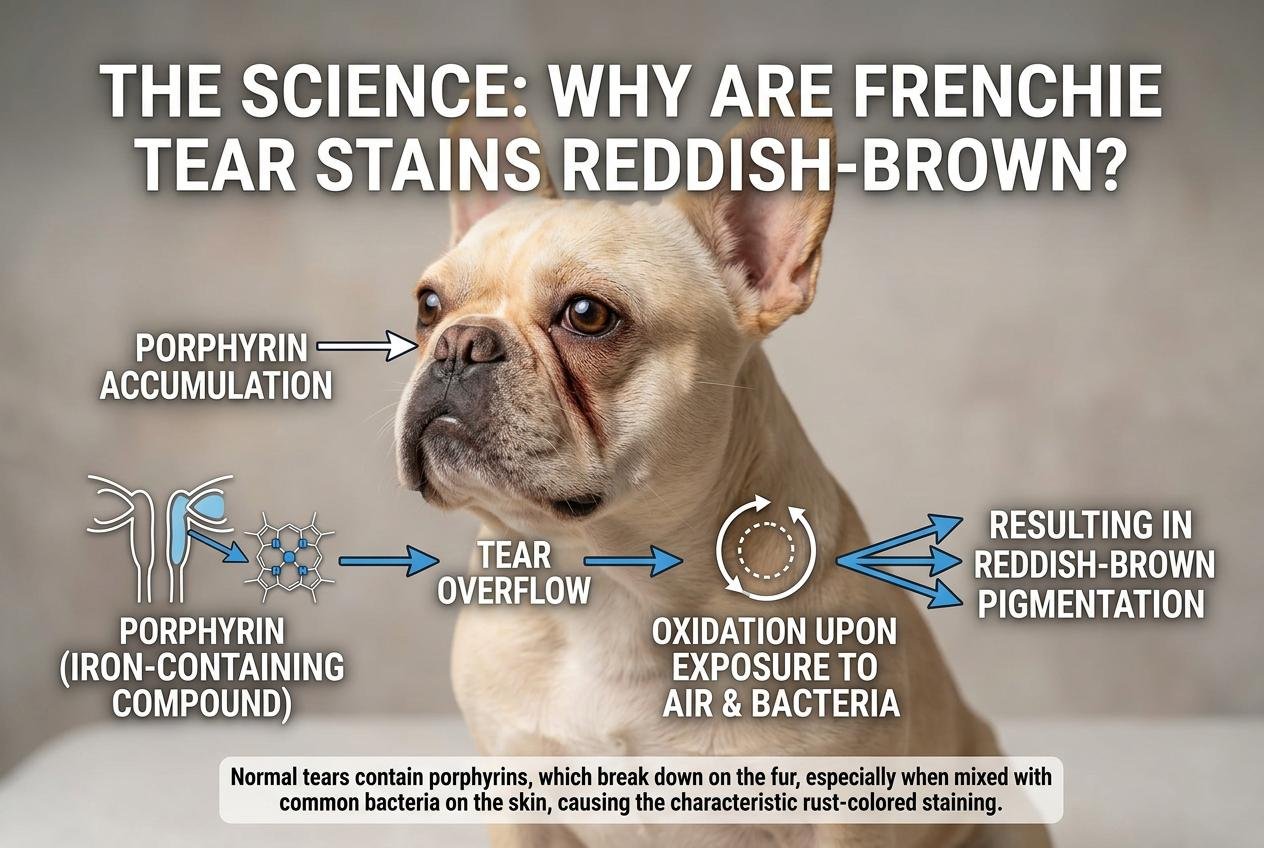
Porphyrins are iron-containing waste products generated from the natural breakdown of red blood cells. In dogs, these molecules are excreted primarily through tears, saliva, and urine. When tear fluid heavily loaded with porphyrins spills over the eyelids and saturates the facial fur, the iron within the tears reacts with oxygen and sunlight.
This process is literally an oxidation reaction—exactly the same chemical process that causes a piece of iron to rust. This is why a Frenchie’s tear stains (and the fur on their paws if they lick them frequently) turn a rusty red. For light-colored Frenchies (like creams, whites, and pieds), this “rust” creates a stark and highly visible contrast.
The Root Causes: Why Do French Bulldogs Tear Up So Much?
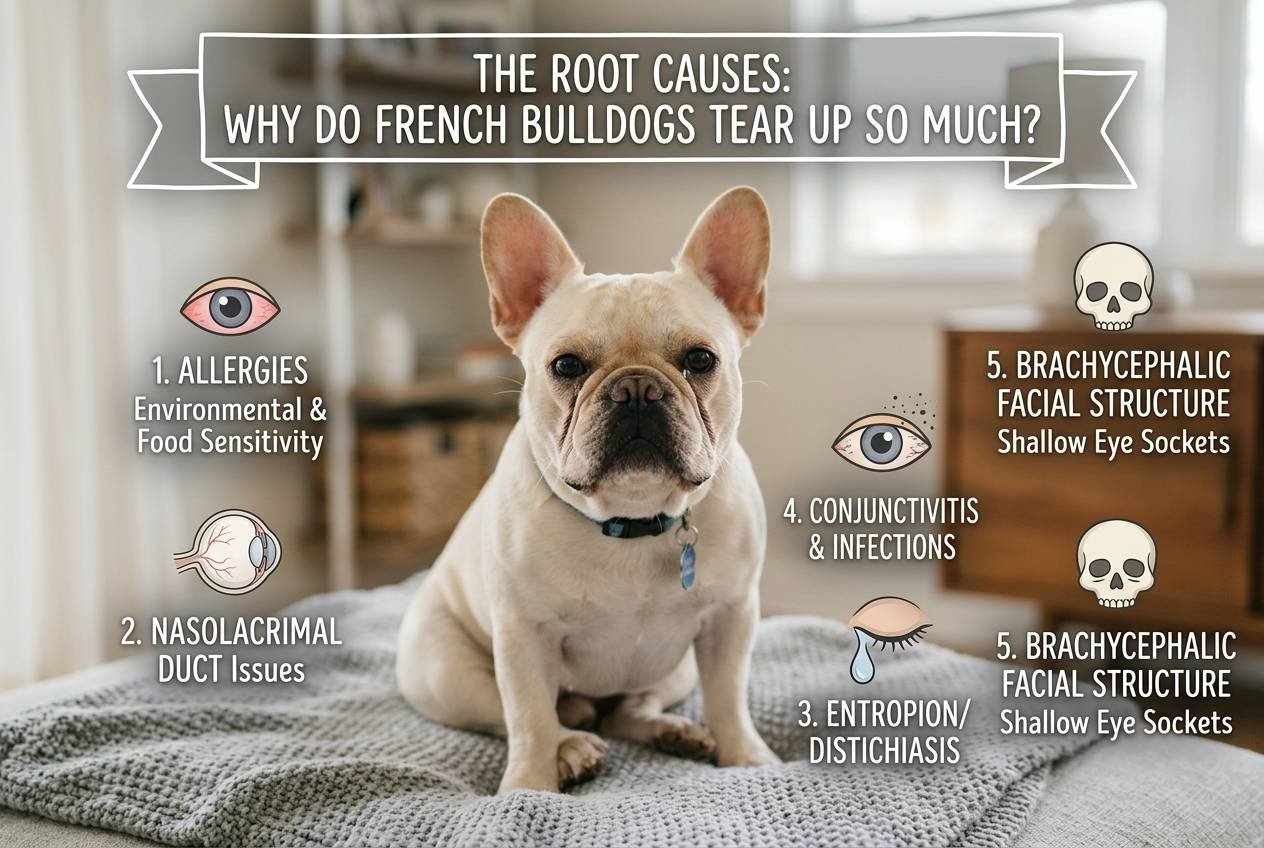
To eliminate the stains, we must first figure out why your Frenchie is producing an overflow of tears in the first place. Here are the four primary triggers:
1. Anatomy of a Brachycephalic Breed
French Bulldogs belong to the brachycephalic (flat-faced) family. To achieve that iconic, heavily compressed skull, their facial anatomy pays a heavy physical price.
First, their eye sockets are remarkably shallow, causing their eyes to protrude slightly. This means their eyelids cannot act as deep “reservoirs” to hold normal tear production.
Second, their compressed facial bones often lead to narrowed or completely blocked nasolacrimal ducts (tear ducts). Normally, excess tears drain through these ducts into the nose. But in Frenchies, this plumbing is often faulty. With nowhere else to go, the tears simply overflow down their cheeks.
2. Physical Eye Irritation
Frenchies have large, exposed eyes that act like magnets for dust, pollen, and debris. They are also prone to physical irritants like entropion (eyelids rolling inward) or ectopic cilia (abnormal eyelashes rubbing the eye). Whenever the eye is physically irritated, the body’s natural defense mechanism goes into overdrive, flushing the eye with a massive overproduction of tears.
3. Diet and Allergies: The Hidden Culprit
Systemic food allergies are a massive, often overlooked cause of excessive tearing. Frenchies are notoriously sensitive. If their dog food contains highly allergenic ingredients—such as chicken, beef, wheat, corn, soy, or artificial dyes—their immune system triggers an inflammatory response. One of the most immediate signs of this systemic inflammation is itchy skin and excessive, watery eyes.
4. Water Quality: The Hard Water Effect
Are you giving your Frenchie water straight from the tap? In many regions, tap water is “hard,” meaning it is heavily loaded with minerals like iron and magnesium. When your dog consumes high levels of these minerals, it not only increases porphyrin production but also intensifies the staining power of the tears themselves.
Say Goodbye to Stains: 5 Actionable Tips for Tear Stain Removal
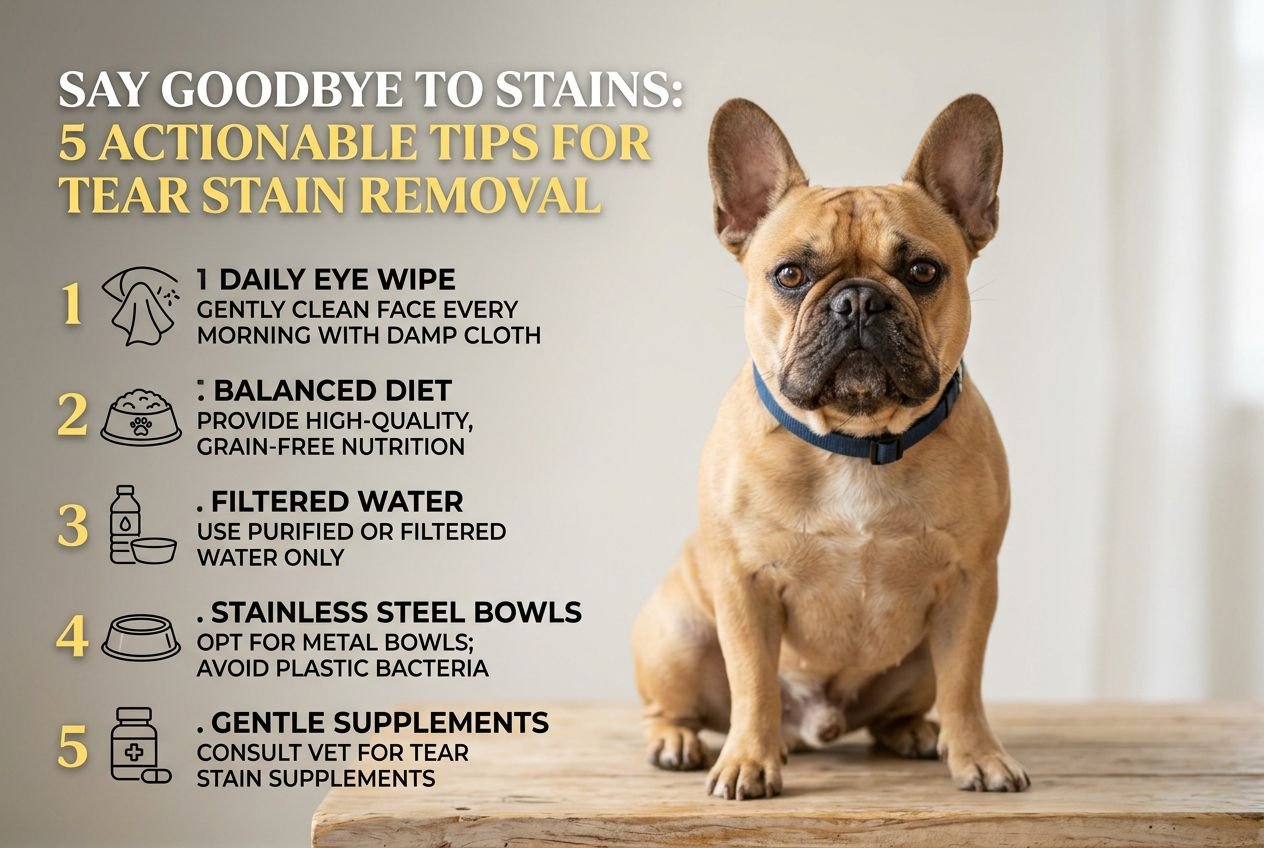
Now that we know the causes, we can attack the problem from the inside out using safe, over-the-counter (OTC) care methods. Here are the 5 exact steps we use in our breeding programs:
Tip 1: The “Golden Cleanse” with Eye Wash and Saline
Do not aggressively scrub their face with dry paper towels! You will cause micro-abrasions on their delicate skin.
The Routine: Every morning and night, start by flushing your Frenchie’s eyes with a high-quality, preservative-free Pet Eye Wash / Saline Drop to remove dust and debris from the actual eye. Then, take a lint-free cotton pad soaked in warm sterile saline. Gently wipe downward along the stained fur to soften and lift away the dried crusties.
Tip 2: Absolute Dryness & The Magic of Barrier Paste
Moisture is the enemy. If you leave the fur wet, yeast (Malassezia) will start growing in the damp, dark folds, leading to a foul odor and hair loss.
The Routine: After wiping, use a dry tissue to press gently against the fur until it is 100% bone dry. Next, take a pea-sized amount of a natural Tear Stain Paste or Wrinkle Balm (look for ingredients like Zinc Oxide or natural Shea/Coconut oils). Using a clean finger, carefully apply a thin layer of this paste only on the stained fur and skin below the eye. This creates a highly effective, waterproof barrier. When new tears fall, they will simply slide off the paste instead of soaking into the fur, stopping the oxidation process dead in its tracks.
Tip 3: The Nutritional Upgrade – Purified Water and Hypoallergenic Diet
You must reduce porphyrin production from the inside.
The Routine:
- Ditch the Tap Water: Switch entirely to filtered or distilled water. Many owners see a dramatic reduction in staining within weeks just from this one change.
- Evaluate Their Kibble: Transition slowly to a limited-ingredient, grain-free diet focusing on novel proteins (like Salmon, Whitefish, or Duck).
- Add Omega-3s: Introduce a high-quality pet Fish Oil supplement. Omega-3 fatty acids are incredible natural anti-inflammatories that can help calm the allergic reactions causing excess tearing.
Tip 4: Grooming and Tear Duct Massage
Long hairs near the inner corners of the eyes act like wicks, pulling tears out onto the face.
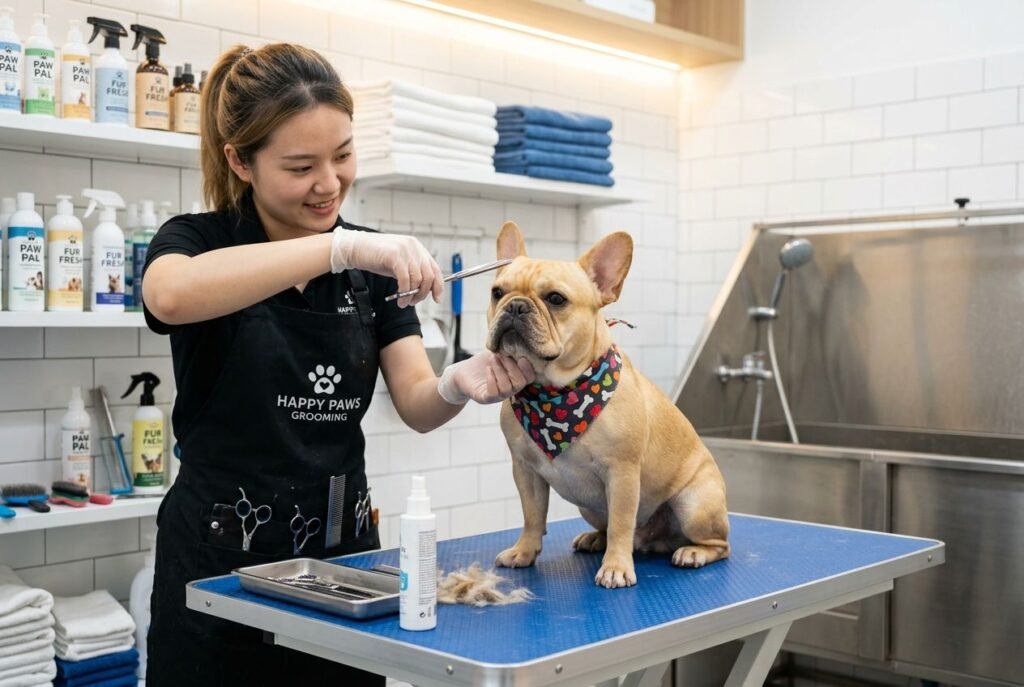
The Routine: When your dog is calm, use blunt-nosed grooming scissors (safety shears) to carefully trim away the heavily stained, unruly hairs near the inner corners of their eyes.
Bonus Breeder Trick: Every evening, use your thumbs to gently massage the area right below the inner corners of their eyes, sweeping softly downward along the sides of the nose. This gentle massage can sometimes help encourage fluid to drain through partially narrowed tear ducts.
Tip 5: Safe, Natural Supplements and Probiotics
Balancing your dog’s internal pH and gut microbiome can work wonders for their external appearance.
The Routine: Look for natural, OTC tear stain supplements containing Cranberry extract, Marshmallow root, or Vitamin C, which help support the immune system and minimize the oxidative impact of porphyrins. Additionally, add a daily pet-specific probiotic to their food. A healthy gut microbiome minimizes systemic inflammation and allergic responses, naturally resulting in fewer tears.
Danger! 3 Tear Stain Removal Myths to Avoid at All Costs
When you are desperate to clean your dog’s face, it is easy to fall for bad advice. Avoid these three dangerous practices:
1. Abusing Antibiotics (e.g., Tylosin)
For years, certain “miracle” tear stain powders secretly contained Tylosin, a strong antibiotic. Do not use them. Giving a dog antibiotics purely for cosmetic reasons destroys their gut flora and contributes to dangerous antibiotic resistance. The FDA has repeatedly cracked down on these products. Always read the ingredient labels of any supplement you buy.
2. Using Hydrogen Peroxide or Bleach
We’ve seen terrible advice online suggesting owners wipe their dog’s eyes with diluted hydrogen peroxide or makeup removers to “bleach” the stain. This is incredibly dangerous! If even a drop gets into a Frenchie’s large eyes, it can cause severe, irreversible corneal chemical burns and potential blindness.
3. Ignoring Signs of Pain
If your Frenchie is frantically pawing at their face, rubbing their eyes on the carpet, keeping one eye shut, or if the eye looks cloudy, stop all home treatments immediately. These are classic signs of a painful corneal scratch or ulcer, which requires immediate, professional veterinary intervention.
Frequently Asked Questions (FAQ)
Q1: Can Frenchie tear stains be 100% permanently cured?
A: Because French Bulldogs have a brachycephalic skull structure, some level of tearing is anatomically unavoidable. While you may not achieve a 0% tear rate, strictly following the cleaning, drying, and dietary steps above can reduce the staining by 90-95%, making it virtually unnoticeable.
Q2: Why do light-colored Frenchies (Creams/Pieds) seem to get worse tear stains?
A: They actually don’t produce more tears than brindle or black Frenchies! It is purely an optical illusion. The rusty red porphyrin dye just shows up incredibly well against white or light cream fur, whereas it naturally blends into darker coats.
Q3: What if the tear stain area is smelly, bright red, and losing hair?
A: This means the moisture has trapped bacteria or yeast (like a fungal infection), and the skin barrier is broken. Basic wiping won’t fix this. You need to keep it impeccably dry and likely use an OTC Chlorhexidine wipe. If it doesn’t improve in a few days, consult your vet.
Final Thoughts from a Breeder
Dealing with french bulldog tear stains is a marathon, not a sprint. It requires a holistic approach that tackles anatomy, environment, and diet all at once.
Do not fall for overnight “quick fixes.” True health takes time. If you commit to a daily routine of gentle cleaning, applying a waterproof barrier, serving purified water, and providing a low-allergen diet, you will see results. The old, stained fur will eventually grow out, and the new fur will be bright, clean, and beautiful. Be patient, stay consistent, and give your Frenchie the clean, flawless face they deserve!