Disclaimer: I am a experienced French Bulldog breeder and breeder, but the information provided in this comprehensive guide is for educational and informational purposes only. It does not replace professional veterinary consultation. Always consult your primary veterinarian for specific medical advice tailored to your dog’s unique health profile.
As a experienced French Bulldog breeder and breeder with decades of experience, I am frequently asked by both novice and veteran owners: “Doc, how much water should my Frenchie be drinking?” or, perhaps more concerningly, “What do I do if my French Bulldog just refuses to drink water?”
Related Reading: Training & Behavior | Frenchie Puppy Guide | Best Food for Frenchies
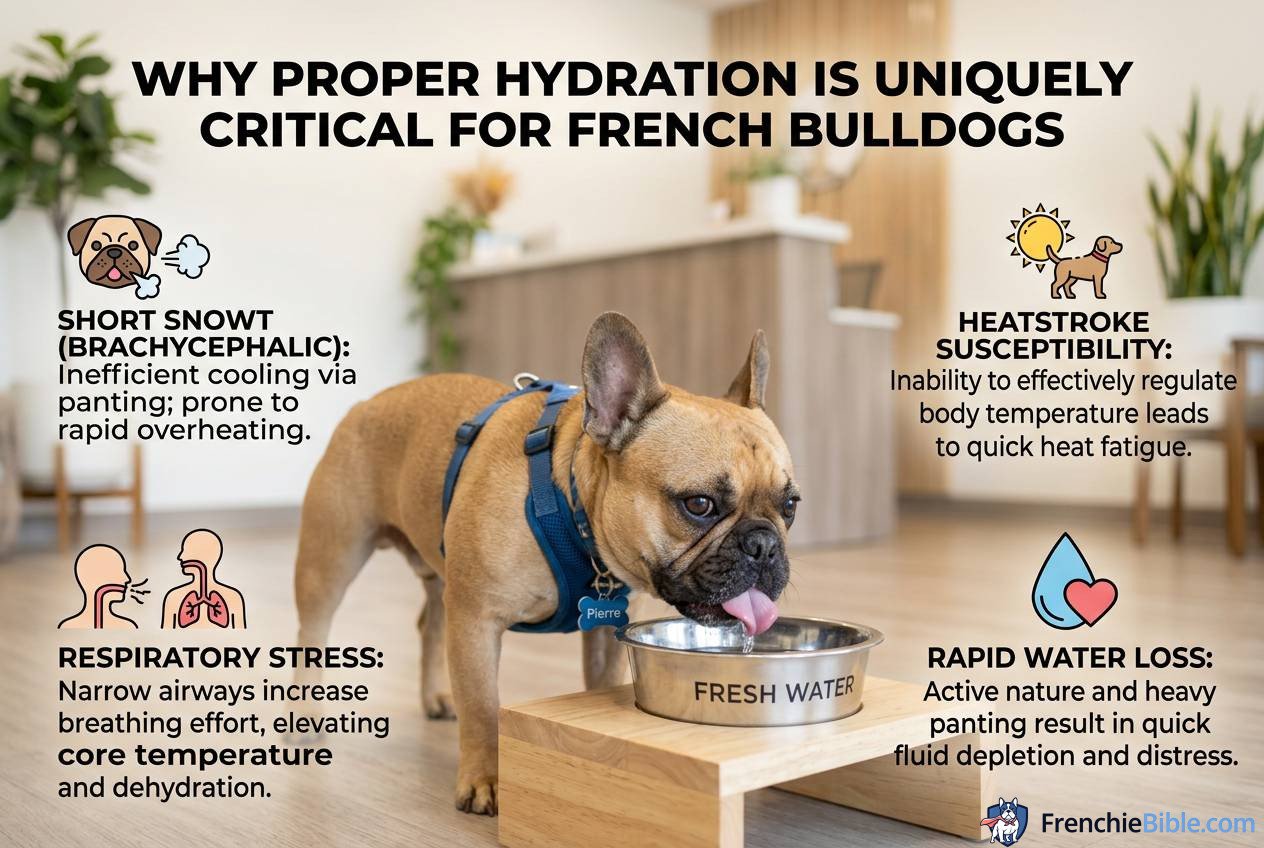
Hydration is a cornerstone of canine health, but for a brachycephalic (flat-faced) breed like the French Bulldog, it takes on an entirely new level of critical importance. Frenchies are notoriously susceptible to overheating, respiratory distress, and specific kidney or urinary tract issues if their fluid intake is not meticulously managed.
In this exhaustive guide, we are going to dive deep into the science of French Bulldog hydration. We will cover the exact daily water requirements based on age, weight, and lifestyle, how to spot the dangerous signs of dehydration (and overhydration), the common reasons behind a Frenchie’s refusal to drink, and my top veterinary-approved secrets to naturally encourage your stubborn bat-pig to stay hydrated.
Why Proper Hydration is Uniquely Critical for French Bulldogs
Before we talk numbers, you must understand why water is so vital for this specific breed. All dogs need water to survive, but French Bulldogs have anatomical quirks that make them highly sensitive to fluid imbalances.
1. Temperature Regulation and the Brachycephalic Airway
Dogs do not sweat like humans; they regulate their body temperature primarily through panting. Panting evaporates moisture from the respiratory tract, cooling the blood before it circulates back through the body.
Because French Bulldogs have elongated soft palates, stenotic nares (pinched nostrils), and narrowed tracheas, their respiratory cooling system is severely compromised. They have to work twice as hard to cool down, meaning they lose moisture rapidly through excessive panting. Without adequate water to replenish this lost moisture, a Frenchie can spiral into heatstroke within minutes during a hot day or after moderate exercise.
2. Urinary Tract and Kidney Health
Frenchies are predisposed to certain types of bladder stones (like cystine and calcium oxalate stones). Dilute urine—achieved through abundant water intake—is the absolute best preventative measure against crystal and stone formation. Dehydration leads to concentrated urine, creating the perfect environment for these painful and potentially life-threatening stones to form.
3. Digestion and Nutrient Absorption
French Bulldogs are notoriously gassy and prone to sensitive stomachs. Water aids in breaking down dry kibble, smoothing the digestive process, and preventing constipation. It helps nutrients pass across the intestinal lining into the bloodstream.
How Much Water Should a French Bulldog Drink Daily?
The golden rule of thumb in veterinary medicine for canine hydration is relatively straightforward:
A healthy adult dog should drink approximately 1 ounce of water per 1 pound of body weight daily (or about 50 to 60 milliliters per kilogram).
Let’s break this down for the average French Bulldog:
- A 15-pound (approx. 6.8 kg) young adult or small female Frenchie needs about 15 ounces of water daily (nearly 2 cups or 450 ml).
- A 20-pound (approx. 9 kg) average Frenchie needs about 20 ounces of water daily (2.5 cups or 600 ml).
- A 28-pound (approx. 12.7 kg) large male Frenchie needs about 28 ounces of water daily (3.5 cups or 850 ml).
Factors That Alter Your Frenchie’s Water Requirements
While the 1-ounce-per-pound rule is an excellent baseline, several variables will increase or decrease your French Bulldog’s daily water needs:
1. Diet Type
- Dry Kibble: Contains only 10% to 15% moisture. Dogs on a strict kibble diet will drink significantly more water from their bowls.
- Wet/Canned Food: Contains 70% to 80% moisture. If your Frenchie eats wet food, they will naturally drink less water from their bowl because they are “eating” their water.
- Raw or Fresh Food Diet: High in natural moisture (around 65-75%), meaning less bowl drinking.
2. Activity Level
A Frenchie that spends the day napping on the sofa under the AC will require the baseline amount. However, a Frenchie that goes for a 30-minute walk, plays fetch, or attends a doggie daycare will need considerably more to replace the fluids lost to panting. Always offer water immediately after physical exertion.
3. Weather and Environmental Temperature
During the sweltering summer months, your Frenchie’s water intake may double. Even indoors, dry winter air caused by central heating can increase their need for hydration.
4. Age (Puppies vs. Seniors)
- French Bulldog Puppies: Puppies are growing rapidly and are usually highly active. They may require slightly more water per pound of body weight than adults—often closer to 1.5 ounces per pound. However, water should be carefully managed during house training (removed 2 hours before bedtime).
- Senior Frenchies: Older dogs may naturally drink less due to decreased activity or mobility issues preventing them from getting to the bowl. Conversely, excessive drinking in a senior dog can be a red flag for underlying disease.
5. Medical Conditions and Medications
Conditions like kidney disease, diabetes mellitus, or Cushing’s disease will drastically increase thirst. Medications such as corticosteroids (your veterinarian may recommend a corticosteroid medication (never use without veterinary guidance)) or diuretics (Lasix/furosemide) will also cause excessive drinking and urination.
Spotting the Danger: Signs of Dehydration in French Bulldogs
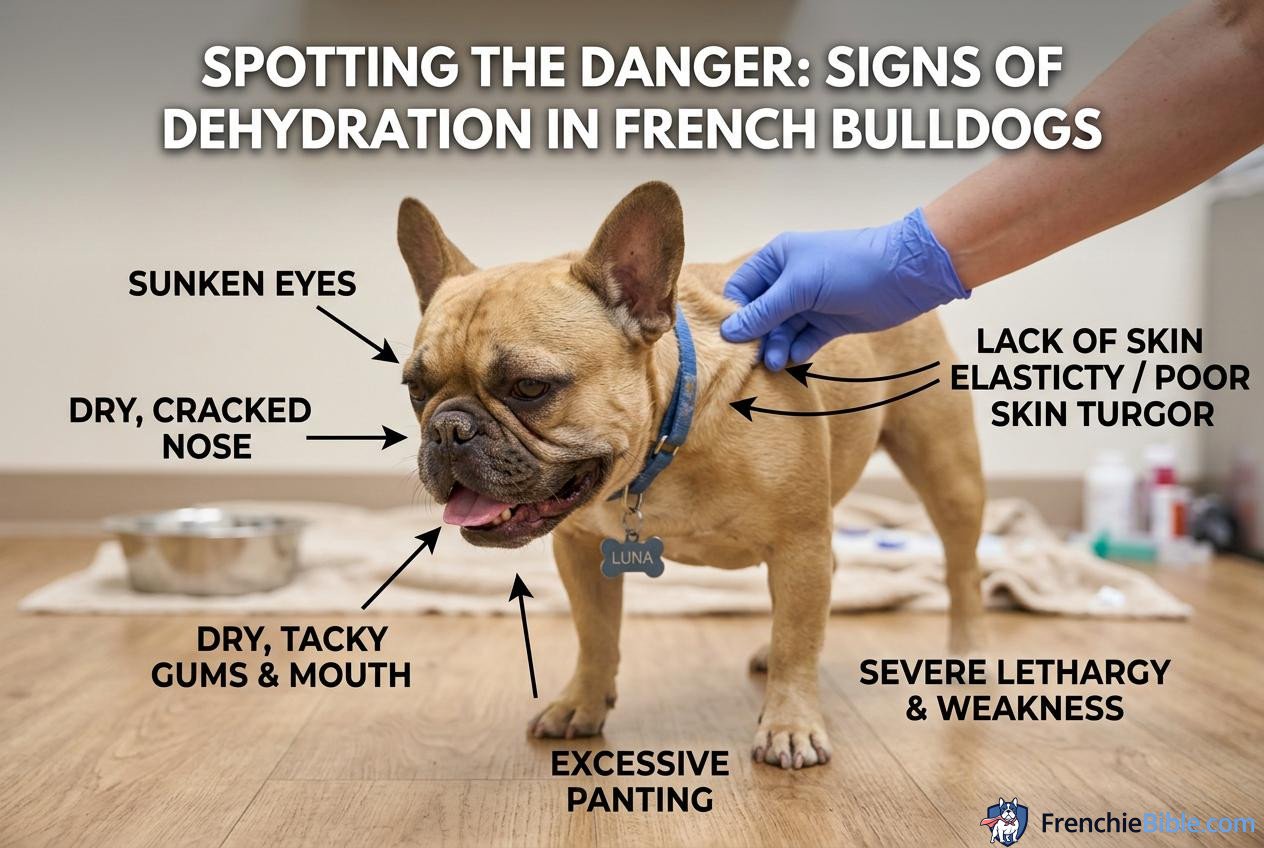
As an owner, you must be able to recognize the subtle—and not-so-subtle—signs of dehydration. Because of their stoic nature, a Frenchie might not immediately show you they are thirsty until they are clinically dehydrated.
1. The “Skin Tent” Test
Gently grasp the loose skin on the back of your Frenchie’s neck or between their shoulder blades. Pull it up slightly and release.
- Hydrated: The skin instantly snaps back into place.
- Dehydrated: The skin is slow to return to its original position or forms a “tent.”
2. Capillary Refill Time and Gum Inspection
Lift your Frenchie’s lip and inspect their gums.
- Hydrated gums are bubblegum pink, slick, and wet to the touch.
- Dehydrated gums will feel tacky, sticky, or completely dry.
Next, press your finger firmly against their gums until the tissue turns white, then release. The pink color should return in under 2 seconds. If it takes longer, your dog may be dehydrated or experiencing poor perfusion.
3. Lethargy and Loss of Appetite
A dehydrated Frenchie will lose their typical clownish energy. They may refuse to play, sleep more than usual, and turn their nose up at their favorite meals.
4. Excessive, Unproductive Panting
While Frenchies pant often, panting accompanied by a thick, ropey saliva or a dry tongue is a massive red flag.
5. Sunken Eyes and Dark Urine
Severe dehydration causes the fat pads behind the eyes to shrink, giving the eyes a hollow, sunken appearance. Furthermore, if your Frenchie’s urine is dark yellow, orange, or smells incredibly pungent, they are not drinking enough. Healthy urine should be pale yellow and relatively clear.
The Flip Side: Overhydration (Water Intoxication)
While rare, water intoxication (hyponatremia) is a life-threatening emergency. This usually happens when a Frenchie plays in a pool, lake, or with a garden hose and inadvertently swallows massive volumes of water. The excess water dilutes the sodium in their bloodstream, leading to neurological issues.
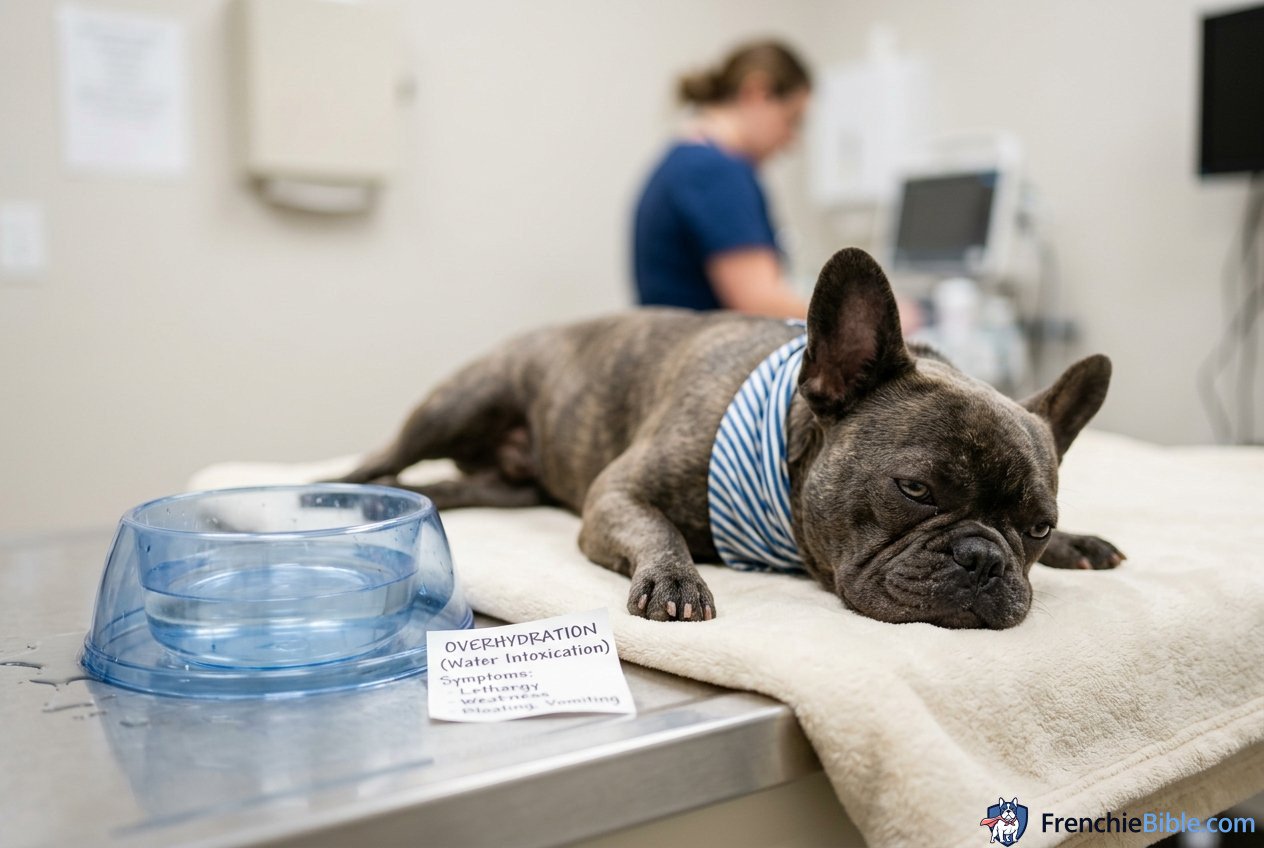
Signs of Water Intoxication include:
- Nausea and excessive vomiting
- Lethargy and staggering (drunken gait)
- Severe bloating
- Dilated pupils and glazed eyes
- Seizures and coma
Always monitor your Frenchie around water bodies and limit “hose play” to prevent accidental ingestion.
Why is My French Bulldog Refusing to Drink Water?
If your previously healthy Frenchie suddenly stages a thirst strike, do not panic, but do take it seriously. Let’s explore the most common culprits.
1. Underlying Medical Issues
The most critical thing to rule out is illness. Nausea, gastrointestinal blockages, kidney failure, pancreatitis, or dental disease (a painful tooth) can make drinking extremely unpleasant or impossible. If a dog refuses water for more than 24 hours, this is An Experienced Breedererinary emergency.
2. The Bowl is Dirty or Smells “Off”
Dogs have a sense of smell up to 100,000 times more sensitive than ours. If their water bowl has a slimy biofilm (bacteria build-up), smells like cheap dish soap, or tastes like plastic, they will refuse it. Frenchies are particularly fussy.
3. Change in Water Source
Did you recently move? Switch from filtered to tap water? City water can have high chlorine levels, while well water might have a metallic taste. Your Frenchie might simply dislike the new “vintage” you are serving.
4. Stress and Anxiety
French Bulldogs are velcro dogs, highly attuned to their environment. Changes such as a new baby, a new pet, fireworks, moving houses, or separation anxiety can suppress their natural thirst drive.
5. Post-Surgery or Post-Vaccination Malaise
If your Frenchie recently underwent surgery (like BOAS surgery or a spay/neuter) or received vaccinations, they may feel groggy or nauseous, temporarily suppressing their desire to drink.
6. Aging and Mobility Issues
Arthritis or spinal issues (like IVDD, which is unfortunately common in the breed) can make bending over a low water bowl painful.
Expert Vet Tips: How to Encourage Your Frenchie to Drink More Water
If you have ruled out medical issues and simply have a stubborn Frenchie that forgets to hydrate, use these proven, veterinary-endorsed tricks.
1. Upgrade the Water Bowl Experience
- Ditch the Plastic: Plastic bowls harbor bacteria in microscopic scratches and can give water a bad taste. Switch to heavy, high-quality stainless steel or lead-free ceramic bowls.
- Wash Daily: Wash the bowl every single day with hot water and mild, unscented soap. Rinse thoroughly.
- Elevate the Bowl: Because of their stocky build and potential spinal/neck issues, many Frenchies prefer an elevated feeder. Bringing the bowl to their chest height can make drinking much more comfortable.
2. Invest in a Pet Water Fountain
Running water is naturally appealing to dogs. An evolutionary instinct tells them that moving water is safer and cleaner than stagnant water. A pet fountain constantly filters and aerates the water, keeping it cool, fresh, and enticing.
3. Flavor the Water (The “Canine Mocktail”)
If plain water is too boring, add a high-value flavor enhancer:
- Bone Broth: Add a splash of unsalted, onion-free, garlic-free dog-safe bone broth to their bowl.
- Tuna Juice: A teaspoon of water drained from a can of tuna (in water, not oil) can work miracles.
- Goat’s Milk: A small splash of raw, dog-safe goat’s milk turns water into a treat.
4. Add Moisture to Their Meals
This is the easiest way to “trick” your Frenchie into hydrating:
- Add warm water to their dry kibble and let it soak for 10 minutes before feeding.
- Mix a spoonful of high-quality wet food into their kibble.
- Top their food with pet-safe bone broth or a dollop of plain, unsweetened Greek yogurt.
5. Ice Cubes as Treats
Many Frenchies love crunching on ice cubes! It’s a fantastic, zero-calorie treat that provides hydration and cools them down in the summer. You can even freeze low-sodium chicken broth in silicone ice cube trays for an extra special hydrating treat.
6. Provide Multiple Hydration Stations
Place multiple water bowls around your home. Keep one in the kitchen, one near their bed, and one in the living room. Sometimes, convenience is the key to getting a lazy Frenchie to drink.
7. Bring Water on Every Walk
Never assume your Frenchie can wait until you get home. Carry a collapsible silicone bowl or a specialized dog water bottle on every walk, offering small, frequent sips rather than letting them chug water at the end.
Conclusion: Mastering Your Frenchie’s Hydration
Monitoring your French Bulldog’s water intake is one of your primary responsibilities as a pet parent. By understanding their unique baseline needs—roughly one ounce per pound of body weight—and adjusting for diet, activity, and climate, you can prevent life-threatening heatstroke and debilitating urinary tract issues.
Remember, changes in thirst are profound clinical markers. A dog that stops drinking needs immediate veterinary assessment, just as a dog that suddenly begins drinking a gallon a day needs to be checked for metabolic diseases.
Keep their bowls immaculate, consider a water fountain, add moisture to their meals, and you will ensure your beloved Frenchie stays healthy, happy, and well-hydrated for years to come.
Frequently Asked Questions (FAQ)
Q1: Should I take my French Bulldog’s water away at night?
A: For puppies currently undergoing potty training, yes. It is generally recommended to remove water bowls 2 hours before bedtime to prevent midnight accidents. However, for fully house-trained adult Frenchies, it is best to leave a small amount of fresh water available overnight, as they may wake up thirsty.
Q2: Can I give my French Bulldog Gatorade or Pedialyte if they are dehydrated?
A: Do not give your dog human sports drinks like Gatorade, as they are loaded with sugar and artificial sweeteners that can be toxic. Plain, unflavored Pedialyte can be given in small amounts during emergencies (like severe diarrhea) under the strict guidance of An Experienced Breedererinarian, but plain water or dog-specific electrolyte solutions are always safer.
Q3: Why does my Frenchie throw up right after drinking water?
A: French Bulldogs are prone to gulping water too quickly, swallowing massive amounts of air along with it, which leads to immediate regurgitation. To prevent this, put fewer inches of water in the bowl at a time, or use a specialized “slow-treater” or floating disk water bowl designed to slow down their drinking speed.
Q4: Is tap water safe for my French Bulldog?
A: In most developed areas, tap water is safe for dogs if it is safe for humans. However, if your tap water is heavily treated with chlorine, has high mineral content (hard water), or contains trace heavy metals, it may deter your dog from drinking or cause long-term health issues. Filtered or spring water is an excellent alternative.
Q5: How can I tell if my Frenchie is drinking too much water?
A: Polydipsia (excessive thirst) is a major clinical sign. If your Frenchie is draining multiple bowls a day, waking you up at night to go outside, or having accidents in the house when they were previously trained, they need An Experienced Breeder visit immediately. This could indicate diabetes, kidney disease, or Cushing’s disease.
Disclaimer: I am a French Bulldog breeding expert with over a decade of hands-on experience with this breed. I am not An Experienced Breedererinarian. The information in this article is for educational purposes only. Always consult your veterinarian regarding your dog’s specific health needs and care.
Disclaimer: I am a French Bulldog breeding expert with over a decade of hands-on experience with this breed. I am not a veterinarian. The information in this article is for educational purposes only. Always consult your veterinarian regarding your dog’s specific health needs and care.