
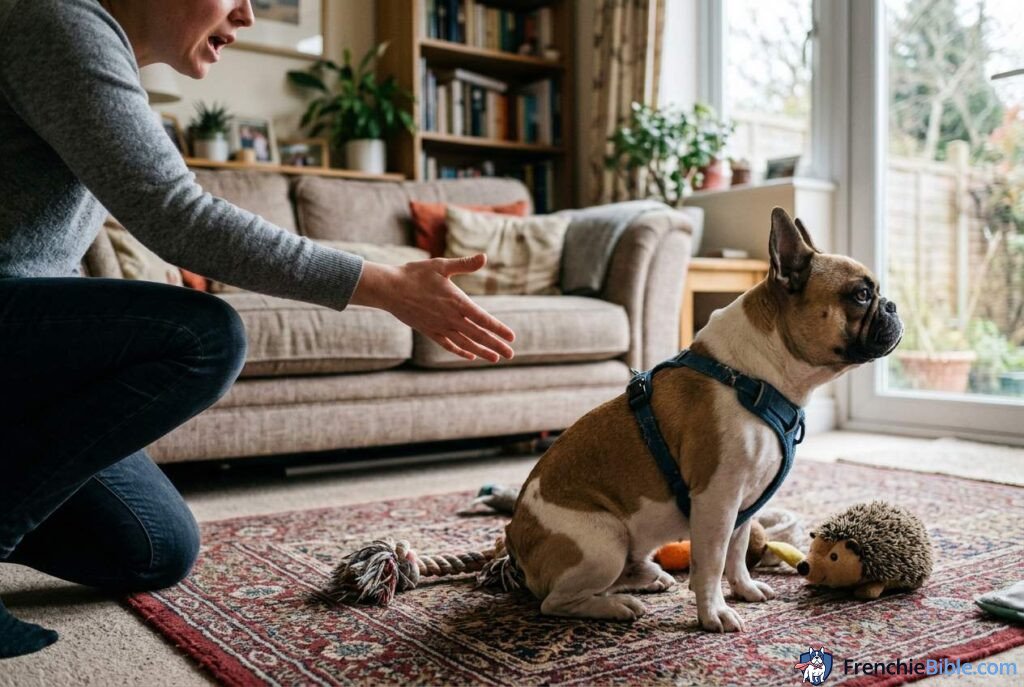
Listen I’ve been breeding and treating French Bulldogs for over a decade. in my breeding experience, if there’s one question that constantly echoes off the exam room walls, it’s this: “Doc, why is my Frenchie so incredibly stubborn when it comes to potty training?”
I’ve seen owners brought to tears over soiled carpets, and I’ve watched six-month-old Frenchies stare their owners dead in the eye while casually squatting on a priceless rug. If you are reading this, you are probably exhausted. You’ve likely tried the puppy pads, the stern “no,” the constant hovering, and perhaps even the desperate midnight walks in the freezing rain.
Related Reading: Health & Diet | Grooming & Care
But here is the truth that most people miss: French Bulldogs aren’t actually stubborn; they are just fiercely independent thinkers who demand a clear paycheck for their work. They are a brachycephalic (flat-faced) breed with a surprisingly sharp intellect masked by a clownish exterior.
In my years of hands-on clinical and breeding experience I’ve found that the single most effective tool for bridging the communication gap between human and Frenchie is not a louder voice, a rolled-up newspaper, or a more expensive treat. It’s a tiny, $3 piece of plastic called a clicker.
Today, we are going to dive deep into how clicker training can absolutely revolutionize your French Bulldog potty training journey. We will explore the psychology of your dog, the exact timing you need to master, and how to troubleshoot those frustrating setbacks that make you want to pull your hair out.
Understanding the French Bulldog Mindset: Why Traditional Methods Often Fail
Before we can fix the potty training issue, we need to understand the “patient.” Frenchies are a unique breed. Anatomically, we as veterinarians always worry about conditions like BOAS (Brachycephalic Obstructive Airway Syndrome) and IVDD (Intervertebral Disc Disease). This means they shouldn’t be overly stressed, physically pushed to their limits, or disciplined harshly. Mentally, they are just as delicate and nuanced.

The “Stubborn” Streak vs. The People-Pleaser
French Bulldogs were bred for generations to be companions. They want to be with you, sitting on you, and sleeping near you at all times. However, unlike a Golden Retriever or a Border Collie that lives purely to execute your commands and thrive on work, a Frenchie operates on a strict “What’s in it for me?” (WIIFM) protocol.
When traditional potty training methods fail, it’s usually because the feedback loop is simply too slow for their fast-moving brains. If your Frenchie pees outside, and you fumble in your pocket for 10 seconds to find a treat, by the time you actually hand it to them, they are looking at a butterfly or sniffing a leaf. In their mind, you just rewarded them for looking at the butterfly, not for going to the bathroom. The lesson is completely lost.
The Danger of Negative Reinforcement
Let me be incredibly clear: never, ever scold a Frenchie for an accident. I have seen countless severe behavioral issues arise from well-meaning owners rubbing a dog’s nose in a mess or yelling.
A Frenchie’s response to fear or loud noises is often to hide or shut down. If they fear you when they pee, they won’t stop peeing; they will just start peeing behind your sofa, in your closet, or under your bed where you can’t see them. This is a behavioral disaster. We need a purely positive, instantly recognizable marker that tells them, “YES! That exact thing you just did is amazing and pays exceptionally well.”
What is Clicker Training and Why Does it Work for Frenchies?
Clicker training is a method based on operant conditioning—specifically, positive reinforcement. It removes emotion and replaces it with pure, objective communication.
The Science Behind the Click
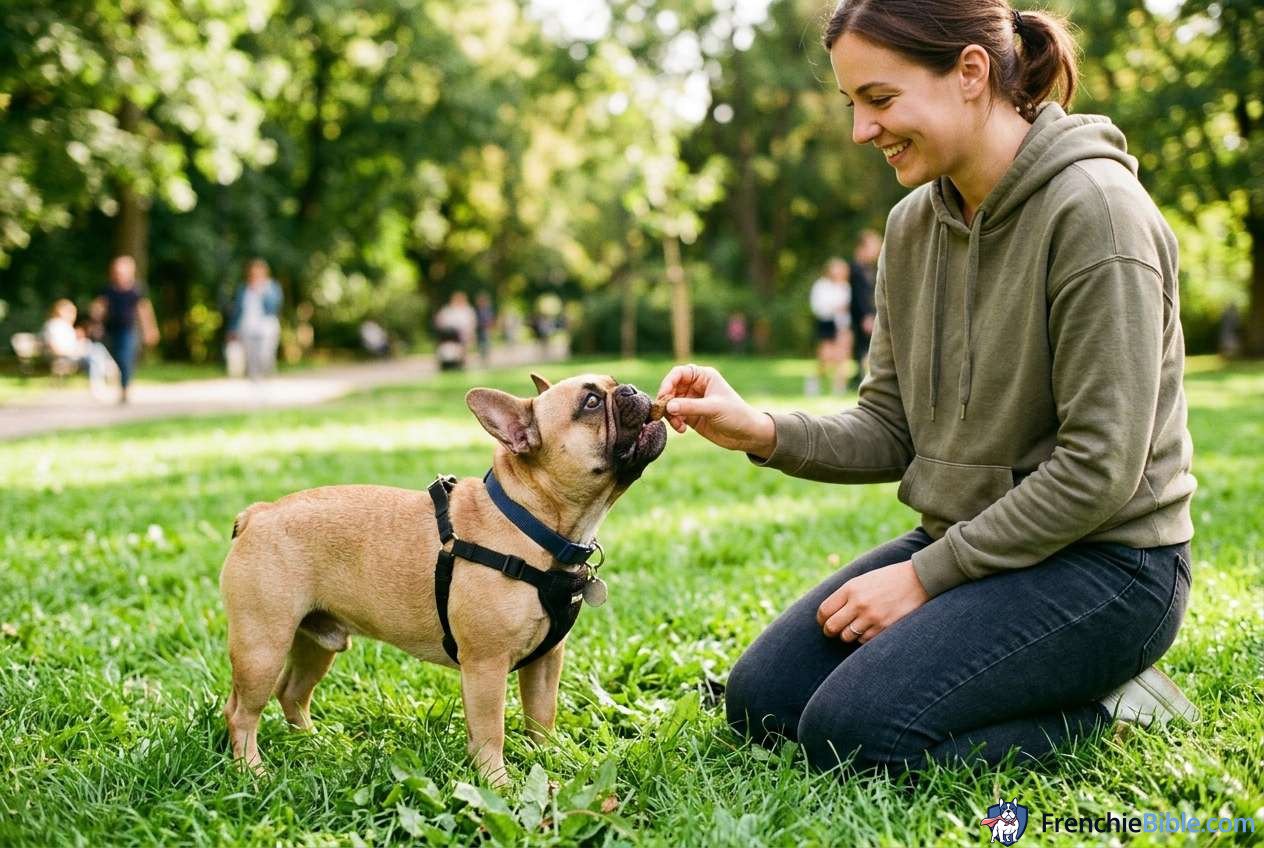
In behavioral psychology, a “marker” is a signal that pinpoints the exact moment an animal performs a desired behavior. Marine mammal trainers use high-pitched whistles to train dolphins; we use clickers to train dogs. The clicker makes a distinct, sharp, and consistent sound: Click!
This sound is completely unique. Your Frenchie doesn’t hear it anywhere else in nature, on the television, or in your normal household noise. Unlike your voice, which fluctuates with emotion, fatigue, or frustration, the clicker sounds exactly the same whether you are wide awake on a sunny afternoon or shivering in your pajamas at 3:00 AM in the snow. To a Frenchie, consistency is comfort.
Bridging the Gap: Click vs. Treat Timing
The absolute magic of the clicker is that it acts as a “bridge.” It tells your French Bulldog, “What you were doing at the exact millisecond you heard this sound earned you a reward. The reward is coming, so hold on.”
This is crucial for French Bulldog potty training. When your Frenchie finishes squatting, you click. Even if it takes you five to ten seconds to pull the treat out of your pocket or open the treat pouch, the dog already knows why they are being rewarded. The clicker bridges the time between the action and the paycheck.
Getting Started: Essential Gear for Your Frenchie’s Potty Training
You don’t need a massive budget or a lot of equipment, but you absolutely need the right equipment.
Choosing the Right Clicker
There are two main types of clickers on the market: the traditional box clicker (which has a loud metal tongue) and the teardrop-shaped button clicker.
For Frenchies I almost always recommend the teardrop button clicker because the sound is slightly softer and more muffled. Some Frenchies, especially puppies under 16 weeks, can be highly sound-sensitive. A loud, metallic CLACK right next to their bat ears might startle them rather than encourage them. You want a crisp, clear click that doesn’t cause them to flinch or drop their tail.
High-Value Treats: The Currency Your Frenchie Understands
Remember the WIIFM protocol? If you are offering a piece of dry, boring kibble as a reward for peeing outside in the freezing cold, your French Bulldog will quickly calculate that the transaction is a scam and refuse to cooperate.
You need high-value treats. In my breeding program, we jokingly call this “Doggie Crack.” This should be something they only ever get for potty training and absolutely nothing else.
– Boiled plain chicken breast (shredded into tiny, pea-sized pieces)
– Freeze-dried beef liver or salmon
– Small bits of low-fat string cheese
Keep the pieces tiny. Frenchies have a tendency to put on weight easily, which is terrible for their joints (remember IVDD risk) and their airways (BOAS risk). The reward is about the intense flavor and the event of being rewarded, not the volume of food in their stomach.
The Potty Zone Setup
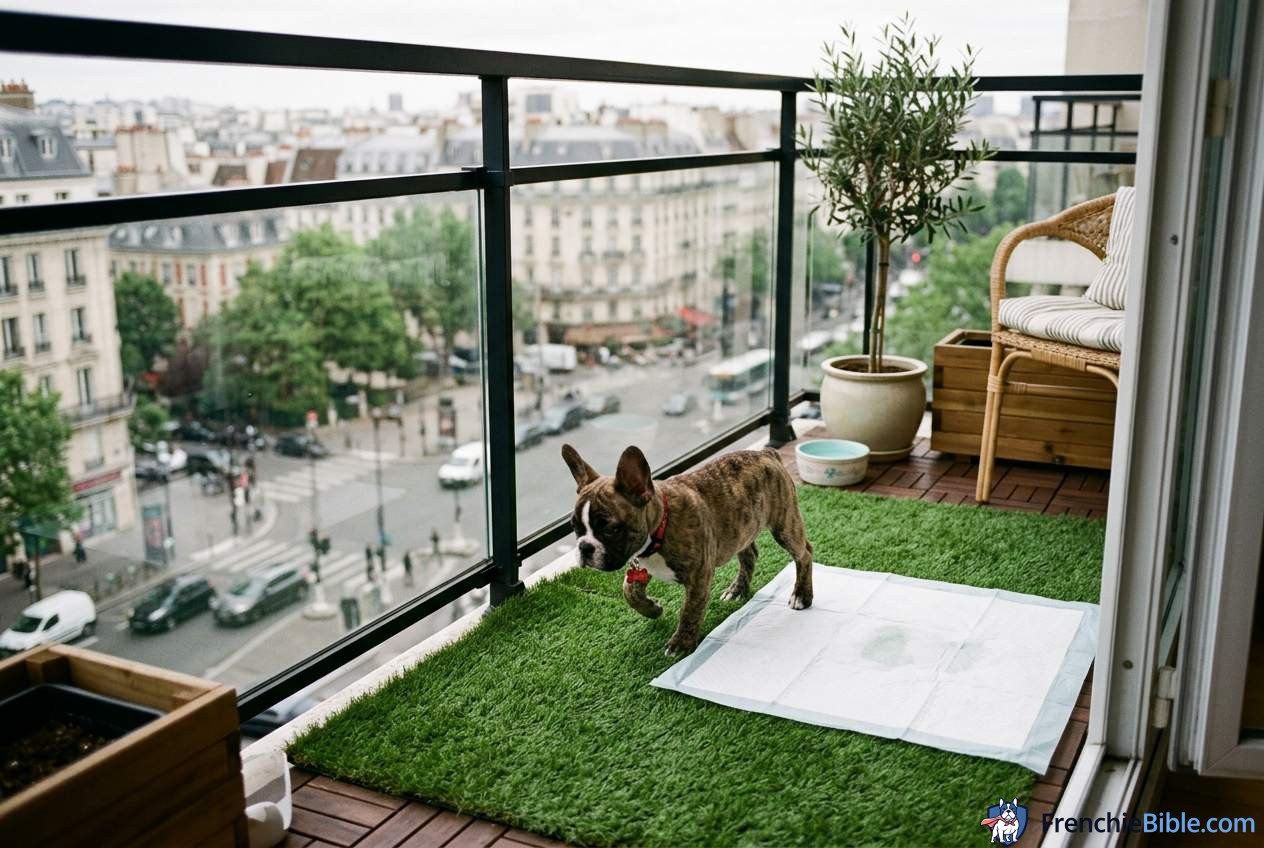
Designate a specific, consistent area in your yard. If you live in a high-rise apartment, designate a specific spot on your balcony with a grass patch or pee pad. Frenchies are creatures of habit. Smelling their own previous elimination heavily encourages them to go in that exact spot again. Keep this area free of distractions—no toys scattered around, and ideally, no other dogs playing nearby.
The Step-by-Step Clicker Potty Training Method
Now, let’s get into the practical, clinical application. Here is the exact, step-by-step protocol I give my breeding clients and veterinary patients.
Step 1: “Charging” the Clicker (Making the Sound Meaningful)
Before you can use the clicker for potty training, your Frenchie needs to understand what the sound actually means. This psychological process is called “charging” the clicker.
1. Grab a handful of your high-value treats and your clicker.
2. Sit in a quiet room with your Frenchie with no distractions.
3. Press the clicker. The instant it makes the sound, hand your dog a treat.
4. Repeat this 15-20 times in a row. Click -> Treat. Click -> Treat. Click -> Treat.
5. Your dog doesn’t have to do anything to earn it right now. We are just building the involuntary neurological association: Click = Imminent Food.
You will know the clicker is fully charged when you click it while they are looking away, and their head instantly snaps toward you, eyes wide, looking for the food.
Step 2: The Potty Watch and Perfecting Your Timing
When you take your Frenchie out to the potty zone, stand still like a tree. Let them sniff. Do not talk to them. Do not say, “Go potty, go potty, come on, go potty.” Your voice is distracting and might interrupt their concentration.
Wait for them to posture and begin to eliminate.
Here is the critical, make-or-break moment: Do NOT click while they are actively peeing or pooping. If you click mid-stream, a startled Frenchie might actually stop, pinch it off, and run over to you for the treat, leaving the job half done. This means they will absolutely finish the job on your living room rug 10 minutes later.
Wait until the exact moment they finish. As soon as the pee stream stops or the final piece of feces drops, CLICK!
Step 3: The Jackpot Reward
Immediately after the click, offer the high-value treat, and now you can unleash your happy voice. “Good boy! What a smart girl!” Make it a massive party.
For the first two to three weeks of this training, every single successful outdoor elimination should be treated like your dog just won an Olympic gold medal.
Step 4: Adding the Verbal Cue
Once your Frenchie is consistently going in their designated spot and eagerly looking up at you waiting for the click, you can add a verbal cue.
Right as they begin to squat or lift a leg, calmly and quietly say your chosen phrase: “Go potty” or “Do your business.” Over time, they will associate the physical act, the location, the verbal cue, the click, and the reward together. Eventually, you will be able to take them out in a thunderstorm, say “Go potty,” and they will expedite the process just to hear the click and get back inside to safety.
Troubleshooting Common Frenchie Potty Nightmares
Even with the absolute best methodology Frenchies will test your patience and your boundaries. Here are the most common issues I see in my years of breeding practice and exactly how to solve them.
The “Fake Potty” Stare
Frenchies are incredibly smart, sometimes to their own detriment. Sometimes, they figure out the clicker game too well. They will run outside, assume a slight squatting position without actually producing any urine, and then run straight over to you expecting a click and a treat.
The Fix: You must confirm the deposit! Do not click unless you visually confirm that urine or feces has actually left their body and hit the ground. If they do a fake squat, ignore it entirely. Stand still. Wait for the real deal. They will quickly realize that counterfeiting the behavior doesn’t result in a paycheck.
Bad Weather Boycotts: When Frenchies Hate the Rain
If a single drop of rain hits a Frenchie’s sensitive bat ears, many of them will flat-out refuse to step foot on wet grass. They hate getting their paws wet and getting cold.
The Fix: This is where the clicker is a lifesaver. You have to exponentially increase the value of the reward on bad weather days. If they get boiled chicken on sunny days, they get warm, smelly hot dog bits or fresh roast beef on rainy days. You can also buy a large golf umbrella and stand over them, or create a small covered area in your yard. Click and jackpot heavily when they brave the elements.
Regressions and Indoor Accidents
Puppy bladders are incredibly small, and their sphincter control isn’t fully developed until they are several months old. If an accident happens indoors, you need to reframe your thinking: it is a management failure on your part, not a dog failure.
If you catch them in the act indoors, make a sharp, interruptive noise (like a quick clap or a firm “Ah-ah!”)—just enough to startle them into stopping mid-stream, not to terrify them. Immediately scoop them up and carry them to the outside potty zone. If they finish outside, CLICK AND REWARD enthusiastically.
If you find a puddle after the fact, clean it up with a high-quality enzymatic cleaner. This is absolutely non-negotiable; regular household soap or bleach leaves invisible pheromones behind that invite the dog to pee there again tomorrow. Do not yell. Do not click. Just clean it and vow to watch them closer next time.
Pro Tips from a Breeder’s Playbook
To ensure long-term, lifelong success, you have to manage their environment and their biology seamlessly.
Consistency is Everything
You must take them out on a strict, unwavering schedule:
– Immediately upon waking up in the morning (carry them if you have to).
– Right after every single meal.
– Immediately after a vigorous play session or zoomies.
– Right after waking up from any nap.
– Right before bedtime.
Managing Water Intake Without Dehydrating
Never restrict water to the point of causing dehydration, but you should actively manage it. Pick up the water bowl about 2 hours before bedtime. This allows their kidneys ample time to process the fluids and gives you a crucial chance to completely empty their bladder before sleep.
Also, closely monitor their diet. High-quality, species-appropriate diets produce smaller, firmer stools that are easier for the dog to pass and for you to clean up. If your Frenchie constantly has loose stools or diarrhea, potty training will be nearly impossible because they simply cannot hold it. Consult your vet to rule out food allergies, giardia, or other intestinal parasites.
Frequently Asked Questions (FAQ)
1. Am I going to have to carry a clicker and pieces of chicken in my pocket for the rest of my dog’s life?
Absolutely not! The clicker is a teaching tool, not a lifelong crutch. Once the behavior is solidly generalized and your Frenchie reliably goes outside 100% of the time (usually after several continuous months of zero indoor accidents), you can gradually phase out the clicker and the constant treats. You replace them with intermittent treats and real-life rewards, like an enthusiastic belly rub, verbal praise, or the reward of getting to go back inside to the warm couch.
2. Can I use a clicker to train an older, rescued French Bulldog who has terrible potty habits?
Yes, absolutely. In fact, clicker training is highly recommended for rescues. Older dogs often come with negative associations, anxiety, and fear surrounding potty time due to previous harsh training or neglect. The clicker provides a fresh, purely positive new language for them to learn. It removes human emotion from the equation and builds massive confidence and trust between you and the dog.
3. My Frenchie seems terrified of the clicker sound. What do I do?
Some Frenchies are extremely sensitive to sharp noises. First, try muffling the clicker by clicking it inside your pocket, wrapping it in a towel, or putting a piece of thick tape over the speaker hole. If they still hate it and cower, you can switch to a “verbal marker.” Pick a specific, short word like “YES!” or “BINGO!” and use it exactly as you would the clicker. The key is to say it with the exact same tone, volume, and pitch every single time.
4. How long does it typically take to completely potty train a Frenchie using this clicker method?
Every dog is an individual. Some extremely food-motivated Frenchies pick it up flawlessly in three weeks; others take six months to become 100% reliable. French Bulldogs are notoriously slower to potty train than some working breeds like German Shepherds or Poodles. Consistency, infinite patience, and impeccable timing with your clicker will dictate your speed of success.
5. Does clicker training help with Frenchie submissive urination or excitement peeing?
Submissive urination happens when a dog pees out of extreme excitement, anxiety, or fear when greeting someone. Clicker training for outdoor pottying doesn’t directly stop this, as submissive urination is an involuntary emotional and physical response, not a lack of potty training. However, clicker training builds overall confidence in the dog, which can gradually reduce submissive peeing over time as they become more secure in their environment.
Disclaimer: We are not veterinarians and do not hold veterinary medical licenses. The information provided in this article is based on years of breeding and daily care experience and is for educational purposes only. It should not replace professional veterinary advice. Always consult with a licensed veterinarian if you have concerns about your French Bulldog’s health or before starting any new treatment.