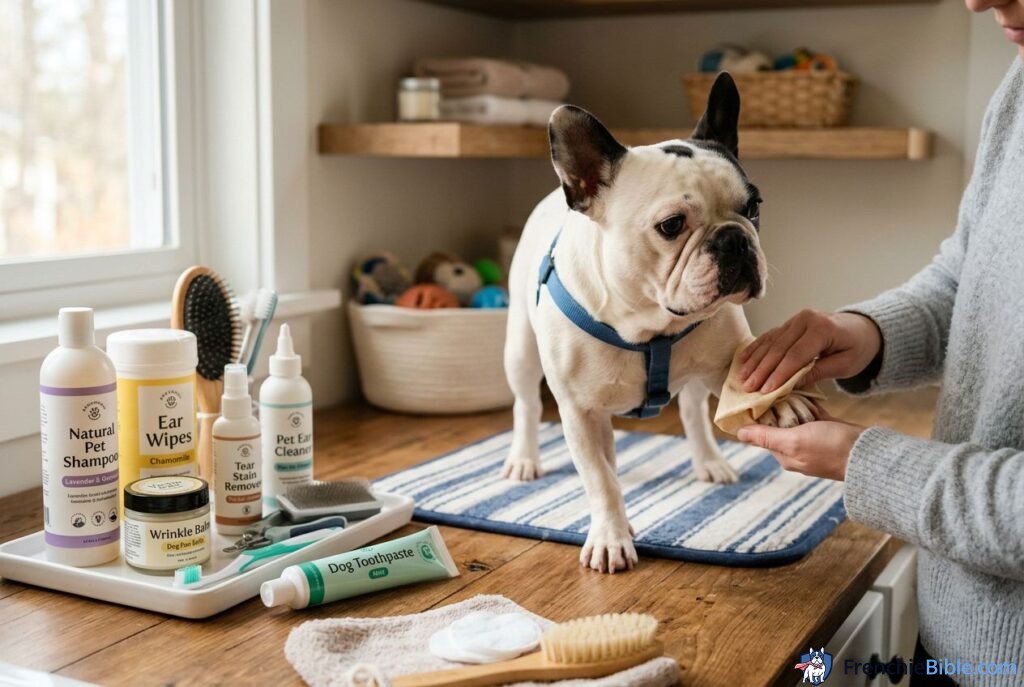
As a companion breed, the French Bulldog is often marketed as a “wash-and-wear” dog that requires minimal grooming. While it is true they do not require complex clipping or scissor work like Poodles or Shih Tzus, their skin is highly reactive, their short coats shed intensely, and their unique physiology makes them incredibly vulnerable to seasonal environmental shifts.
In my ten years of breeding and showing French Bulldogs, I have learned that a static, identical grooming routine year-round is a recipe for chronic skin issues.
Related Reading: Training & Behavior | Grooming & Care | French Bulldog Colors
The spring thaw brings grass pollen allergies; the summer heat triggers extreme airway distress and heat rash; the autumn brings heavy coat changes; and the dry winter air strips away their skin’s protective lipid barrier, leading to dry, scaly skin and cracked paw pads.
To keep your Frenchie in peak physical comfort, you must adapt your grooming and care routine to match the changing environment.
This guide delivers my kennel’s closely guarded, seasonal French Bulldog grooming and care timetable—a comprehensive, year-round breakdown of the exact physical care your Frenchie needs to thrive across all four seasons.
1. Spring Protocol (March – May): Navigating the Allergy and Pollen Thaw
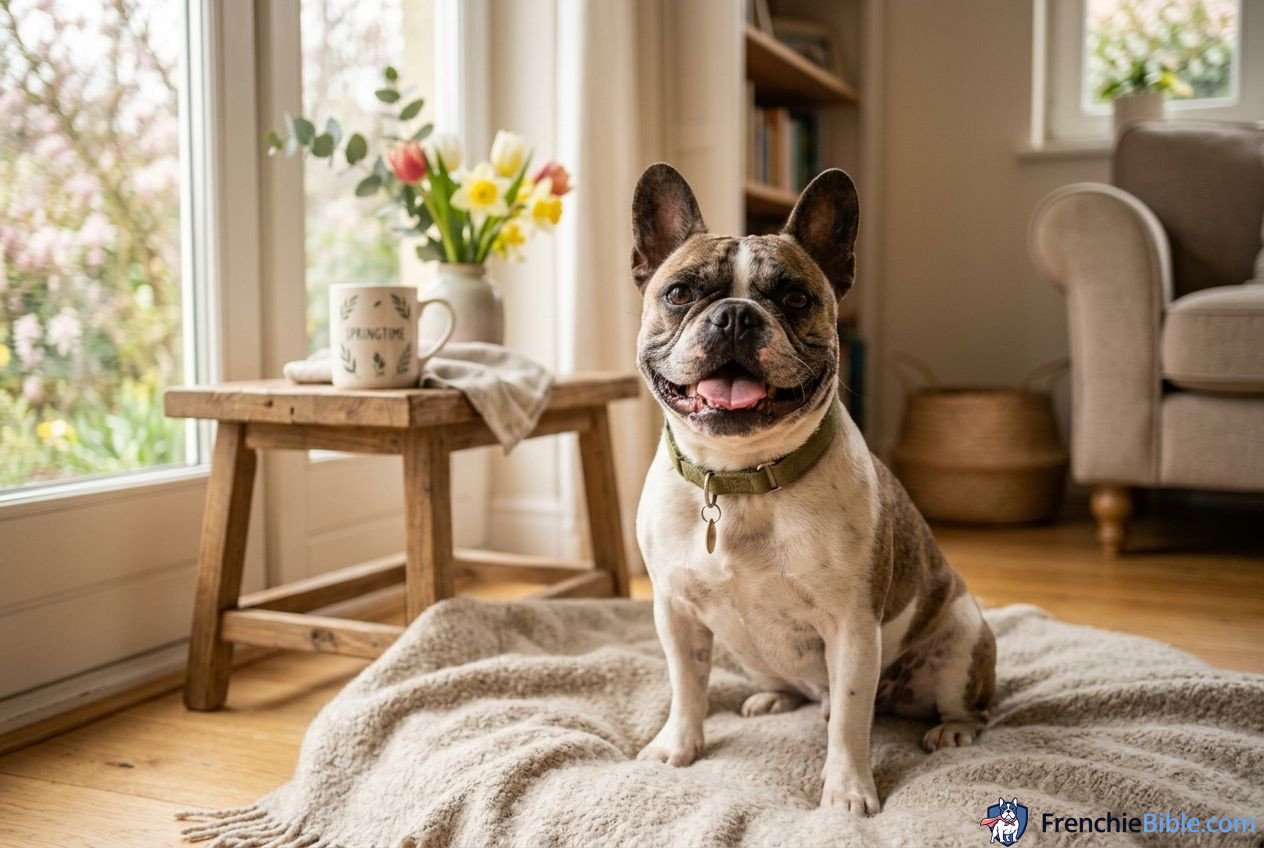
Spring is the season of renewal, but for a Frenchie’s sensitive skin, it is the start of the annual allergy nightmare. As grass, tree, and weed pollens thaw and circulate, they settle on your Frenchie’s skin, triggering intense itching and secondary infections.
Core Spring Grooming Focus: Environmental Decontamination
- The Post-Walk Wipe-down: After every single walk, your Frenchie must be decontaminated. Use a damp microfiber cloth to thoroughly wipe down their paws, belly, groin, and face wrinkles to physically remove microscopic pollen grains before they can penetrate the skin barrier.
- Weekly Therapeutic Baths: Increase bath frequency to once a week using a gentle, oatmeal-based or Chlorhexidine-based shampoo. This physically washes away allergens from the coat and calms early allergic skin redness before it can progress to full-blown pyoderma.
- Pollen Foot Baths: If your Frenchie is a chronic paw-chewer in spring, set up a shallow tray of lukewarm water at your front door. Soak their paws for 60 seconds after walks to rinse away lawn chemicals and environmental pollens.
2. Summer Protocol (June – August): Extreme Heat Defense and Friction Care
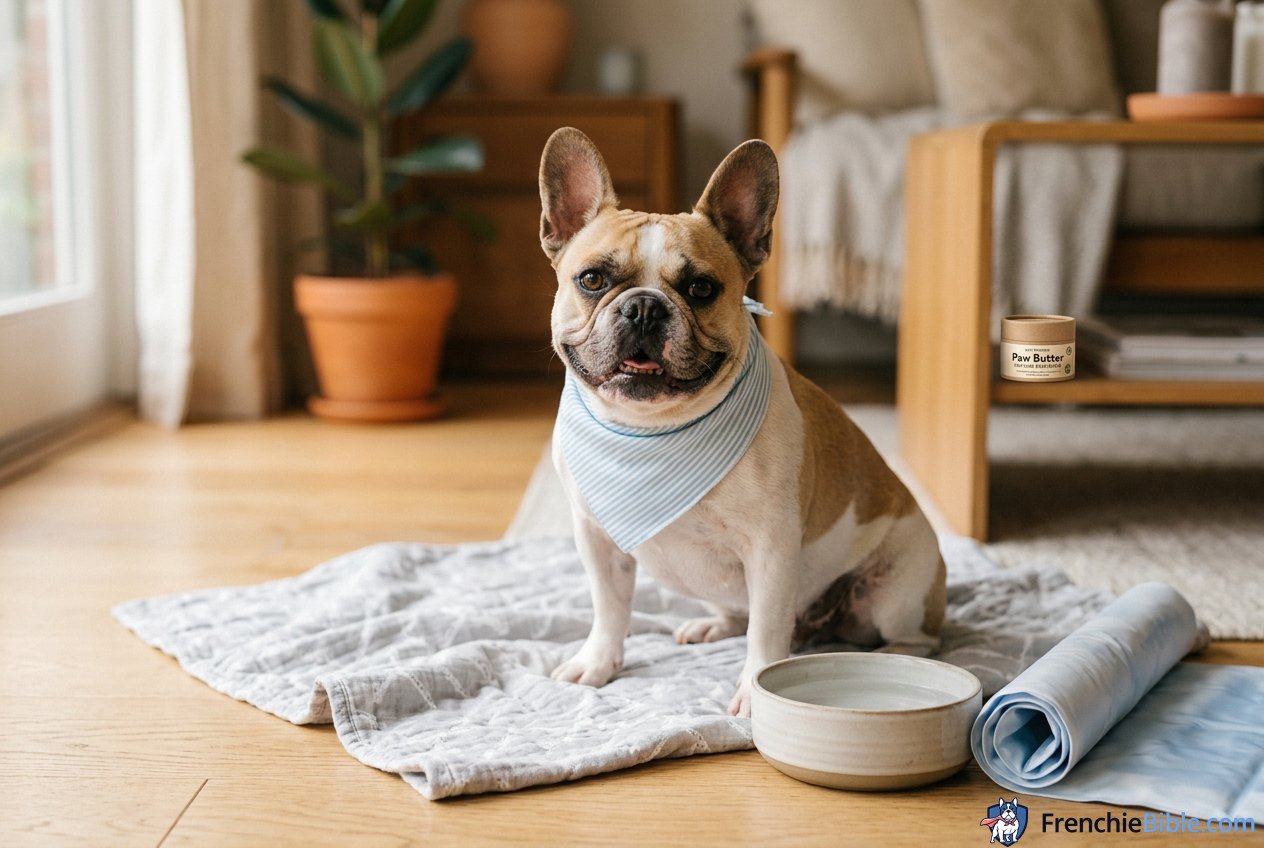
Summer is the most dangerous season for a French Bulldog. Their brachycephalic airway limits their ability to cool themselves via panting, making them highly susceptible to heat stroke and heat rash.
Core Summer Grooming Focus: Airway Safety and Moisture Control
- The absolute “No Shaving” Rule: Never shave your Frenchie’s coat to keep them cool. Their short fur acts as a natural shield against harmful UV rays and insulates their body from ambient heat. Shaving them actually increases their risk of sunburn and heat stroke.
- Deep Tail Pocket and Wrinkle Sanitization: Summer humidity accelerates yeast growth. You must inspect and clean their nasal wrinkles and tail pocket daily. Keep these areas completely, bone-dry to prevent sour odor and yeast infections.
- Friction Care for Chest Harnesses: High heat leads to sweating and friction. Inspect their chest and armpits daily; if the harness is rubbing their skin raw, apply a thin layer of natural soothing balm and switch to short, early-morning walks to bypass the hottest hours of the day.
3. Autumn Protocol (September – November): Navigating the “Coat Blow”
As the temperature drops, your Frenchie’s body prepares for winter by growing a dense, insulating undercoat. To make room for this new coat, they must shed their entire summer coat—a phase known as the autumn “coat blow.”
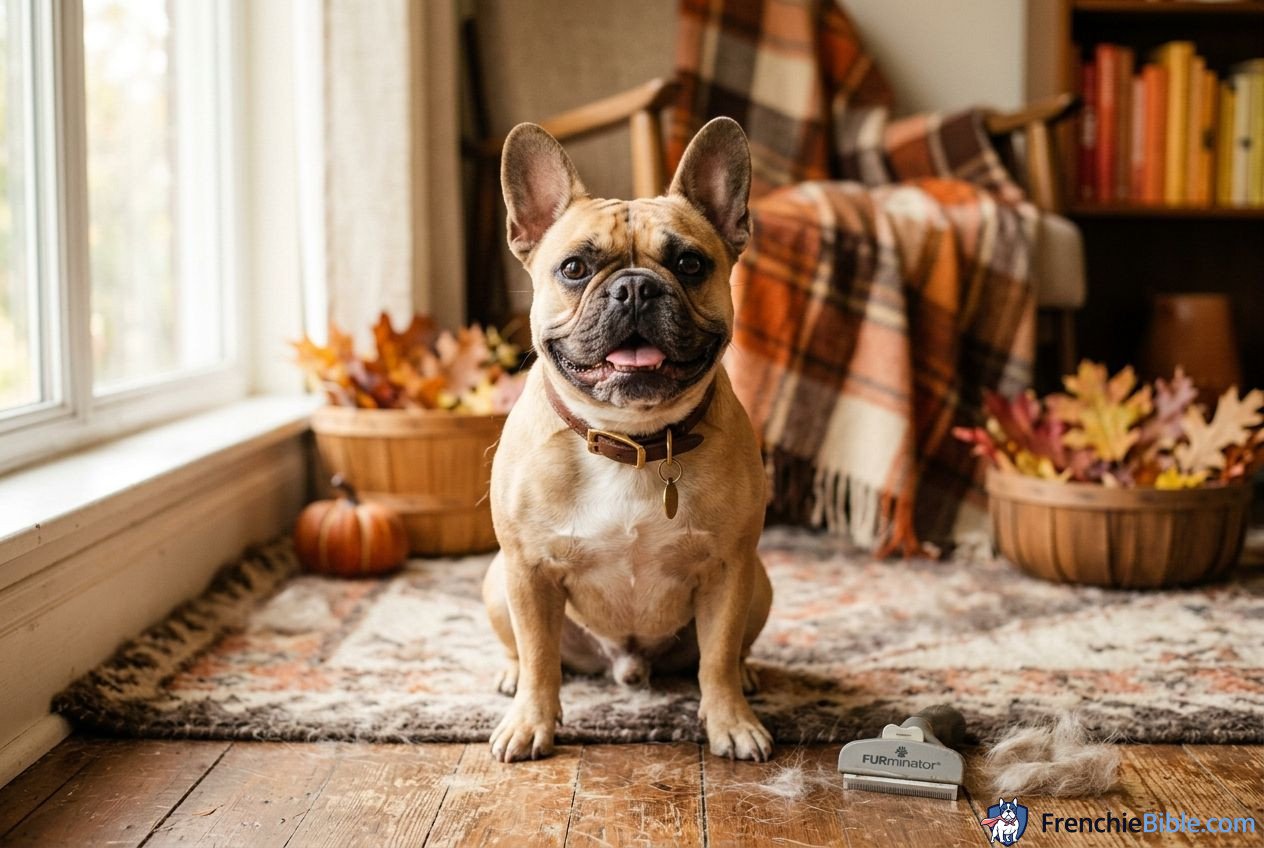
Core Autumn Grooming Focus: Dead Hair Extraction
- High-Velocity Blow-drying: The fastest way to manage autumn shedding is to blow out their coat. After their bi-weekly bath, use a professional high-velocity pet dryer on the completely cold setting to physically blast the dead, loose undercoat hairs out of their follicles.
- Rubber Curry Brush Massage: Spend 5 minutes every other day brushing your Frenchie with a rubber curry brush in circular motions. This stimulates blood flow to the skin, distributes natural sebum oils, and pulls away fine, dead hairs before they end up on your furniture.
4. Winter Protocol (December – February): Lipid Barrier Protection and Paw Care
Winter brings cold winds and dry indoor heating, which strips the natural moisture out of your Frenchie’s skin. This is the season of dry, scaly coats, dandruff, and painful, cracked paw pads.
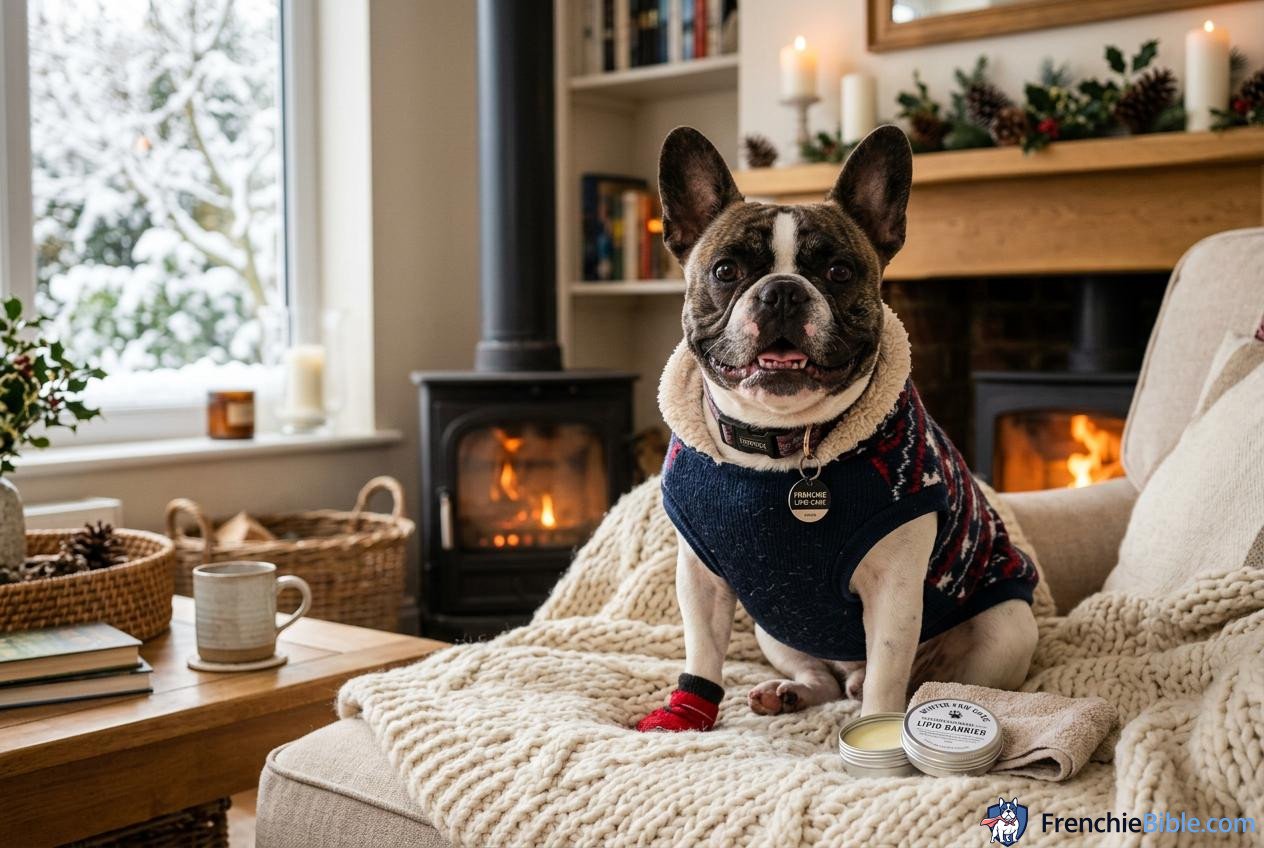
Core Winter Grooming Focus: Hydration and Cold Protection
- Protect the Paw Pads: Winter pavements are often treated with harsh chemical de-icers and salt, which burn and erode your Frenchie’s paw pads. Apply a thick layer of a beeswax-based paw balm before walks to form a physical shield, and wash their paws with warm water the second they return home.
- Humidify the Home: Dry indoor heating leads to dry skin and itchy coats. Place a humidifier next to your Frenchie’s sleeping area to maintain a healthy 40% to 50% humidity level, preserving their skin’s moisture.
- Biotin and Salmon Oil Boosting: Support their skin barrier from the inside. Double their daily dose of wild-caught salmon oil and feed raw egg yolks twice a week to keep their skin supple during the harshest winter months.
5. Frequently Asked Questions (FAQ)
Q1: My Frenchie’s paw pads are dry, hard, and cracking in winter. Can I use human lotion on them?
No, never use human skin lotions or moisturizers on a dog’s paw pads. Human lotions are designed to soften human skin, but they contain chemicals that can make a dog’s paw pads unnaturally soft and thin, leaving them highly vulnerable to tearing, cuts, and bleeding on rough concrete. Only use professional, organic dog paw balms containing natural ingredients like beeswax, shea butter, and coconut oil, which form a protective, breathable shield.
Q2: Why does my Frenchie get a dry, scaly coat with white dandruff in the winter?
This is caused by “dry air desiccation.” Low winter humidity combined with dry indoor heating sucks the moisture directly out of your Frenchie’s skin. Because their skin is naturally sensitive due to a genetically weak lipid barrier, they develop dry skin flakes (dandruff) and a brittle, dull coat. You can easily fix this by adding a daily dose of wild-caught fish oil to their meals and placing a humidifier next to their sleeping crate.
Q3: How do I protect my Frenchie’s chest and belly from mud and cold rain during autumn walks?
Because Frenchies are low-slung dogs with short legs, their chest and belly are constantly splashed with mud, wet road salt, and cold water during autumn walks. To protect them, invest in a high-quality, lightweight, waterproof dog raincoat or “belly-suit” that covers their chest and undercarriage. This keeps their skin dry, preventing the development of wet dermatitis and skin infections.
Q4: Can I bathe my Frenchie more often in the summer to help them cool down?
While a cool bath can help cool an overheated dog, you should not increase their full shampoo bath frequency to more than once every two weeks in summer. Bathing too frequently with shampoo will strip away their skin’s natural sebum oils, leading to dry, irritated skin that is highly vulnerable to hot weather rashes. If they need to cool down, simply rinse them with cool, clean water without using any soap or shampoo, and dry them thoroughly.
6. Disclaimer
The seasonal grooming schedules, environmental protection protocols, and nutritional advice shared in this article are based on my ten years of experience breeding, raising, and showing French Bulldogs. I am not a veterinarian, and this content is intended strictly for educational, supportive, and preventative purposes. Extreme seasonal skin conditions, raw bleeding paws, or sudden baldness require professional clinical diagnosis and skin cytologies by a licensed veterinarian.