
If you welcomed a French Bulldog into your home expecting a low-maintenance, virtually non-shedding companion due to their short, sleek coat, you have likely experienced a rude awakening. Frenchies are legendary shedders. Their short, stiff hairs act like tiny needles, weaving themselves permanently into your carpets, upholstery, and clothing.
While moderate, seasonal shedding (typically in spring and autumn as they blow their winter or summer coats) is a perfectly normal biological process, chronic, non-seasonal, excessive shedding is a warning sign of an underlying systemic imbalance.
Related Reading: Training & Behavior | Grooming & Care | French Bulldog Colors
When a Frenchie sheds heavily year-round, developing a dull, dry, brittle coat, patchy hair loss, or scaly skin, their body is struggling from the inside out.
As a breeder who has managed the coat health of hundreds of French Bulldogs through breeding programs, showing championships, and seasonal shifts, I have learned that excessive shedding is rarely resolved by simply brushing them more. The secret to a rich, glossy, minimal-shedding coat lies in nourishing the hair follicle from within.
This guide will break down the biology of the canine hair growth cycle, expose the hidden micronutrient deficiencies that cause chronic shedding, and outline the hormonal triggers that can decimate your Frenchie’s coat health.
1. The Biology of the Hair follicle: Why do french bulldogs shed Year-Round?
To stop excessive shedding, we must understand how your Frenchie’s hair grows.
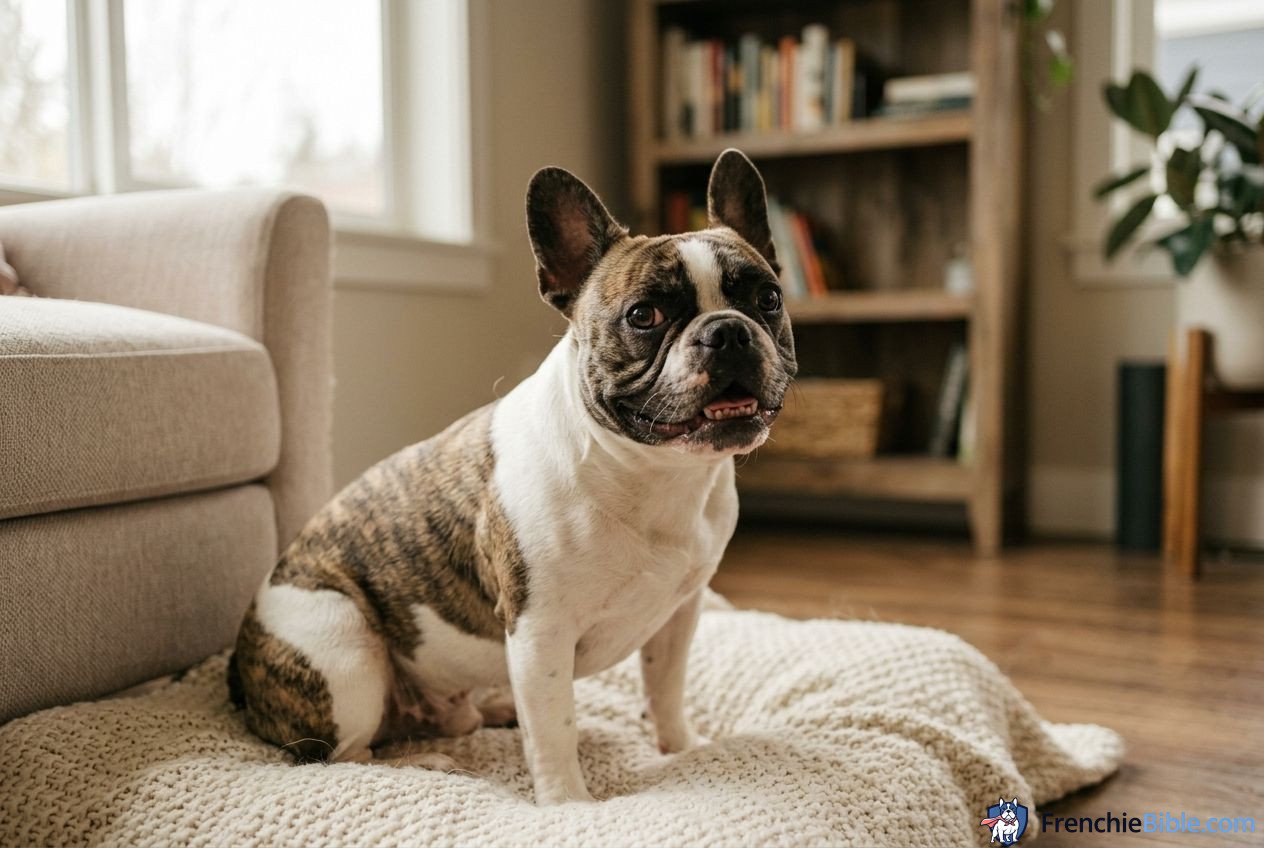
Unlike humans, who have single-hair follicles, dogs possess compound hair follicles. This means a single pore in your Frenchie’s skin contains one primary guard hair and several softer, shorter secondary undercoat hairs.
Every single hair follicle on your dog’s body goes through a strict, three-phase life cycle:
1. Anagen Phase (Active Growth): The hair is actively growing from the nutrient-rich blood supply at the base of the hair follicle.
2. Catagen Phase (Transition): The hair stops growing, the follicle shrinks, and the hair shaft is cut off from its active blood supply.
3. Telogen Phase (Resting/Shedding): The old, dead hair sits loosely in the follicle. Eventually, a new anagen hair begins to grow underneath, physically pushing the old hair out, resulting in shedding.
In a healthy wild dog, this cycle is triggered by environmental light and temperature changes, causing them to shed twice a year.
However, because our companion Frenchies live indoors under constant artificial lighting, artificial heating, and air conditioning, their internal biological clock is disrupted.
Their hair follicles remain in a state of chronic telogen (resting) phase, leading to moderate, year-round shedding.
But when the shedding becomes extreme—leaving your hands covered in fur every time you pet them—the hair follicles are suffering from cellular starvation.
2. Hidden Micronutrient Deficiencies: Feeding the Hair Follicle
When a Frenchie’s diet lacks key, bioavailable micronutrients, their body prioritizes survival over beauty.

The brain redirects vital minerals and proteins to support core organs (like the heart, liver, and kidneys), leaving the skin and hair follicles completely starved of nutrition.
This triggers a massive, premature shift of hair follicles into the telogen (shedding) phase.
Deficiency 1: Essential Fatty Acids (Omega-3 and Omega-6)
Canine skin requires a precise balance of essential fatty acids (EFAs) to maintain its lipid moisture barrier.
- The Problem: Most dry extruded kibbles use cheap vegetable oils or low-grade animal fats that oxidize rapidly inside the bag, losing all nutritional value.
- The Result: A lack of bioavailable Omega-3 (especially EPA and DHA) leads to dry, itchy skin, inflamed hair follicles, and brittle hair shafts that break and shed prematurely.
Deficiency 2: Zinc and Biotin (Vitamin B7)
Zinc and biotin are the primary catalysts for keratin synthesis—the structural protein that makes up 90% of your Frenchie’s hair shaft.
- The Problem: Many grain-heavy dog foods contain high levels of phytates (found in wheat, corn, and soy), which bind to zinc in the digestive tract, preventing absorption.
- The Result: Zinc deficiency causes “zinc-responsive dermatosis,” characterized by crusty skin around the eyes and muzzle, dry coats, and chronic, massive hair loss.
3. Hormonal Triggers: When Shedding is a Symptom of Internal Disease
If your Frenchie is shedding excessively, losing hair symmetrically along their flanks, or showing extreme lethargy, you must look beyond nutrition. The endocrine system plays a direct role in follicle regulation.

- Hypothyroidism (Underactive Thyroid): The thyroid gland produces hormones that control metabolic rate and cellular division. When thyroid levels drop, the hair follicles cannot enter the active anagen (growth) phase. The old hair falls out, but no new hair grows to replace it, leading to a thin, dry coat and symmetrical baldness on the flanks.
- Cushing’s Disease (Hyperadrenocorticism): This condition occurs when the adrenal glands produce chronic, excessive levels of cortisol (the stress hormone). High cortisol levels are highly destructive to hair follicles, causing them to atrophy. Frenchies with Cushing’s will shed heavily, develop thin, paper-like skin, and have a distinctive “pot-bellied” appearance.
4. Frequently Asked Questions (FAQ)
Q1: Can I stop my Frenchie from shedding by giving them a close shave or trim?
No! You must never shave or closely trim a French Bulldog’s coat. Frenchies are a single-coated or short double-coated breed; their coat acts as a critical insulation barrier that protects them from both winter cold and summer heat. Shaving their fur destroys this natural thermal barrier, drastically increasing their risk of heat stroke, sunburn, and skin cancer. Furthermore, shaving does not stop shedding; it simply turns long, soft shed hairs into short, stiff, needle-like stubble that is even harder to clean out of fabrics.

Q2: Why is my female Frenchie shedding excessively 6 to 8 weeks after her heat cycle?
This is a completely normal hormonal phenomenon known in the breeding community as “blowing the coat.” During her heat cycle or pregnancy, her progesterone and estrogen levels spike dramatically. Once the cycle or pregnancy is over, these hormone levels crash back to normal. This sudden hormonal drop shocks her hair follicles, forcing a massive percentage of them into the telogen (shedding) phase simultaneously. Within 8 weeks of a heat or weaning a litter, a female Frenchie will shed almost her entire undercoat. Provide extra protein and fish oil to help her regrow her coat quickly.
Q3: How do I know if my Frenchie’s shedding is normal or caused by a thyroid issue?
Normal shedding occurs evenly across the entire body, and the skin underneath remains healthy, pink, and clean. If your Frenchie’s shedding is caused by hypothyroidism, the hair loss is typically symmetrical (occurring in the exact same pattern on both sides of their body, especially the flanks), the skin underneath may look dark, hyperpigmented, or scaly, and your dog will show other systemic signs like unexplained weight gain, extreme lethargy, and a constant search for warm spots to sleep.
Q4: Which daily supplement will reduce my Frenchie’s non-seasonal shedding the fastest?
A high-potency, wild-caught marine oil (such as anchovy, sardine, or wild salmon oil) rich in EPA and DHA will reduce non-seasonal shedding fastest. Marine oils provide the highly bioavailable Omega-3 fatty acids that canine skin needs to rebuild its lipid barrier and reduce follicular inflammation. Combine this with a daily raw egg yolk (rich in natural biotin and lecithin) 2 to 3 times a week for an incredibly glossy, low-shedding coat.
5. Disclaimer
The coat health analyses and nutritional strategies shared in this article are based on my ten years of hands-on experience breeding, raising, and showing French Bulldogs. I am not a veterinarian, and this content is intended strictly for educational, supportive, and preventative purposes. Severe, patchy baldness, red raw skin, or shedding accompanied by lethargy and weight changes require professional clinical diagnosis and blood panels by a licensed veterinarian to rule out thyroid or adrenal diseases.