

As a French Bulldog breeding expert and with over ten years of dedicated, hands-on experience I have dedicated a significant portion of my life to understanding the unique intricacies of this magnificent breed. Throughout the past decade I have worked with countless Frenchie puppies, adult dogs, and passionate owners. In all these years of observing canine behavior, anatomy, and lifestyle habits I have encountered one recurring, well-intentioned, yet incredibly dangerous mistake that owners consistently make. That mistake is attaching a leash to a standard neck collar and allowing their French Bulldog to pull aggressively during walks.
For a larger, anatomically standard breed—like a Labrador Retriever or a German Shepherd—a bit of leash tension might merely result in a mild cough or a temporary discomfort. But for a French Bulldog, leash pulling is not merely an inconvenience or a minor training issue; it is a life-threatening hazard. The physiological makeup of a French Bulldog is unique, beautiful, and deeply compromised. In this exhaustive, in-depth guide I will draw upon my extensive background in Frenchie genetics, behavioral psychology, nutrition, and daily care to explain exactly why leash pulling can be fatal, how their fragile bodies react to this intense pressure, and the actionable, step-by-step methods you must implement to ensure your beloved companion enjoys safe, comfortable, and enriching walks.
Related Reading: Health & Diet | Grooming & Care
The Anatomy of a French Bulldog: Why They Are So Vulnerable
To truly comprehend the catastrophic dangers of leash pulling, we must look far beneath the adorable, wrinkly surface of a French Bulldog. Frenchies belong to a category of dogs known as brachycephalic breeds, a term derived from Greek that literally translates to “short-headed.” Through generations of selective breeding designed to achieve that distinct, flat-faced appearance, their skulls have been dramatically compressed. However, the soft tissues inside their heads and throats have not decreased in size proportionally to their skeletal structure. This evolutionary quirk creates a crowded, heavily compromised airway that leaves absolutely zero room for error, stress, or external pressure.

Understanding Brachycephalic Airway Syndrome (BAS)
A vast majority of French Bulldogs suffer from some degree of Brachycephalic Airway Syndrome (BAS). This syndrome is not a single disease, but rather a combination of several anatomical abnormalities that work together to restrict airflow. These abnormalities typically include stenotic nares (severely pinched or narrowed nostrils), an elongated soft palate (which hangs down loosely at the back of the throat and partially blocks the airway), and everted laryngeal saccules (small pockets of tissue within the airway that get pulled into the trachea due to increased respiratory effort, further obstructing airflow).
Because their baseline ability to breathe is already significantly compromised, any external pressure applied to their delicate neck area drastically exacerbates these internal obstructions. When a French Bulldog pulls on a leash that is attached to a traditional neck collar, the collar presses directly, firmly, and relentlessly against the trachea (windpipe) and larynx (voice box). For a dog that is already struggling to pull a sufficient volume of oxygen through a narrowed airway, this added compression is nothing short of suffocating. It is akin to breathing through a very narrow cocktail straw while someone pinches the middle of it.
The Trachea and Larynx: Exceptionally Fragile Structures
The trachea is the crucial tube that carries air from the throat to the lungs. It is composed of C-shaped rings of cartilage designed to keep the airway open. In French Bulldogs, these cartilage rings can be hypoplastic (underdeveloped) or generally narrower and softer than those found in non-brachycephalic breeds. The larynx, located at the top of the trachea, is equally sensitive and structurally vulnerable.
Constant pulling, jerking, and tension on the neck weaken these cartilaginous rings over time. The structural integrity of a Frenchie’s airway is simply not designed to withstand external trauma. Every time your dog lunges forward to sniff a fire hydrant, greet another dog, or chase a squirrel while wearing a collar, they are inflicting micro-traumas on their trachea and larynx. Over months and years, this repetitive damage accumulates, leading to devastating consequences that can drastically shorten their lifespan.
The Spinal Structure: The Ever-Present Risk of IVDD
The airway is not the only bodily system at grave risk. French Bulldogs are a chondrodystrophic breed. This means they possess a genetic predisposition to a specific type of dwarfism, which affects the development of their cartilage and spinal structure. As a result of this genetic makeup, they are highly susceptible to Intervertebral Disc Disease (IVDD). IVDD is a excruciatingly painful condition where the cushioning discs located between the spinal vertebrae degenerate, bulge, or burst directly into the spinal cord space, causing severe inflammation and nerve compression.
The neck region, specifically the cervical spine, is a prime location for IVDD flare-ups and herniations. When a Frenchie pulls aggressively on a leash, or worse, when a frustrated owner abruptly yanks the leash backward to correct the dog’s behavior, an immense amount of concussive force is transferred directly to the delicate cervical vertebrae. This repetitive mechanical stress can lead to micro-tears in the outer layer of the spinal discs. Eventually, this stress causes the discs to rupture, resulting in agonizing pain, loss of motor function, nerve damage, or even permanent, irreversible paralysis.
The Hidden Silent Dangers of Leash Pulling in Frenchies
The terrifying reality of leash pulling is that the consequences are not always immediate or obvious. While a sudden collapse or acute injury is entirely possible, the damage is more often cumulative. It builds up silently over months or even years of improper walking techniques and incorrect gear, ultimately culminating in a severe health crisis that leaves owners devastated and confused.
Tracheal Collapse: A Slow Progressive, and Silent Threat
As discussed, the cartilage rings of a French Bulldog’s trachea are inherently compromised. Continuous pressure from a collar pulling against the neck causes these cartilaginous rings to flatten, lose their rigidity, and eventually cave in on themselves. This phenomenon is known as tracheal collapse—a chronic, progressive, and generally irreversible condition.
Dogs suffering from a collapsed trachea will frequently exhibit a highly distinct, harsh, dry cough that sounds remarkably like a goose honking. As the condition worsens and the airway becomes narrower, the dog will struggle to perform even basic exercise, become easily distressed or panicked, and may require lifelong administration of cough suppressants, bronchodilators, and anti-inflammatory medications. In severe cases, highly invasive and expensive surgery involving the placement of tracheal stents is required simply to keep the airway open so the dog can breathe. Drawing from my decade of breeding experience I can unequivocally assure you that preventing tracheal collapse through proper management is infinitely easier, kinder, and more cost-effective than attempting to manage it once the damage is done.
Oxygen Deprivation and the High Risk of Overheating
French Bulldogs are notoriously poor at regulating their internal body temperature. Unlike humans who rely on a comprehensive system of sweat glands to cool down, dogs regulate their temperature primarily through panting, which involves exchanging hot internal air for cooler outside air. Because of their restricted, anatomically crowded airways, a Frenchie’s panting mechanism is significantly less effective and less efficient than that of a dog with a longer snout, such as a Greyhound or a Poodle.
When leash pulling restricts their airway even further, a dangerous cascade of physiological events begins. Less oxygen is able to enter the lungs and the bloodstream. Consequently, the dog’s body temperature begins to rise rapidly. This initiates a vicious, often fatal cycle: the dog becomes hot and begins to pant harder in a desperate attempt to cool down; the increased respiratory effort causes the already crowded, fleshy tissues of the airway to become inflamed and swollen; the airway narrows even more due to the swelling; less air gets in; the dog pants even harder; and the core temperature continues to skyrocket. This rapid progression can escalate into full-blown heatstroke in a matter of minutes. Heatstroke is an absolute medical emergency that causes organ failure and death, and it can occur even on days that humans would consider only mildly warm.
Eye Proptosis: The Unseen and Horrifying Pressure
One of the lesser-known, yet equally horrifying risks of collar pressure and leash pulling involves intraocular pressure (the fluid pressure within the eyes). French Bulldogs possess naturally shallow eye sockets, which contribute to their charming, wide-eyed, slightly bug-eyed appearance. However, tight collars and the tension caused by leash pulling restrict the flow of blood through the jugular veins located in the neck. These veins are primarily responsible for draining deoxygenated blood away from the head and brain and back toward the heart.
When this venous blood cannot drain efficiently due to collar compression, pressure rapidly builds up inside the head and directly behind the eyes. In severe cases of intense, sustained leash pulling or acute yanking, this dramatic spike in pressure can actually cause proptosis—a gruesome and traumatic condition where the eyeball is physically pushed completely out of its socket. Even if the situation does not reach that catastrophic extreme, the chronic, repetitive increase in intraocular pressure over time can contribute to or worsen severe ocular conditions such as glaucoma, which eventually leads to irreversible blindness and requires lifelong management or surgical eye removal.
Long-Term Spinal Orthopedic, and Neck Injuries
Moving beyond the catastrophic risk of IVDD, the constant, unnatural jerking motion associated with a pulling Frenchie causes severe, chronic muscle strains, whiplash-like trauma, and subtle but painful misalignments in the cervical spine. A French Bulldog enduring chronic, low-grade neck pain will often exhibit subtle behavioral changes before obvious physical limping occurs. They may become surprisingly lethargic, unusually irritable, or even display uncharacteristic aggression toward other dogs or family members. They might suddenly refuse to eat or drink from a bowl placed flat on the floor, as bending their neck downwards causes pain. They may yelp or cry out seemingly without reason when being picked up or petted around the head. The hidden orthopedic toll of leash pulling is immense, silent, and can drastically reduce your dog’s overall quality of life and happiness.
Identifying the Signs: Is Your Frenchie in Immediate Danger?
As a responsible French Bulldog owner, you must cultivate hyper-vigilance. Frenchies are famously stoic, resilient little dogs that possess a remarkably high pain tolerance. They will frequently push themselves far past their physical limits just to please you, stay by your side, or investigate that fascinating squirrel across the street. You simply cannot rely on them to vocalize or clearly demonstrate when they are hurting or struggling to breathe. Instead, you must proactively watch for these critical, easily missed warning signs:

Choking Gagging, and Hacking Sounds
If your French Bulldog makes any form of choking, gagging, retching, or “hacking” noises while walking on a leash, it is a glaring red flag that the collar or improperly fitted harness is putting excessive, dangerous pressure directly on their airway. This is not normal canine behavior, and it is certainly not something to be ignored or laughed off. Many novice owners mistakenly believe that if the pulling was truly hurting the dog, the dog would simply stop pulling. This is a dangerous misconception. A dog’s prey drive, excitement, or sheer stubbornness will almost always override their natural sense of self-preservation. A gagging Frenchie is a Frenchie whose airway is actively being crushed.
Excessive Labored Panting and Severe Snorting
While a certain degree of snorting, snuffling, and heavy breathing is considered somewhat normal for this brachycephalic breed, a sudden, sharp increase in the volume, harshness, or frequency of snorting, wheezing, or roaring sounds (medically referred to as stridor) strongly indicates severe airway turbulence and distress. If you observe your dog’s tongue or gums turning a dark, brick red, a deep purple, or a bluish-grey tint, they are actively cyanotic. This means they are severely oxygen-deprived. If you see this, you must stop the walk immediately, remove all collars and harnesses to free the airway, move the dog to a cool, shaded area, and focus entirely on calming them down and lowering their body temperature.
Sudden Reluctance to Walk or Unexplained Behavioral Changes
A French Bulldog that abruptly refuses to continue walking, sits or lies down on the pavement and refuses to move, or suddenly begins biting aggressively at the leash or your ankles may be experiencing acute, shooting neck pain. In the canine world, undiagnosed pain frequently manifests as sudden behavioral issues or stubbornness. If your previously enthusiastic, happy walker has transformed into a fearful, reluctant, or aggressive dog during walk time, you must seriously consider the physical toll that your current leash and collar setup might be taking on their spine and airway.
Collars vs. Harnesses: The Ultimate Non-Negotiable Gear Guide for French Bulldogs
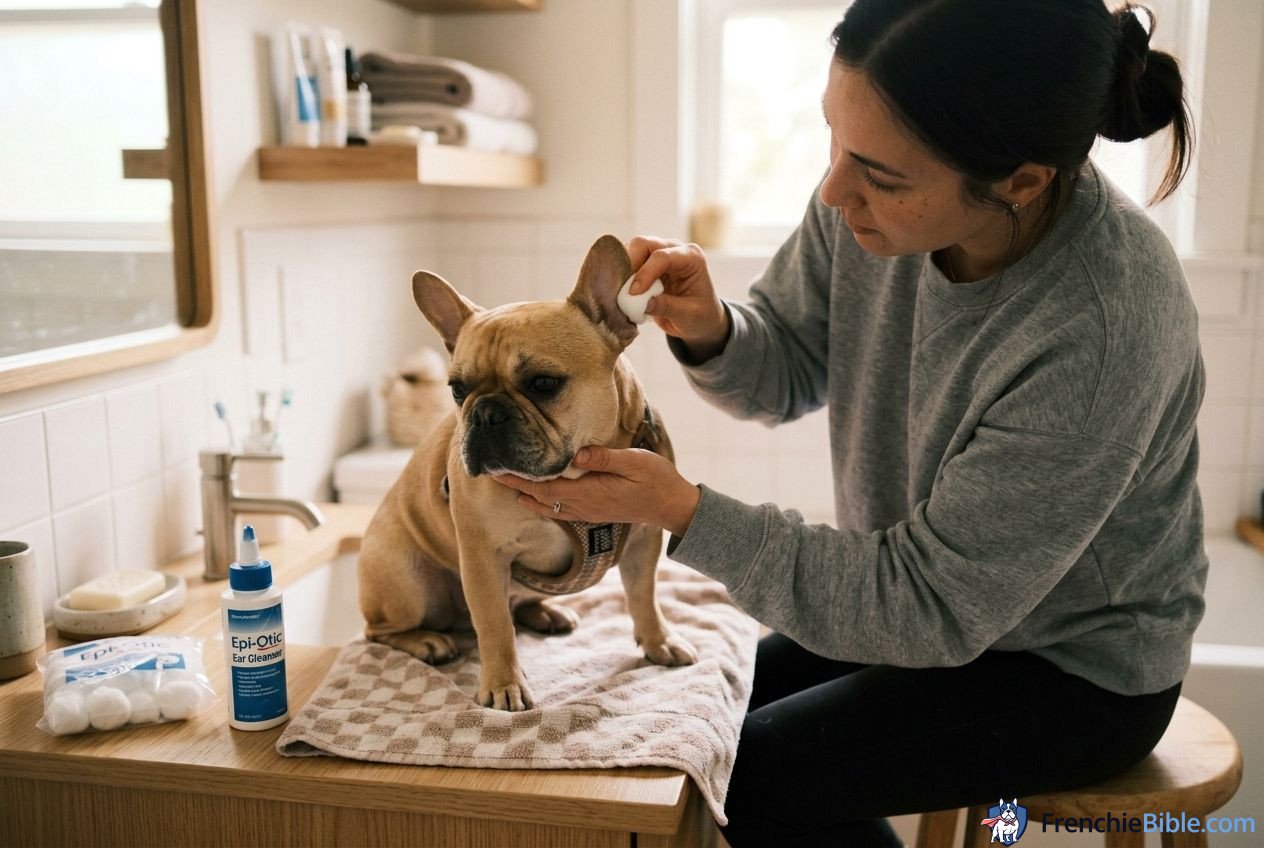
Given the extensive anatomical vulnerabilities we have thoroughly explored, the solution to this life-threatening problem must begin with the physical equipment you use. The golden rule in my breeding program, and the strict protocol I mandate for every single family that takes one of my carefully bred puppies home, is absolutely non-negotiable: neck collars are strictly reserved for holding identification tags and adding a touch of fashion; high-quality harnesses are the only acceptable gear for attaching a leash and going for a walk.
Why Neck Collars Are an Absolute Unforgivable No
When a dog wears a standard neck collar, the material rests directly and entirely over the trachea, the larynx, the crucial jugular veins, and the delicate cervical spine. When tension is applied to that collar via a leash, one hundred percent of that pulling force is concentrated directly on these incredibly fragile structures. Even a standard, wide “flat” collar is incredibly dangerous for a Frenchie. The use of slip leads, choke chains, martingale collars, or prong collars on a brachycephalic breed is tantamount to physical abuse and should never, under any circumstances, be placed on a French Bulldog.
Choosing the Right Harness for Your French Bulldog’s Unique Body
A properly designed and fitted harness functions by redistributing the force of a pull away from the vulnerable neck and airway, spreading it safely across the much stronger, broader skeletal and muscular structures of the chest, shoulders, and ribcage. However, navigating the pet store aisles can be overwhelming, as not all harnesses are created equal. Finding the perfect fit for a French Bulldog’s unique, somewhat comical “potato” shape—characterized by a broad, deep barrel chest, a thick, muscular neck, and narrow, tapering hips—can be a significant challenge.
- Y-Shaped Harnesses: The Undisputed Gold Standard: For French Bulldogs, a Y-shaped harness is the absolute gold standard and the only style I recommend. When viewed from the front of the dog, the straps of this harness form a distinct “Y” shape. The center strap drops down the front of the chest, resting firmly on the sternum (the breastbone) rather than sitting high across the lower neck or throat. When the dog pulls, the pressure is entirely absorbed by the robust skeletal structure of the chest plate, leaving the delicate airway completely free, unrestricted, and safe.
- The Dangers of Horizontal Chest Straps: Many harnesses marketed heavily as “no-pull” solutions feature a straight, horizontal strap that cuts directly across the dog’s chest and shoulders. These must be avoided. This horizontal strap significantly restricts the dog’s natural shoulder extension and front limb movement. Over time, walking with an altered, restricted gait can cause chronic joint issues, muscle imbalances, and early-onset arthritis in the shoulders. Furthermore, if these horizontal harnesses ride up even slightly during a walk, the top edge can easily press directly into the lower trachea, entirely defeating the purpose of using a harness in the first place.
- The Pitfalls of Step-In Harnesses: While step-in harnesses are undeniably convenient and easy to put on a wiggly dog, they present severe drawbacks for Frenchies. They frequently sit too closely tucked behind the front legs (the armpits), causing severe, painful chafing on a Frenchie’s notoriously sensitive skin. Moreover, due to a French Bulldog’s front-heavy build and narrow hips, step-in harnesses are notoriously easy for a determined, frightened, or stubborn Frenchie to easily back out of, leading to terrifying escape scenarios near busy roads.
Proper Fit Measurement, and Material Selection
Selecting the right style is only half the battle; the fit must be impeccable. When fitting a Y-harness on your French Bulldog, you should be able to comfortably slip exactly two fingers between the harness straps and your dog’s skin at any given point—not too tight, not too loose. It must be snug enough that the dog cannot physically back out of it if they panic, but loose enough to prevent friction burns, chafing, and restriction of breathing.
Material selection is equally critical. Because Frenchies are highly prone to overheating, skin allergies, and contact dermatitis, you must choose a harness constructed from lightweight, highly breathable, and exceptionally soft materials. Look for harnesses lined with padded mesh, soft neoprene, or fleece. Avoid stiff, cheap nylon webbing with sharp, unyielding edges that can quickly cut into their skin and cause painful sores, particularly in the delicate armpit and chest areas.
Expert Breeding Insights: How to Train Your Frenchie to Stop Leash Pulling
Upgrading your gear to a high-quality Y-harness successfully removes the immediate, life-threatening danger of suffocation and spinal injury, but it does not magically solve the behavioral problem of pulling. In fact, because a harness is more comfortable and utilizes their strong chest muscles, a dog can actually become stronger and more efficient at pulling when wearing one. Therefore, you must combine the use of safe gear with a dedicated, consistent, and patient behavioral training protocol.
Training a French Bulldog requires a deep well of patience and an understanding of their unique psychology. They are incredibly intelligent, but they were historically bred to be lap dogs and companions, not highly biddable working dogs eager to take orders, like a Border Collie or a Belgian Malinois. A Frenchie constantly asks the question, “What is in it for me?” Your primary job as a trainer and owner is to manipulate the environment so that walking nicely by your side becomes the most rewarding, exciting, and beneficial option available to them.
Understanding Your Frenchie’s Motivation: Why Do They Pull?
The psychology behind pulling is remarkably simple: dogs pull because, from their perspective, pulling works. If they pull toward a fascinating fire hydrant, a discarded piece of food, or another dog, and you dutifully follow them, allowing them to reach their target, they have just learned a powerful lesson. They have learned that applying tension to the leash gets them exactly what they desire. To successfully extinguish the pulling behavior, you must completely remove the reward (which is forward momentum and access to the environment) and heavily, generously reinforce the desired behavior (maintaining a loose, relaxed leash).
The “Stop and Go” Method: The Foundation of Loose Leash Walking
This specific technique is the most effective, foundational method for teaching loose-leash walking to a stubborn French Bulldog. However, it requires absolute, unwavering consistency from the human at the end of the leash.
- The Proper Setup: Equip your Frenchie with their well-fitted Y-harness and a standard, sturdy 4-to-6-foot fixed-length leash. Absolutely never use retractable leashes. Retractable leashes maintain a constant state of tension, directly teaching the dog that they must pull against spring pressure to gain freedom. This ruins all loose-leash training.
- The Walk and The Freeze: Begin your walk normally. The exact millisecond the leash goes tight—ideally, right before the dog even fully leans their body weight into the harness—stop walking completely. Plant your feet. Become an immovable tree. Do not yank the dog back, do not angrily yell their name, and do not repeat commands. Simply freeze in place.
- The Release of Tension: Wait patiently. Your intelligent Frenchie will eventually realize that their forward momentum has completely ceased. They will likely stop pulling, look back at you in confusion, or take a single step backward toward you. This action will cause the tension to drop, creating a slack, “U” shape in the leash.
- The Immediate Reward: The absolute, split-second there is visible slack in the leash, mark the behavior enthusiastically with a verbal marker (like a bright, happy “Yes!” or “Good!”) and immediately begin moving forward again. In this exercise, the forward motion itself acts as the primary reward.
Be prepared: in the beginning stages of this training, you may only be able to take two or three steps before the dog pulls and you have to stop again. A frustrating 15-minute walk might cover a grand total of 20 feet. This is completely normal and expected. Do not get frustrated, and do not give up. You are literally rewiring their brain and breaking deeply ingrained habits.
The Power of Positive Reinforcement and High-Value Treats
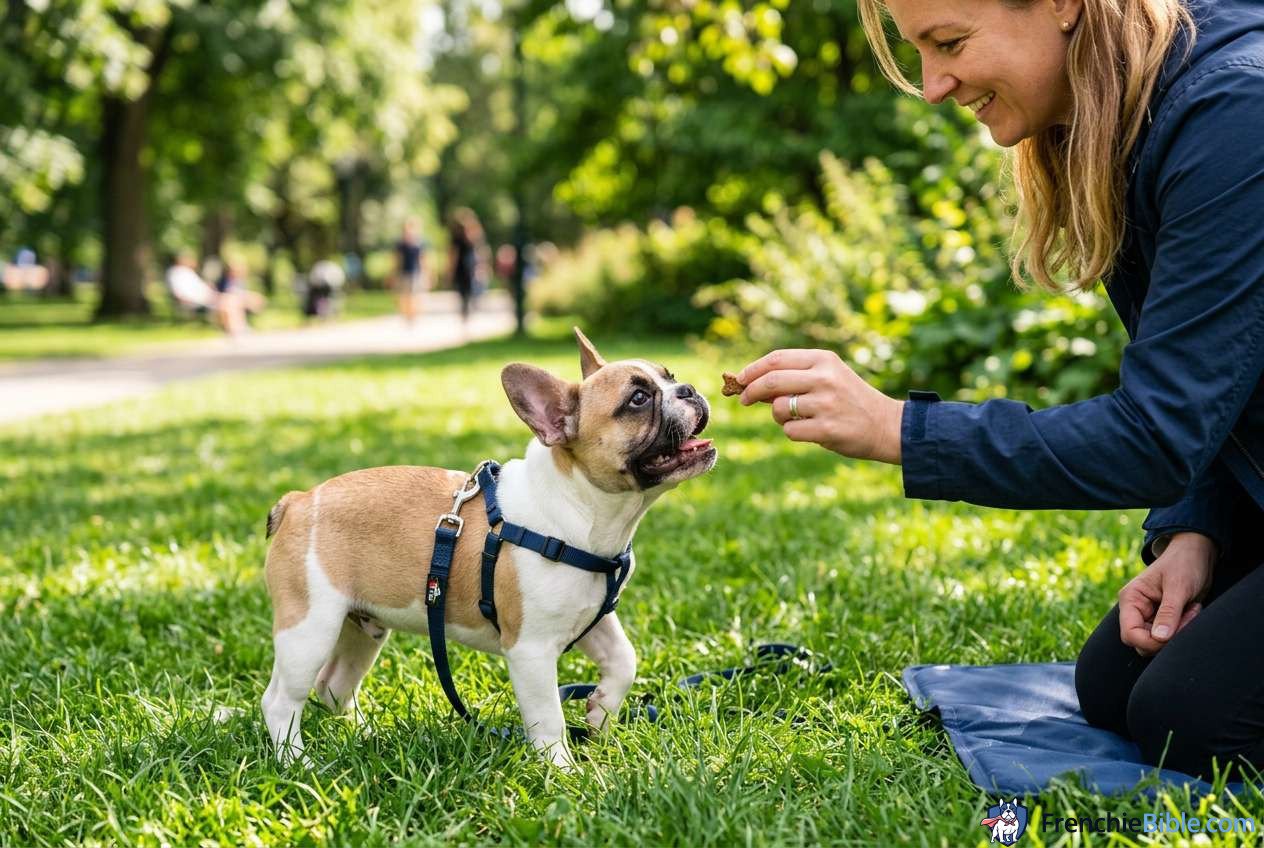
To significantly accelerate the learning process and keep your Frenchie engaged, you must become far more interesting and rewarding than the outdoor environment. You must bring “high-value” treats on every single training walk. High-value treats are things your Frenchie absolutely loses their mind over—items they do not get during their normal daily routine. Excellent options include tiny pieces of plain boiled chicken breast, freeze-dried beef liver, small cubes of low-fat cheese, or plain boiled hot dogs. Standard, dry kibble will absolutely not compete with the intoxicating smell of a squirrel or a discarded pizza crust on the sidewalk.
Keep these premium treats easily accessible in a treat pouch positioned on the side of your body where you want the dog to walk (typically the left side). Whenever your French Bulldog makes the choice to walk next to you with a completely loose leash, randomly reach down and deliver a small treat directly next to the seam of your pants. Do not make the dog stop to eat it; feed them while they are in motion. By doing this, you are actively building a highly rewarding “reinforcement zone.” The dog will quickly learn that hanging out right next to your knee is a magical, wonderful place where delicious chicken spontaneously falls from the sky.
Indoor Practice Before Outdoor Mastery: Setting Up for Success
One of the most profound mistakes novice owners make is attempting to teach the complex concept of loose-leash walking in the great outdoors from day one. The outdoor world is an intense sensory overload for a dog—filled with rushing cars, screaming children, other animals, and thousands of distracting scents. Trying to teach a new skill in this environment is the equivalent of trying to teach a young child advanced calculus in the middle of a loud, chaotic carnival.
You must start inside the quiet, boring environment of your home. Put the harness and leash on your Frenchie and simply practice walking up and down your hallway or back and forth in your living room. Reward heavily and frequently for staying by your side. Once they have mastered the living room and look like an obedience champion, move the training to your securely fenced backyard. Once the backyard is perfect, try the front driveway. Only after they succeed there should you attempt the sidewalk in front of your house. By gradually and systematically increasing the level of distraction, you are setting your beloved dog up for immense success rather than inevitable failure.
Managing a Supremely Stubborn Puller: Advanced Behavioral Techniques
While the “stop and go” method works for the vast majority of dogs, some French Bulldogs are incredibly headstrong, intensely prey-driven, or deeply conditioned to pull. If standing like a tree is not breaking your dog’s intense focus on whatever they are pulling toward, you may need to escalate your training to more active management techniques.
The Unpredictable U-Turn Strategy
If stopping completely fails to regain your dog’s attention, change the dynamic and the direction entirely.
- As soon as the dog begins to aggressively pull ahead, cheerfully and enthusiastically say a cue phrase like, “Let’s go!” or “This way!”
- Immediately upon saying the phrase, abruptly turn 180 degrees and briskly walk in the exact opposite direction.
- It is vital that you do not aggressively drag or yank the dog. The cheerful verbal cue gives them a fraction of a second of warning to realize you are turning and to follow you.
- The moment they turn, catch up to you, and fall into place beside you in the new direction, praise them exuberantly and reward them with a high-value treat.
This technique is incredibly effective because it teaches the dog that they must constantly pay attention to your physical position because you are highly unpredictable. If they forge ahead and ignore you, they lose you and miss out on the treats. It rapidly builds engagement, eye contact, and handler focus.
Desensitization to Extreme Distractions (Reactivity)
If your Frenchie walks perfectly normally until they see another dog, a skateboard, or a child, and then immediately turns into a pulling, lunging nightmare, you are dealing with reactivity (which is often rooted in frustration, fear, or extreme over-arousal). You cannot simply train through this; you must work on emotional desensitization.
You must locate your dog’s “threshold”—this is the specific distance at which your dog first notices the distracting trigger, but is not yet reacting, pulling, or panicking. If they can look at the other dog 50 feet away and still willingly take a piece of chicken from your hand, you are safely under threshold. Reward them generously for simply looking calmly at the distraction, and then reward them again for looking back at you. Gradually, over a period of weeks or months, slowly decrease the distance between you and the triggers. If they start pulling, lunging, or refuse to eat the treat, you have moved too close, too fast. You have crossed their threshold. Calmly retreat to a greater distance and try again.
Conclusion: A Commitment to Their Health and Happiness
To summarize the immense importance of this topic: leash pulling is not merely an annoying behavioral quirk or a frustrating aspect of your daily walk. For a French Bulldog, equipped with their uniquely compressed airways and vulnerable spinal columns, leash pulling is a direct, violent assault on their incredibly fragile respiratory and orthopedic systems.
As someone who has dedicated their entire professional life and passion to the health, longevity, and betterment of this incredible breed I implore you to take this information seriously. Ditch the dangerous neck collar today, invest in a high-quality, properly fitted Y-harness, and commit fully to the patient, consistent training required to teach loose-leash walking. Your Frenchie’s long-term health, daily comfort, and very life depend entirely on your willingness to advocate for them. A walk should be a joyful bonding experience, a time for mental enrichment through sniffing, and gentle physical exercise—it should never be a daily, terrifying struggle for breath.
FAQs About French Bulldogs and Leash Pulling
1. Is it simply too late to teach my older, stubborn French Bulldog to stop pulling?
Absolutely not. It is a total myth that you cannot teach an old dog new tricks. Dogs of any age, breed, and background can learn new behaviors. While it is true that an older dog has had months or years to practice and reinforce the bad habit of pulling, unwavering consistency with the “stop and go” method, upgrading to a comfortable Y-harness, and utilizing highly motivating, high-value treats will absolutely yield positive results. Patience and consistency are your greatest tools.
2. My Frenchie absolutely hates putting on their harness. They run away and hide when they see it. What should I do?
This is a remarkably common issue. It is almost always caused by one of two things: either previous harnesses have chafed and caused physical pain, or the dog has associated the harness being put on with the end of fun playtime indoors. You must systematically desensitize them to the harness. Start by simply leaving it on the living room floor and placing delicious treats directly on top of it. Next, hold the harness up and feed them treats exclusively through the neck hole, allowing them to push their own head through to get the food. Make the visual appearance of the harness a reliable predictor of amazing, wonderful things (like chicken or cheese), rather than a scary chore.
3. Can I use a front-clip “no-pull” harness to quickly stop the pulling behavior?
Front-clip harnesses can be a useful, temporary training tool for some breeds because when the dog pulls forward, the front attachment point redirects their forward momentum back toward the handler. However I advise using them with extreme caution and hesitation in French Bulldogs. If fitted even slightly poorly, the front strap can severely alter their natural front-end gait, leading to long-term orthopedic shoulder issues. Use it strictly as a temporary stepping stone while actively training loose-leash walking, and transition back to a standard back-clip Y-harness as soon as possible.
4. Why does my French Bulldog pant so heavily and loudly even when we are walking slowly and they aren’t pulling at all?
Due to the anatomical realities of Brachycephalic Airway Syndrome (BAS) Frenchies naturally have a significantly harder time breathing and cooling themselves compared to other breeds. Heavy, loud panting can occur simply from mild physical exertion, emotional excitement, or even slightly warm weather. Always monitor them closely during any activity. Keep walks short in warm weather, absolutely never exercise them in the heat of the day, and carry water. If the panting sounds excessively labored, raspy, or if their gums change color, stop immediately and consult veterinary professional.
5. Are retractable leashes (like Flexi-leads) safe to use for French Bulldogs in open parks?
No. Categorically, no. Retractable leashes are incredibly dangerous for all dogs, but they pose a uniquely lethal threat to Frenchies. From a training perspective, they teach the dog that pulling continuously against tension provides more freedom, directly contradicting and ruining all your loose-leash training efforts. More importantly, from a safety perspective, if a Frenchie builds up speed and hits the end of a 15-foot retractable leash at a full sprint, the sudden, violent jerking force on their body can cause severe spinal trauma, whiplash, or tracheal damage, even if they are wearing a harness. Always stick to a standard, reliable 4-to-6-foot fixed-length leash.
Disclaimer: The comprehensive information, behavioral advice, and breed-specific guidance provided in this article are based solely on over a decade of personal, hands-on experience in French Bulldog breeding, behavioral training, and daily care management. I am not a licensed veterinarian, and I do not hold any formal medical or veterinary qualifications. The contents of this article are intended for informational and educational purposes only and should never, under any circumstances, be used as a substitute for professional veterinary advice, diagnosis, or medical treatment. Always consult directly with a licensed, qualified veterinarian regarding any health concerns, medical conditions, or physical symptoms your dog may be experiencing, especially concerning critical issues like airway patency, respiratory distress, or spinal health.
Disclaimer: I am a French Bulldog breeding expert with over a decade of hands-on experience with this breed. I am not a veterinarian. The information in this article is for educational purposes only. Always consult your veterinarian regarding your dog’s specific health needs and care.