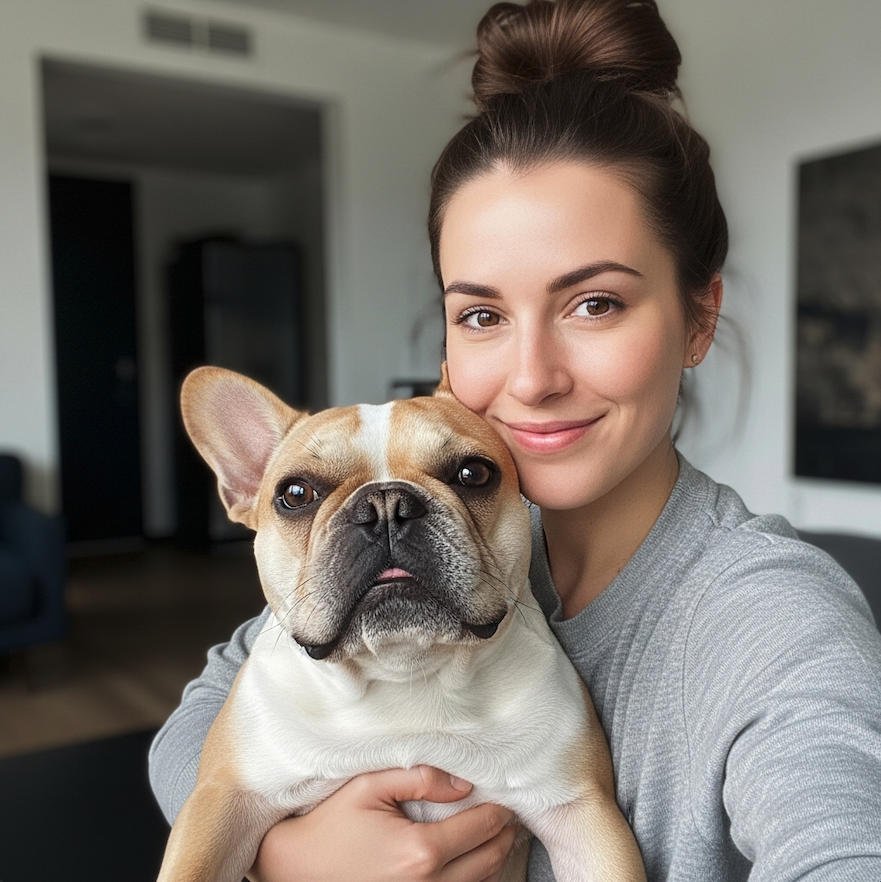
When people think of the French Bulldog breed, they usually think of words like “comical,” “affectionate,” and “cuddly.” They rarely think of words like “highly obedient” or “laser-focused.” Indeed, the Frenchie is famous for its stubborn, independent streak.
They will hear your command, look directly at you, and then calmly walk in the opposite direction to take a nap.
Related Reading: Health & Diet | Grooming & Care
But in my ten years of breeding and showing champion French Bulldogs, I have learned that their reputation for stubbornness is a misunderstanding.
Frenchies are incredibly intelligent, but they are not mindless pleasers like Golden Retrievers or Border Collies.
They require a training method based on mutual respect, clear communication, and absolute focus.
If you do not have your Frenchie’s attention, you cannot teach them a single thing.
This is why high-level obedience begins with a single, foundational skill: the Focus Eye Contact command.
By training your Frenchie to look directly into your eyes on cue, you create a powerful mental bridge that cuts through their typical sensory distractions.
This guide will break down the precise psychology of why eye contact is the ultimate key to unlocking a Frenchie’s brain, explain how to build a laser-like focus under heavy distractions, and deliver my kennel’s step-by-step training protocol to turn your stubborn companion into a highly compliant, trust-driven partner.
1. The Power of the Gaze: Why Eye Contact Resets a Frenchie’s Brain
To a dog, eye contact is not a neutral act. In the wild canine world, a direct, prolonged stare is often treated as a challenge or an act of aggression.
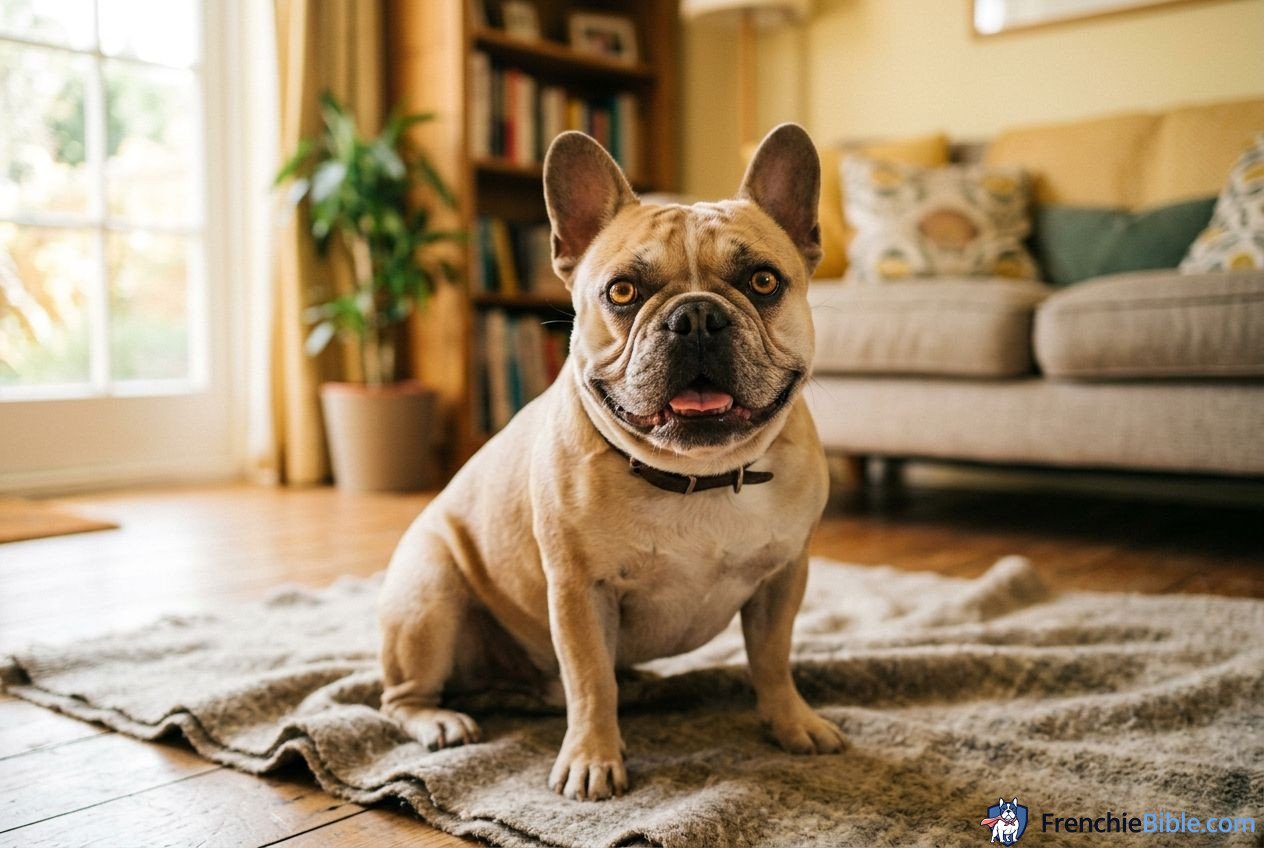
This is why many naturally timid dogs will avoid looking directly at humans.
However, through domestic evolution, dogs have developed a unique cognitive ability to look at human faces to gather cooperative information and emotional cues.
When a dog looks into their owner’s eyes, both the human and canine brains release a massive surge of oxytocin—the “love hormone” responsible for bonding, trust, and reduction of social anxiety.
For a French Bulldog, eye contact acts as a cognitive reset button.
Because their compact bodies and short airways make them highly prone to over-excitement and physical arousal, their focus can easily scatter.
They get distracted by a blowing leaf, the scent of another dog, or a distant sound, and their brain enters a high-state buzz.
By training a reliable “Look at Me” or “Focus” command, you physically interrupt this sensory overload.
When your Frenchie locks eyes with you:
1. Arousal Levels Drop: The oxytocin release calms their heart rate and reduces adrenaline.
2. External Distractions Fade: Their visual field shrinks to focus solely on your face.
3. Ready for Input: They enter a highly receptive state, waiting for your next command.
2. Setting Up the “Look” Command: The Three Golden Breeder Rules
Before you start clicking and feeding, you must establish the proper environment to ensure success.
- Rule 1: Start in a Low-Distraction Zone: Never attempt to train focus in a busy park or on a noisy sidewalk. Start in a quiet, familiar room in your house—such as a hallway or a bedroom—where there are zero toys, other pets, or distractions.
- Rule 2: Use Ultra-Smelly, High-Value Treats: Because Frenchies are intensely food-motivated, we must use treats that have an incredible scent. Slivers of cooked liver, dried beef lung, or freeze-dried duck work beautifully.
- Rule 3: Establish a Marker Word: You need a precise bridge word to mark the exact micro-second your dog makes eye contact. I recommend a crisp, energetic “Yes!” or the click of a standard training clicker.
3. The Step-by-Step Focus Eye Contact Training Protocol
This protocol uses positive reinforcement and progressive shaping to turn eye contact into a highly reliable, automatic behavior.
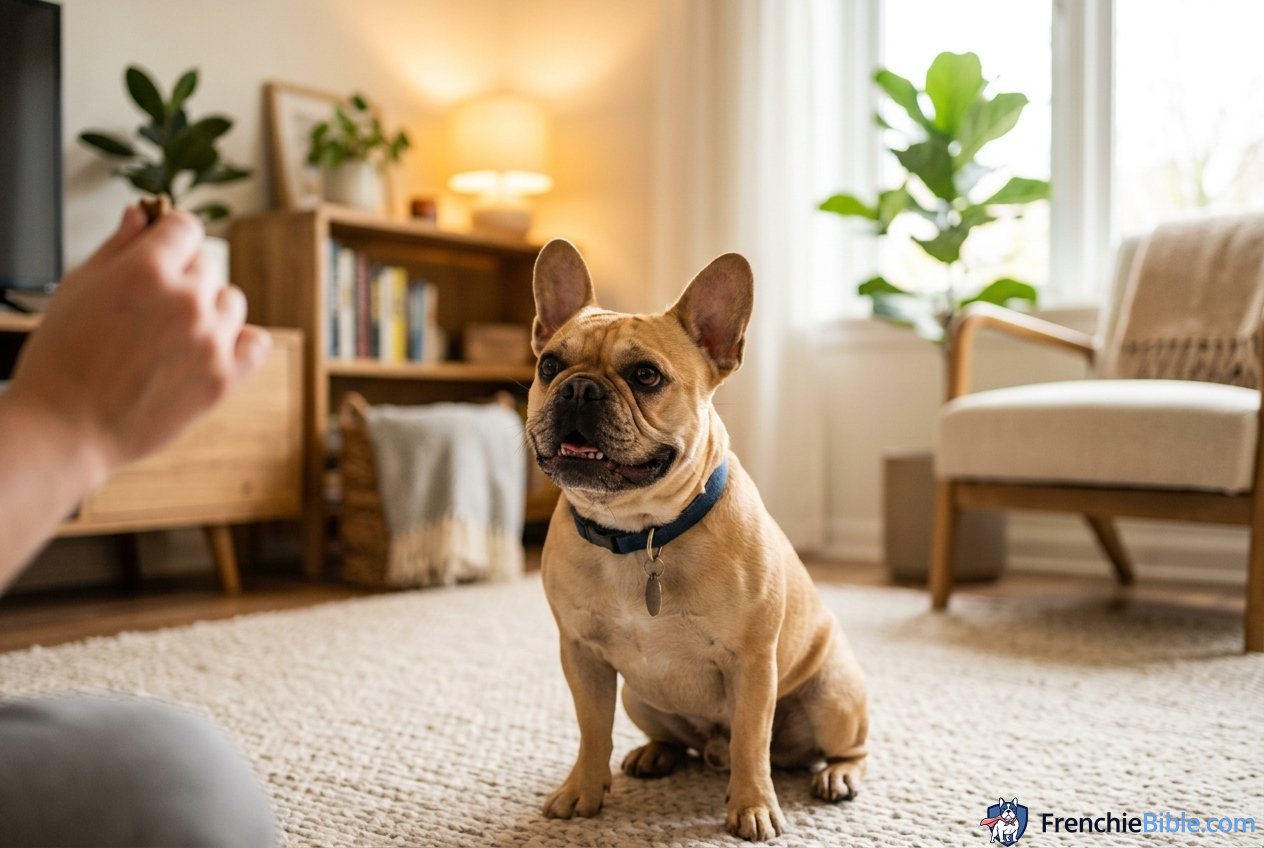
Step 1: The Hand-to-Eye Lure (The Foundation)
- The Action: Sit on the floor with your Frenchie puppy. Take a small, smelly treat and hold it directly between your thumb and forefinger.
- The Lure: Hold the treat right in front of your Frenchie’s nose so they can smell it. Then, slowly draw the treat in a straight line from their nose up to the bridge of your nose, directly between your eyes.
- The Mark and Reward: Your Frenchie’s eyes will naturally follow the treat up to your face. The exact micro-second their gaze shifts from the treat to lock onto your eyes, say “Yes!” and immediately feed them the treat.
- Repeat: Perform this 5 to 10 times in a row. Repeat this short session twice daily for 3 days.
Step 2: The Hand-to-Side Distraction (Fading the Lure)
Once your dog understands that looking at your face results in a treat, we must teach them to look past the food to find your eyes.
- The Action: Hold a treat in your hand and extend your arm straight out to the side, away from your body. Your Frenchie will naturally stare intently at your hand, waiting for the food.
- The Wait: Remain completely still and silent. Do not repeat their name or say “look.” Simply wait.
- The Choice: Eventually, after 5 to 15 seconds, your Frenchie will get confused about why the food is not moving. They will turn their head to look at your face to “ask” what is going on.
- The Mark: The exact micro-second their eyes leave your extended hand and lock onto your eyes, say “Yes!” and feed them the treat from your hand.
- The Lesson: Staring at the food gets you absolutely nothing. Looking at the human’s eyes is the key that unlocks the food. Repeat this until they look at your eyes instantly, ignoring the extended treat.
Step 3: Adding the Verbal Cue (“Focus” / “Look”)
Only add the verbal cue when your dog is consistently choosing to make eye contact.
- The Action: Extend the treat to the side. The split-second before your dog turns their head to make eye contact, say your cue: “Focus.”
- The Mark: As their eyes lock with yours, mark “Yes!” and reward them. Repeat this over 5 days to permanently bind the word “Focus” to the action of direct eye contact.
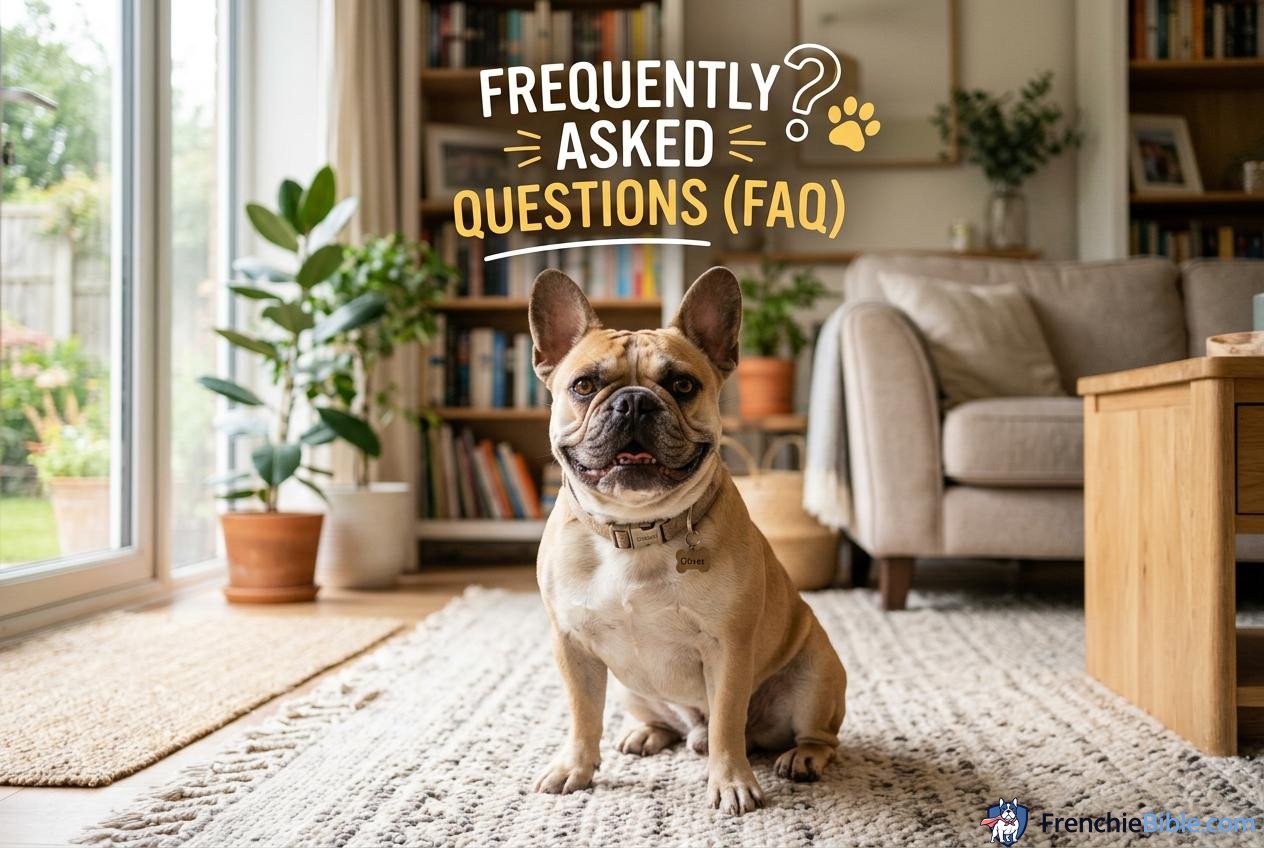
4. Frequently Asked Questions (FAQ)
Q1: My Frenchie will make eye contact at home but completely ignores the “Focus” command outside. Why?
This is due to a lack of “generalization.” Dogs do not automatically understand that a command learned in the living room applies to the outside world. To fix this, you must proof the command under gradual distractions. Move your training from the living room to your quiet backyard, then to your front porch, then to a quiet sidewalk, and finally to a busy park. If they ignore you, you have jumped to a high-distraction level too quickly; take a step back to a quieter location and rebuild their confidence.
Q2: How long should my Frenchie hold eye contact during the “Focus” command?
In the beginning, reward them for a split-second flash of eye contact. Once that is reliable, slowly build duration. After saying “Focus,” wait 2 seconds before marking “Yes!” and rewarding. Over two weeks, slowly increase the duration to 5 seconds, 10 seconds, and eventually a full 15 seconds of solid, unwavering eye contact.
Q3: My dog looks at my hand or my pocket instead of my face because they know that’s where the treats are. How do I fix this?
This is a classic “pocket-staring” issue. To correct this:
1. Stop keeping treats in your hands. Keep them inside a closed pouch clip on your back waist, or placed on a high shelf nearby.
2. If they stare at your pocket, stand completely still and ignore them.
3. Only mark “Yes!” and reward when they give up pocket-staring and look directly into your eyes. You can also temporarily hide the treats behind your back during the luring phase.
Q4: Can I use the “Focus” command to stop my Frenchie from barking at other dogs on leash?
Absolutely! This is the primary real-world application of the command. If your Frenchie is reactive on leash:
1. Identify their “threshold distance”—the exact distance from another dog where they notice them but have not started barking yet (e.g., 20 feet away).
2. Before they can trigger, say “Focus.”
3. The moment they look at you, feed them high-value treats continuously while walking past the other dog. This keeps their brain occupied, prevents visual lock-on to the trigger, and rewrites their emotional response to seeing other dogs.
5. Disclaimer
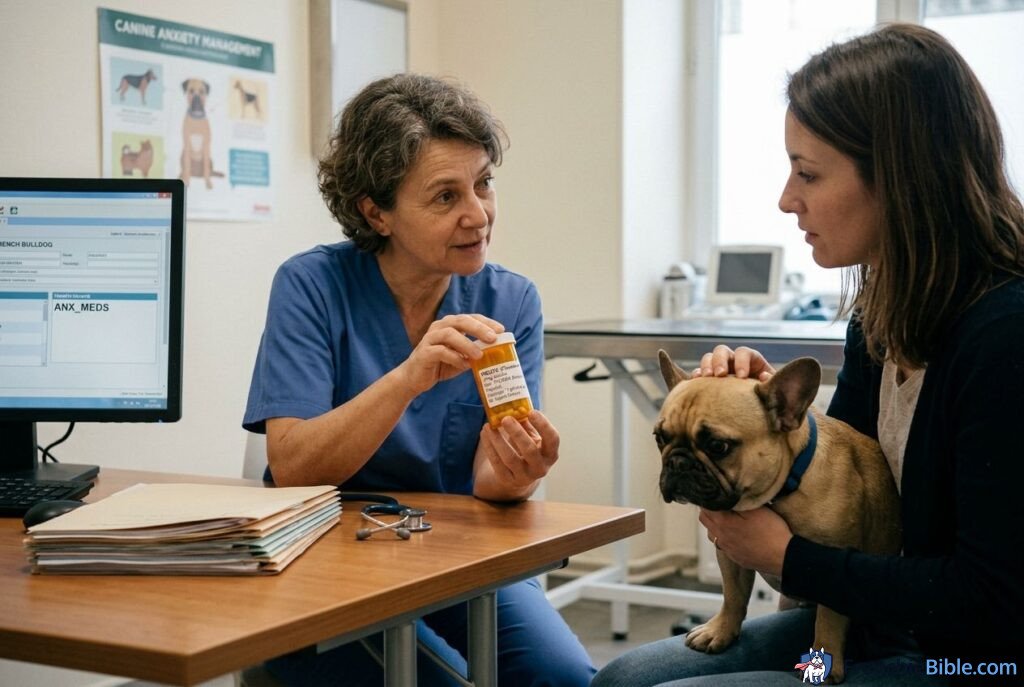
The obedience training protocols, behavioral analyses, and psychological techniques shared in this article are based on my ten years of experience breeding, raising, and showing French Bulldogs. I am not a certified professional dog trainer or veterinary behaviorist. Stubborn or reactive behavior can occasionally be linked to underlying physical discomfort, spinal pain (such as early-stage IVDD), or thyroid imbalances. If your French Bulldog shows sudden, severe resistance to training or displays aggressive reactivity, please consult a licensed veterinarian to rule out any underlying medical causes.