Disclaimer: I am a French Bulldog specialist and breeder with over 10 years of clinical and hands-on experience, but this article is for informational and educational purposes only. It is not a substitute for professional veterinary advice, diagnosis, or treatment. Severe tail pocket infections can lead to deep tissue necrosis or systemic issues. If your dog’s tail pocket is swollen, bleeding, emitting pus, or causing severe pain, seek immediate veterinary care.
When a new owner brings a French Bulldog into their clinic or home, they quickly learn about the high-maintenance hygiene required for the facial wrinkles and bat ears. However, as a veterinary professional and breeder, I consistently see one critical area completely overlooked until it becomes a massive medical issue: the elusive “Tail Pocket.”
Related Reading: Training & Behavior | Frenchie Puppy Guide | Best Food for Frenchies
Many owners are entirely unaware that their Frenchie even has a tail pocket until the dog starts aggressively scooting their rear end across the carpet, or a foul, unmistakable odor begins to emanate from their hindquarters. The tail pocket is the ultimate hidden breeding ground for yeast, bacteria, and severe inflammation. In this comprehensive guide, we will demystify the anatomy of the French Bulldog tail pocket, explain why it is so prone to chronic infections, and provide a step-by-step, vet-approved protocol for cleaning, treating, and preventing painful tail pocket dermatitis.
Anatomy of the Frenchie Rear: What is a Tail Pocket?
To understand the pathology of tail pocket infections, we must look at the unique genetics and anatomy of the French Bulldog. Frenchies are bred to have very short, stubby, or “screwed” tails that sit tightly against their hindquarters.
In many Frenchies, the tail is set so deeply into the body that a dimple or a deep crevice forms directly beneath or around the base of the tail. This anatomical indentation is the “Tail Pocket.”
Not all French Bulldogs have a tail pocket. Those with a slightly longer tail or a tail that points outward (often called a “pump handle” tail) may not have one. However, those with tightly curled, inverted, or practically non-existent tails almost always possess this hidden crevice. Some pockets are shallow, while others can be an inch or more deep, essentially forming an inverted pouch of skin.
The Perfect Storm: Why Tail Pockets Get Infected
The tail pocket is arguably the most vulnerable skin fold on a Frenchie’s body for several physiological reasons:
1. The Microclimate of Doom
Like facial wrinkles, the tail pocket is dark, warm, and lacks air circulation. However, its location makes it far worse. It is situated directly above the anus.
2. Debris Accumulation
Because of its proximity to the anus, the tail pocket acts as a trap for biological waste. Fecal matter, dirt, dander, loose fur, and environmental dust easily become lodged deep inside the pocket. When this organic debris mixes with natural body heat, it creates the ultimate buffet for opportunistic pathogens.
3. Yeast and Bacterial Overgrowth
The two most common culprits in tail pocket infections are Malassezia (yeast) and Staphylococcus (bacteria).
– Yeast Infections: Moisture trapped in the pocket (from bathing, humidity, or natural skin oils) fuels yeast overgrowth. A yeast infection typically produces a dark brown, waxy discharge and a pungent odor reminiscent of corn chips or rotting cheese.
– Bacterial Infections: Friction from the tail rubbing against the skin of the pocket causes micro-abrasions. Bacteria enter these abrasions, causing severe inflammation (intertrigo), redness, swelling, and purulent (pus-like) discharge.
Left untreated, these infections are agonizing for the dog. The inflammation causes intense itching and burning, leading to frantic scooting, biting at the rear, and behavioral changes due to chronic pain.
The Vet-Approved Tail Pocket Cleaning Protocol
If your French Bulldog has a tail pocket, cleaning it must become a non-negotiable part of your weekly (and sometimes daily) routine.
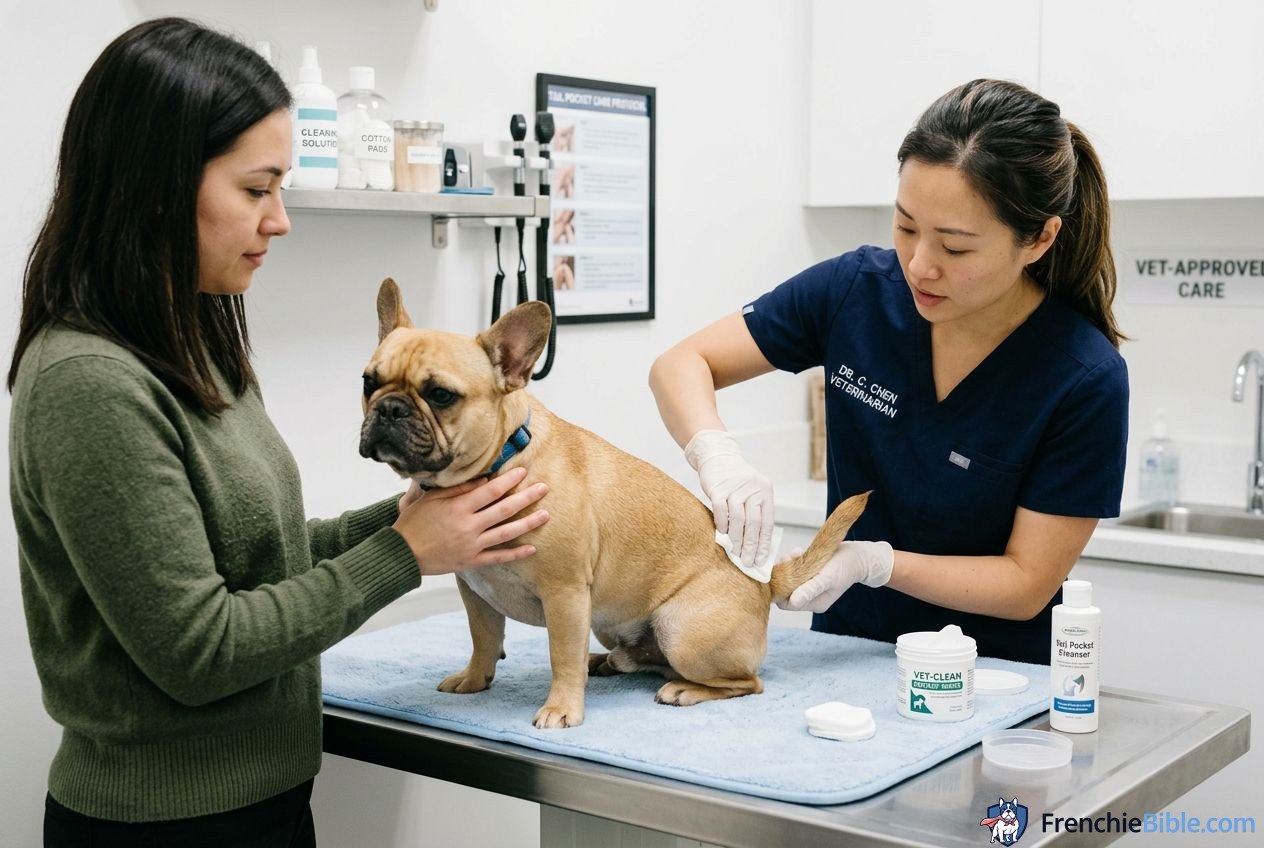
Step 1: The Assessment
Before cleaning, lift the tail gently (do not force it, as bulldog tails are notoriously rigid and easily injured or broken). Look into the pocket with a flashlight. If the skin is pale pink and dry, it is healthy. If it is bright red, raw, bleeding, or filled with green/yellow pus, stop immediately. Do not clean it; take the dog to the vet, as cleaning a raw, severely infected pocket at home will cause immense pain and drive the infection deeper.
Step 2: The Gentle Wipe Out
If the pocket is just dirty or mildly irritated, proceed with cleaning.
1. Use the Right Wipe: Do not use human baby wipes, as the pH is wrong for dogs and they often contain irritating fragrances. Use veterinary-grade wipes containing Chlorhexidine or Ketoconazole.
2. The Technique: Wrap the wipe around your index finger. Gently lift the tail. Carefully insert your finger into the pocket and sweep from left to right. Do not scrub aggressively. You may need to use 3-4 wipes until they start coming out clean. Be prepared: the odor and the amount of black/brown gunk that comes out of a neglected pocket can be shocking.
Step 3: The Absolute Necessity of Drying
This is the step where most owners fail. If you wipe the pocket with a moist wipe and then let the tail drop, you have just locked moisture into a dark, warm crevice—guaranteeing a yeast infection.
1. Wrap a clean, dry tissue or a piece of sterile gauze around your finger.
2. Insert it into the pocket and gently dab away all remaining moisture.
3. Repeat until the tissue comes out completely bone-dry.
Step 4: The Protective Barrier
Once the pocket is clean and dry, you must apply a barrier to protect the skin from friction and future debris.
Apply a thin layer of a natural, high-quality wrinkle balm or a veterinary-prescribed barrier cream deep into the pocket. Look for balms containing soothing ingredients like calendula, shea butter, and natural waxes to repel moisture.
Surgical Intervention: When Cleaning Isn’t Enough
In some French Bulldogs, the tail pocket is so deep, or the tail is curled so tightly into the body (an inverted tail), that chronic infections occur regardless of how meticulously the owner cleans it. The chronic inflammation causes the skin to thicken, creating deeper crevices and worse infections in a vicious cycle.
As a veterinary specialist, when I see a Frenchie suffering from chronic, intractable tail pocket dermatitis, we must discuss surgical intervention. The procedure is called a Caudectomy (tail amputation).
While the idea of amputating the tail sounds extreme to owners, it is often a life-changing, curative procedure. The surgeon carefully removes the vestigial tail bones and excises the diseased skin fold, suturing the area flat. The dog wakes up free from the chronic pain and itching of the infected pocket, and the owner is freed from the daily, smelly cleaning routine. It is a highly successful surgery that dramatically improves the dog’s quality of life.
Conclusion
The French Bulldog’s tail pocket is an anatomical quirk that requires serious vigilance. Ignoring the hindquarters because it is an unpleasant chore is not an option; neglecting a tail pocket borders on medical negligence due to the severe pain and infection it guarantees. By establishing a routine of gentle, thorough cleaning, absolute drying, and barrier protection, you can keep this hidden crevice healthy. If your dog suffers from a deep pocket and chronic infections, do not despair—consult your veterinarian about medical management or the curative option of a caudectomy. Your Frenchie relies entirely on you to keep them comfortable from nose to tail.
Frequently Asked Questions (FAQs)
1. How do I know if my Frenchie even has a tail pocket?
Have your dog stand still. Gently lift the tail upward or to the side. Look at the base where the tail meets the body. If you see a skin fold, dimple, or deep crevice that you can slide a finger (or a Q-tip) into, your dog has a tail pocket. If the skin is flat and tight around the base, they do not.
2. How often should I clean my dog’s tail pocket?
This depends entirely on the dog’s anatomy. Some dogs need their pockets wiped out twice a day, especially after bowel movements. For others with shallower pockets, a thorough cleaning twice a week is sufficient. Check it daily until you establish a routine that keeps it dry and odor-free.
3. Why is my Frenchie scooting their butt on the carpet? Is it worms?
While scooting can be a sign of intestinal parasites (worms) or impacted anal glands, in French Bulldogs, it is very frequently a sign of an infected, itchy tail pocket. You must check the tail pocket, have the vet express the anal glands, and run a fecal test to determine the exact cause.
4. Can I use cornstarch or baby powder to keep the tail pocket dry?
Veterinarians strongly advise against using powders like cornstarch or talcum powder in skin folds. When powder mixes with moisture, it clumps together, creating abrasive pastes that cause more friction and become a feeding ground for yeast. Stick to drying with tissues and using wax-based balms.
5. Does tail amputation (caudectomy) affect a Frenchie’s balance?
No. A French Bulldog’s tail is a vestigial appendage (they are virtually tailless to begin with). It serves no anatomical purpose for balance or locomotion. Amputating a severely infected, inverted tail will only improve their movement by removing chronic pain.