[MEDICAL DISCLAIMER]
The information provided in this article is for educational and informational purposes only. The author is an experienced canine genetics researcher and breeding educator, not a licensed veterinarian. This content is not intended to be a substitute for professional veterinary medical advice, diagnosis, or treatment. Always seek the advice of your veterinarian with any questions you may have regarding your French Bulldog’s health, skin conditions, or physical well-being.
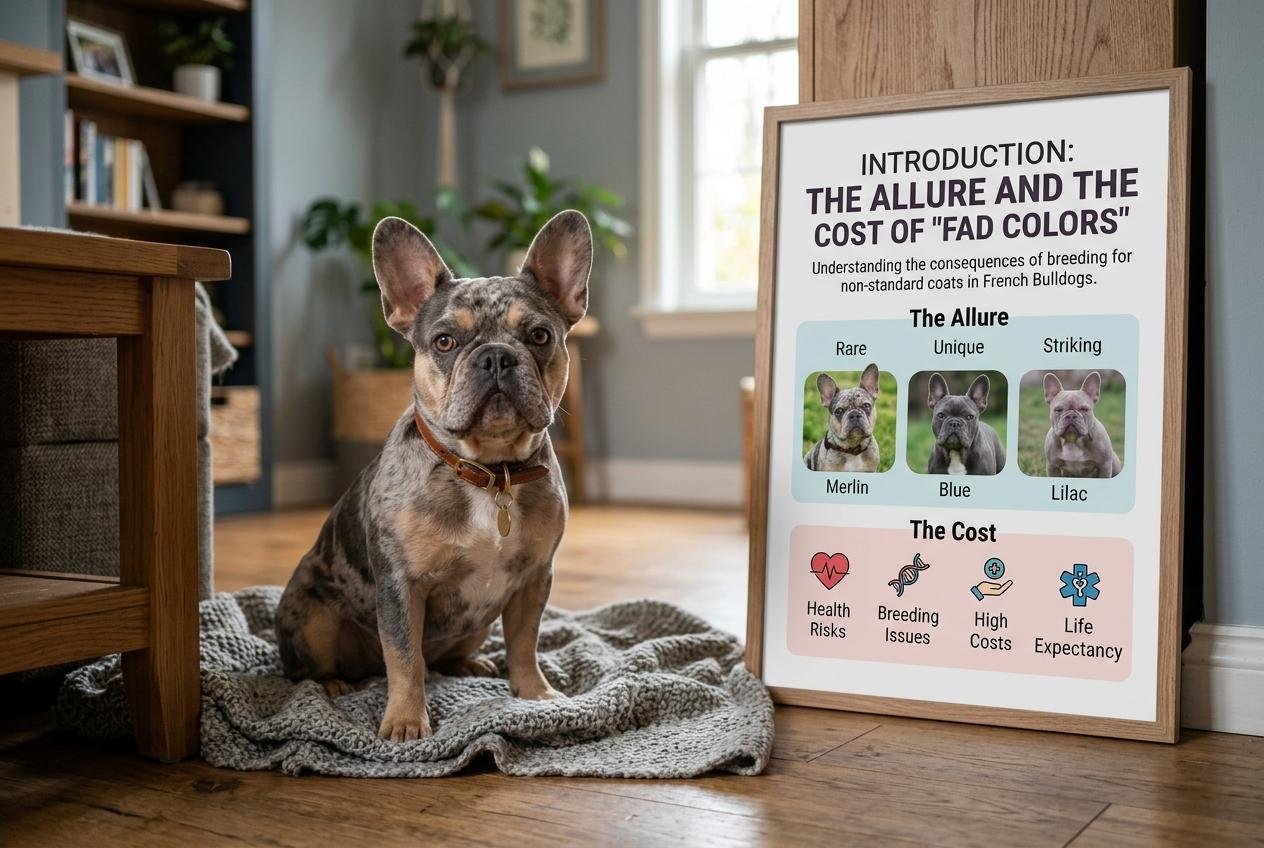
Introduction: The Allure and the Cost of “Fad Colors”
Scroll through Instagram or TikTok, and you will undoubtedly see them: French Bulldogs with stunning, head-turning coats. From the icy gleam of a Blue, the mystical shade of a Lilac, to the marble-like patterns of a Merle. These are commonly known as Fad Colors, and they often command exorbitant prices in the pet market.
Related Reading: Training & Behavior | Frenchie Puppy Guide | Best Food for Frenchies
However, as a canine genetics educator, I must share a crucial truth with current and future Frenchie owners: beneath these breathtaking coats lies a highly complex genetic code. Blindly chasing after rare colors without understanding the underlying science often results in dogs paying the ultimate price with their health.
In this comprehensive guide, we will decode the Lilac Frenchie DNA, explore Blue Frenchie health considerations, and reveal the truth behind Merle Frenchie defects. Let’s dive into the DNA palette of these amazing dogs.
Frenchie Genetics 101: Understanding the Canine DNA Palette
To understand fad colors, we first need to define “standard colors.” According to major kennel clubs like the AKC (American Kennel Club), standard acceptable Frenchie colors are fawn, brindle, and pied. Fad colors are the result of specific recessive genes or mutations that are generally not accepted in the official show ring.
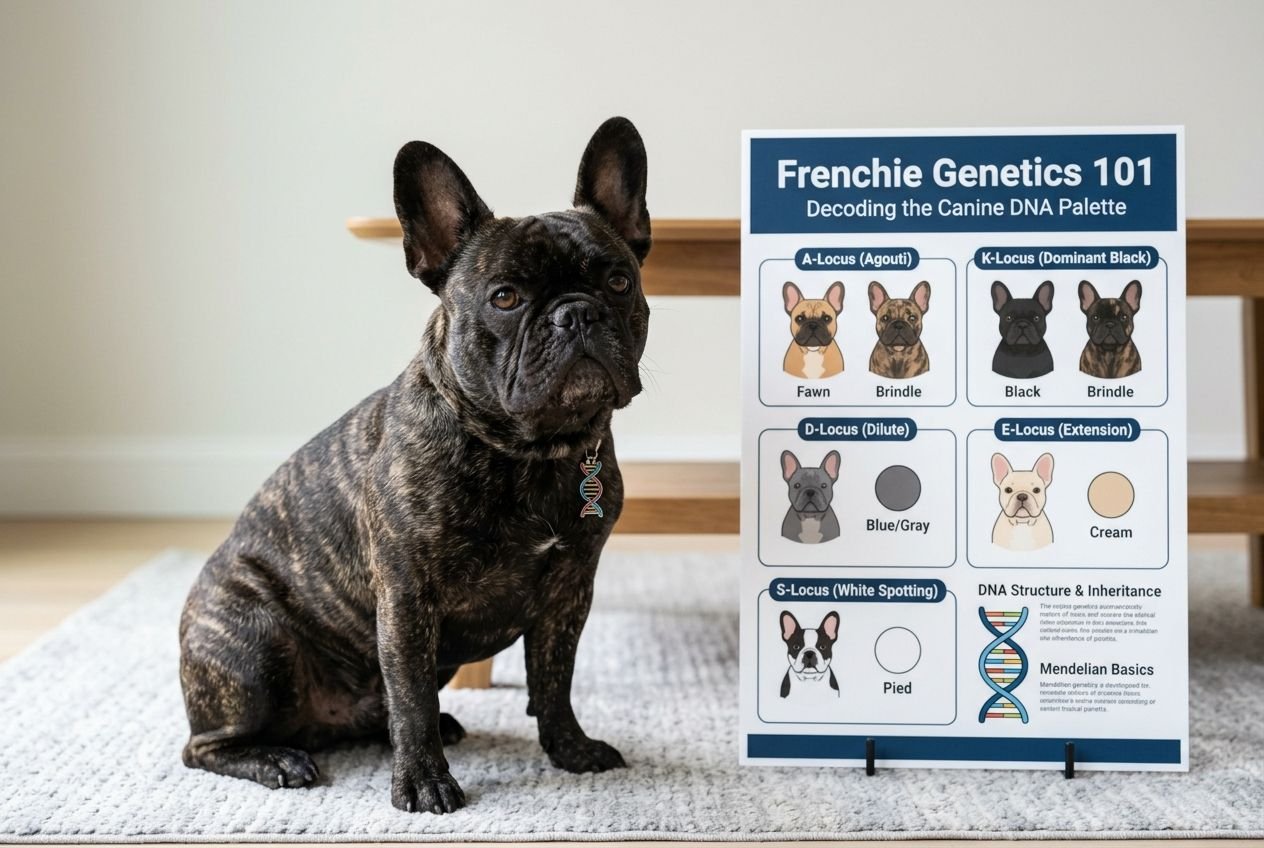
A dog’s coat color is determined by various genetic locations known as Loci:
- K-Locus and A-Locus: Dictate the base pattern (e.g., solid or brindle).
- E-Locus: Controls the extension of pigment (whether a dog can produce black hair or is restricted to yellow/fawn).
- B-Locus and D-Locus: These are the “magic switches” for fad colors. They modify how pigment is expressed and concentrated.
Deep Dive into Fad Color DNA Profiles
1. The Blue Frenchie: The Magic of the Dilution Gene (D-Locus)
A Blue Frenchie isn’t technically blue; it’s a stunning shade of silvery-grey. Genetically speaking, this color is caused by a recessive mutation at the D-Locus (Dilution gene).
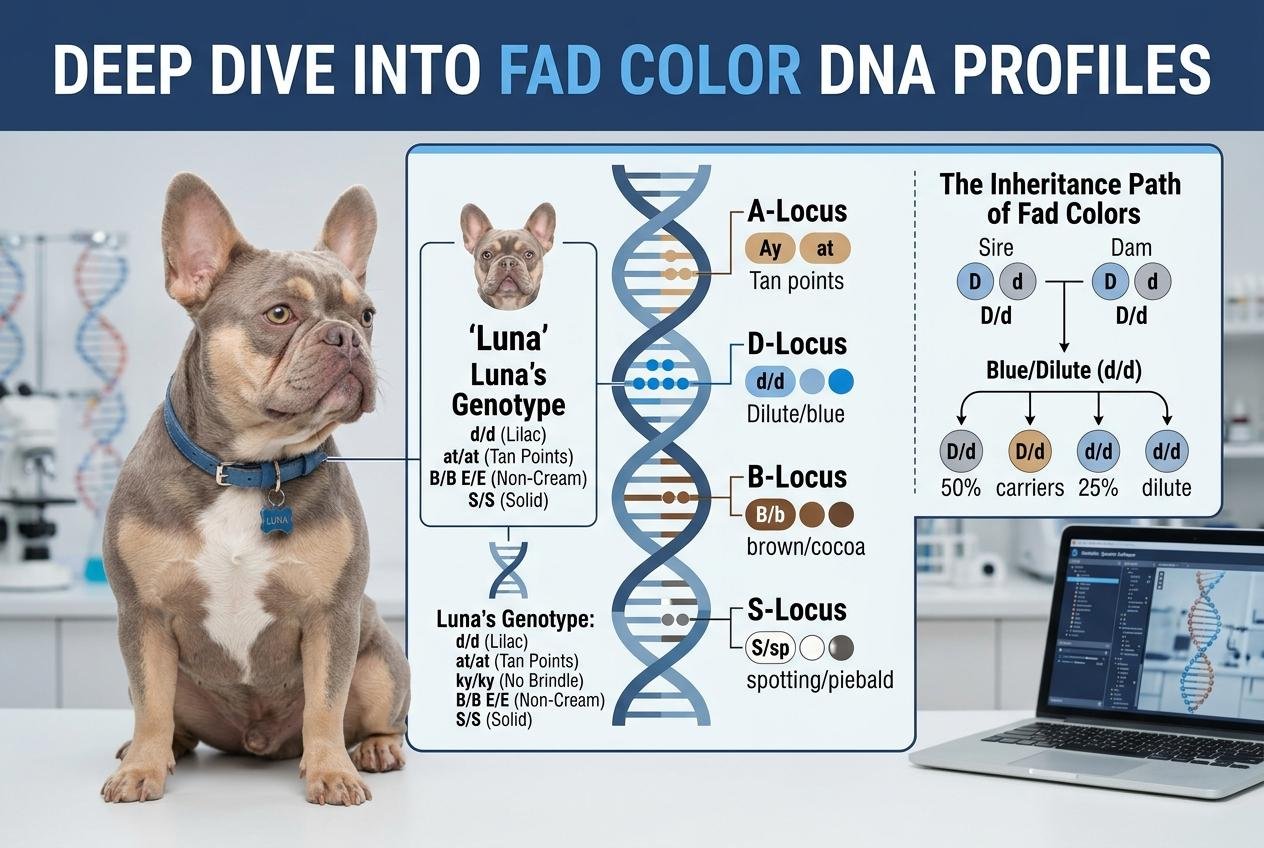
- The DNA Profile: For a Frenchie to be blue, it must inherit a lowercase “d” from both parents, resulting in a homozygous recessive
d/dgenotype. - The Science: The
d/dmutation doesn’t remove black pigment (eumelanin). Instead, it alters the melanophilin gene, causing the pigment cells to clump together rather than distributing evenly along the hair shaft. This microscopic clumping changes how light reflects off the coat, making it appear bluish-grey.
2. The Lilac Frenchie: The Double-Dilution DNA Masterpiece
Lilac is an incredibly soft, dusty grey-purple hue, often accompanied by striking light-colored eyes (amber or pale green). Achieving stable Lilac Frenchie DNA is notoriously difficult.
- The DNA Profile: A Lilac is a “double recessive” dog. It must carry homozygous recessive genes for both chocolate (
b/b) and blue (d/d). - The Science: The B-Locus dilutes black pigment to a brownish-chocolate color, and then the D-Locus dilutes that brown color even further. Imagine pouring milk into black coffee, and then doing it again. Because it requires the perfect alignment of two rare recessive genes, responsible breeding of Lilacs requires deep pedigree knowledge.
3. The Merle Frenchie: The Controversial Outcross Gene
Merle Frenchies boast a mottled, marble-like base with patches of dark or blue pigmentation. They often have striking heterochromia (one blue eye, one brown eye).
- The DNA Profile: Unlike Blue and Lilac, the Merle pattern is caused by a dominant mutation at the M-Locus (
M/m). Just one copy of the “M” gene is enough to produce the merle pattern. - The Breeding History: Merle is arguably the most controversial color in the Frenchie community. Why? Because the merle gene did not naturally exist in the original purebred French Bulldog gene pool. Geneticists widely agree that the M-gene was introduced decades ago via outcrossing (crossbreeding) with breeds that naturally carry merle, such as Chihuahuas or certain Terriers.
The Scientific Reality: Health Risks Behind Fad Color Genetics
We are not here to fear-monger, but science dictates that owners must be aware of the specific health vulnerabilities associated with these coat genetics.
Color Dilution Alopecia (CDA) & Skin Barrier Issues
This is the most common concern regarding Blue Frenchie health (and sometimes Lilacs). Color Dilution Alopecia (CDA) specifically affects dogs with the d/d genotype.
Because the pigment clumps inside the hair shaft, the hair itself becomes structurally weak and prone to breakage. Frenchies with CDA typically begin showing signs between 6 months and 3 years of age. Symptoms include hair thinning along the spine, dry/flaky skin, and chronic bacterial folliculitis (hair follicle infections). While CDA is not life-threatening, it causes severe itching and requires lifelong skin management.
Merle Frenchie Defects: The Tragedy of the “Double Merle”
The merle gene is a dominant mutation that dilutes pigment—but it doesn’t just affect fur. It also randomly strips pigment from the cells in the eyes and inner ears.
If an irresponsible breeder pairs two merle dogs together, there is a 25% chance of producing a “Double Merle” (M/M) puppy. This is a genetic catastrophe. Double merle puppies are often born completely white and face severe Merle Frenchie defects, including congenital deafness and blindness (microphthalmia or missing eyes entirely). Ethical breeders have a strict rule: never breed merle to merle.
Sacrificing Structure for Color: BOAS and IVDD
The sad reality of the market is that many “backyard breeders” focus entirely on generating profitable colors, completely ignoring the dog’s structural integrity. Severe inbreeding to lock in Lilac or Merle genetics often exacerbates inherent breed issues like Brachycephalic Obstructive Airway Syndrome (BOAS) and Intervertebral Disc Disease (IVDD). A beautiful coat means nothing if the dog cannot breathe without surgery or is at high risk for spinal paralysis.
Actionable Buyer & Owner Guide: Navigating Fad Colors Safely
Looking to Buy? How to Spot a Responsible Breeder
- Demand Health Clearances, Not Just Color DNA: A reputable breeder will proudly show you a 4-panel genetic health test, but more importantly, OFA (Orthopedic Foundation for Animals) clearances for the parents’ patellas, heart, and trachea.
- Evaluate the “Hardware”: Look beyond the coat. Do the parents have wide-open nares (nostrils)? Do they breathe quietly? Is their back structurally sound? Never support a breeder who sacrifices structure for color.
Already Own a Fad Color Frenchie? Care & Nutrition Tips
- Skin Care for CDA: If your Blue or Lilac Frenchie is experiencing hair thinning, consult your veterinarian. Many vets recommend hypoallergenic diets and medicated shampoos containing ingredients like chlorhexidine or soothing oatmeal to protect the compromised skin barrier.
- Nutritional Support: Canine nutritionists frequently suggest supplementing a fad-colored dog’s diet with high-quality Omega-3 fatty acids (like pure salmon oil) and Vitamin E. Studies show these nutrients can significantly support hair follicle strength and skin health.
- Always Use a Harness: To mitigate the risks of BOAS (choking) and IVDD (neck strain), never walk your Frenchie on a collar. A well-fitted, Y-shaped harness is mandatory for their daily walks.
Conclusion: Love Them by Knowing Their Genes
Merle, Lilac, and Blue Frenchies are undeniably gorgeous. There is nothing inherently wrong with the colors themselves; the danger lies in unethical breeding practices that prioritize profit over health. As an owner, arming yourself with the knowledge of Frenchie genetics is your superpower. It allows you to make ethical purchasing decisions and provides you with the scientific foundation needed to give your dog the long, healthy, and happy life they deserve.