

Disclaimer: The information provided in this article is for educational purposes only and should not replace professional veterinary advice. Always consult your veterinarian before introducing new toys, treats, or dental care routines for your French Bulldog puppy. Dental health is critical for brachycephalic breeds, and professional guidance is essential.
Bringing home a French Bulldog puppy is an incredibly exciting experience, filled with cuddles, playtime, and an abundance of joy. However, alongside the adorable snorts and bat-eared expressions comes a less glamorous phase: teething. Just like human infants, French Bulldog puppies go through a natural process of losing their baby teeth to make way for their permanent adult teeth. This transition, while entirely normal, can be accompanied by discomfort for your puppy and a significant amount of destruction for your household if not managed properly.
Related Reading: Health & Diet | Frenchie Puppy Guide
With my background in French Bulldog breeding specializing in brachycephalic breeds and a long-time Frenchie breeding expert, I have guided countless pet owners through this challenging period. French Bulldogs possess unique anatomical characteristics, specifically their shortened muzzles and compact jaw structures, which make their teething phase slightly different from that of longer-snouted breeds. Because their jaws are crowded, the eruption of adult teeth can sometimes cause more localized pain, inflammation, and potential dental complications.
In this comprehensive, 3000+ word guide, we will explore everything you need to know about your French Bulldog’s teething journey. We will break down the exact timeline of when to expect tooth loss, identify the common signs of teething discomfort, discuss effective ways to soothe your puppy’s sore gums, and, most importantly, provide a meticulously curated list of the safest and most dangerous chew toys specifically tailored for the French Bulldog anatomy. By understanding this process and being prepared, you can ensure your Frenchie transitions into adulthood with a healthy, beautiful smile and intact furniture.
Understanding the French Bulldog Teething Process
To effectively manage your Frenchie’s teething phase, you first need to understand the biological process occurring inside their mouth. Dogs are diphyodonts, meaning they develop two successive sets of teeth throughout their lifetime: a deciduous (temporary or “baby”) set and a permanent (adult) set.
The Unique Jaw Structure of French Bulldogs
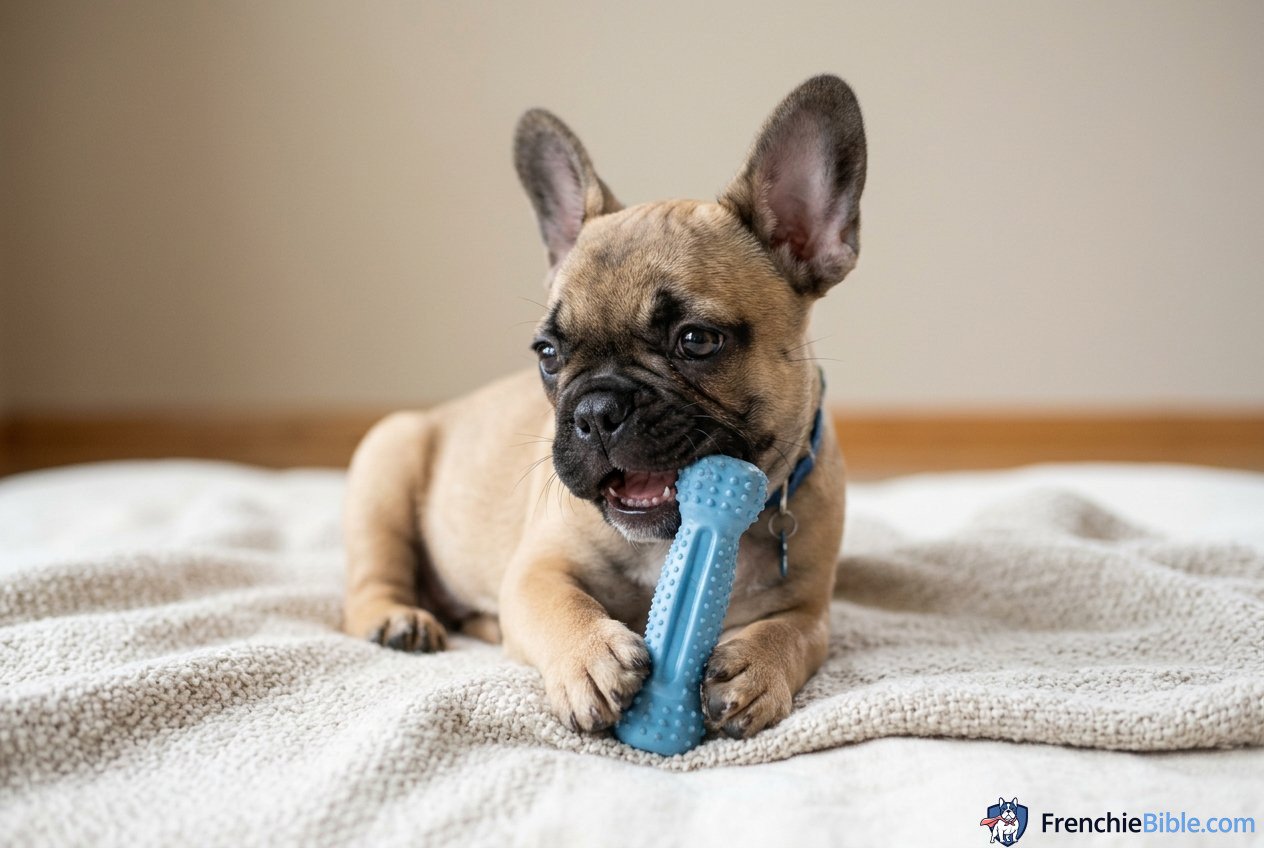
Before diving into the timeline, it is crucial to address the specific anatomy of the French Bulldog. As a brachycephalic (flat-faced) breed, Frenchies have a compressed maxilla (upper jaw) and mandible (lower jaw). Despite having a shorter snout, they still must accommodate the exact same number of teeth as a large dog breed like a German Shepherd—42 adult teeth.
This dramatic lack of space often leads to overcrowding, rotated teeth, and malocclusion (misalignment of the upper and lower jaws, commonly an underbite in Frenchies). Consequently, the teething process can be slightly more painful or complicated for them. Adult teeth may struggle to find the necessary space to erupt properly, sometimes causing them to push against existing baby teeth or come in at awkward angles. This anatomical quirk underscores why providing appropriate chew toys and monitoring their dental development is so vital.
The French Bulldog Teething Timeline: What to Expect at Each Stage
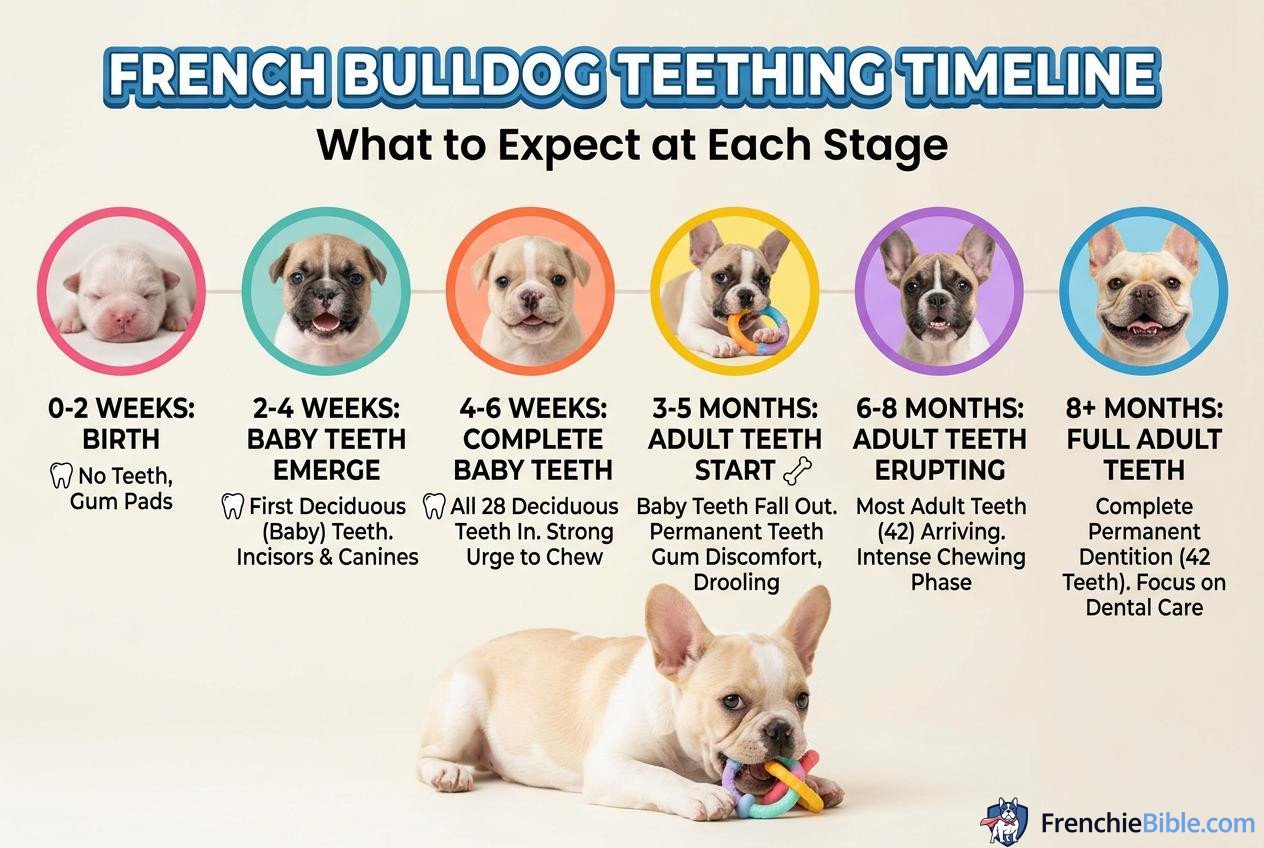
The teething timeline is relatively predictable, though slight variations can occur from one puppy to another. Knowing this schedule will help you anticipate your puppy’s needs and intervene appropriately when the chewing instinct hits its peak.
Weeks 2 to 4: The Arrival of Deciduous (Baby) Teeth
When French Bulldog puppies are born, they are completely toothless. Their primary source of nutrition is their mother’s milk, which requires no chewing. Around the second to third week of life, their deciduous teeth begin to erupt through the gums. The incisors (the small front teeth) usually appear first, followed closely by the canine teeth (the “fangs”), and finally the premolars. During this early stage, the puppies are still with their mother and littermates. The emergence of these sharp little teeth is often the mother’s cue to begin the weaning process, as nursing becomes uncomfortable for her.
Weeks 5 to 8: A Full Set of Baby Teeth
By the time a French Bulldog puppy reaches five to eight weeks of age, they should have a complete set of 28 deciduous teeth. These teeth are notoriously sharp—often compared to tiny needles—and are designed to help the puppy transition to solid food. It is usually around the eight-week mark that a puppy leaves the breeder and goes to their new forever home. At this point, the puppy will naturally explore the world using their mouth, but the intense, pain-driven teething phase has not quite started yet.
Weeks 12 to 16 (3 to 4 Months): The Loss of Baby Teeth Begins
This is the phase most dog owners associate with “teething.” Around three to four months of age, the root of the baby tooth is slowly absorbed by the developing adult tooth beneath it. As the adult tooth pushes upward, the baby tooth becomes loose and eventually falls out.
The incisors are typically the first baby teeth to fall out, replaced by the larger, flatter adult incisors. During this period, you will likely notice a significant increase in your puppy’s desire to chew. Chewing helps alleviate the pressure and discomfort in their gums as the adult teeth cut through the tissue. You কাশী may occasionally find tiny, hollowed-out baby teeth on the floor or in their bedding, but it is extremely common for puppies to simply swallow them while eating or playing. This is completely harmless.
Months 5 to 6: The Eruption of Adult Canines and Premolars
Between five and six months, the teething process intensifies. The puppy will lose their needle-like deciduous canines, making way for the robust adult canine teeth. Simultaneously, the premolars and the large molars at the back of the mouth begin to erupt. This is often the most painful part of the teething timeline. The molars are large, broad teeth that require more effort to break through the gums.
During these months, your Frenchie’s chewing instinct will be at its absolute strongest. If they are not provided with an array of safe, durable, and soothing chew toys, they will inevitably target your shoes, baseboards, furniture, and hands.
Months 7 to 8: Teething Completion
By the time your French Bulldog reaches seven to eight months of age, the teething process should be entirely complete. All 28 baby teeth should have fallen out, replaced by a full set of 42 permanent adult teeth (20 in the upper jaw, 22 in the lower jaw). The intense, frantic need to chew to relieve pain will subside, although adult Frenchies will still enjoy chewing as a natural behavior for mental stimulation and jaw exercise.
It is highly recommended to schedule An Experienced Breedererinary checkup around the six to seven-month mark to ensure all deciduous teeth have fallen out and that the adult teeth are coming in correctly without severe overcrowding.
Recognizing the Signs and Symptoms of a Teething French Bulldog
Your puppy cannot explicitly tell you that their mouth hurts, but their behavior and physical symptoms will clearly indicate that the teething process is underway. As an owner, recognizing these signs allows you to intervene with appropriate relief.
1. Increased Chewing and Nipping
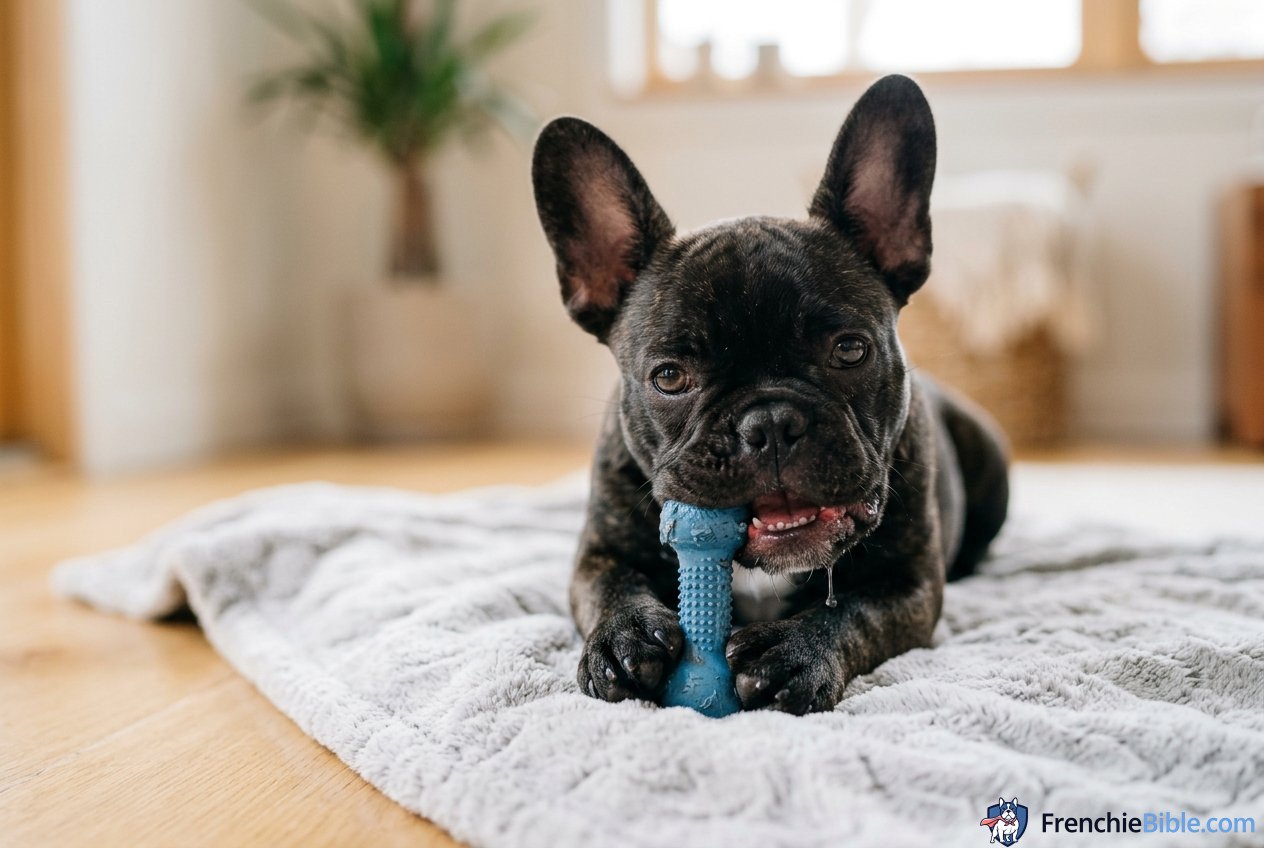
The most obvious sign of teething is an insatiable urge to chew. Your puppy will attempt to gnaw on anything they can get their mouth around. This is not out of spite or misbehavior; chewing provides counter-pressure against the gums, which physically relieves the aching and throbbing sensations caused by erupting teeth. You may also notice an increase in puppy nipping and biting directed at your hands, ankles, or clothing.
2. Drooling and Bad Breath
While French Bulldogs are not excessive droolers like Mastiffs or Saint Bernards, you may notice an increase in salivation during the peak teething months. The excess saliva is a natural response to gum inflammation. Furthermore, the combination of bleeding gums, loose teeth, and trapped food particles can lead to a distinct, slightly metallic or foul odor known colloquially as “teething breath.” This is usually temporary and will resolve once the adult teeth are fully in.
3. Inflamed, Red, or Bleeding Gums
If you gently lift your puppy’s lips (known as the flews), you may observe that their gums appear swollen, angry, and bright red, particularly where new teeth are emerging. You might also notice small spots of blood on their chew toys, ropes, or even in their water bowl. Minor bleeding is completely normal when a baby tooth falls out or an adult tooth cuts through the gum line. However, profuse or continuous bleeding should be evaluated by An Experienced Breedererinarian.
4. Changes in Eating Habits
A sore mouth can make eating hard kibble uncomfortable. You might notice your Frenchie eating slower than usual, picking at their food, or dropping pieces out of their mouth. Some puppies may skip a meal altogether if the pain is particularly severe that day.
5. Loose or Missing Teeth
As previously mentioned, you may occasionally spot a tiny tooth on the carpet or notice a sudden gap in your puppy’s smile. You might also see a baby tooth hanging loosely by a thread of tissue. Never attempt to force or pull a loose baby tooth out with pliers or your fingers, as this can break the root and lead to painful infections. Allow it to fall out naturally.
6. Whining, Restlessness, and Irritability
Teething pain can make a normally cheerful puppy feel cranky, lethargic, or restless. They may have trouble settling down for a nap, whine for seemingly no reason, or act slightly more irritable during playtime.
7. Mild Fever and Upset Stomach
In some cases, the systemic inflammation of teething can cause a very mild, low-grade fever. Additionally, if the puppy swallows excess saliva and a few baby teeth, they might experience a mild episode of loose stools or an upset stomach. If diarrhea is severe, bloody, or persists for more than 24 hours, contact your vet, as this may be a sign of a virus or parasite rather than teething.
How to Soothe Your French Bulldog’s Teething Pain
Seeing your puppy in discomfort can be distressing, but there are numerous safe and effective methods to alleviate their pain and protect your home from destruction.
Cold and Frozen Remedies
Cold temperatures act as a natural anesthetic, numbing the gums and significantly reducing inflammation and swelling.
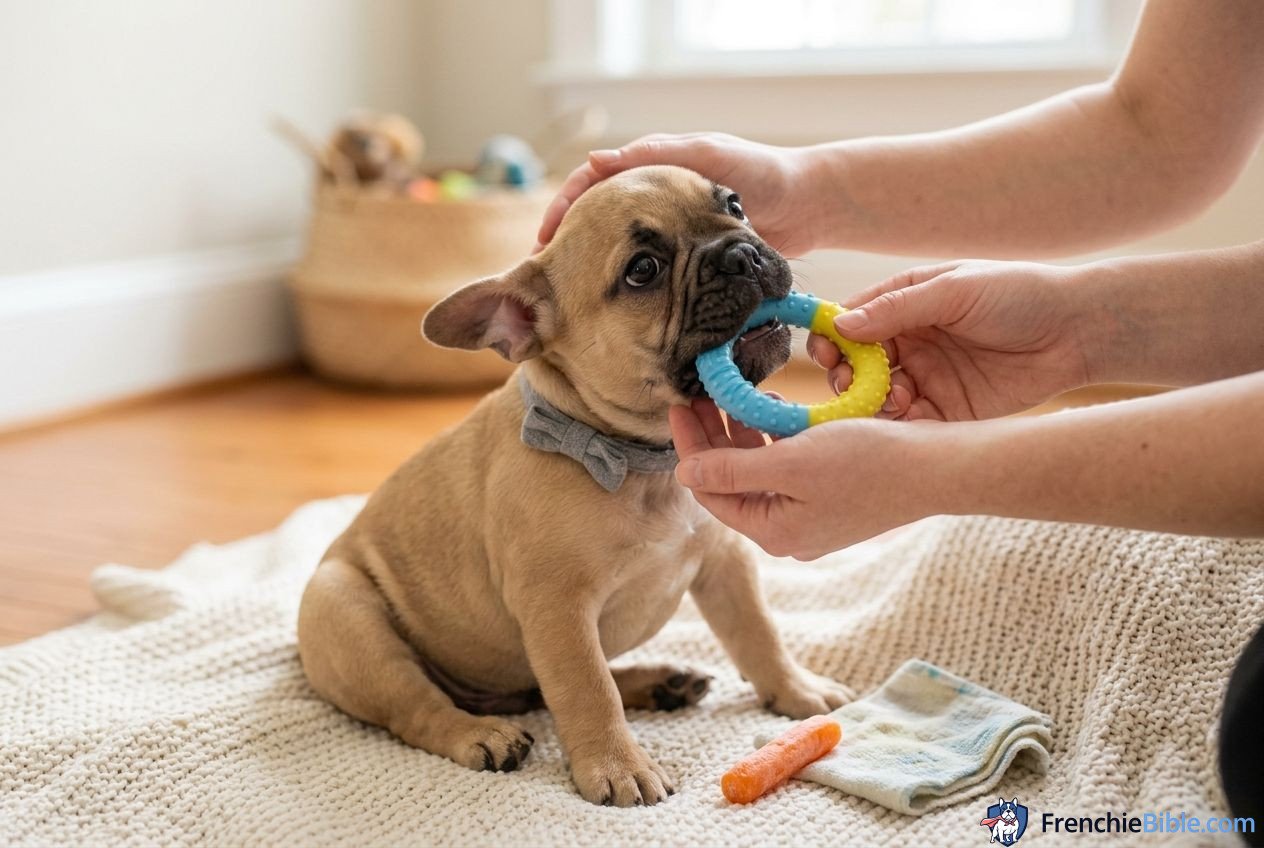
- Frozen Carrots or Apple Slices: Thick, chilled carrots are fantastic, natural, low-calorie chew items. They are hard enough to provide resistance but will eventually break down safely. Always supervise to ensure your puppy doesn’t choke on a large chunk.
- Frozen Wet Washcloth: Take a clean, damp washcloth, twist it into a rope shape, and freeze it. The texture of the terrycloth feels great on itchy gums, and the cold soothes the ache. Once it thaws, take it away so your dog doesn’t ingest the fabric.
- Ice Cubes: Offering crushed ice or small, manageable ice cubes for your puppy to lick and crunch can provide immediate relief. Avoid massive, rock-hard ice blocks, which could potentially fracture a fragile tooth.
Gentle Gum Massages
If your Frenchie is comfortable with you handling their mouth, you can gently massage their gums to relieve pressure. Wash your hands thoroughly, and use your bare index finger to apply light, circular pressure to the inflamed areas of their gums. You can also dip your finger in a dog-safe bone broth and freeze it slightly before massaging.
Softening Their Food
If your puppy is struggling to crunch their dry kibble, simply add warm water or low-sodium, dog-safe chicken broth to their bowl and let it sit for 10-15 minutes before serving. This softens the food, making it much easier and less painful for them to eat, ensuring they continue to get the necessary nutrients for growth.
Creating a Safe, Restricted Chewing Environment
Management is half the battle. When you cannot directly supervise your teething puppy, they must be in a puppy-proofed area, such as a crate or an exercise pen. Ensure the only items in this area are their designated safe chew toys. Do not leave shoes, electrical cords, or valuable items within their reach. By setting them up for success, you prevent destructive habits from forming.
Choosing the Safest Chew Toys for French Bulldogs
Not all chew toys are created equal, and this is especially true for brachycephalic breeds. Because French Bulldogs have incredibly strong jaws relative to their size, but also suffer from crowded teeth and airway vulnerabilities, selecting the right toy requires careful consideration.
Factors to Consider When Selecting Toys
- Size Appropriateness: Toys must be large enough that they cannot be swallowed entirely or get lodged in the back of the throat, causing a choking hazard. However, they should not be so massive and heavy that a Frenchie puppy cannot comfortably carry or manipulate them.
- Durability and Texture: The ideal teething toy provides “give.” If a toy is so hard that you cannot indent it with your thumbnail, it is too hard for a puppy’s teeth and poses a risk of dental fractures. Conversely, toys that are too soft can be easily shredded into small pieces and ingested, leading to dangerous intestinal blockages.
- Non-Toxic Materials: Puppies will be ingesting small, microscopic amounts of whatever they are chewing on. Ensure toys are made from 100% natural rubber, BPA-free plastics, or food-grade nylon. Always buy from reputable brands to avoid cheap toys containing toxic chemicals or lead paint.
- Brachycephalic-Friendly Shapes: Because Frenchies lack a long snout, they often struggle to hold flat or wide toys between their paws while chewing. Toys with contours, ridges, and a “wishbone” or “Y” shape are much easier for them to grip and manipulate.
Top Recommended Safe Chew Toys for Frenchie Puppies
Based on decades of veterinary experience and feedback from Frenchie owners, here are the absolute best, safest chew toys to guide your puppy through the teething phase:
1. The Classic KONG Puppy Toy
The KONG Puppy toy is an absolute staple for any dog owner. Made from a special, softer rubber formula specifically designed for puppy teeth, its unpredictable bounce satisfies their prey drive, while the hollow center is perfect for stuffing.
- Pro Tip: Fill the inside of the KONG with puppy-safe peanut butter (xylitol-free!), plain unsweetened yogurt, or mashed banana, and freeze it overnight. The frozen filling will keep your puppy occupied for up to an hour, and the cold temperature will deeply numb their sore gums.
2. Nylabone Puppy Chew Teething Rings or Keys
Nylabone creates specific products for the teething phase. Their puppy keys or textured rings are made of a softer, flexible polymer designed for puppies without adult teeth. The raised bristles and nubs help clean teeth and massage the gums as the puppy chews. Remember that once your puppy gets their adult teeth, these softer Nylabones will be destroyed quickly and must be replaced with adult-strength versions.
3. Benebone Puppy Wishbone
The Benebone Wishbone is brilliant for French Bulldogs. The curved, ergonomic shape makes it incredibly easy for a flat-faced dog to hold the toy upright with their front paws and get a good chewing angle. Benebone’s puppy line is slightly softer than their adult line and is infused with real bacon or wood flavor, making it highly enticing.
4. High-Quality Natural Rubber Teething Sticks
Brands like West Paw (Zogoflex toys) or Petstages make excellent rubber-like sticks and ridges. The Petstages Cool Teething Stick can be soaked in water and frozen. The crunchy sound it makes when frozen mimics the satisfying crunch of ice, while the fabric and rubber combination massages the gums.
5. Edible Teething Rings (Carefully Monitored)
There are specific edible teething rings on the market, such as those made by N-Bone. These are completely digestible, pliable, and safe for puppy tummies. They provide excellent chewing satisfaction but don’t last as long as synthetic toys. Always supervise to ensure your puppy doesn’t try to swallow the last remaining chunk whole.
6. Rope Toys (Under Strict Supervision ONLY)
High-quality, tightly woven cotton rope toys can be great for teething. The individual threads act almost like dental floss, cleaning the spaces between the puppy’s teeth. Soaking a rope toy in water or low-sodium chicken broth and freezing it is a highly effective pain reliever.
- Warning: Rope toys are for supervised play only. If your Frenchie begins to pull out strings and swallow them, take the toy away immediately. Swallowed string can cause a linear foreign body obstruction in the intestines, which is fatal without emergency surgery.
Dangerous Chew Toys You Must Avoid
Just as important as knowing what to give your Frenchie is knowing what to avoid. The pet store aisles are filled with products that are incredibly dangerous, especially for brachycephalic dogs.
1. Rawhide Chews
Rawhide is universally condemned by modern veterinarians. It is not a natural byproduct but rather the inner layer of cowhide chemically treated with bleaches and preservatives. When a Frenchie chews rawhide, it turns into a slimy, sticky mess. If swallowed in chunks, it cannot be easily digested and poses a massive choking and intestinal blockage risk. The chemicals used in processing are also highly toxic over time.
2. Hard Animal Bones, Antlers, and Hooves
Elk antlers, cow hooves, and thick marrow bones have become popular, but they are disastrous for teething puppies. These items are harder than dog teeth. Chewing on them frequently results in slab fractures—where a chunk of the tooth shears off entirely, exposing the sensitive nerve pulp. This requires an expensive root canal or surgical extraction.
3. Cheap Plastic and Squeaky Toys with Loose Parts
Flimsy plastic toys from discount bins break apart easily, creating sharp, jagged edges that can lacerate a puppy’s mouth or intestines if swallowed. Additionally, cheap squeakers are easily extracted by a determined puppy and pose a severe choking hazard.
4. Uncrushed Ice Cubes
While crushed ice is fine, whole, hard ice cubes straight from the freezer can be too tough for delicate puppy teeth and may cause micro-fractures in the enamel.
5. Sticks and Branches from the Yard
Never allow your French Bulldog to chew on wooden sticks found outside. Sticks easily splinter, and sharp shards of wood can pierce the roof of the mouth, lodge in the throat, or cause dangerous perforations in the stomach and intestines.
Training Your Frenchie Not to Nip During Teething
Because your puppy’s mouth hurts, they will often try to chew on your hands, fingers, and toes. It is critical to teach bite inhibition during this phase to ensure they develop a “soft mouth” as an adult.
The “Ouch!” Method and Redirection
When your puppy bites your skin too hard, immediately say “Ouch!” or let out a sharp, high-pitched yelp (mimicking the sound a littermate would make if bitten too hard). Immediately pull your hand away and stop all interaction for 10-15 seconds. This teaches the puppy that biting humans makes the fun stop.
After the brief pause, immediately offer them an appropriate, safe chew toy. When they take the toy instead of your hand, praise them enthusiastically. This is called redirection—you are not just telling them “no,” you are showing them what they should chew on.
Enforced Naps and Time-Outs
Often, excessive biting and nipping in puppies are signs of overtiredness rather than just teething pain. Puppies need 16-20 hours of sleep per day. If your Frenchie is acting like a little landshark, they likely need an enforced nap in their crate.
Establishing a Lifelong Dental Care Routine
The teething phase is the absolute best time to desensitize your French Bulldog to having their mouth handled, setting the stage for lifelong dental health. Brachycephalic breeds are prone to periodontal disease due to their crowded teeth, making daily brushing non-negotiable.
Starting the Desensitization Process
While they are young, make touching their mouth a positive experience. Gently lift their lips, touch their gums, and reward them with a tiny lick of dog-safe peanut butter or a soft treat. Do this daily until they are completely relaxed with the process.
Brushing Your Frenchie’s Teeth
Once their adult teeth begin coming in fully (around 6 months), introduce a soft-bristled finger brush or a very small, soft pet toothbrush.
- Never use human toothpaste. Human toothpaste contains fluoride and often xylitol, both of which are highly toxic to dogs. Use an enzymatic dog toothpaste, preferably in a flavor they love, like poultry or beef. The enzymes help break down plaque even if you can’t scrub perfectly.
Aim to brush their teeth at least 3-4 times a week, though daily is optimal.
Dental Chews and Water Additives
Incorporating Veterinary Oral Health Council (VOHC) approved dental chews (like Greenies or Virbac C.E.T. VeggieDent chews) can help reduce tartar buildup. Water additives containing chlorhexidine can also reduce the bacteria load in their mouth, helping to combat “Frenchie breath.”
When to See An Experienced Breedererinarian During the Teething Phase
While teething is a normal physiological process, complications can arise, particularly in a breed with a crowded jawline like the French Bulldog. Keep a close eye out for these red flags:
1. Retained Deciduous Teeth
This is a very common issue in Frenchies. Sometimes, the adult tooth erupts alongside the baby tooth, rather than pushing it out. This results in two teeth occupying the space meant for one. Retained baby teeth trap food, accelerate plaque buildup, and can force the adult tooth to grow at an abnormal, painful angle. If a baby tooth has not fallen out by the time your dog is 7-8 months old, it will likely need to be surgically extracted by your veterinarian while the dog is under anesthesia (often done concurrently with a spay or neuter procedure).
2. Excessive Bleeding, Swelling, or Foul Odor
A tiny amount of pink blood on a toy is normal. Puddles of blood, severe facial swelling, or an overwhelmingly putrid smell coming from the mouth indicate an infection or a fractured root and require immediate veterinary attention.
3. Loss of Appetite or Extreme Lethargy
If the pain is so severe that your puppy refuses to eat for more than 24 hours, or if they are extremely lethargic and unresponsive, consult your vet immediately. Your vet may prescribe a short course of safe, canine-specific pain medication to help them through the worst days.
Frequently Asked Questions (FAQs) About French Bulldog Teething
1. How long does the French bulldog teething phase last?
The most intense period of teething, where they are actively losing baby teeth and erupting adult teeth, lasts from about 3 months to 6 months of age. By 7 to 8 months, all 42 permanent adult teeth should be fully in place, and the teething phase is officially over.
2. Is it normal for my Frenchie puppy to swallow their baby teeth?
Yes, it is entirely normal and very common. Because the teeth are so small, puppies usually swallow them while eating or playing with toys. The teeth pass safely through the digestive tract without causing any harm.
3. Why does my teething Frenchie smell like fish?
A fishy or metallic smell during the teething phase is common. It is usually caused by a combination of minor gum bleeding, loose teeth, and trapped food particles. As long as the odor isn’t accompanied by severe swelling or pus, it should resolve once the adult teeth come in. If the smell persists after 7 months, consult An Experienced Breeder regarding periodontal disease.
4. Can teething cause diarrhea in French bulldogs?
Mild, temporary loose stools can occur because puppies tend to swallow excess saliva during teething, which can slightly upset the stomach. The stress and systemic inflammation can also play a minor role. However, severe, watery, or bloody diarrhea is not a symptom of teething and warrants An Experienced Breeder visit to rule out parasites or parvo.
5. How many teeth do French bulldogs have?
Like most dogs, French Bulldog puppies have 28 deciduous (baby) teeth. As adults, they should have a full set of 42 permanent teeth.
6. Are pig ears safe for teething Frenchies?
Pig ears are highly debated. While softer than bones, they are incredibly high in fat, which can easily trigger gastroenteritis or severe pancreatitis in puppies. Additionally, they can be a source of Salmonella contamination. It is generally safer to stick to high-quality rubber chew toys.
7. What should I do if my puppy’s baby tooth won’t fall out?
If you notice an adult tooth growing right next to a baby tooth, do not try to pull it out yourself. Wait until your puppy is around 6-7 months old. If the baby tooth is still stubbornly retained, your veterinarian will need to surgically extract it to prevent permanent dental misalignment and disease.
8. How often should I brush my French bulldog’s adult teeth?
Ideally, you should brush your Frenchie’s teeth every single day to prevent plaque from hardening into tartar. At a minimum, aim for 3 to 4 times a week using a dog-specific enzymatic toothpaste.
9. Can I use human teething gel (like Orajel) on my French bulldog?
No, absolutely not. Human teething gels often contain benzocaine, which is toxic to dogs and can cause a severe condition called methemoglobinemia, where the blood cannot carry oxygen properly. Never use human medications on a dog without explicitly consulting An Experienced Breeder.
10. At what age can Frenchies transition to adult chew toys?
Once your puppy has lost all their baby teeth and their adult teeth are fully established—typically around 7 to 8 months of age—you should discard the softer puppy teething toys. Transition them to more durable, adult-grade rubber toys (like the classic red or black KONGs) that can withstand the chewing power of their permanent teeth.
Conclusion
The French Bulldog teething phase is a temporary, albeit sometimes stressful, rite of passage in your puppy’s development. Because of their unique brachycephalic jaw structure, Frenchies require extra attention to ensure their adult teeth come in correctly and without severe overcrowding or retention issues.
By understanding the teething timeline from weeks 12 to 24, recognizing the symptoms of gum discomfort, and providing safe, durable, and soothing chew toys, you can effectively manage this phase. Avoid dangerous items like rawhide and bones, leverage the pain-relieving power of frozen items, and use this period to establish a positive, lifelong dental hygiene routine. Armed with patience, plenty of puppy-safe KONGs, and the guidance in this article, you and your Frenchie will navigate the teething months successfully, resulting in a healthy, happy, and well-behaved adult companion.
Disclaimer: I am a French Bulldog breeding expert with over a decade of hands-on experience with this breed. I am not An Experienced Breedererinarian. The information in this article is for educational purposes only. Always consult your veterinarian regarding your dog’s specific health needs and care.
Disclaimer: I am a French Bulldog breeding expert with over a decade of hands-on experience with this breed. I am not a veterinarian. The information in this article is for educational purposes only. Always consult your veterinarian regarding your dog’s specific health needs and care.