If you’ve recently packed up your life, moved to a new house or apartment, and suddenly found your previously perfectly housebroken Frenchie leaving “surprises” on your new rugs, take a deep breath. You are not alone. In my ten years of breeding, raising, and placing French Bulldogs with loving families I have fielded frantic phone calls from dozens of new and experienced owners dealing with this exact scenario.
french bulldog potty training regression after moving is one of the most common behavioral hiccups this breed faces. Frenchies are creatures of intense habit. They thrive on routine, familiar scents, and a predictable environment. When you uproot them, their entire world gets turned upside down. The spatial map they used to navigate their potty routine has been erased. To them, the new living room might as well be an outdoor field.
Related Reading: Health & Diet | Grooming & Care
In this comprehensive guide I am going to walk you through exactly why this happens from a behavioral standpoint, and more importantly I’ll share my foolproof 3-step method to quickly and effectively rebuild their potty habits. No fluff, just real-world strategies that have worked for my own Frenchies and the countless families I’ve mentored.
Understanding the “Why”: The Psychology Behind French Bulldog Potty Regression
Before we can fix the problem, we have to understand why your Frenchie is suddenly acting like a completely untrained eight-week-old puppy. It’s easy to get frustrated and think they are acting out of spite because of the move. Let me stop you right there: dogs do not pee on the floor out of spite.
When a French Bulldog experiences potty training regression after a move, it usually boils down to three core factors:
1. The Loss of Scent Markers and Spatial Familiarity
In your old home, your French Bulldog knew exactly where the door was, what the floor felt like on the way there, and most importantly, they could smell their own subtle scent markers that indicated “this is the bathroom area.” Dogs rely heavily on their olfactory senses. When you move to a new environment, those familiar scents are gone. Worse, the new home might smell like previous pets, cleaning chemicals, or simply unfamiliar odors that confuse their internal compass. Without their spatial map and scent cues, the new plush carpet might feel like a perfectly acceptable place to relieve themselves.
2. Stress Anxiety, and Overstimulation
Moving is incredibly stressful for humans, and it is exponentially more stressful for a French Bulldog who doesn’t understand why the furniture is in boxes. The chaos of packing, the car ride, and the sudden shift in environment elevate their cortisol levels. When a dog is stressed or anxious, their fundamental routines—including bowel and bladder control—are often the first things to falter. They might feel too nervous to go outside in a strange new yard, leading them to hold it until they simply can’t anymore, resulting in an accident inside.
3. Disruption of the Daily Routine
Frenchies are the ultimate creatures of habit. In your old home, they likely had a very set schedule: wake up, go out the back door, eat, go out again, sleep. Moving inevitably disrupts this. Maybe you are busy unpacking, so their feeding time shifted by an hour. Maybe the new house requires walking down a hallway and taking an elevator instead of just opening a sliding glass door. These routine disruptions throw off their biological clock, leading to mistimed potty breaks and unavoidable accidents.
The Breeder’s Blueprint: 3 Steps to Rebuild the Potty Habit Fast
Now that we know why your Frenchie is struggling, let’s get to the solution. When families call me in a panic about housebreaking a French Bulldog after moving I immediately put them on my “Potty Reboot Protocol.” You must treat your adult Frenchie as if they are a brand-new puppy who knows absolutely nothing.
Here is the 3-step process to get your Frenchie back on track, usually within 7 to 14 days.
Step 1: Total Environmental Management (The “Zero Freedom” Rule)
The biggest mistake owners make after moving is giving their Frenchie full free roam of the new house. You cannot do this. Free roam must be earned back. By allowing them to wander the new house unsupervised, you are giving them the opportunity to make mistakes. Every time they pee inside, they are building a new, bad habit.
Implement Strict Confinement
For the first week in the new home, your Frenchie should only be in one of three places:
1. In their crate.
2. Securely tethered to you (the “umbilical cord” method).
3. Actively supervised in a small, gated-off area (like the kitchen or living room) where you have 100% eyes on them.
The Umbilical Cord Method
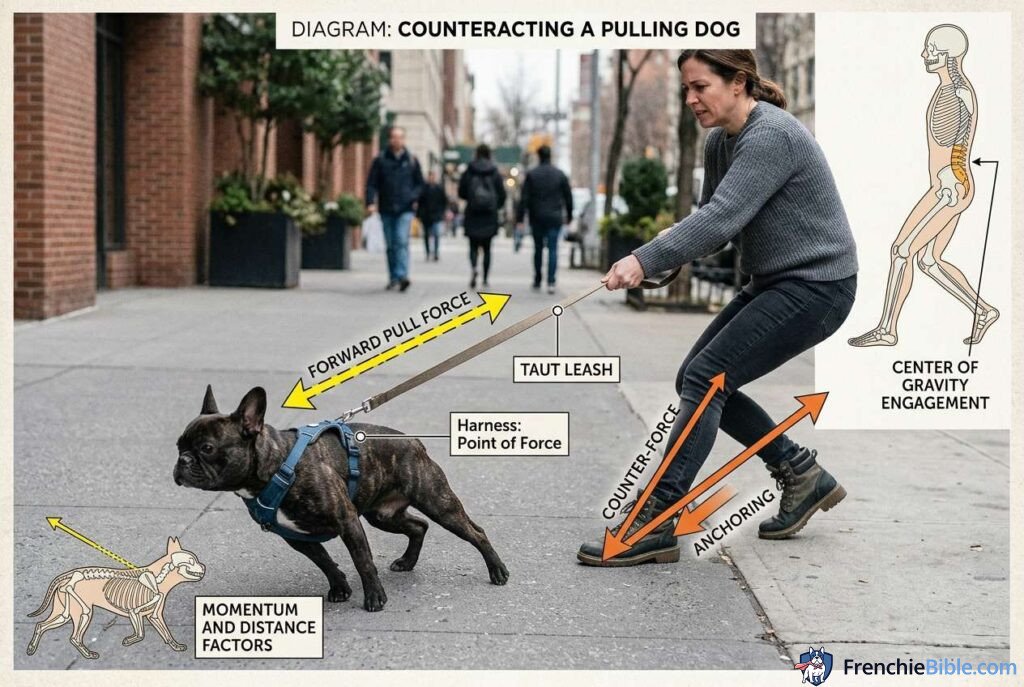
This is a technique I swear by. Attach a 6-foot leash to your Frenchie’s harness and loop the other end around your waist or belt loop. As you walk around unpacking boxes, your Frenchie goes with you. Because they are tethered to you, they physically cannot sneak off into the guest bedroom to poop on the rug. Furthermore, because they are right next to you, you can observe their micro-behaviors. If they start sniffing the ground intently, circling, or whining—boom, you immediately take them outside.
Crate Re-Acclimation
Your Frenchie’s crate should be their safe haven. Place it in a quiet, low-traffic area of the new home. Put a piece of unwashed clothing that smells like you inside it, along with their favorite chew toy. If you cannot actively supervise them, they must go in the crate. Dogs naturally do not want to soil where they sleep, so utilizing the crate prevents accidents and helps them practice holding their bladder while their routine stabilizes.
Step 2: Establish the New “Potty Zone” with High Predictability
Your French Bulldog needs a new spatial map, and it is your job to draw it for them. You need to pick one specific spot outside that will become the designated bathroom area, and you must be relentlessly consistent about it.
Choosing the Spot
Pick a quiet area in your new yard or near your new apartment building. Try to choose a surface similar to what they were used to (e.g., if they loved grass at the old house, find grass; if they were used to concrete, find a quiet patch of pavement).
The Scent Transfer Trick
Here is a breeder secret that works wonders: scent transfer. If you can, take a paper towel and wipe up a little bit of their urine from an indoor accident (or bring a soiled potty pad if you use them). Take that paper towel outside to the new designated potty spot and place it on the ground, securing it with a rock or stick. When you take your Frenchie out, lead them directly to that spot. The smell of their own urine triggers an instinctual response: “Ah, this is where I am supposed to go.”
The Strict Schedule
You must put your Frenchie on an aggressive potty schedule until the regression is fixed. Do not wait for them to signal that they need to go out, because in a new environment, they might not signal at all.
Take them to the designated spot:
– The absolute second they wake up in the morning.
– Immediately after eating or drinking.
– Immediately after a vigorous play session.
– Right after they wake up from a nap.
– Right before bed.
– And every 2 to 3 hours in between.
Yes, this is exhausting. But doing this strictly for one week is much better than cleaning pee out of your carpets for six months.
Step 3: High-Value Reinforcement and Avoiding the Punishment Trap
The final step is cementing the behavior through aggressive positive reinforcement. Your Frenchie needs to learn that going potty in the new outside spot is the greatest thing they could possibly do.
The “Jackpot” Reward System
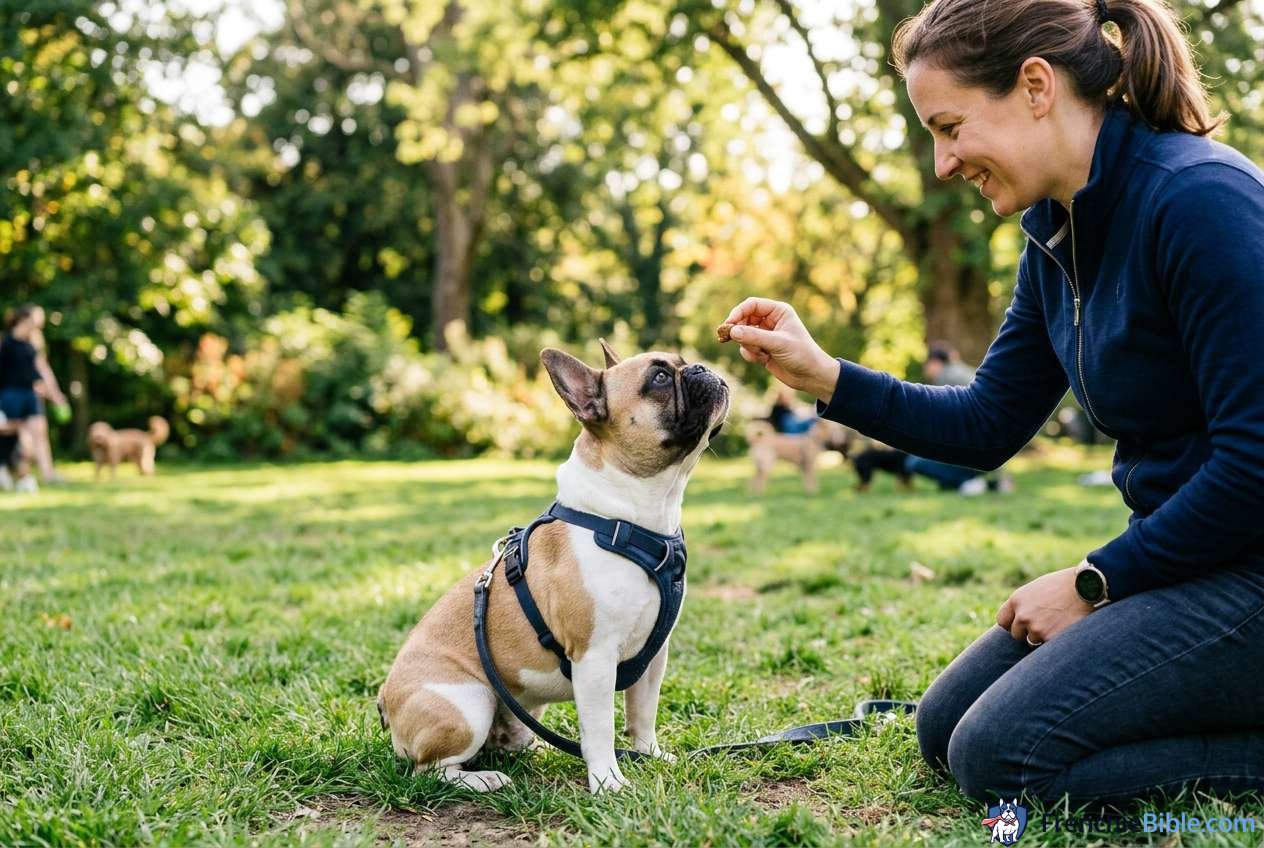
Do not just give them a dry kibble when they pee outside. You need high-value treats that they only get for successful outdoor potty trips. I’m talking about boiled chicken breast, small pieces of freeze-dried liver, or a tiny smear of dog-safe peanut butter on a spoon.
Timing is everything. You must give them the treat immediately after they finish doing their business, while you are still outside in the potty zone. Do not wait until you get back inside the house, otherwise, you are rewarding them for coming inside, not for going potty. Accompany the treat with enthusiastic verbal praise (“Yes! Good potty!”).
The Danger of Punishment
If you catch your French Bulldog having an accident in the new house, do absolutely nothing to punish them. Do not yell, do not swat them with a newspaper, and for the love of all things, do not rub their nose in it.
If you punish a Frenchie for peeing inside, they do not learn “I shouldn’t pee inside.” They learn “Peeing in front of my human is dangerous.” This leads to a dog that sneaks behind the sofa to pee, or worse, a dog that refuses to pee outside when you are watching them because they are terrified you will get mad.
If you catch them mid-stream, make a sharp but non-aggressive sound (like a loud clap or a sharp “Ah-ah!”) to interrupt them, scoop them up, and hustle them outside to the potty zone. If they finish outside, give them a massive reward. If you find an accident after the fact, just roll up your sleeves, clean it up, and silently vow to supervise them better next time.
The Ultimate Odor Eradication: Cleaning Up Mistakes
When an accident happens—and it will—how you clean it is arguably just as important as how you train. French Bulldogs have an incredibly sensitive sense of smell. If they pee on the carpet and you clean it with standard household cleaners like bleach, ammonia, or soap, you are only masking the smell to human noses. To a dog, that spot still smells like a bathroom, and they will return to it.
You absolutely must use an enzymatic cleaner specifically formulated for pet urine. Enzymatic cleaners contain biological enzymes that literally eat and break down the uric acid crystals in the urine, completely neutralizing the odor profile.
When you clean an accident:
1. Blot up as much liquid as possible with paper towels. Do not scrub, as this pushes the urine deeper into the carpet pad.
2. Saturate the area heavily with the enzymatic cleaner. It needs to soak down as deep as the urine went.
3. Let it sit for the time recommended on the bottle (usually 10-15 minutes) to allow the enzymes to work.
4. Blot dry and let the area air dry completely.
5. Block off the area while it dries so your Frenchie doesn’t wander back over to investigate.
Adapting to Specific Move Scenarios: Apartments vs. Houses
The way you handle potty training regression might need a slight adjustment depending on the exact nature of your move. Let’s look at two common scenarios I hear about from my extended Frenchie families.
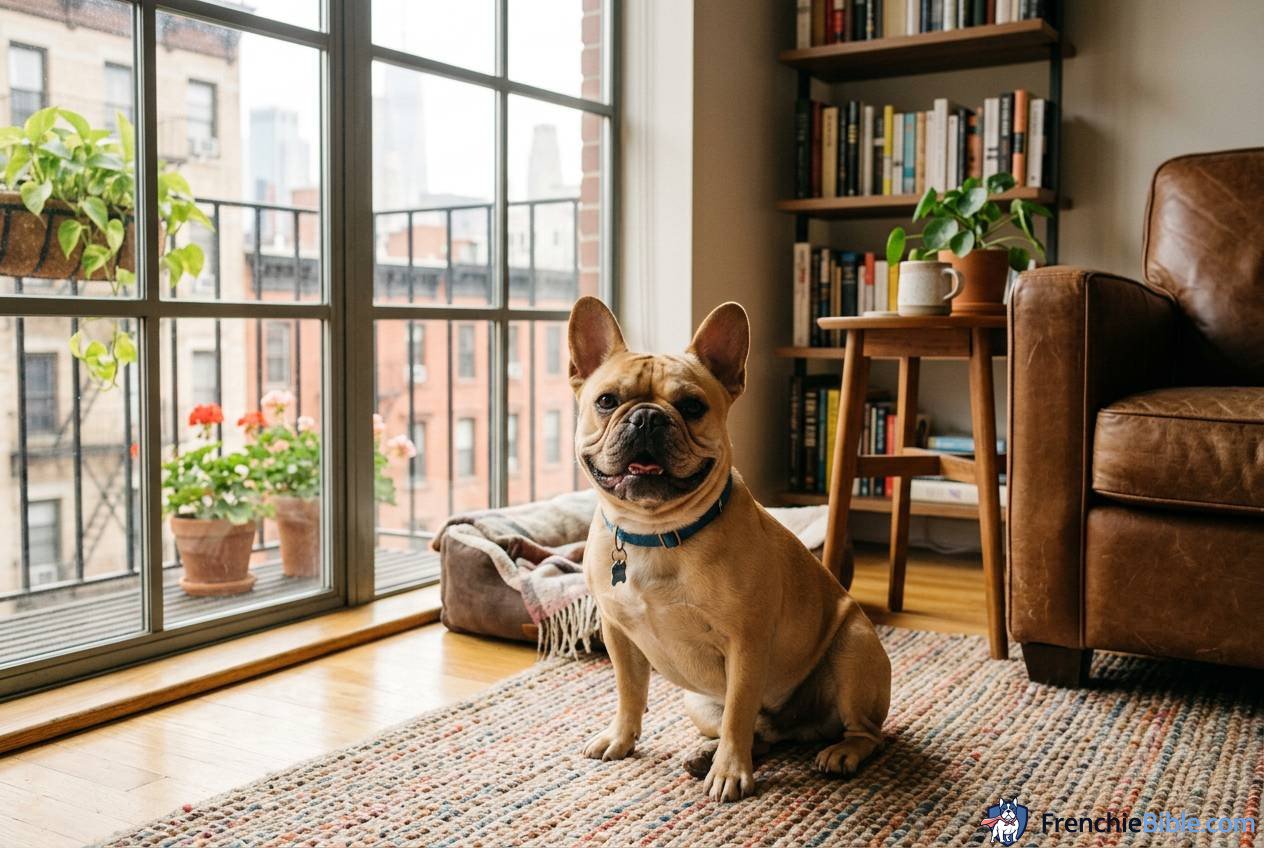
Moving from a House with a Yard to a High-Rise Apartment
This is often the hardest transition for a French Bulldog. They are used to waking up, walking out a back door, and immediately hitting the grass. Now, they have to wait for you to put on shoes, put on their harness, walk down a hallway, wait for an elevator, and walk through a lobby before they see a blade of grass. For a dog that urgently needs to pee, this gauntlet is simply too long.
The Solution: For the first few weeks, you may need to carry your Frenchie from the apartment door all the way to the outside potty area. Dogs naturally try to avoid peeing while being held. Carrying them prevents hallway accidents while they learn the new route. Alternatively, if your apartment allows it, consider investing in a high-quality balcony potty patch (real grass patches delivered via subscription are excellent for this) to serve as a transitional middle-ground.
Moving from an Apartment to a House with a Big Yard
You might think this is an easier transition, but it comes with its own pitfalls. Often, owners just open the back door and expect the dog to figure it out. But to an apartment-raised Frenchie, a giant, echoing backyard can be terrifying or overwhelmingly distracting.
The Solution: Do not just let them out alone. Put them on a leash, even in your own fenced backyard. Walk them to a specific corner of the yard and stand there like a tree until they do their business. If you just let them loose, they will spend 20 minutes sniffing the fence line, chasing a bug, forgetting they need to pee, and then they will come inside and immediately pee on the rug. Leash them, focus them, reward them, and then take the leash off and let them play in the yard as a reward.
Managing Your Expectations and Your Frenchie’s Anxiety
Re-establishing potty habits after a move takes patience. You are not just dealing with a bladder; you are dealing with a little living creature going through a major life transition. Some French Bulldogs bounce back in three days. Others, especially older rescues or particularly sensitive dogs, might take three weeks.
Be patient. Maintain a calm demeanor. French Bulldogs are incredibly empathetic dogs—they feed off your energy. If you are constantly stressed, angry, and stomping around the new house because of potty accidents, your dog’s anxiety will spike, worsening the regression.
Take a breath, stick to the strict management protocol, use those high-value treats, and remember that this is temporary. Soon enough, your Frenchie will view the new house as their true home, and the potty routine will be as solid as it ever was.
Frequently Asked Questions (FAQ)
1. How long does French Bulldog potty training regression usually last after a move?
With strict management and a reboot of basic puppy potty training protocols, most French Bulldogs will resolve their regression within 7 to 14 days. However, highly sensitive dogs or older dogs deeply ingrained in their old habits might take up to a month to fully adapt to the new spatial map and routine.
2. Should I use indoor pee pads temporarily while my Frenchie adjusts to the new home?
I generally advise against introducing pee pads if your dog was previously trained to go strictly outdoors. Introducing pee pads during a move can confuse them further, teaching them that going to the bathroom inside the house is suddenly acceptable. It is better to rely on strict supervision, frequent outdoor trips, and crate management.
3. My Frenchie is suddenly peeing on my bed in the new house. Why are they doing this?
Peeing on soft, scent-heavy items like beds, couches, or your clothing after a move is a classic sign of severe anxiety and stress, not spite. Your bed smells intensely like you, which provides comfort. By mingling their scent with yours, they are trying to self-soothe and establish security in an unfamiliar environment. Treat this with extreme supervision, keeping bedroom doors closed, and focusing on rebuilding their confidence.
4. I caught my Frenchie having an accident; should I carry them outside mid-stream?
Yes. If you catch them in the act, interrupt them with a sharp but non-scary sound (like clapping your hands), immediately scoop them up, and take them straight to their designated outdoor potty spot. If they finish outside, reward them heavily.
5. Do I need to wake up in the middle of the night to take them out like a puppy again?
In the first few days after a stressful move, it might be necessary. If your Frenchie is anxious, they may wake up panting or pacing. Setting an alarm for a middle-of-the-night potty break for the first 3-4 days can prevent crate accidents and help ease their transition until their stress levels drop and they sleep through the night again.
Disclaimer: We are not veterinarians and do not hold veterinary medical licenses. The information provided in this article is based on years of breeding and daily care experience and is for educational purposes only. It should not replace professional veterinary advice. Always consult with a licensed veterinarian if you have concerns about your French Bulldog’s health or before starting any new treatment.