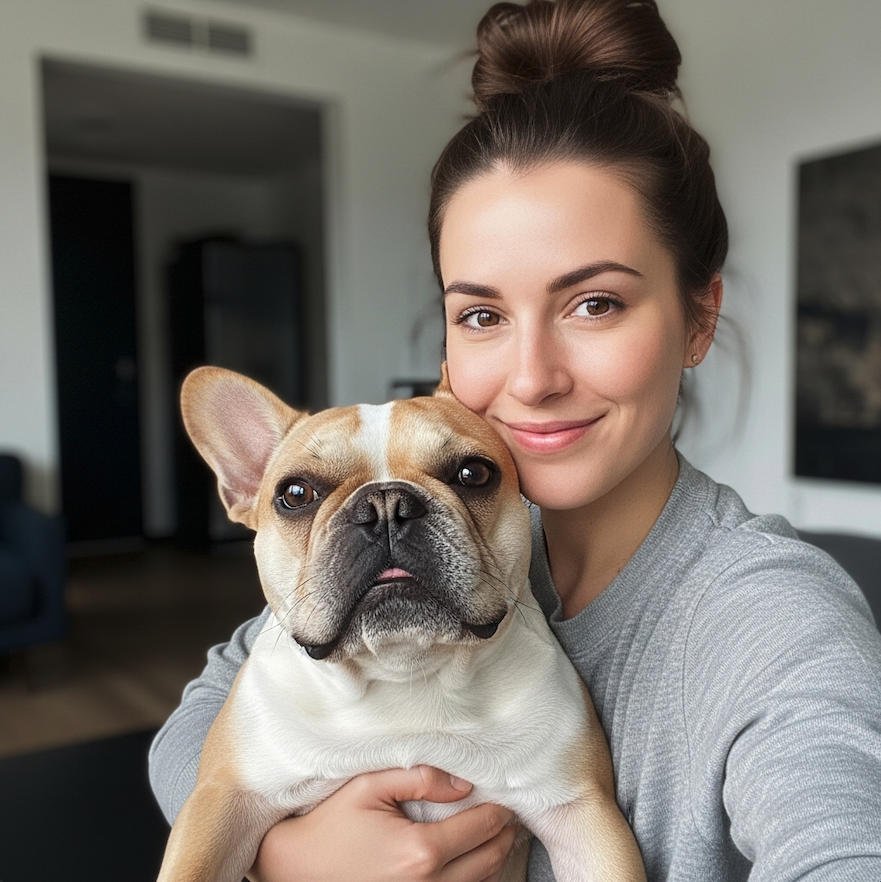

Welcome to this comprehensive guide on managing an overprotective French Bulldog. As someone who has spent the last decade deeply immersed in the world of French Bulldogs—studying their unique genetics, optimizing their daily care, analyzing their complex behavioral psychology, and fine-tuning their nutrition—I have seen firsthand how this incredible breed interacts with their human families. French Bulldogs are universally renowned for their affectionate nature, their comical antics, and their unwavering loyalty. They form incredibly strong bonds with their owners, often choosing one specific person to become their absolute center of the universe.
However, this deep, soul-level bond can sometimes cross the line from healthy affection into overprotective and territorial behavior. When a Frenchie decides that you, the couch, or their food bowl is their exclusive property, the resulting behavior can become problematic and even dangerous. Many new and even intermediate owners mistake this territorial aggression for “love” or “protectiveness.” They might think it is endearing that their small, bat-eared companion wants to guard them from other dogs or people. But in reality, this behavior stems from insecurity, resource guarding, and a lack of clear leadership.
Related Reading: Health & Diet | Grooming & Care
In this extensive guide, we will dive deep into the psychology of the French Bulldog. We will explore why they become overprotective, the hidden dangers of allowing territorial behavior to continue unchecked, how to recognize the subtle early warning signs before an incident occurs, and, most importantly, provide a step-by-step breeder’s framework for correcting these behavioral issues. Whether you are bringing home a new puppy and want to prevent these issues from developing, or you are struggling with an adult Frenchie who has already developed severe territorial habits, this guide will equip you with the knowledge and tools you need to foster a balanced, confident, and well-behaved canine companion.
Understanding French Bulldog Overprotectiveness and Territorial Behavior
To effectively correct overprotective and territorial behavior in your French Bulldog, it is crucial to first understand the root causes. Frenchies are a companion breed; they were bred for centuries specifically to sit on laps, offer companionship, and be closely attached to humans. Unlike working breeds that were bred to herd sheep, guard livestock, or retrieve game, the Frenchie’s primary “job” is to be with you. This intense focus on their human family means they are prone to developing unhealthy attachments if not properly guided.
The Psychology Behind French Bulldog Loyalty
French Bulldogs are incredibly intuitive and emotionally sensitive dogs. They are highly attuned to their owner’s moods, routines, and physical presence. This hyper-attachment is a double-edged sword. On one hand, it creates a deeply rewarding relationship where your dog truly feels like your best friend. On the other hand, it means they can easily become overly dependent on your presence for their sense of security.
When a Frenchie lacks confidence or when the hierarchy in the household is unclear, they may feel compelled to take on the role of the “protector” or “resource manager.” Because they are a structurally small breed, this attempt to control their environment often manifests as disproportionately aggressive displays—barking, lunging, and snapping—to create distance between their perceived “resource” (you) and a perceived “threat” (a guest, another dog, or even a family member).
Is It Love or Resource Guarding?
One of the most common misconceptions I encounter in my decade of working with this breed is the misinterpretation of resource guarding as love. An owner might say, “My Frenchie loves me so much, he won’t let anyone else sit next to me on the couch!”
Let me be perfectly clear: this is not love. This is resource guarding.
In the canine mind, high-value resources can include food, toys, a comfortable resting spot (like your bed or the couch), and, very frequently, their favorite human. When your Frenchie growls at your partner for approaching while the dog is on your lap, they are not protecting you from danger. They are claiming you as a possession and warning the other person to back off from their property.
True canine love and affection are rooted in trust, relaxation, and mutual respect. A well-adjusted, confident French Bulldog who truly feels secure in their relationship with you will be happy to share your attention and will welcome positive interactions with others. Resource guarding, conversely, is rooted in anxiety and the fear of losing access to something valuable. Recognizing this distinction is the absolute foundation of addressing the behavior.
Common Triggers for Territorial Behavior in Frenchies
Territorial behavior rarely happens in a vacuum. It is usually triggered by specific situations, environments, or interactions. In my experience, the most common triggers for French Bulldogs include:
- Space Invaders: Someone approaching the dog’s designated safe space, such as their crate, their bed, or the area where they eat.
- The Lap Claim: A person or another animal approaching while the Frenchie is sitting on their owner’s lap or sitting very close to them on furniture.
- Doorway Defense: The dog aggressively reacting to the doorbell, knocking, or people entering the home. The front door is a major transition point and a prime location for territorial displays.
- High-Value Items: The presence of a new, highly coveted toy, a long-lasting chew, or a special treat.
- Leash Restriction: Being on a leash can amplify feelings of vulnerability and territoriality, leading to leash reactivity when other dogs or people approach what the dog perceives as their personal space bubble.
- Vehicle Guarding: Many Frenchies become highly territorial of their owner’s car, barking aggressively at anyone who walks by or approaches the vehicle.
By identifying your specific dog’s triggers, you can begin to anticipate their reactions and manage the environment to prevent the behavior from occurring while you work on training and desensitization.
The Hidden Dangers of an Overprotective Frenchie
Allowing overprotective and territorial behavior to persist is not just an annoyance; it poses significant risks to your dog, your family, and your community. While a Frenchie’s small stature might make their aggression seem less threatening than that of a larger breed, the consequences of unchecked territoriality are severe and multifaceted.
Risk of Aggression Snapping, and Bites
The most immediate and obvious danger of territorial behavior is the potential for physical harm. A French Bulldog that is resource guarding you or their space is in a state of high arousal and defensive aggression. If their warning signs (growling, stiffening, lip licking) are ignored or inadvertently challenged, they will escalate to snapping and, ultimately, biting.
French Bulldogs possess surprisingly strong jaws and a very determined nature. A bite from a Frenchie can cause significant injury, particularly to children, elderly individuals, or other pets in the household. As a responsible owner, it is your duty to ensure your dog does not pose a danger to others. Ignoring territorial aggression is a direct path to a bite incident, which can result in legal liability, devastating injuries, and the heartbreaking reality of behavioral euthanasia.
Chronic Stress Cortisol, and Anxiety for Your Dog
From a psychological and physiological standpoint, being constantly on guard is incredibly detrimental to your French Bulldog’s health. A dog that feels the need to aggressively protect their owner or their territory is living in a perpetual state of chronic stress.
When a dog is stressed, their body releases high levels of cortisol and adrenaline. While these hormones are useful for short-term “fight or flight” situations, chronic exposure to them suppresses the immune system, disrupts digestion, and can lead to a host of long-term health issues. An overprotective Frenchie is an anxious Frenchie. They cannot relax, they cannot sleep deeply, and they are constantly scanning the environment for threats. This is a miserable existence for a companion animal. Resolving this behavior is as much about improving your dog’s quality of life and mental well-being as it is about safety.
Social Isolation Lifestyle Limitations, and Liability
Living with a highly territorial and overprotective dog often leads to a shrinking world for both the dog and the owner. Owners quickly realize that they cannot safely invite guests over, they cannot take their dog to cafes or parks, and they cannot easily travel or leave their dog with a pet sitter.
This social isolation exacerbates the problem. The dog receives less exposure to novel situations and people, making them even more suspicious and reactive when they do encounter them. For the owner, the constant hyper-vigilance required to manage an unpredictable dog is exhausting and isolating. Furthermore, if your dog bites someone or injures another animal due to territorial aggression, you could face severe legal and financial repercussions.
Recognizing the Early Signs of a Territorial French Bulldog
One of the hallmarks of my approach to canine behavior—developed over a decade of observing litters, adults, and interacting with thousands of owners—is the emphasis on reading subtle body language. Aggression rarely happens without warning. Dogs communicate their discomfort and intentions clearly, provided you know what to look for. Recognizing the early signs of territoriality allows you to intervene before the dog escalates to growling or biting.
Subtle Body Language Cues to Watch For
Long before a French Bulldog growls, their body language will shift to indicate resource guarding or territorial tension. Pay close attention to these subtle cues, especially when someone approaches your dog while they are eating, chewing a toy, or resting with you:
- Hard Stare and Whale Eye: The dog will freeze and fixate a hard, unblinking stare on the approaching person or animal. You may also see “whale eye,” where the whites of the dog’s eyes are visible as they avert their head slightly but keep their eyes locked on the target.
- Stiffening and Freezing: The dog’s entire body will suddenly become rigid and tense. They will stop whatever they were doing (eating, panting, playing) and freeze in place. This is a highly significant warning sign.
- Closed Mouth and Pursed Lips: A relaxed Frenchie usually has a slightly open mouth and a soft expression. A territorial dog will firmly close their mouth, sometimes pushing their commissures (the corners of the mouth) forward.
- Weight Shifting: The dog may shift their weight forward, preparing to lunge, or they may hunker down over the item they are guarding.
- Ear Position: While Frenchie ears are naturally erect, during a territorial display, they may become rigidly pinned forward or flattened back against the head, depending on whether the dog’s aggression is rooted more in offensive confidence or defensive fear.
- Lip Licking and Yawning: These are classic displacement behaviors indicating stress and anxiety in a situation they perceive as threatening.
Escalating Vocalization: Barking Growling, and Snapping
If the subtle body language cues are ignored, the Frenchie will escalate their communication to vocalizations and overt actions.
- Low Rumble Growling: This is a clear, unmistakable warning. It is the dog saying, “I am uncomfortable, back away.” Never punish a growl. Punishing a growl teaches the dog that warning is not allowed, which can lead to them biting without warning in the future.
- Sharp Staccato Barking: This often occurs at boundaries, such as windows, fences, or doorways. It is designed to alert the pack and drive the intruder away.
- Lunging and Air Snapping: If the threat continues to approach despite the growl, the dog will lunge forward and snap their jaws in the air. This is a final warning before contact is made.
- Contact Biting: The ultimate escalation, occurring when all previous warnings have failed to create the desired distance.
Barrier Frustration and Leash Reactivity
Territorial behavior frequently manifests as barrier frustration. When a Frenchie is behind a physical barrier—such as a window, a fence, or on a leash—they cannot freely interact with the stimulus they are observing. This restriction builds immense frustration, which is often redirected into aggressive displays. A dog that is perfectly friendly off-leash in a neutral environment may become highly reactive and overprotective when on a leash, feeling tethered to their owner and unable to escape or properly investigate a perceived threat.
How to Correct Overprotective and Territorial Behavior: A Breeder’s Step-by-Step Guide
Correcting overprotective and territorial behavior in a French Bulldog requires patience, consistency, and a fundamental shift in how you interact with your dog. There are no quick fixes, but with dedicated effort, you can reshape your dog’s emotional response and teach them that they do not need to guard you or their resources. Here is the comprehensive framework I recommend based on years of successful behavioral rehabilitation.
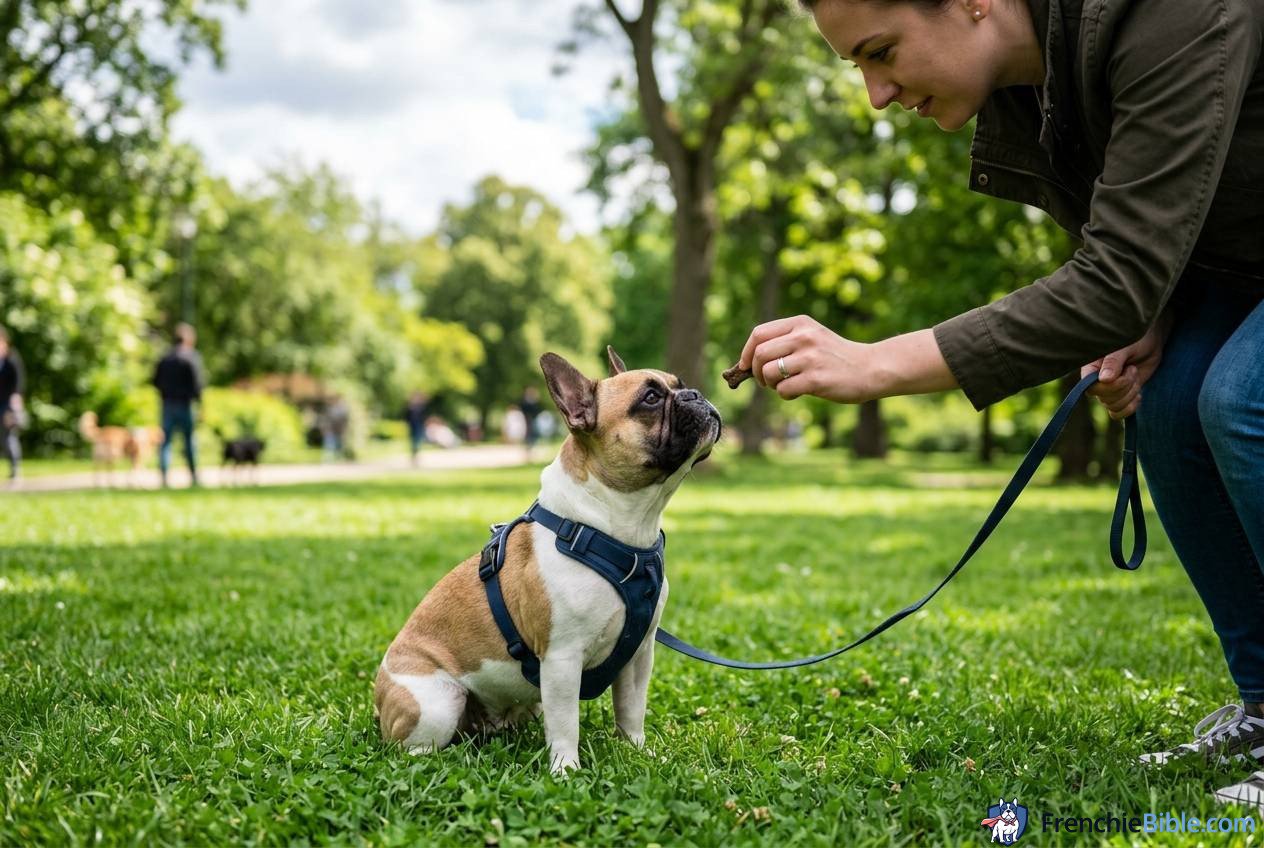
Step 1: Establish Clear Leadership and Consistent Rules (Without Intimidation)
The very first step is to relieve your Frenchie of the burden of being the “protector.” Dogs naturally seek structure. If you do not provide clear leadership, a sensitive or insecure dog will feel forced to step up and manage the environment themselves.
Leadership in the canine world is not about alpha rolls, yelling, or physical intimidation. True leadership is about controlling access to resources, setting clear boundaries, and being a calm, predictable presence.
- The “Nothing in Life is Free” (NILIF) Protocol: Implement this protocol immediately. Your Frenchie must earn everything they value. Before they get their food, they must sit and wait calmly. Before they get on the couch (if allowed), they must sit and wait for an invitation. Before you throw a toy, they must sit. This teaches the dog that you control all the high-value resources, significantly reducing their perceived need to guard them.
- Revoke Unearned Privileges: If your dog guards the couch or your bed, they lose access to those spaces immediately. Furniture is a privilege, not a right. Provide a comfortable, high-quality dog bed on the floor. They are only allowed on the furniture when explicitly invited, and if they show any signs of tension or guarding while on the furniture, they must calmly be removed immediately.
- Consistent Boundaries: Rules must be enforced 100% of the time by 100% of the household members. If you don’t allow the dog to bark at the window, but your spouse lets it slide, the dog will remain confused and the behavior will persist. Consistency is the bedrock of canine behavioral modification.
Step 2: Desensitization and Counter-Conditioning Techniques
Desensitization and counter-conditioning are the most effective methods for changing a dog’s emotional response to a trigger. The goal is to change the dog’s perception from “This person approaching my owner is a threat” to “This person approaching my owner means amazing things happen for me.”
- Identify the Threshold: Determine the exact distance at which your dog notices the trigger but is not yet reacting (e.g., they look at the approaching person but have not stiffened or growled). This is your working threshold.
- The Protocol: Have a helper approach you while you are sitting with your dog. The moment the helper appears at the edge of the threshold, start feeding your dog extremely high-value treats (tiny pieces of boiled chicken, freeze-dried liver, or plain cooked steak—things they rarely get).
- The association: Continue feeding continuously as long as the helper is present and the dog remains calm.
- The withdrawal: As soon as the helper retreats or disappears, the treats stop immediately.
- Over time, and with hundreds of repetitions, gradually decrease the distance between the helper and the dog. The dog will learn to associate the approach of the “threat” with the delivery of incredible rewards, fundamentally shifting their emotional response from defensive anxiety to happy anticipation.
Step 3: Controlled Socialization for Adult Frenchies
If your Frenchie is overprotective, their social circle has likely become too small. Careful, controlled socialization is necessary to rebuild their confidence around novel stimuli.
- Neutral Territory: Never introduce an overprotective dog to a new person or dog in their home or on their typical walking route. These are highly territorial areas. Always conduct introductions in a completely neutral environment, such as a quiet parking lot or an unfamiliar park.
- Parallel Walking: The best way to introduce a territorial Frenchie to another dog is through parallel walking. Have both dogs on a leash, walking in the same direction, with a significant amount of distance between them (perhaps 20 feet). Do not allow them to meet face-to-face initially. Allow them to smell each other’s scent where the other has walked. Reward calm behavior. Gradually, over several sessions, decrease the distance until they can walk side-by-side without tension.
- Positive Human Interactions: Have new people ignore the dog completely at first. No eye contact, no reaching out to pet them, no high-pitched talking. Let the dog approach the person at their own pace. The person can drop high-value treats on the ground near their feet, rewarding the dog for approaching without applying any social pressure.
Step 4: Mastering the “Place” Command and Boundary Training
The “Place” command is an absolute game-changer for territorial dogs. It gives the dog a specific job to do and a designated safe zone when they are feeling anxious or when triggers are present.
- Teaching “Place”: Use a distinct dog bed or a raised cot. Lure the dog onto the cot with a treat, say “Place,” and reward heavily when all four paws are on the cot. Gradually increase the duration they must stay on the cot and the level of distraction in the room before releasing them with a release word (like “Free” or “Break”).
- Utilizing “Place” for Doorbell Reactivity: When the doorbell rings, instead of the dog rushing the door to defend the territory, their job is to immediately go to their “Place” and stay there until released. This requires extensive practice without actual guests first. Ring the bell yourself, command “Place,” and reward heavily.
- Boundary Training: Teach your dog invisible boundaries within the home. For example, they are not allowed in the kitchen while you are cooking, or they must stay behind a certain threshold when the front door is open. This reinforces your leadership and spatial control.
Step 5: Managing the Environment to Prevent Rehearsal of Bad Behavior
Every time your dog successfully practices an overprotective or territorial behavior, that behavior becomes deeper ingrained in their neural pathways. Management is crucial to prevent the rehearsal of the behavior while you are actively training.
- Block Visual Triggers: If your dog barks aggressively at people walking past the front window, use opaque window film on the lower half of the windows or keep the curtains drawn. If they cannot see the trigger, they cannot react to it.
- Use Baby Gates and Crates: When guests come over, do not allow the dog free roam of the house to guard you. Put them in a secure crate in a quiet room with a frozen Kong toy, or use baby gates to keep them in a separate area where they cannot practice guarding behavior.
- Remove Guarded Items: If your dog guards high-value chews like bully sticks or raw bones, they simply do not get them anymore, or they only get them while securely locked in their crate where no one will approach them. Manage the environment so the dog never feels the need to guard.
Step 6: Proper Leash Handling and Reducing Tension
Leash tension is highly communicative. If you tighten the leash the moment you see another dog or person approaching, you are instantly sending a signal of anxiety down the leash to your Frenchie. This validates their belief that the approaching stimulus is a threat that needs to be defended against.
- Loose Leash Walking: Invest time in teaching a solid loose leash walk. The leash should hang in a “J” shape.
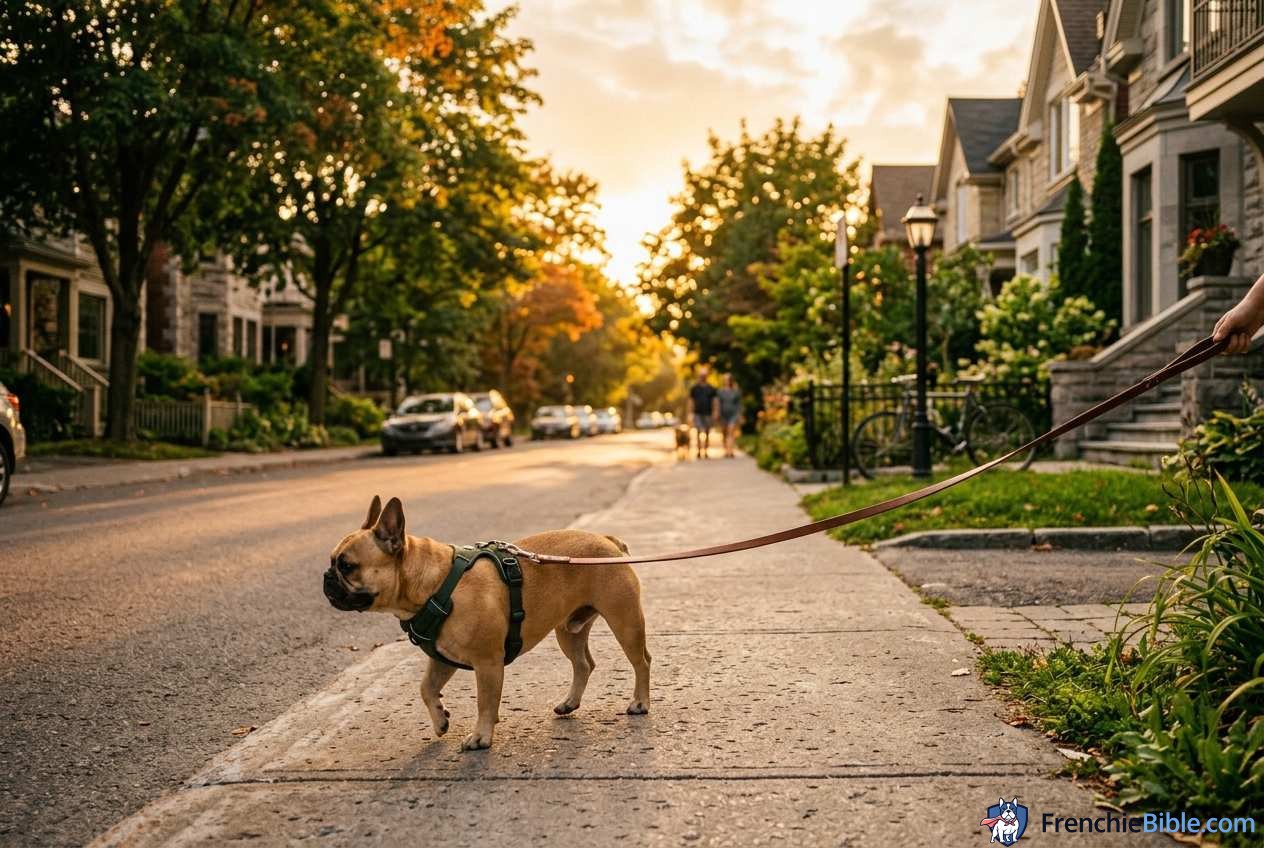
- The U-Turn: If you see a trigger approaching and you know your dog will react, do not drag them forward and force a confrontation. Simply execute a U-turn, say “Let’s go!” in a cheerful voice, and walk briskly in the opposite direction. Reward the dog for following you.
- Avoid On-Leash Greetings: Generally speaking, on-leash greetings between dogs are highly unnatural and often lead to tension. It is perfectly acceptable—and often preferable—to teach your dog to ignore other dogs while on a leash and focus entirely on you.
When to Seek Professional Help
While the steps outlined above are highly effective, correcting deeply ingrained behavioral issues can be complex and challenging. It is important to recognize when a situation requires professional intervention.
Identifying Red Flags That Require Immediate Intervention
You should seek professional help immediately if you observe any of the following red flags:
1. Your dog has bitten a person or another animal, breaking the skin.
2. The aggressive behavior is escalating in intensity or frequency despite your best efforts at management and training.
3. The dog’s triggers are unpredictable or generalized (i.e., they are reacting aggressively to almost everything).
4. You feel afraid of your own dog.
5. You have young children or vulnerable individuals in the home, and the dog is guarding resources from them.
6. The dog is engaging in severe self-mutilation or displaying extreme, uncontrollable anxiety alongside the territorial behavior.
Choosing the Right Positive Reinforcement Behaviorist or Trainer
When seeking professional help, it is vital to choose the right expert. Look for a Certified Applied Animal Behaviorist (CAAB) or a highly experienced trainer who strictly utilizes Force-Free Positive Reinforcement (R+) methodologies.
Avoid any trainer who recommends “alpha rolls,” prong collars, shock collars, physical corrections, or dominance theory. These punitive methods will severely damage the trust between you and your French Bulldog and have a high probability of making territorial aggression significantly worse by layering fear and pain on top of their existing anxiety. A qualified professional will help you develop a customized behavior modification plan based on scientific learning theory, desensitization, and counter-conditioning.
Frequently Asked Questions (FAQ)
Q1: Are French Bulldogs naturally protective?
A1: French Bulldogs are not bred to be guard dogs or protection dogs; they are companion animals. However, they are immensely loyal and can become hyper-attached to their owners. This deep attachment, especially in dogs lacking confidence or clear leadership, can frequently manifest as resource guarding and territorial behavior. They are protecting their “resources,” not necessarily acting out of a natural guarding instinct.
Q2: Can I train an older Frenchie out of resource guarding?
A2: Yes, absolutely. While it is always easier to prevent these behaviors through proper socialization and training during puppyhood, older dogs can successfully undergo behavioral modification. It will require more time, patience, and strict consistency, as you are working to rewire years of ingrained habits, but desensitization and counter-conditioning are effective at any age.
Q3: Why does my French Bulldog only act aggressively when on a leash?
A3: This is known as leash reactivity or barrier frustration. When a dog is on a leash, their natural “flight” response is removed. If they feel threatened or anxious about an approaching dog or person, their only remaining option is to “fight” (display aggression) to increase distance. Furthermore, owners often inadvertently transmit tension down the leash, signaling to the dog that there is a reason to be worried.
Q4: Will getting another dog help my overprotective Frenchie?
A4: Generally, no. In fact, getting another dog is often one of the worst things you can do for a highly territorial or resource-guarding dog. The existing dog will likely view the new dog as a massive threat to their resources (you, their space, their food), leading to severe conflict and fights within the home. You must resolve the overprotective behavior completely before even considering adding another pet to the household.
Q5: How long does it take to correct territorial behavior?
A5: There is no set timeline for behavioral modification. It depends entirely on the severity of the behavior, how long the dog has been practicing it, the dog’s individual temperament, and your unwavering consistency in applying management and training protocols. For mild cases, you may see improvement in a few weeks. For severe resource guarding, it can take many months of dedicated daily work.
Disclaimer: The information provided in this article is based on over a decade of personal experience in French Bulldog breeding, training, and behavioral observation. I am not a licensed veterinarian, and I do not possess medical or veterinary credentials. The content of this guide is intended solely for educational and informational purposes regarding behavioral management and routine care. It is absolutely not a substitute for professional veterinary advice, diagnosis, or treatment. If your dog is displaying sudden behavioral changes, severe aggression, or any signs of illness, you must consult a licensed veterinarian to rule out underlying medical conditions before initiating any behavioral modification program.
Disclaimer: I am a French Bulldog breeding expert with over a decade of hands-on experience with this breed. I am not a veterinarian. The information in this article is for educational purposes only. Always consult your veterinarian regarding your dog’s specific health needs and care.