
Disclaimer: The information provided in this article is strictly for educational and informational purposes. While I draw upon over a decade of specialized experience as a French Bulldog breeder and veterinary professional, I am not your dog’s attending veterinarian. The content herein does not constitute professional medical advice, diagnosis, or treatment. A seizure is a neurological medical emergency. Always consult with a licensed, practicing veterinarian or an emergency veterinary hospital immediately if your dog experiences a seizure of any kind.
There are very few things in dog ownership as terrifying, helpless, and traumatic as witnessing your French Bulldog experience a seizure for the first time.
Related Reading: Training & Behavior | Frenchie Puppy Guide | Best Food for Frenchies
One moment, your dog is sleeping peacefully on the sofa or playing with a toy; the next, they are entirely unresponsive, violently convulsing, paddling their legs, foaming at the mouth, and losing control of their bowels. To an unprepared owner, it looks and feels like the dog is dying.
As a veterinary professional and a French Bulldog breeder who has counseled countless panicked owners through these crises, I need you to hear this first: Take a deep breath. The seizure itself, while horrifying to watch, is rarely immediately fatal, and your dog is not in conscious pain during the event.
However, French Bulldogs are neurologically complex. Because of their brachycephalic (short-skulled) anatomy, prolonged seizures present unique and deadly secondary risks to this specific breed—primarily airway obstruction and hyperthermia (fatal overheating).
You cannot stop a seizure once it starts, but your actions during and immediately after the event are critical to your Frenchie’s survival and recovery. This comprehensive guide will equip you with the knowledge to recognize a seizure, execute an emergency action plan safely, understand the medical diagnostics, and manage epilepsy long-term.
Understanding Seizures in French Bulldogs
A seizure is a sudden, uncontrolled surge of electrical activity in the brain. It is essentially a temporary electrical storm that scrambles the communication between the brain and the body.
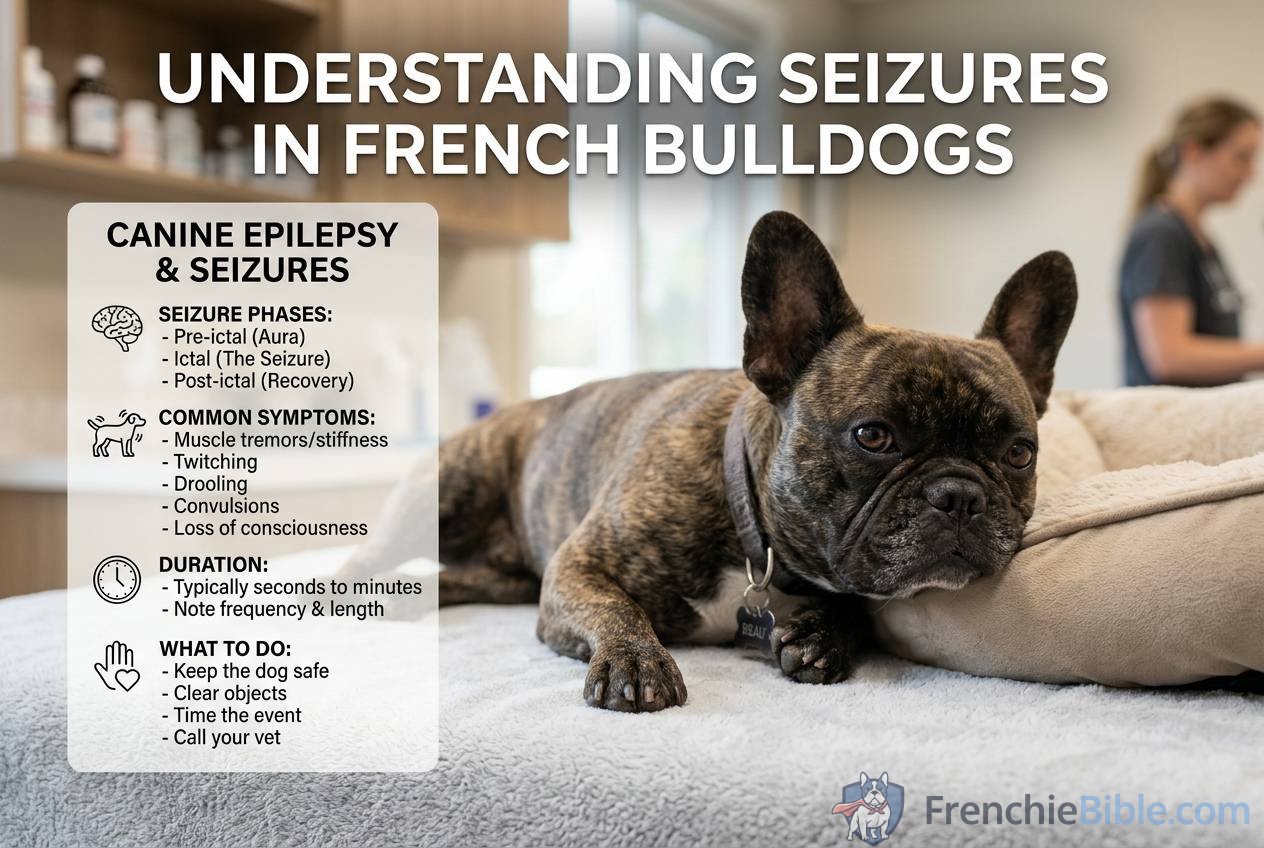
While seizures can happen to any dog, French Bulldogs have a notable genetic predisposition to neurological issues.
The Three Phases of a Seizure
To manage the event effectively, you must understand the clinical timeline of a seizure. It happens in three distinct phases:
1. The Pre-Ictal Phase (Aura):
This occurs minutes to hours before the actual seizure. The dog may act highly abnormal. They often seem confused, restless, anxious, or unusually clingy. They may pace, whine, or attempt to hide in dark corners. If you recognize these signs in an epileptic dog, you have time to move them to a safe, carpeted area.
2. The Ictal Phase (The Seizure):
This is the active seizure event. In a Grand Mal (Generalized) Seizure, the dog will fall on their side, become completely unconscious, and their limbs will paddle rigidly. Their jaw will often clamp shut or chomp rapidly, they will salivate heavily (foaming), and they will usually urinate or defecate. This phase typically lasts between 30 seconds and 3 minutes.
3. The Post-Ictal Phase (Recovery):
This occurs immediately after the convulsions stop. The electrical storm is over, but the brain is exhausted. The dog may be temporarily blind, disoriented, pacing frantically, excessively thirsty, or deeply lethargic. This phase can last anywhere from 15 minutes to 24 hours.
Causes of Seizures in French Bulldogs
Why do Frenchies have seizures? In veterinary medicine, we divide the causes into two main categories: Extracranial (outside the brain) and Intracranial (inside the brain).
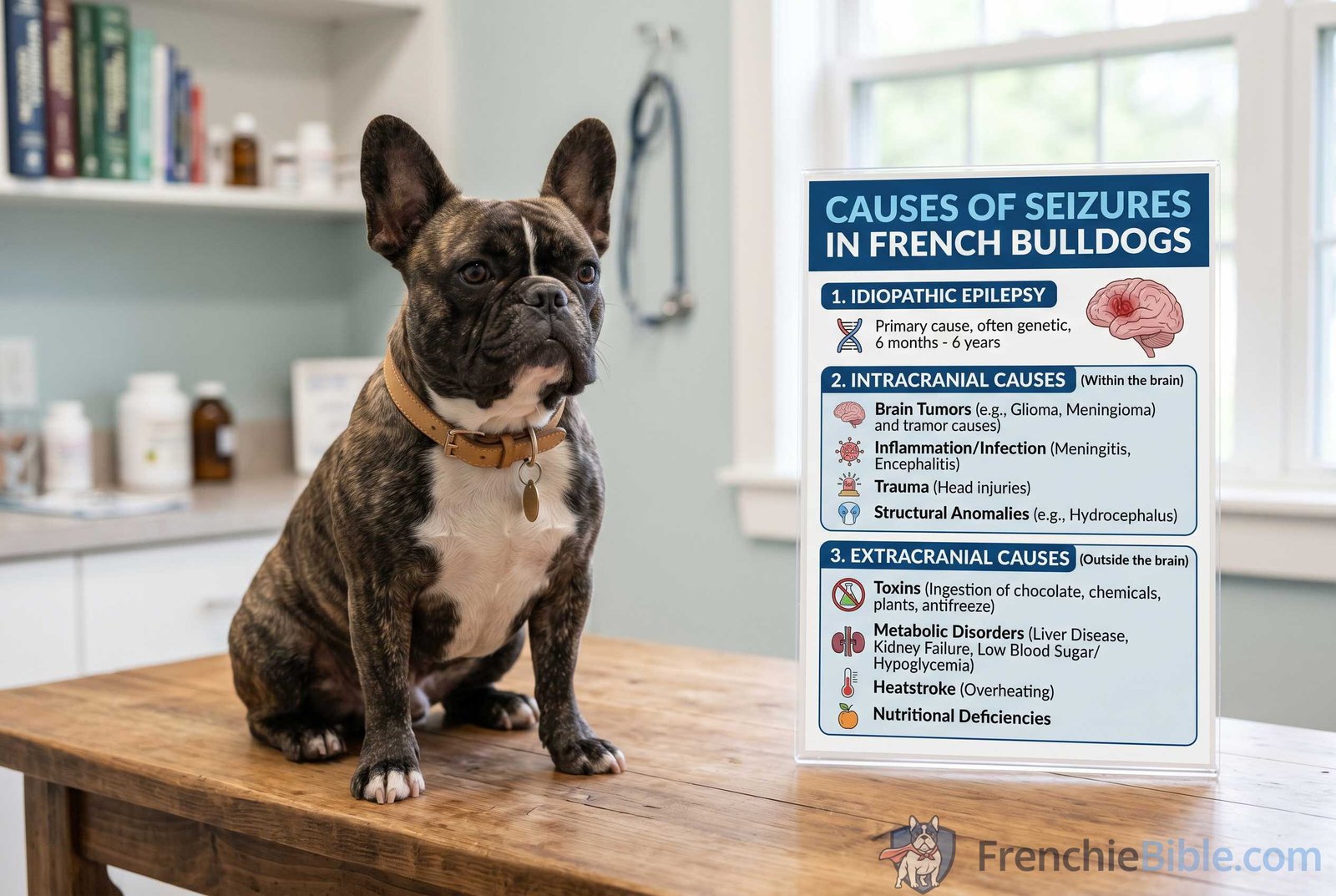
1. Idiopathic Epilepsy (Genetic)
This is the most common cause of seizures in young French Bulldogs. “Idiopathic” is the medical term for “we don’t know the exact cause.” It is an inherited neurological disorder where the brain’s electrical thresholds are abnormally low. Idiopathic epilepsy typically manifests when the Frenchie is between 6 months and 5 years old. Between seizures, the dog is perfectly normal and healthy.
2. Brain Tumors and Inflammatory Disease
If a French Bulldog has their first seizure after the age of 5 or 6, idiopathic epilepsy is highly unlikely. In older dogs, seizures are a massive red flag for a brain tumor (like a meningioma) or an inflammatory brain disease (like encephalitis). These conditions require immediate MRI diagnostics.
3. Hypoglycemia (Low Blood Sugar)
This is a critical danger for French Bulldog puppies. Because puppies have tiny fat reserves, if they miss a meal or suffer from severe diarrhea, their blood sugar can crash rapidly, leading to a hypoglycemic seizure.
4. Toxins and Poisons
Household toxins are a common trigger for acute seizures. Xylitol (a deadly artificial sweetener found in sugar-free gum and some peanut butters), chocolate toxicity, snail bait, rat poison, and certain human medications (like ibuprofen or antidepressants) will cause violent neurological reactions.
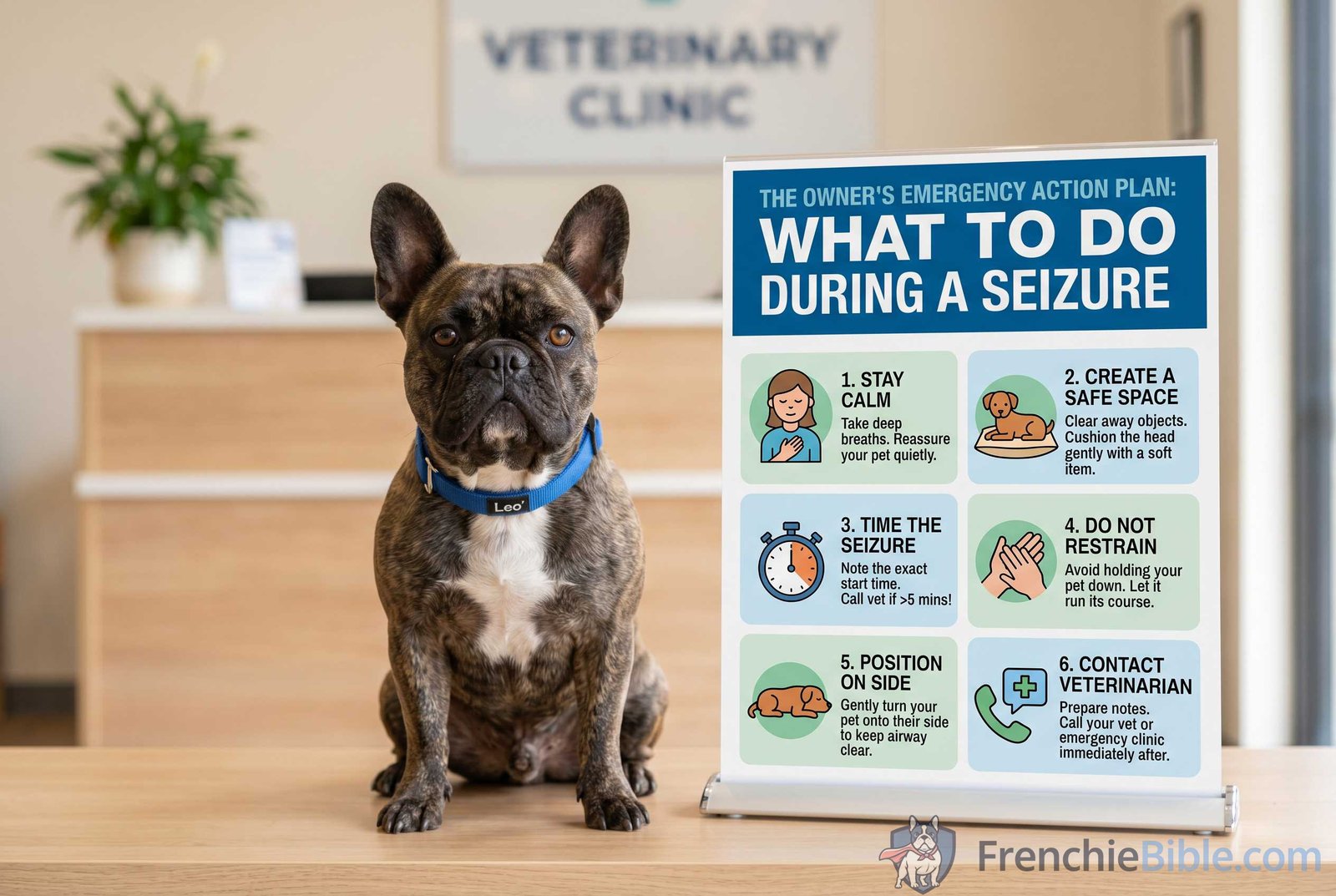
The Owner’s Emergency Action Plan: What to Do DURING a Seizure
When the seizure strikes, panic is your worst enemy. You must remain calm and execute this specific emergency protocol.
Step 1: Do NOT Touch Their Mouth
This is the most critical safety rule. A dog cannot swallow their tongue. Do not put your hands, fingers, spoons, or any objects near or inside their mouth. During a seizure, their jaw muscles clamp down with uncontrollable, bone-crushing force. If your finger is in their mouth, they will amputate it, and they will not be conscious enough to let go.
Step 2: Clear the Area
Do not try to restrain the dog or hold them down; you can cause muscle tears or bone fractures. Instead, quickly push away coffee tables, chairs, and sharp objects. If they are on a sofa or bed, carefully slide them onto a soft carpet or a dog bed on the floor so they do not fall and sustain a traumatic brain injury.
Step 3: Start a Timer
This is the most important medical data your vet will need. The moment the seizure starts, look at your watch or phone. If an active seizure lasts longer than 5 minutes, it is a catastrophic medical emergency called Status Epilepticus. Their brain is frying, their body temperature is skyrocketing, and they will die or suffer permanent brain damage without immediate intravenous anticonvulsants (like Valium) from a veterinarian.
Step 4: Video the Event
If you have a second person with you, have them record the seizure on their smartphone. There are many types of neurological events (like syncope/fainting or vestibular disease) that look like seizures but are not. Giving your vet video evidence allows them to accurately diagnose the specific type of electrical activity.
Step 5: Protect the Airway (The Frenchie Specific Risk)
Because Frenchies are brachycephalic, their airways are naturally compromised. During the heavy salivation of a seizure, they can easily aspirate (inhale) their own saliva or vomit into their lungs, causing deadly aspiration pneumonia. Keep their head flat on the floor, and if possible, gently slide a thin towel under their head.
What to Do AFTER the Seizure (The Post-Ictal Phase)
When the paddling stops, the dog will be terrified, confused, and exhausted.
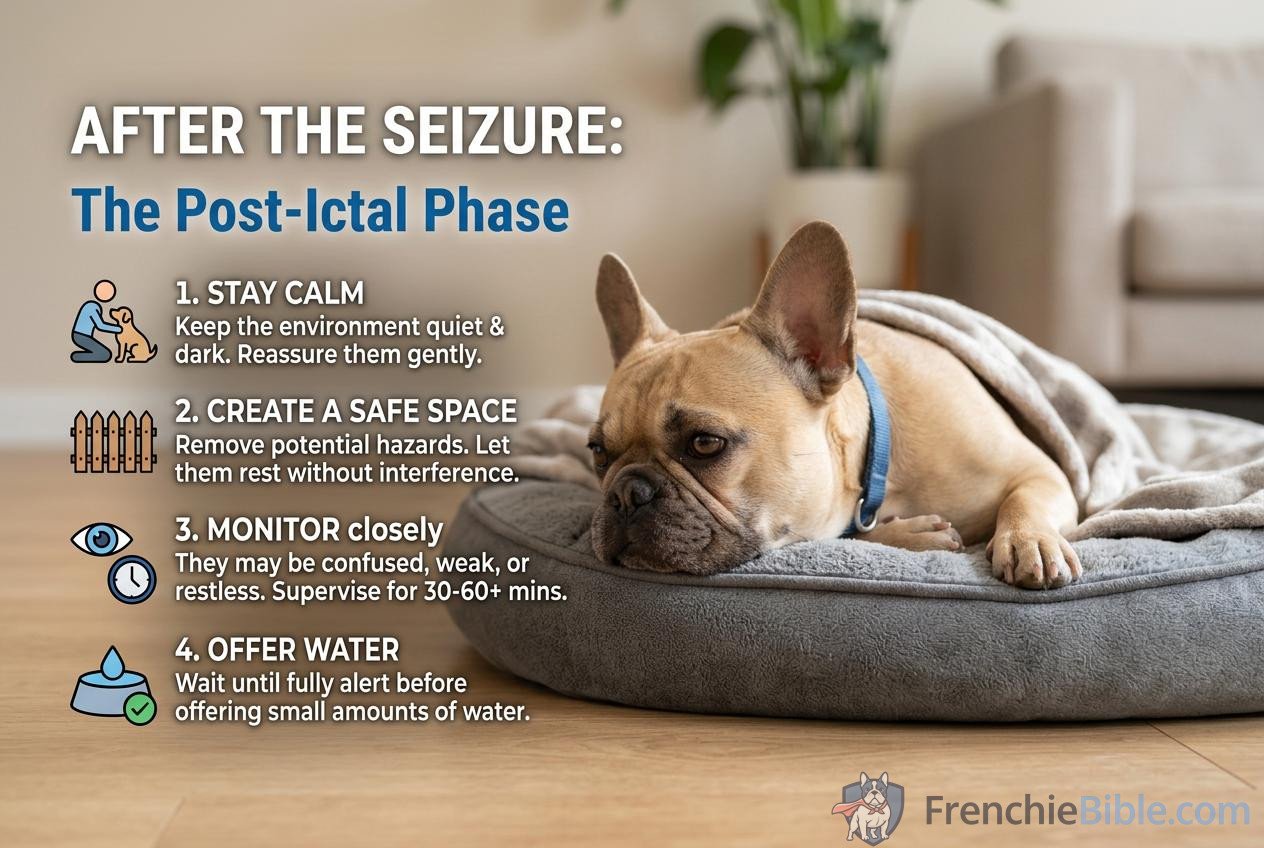
1. Prevent Overheating (Hyperthermia)
During a seizure, the intense, continuous muscle contractions generate massive amounts of body heat. A Frenchie cannot pant efficiently to cool down. Check their temperature if you can. If they feel extremely hot, wipe their paw pads and the inside of their ears with a damp, cool (not ice cold) cloth. Bring a fan into the room to circulate air.
2. Keep the Environment Quiet and Dark
The brain is currently hypersensitive to stimuli. Turn off the TV, dim the lights, and keep children and other pets away from the dog. Speak to them in a very low, soothing voice. Do not force them to interact; let them pace or sleep as they need to.
3. Call Your Veterinarian
Every single seizure warrants a call to the vet. If it is their first seizure, they need to be seen as soon as they are stable enough to transport. The vet will need to run a complete blood count (CBC), a chemistry panel, and a urinalysis to rule out toxins, kidney failure, or liver shunts before diagnosing idiopathic epilepsy.
Long-Term Management: Living with an Epileptic Frenchie
If your French Bulldog is diagnosed with Idiopathic Epilepsy, take comfort in knowing that while there is no cure, it is highly manageable.
1. Anti-Epileptic Drugs (AEDs):
If your dog has more than one seizure a month, or if their seizures are severe or occur in clusters (multiple seizures in 24 hours), your vet will prescribe daily anticonvulsant medications. Common medications include Phenobarbital, Keppra (Levetiracetam), or Potassium Bromide.
Crucial Rule: You must give these medications at the exact same time every single day. Missing a dose by even a few hours can cause the blood levels of the drug to drop, triggering a severe “breakthrough” seizure.
2. Regular Blood Testing:
Medications like Phenobarbital are processed by the liver. Your vet will require blood work every 6 months to ensure the drug isn’t causing liver toxicity and to verify that the drug levels in the bloodstream are within the therapeutic range.
3. The Ketogenic/Neuro-Supportive Diet:
There is emerging veterinary evidence that diets highly enriched with Medium-Chain Triglycerides (MCTs), such as the Purina Pro Plan NeuroCare diet, can help reduce seizure frequency in epileptic dogs. The brain utilizes these specific fats as an alternative energy source, which appears to stabilize electrical activity. Discuss this nutritional intervention with your vet.
The Breeder’s Final Verdict
A diagnosis of epilepsy is heartbreaking, but it is not a death sentence for your French Bulldog. I have bred and managed dogs with epilepsy who lived long, happy, and incredibly fulfilling lives right up to old age.
The key to survival is your preparedness. Know the three phases of a seizure. Never put your hands in their mouth. Time the event with a stopwatch. Protect them from overheating, and be absolutely militant about administering their daily medications.
Your Frenchie cannot control the electrical storms in their brain, but with a calm, educated owner and an excellent veterinary team, you can provide the anchor they need to weather the storm safely.
Frequently Asked Questions (FAQ) About french bulldog seizures
1. My Frenchie twitches and “runs” in their sleep. Is this a seizure?
No. This is highly common and entirely normal. Dogs experience REM (Rapid Eye Movement) sleep just like humans do. When they are dreaming, they will frequently twitch their paws, make soft barking noises, or paddle their legs. You can easily wake a dog from a dream; you cannot wake a dog from a generalized seizure.
2. Can flea and tick medications cause seizures in French Bulldogs?
Yes, this is a known risk. Oral flea and tick preventatives in the Isoxazoline class (which includes popular brands like Bravecto, NexGard, Simparica, and Credelio) carry FDA warnings for potential neurological adverse reactions, including muscle tremors, ataxia, and seizures. If your Frenchie has a history of seizures or diagnosed epilepsy, you must inform your vet. They will likely recommend switching to a topical preventative or a different class of medication to avoid lowering the seizure threshold.
3. What is a “Cluster Seizure,” and why is it dangerous?
A cluster seizure is when a dog experiences two or more seizures within a 24-hour period, and they regain consciousness between them. Cluster seizures are a massive medical emergency. The brain pathways become “super-heated,” making each subsequent seizure easier to trigger and harder to stop. If your dog has a second seizure in one day, rush them to an emergency vet immediately; they will need intravenous medications to break the cluster cycle before it progresses into fatal Status Epilepticus.
4. Can CBD oil cure my French Bulldog’s epilepsy?
“Cure” is the wrong word, but it can be an effective supplementary treatment. Some veterinary studies have shown that high-quality, veterinary-specific CBD oil (which contains zero THC, as THC is toxic to dogs) can help reduce the frequency and severity of seizures when used in conjunction with traditional anti-epileptic drugs (AEDs). However, CBD is metabolized by the liver on the same pathway as many seizure medications, which can alter the drug levels in the blood. Never give your dog CBD without consulting the veterinarian managing their epilepsy.
5. Should I change my epileptic French Bulldog’s diet?
Dietary changes alone will not stop seizures, but they can support brain health. I highly recommend avoiding diets packed with artificial colors, preservatives (like BHA/BHT), and cheap carbohydrate fillers that promote systemic inflammation. Transitioning to a high-quality, whole-food diet or a veterinary neuro-supportive diet rich in Omega-3 fatty acids and MCTs can support neurological function and overall health.