Disclaimer: The information provided in this article is for educational and informational purposes only. It is not intended as a substitute for professional veterinary advice, diagnosis, or treatment. Always seek the advice of your veterinarian or a qualified animal health provider with any questions you may have regarding your French Bulldog’s medical condition, especially if you suspect an infection or abscess.
If you are a French Bulldog owner, you have likely experienced the undeniable joy, the hilarious snores, and the fierce loyalty these little bat-eared dogs bring to our lives. But along with their charming quirks comes a set of specific health challenges. Among the less glamorous, yet incredibly common issues we see in the clinic is French Bulldog anal gland inflammation.
Related Reading: Training & Behavior | Frenchie Puppy Guide | Best Food for Frenchies
As a French Bulldog specialist veterinarian and breeding expert, I cannot tell you how many times distressed owners have rushed into my office because their beloved Frenchie is frantically dragging their bottom across the living room rug. That classic “scooting” behavior is the universal canine SOS signal for anal gland trouble.
Understanding how to manage this issue, recognizing the signs of inflammation, and learning how to safely express your French Bulldog’s anal glands at home can save your dog from significant discomfort and save you from frequent, costly trips to the vet. In this comprehensive guide, we will dive deep into everything you need to know about Frenchie anal gland health.
Understanding French Bulldog Anal Glands: What Are They?
Before we discuss how to fix the problem, we need to understand what we are dealing with. All dogs have two small sacs, known as anal glands or anal sacs, located just under the skin on either side of their anus, roughly at the 4 o’clock and 8 o’clock positions.
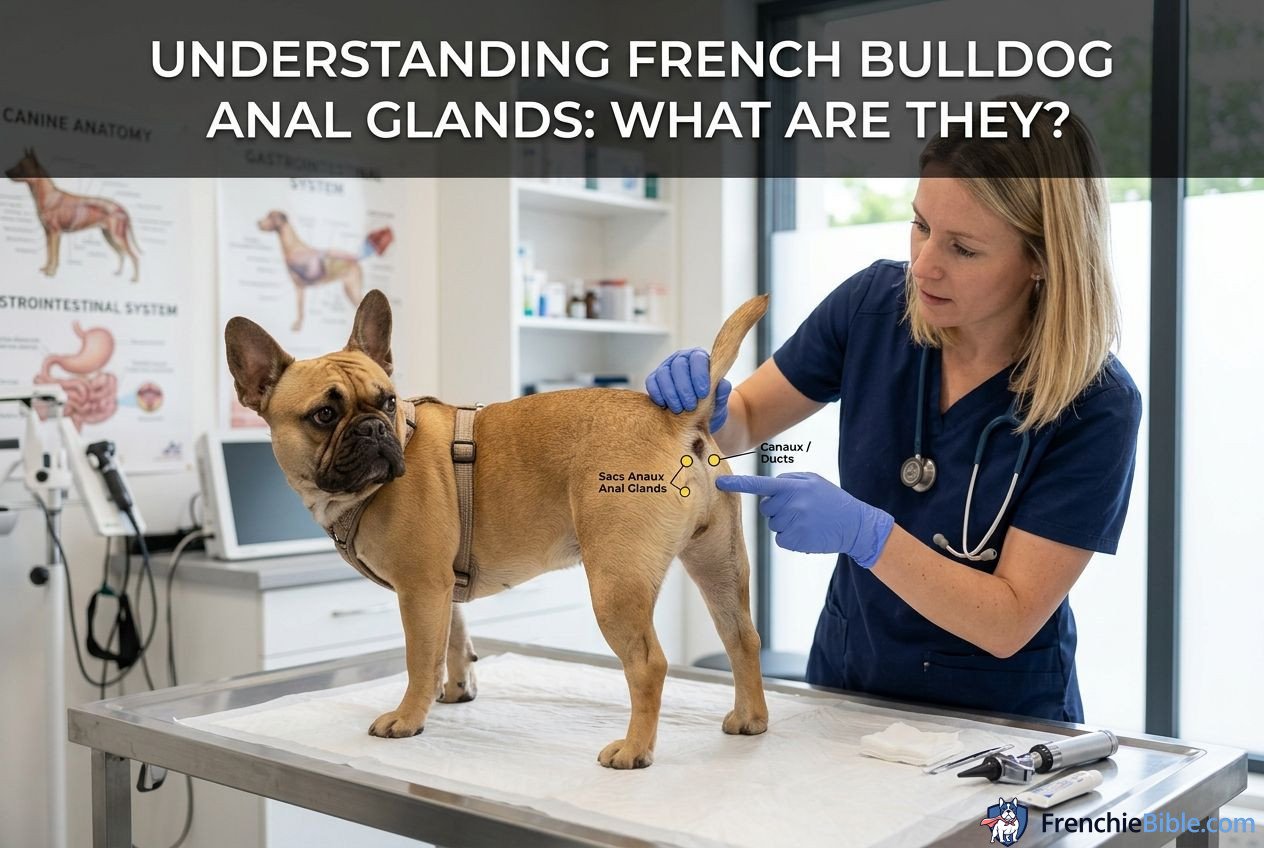
These glands secrete a strongly scented, oily, brownish fluid. In the wild, this fluid serves as a territorial marker and a way for dogs to identify each other. When a healthy dog has a firm, well-formed bowel movement, the pressure of the stool passing through the rectum naturally squeezes these glands, emptying a small amount of the fluid.
Why Do Frenchies Struggle More with Anal Gland Issues?
You might be wondering why your Frenchie seems to have more anal gland problems than the Golden Retriever next door. It comes down to a perfect storm of genetics, anatomy, and common breed predispositions:
- Conformation and Anatomy: French Bulldogs have a compact, stocky build. Their tails are often tight or tucked (screw tails), which can physically alter the angle and position of the anal glands, making natural expression more difficult.
- Digestive Sensitivities: Frenchies are notorious for having sensitive stomachs. They are prone to food allergies and intolerances, which frequently lead to soft stools or chronic diarrhea. Soft stools simply do not provide the physical pressure necessary to naturally empty the anal sacs.
- Skin Allergies (Atopic Dermatitis): French Bulldogs frequently suffer from environmental allergies. Allergies cause widespread inflammation, especially in the skin and mucous membranes, which includes the delicate tissue surrounding the anal glands. Swollen tissue can block the tiny ducts where the glands empty.
- Obesity: Let’s face it, Frenchies love to eat, and they aren’t the most athletic breed. Excess weight can add fatty tissue around the rectum, interfering with the natural emptying process.
Recognizing the Signs of French Bulldog Anal Gland Inflammation
When the anal glands fail to empty naturally, the fluid inside becomes thick, pasty, and impacted. If left unresolved, this impaction leads to inflammation, bacterial overgrowth, and eventually, a painful infection or a ruptured abscess.
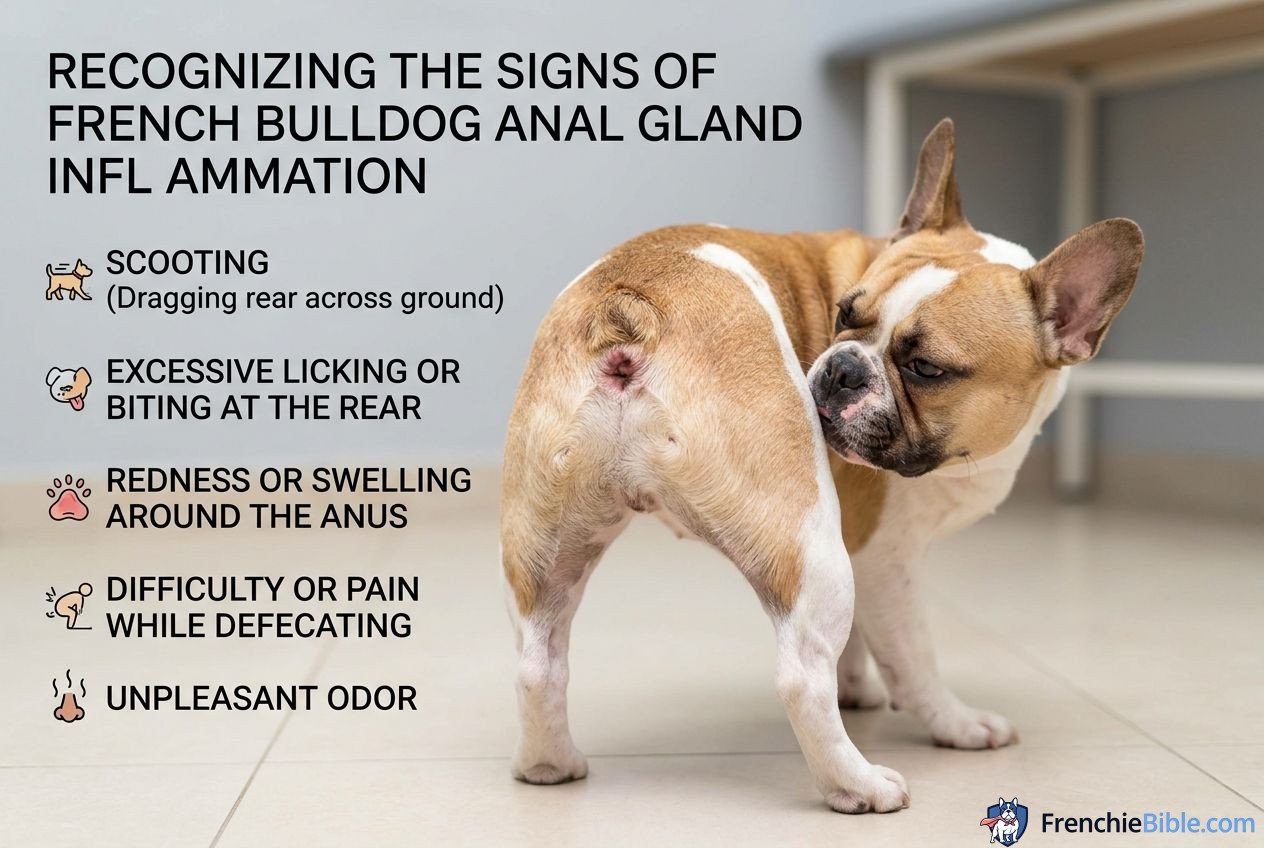
Early detection is critical. Watch for these telltale signs that your Frenchie is experiencing anal gland discomfort:
1. The Classic “Scooting”
This is the most obvious sign. Your dog will sit down and drag their rear end across the floor—often preferring textured surfaces like carpets or rugs—in a desperate attempt to relieve the pressure and itching.
2. Obsessive Licking and Biting
If your Frenchie is constantly turning around to lick, chew, or nibble at their rear end or the base of their tail, they are trying to soothe the irritation caused by full or inflamed glands.
3. A Distinct, Fishy Odor
Anal gland fluid has a very specific, highly unpleasant smell, often described as a mix of rotting fish and metallic rust. If you suddenly notice this pungent odor wafting from your dog, especially when they are resting or frightened, their glands may be leaking or overly full.
4. Swelling and Redness
Take a gentle look at your Frenchie’s rear end. If you notice localized swelling, a bulge, or angry redness on one or both sides of the anus, inflammation is present.
5. Pain and Behavioral Changes
A dog with inflamed anal glands is an uncomfortable dog. They may suddenly snap if you touch their hindquarters, sit down gingerly, cry out when defecating, or appear unusually lethargic or depressed.
Causes of Anal Gland Issues in French Bulldogs
To effectively manage this issue long-term, you need to address the root causes. As mentioned, the anatomy plays a role, but the most common controllable culprits include:
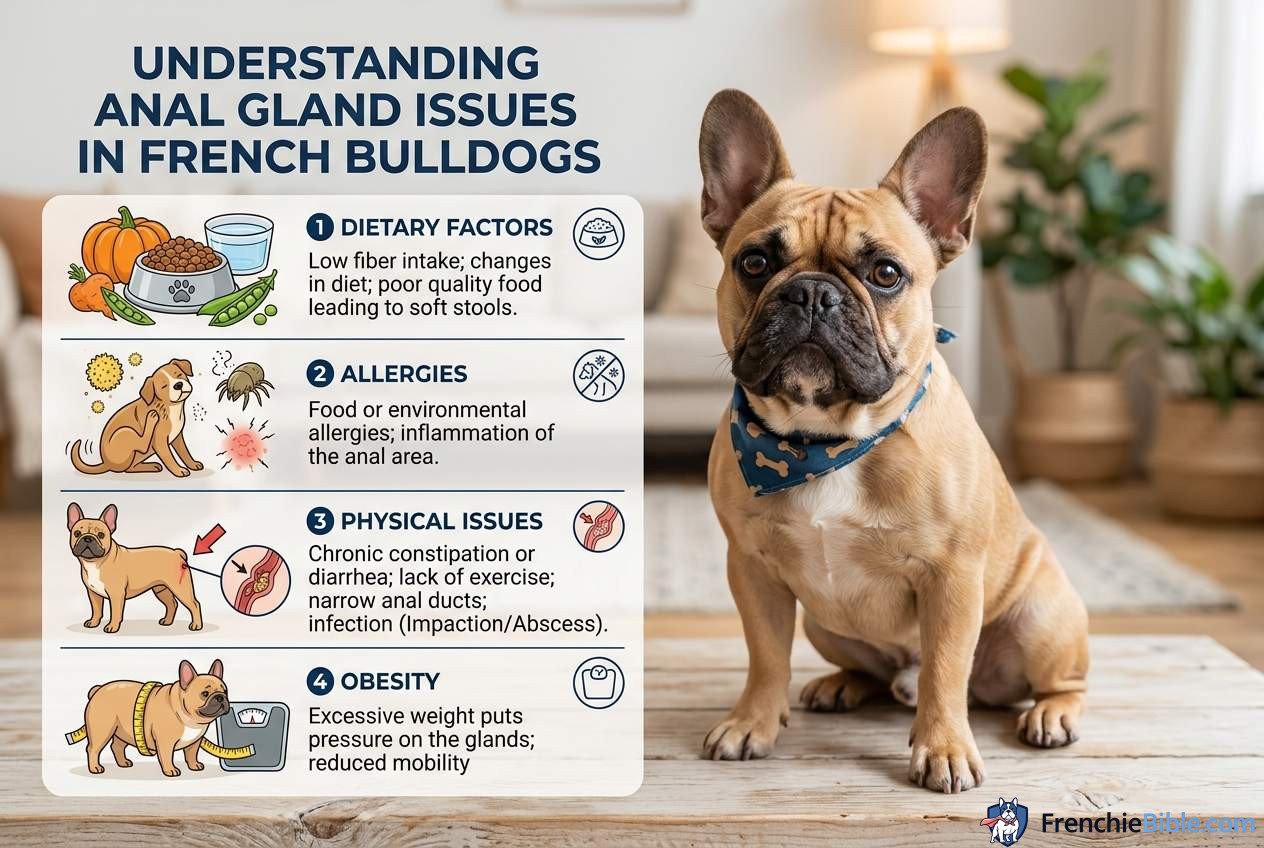
- Inadequate Dietary Fiber: A diet low in fiber often results in smaller, softer stools that fail to express the glands.
- Food Allergies/Intolerances: Chicken, beef, dairy, and wheat are common triggers that cause gastrointestinal upset and subsequent anal gland impaction.
- Environmental Allergies: Pollen, dust mites, and mold can cause systemic inflammation affecting the glandular ducts.
- Anatomical Anomalies: Some Frenchies are simply born with abnormally narrow anal gland ducts.
- Chronic Soft Stools: Regardless of the cause, consistently loose stools are the primary enemy of healthy anal glands.
When to See a Vet vs. When to Express at Home
This is a crucial distinction. Do not attempt to express your dog’s anal glands at home if you suspect an infection or an abscess. Doing so can cause excruciating pain, push the infection deeper into the tissues, or cause the gland to rupture internally.
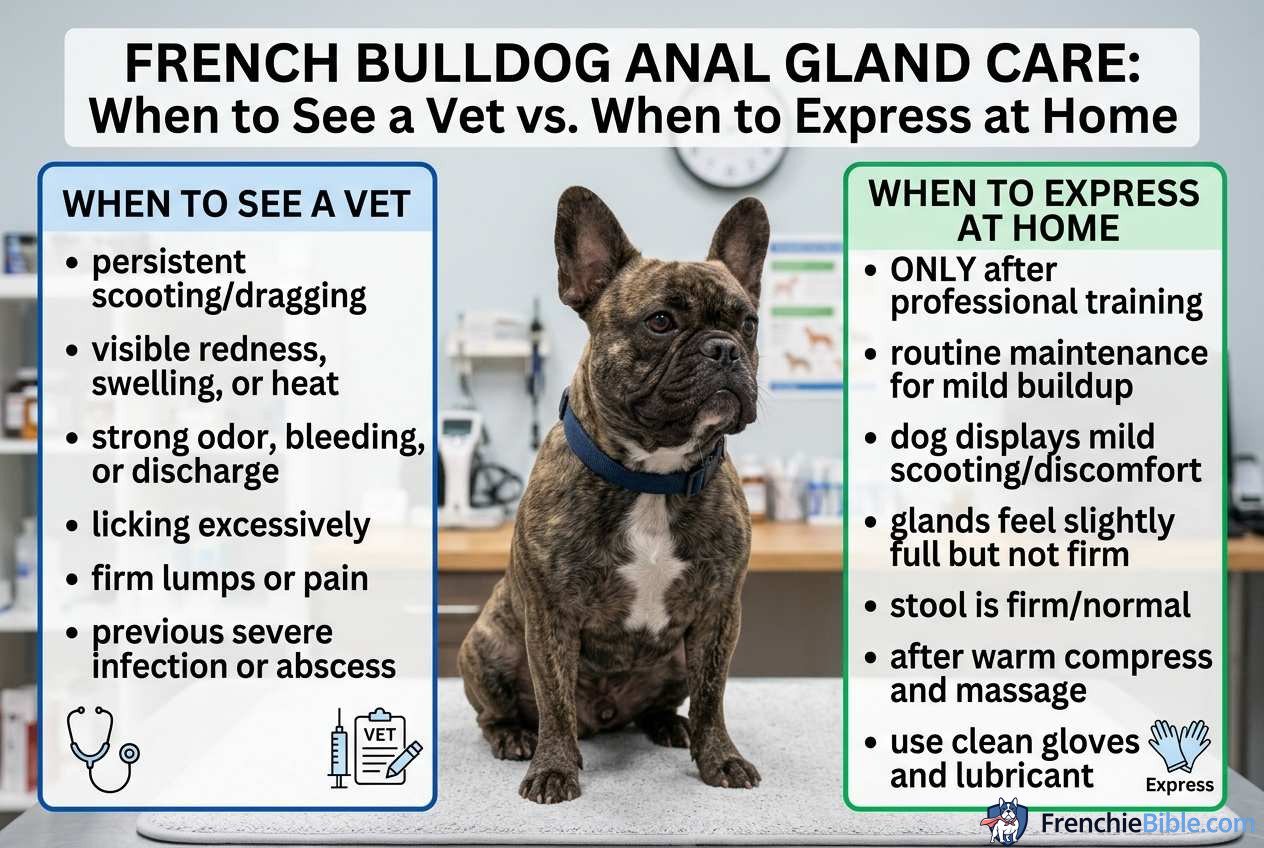
You CAN attempt at-home expression if:
- Your dog is scooting or licking, but the area is NOT bright red, hot to the touch, or severely swollen.
- Your dog allows you to touch the area without yelping or snapping.
- You are dealing with routine fullness rather than a medical crisis.
- Your vet has previously shown you how to do it and given you the green light.
You MUST see a Veterinarian if you observe:
- Pus or Blood: If you see green, yellow, or bloody discharge near the anus.
- Severe Swelling: A large, hard, red, or purple lump on one side of the anus.
- Open Wounds: If the abscess has already ruptured, leaving an open, bleeding hole.
- Extreme Pain: Your dog will not let you near their hind end.
- Systemic Illness: Fever, loss of appetite, or extreme lethargy accompanying the rear-end issues.
Step-by-Step Guide: How to Safely Express French Bulldog Anal Glands at Home
If you have determined that your Frenchie is simply experiencing routine fullness and your vet approves, you can learn to express the glands at home. There are two methods: External and Internal.
Note: The external method is safer for beginners, but the internal method is much more effective. I highly recommend having your vet demonstrate the internal method in person before you try it for the first time.
Preparation: What You Will Need
Gather your supplies before you begin. You do not want to be searching for paper towels while holding a squirming Frenchie.
- Latex or Nitrile Gloves: Absolutely essential for hygiene and to protect your hands from the smell.
- Lubricant: Water-based personal lubricant or sterile veterinary lubricant (do not use Vaseline).
- Paper Towels or Heavy-Duty Wipes: You will need several.
- Warm Washcloth: For cleaning up afterward.
- An Assistant: Having a second person to gently hold and distract your Frenchie (perhaps with a lick mat smeared with peanut butter) is highly recommended.
- Odor Eliminator Spray: Pet-safe enzyme sprays are great for neutralizing any lingering smells in the room.
Location, Location, Location
Do this in a place that is easy to clean. The bathtub, a tiled bathroom floor, or outside in the yard are your best options. The fluid can squirt unexpectedly, and you do not want it on your favorite rug or furniture.
Method 1: The External Expression (For Beginners)
This method is less invasive but sometimes fails to fully empty thick, impacted fluid.
- Position Your Frenchie: Have your assistant hold your dog standing up. If you are alone, place your dog on a table (with a non-slip mat) and stand behind them.
- Lift the Tail: Gently lift your Frenchie’s tail to expose the anus. (Be careful with screw tails; only lift as far as is comfortable).
- Locate the Glands: Place your gloved thumb and index finger on either side of the anus, roughly at the 4 o’clock and 8 o’clock positions. You should feel two small, firm, pea-to-grape-sized lumps just under the skin.
- Cover the Area: Hold a thick wad of paper towels directly over the anus. This is your splash guard.
- Apply Pressure: Gently but firmly push your thumb and forefinger inward toward the center of the anus, and then pull slightly upward and outward toward you. Think of a milking motion rather than a squeezing-a-pimple motion.
- Release the Fluid: If successful, you will feel the glands flatten, and a smelly brownish fluid will be released onto the paper towel.
- Clean Up: Wipe the area thoroughly with a warm, damp washcloth or pet-safe grooming wipes.
Method 2: The Internal Expression (The Professional Vet Method)
This is how veterinarians and professional groomers express glands. It empties the sacs completely but requires more confidence and a very gentle touch.
- Glove Up and Lubricate: Put on your gloves and generously apply water-based lubricant to your index finger.
- Position the Dog: Have your assistant secure the dog in a standing position.
- Insert Your Finger: Gently insert your lubricated index finger about one inch into the dog’s rectum.
- Locate the Gland (One at a time): Feel the wall of the rectum. At roughly the 4 o’clock position (or 8 o’clock for the other side), you will feel a firm, round sac between your internal index finger and your external thumb.
- Squeeze and Milk: Pinch the gland gently between your internal index finger and your external thumb. Squeeze gently, pulling your fingers slightly toward the opening of the anus to milk the fluid out.
- Use Your Shield: Have a paper towel ready in your other hand to catch the fluid as it exits the duct.
- Repeat: Switch hands or adjust your position to locate and express the gland on the opposite side (8 o’clock).
- Thorough Cleanup: Clean your dog’s rear end meticulously with a warm washcloth and pet-safe shampoo to remove all traces of the fluid and smell.
Post-Care After Expression
Reward your Frenchie immediately! Give them a high-value treat and lots of praise. They just tolerated a very unnatural and slightly uncomfortable procedure. Monitor the area for the next 24 hours. If you notice increased redness, swelling, or if the scooting worsens, contact your vet immediately, as you may have irritated the tissue or there may be an underlying infection.
Prevention: Keeping Your Frenchie’s Anal Glands Healthy
While some Frenchies will always need manual expression due to their anatomy, you can significantly reduce the frequency of issues with proactive care.
1. Optimize Their Diet for Firm Stools
This is the single most important preventative measure. Your dog’s stool needs to be firm enough to naturally press against the glands.
- High-Quality Protein: Ensure you are feeding a premium diet that your dog digests well.
- Hypoallergenic Diets: If your Frenchie suffers from food allergies causing soft stools, consult your vet about switching to a limited-ingredient or prescription hydrolyzed protein diet.
2. Increase Dietary Fiber
Adding natural fiber bulks up the stool, providing the necessary pressure for natural expression.
- Canned Pumpkin: Adding 1 to 2 tablespoons of plain, unsweetened canned pumpkin (NOT pumpkin pie filling) to their daily meals works wonders.
- Psyllium Husk: A small sprinkle of unflavored psyllium husk powder can help firm things up.
- Commercial Fiber Supplements: There are several excellent veterinary-approved anal gland supplements on the market (like Glandex) that contain a blend of fiber, probiotics, and anti-inflammatories.
3. Maintain a Healthy Weight
Overweight French Bulldogs have a much higher incidence of anal gland impaction. The excess fat around their rear end cushions the glands, preventing the stool from applying enough pressure to empty them. Keep your Frenchie lean through measured feeding and appropriate daily exercise.
4. Manage Environmental Allergies
If your dog licks their paws, has frequent ear infections, and recurrent anal gland issues, environmental allergies (atopy) are likely to blame. Work with your veterinarian to manage these allergies with antihistamines, cytopoint injections, or specific immunotherapy. Reducing systemic inflammation will directly benefit the anal glands.
5. Regular Vet Checks
If your dog is prone to impactions, schedule regular gland checks with your vet every 4-8 weeks. It is much better to have a professional empty full glands routinely than to wait until they become infected and abscessed.
Frequently Asked Questions (FAQs)
Q1: How often should I express my French Bulldog’s anal glands?
Answer: There is no set schedule. You should only express them when they need it—when you see signs of fullness like scooting or a fishy odor. If you do it too frequently when they aren’t full, you can cause irritation and inflammation, making the problem worse. Some dogs need it monthly, others never need it.
Q2: Can I just have my groomer do it?
Answer: Many groomers will perform an external expression during a bath. However, if your dog has a history of impaction or thick fluid, the external method might not be sufficient. In these cases, it is safer and more effective to have a veterinary professional perform an internal expression. Furthermore, groomers cannot legally treat or diagnose an infection.
Q3: What happens if an anal gland abscess ruptures?
Answer: A ruptured abscess is incredibly painful and looks like a bloody, pus-filled hole next to the anus. This is a veterinary emergency. Your vet will need to flush the wound, prescribe systemic antibiotics, pain medication, and possibly place your dog in an Elizabethan collar (cone) to prevent licking. Do NOT try to treat a rupture at home.
Q4: Is anal gland removal surgery an option for my Frenchie?
Answer: Yes, a procedure called an anal sacculectomy can surgically remove the glands permanently. However, this is considered a salvage procedure—a last resort. It is only recommended for dogs who suffer from chronic, recurrent, severe abscesses that do not respond to diet changes and frequent manual expression. The surgery carries risks, including a small chance of permanent fecal incontinence, so it is not a decision to be made lightly.
Q5: Why is the fluid coming out black and chunky instead of brown and liquid?
Answer: Healthy anal gland fluid is usually a watery, brownish-yellow liquid. If the fluid is thick, pasty, chunky, grey, or black, it means it has been sitting in the gland for far too long and is severely impacted. This consistency is very difficult to express externally and usually requires a veterinarian’s intervention.
Taking care of your French Bulldog’s anal glands isn’t the most glamorous part of pet ownership, but it is an essential part of keeping them comfortable, healthy, and happy. By understanding the causes, recognizing the signs early, and working closely with your veterinarian, you can keep those pesky gland issues under control.