Disclaimer: I am a French Bulldog specialist and breeder with over 10 years of experience, but this article is strictly for informational and educational purposes. It does not replace professional veterinary diagnostics or medical treatment. Skin infections, especially near the eyes and nose, can deteriorate rapidly. Always consult your veterinarian for an accurate diagnosis and prescription medication if your dog’s skin is oozing, bleeding, foul-smelling, or showing severe signs of infection.
When you look at a French Bulldog, their most iconic and endearing features are their large, expressive bat ears, their squished brachycephalic faces, and those adorable, deep facial wrinkles. However, as a veterinary professional and longtime breeder, I can assure you that those cute wrinkles are ground zero for some of the most stubborn and uncomfortable dermatological issues this breed faces.
Related Reading: Training & Behavior | Frenchie Puppy Guide | Best Food for Frenchies
French Bulldogs are genetically predisposed to a myriad of skin conditions, and their facial anatomy creates the perfect microclimate for bacteria and yeast to thrive. Without rigorous, daily maintenance, those charming skin folds can quickly turn into inflamed, painful, and infected hotspots. Furthermore, their prominent noses are highly susceptible to hyperkeratosis—a condition causing the nose to become dry, cracked, and crusty. In this comprehensive guide, we will explore the pathology of Frenchie facial infections, how to properly clean the folds, and the vital role that high-quality wrinkle balms and nose butters play in preventing fungal and bacterial nightmares.
The Anatomy of a Frenchie Face: A Breeding Ground for Infection
To understand why your Frenchie needs a dedicated skincare routine, you have to look closely at their facial structure.
The Deep Folds and the “Microclimate”
The deep wrinkles around the muzzle and between the eyes of a French Bulldog create a dark, warm, and poorly ventilated environment. When a Frenchie drinks water, eats wet food, or simply breathes heavily (which causes condensation), moisture becomes trapped deep within these folds. Furthermore, Frenchies are notorious for weeping eyes (often due to allergies or shallow eye sockets). This tear stain runoff flows directly into the facial creases.
The combination of darkness, body heat, trapped moisture, and organic debris (food particles, dirt, dead skin cells) creates an ideal incubator for microorganisms.
Common Invaders: Yeast and Bacteria
When the skin barrier in the folds is compromised by friction (skin rubbing on skin) and moisture, opportunistic pathogens take over:
– Malassezia Pachydermatis (Yeast): This is the most common culprit in Frenchie wrinkle infections. Yeast thrives in damp, dark areas. A yeast infection typically presents as reddish-brown discoloration, severe itching, and a highly distinct, pungent odor often described as smelling like “corn chips” or dirty socks.
– Staphylococcus (Bacteria): Bacterial skin fold dermatitis (intertrigo) often presents with bright red inflammation, oozing sores, crusty scabs, and a putrid smell.
Left untreated, these infections cause immense discomfort. The dog will rub their face vigorously on carpets or furniture, further damaging the skin and risking corneal ulcers if they accidentally scratch their own eyes.
Hyperkeratosis: The “Crusty Nose” Syndrome
Alongside wrinkle infections, Frenchies frequently suffer from Nasal Hyperkeratosis. This is a condition where the body produces too much keratin, causing the nose to grow thick, dry, hard, and crusty layers. In severe cases, the nose can crack and bleed, making it incredibly painful for the dog to use their primary sense: smell. Because Frenchies cannot physically lick their own noses efficiently due to their facial structure, they rely entirely on their owners to keep their noses hydrated and healthy.
The Ultimate Prevention Protocol: Cleaning and Protection
Preventing these dermatological nightmares requires a strict, two-step daily routine: Cleaning and Protecting.
Step 1: Meticulous Cleaning
You cannot apply balms or ointments over dirty, moist skin; doing so will only seal the bacteria and moisture in, exacerbating the infection.
- Wipe It Out: Use unscented, hypoallergenic dog wipes containing Chlorhexidine or Ketoconazole (which specifically target bacteria and yeast). Gently open the folds with your thumb and forefinger and wipe deep into the crevice. Be incredibly gentle; the skin here is thin and easily irritated.
- The Crucial Drying Phase: This is the step most owners miss. After wiping with a damp cloth or medicated wipe, you must dry the fold completely. Use a clean, dry tissue, a cotton pad, or a soft, dry cloth to dab away all remaining moisture. The fold must be bone-dry before proceeding to Step 2.
Step 2: The Barrier Protection (Wrinkle Balms)
Once the fold is clean and dry, you need to apply a barrier cream to prevent tear runoff and saliva from irritating the skin again. This is where high-quality wrinkle balms come in.
A good wrinkle balm acts as a hydrophobic (water-repelling) shield while simultaneously soothing inflamed skin.
What to look for in a Wrinkle Balm:
– Natural Waxes: Beeswax or Candelilla wax create the waterproof barrier.
– Antifungal/Antibacterial Properties: Ingredients like coconut oil, neem oil, or calendula help keep microbial growth at bay.
– Soothing Agents: Shea butter, aloe, or chamomile reduce redness and friction.
Avoid products with strong artificial fragrances or essential oils like tea tree oil, which can be highly toxic to dogs if ingested and incredibly irritating near the eyes.
Treating the Crusty Nose (Nose Butters)
For nasal hyperkeratosis, you need deep hydration. Nose butters are specifically formulated to penetrate the thick, keratinized crust.
1. Gently wipe the nose to remove loose dirt.
2. Apply a generous layer of a heavy, oil-based nose butter (look for ingredients like hemp seed oil, shea butter, and almond oil).
3. Distract the dog! The hardest part is preventing the dog from immediately licking the tasty butter off. Give them a high-value chew, a stuffed Kong, or their dinner immediately after application to distract them while the oils absorb.
Veterinary Tip: Apply nose butter right before the dog goes to sleep at night. Their metabolism slows down, they aren’t drinking or eating, and the oils have hours to penetrate the crust deeply.
When to See the Vet: Moving Beyond Balms
Over-the-counter wrinkle balms and nose butters are highly effective for prevention and for treating very mild, superficial irritation. However, they are not a cure for a raging infection.
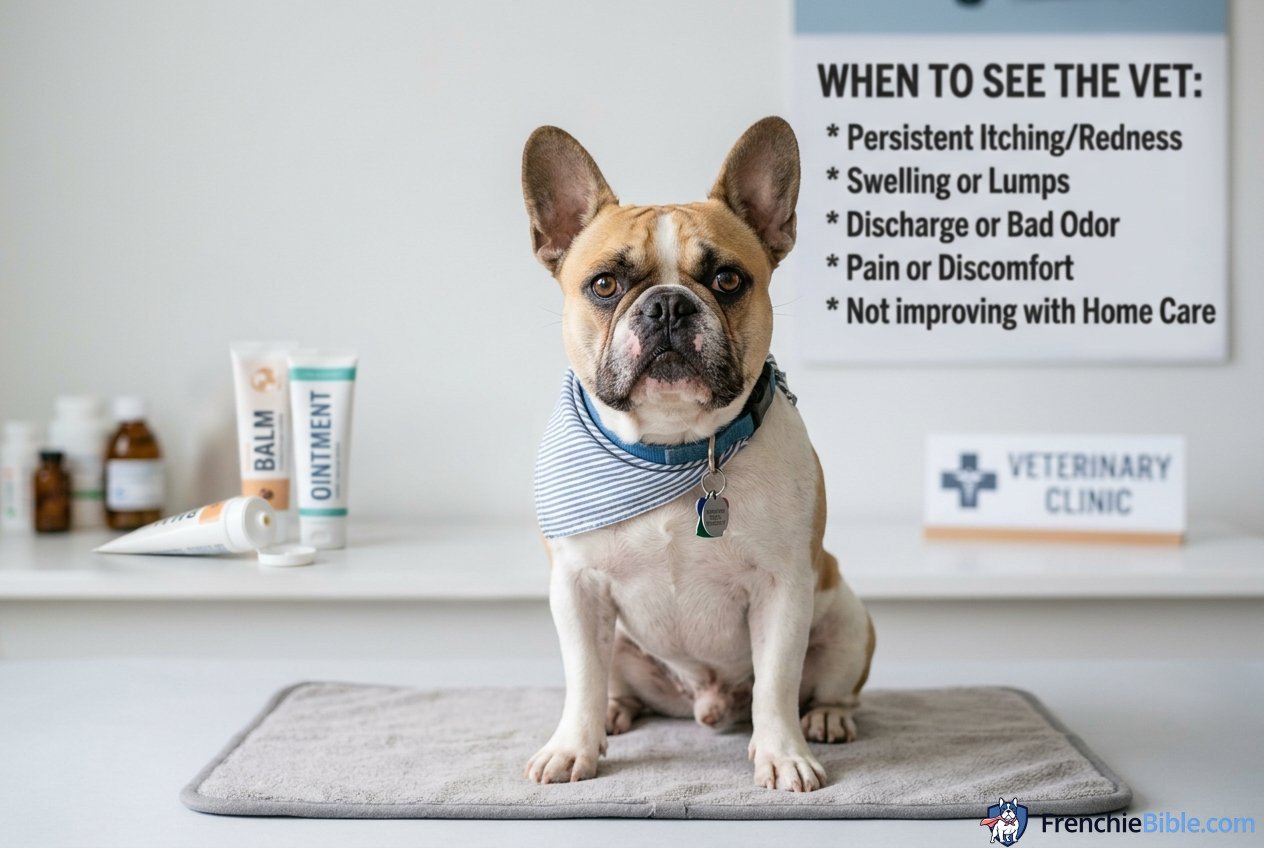
You must take your French Bulldog to the veterinarian if you observe any of the following:
– Bright red, raw, or bleeding skin inside the folds.
– Thick, yellow, green, or foul-smelling discharge.
– The dog is frantically rubbing their face or crying in pain when the area is touched.
– The skin condition does not improve after 3-4 days of strict cleaning and balm application.
In these cases, your vet will likely prescribe topical antibiotic or antifungal ointments (such as those containing mupirocin or nystatin), and potentially oral medications to knock out a severe infection. Once the infection is cleared by the prescription meds, you can resume your daily balm routine for maintenance.
Conclusion
Owning a French Bulldog means committing to a higher level of daily hygiene than most other breeds require. Those adorable facial wrinkles and distinct noses demand vigilant care to prevent the overgrowth of yeast and bacteria. By integrating a strict routine of gentle cleaning, thorough drying, and the application of high-quality, natural wrinkle balms and nose butters, you create an impenetrable barrier against fungal infections and painful hyperkeratosis. Consistent, daily maintenance is the absolute best medicine to keep your Frenchie’s iconic face healthy, comfortable, and kissable.
Frequently Asked Questions (FAQs)
1. How often should I clean and apply balm to my French Bulldog’s wrinkles?
For maintenance of healthy skin, cleaning and applying balm once a day is usually sufficient. However, if your dog has deep folds, heavy tear stains, or is prone to infections, you may need to clean and dry the folds twice a day (morning and night), followed by a light application of barrier balm.
2. Can I use human baby wipes or Vaseline on my Frenchie’s face?
Avoid human baby wipes. They are formulated for human skin pH and often contain fragrances and chemicals that irritate canine skin and disrupt their natural flora. Vaseline (petroleum jelly) provides a barrier, but it does not absorb well, has zero antifungal properties, and can clog pores. Natural, dog-specific balms are vastly superior.
3. Why do my Frenchie’s tear stains smell so bad?
Foul-smelling tear stains are a classic indicator of a yeast infection (Malassezia) brewing in the moisture tracks left by the tears. The tears themselves don’t smell; the overgrowth of yeast feeding on the moisture and dead skin cells produces the odor.
4. My Frenchie hates having their face cleaned. How can I make it easier?
Desensitization is key. Start slow. Touch their face with a dry tissue, say “Yes!”, and give a high-value treat. Gradually introduce the wipe, rewarding heavily for calm behavior. Never force them down or yell, as this creates a negative association. Make “face time” synonymous with “treat time.”
5. Is Nasal Hyperkeratosis (crusty nose) contagious to other dogs or humans?
No, nasal hyperkeratosis is not an infection; it is an idiopathic condition (often genetic in bulldog breeds) characterized by the overproduction of keratin. It is not contagious to other pets or humans in the household, but it does require lifelong management with heavy moisturizing butters.