Any experienced French Bulldog owner knows the sinking feeling of running their hands along their dog’s sleek coat, only to feel a series of hard, crusty bumps, flaking circular “moth-eaten” hairless patches, and raised red pimples. This is pyoderma—a bacterial skin infection that is arguably the number-one dermatological plague of the French Bulldog breed.
For many Frenchie owners, the cycle of pyoderma is incredibly frustrating. You notice the pustules, you take your dog to a clinic, you receive a course of oral antibiotics (like Cephalexin) and steroid anti-itch pills (like Apoquel), and the skin clears up beautifully. But within two weeks of stopping the medication, the bumps return with a vengeance, often worse than before.
Related Reading: Training & Behavior | Grooming & Care | French Bulldog Colors
In my ten years of breeding and showing French Bulldogs, I have learned that relying solely on systemic oral antibiotics to treat recurrent superficial pyoderma is a losing battle. Not only does it decimate your dog’s gut microbiome—which is the very foundation of their skin’s immune system—but it also accelerates the development of drug-resistant superbugs like MRSP (Methicillin-Resistant Staphylococcus pseudintermedius).
To break this vicious cycle, you must shift your strategy from systemic intervention to aggressive, highly precise topical therapy.
This guide will demystify the biology of recurrent Frenchie pyoderma, explain why internal antibiotics frequently fail, and deliver my kennel’s closely guarded, step-by-step protocol for deep antibacterial baths and localized wet compress therapies to restore your dog’s protective skin barrier from the outside.
1. What is Pyoderma? The Battle of the Vulnerable Frenchie Skin Barrier
To defeat pyoderma, we must understand what is happening at the microscopic level of your Frenchie’s skin.
Pyoderma is not a primary disease; it is always a secondary symptom of an underlying breakdown in the skin barrier.
Healthy canine skin is covered by a natural protective film called the acid mantle (a mixture of sebum, sweat, and beneficial bacteria). In French Bulldogs, this barrier is naturally weaker due to genetic mutations that affect lipid production and cellular structure.
When your Frenchie suffers from food allergies, environmental allergies (like grass or dust mites), or hormonal imbalances, their skin barrier cracks.
The moisture evaporates, leading to dry, itchy skin. As your dog scratches and licks, they create micro-tears in the epidermis.
Once the barrier is breached, Staphylococcus pseudintermedius—a normal, opportunistic bacterium that lives harmlessly on every dog’s skin—seizes the opportunity. It migrates deep into the hair follicles and scratches, multiplying rapidly.
The body’s immune system sends white blood cells to fight the infection, resulting in the classic symptoms of pyoderma:
- Pustules: Small, pus-filled pimples.
- Epidermal Collarettes: Circular crusty patches with a red, raw center and flaking edges (representing exploded pustules).
- Papules: Raised, firm red bumps that cause intense itching.
- Moth-Eaten Hair Loss: Patchy shedding where the hair follicles have been severely inflamed.
2. Why Antibiotics Fail: The Rise of Resistant Superbugs
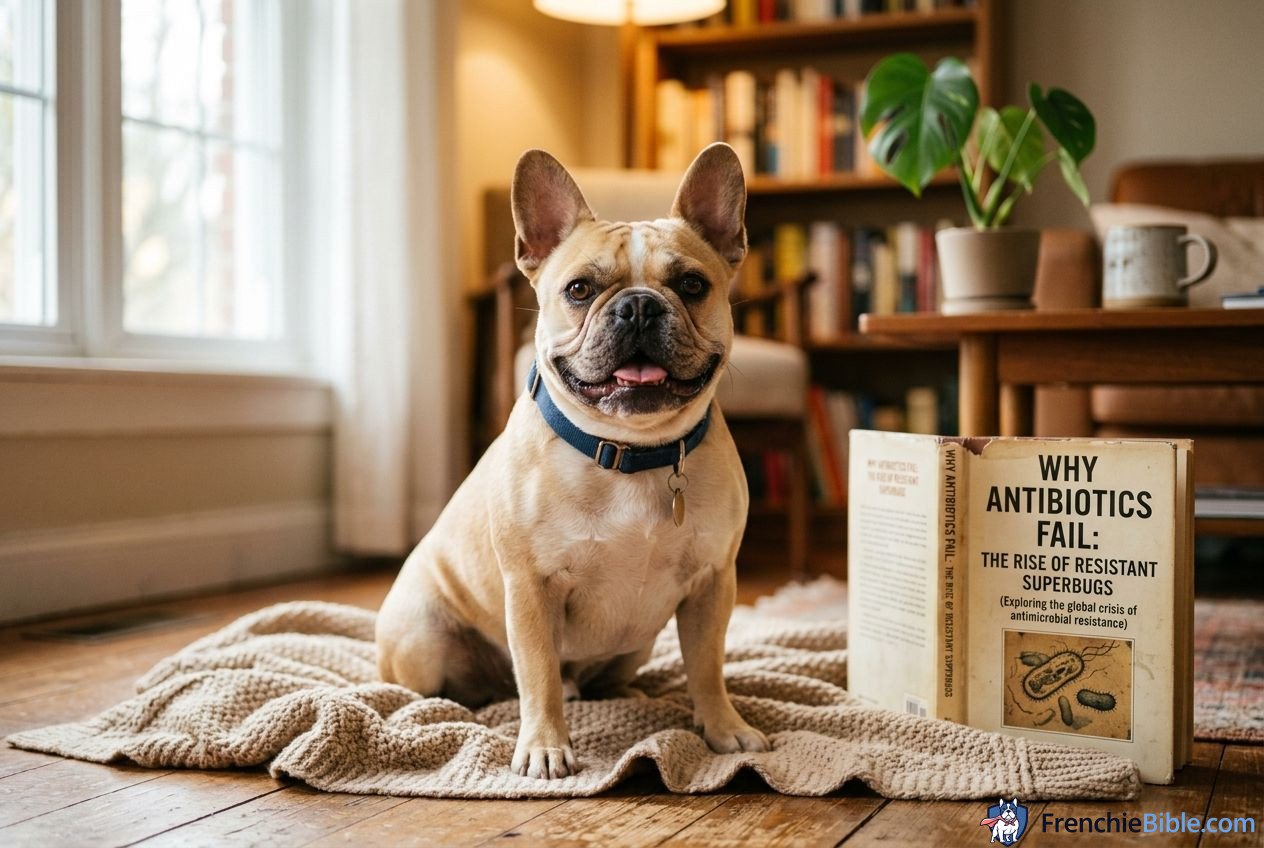
Historically, vets prescribed oral antibiotics for almost every case of skin bumps. While effective in the past, this approach has led to a major crisis in Frenchie health: microbiome collapse and antibiotic resistance.
The Microbiome Connection
Every time you feed your Frenchie oral antibiotics, the drug kills off the bad bacteria on their skin, but it also wipes out the beneficial bacteria in their gut.
Because the gut microbiome regulates the immune system’s inflammatory responses, destroying it actually makes your Frenchie more sensitive to allergies over time. You temporarily cure the skin bumps but leave the dog with a compromised immune system, guaranteeing the pyoderma will return the moment the drug leaves their system.
Methicillin-Resistant Staphylococcus (MRSP)
Worse still, repeated, short-course antibiotic therapies have allowed the Staphylococcus bacteria on your dog’s skin to mutate.
If your Frenchie develops an MRSP infection, standard antibiotics will no longer work. Treating an MRSP flare-up is incredibly expensive and difficult, often requiring strong, kidney-damaging intravenous drugs as a last resort.
The Breeder’s Philosophy: For superficial pyoderma (infections restricted to the upper layers of the skin), we must use aggressive topical therapy instead of oral drugs. Topical disinfectants kill bacteria physically, meaning the bacteria cannot develop resistance to them.
3. The Breeder’s Three-Stage Deep Antibacterial Bath Protocol
The cornerstone of topical pyoderma management is the medicated bath. However, simply lathering your dog up and rinsing them off immediately is useless.
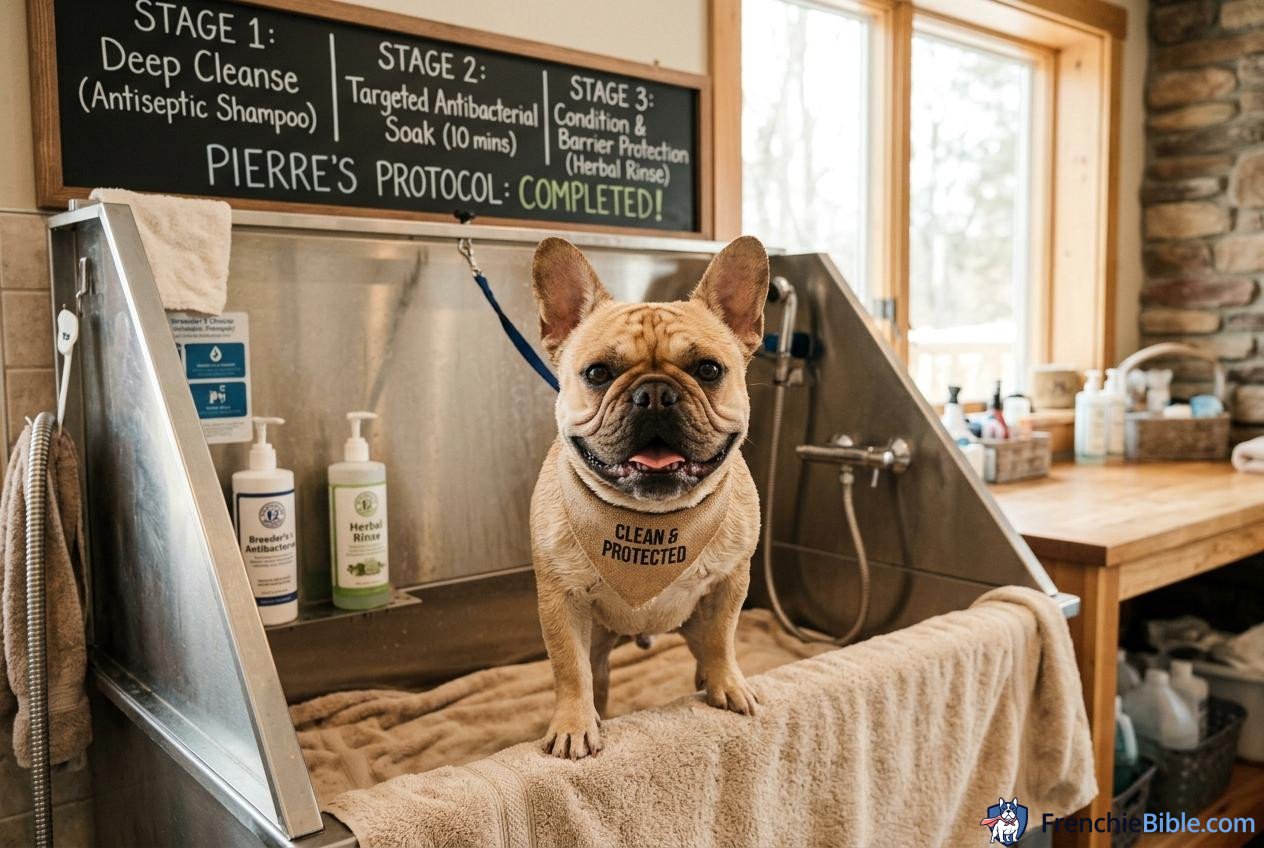
To eradicate deep-follicle bacterial colonization, you must execute this highly specific, three-stage clinical bath protocol.
Stage 1: The Pre-Wash and Debris Removal
If you apply medicated shampoo directly onto a dirty, crusty Frenchie coat, the active ingredients will bind to the surface dirt, oils, and dead skin flakes instead of reaching the bacteria.
- Action: Place your Frenchie in a warm tub. The water temperature must be lukewarm, not hot (hot water triggers histamine release, worsening itching).
- The Wash: Use a gentle, soap-free, hypoallergenic oatmeal shampoo to wash away superficial dirt, mud, and loose fur. Thoroughly massage their paws, belly, and face.
- The Soak: Let your dog stand in the warm water for 5 to 10 minutes. This softens the crusty epidermal collarettes, allowing them to gently dissolve and open up the infected hair follicles to the medicated shampoo. Rinse completely.
Stage 2: The Medicated Lather and 10-Minute Contact Time
For this stage, you must use a shampoo containing Chlorhexidine (2% to 4%) and Ketoconazole (1% to 2%). Chlorhexidine is a broad-spectrum antibacterial that physically ruptures bacterial cell membranes; Ketoconazole is an antifungal that eliminates yeast, which almost always co-infects pyoderma areas.
- The Lather: Apply the medicated shampoo starting at the most heavily infected areas (usually the belly, groin, and paws). Work the shampoo into a rich lather, massaging against the direction of hair growth to drive the active ingredients deep into the hair follicles.
- The Non-Negotiable 10-Minute Soak: This is where 90% of pet parents fail. Medicated shampoos require a minimum of 10 minutes of active contact time with the skin to penetrate and kill the bacteria. If you rinse after 2 minutes, you are wasting your time.
- Breeder Tip: Keep a timer on your phone. To keep your Frenchie warm and occupied during the 10 minutes, periodically pour warm water from the tub over their shoulders (avoiding the eyes and ears) and feed them low-fat treats or lick mats smeared with peanut butter.
- Rinse: Rinse with cool, clean running water for at least 5 minutes. Any shampoo residue left behind will dry out and cause intense post-bath itching.
Stage 3: The Cold-Water Closure and Deep-Drying Protocol
Medicated baths open up the skin pores and hair follicles. If you leave the pores open and moist, bacteria will re-colonize immediately.
- The Cold Rinse: For the final 30 seconds, run cool-to-cold water over your Frenchie’s body. This constricts the skin blood vessels and closes the hair follicles, lock-sealing the active Chlorhexidine within the skin layers.
- The Drying Rule: Moisture is the absolute best friend of Staphylococcus and yeast. You must get your Frenchie dry, but never use a human hair dryer on hot heat (this burns their sensitive, damaged skin and triggers intense itching).
- The Process: Towel dry thoroughly with absorbent microfiber towels. Then, use a professional high-velocity pet dryer on the COOL or NO-HEAT setting to blow water droplets completely out from under the dense fur, paying extreme attention to the groin, armpits, tail pocket, and paw webbing.
4. Localized Wet Compress Therapy: Tackling Face, Lip, and Paw Pustules
If your Frenchie’s pyoderma is concentrated in specific, hard-to-wash zones—such as the deep folds of their chin (chin acne), lip folds, or between their toes—you do not need to give them a full bath every day. Instead, use localized wet compress therapy.
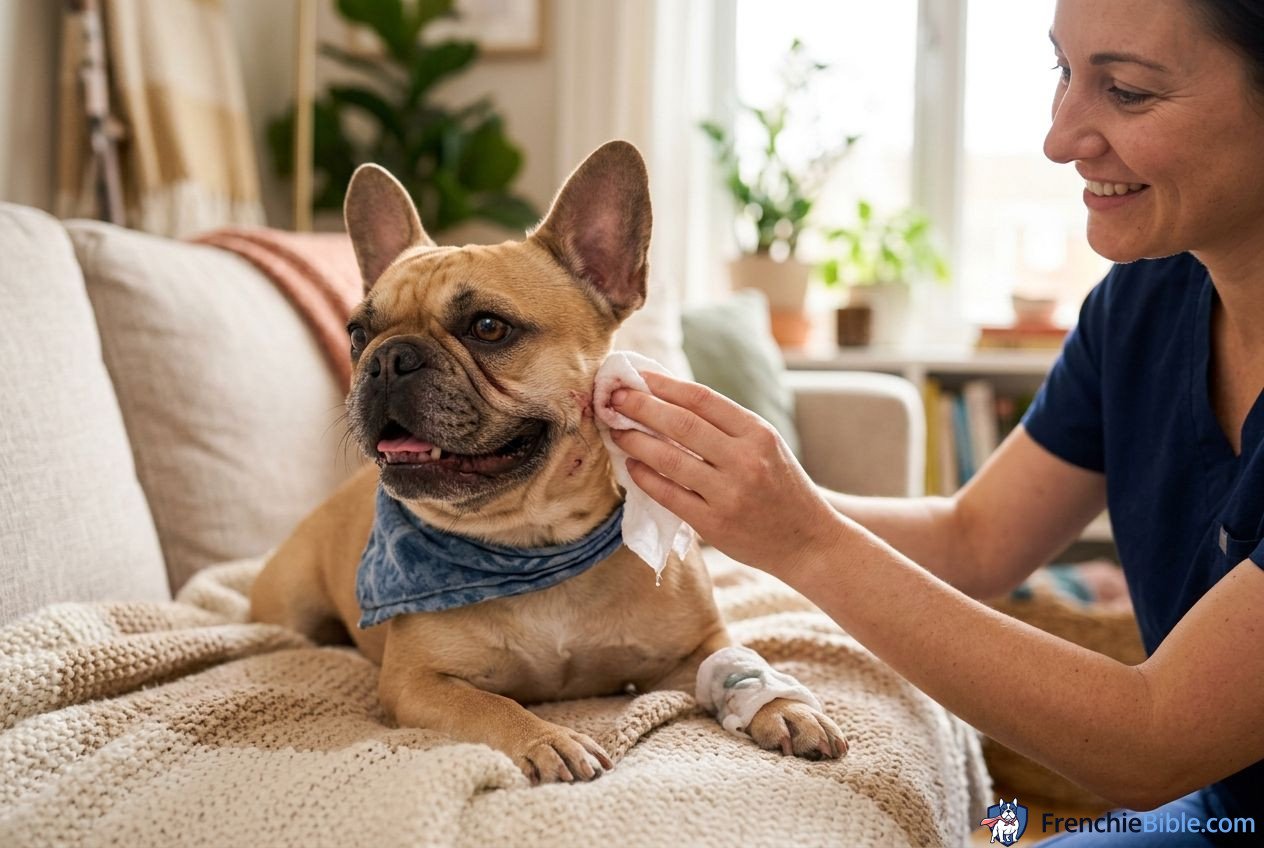
The Wet Compress Protocol
- The Solution: Dilute a clinical-grade Chlorhexidine Gluconate (4%) solution (such as Hibiclens) with distilled water. The ratio should be 1 part Chlorhexidine to 4 parts water (producing a safe, non-irritating 0.8% to 1% concentration). The liquid should look light pink.
- The Application: Saturate a clean, medical-grade cotton pad or cosmetic cotton round with the diluted solution.
- The Compress: Press the saturated pad gently but firmly directly onto the infected pustules, chin wrinkles, or swollen paw webbing. Hold it there for 3 to 5 minutes. Do not rub aggressively; let the antibacterial solution soak into the skin.
- No Rinse Needed: Remove the pad and let the area air dry naturally. Repeat this twice daily for 7 days. The Chlorhexidine leaves a residual protective layer on the skin that continues to kill bacteria for hours.
5. Frequency and Schedule for Severe Pyoderma Management
When dealing with an active, severe outbreak of red bumps and flaking circular lesions, you must be consistent.
Here is my kennel’s active healing schedule:
| Timeline | Bath Frequency | Wet Compress Frequency (Local Areas) | Skin Barrier Restoration |
|---|---|---|---|
| Week 1 | Every 3 days (3 baths total) | Twice daily (Morning and Night) | Daily topical Ceramide spray |
| Week 2 | Every 4 days (2 baths total) | Twice daily | Daily topical Ceramide spray |
| Week 3 | Once a week | Once daily (Night only) | Every other day spray |
| Week 4 (Maintenance) | Once every two weeks | As needed after walks | Once a week spray |
6. Post-Bath Barrier Restoration: Feeding the Skin from Within
Killing the bacteria is only half the battle. If you do not rebuild the dry, damaged skin barrier, new bacteria will invade the moment you stop the medicated baths.
- Topical Ceramides and Phytosphingosine: After your Frenchie is completely dry, spray or apply a topical lipid-repair treatment (such as sprays containing ceramides, cholesterol, and essential fatty acids). This mimics the natural skin barrier, sealing moisture in and keeping bacteria out.
- Essential Fatty Acids (Omega-3 & Omega-6): You must nourish the skin barrier from the inside. Add a high-potency wild-caught anchovy or sardine oil to your Frenchie’s daily meals. The EPA and DHA in fish oil act as powerful systemic anti-inflammatories, reducing the skin’s allergic reactivity and strengthening the cellular lipid barrier from within.
7. Frequently Asked Questions (FAQ)
Q1: Is normal for my Frenchie to itch intensely immediately after a medicated bath?
Yes, this is a common reaction during the first 1 to 2 baths. As the medicated shampoo kills off large colonies of bacteria and yeast, the dying microbes release toxins and enzymes that can cause temporary, intense localized itching. Additionally, the deep-cleaning action of Chlorhexidine can temporarily dry out the skin surface. To minimize this, ensure you rinse with cool water at the end, dry them on a completely cold setting, and apply a soothing, alcohol-free ceramide spray immediately after drying.
Q2: Can I use human antibacterial body washes like Dial or antiseptic liquids like Dettol on my Frenchie?
Absolutely not. Human skin has a significantly lower, more acidic pH (around 5.5), whereas canine skin is much more alkaline (around 7.0 to 7.52). Using human antiseptic products like Dial or Dettol will strip away the essential lipid layers of your Frenchie’s skin, throwing off their pH and leaving them completely defenseless against deeper, more severe bacterial infections. Only use veterinary-approved products specifically formulated for the canine pH.
Q3: My Frenchie has chronic red bumps under their chin. Is this pyoderma, and how do I clean it?
Yes, this is commonly referred to as “dog acne” or localized chin pyoderma. It is caused by food oils, bacteria, and moisture getting trapped inside the hair follicles when your Frenchie eats out of their bowl. To treat this:
1. Throw away plastic food bowls; they have microscopic scratches that harbor bacteria. Only use stainless steel or ceramic bowls, and wash them after every meal.
2. Perform the Chlorhexidine Wet Compress Therapy on their chin for 3 minutes after their morning and evening meals to keep the area disinfected.
Q4: How do I know if my Frenchie’s skin bumps are pyoderma or demodectic mange mites?
Superficial pyoderma and demodectic mange can look identical, as both cause circular hairless patches, red bumps, and crusting. However, there are two distinct differences:
- Mange is caused by microscopic mites living in the hair follicles and typically begins with hair loss around the eyes, muzzle, and front legs without being intensely itchy initially.
- Pyoderma pustules are intensely itchy and respond rapidly to topical Chlorhexidine washes.
If your Frenchie’s skin does not show a 50% improvement after two weeks of our medicated bath protocol, please consult your veterinarian for a simple skin scraping test to rule out mites.
Q5: Can I use apple cider vinegar as a topical spray to cure pyoderma?
While apple cider vinegar (ACV) has mild antibacterial and antifungal properties, you should never spray it directly onto raw, inflamed pyoderma lesions. The acetic acid will cause intense, painful stinging and can further irritate open sores. Keep ACV in the kitchen for bone broth making, and rely on veterinary-strength, pH-balanced Chlorhexidine for active bacterial skin infections.
8. Disclaimer
The guidelines and topical therapy protocols outlined in this article are based on my ten years of experience breeding, raising, and managing the delicate skin health of French Bulldogs. I am not a veterinarian, and this content is intended solely for educational, supportive, and preventative purposes. Severe, deep-tissue pyoderma, or cases accompanied by high fever, lethargy, and loss of appetite, require professional clinical diagnosis and treatment. If your French Bulldog’s skin condition worsens or fails to improve, please consult a licensed veterinarian immediately.