
Few dog breeds possess a gastrointestinal system as sensitive and structurally volatile as the French Bulldog. As a long-time breeder who has managed the dietary transitions of dozens of litters and counselled countless frustrated new owners, I am intimately familiar with the daily anxiety of the Frenchie “belly gurgle.” For this breed, chronic flatulence—often of the eye-watering, room-clearing variety—and loose, unformed stool are not just minor inconveniences; they are chronic indicators of a gut lining under constant distress.
In your search for a cure, you have likely run into the premium nutrition trend of dehydrated freeze-dried dog food. Promoted as the raw food diet’s clean, convenient cousin, freeze-dried food carries a price tag that can easily make a dog owner hesitate. At first glance, paying eighty to a hundred dollars for a relatively small bag of dry, lightweight nuggets feels like a marketing gimmick.
Related Reading: Training & Behavior | Grooming & Care | French Bulldog Colors
Is freeze-dried food truly a miracle cure for a Frenchie’s gas and soft stool, or is it simply an expensive trend?
To answer this, we must put aside the marketing slogans and analyze the direct, biochemical impact of freeze-drying on a dog’s digestive tract. When we look at how the Frenchie’s compact stomach and shortened colon interact with proteins and starches, we find that freeze-dried food is not a gimmick—provided you understand how to prepare and feed it correctly.
1. The Freeze-Drying Process: What Happens to the Meat?
To understand why this food is so beneficial, we must understand the science behind how it is made. Freeze-drying is not the same as standard dehydrating (which uses heat to evaporate moisture, cooking the food in the process).
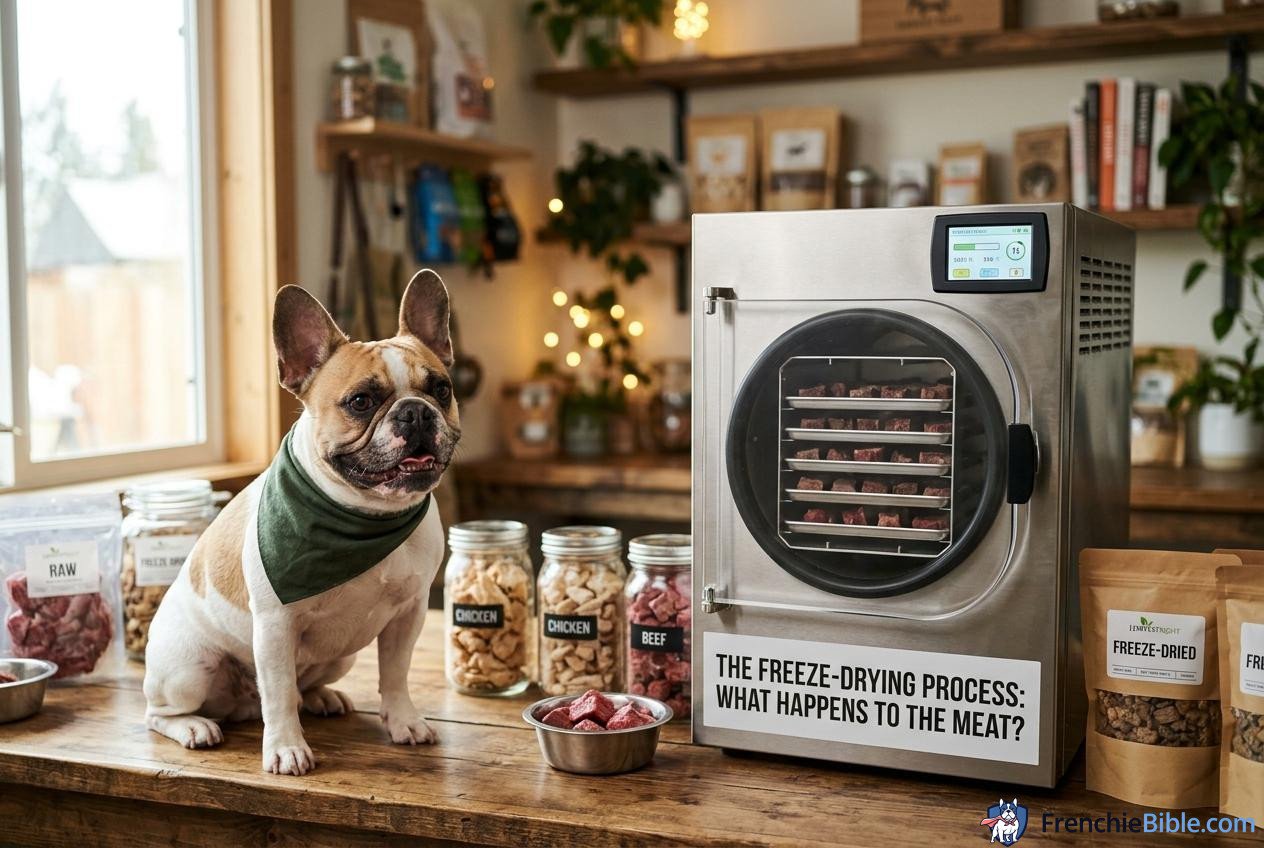
The freeze-drying process involves three distinct scientific phases:
1. Freezing: The raw ingredients (usually high-quality muscle meats, organ meats, and bones) are quickly frozen to temperatures well below zero (around -40°F / -40°C). This rapid freezing locks the cellular structure of the food in place, preventing the formation of large ice crystals that can damage nutrient density.
2. Primary Drying (Sublimation): The food is placed in a highly controlled vacuum chamber. The pressure is lowered, and a tiny amount of heat is applied. This causes the water inside the food to instantly transition from solid ice to water vapor, completely bypassing the liquid phase. This is called sublimation, and it removes about 95% of the water content.
3. Secondary Drying (Desorption): The temperature is raised slightly to pull out any remaining bound water molecules, leaving a food product that is completely dry but retains 97% of its original raw nutrients, active enzymes, and natural scent.
Because there is zero heat used during drying, the raw proteins do not denature. To your Frenchie’s stomach, eating rehydrated freeze-dried food is identical to eating fresh, raw meat from a butcher, but with the shelf-life convenience of a standard kibble.
2. Why Traditional Extruded Kibble Triggers Gas and Soft Stool
To see why freeze-dried food is a superior digestive option, we must look at what happens when your Frenchie eats standard extruded kibble.
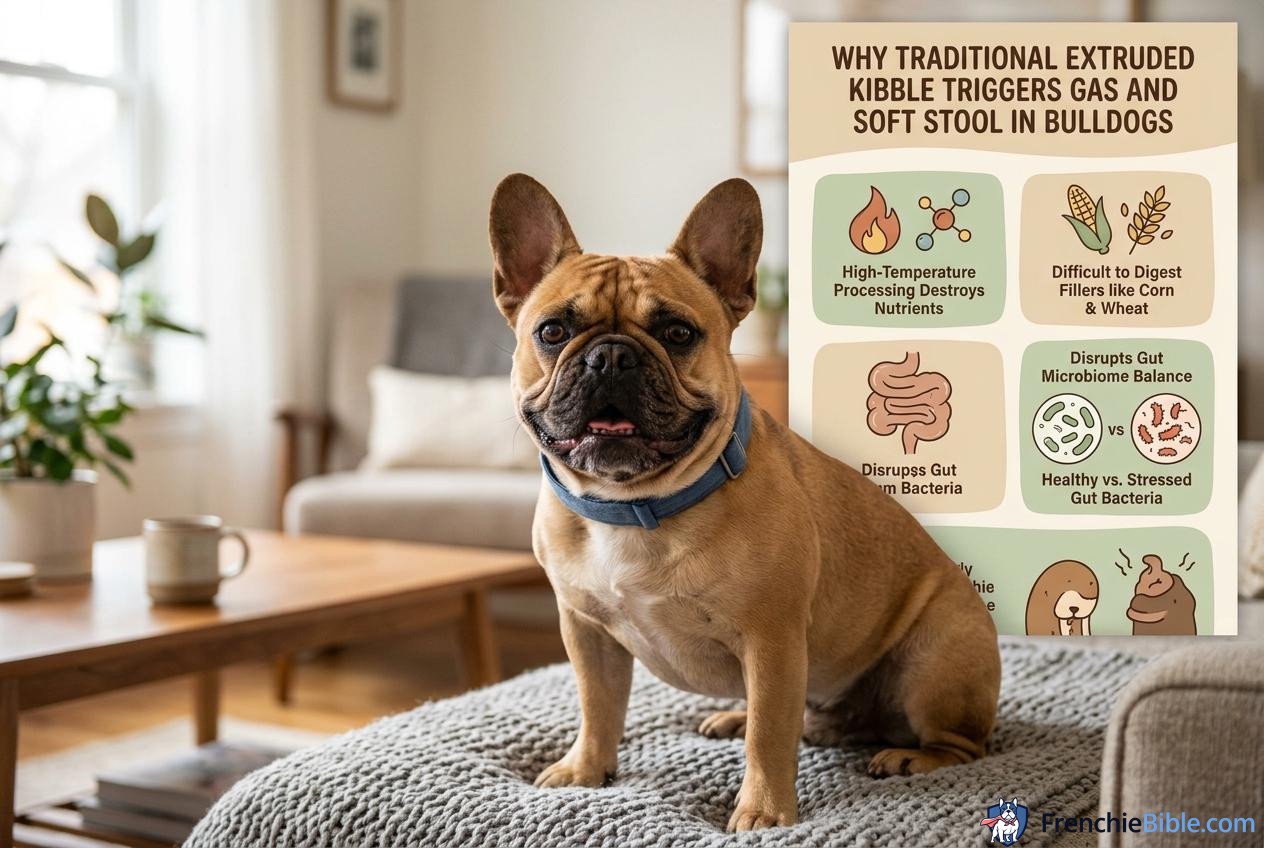
Traditional kibble is made through extrusion, which subjects ingredients to extreme heat, pressure, and steam. To make a dry kibble hold its shape, the recipe must contain a high percentage of starches and binders—usually corn, wheat, peas, white potatoes, or lentils.
- The Fermentation Problem: French Bulldogs have a shortened colon relative to their body size, which gives them a shorter window to extract nutrients. When they eat a food high in complex starches and binders, their small intestines cannot fully digest these heavy carbs. The undigested starches pass into the large intestine, where they are consumed by sugar-loving colonic bacteria. This process produces massive volumes of volatile gases, leading to painful abdominal gurgling and foul flatulence.
- The Expansion and Bile Issue: Traditional kibble expands exponentially when it absorbs stomach acid. This expansion creates a heavy, bloated weight in your Frenchie’s stomach, which often triggers morning bile vomiting, acid reflux, or active regurgitation.
- Synthetic Coating Sickness: Because extrusion strips away natural nutrients, manufacturers must spray a synthetic vitamin and fat mixture onto the outside of the kibble after cooling. This greasy, rancid surface fat is highly irritating to a Frenchie’s sensitive liver and pancreas, frequently triggering soft stool or chronic colitis.
3. How Freeze-Dried Food Heals the Frenchie Gut
When you feed high-quality, rehydrated freeze-dried food, you eliminate almost every major trigger of Frenchie digestive distress.
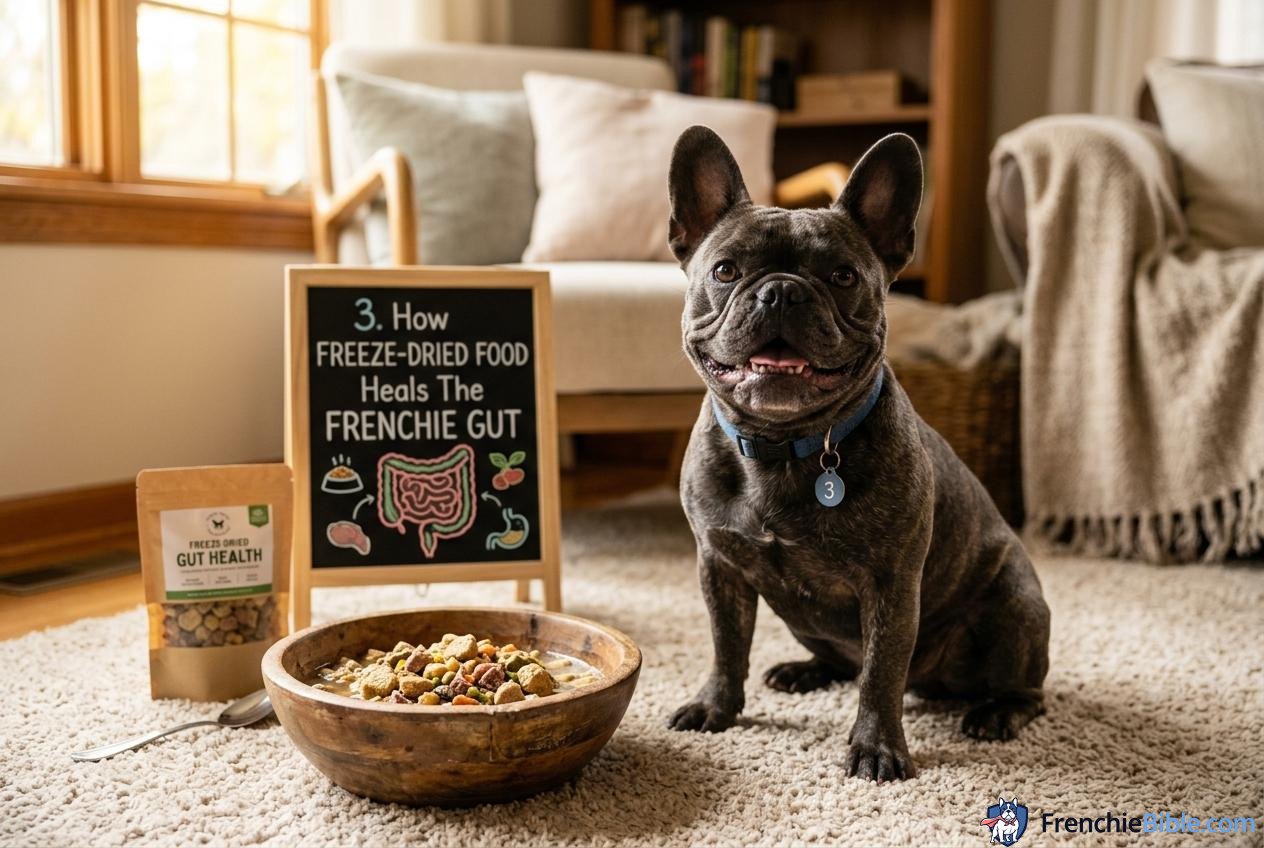
- Zero Fillers or Binders: Premium freeze-dried foods consist of 80% to 90% meat, organs, and bone, with zero high-glycemic starches or legumes. Because there are no heavy carbs to pass undigested into the colon, there is nothing for the bad bacteria to ferment. Within 48 hours of switching to a clean freeze-dried diet, your Frenchie’s flatulence will virtually disappear.
- High Bioavailability: Because the proteins have not been chemically altered by extreme heat, your Frenchie’s digestive enzymes can break them down with minimal cellular effort. Your dog’s body absorbs almost every single calorie and micronutrient consumed. In my kennel, we notice that dogs fed a freeze-dried diet produce stools that are 50% smaller, firmer, and almost odorless.
- Active Enzymes and Microbiome Support: Because the food is technically raw, it retains its natural, active enzymes. These enzymes assist your dog’s pancreas in breaking down nutrients, reducing pancreatic strain and promoting a diverse, robust, and stable gut microbiome. A healthy microbiome is your Frenchie’s absolute best defense against systemic skin allergies and ear infections.
4. The Golden Rule of Freeze-Dried Food: Never Feed It Dry!
While freeze-dried food is an incredible tool, many owners make a critical mistake: they feed the nuggets straight out of the bag without rehydrating them.
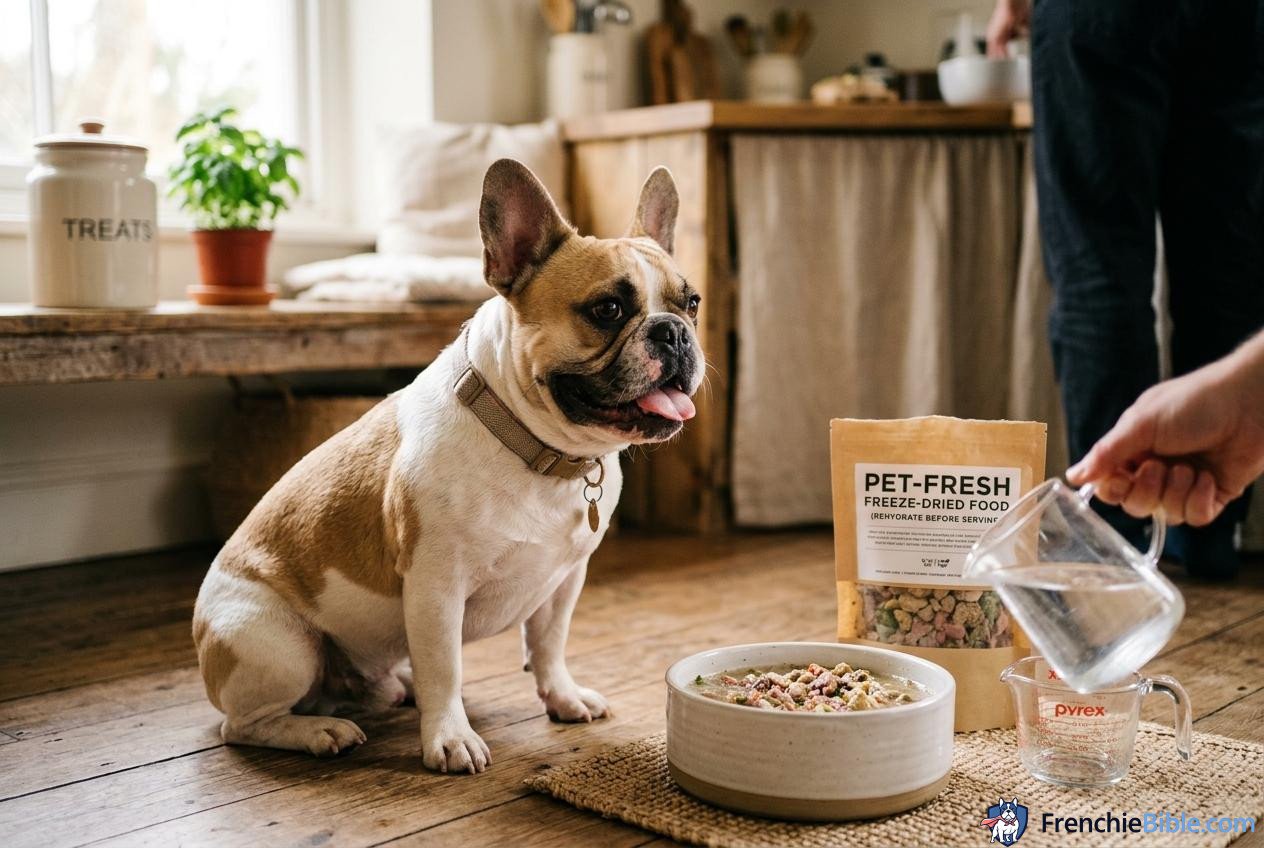
Feeding dry freeze-dried nuggets to a Frenchie is a recipe for severe dehydration, constipation, or acute vomiting.
Because freeze-dried food has had almost 98% of its moisture removed, it acts like a dry sponge inside your dog’s stomach. When your Frenchie swallows a dry nugget, the food must pull water directly out of your dog’s digestive tract and tissues to rehydrate itself before it can be digested.
This causes several severe physiological issues:
1. Tissue Dehydration: It drains systemic fluids from your dog’s kidneys, bladder, and bloodstream, which can trigger bladder stones—a common issue in Frenchies.
2. Stomach Irritation: The dry, expanding mass sits heavily against the stomach lining, triggering immediate regurgitation of foam or undigested food.
3. Severe Constipation: The resulting digested paste is incredibly dry and hard, leading to painful straining when your dog tries to defecate.
The Solution: Always rehydrate freeze-dried food with warm, filtered water, bone broth, or goat milk. Let the mixture sit for 5 to 10 minutes until the nuggets are soft, fully saturated, and juicy before serving.
5. How to Transition Your Sensitive Frenchie to Freeze-Dried Food
Because freeze-dried food is incredibly rich and nutrient-dense, you must transition your Frenchie slowly to prevent transition shock.
- Days 1–3: Feed 75% of their old diet and 25% rehydrated freeze-dried food.
- Days 4–6: Feed a 50/50 mix of old and new food.
- Days 7–9: Feed 25% old food and 75% rehydrated freeze-dried food.
- Day 10+: 100% rehydrated freeze-dried food.
Expert Tip: If your Frenchie is prone to loose stools during any diet transition, add a spoonful of unsweetened pure pumpkin puree to their bowl. Pumpkin contains soluble fiber that naturally slows down digestion, allowing the gut microbiome to adjust smoothly to the rich raw proteins.
6. Frequently Asked Questions (FAQ)
Q1: Is freeze-dried dog food safe from pathogens like Salmonella?
Yes. Reputable pet food manufacturers use high-pressure processing (HPP) before freeze-drying. HPP is a cold pasteurization technique that subjects the raw food to extreme water pressure, instantly killing harmful pathogens like Salmonella, Listeria, and E. coli while leaving the natural proteins, enzymes, and nutrients completely intact. Always choose premium brands that openly state they use HPP and conduct batch testing for pathogens.
Q2: Why is freeze-dried food so much more expensive than standard kibble?
The cost is driven by two main factors: ingredient quality and processing time. Freeze-dried food consists of almost 85% to 95% pure muscle meat, organ meat, and bone, with no cheap grain or vegetable fillers. Additionally, the freeze-drying process (freezing, vacuum sublimation, and desorption) takes up to 24 to 36 hours of continuous, high-tech energy run-time per batch, making it a highly resource-intensive manufacturing method compared to rapid extrusion.
Q3: Can I use freeze-dried nuggets as daily treats instead of a full meal?
Absolutely! Because of their intense natural meat scent and lightweight texture, freeze-dried nuggets make outstanding, high-value training treats. If you are using them strictly as treats (in small, individual pieces), you do not need to rehydrate them. However, ensure your Frenchie always has access to fresh, clean drinking water nearby.
Q4: My Frenchie has white, chalky poop after eating freeze-dried food. Is this normal?
Yes, this is very common and is actually a sign of a highly bioavailable, species-appropriate diet. Many premium freeze-dried formulas contain natural ground bone, which is rich in calcium. Because your Frenchie’s body absorbs almost all the meat and organ nutrients, the digested waste consists primarily of unabsorbed calcium minerals, resulting in small, firm, slightly chalky stools that break down quickly in the yard. As long as your dog is not straining or showing signs of constipation, this is perfectly healthy.
Q5: Can I rehydrate freeze-dried food with cold water instead of warm water?
While you can use cold water, warm water (around 100°F / 37°C) is highly recommended. Warm water mimics the natural temperature of fresh prey, which drastically increases the meat’s aroma and stimulates your Frenchie’s appetite. More importantly, warm liquids are far gentler on a sensitive stomach; cold liquids can shock the gastric nerves, causing rapid stomach spasms that lead to immediate regurgitation or soft stools.
7. Disclaimer
The nutritional analysis and feeding guidelines shared in this article are based on my ten years of hands-on experience as a French Bulldog breeder and breed researcher. I am not a veterinarian, and this content is intended purely for supportive, educational, and preventative purposes. Chronic flatulence combined with rapid weight loss, bloody diarrhea, or lethargy can be symptoms of underlying systemic conditions and require immediate clinical diagnosis by a licensed veterinarian.