as a French Bulldog expert and breeder and breeder, I have sat in the consultation room with countless panicked owners who tell me the same terrifying story: “Doctor, my Frenchie was sleeping soundly, and then suddenly woke up gasping for air, choking, and panicking as if they couldn’t breathe.” If you have experienced this with your beloved bat-eared companion, you know the exact mix of dread and helplessness it brings.
You watch them jolt awake, their chest heaving, eyes wide with panic, making a horrific choking or snorting sound. This is not a nightmare. This is sleep apnea, and in French Bulldogs, it is almost always inextricably linked to Brachycephalic Obstructive Airway Syndrome (BOAS).
Related Reading: Training & Behavior | Grooming & Care | French Bulldog Colors
While many people think of snoring as a “cute” and “normal” Frenchie trait, the reality is much darker. Snoring is the sound of airway resistance; waking up gasping is the sound of an airway completely failing. In this comprehensive, deep-dive guide, we will explore exactly what sleep apnea is in French Bulldogs, the anatomical anomalies that cause it, the severe long-term health consequences of ignoring it, and the life-saving treatments available to ensure your Frenchie can sleep peacefully and safely.
What is Sleep Apnea in French Bulldogs?
Sleep apnea is a sleep disorder characterized by pauses in breathing or periods of shallow breathing during sleep. Each pause can last for a few seconds to several minutes, and they happen multiple times a night. In humans, it is a well-documented and heavily treated condition, often managed with CPAP machines. In dogs, particularly extreme brachycephalic (flat-faced) breeds like the French Bulldog, it is a chronic, progressive, and potentially fatal condition that often goes undiagnosed until a severe crisis occurs.
The Mechanics of Canine Sleep Apnea
To understand sleep apnea, we must understand the normal respiratory cycle during sleep. When a dog enters deep sleep (REM sleep), the muscles throughout their body, including the muscles of the upper airway, naturally relax. In a dog with normal facial anatomy (mesocephalic or dolichocephalic breeds like a Labrador or Greyhound), this relaxation does not cause a problem because their airway is wide and structurally sound.
However, in a French Bulldog, the anatomy is already fundamentally compromised. They have been bred to have a highly compressed skull, but the soft tissues inside that skull have not decreased proportionally in size. They essentially have the soft tissue of a much larger dog crammed into a tiny, flattened space. When a Frenchie goes to sleep and their upper airway muscles relax, this excessive soft tissue collapses inward, completely blocking the flow of air into the trachea and lungs.
Central vs. Obstructive Sleep Apnea
In veterinary medicine, just as in human medicine, there are two primary types of sleep apnea:
- Central Sleep Apnea: This occurs when the brain temporarily fails to send the correct signals to the muscles that control breathing. This is a neurological issue and is relatively rare in dogs, though it can happen secondary to brain trauma, tumors, or severe central nervous system disease.
- Obstructive Sleep Apnea (OSA): This is the culprit in 99.9% of French Bulldog cases. OSA occurs when the airway is physically blocked, preventing air from reaching the lungs despite the body’s effort to breathe. The chest and diaphragm are working hard, pumping to draw in air, but the physical obstruction in the throat or nose stops the airflow.
When a Frenchie has an obstructive apneic episode, their blood oxygen levels begin to drop rapidly (hypoxia), and their blood carbon dioxide levels begin to rise (hypercapnia). The brain senses this dangerous chemical shift and triggers an emergency “wake up” signal, resulting in a sudden surge of adrenaline. The dog jolts awake, violently gasping for air, desperately trying to re-open their collapsed airway.
Why Do French Bulldogs Suddenly Wake Up Gasping? (The BOAS Connection)
The exact reason your French Bulldog wakes up gasping is rooted in the anatomical deformities classified under Brachycephalic Obstructive Airway Syndrome (BOAS). BOAS is not just one problem; it is a constellation of upper airway abnormalities that compound to make breathing a constant struggle. Let’s break down the specific components of BOAS that lead directly to sleep apnea.
1. Elongated Soft Palate
The soft palate is the fleshy flap of tissue at the back of the roof of the mouth that separates the oral cavity from the nasal passages. In a Frenchie, the skull is short, but the soft palate remains the length of a dog with a normal muzzle. Because it is too long for the short oral cavity, the tip of the soft palate hangs down into the airway, partially covering the epiglottis and the opening to the trachea (the windpipe).
When the dog is awake, muscle tone helps keep this elongated palate somewhat out of the way. But during sleep, when muscle tone drops, this massive flap of tissue sags directly over the tracheal opening. Each time the dog inhales, the negative pressure pulls the elongated soft palate further into the airway, effectively acting like a cork in a bottle. This is the primary physical obstruction causing your Frenchie to stop breathing and wake up gasping.
2. Stenotic Nares (Pinched Nostrils)
Take a close look at your Frenchie’s nose. Normal dog nostrils resemble commas or kidney beans, with wide, open slits that allow air to flow freely. Many French Bulldogs have “stenotic nares,” meaning the cartilage of the nose is malformed, causing the nostrils to pinch tightly shut, sometimes leaving only a microscopic pinhole for air to pass.
When a dog cannot breathe easily through its nose, it is forced to mouth-breathe. However, dogs are obligate nasal breathers when resting and sleeping. If a Frenchie with severe stenotic nares tries to sleep with its mouth closed, the massive resistance at the nostrils creates a powerful vacuum effect in the throat. This vacuum forcibly sucks the elongated soft palate and other soft tissues deeper into the airway, rapidly triggering an apneic episode.
3. Hypoplastic Trachea
A hypoplastic trachea means the windpipe itself is abnormally narrow or underdeveloped. Imagine trying to breathe through a cocktail straw instead of a wide garden hose. While not all Frenchies have a hypoplastic trachea, many do. A narrow windpipe exponentially increases airway resistance. When combined with an elongated soft palate and pinched nostrils, a hypoplastic trachea means that even if the dog manages to get some air past the throat obstruction, the volume of air reaching the lungs is severely restricted.
4. Everted Laryngeal Saccules
The laryngeal saccules are small pouches of tissue located just inside the larynx (the voice box). In a healthy dog, these sit flat and out of the way. However, in a French Bulldog with BOAS, the constant, lifelong struggle to breathe creates chronic negative pressure within the throat. Over time, this intense vacuum effect actually sucks the laryngeal saccules inside-out (everts them).
Once everted, these swollen, fleshy masses protrude directly into the airway, further narrowing an already compromised passage. During sleep, as the tissues relax, these everted saccules act as yet another physical barrier, heavily contributing to the complete airway blockages that cause sleep apnea.
5. Tonsillar Enlargement and Pharyngeal Edema
The constant vibration of the soft palate (snoring) and the intense effort required to breathe cause chronic inflammation in the back of a Frenchie’s throat. This leads to swelling of the pharyngeal tissues (edema) and chronic enlargement of the tonsils. Enlarged tonsils take up precious millimeter space in the airway. When a Frenchie lies down to sleep, gravity and muscle relaxation cause these swollen tissues to collapse inward, sealing off the airway and precipitating a gasping attack.
Symptoms of Sleep Apnea in Frenchies
Sleep apnea is an insidious condition. Because it happens while the owner is often asleep as well, the early stages frequently go unnoticed. as a French Bulldog expert and breeder, I urge owners to be hyper-vigilant. Recognizing the symptoms early can prevent catastrophic outcomes.
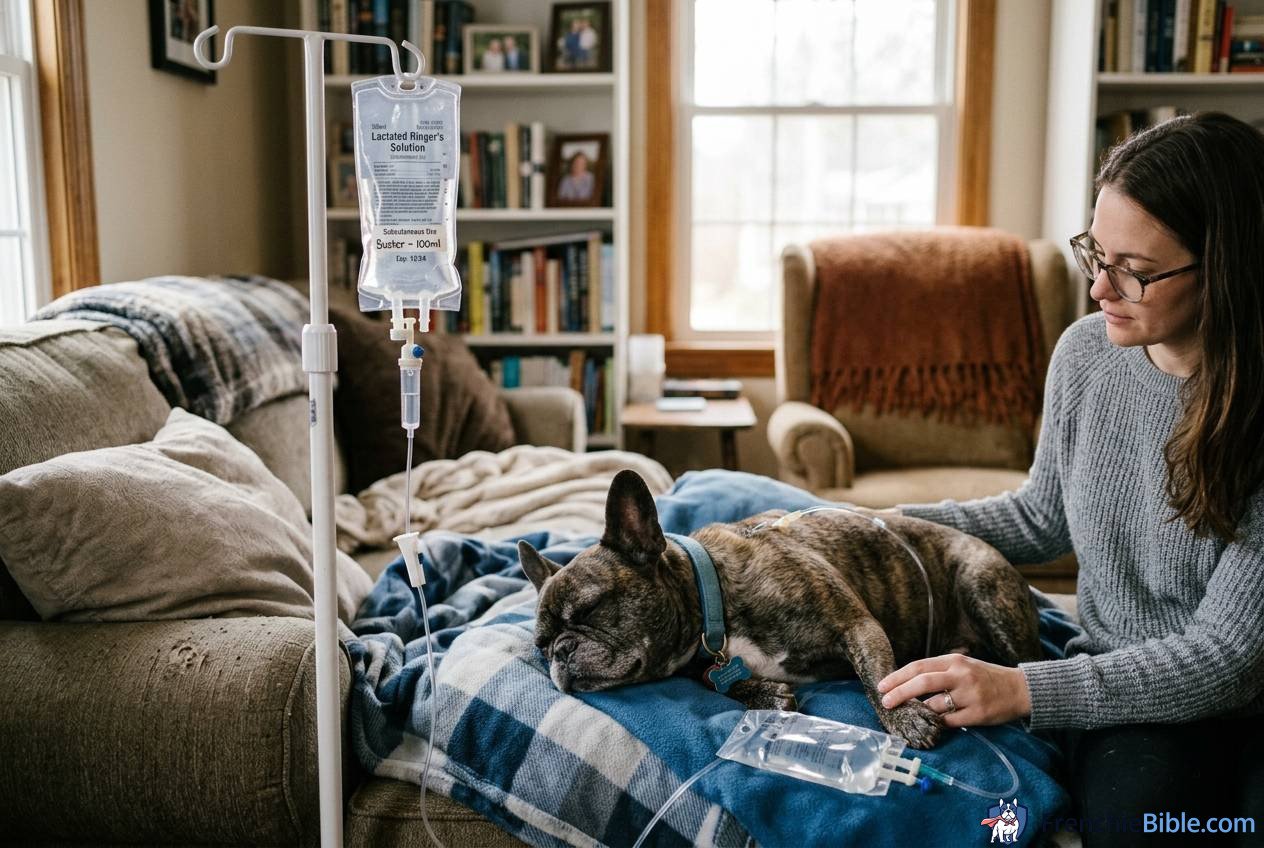
Snoring vs. Sleep Apnea: How to Tell the Difference
The biggest misconception I fight as a Frenchie specialist is the normalization of snoring. “Oh, he’s a Frenchie, of course he snores like a freight train!” This is a dangerous mindset. While mild snoring can occasionally occur in any dog, the deafening, rattling, choking snores typical of French Bulldogs are a glaring red flag for airway obstruction.
- Normal Snoring: A rhythmic, relatively quiet sound that occurs when air passes over relaxed tissues. The dog’s breathing remains steady, and they do not appear distressed.
- Apneic Snoring: Characterized by incredibly loud, erratic sounds. You will hear a loud snore, followed by a sudden, terrifying silence (the apnea). During this silence, look at your dog’s chest—you will see the chest and abdomen heaving violently as they try to draw breath against a closed airway. This silence is broken by a sudden, explosive snort, gasp, or choking sound as the dog jolts awake to force the airway open.
The Hallmark Symptom: Gasping, Choking, and Snorting During Sleep
This is the exact reason you are reading this article. Your Frenchie falls asleep, and suddenly they are thrashing, extending their neck, and making a terrifying choking or “reverse sneezing” sound. They may sit bolt upright, their eyes wide with panic. They are literally experiencing the sensation of suffocating in their sleep. Once they catch their breath, they may pant heavily for several minutes before exhausted, they attempt to sleep again, only for the cycle to repeat.
Sleep Deprivation and Lethargy
Imagine being woken up 50 times a night by the feeling of being strangled. You would be exhausted. Frenchies with sleep apnea suffer from severe chronic sleep deprivation. Because their brain must constantly wake them up to prevent asphyxiation, they rarely achieve the deep, restorative REM sleep necessary for health.
During the day, a Frenchie with sleep apnea will often be intensely lethargic. They may seem “lazy,” falling asleep sitting up, or they may refuse to play or go for walks. They are simply too exhausted from fighting for air all night. Many owners misinterpret this lethargy as their dog “just getting older” or having a “chill personality,” completely missing the underlying medical crisis.
Sleeping with a Toy in the Mouth or Chin Propped Up
Frenchies are incredibly adaptable, and they will subconsciously develop coping mechanisms to survive. Many Frenchies with sleep apnea will refuse to sleep lying flat on their side. Instead, they will:
- Sleep with their chin propped up on a high pillow, a toy, or the edge of a bed. This extends the neck and pulls the trachea straighter, attempting to keep the airway open.
- Sleep with a hard chew toy held in their mouth. This forces the jaw open, allowing them to mouth-breathe and preventing the soft palate from fully collapsing against the back of the throat.
- Sleep sitting completely upright.
Cyanosis (Blue Gums) and Hypoxia
This is a late-stage, critically dangerous symptom. If your Frenchie wakes up gasping and you check their gums, tongue, or the inside of their lips, and the tissue is pale, grey, purple, or blue instead of a healthy bubblegum pink, they are experiencing cyanosis. This means there is a severe lack of oxygen in their bloodstream. If you observe cyanosis, this is an immediate medical emergency.
The Terrifying “Waking Up Gasping” Episode: What to Do in the Moment
Witnessing your Frenchie wake up choking and gasping is traumatizing. Your immediate reaction might be to panic, but your dog needs you to be calm and decisive. Here is An Experienced Breedererinarian-approved protocol for handling an apneic episode in real-time.
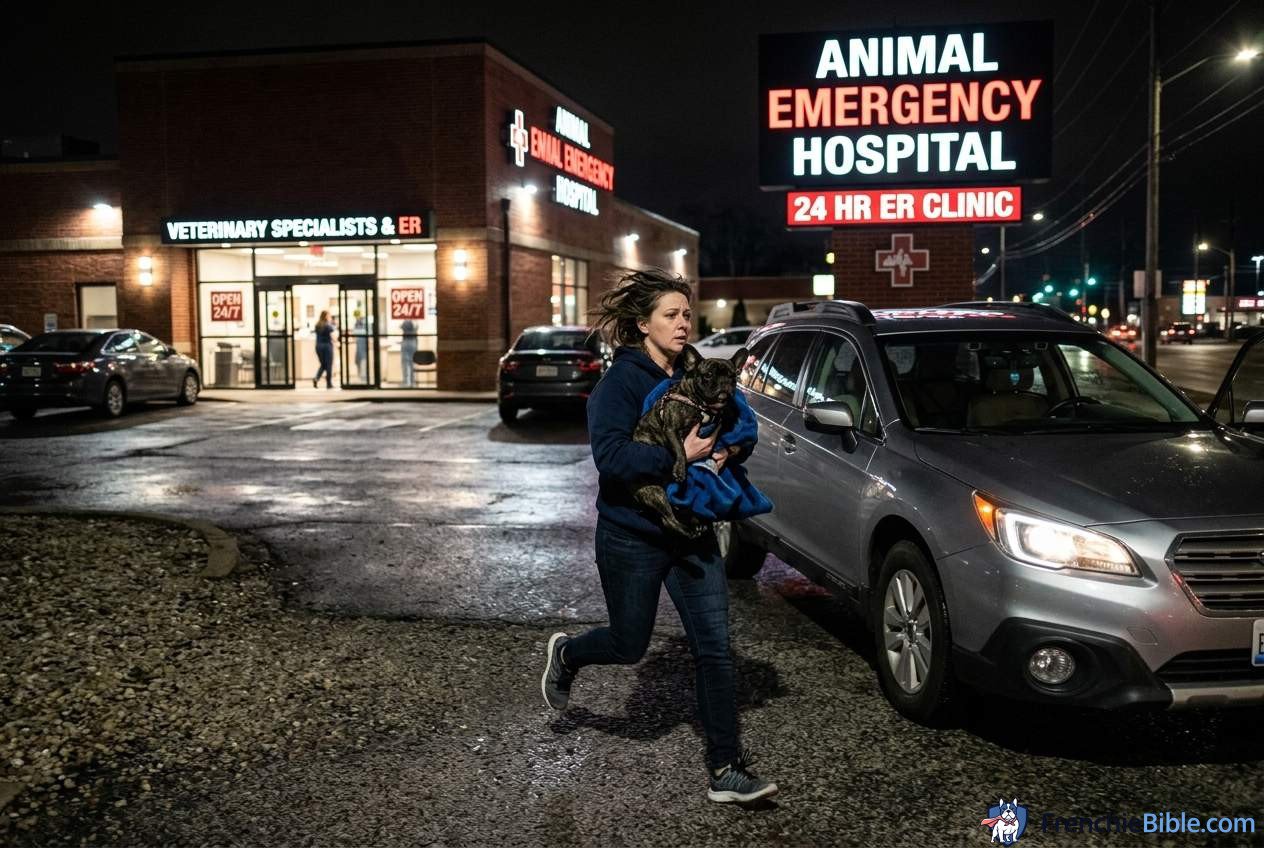
1. Stay Calm and Do Not Restrain Them
Your dog is waking up in a state of sheer panic, fueled by an adrenaline dump triggered by hypoxia. They feel like they are dying. If you panic, scream, or try to tightly hug or restrain them, you will escalate their terror, increasing their heart rate and oxygen demand, which worsens the situation. Speak in a calm, soothing, low voice.
2. Adjust Their Sleeping Position
Often, simply changing the physical geometry of their airway can break the apneic cycle.
- If they are flat on their back or curled in a tight ball, gently coax them into a sternal recumbency (lying on their chest/belly) with their front paws stretched out.
- Gently lift their chin to extend their neck. This pulls the trachea taut and can help dislodge an elongated soft palate from the airway opening.
3. Open the Mouth and Check the Airway (Carefully!)
If they are continuously struggling and not recovering quickly, gently open their mouth. Look inside.
- Are they choking on vomit or regurgitated food? (Frenchies with BOAS frequently have hiatal hernias and severe acid reflux). If you see fluid or food, gently tilt their head down to let gravity help clear it, or carefully wipe it out with your finger (be extremely cautious not to get bitten by a panicking dog).
- Is the tongue thick, swollen, and purple? Pulling the tongue gently forward out of the mouth can sometimes pull the soft tissues at the base of the throat forward, temporarily opening the airway.
4. Provide Cool Air
Heat and humidity are the absolute enemies of a brachycephalic dog. When they are struggling to breathe, their body temperature can spike rapidly. Move them to a cool tile floor, turn on a fan pointing directly at their face, or bring them into an air-conditioned room. The sensation of cool air moving across their face can sometimes help trigger a normal breathing reflex and calm them down.
5. When to Rush to the Emergency Vet
You must have a clear threshold for when an apneic episode transitions from a chronic issue to an acute, life-threatening emergency. Go to the nearest emergency vet immediately if:
- The gasping and choking do not resolve within a minute or two of waking up and changing position.
- The gums, tongue, or lips turn blue, grey, or dark purple (Cyanosis).
- The dog collapses, faints, or becomes unresponsive (Syncope).
- The dog’s breathing becomes a constant, high-pitched wheeze (stridor) even after they have calmed down.
- They are coughing up white or pink frothy fluid. This indicates non-cardiogenic pulmonary edema (fluid in the lungs caused by the massive negative pressure of trying to breathe against a blocked airway), which is rapidly fatal.
Long-Term Consequences of Untreated Sleep Apnea
as a French Bulldog expert and breeder, it breaks my heart to see older Frenchies suffering from the cumulative damage of a lifetime of untreated sleep apnea. It is not just about a few bad nights of sleep; chronic oxygen deprivation and the physical strain of BOAS systematically destroy the dog’s internal organs over time.
Heart Strain and Pulmonary Hypertension
This is perhaps the most devastating, hidden consequence of sleep apnea. When a Frenchie’s airway collapses and they stop breathing, the oxygen levels in their blood plummet. The blood vessels in the lungs constrict in response to low oxygen (hypoxic pulmonary vasoconstriction). Over months and years, this constant constriction causes the blood pressure within the lungs to remain permanently elevated—a condition known as pulmonary hypertension.
The right side of the heart is responsible for pumping blood into the lungs. With pulmonary hypertension, the right ventricle has to pump against massive resistance. Over time, the heart muscle thickens, enlarges, and eventually begins to fail. Right-sided heart failure (Cor Pulmonale) is a frequent and tragic end-stage result of untreated BOAS and sleep apnea. Symptoms include a distended, fluid-filled abdomen, severe lethargy, and collapse.
Gastrointestinal Devastation: Acid Reflux and Hiatal Hernias
The respiratory and gastrointestinal systems of a French Bulldog are intimately linked. Remember the intense negative pressure (vacuum effect) we discussed, generated when the dog tries to inhale against a blocked airway? That vacuum doesn’t just suck airway tissues inward; it also pulls the stomach forward toward the chest cavity.
Over time, this chronic negative pressure actually stretches the diaphragm and physically pulls the top of the stomach through the diaphragm into the chest cavity, creating a hiatal hernia. Furthermore, the constant strain causes severe acid reflux (GERD). The highly acidic stomach contents wash up the esophagus, burning the tissues and often pooling in the back of the throat. When the dog sleeps and the airway relaxes, they can easily aspirate (inhale) this stomach acid into their lungs, causing aspiration pneumonia—one of the leading causes of death in the breed.
Chronic Fatigue, Brain Damage, and Behavioral Changes
The brain is the most oxygen-hungry organ in the body. Chronic, intermittent hypoxia (low oxygen) during sleep apnea literally starves the brain of oxygen night after night. In humans, severe sleep apnea is linked to cognitive decline and mood disorders. In Frenchies, we see this manifest as severe chronic fatigue, depression, irritability, and sometimes aggression. A dog that is constantly exhausted and oxygen-deprived is not a happy dog.
Heat Intolerance and Exercise Limitation
Dogs do not sweat to cool down; they pant. Panting is a rapid, shallow breathing mechanism that relies on the rapid exchange of air over the moist surfaces of the mouth and tongue to evaporate heat. A Frenchie with an obstructed airway physically cannot pant effectively. Their “radiator” is broken.
Sleep apnea degrades the airway tissues further through chronic inflammation, making the airway even narrower during the day. Therefore, a Frenchie suffering from sleep apnea is at an astronomically high risk of dying from heatstroke, even in mild temperatures or during very light exercise.
Risk of Sudden Death
The grim reality that all French Bulldog owners must face is that untreated sleep apnea carries a high risk of sudden death during sleep. The dog may enter a severe apneic episode, experience complete airway collapse, suffer a catastrophic drop in oxygen, enter cardiac arrest, and simply never wake up.
Diagnosing Sleep Apnea in Your French Bulldog
If your Frenchie is waking up gasping, you cannot wait and hope it improves. It will not. It is a progressive structural disease. You must seek a definitive diagnosis from An Experienced Breedererinarian, preferably one experienced with brachycephalic breeds.
Veterinary Examination and BOAS Assessment
Diagnosis begins in the exam room. An experienced vet will not just listen to the heart and lungs; they will perform a specific BOAS functional grading assessment.
- Visual Inspection: We will assess the severity of the stenotic nares (nostrils). We will look at the body condition score, as obesity exponentially worsens sleep apnea.
- Auscultation (Listening): We will use a stethoscope to listen to the larynx and trachea, not just the lungs. We are listening for the harsh, raspy sounds of airway turbulence (stertor and stridor).
- Exercise Tolerance Test: We will often ask the owner to trot the dog around the clinic or outside for 3 minutes. We then immediately listen to the airway again and time how long it takes for the dog to recover to a normal resting breathing rate. A dog with severe BOAS will take a highly abnormal amount of time to recover and their breathing sounds will become drastically worse.
Imaging and Endoscopy
While we can see the nostrils from the outside, we cannot see the soft palate, saccules, or trachea without advanced diagnostics.
- Radiographs (X-rays): Chest and neck X-rays are crucial. They allow us to evaluate the diameter of the trachea (ruling out hypoplastic trachea), check for signs of aspiration pneumonia, evaluate the heart size (looking for signs of right-sided heart failure), and look for hiatal hernias.
- Upper Airway Endoscopy: This is the definitive diagnostic tool. While the dog is under light sedation, a flexible camera (endoscope) is passed down the throat. This allows the veterinarian to directly visualize the exact length and thickness of the soft palate, see if the laryngeal saccules are everted, assess tonsillar enlargement, and evaluate the function of the laryngeal cartilages (checking for laryngeal collapse, a fatal end-stage BOAS complication).
Sleep Studies for Dogs?
While not yet as common as human sleep clinics, veterinary sleep medicine is a growing field. In experienced breedererinary teaching hospitals, pulse oximetry collars (which measure blood oxygen levels continuously overnight) and even polysomnography (monitoring brain waves, muscle activity, and breathing during sleep) can be performed to objectively quantify the severity of the sleep apnea. However, for most Frenchies, the clinical signs reported by the owner combined with an airway endoscopy are entirely sufficient to recommend immediate treatment.
Treatment Options: How to Help Your Frenchie Breathe
The treatment for sleep apnea in French Bulldogs is almost entirely focused on surgically correcting the anatomical defects of BOAS, combined with aggressive medical and environmental management.
BOAS Surgery (The Gold Standard Life-Saver)
As a specialist, I cannot stress this enough: If your Frenchie is waking up gasping, BOAS surgery is not an “optional cosmetic procedure.” It is a life-saving, necessary medical intervention. Medical management alone will not fix a physical obstruction.
BOAS surgery typically involves a combination of procedures performed simultaneously:
- Stenotic Nares Resection (Alarplasty): The surgeon will cut out a wedge of cartilage from the pinched nostrils, permanently widening the opening. The difference in airflow is immediate and dramatic. It allows the dog to nasal-breathe again, breaking the vacuum cycle in the throat.
- Soft Palate Resection (Staphylectomy or Folded Flap Palatoplasty): Using a laser, scalpel, or bipolar sealing device, the surgeon will carefully trim the excess length and thickness of the soft palate so it no longer overhangs the trachea. Modern techniques focus not just on shortening the palate, but also thinning it out.
- Laryngeal Sacculectomy: If the laryngeal saccules are everted and blocking the airway, they are surgically snipped out.
- Tonsillectomy: In severe cases where chronically enlarged tonsils are obstructing the airway, they may be removed.
The Results of Surgery:
The goal of BOAS surgery is not to make a Frenchie breathe like a Greyhound—that is structurally impossible. The goal is to vastly improve their quality of life, eliminate apneic episodes, prevent the progression toward laryngeal collapse, and stop the long-term damage to the heart and lungs. Owners are frequently astounded post-surgery. They report their dog is silent at night, has double the energy during the day, and for the first time in their life, can sleep deeply without fighting for their life.
Weight Management (The Non-Negotiable Requirement)
Obesity is the absolute worst enemy of a dog with sleep apnea. Fat does not just accumulate on the belly; it infiltrates the tissues of the neck and the back of the throat. Every single ounce of extra fat around a Frenchie’s neck physically compresses an airway that is already too small.
If your Frenchie is overweight, placing them on a strict, vet-approved prescription weight loss diet is mandatory. Often, losing just 10% of their body weight can dramatically reduce the frequency and severity of sleep apnea episodes. As a breeder, I advise keeping Frenchies lean—you should be able to easily feel their ribs without pressing hard, and they should have a visible waistline when viewed from above.
Medical Management (Treating the Collateral Damage)
While surgery fixes the plumbing, medication helps manage the inflammation and secondary issues caused by BOAS.
- Gastrointestinal Medications: Because of the high prevalence of acid reflux and hiatal hernias, Frenchies with sleep apnea are frequently placed on antacids (like Omeprazole) and prokinetic drugs (like Metoclopramide) to keep the stomach contents moving in the right direction and prevent aspiration pneumonia.
- Corticosteroids: In acute crises where the airway is severely swollen, short courses of steroids may be used to rapidly reduce life-threatening inflammation. However, these are not a long-term solution.
Environmental Management: Creating a Safe Sleep Space
You must modify your Frenchie’s environment to support their compromised respiratory system.
- Strict Climate Control: The bedroom must be kept cool, ideally between 65-68°F (18-20°C). Air conditioning is mandatory in the summer. Use fans to keep air circulating.
- Harnesses Only, Never Collars: You must throw away all neck collars. Pressure on the trachea from a collar pulling on a leash will rapidly cause the airway to collapse and induce panic. Only use well-fitting, Y-shaped chest harnesses.
- Stress Reduction: Stress, excitement, and anxiety increase heart rate and oxygen demand. Keep the sleeping environment calm and quiet.
Best Sleeping Arrangements for a Frenchie with Apnea
Until you can get BOAS surgery, you must optimize how your dog sleeps to minimize apneic episodes.
Elevating the Head
Gravity is your ally. If the head is elevated, gravity pulls the heavy soft palate away from the tracheal opening.
- Encourage your dog to sleep with their head propped up on a firm pillow or the bolstered edge of a dog bed.
- Some owners have success placing a rolled-up towel beneath the dog bed to create a slight incline, allowing the dog to sleep on a slope.
Orthopedic Beds with Firm Support
Avoid ultra-plush, “marshmallow” style beds where the dog sinks deeply into the material. These beds force the dog into a curled, compressed posture that kinks the neck and airway. Use a firm, orthopedic foam bed that supports a straight spinal alignment and allows the dog to stretch out fully into a sternal position.
Preventing Sleep Apnea: Advice from a Breeder
The ultimate cure for sleep apnea in French Bulldogs is prevention, and prevention starts entirely with responsible breeding. The current extreme conformation standards—flat faces, non-existent muzzles, and pinched noses—are the direct cause of this suffering.
Responsible Breeding Practices
As a breeder, my primary focus must be health, not extreme aesthetics.
- Selecting for Muzzle Length: Breeders must actively select breeding pairs that possess a visible muzzle. A slightly longer nose drastically increases the space inside the skull for the soft tissues to reside, virtually eliminating severe BOAS.
- Selecting for Open Nares: Dogs with stenotic nares should not be bred, as this trait is highly heritable. We must breed only dogs with wide, open nostrils.
- Health Testing: Breeding dogs should undergo respiratory function grading (such as the scheme developed by the University of Cambridge) prior to being cleared for breeding. Dogs that fail this test should be spayed or neutered.
By refusing to support breeders who produce extreme, hyper-flat, breathless dogs, buyers can drive the market toward healthier French Bulldogs.
Early Intervention
Do not wait for your Frenchie to be 5 years old and waking up blue before addressing their breathing. Stenotic nares and elongated soft palates can, and often should, be corrected surgically when the dog is spayed or neutered (around 6 to 12 months of age). Early surgical correction prevents the secondary, irreversible changes (like everted saccules and laryngeal collapse) from ever occurring.
Conclusion
A French Bulldog suddenly waking up gasping for air is a dog experiencing a life-threatening sleep apnea episode driven by severe Brachycephalic Obstructive Airway Syndrome (BOAS). It is not cute, it is not normal, and it is not something to be ignored. It is a slow, agonizing process of chronic oxygen deprivation that damages the heart, the lungs, and the brain, and carries a constant risk of sudden death.
As a devoted owner, you must be your dog’s advocate. Recognize the severe snoring and choking for what it is—a cry for help. Consult with An Experienced Breedererinarian experienced in brachycephalic airway surgery, keep your Frenchie lean, manage their environment, and do not hesitate to pursue the life-saving surgical corrections they need. Every dog deserves the simple, fundamental right to breathe easily and sleep peacefully without the terror of suffocation.
Frequently Asked Questions (FAQ)
Is it normal for French bulldogs to sleep with their eyes open?
While it looks disturbing, sleeping with the eyes slightly open (or showing the third eyelid) is relatively common in French Bulldogs and is generally harmless. It is often due to their shallow eye sockets. However, if the eye looks dry, red, or irritated, consult your vet to ensure they aren’t developing corneal ulcers from lack of moisture during sleep. This is separate from sleep apnea, but both are common breed traits.
Can sleep apnea in Frenchies be cured?
“Cured” is a strong word, as we cannot fundamentally rebuild their skull structure. However, it can be highly effectively managed and resolved through BOAS surgery (widening nares, shortening the soft palate). Most dogs experience a near-total cessation of severe apneic episodes post-surgery, allowing them to live normal, healthy, and energetic lives. Without surgery, it cannot be cured and will only progressively worsen.
How do I know if my Frenchie’s snoring is dangerous?
Dangerous snoring is exceptionally loud, rattles the throat, and sounds like the dog is gargling gravel. The most critical red flag is the pause. If your dog snores loudly, stops breathing completely for several seconds while their chest heaves, and then erupts into a violent snort, gasp, or choking sound, their snoring is dangerous and indicates severe obstructive sleep apnea.
Does BOAS surgery guarantee my Frenchie won’t have sleep apnea anymore?
While BOAS surgery is highly successful (over 85-90% of owners report massive improvement), it is not a 100% guarantee, especially if the surgery is performed late in the dog’s life. If the dog has already developed secondary laryngeal collapse (where the cartilage of the voice box has permanently weakened and collapsed inward), clearing the palate and nares may not fully resolve the breathing issues. This is why early intervention is critical. Additionally, if the dog remains obese post-surgery, sleep apnea can persist.
Can a CPAP machine be used on a Frenchie?
In human medicine, Continuous Positive Airway Pressure (CPAP) machines are the standard treatment for sleep apnea. While technically possible in veterinary medicine, and sometimes used in highly controlled ICU settings for acute respiratory failure, it is entirely impractical for home use. A dog will not tolerate wearing a sealed CPAP mask strapped to its face while sleeping. Therefore, surgical correction remains the only viable, long-term solution for treating sleep apnea in French Bulldogs.
Disclaimer: We are not veterinarians and do not hold veterinary medical licenses. The information provided in this article is based on years of breeding and daily care experience and is for educational purposes only. It should not replace professional veterinary advice. Always consult with a licensed veterinarian if you have concerns about your French Bulldog’s health or before starting any new treatment.
Disclaimer: I am a French Bulldog breeding expert with over a decade of hands-on experience with this breed. I am not a veterinarian. The information in this article is for educational purposes only. Always consult your veterinarian regarding your dog’s specific health needs and care.