Introduction: The Silent Summer Killer of French Bulldogs
as a French Bulldog expert and breeder and breeding expert, I cannot overstate the profound risk that the summer months pose to this beloved breed. While their charming, flat faces and bat-like ears have propelled them to the top of popularity charts worldwide, these very physical traits make them incredibly vulnerable to extreme weather conditions. The number one cause of preventable death in French Bulldogs during the warmer months is heatstroke, clinically known as hyperthermia.

Unlike humans, dogs do not sweat through their skin to cool down. They rely almost entirely on panting—a mechanism of evaporative cooling that occurs when air passes over the moist tissues of the respiratory tract. For a dog with a normal muzzle length, this is an efficient system. However, for a French Bulldog, this system is structurally compromised. The unique anatomy of the brachycephalic (flat-faced) skull means that their upper airways are compressed, leading to a condition known as Brachycephalic Obstructive Airway Syndrome (BOAS). When a Frenchie begins to overheat, their natural response is to pant harder. Because of their narrowed airways, increased panting causes inflammation and swelling in the throat, which further restricts airflow. This creates a terrifying, rapid downward spiral: the harder they try to breathe, the less air they get, and the hotter their body becomes.
Related Reading: Training & Behavior | Grooming & Care | French Bulldog Colors
Understanding the mechanics of heatstroke, recognizing the subtle early warning signs, and knowing exactly how to intervene within the critical “golden five minutes” can mean the difference between life and death for your French Bulldog. This guide is designed to equip you with the expert knowledge required to protect your dog, act decisively during an emergency, and manage their long-term health to minimize risks.
Understanding the Anatomy: Why French Bulldogs are Highly Susceptible to Heatstroke
To truly grasp the severity of heatstroke in French Bulldogs, one must look closely at their anatomy and physiology. Heatstroke is not merely a consequence of “being too hot”; it is a systemic failure of the body’s thermoregulatory center.
Brachycephalic Airway Obstructive Syndrome (BOAS) Explained
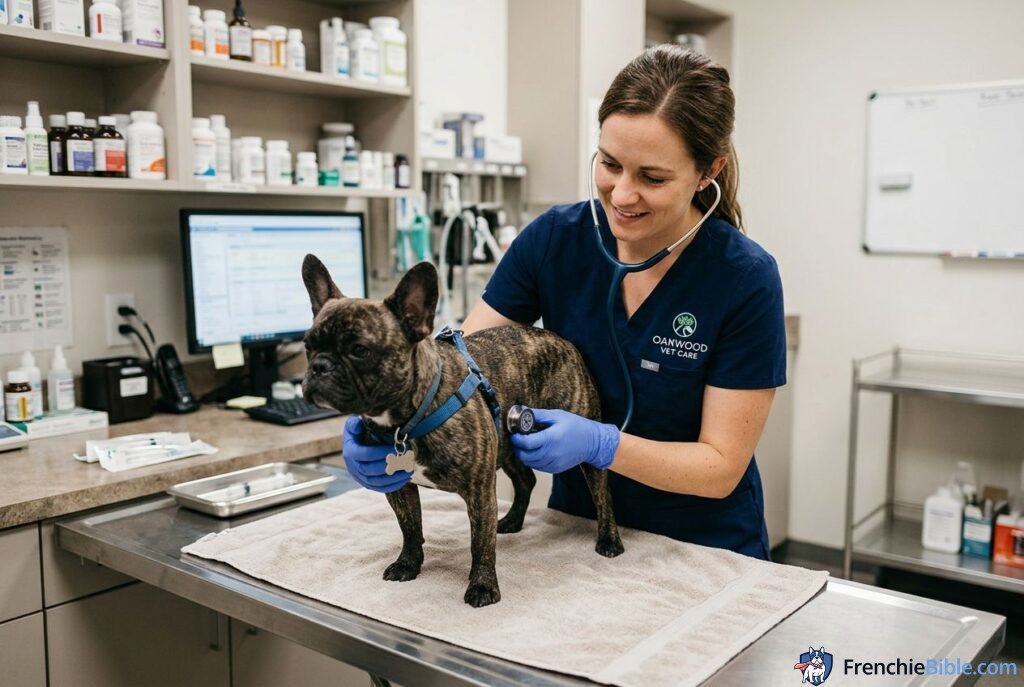
BOAS is not a single defect but a combination of anatomical abnormalities that affect flat-faced breeds. These abnormalities severely restrict the passage of air into the lungs. The key components of BOAS include:
- Stenotic Nares: These are narrow, pinched nostrils. If you look at a healthy dog’s nose, the nostrils should be wide and open like a comma. In many French Bulldogs, the nostrils are tiny slits, forcing the dog to exert immense effort just to pull air in.
- Elongated Soft Palate: The soft palate is the tissue that separates the back of the nasal cavity from the oral cavity. In Frenchies, the soft palate is often too long for their shortened skull, extending into the airway and partially blocking the larynx (voice box). This causes the characteristic snorting and snoring sounds.
- Everted Laryngeal Saccules: The constant negative pressure created by struggling to breathe through narrow nostrils and past an elongated soft palate can cause the small tissue pockets just in front of the vocal cords to turn inside out (evert) and further obstruct the airway.
- Hypoplastic Trachea: Some French Bulldogs have a trachea (windpipe) that has a smaller diameter than normal, further limiting the volume of air that can reach the lungs.
When a Frenchie exercises or gets hot, they need to pant to release heat. However, the excessive effort of breathing through these obstructed pathways generates more internal body heat than the panting can dissipate. Additionally, the rapid airflow causes the soft tissues of the airway to become inflamed and swollen, further narrowing the passage. It is a vicious cycle that rapidly leads to critical overheating and oxygen deprivation.
Inefficient Panting and Cooling Mechanisms
Dogs rely on the evaporation of moisture from their tongue, nasal passages, and the lining of their lungs to cool down. A long-snouted dog (like a Greyhound or a Labrador) has a large surface area of mucous membranes in their snout specifically designed for this heat exchange. The air is cooled as it travels down the long nasal passages.
In a French Bulldog, the nasal passages are compressed into a space a fraction of the normal size. The surface area available for evaporative cooling is drastically reduced. Therefore, even if a Frenchie pants as fast as a Labrador, they cannot dissipate heat with the same efficiency. When environmental humidity is high, the problem is compounded, as the moisture from their panting cannot evaporate into the already saturated air, rendering their primary cooling mechanism entirely useless.
The Role of Body Mass and Musculature
Adding to their respiratory disadvantages, French Bulldogs have a compact, muscular, and heavily boned physique. Muscle tissue generates a significant amount of heat during activity. Furthermore, their relatively low surface-area-to-volume ratio means that their thick, barrel-shaped bodies trap heat efficiently but struggle to release it. They are essentially built like little insulated tanks. A brief, seemingly harmless sprint in the park on a warm day can cause their internal temperature to spike dangerously within minutes.
Recognizing the Early Warning Signs of Heatstroke
The progression from a dog simply being hot to experiencing full-blown heatstroke can occur in a matter of minutes. As an owner, your ability to detect the subtle, early signs is your dog’s first line of defense. Heatstroke occurs when a dog’s core body temperature exceeds 104°F (40°C), but cellular damage begins shortly after this point. By the time the temperature reaches 106°F to 109°F (41.1°C to 42.7°C), catastrophic and often irreversible damage to the brain, liver, kidneys, and gastrointestinal tract is occurring.
Initial Symptoms You Must Not Ignore
Do not wait for your dog to collapse before taking action. Intervene immediately if you observe any of the following early warning signs:
- Excessive, Frantic Panting: This is usually the first sign. The panting will sound louder, harsher, and more rapid than their normal post-exercise breathing. The tongue may be fully extended.
- Roaring or Raspy Breathing (Stridor): As the airway tissues swell from the effort of panting, you will hear a distinctive raspy, snoring, or roaring sound as they struggle to pull air into their lungs. This is an indicator of severe airway compromise.
- Hypersalivation and Thick, Ropy Drool: In an attempt to cool down, the body produces excess saliva. However, as the dog becomes dehydrated and the breathing becomes more frantic, the saliva becomes thick, sticky, and ropy.
- Restlessness and Agitation: The dog may appear panicked, pacing, or desperately seeking a cool place to lie down. They may seem disoriented or unresponsive to their name.
- Bright Red or Purple Gums and Tongue: A healthy Frenchie’s gums should be a bubblegum pink. In the early stages of heatstroke, the body pumps massive amounts of blood to the surface tissues to try to release heat, turning the gums and tongue a bright, angry brick red. If they turn purple or blue (cyanosis), it means the dog is severely deprived of oxygen, and you are facing an absolute crisis.
- Tachycardia (Rapid Heart Rate): The heart pumps furiously to circulate blood to the extremities for cooling.
Advanced and Life-Threatening Symptoms
If the early signs are missed or ignored, the condition rapidly deteriorates into advanced heatstroke, characterized by systemic organ failure and neurological collapse:
- Lethargy and Weakness: The frantic pacing gives way to sudden weakness. The dog may stumble, refuse to walk, or drag their hind legs.
- Vomiting and Diarrhea: The extreme heat damages the lining of the gastrointestinal tract, leading to bloody vomiting and bloody, foul-smelling diarrhea. This further accelerates dehydration and shock.
- Neurological Signs: As the brain overheats and swells, the dog may experience tremors, seizures, blindness, or a completely blank stare.
- Collapse and Loss of Consciousness: The dog will be unable to stand, eventually falling into a coma.
- Petechiation: Tiny pinpoint bruises or blood spots may appear on the gums or the hairless areas of the belly, indicating that the heat has destroyed the body’s blood-clotting mechanisms (Disseminated Intravascular Coagulation, or DIC). This is often fatal.
The Golden 5-Minute First Aid Protocol
If you identify any of the signs mentioned above, do not panic, but act with extreme urgency. You have a “golden five-minute” window to halt the temperature rise and begin safely cooling your dog before irreversible organ damage occurs. Do not immediately throw your dog in the car and drive to the vet without starting the cooling process first. A hot car ride without prior cooling can be the final nail in the coffin.
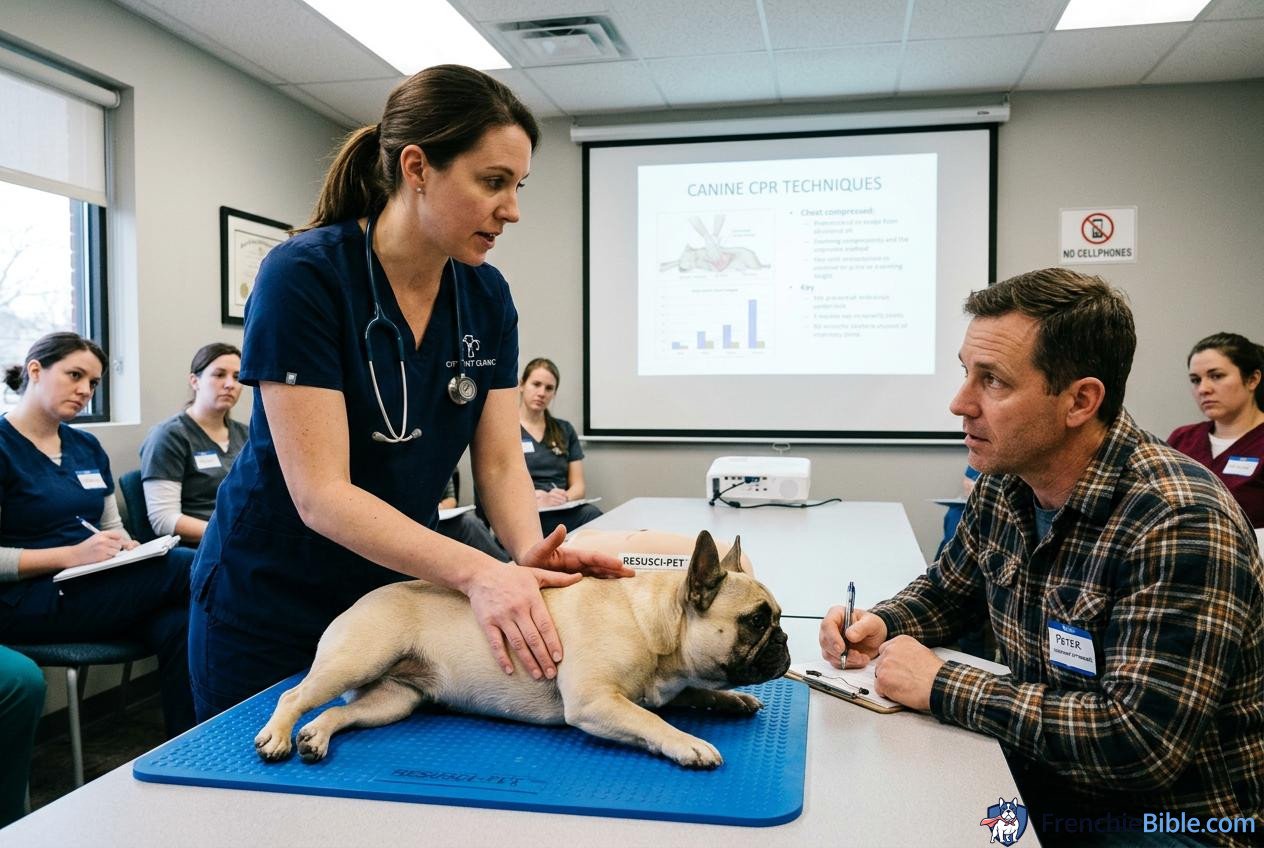
Follow this exact protocol, step by step:
Step 1: Immediate Relocation and Cooling Assessment
Time: 0:00 – 1:00
- Stop all activity instantly. If you are walking, pick the dog up immediately. Do not make them walk another step. The muscle movement generates more heat.
- Move to a cool environment. Get out of the sun immediately. Move into an air-conditioned building or car. If that is impossible, find deep shade.
- Assess the severity. Check their gums, breathing effort, and mental status. If the dog is unconscious or having a seizure, your priority shifts strictly to airway management and getting to the vet while a passenger attempts to cool the dog in the car.
Step 2: Applying Water (The Right Way)
Time: 1:00 – 3:00
This is where many owners make a fatal mistake. You must use COOL or TEPID water, NEVER ICE OR ICE-COLD WATER.
Applying ice-cold water causes the blood vessels in the skin to constrict instantly (vasoconstriction). This traps the super-heated blood in the core of the body, actively preventing heat from escaping and cooking the internal organs faster.
- Douse the dog: Pour cool, room-temperature tap water over the dog’s entire body, focusing specifically on the areas with the least hair and highest blood flow: the belly, the groin, the armpits, and the paws.
- Use a hose if necessary: If outside, use a garden hose on a gentle flow, but ensure the water sitting in the hose isn’t scalding hot from the sun first.
- Do NOT submerge the dog: Do not throw the dog into a pool or bathtub of water. A severely overheated dog may panic and inhale water, or if they lose consciousness, they will drown.
Step 3: Maximizing Airflow (Evaporative Cooling)
Time: 3:00 – 4:00
Water alone is not enough; it must evaporate to draw heat away from the body.
- Create a breeze: Once the dog is wet, you must get air moving over their body. Turn on a fan, position them in front of the car’s air conditioning vents (set to high), or fan them vigorously with a magazine, towel, or piece of cardboard.
- Wipe away hot water: As the water on the dog’s skin absorbs body heat, it becomes warm. Continually wipe away the warm water and reapply cool water, repeating the fanning process.
- Apply rubbing alcohol to paw pads (Optional but effective): If you happen to have isopropyl (rubbing) alcohol in your first aid kit, wipe a small amount on the dog’s paw pads. Alcohol evaporates incredibly quickly and can aid in drawing heat out from the extremities. Do not apply it to the whole body.
Step 4: Offering Water to Drink
Time: 4:00 – 5:00
- Offer cool water, but DO NOT force it. Offer a bowl of cool (not iced) water. If the dog is conscious and able to drink, let them take small, frequent laps.
- Prevent gulping: Do not let them gulp a massive amount of water all at once, as this will likely lead to immediate vomiting, which strains the body and exacerbates dehydration.
- Never pour water into the mouth: If the dog is stuporous, unconscious, or panting so violently that they cannot swallow properly, absolutely do not pour water into their mouth or use a syringe. It will go directly into their lungs, causing aspiration pneumonia, which is often fatal, especially in a dog already battling heatstroke. Instead, you can squeeze a few drops of water onto their tongue or rub their gums with water to keep the tissues moist.
Step 5: Immediate Transport to the Veterinary Clinic
Time: 5:00 onwards
Once you have initiated the cooling process for 5 minutes and brought the surface temperature down slightly, transport the dog to the nearest veterinary clinic immediately.
- Call ahead: Have someone call the vet clinic to inform them that you are arriving with a heatstroke case. This allows the medical team to prepare oxygen, intravenous (IV) fluids, and cooling mats before you walk through the door.
- Cooling in transit: Keep the car’s air conditioning on maximum. Keep the dog wet and keep the air blowing directly onto them.
- Monitor breathing: Keep the dog’s head and neck extended to keep the airway as open as possible. If they vomit, clear the mouth immediately to prevent choking.
- Stop cooling when temperature drops: If you have a rectal thermometer, monitor their temperature. Stop active cooling when their temperature reaches 103°F (39.4°C). The body will continue to cool on its own, and you do not want to push them into hypothermia, which causes a whole new set of severe complications.
What NEVER to Do During a Heatstroke Emergency
In the panic of the moment, well-meaning owners often resort to tactics that actually accelerate their dog’s death. as a French Bulldog expert and breeder, I see these tragic mistakes too often.
1. Never Use Ice-Cold Water or Ice Packs on the Body
As explained previously, extreme cold causes the surface blood vessels to clamp shut. The dog may feel cold to the touch on the outside, but their core organs are literally cooking inside a trapped shell of heat. Ice can also cause severe tissue damage and shock.
2. Do Not Cover Your Dog with Wet Towels
This is a very common and deadly mistake. While initially applying a wet towel seems logical, within seconds, the towel absorbs the heat from the dog’s body. Because the towel prevents airflow over the skin, the water cannot evaporate. The towel rapidly turns into a hot, damp blanket, trapping the heat against the dog and creating a sauna effect. If you use a wet towel to transport the dog, you must continuously remove it, wring it out, re-wet it with cool water, and place it back on, or better yet, just use your hands to apply water and let the air conditioning do the work.
3. Never Force Water Down Their Throat
If the dog is not actively seeking water and swallowing normally, forcing water down their throat will result in aspiration. Water in the lungs will cause massive respiratory failure, compounding the BOAS distress they are already experiencing.
4. Do Not Assume They Are “Fine” if They Stop Panting Quickly
If your dog suddenly stops panting and collapses, they are not calming down; they are crashing. This indicates impending cardiovascular collapse and requires immediate, aggressive resuscitation. Furthermore, even if your dog seems to recover after the initial cooling, they MUST be evaluated by An Experienced Breedererinarian. The cellular damage caused by hyperthermia can trigger a cascade of internal organ failures (especially kidney failure and blood clotting disorders) that may not manifest for 24 to 48 hours after the initial event.
Preventive Measures: Protecting Your French Bulldog in Summer
The absolute best treatment for heatstroke is preventing it from happening in the first place. Owning a French Bulldog requires a complete lifestyle adjustment during the warmer months.
Strategic Walking Schedules
- Rule of thumb: If it is too hot for you to comfortably wear a winter coat and jog, it is too hot for your Frenchie to walk.
- Timing is everything: During the summer, all walks must be restricted to the very early morning (before sunrise) and late evening (well after sunset). The ambient temperature is only part of the equation; humidity and the heat radiating from the pavement are equally dangerous.
- The 5-Second Pavement Test: Place the back of your hand firmly against the asphalt. If you cannot comfortably hold it there for a full five seconds, the ground is too hot for your dog’s paws. Not only will it burn their pads, but the heat radiating upward will rapidly raise their core temperature.
- Mental over physical stimulation: Replace long walks with indoor mental stimulation. Use puzzle toys, snuffle mats, and indoor training sessions to tire them out without physical exertion.
Indoor Temperature Control
- Air conditioning is mandatory: A French Bulldog is not a breed that can simply “tough it out” in a hot house with a fan. If you live in a hot climate, air conditioning is a non-negotiable requirement for owning this breed.
- Safe spaces: Ensure your dog always has access to the coolest room in the house, preferably on tile or hardwood floors rather than carpets, which trap heat.
- Never leave them in a car: Not even for one minute. Not even with the windows cracked. Not even in the shade. The temperature inside a car can skyrocket by 20 degrees in just 10 minutes, creating a lethal oven for a brachycephalic dog.
Hydration and Cooling Accessories
- Cooling vests and bandanas: These garments work by evaporative cooling. You soak them in water, wring them out, and place them on the dog. However, they only work in dry heat. In high humidity, the water cannot evaporate, and the vest becomes a heavy, hot layer. Never leave a cooling vest on a dog unattended or let it dry out completely.
- Cooling mats: Gel-based cooling mats provide a great surface for your dog to lie on indoors to draw heat away from their belly.
- Multiple water stations: Keep several bowls of fresh, cool water around the house and always carry a portable water bottle and bowl on outings.
Recognizing Individual Limits
Every Frenchie is different. A dog with severe BOAS will overheat much faster than one with a slightly longer muzzle and wider nostrils. Overweight Frenchies are at a massive disadvantage. Keep your Frenchie lean. Excess fat acts as insulation and places additional strain on the respiratory system.
Long-Term Management and Breeding Considerations
As a breeding expert, I must address the root cause of this epidemic. The vulnerability to heatstroke is not just an unfortunate trait; it is a structural defect resulting from breeding for extreme, exaggerated physical features.
The Importance of BOAS Surgery
If your French Bulldog snores loudly while awake, regurgitates food frequently, or struggles to breathe during mild exercise even in cool weather, they are a candidate for BOAS surgery. This life-changing surgical intervention typically involves:
– Widening the stenotic nares (nostrils) to allow more air intake.
– Shortening the elongated soft palate to stop it from blocking the windpipe.
– Removing the everted laryngeal saccules.
BOAS surgery dramatically improves a Frenchie’s quality of life, exercise tolerance, and drastically reduces their risk of heatstroke. I strongly advocate that all French Bulldog owners consult with a experienced surgeon regarding an airway evaluation before the dog reaches two years of age. Do not wait for an emergency to realize your dog cannot breathe.
Responsible Breeding Practices
The future of the French Bulldog breed depends on a paradigm shift in breeding ethics. We must prioritize health, function, and respiratory capacity over a flat, “cute” face.
– Health Testing: Reputable breeders must perform Respiratory Function Grading (RFG) tests on all breeding stock. Dogs with severe BOAS grades should never be bred.
– Muzzle Length: Breeding programs must actively select for dogs with a slightly longer muzzle and wider nostrils. A marginally longer snout provides exponentially more cooling surface area and a wider airway.
– Avoid Extreme Phenotypes: Avoid breeders who advertise “micro,” “exotic,” or extremely flat-faced dogs. These extremes guarantee severe health compromises and a lifetime of suffering for the animal.
Frequently Asked Questions (FAQ)
How quickly can a French Bulldog die from heatstroke?
Tragically, a French Bulldog can succumb to heatstroke in as little as 10 to 15 minutes. Their compromised airways mean they heat up exponentially faster than normal dogs, and their ability to cool down is severely limited. Irreversible brain and organ damage begins to occur within minutes of their core temperature crossing the critical threshold of 106°F (41.1°C).
Can a French Bulldog recover fully from heatstroke?
Recovery depends entirely on how quickly first aid was administered and how high the core temperature spiked. If caught very early and cooled properly, recovery is possible. However, dogs that experience severe heatstroke often suffer permanent organ damage (particularly kidney and liver damage) or neurological deficits. Furthermore, a dog that has suffered heatstroke once is permanently more susceptible to it in the future, as their internal thermoregulatory center becomes damaged.
Is a cooling vest effective for French Bulldogs?
Cooling vests can be helpful, but they are not a magic shield and come with strict caveats. They rely on evaporative cooling. If you live in a very humid environment, the water in the vest cannot evaporate, rendering the vest useless and potentially dangerous as it traps body heat. They are best used in hot, dry climates. You must re-wet the vest frequently. Never let a cooling vest dry out while on the dog, and never leave a dog unattended while wearing one.
What is the normal body temperature for a Frenchie?
The normal internal body temperature for a dog, including French Bulldogs, ranges from 100°F to 102.5°F (37.8°C to 39.2°C). A temperature of 103°F indicates a fever or mild overheating. Anything 104°F (40°C) or higher is considered hyperthermia and is a medical emergency.
How do I know if the pavement is too hot for my dog’s paws?
Use the “7-Second Rule” or “5-Second Rule.” Place the back of your bare hand firmly against the asphalt or concrete. If it is too painful to hold your hand there for 5 to 7 seconds, it is absolutely too hot for your dog’s paws. Pavement absorbs and radiates heat. When the air temperature is 85°F (29°C), the asphalt can easily reach a blistering 135°F (57°C). Walking a low-to-the-ground dog like a Frenchie on hot pavement not only burns their pads but causes massive heat radiation directly into their chest and abdomen.
Does shaving my French Bulldog help keep them cool?
No. French Bulldogs have a short, single coat. Unlike double-coated breeds (like Huskies) where the undercoat traps heat, a Frenchie’s short coat actually helps protect their skin from direct sun exposure and sunburn. Shaving them removes this protective layer and offers no physiological cooling benefit. Focus on environmental management and airway health instead.
Why does my Frenchie vomit white foam when they are hot?
Vomiting white foam or thick, ropy saliva is a sign of extreme respiratory distress and impending heatstroke. The intense effort of panting through narrow airways causes irritation and inflammation in the throat and stomach. The excessive swallowing of air (aerophagia) combined with the thick saliva produced during dehydration leads to regurgitation or vomiting of foam. If you see this symptom during a walk, stop immediately, seek shade, begin cooling, and head to An Experienced Breeder. This is a massive red flag.
Should I let my French Bulldog swim to cool down?
Swimming must be approached with extreme caution. Because French Bulldogs are front-heavy, have short legs, and are brachycephalic, they are naturally terrible swimmers and can drown in seconds. If you want to use water for cooling, a shallow kiddie pool filled with just an inch or two of cool water for them to stand or sit in under a shaded area is much safer. Always supervise them, and ensure they wear a specialized canine life jacket if near deep water. However, remember that the physical exertion of swimming also generates body heat, so it must be brief and strictly supervised.
Conclusion: Owning a French Bulldog is a privilege that comes with immense responsibility. Their structural vulnerabilities demand that we act as their protectors against the elements. By understanding the terrifying speed at which heatstroke strikes, recognizing the early signs, and mastering the golden 5-minute first aid protocol, you can ensure that your Frenchie enjoys a safe, healthy, and happy summer.
Disclaimer: We are not veterinarians and do not hold veterinary medical licenses. The information provided in this article is based on years of breeding and daily care experience and is for educational purposes only. It should not replace professional veterinary advice. Always consult with a licensed veterinarian if you have concerns about your French Bulldog’s health or before starting any new treatment.
Disclaimer: I am a French Bulldog breeding expert with over a decade of hands-on experience with this breed. I am not a veterinarian. The information in this article is for educational purposes only. Always consult your veterinarian regarding your dog’s specific health needs and care.