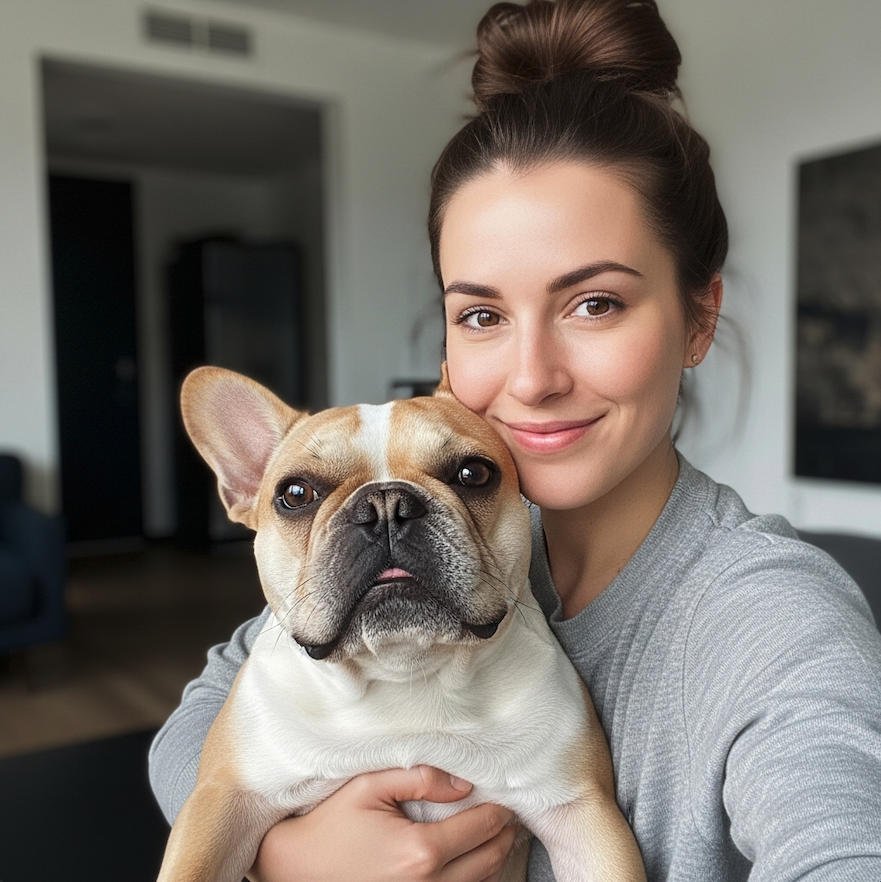
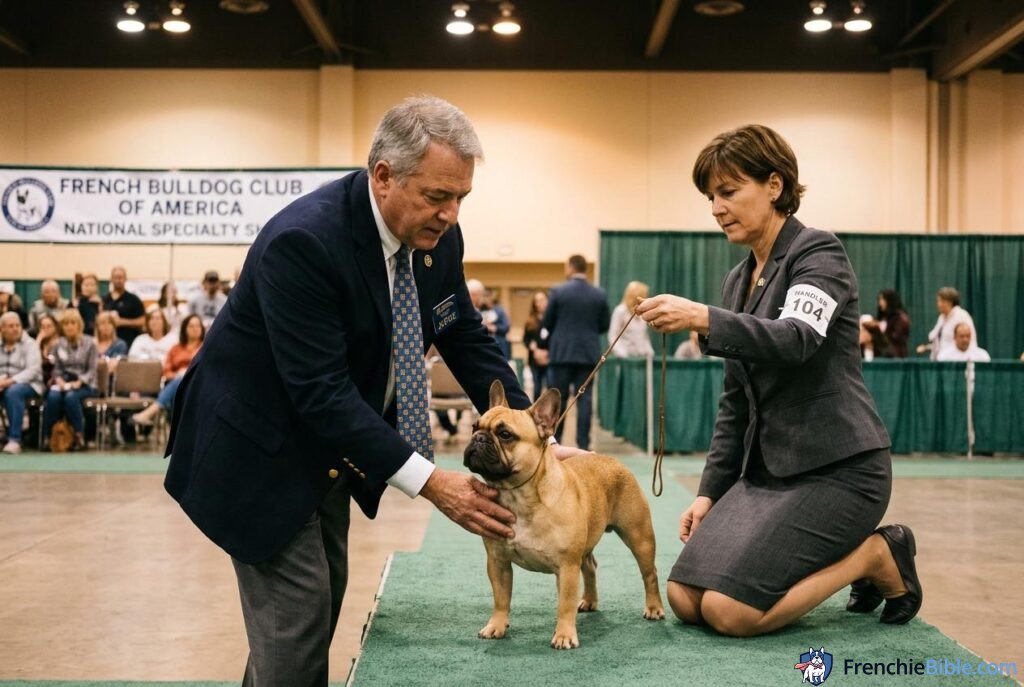
As a French Bulldog breeder with over a decade of hands-on experience I frequently get asked by prospective and current owners about the protective instincts of these charming little dogs. “Will my Frenchie protect me?” or “Are French Bulldogs good watchdogs?” are common questions from families looking for a companion that might also offer a sense of security.
Understanding the true nature of a French Bulldog is essential. These dogs are primarily bred for companionship, not for guarding estates or taking down intruders. However, their deep loyalty and strong bond with their human families can sometimes translate into behaviors that mimic protectiveness. In this comprehensive, long-form guide, we will delve deep into the psychology, genetics, and typical behaviors of the French Bulldog to assess their real potential as watchdogs, distinguish between protectiveness and possessiveness, and explore how you can manage their instincts.
Related Reading: Training & Behavior | Grooming & Care | French Bulldog Colors
Whether you are a complete novice considering bringing a Frenchie into your home, or an intermediate owner looking to better understand your dog’s behavioral quirks, this article will provide you with the deep insights needed to foster a balanced, happy relationship with your pet.
Understanding the French Bulldog Temperament
To truly understand whether a French Bulldog can be protective, we first need to look at their history, genetics, and what they were originally bred to do over the past century.

The Companion Dog Lineage
Unlike German Shepherds Doberman Pinschers Rottweilers, or Belgian Malinois, which have long, well-documented histories as working, herding, and guarding breeds French Bulldogs belong to the non-sporting group. Their ancestors were small bulldogs used by lace workers in Nottingham England, for companionship and ratting during the 1800s. When these workers migrated to France during the Industrial Revolution to seek better opportunities, the dogs went with them. Over decades, these small bulldogs were crossed with local Parisian ratters and pugs, eventually evolving into the distinct Frenchie we know today—complete with their signature bat ears.
Generations of selective breeding have focused entirely on creating a dog that thrives on human affection, adapts seamlessly to indoor living, and serves as an ultimate lap dog. The protective drive, prey drive, and territorial aggression were never traits that breeders selected for. In fact, overly aggressive, reactive, or highly territorial dogs were typically bred out of the lines to ensure a docile, friendly, and easily manageable companion for city dwellers.
Affectionate and Loyal Nature
If you have ever owned a Frenchie, you know they are the quintessential “velcro dogs.” They love to be where you are, whether that means following you to the bathroom, sitting in the kitchen while you cook, or sleeping on your feet while you work at your desk. This intense loyalty is a hallmark of the breed and is one of the reasons they have surged in popularity globally.
Because they form such strong, almost co-dependent attachments to their humans, they are highly attuned to their owners’ emotions, daily routines, and stress levels. While this loyalty is incredibly endearing, it is also the root of what many people mistakenly identify as “protectiveness.” A Frenchie that barks when someone approaches their owner is often reacting out of a deep bond and a desire to maintain proximity, rather than a tactical instinct to guard against a genuine threat.
Are French Bulldogs Protective of Their Owners?
The short answer is: sometimes, but not in the way a traditional guard dog would be. A French Bulldog’s “protectiveness” usually stems from their deep-seated loyalty, strong pack mentality, and occasionally, from underlying insecurity.

The Difference Between Protection and Possessiveness
It is crucial for any dog owner to distinguish between a dog that is genuinely protective and a dog that is merely possessive (a behavior scientifically known as resource guarding).
A truly protective dog assesses a situation calmly, identifies a genuine threat based on context and body language, and reacts appropriately to neutralize that threat or create distance. They are confident, balanced, and usually trained extensively to differentiate between a friend, a neutral stranger, and a foe. They operate out of confidence.
A possessive dog, on the other hand, views their owner, their food, or their toys as a high-value resource that belongs exclusively to them. If a Frenchie growls, stiffens, or snaps when another dog or person approaches you while you are sitting on the couch together, this is almost always resource guarding. They are not protecting you from a threat; they are guarding you as their possession, much like a toddler refusing to share a toy. This behavior is rooted in insecurity, anxiety, and a lack of leadership in the household, rather than bravery. As a breeder I have seen many owners misinterpret this possessiveness as a cute sign of love. However, resource guarding can escalate into dangerous behavioral issues, leading to bites, if not addressed properly with consistent training.
Signs Your Frenchie Might Be Protective
While true guarding instinct is incredibly rare in the breed, some Frenchies do exhibit mild behaviors that can be construed as protective. These might include:
– Positioning: Placing themselves physically between you and a perceived threat (like a strange, larger dog approaching rapidly on a walk).
– Alerting: Giving a low, rumbling “boof” or a series of sharp barks when someone knocks on the door or approaches the car.
– Vigilance: Keeping a watchful, unblinking eye on strangers when they first enter the home, only relaxing and returning to their bed once they see you are comfortable and interacting warmly with the guest.
These behaviors are generally harmless and demonstrate that the dog is aware of its surroundings and cares deeply about the integrity of its pack. However, they should never escalate into unprovoked aggression, lunging, or sustained hostility.
French Bulldogs as Watchdogs vs. Guard Dogs
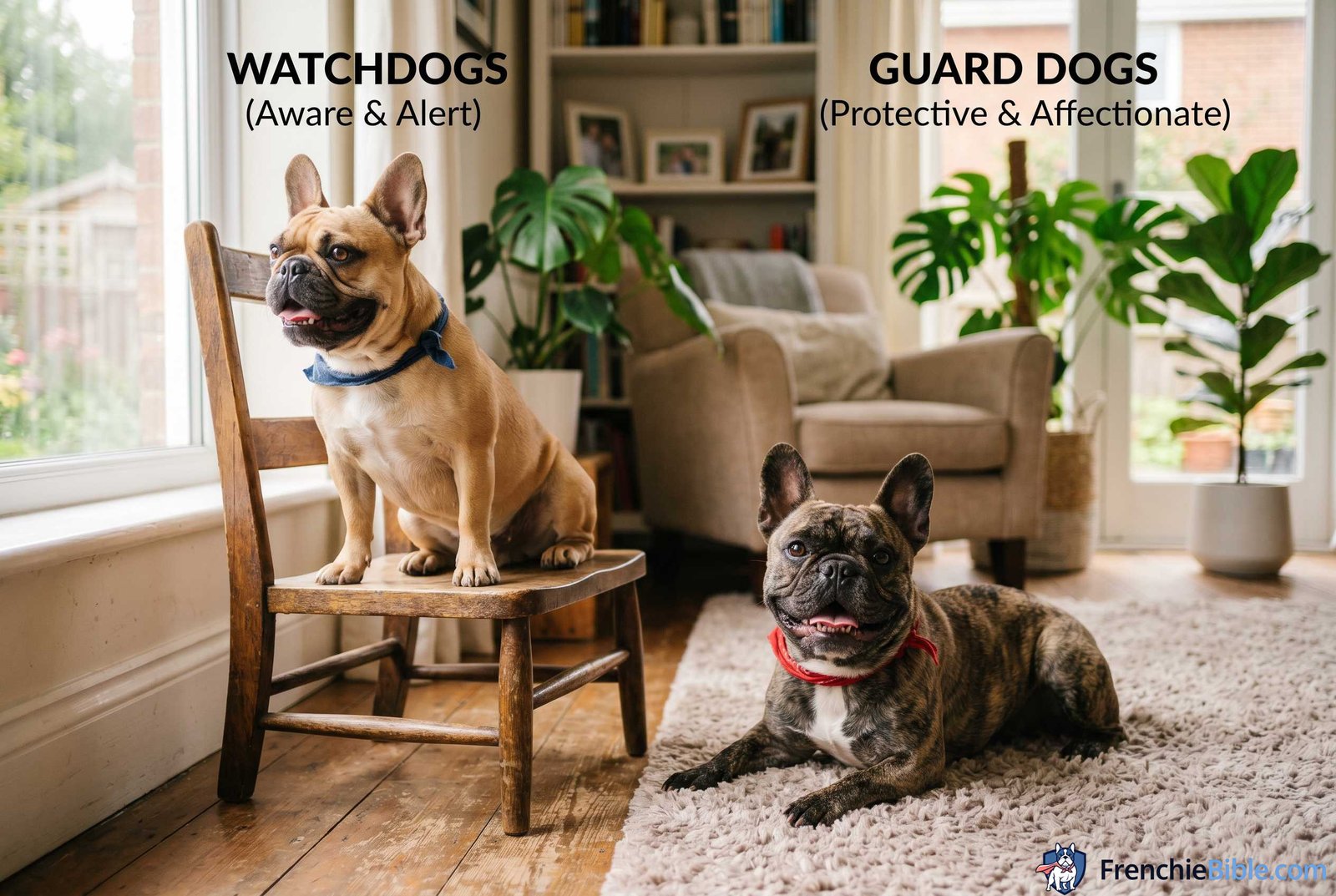
To assess their potential accurately, we must clearly define and separate the roles of watchdogs and guard dogs, as these terms are often incorrectly used interchangeably.
What Makes a Good Watchdog?
A watchdog’s primary, and usually only, job is to alert. They do not need to be large, strong, or aggressive. They simply need to have a keen sense of hearing, a spatial awareness of their territory, and the inclination to bark or make noise when something is out of the ordinary. Chihuahuas Terriers Miniature Poodles, and even some hounds make excellent watchdogs because they are highly alert and highly vocal. Their job is to act as a living alarm system, notifying the human pack that something requires investigation.
What Makes a Good Guard Dog?
A guard dog, conversely, is expected to both alert and defend. They must possess the physical size, muscular strength, significant bite force, and natural courage to physically stop an intruder or threat. Furthermore, they require highly specialized, rigorous training to ensure they only act when truly necessary and can be called off immediately by their handler. Breeds like the Cane Corso Belgian Malinois Doberman Pinscher, and Anatolian Shepherd excel in these roles.
Where Do Frenchies Fit In?
French Bulldogs fall strictly into the “watchdog” category, and even then, their effectiveness varies wildly from individual dog to dog.
As a watchdog, a Frenchie can be surprisingly effective. Despite their reputation for being lazy couch potatoes, they are quite observant when awake. Many Frenchies will reliably alert their owners to a knock at the door, heavy footsteps in the hallway outside an apartment, or a strange car pulling into the driveway. Their bark, though not as piercing as a terrier’s yap, is surprisingly deep, guttural, and resonant for a dog of their small stature. This deep bark might actually give a potential intruder pause if they hear it through a solid door and cannot see the size of the dog making the noise.
However, as a guard dog, a French Bulldog is practically useless. They completely lack the size, the physical stamina, the necessary bite force, and the natural aggression required to physically defend a home or a person. If an intruder were to actually kick down the door and enter the house, most Frenchies would either retreat in fear, freeze in confusion, or, hilariously but true to their nature, run up to the intruder expecting belly rubs and treats. Relying on a French Bulldog for physical protection is fundamentally misunderstanding the genetic makeup of the breed.
The “Alert” Bark: How French Bulldogs React to Strangers and Noises
One of the great benefits of the breed, especially for urban dwellers, is that French Bulldogs are not generally known for being nuisance barkers. Unlike some breeds that will stand at a window and bark at every leaf, squirrel, or passing cloud Frenchies generally only vocalize when they feel there is a legitimate reason to do so.

Their Vocalization Patterns
The Frenchie alert system is unique and often highly entertaining. It frequently starts with a low, rumbling “boof,” a series of grumbles, or what owners lovingly call “Frenchie talk” (a mix of whines, yodels, and grunts) rather than a full-throated bark. If the perceived threat persists—like the mail carrier walking up the path and dropping a package loudly—this grumbling might escalate into a few sharp, distinct barks.
Because they are not chronic barkers, when a Frenchie does bark, it usually warrants the owner’s immediate attention. This makes them a highly reliable alarm system in an apartment or close-quarter living situation, where constant, yappy barking would be a problem with neighbors, but an occasional, justified alert is helpful.
Reading Their Body Language
When a Frenchie alerts, their entire body language shifts dramatically. Their usually relaxed, bat-like ears will pivot rigidly forward like satellite dishes, their brow will furrow in intense concentration (making their wrinkles more pronounced), and their typically wiggly, relaxed body will stiffen. They may stand with their front legs splayed slightly wide for balance, staring intently at the source of the noise.
As an owner, it is your job to acknowledge their alert. Once you check the door, look out the window, and show them calmly that everything is fine, a well-adjusted Frenchie will usually visibly relax, shake their body off (a common canine stress-release mechanism), and go right back to sleep. If they continue to act highly agitated, pacing, or barking long after you have dismissed the “threat,” it may be a sign of underlying anxiety or hyper-arousal that needs to be addressed through training.
Training Your French Bulldog for Better Awareness (Without Encouraging Aggression)
While you absolutely cannot and should not train a French Bulldog to be an attack dog, you can help them develop into confident, well-adjusted companions who are aware of their surroundings without being fearful or highly reactive.
Socialization is Key
The absolute foundation of a good, stable temperament in any dog is early, positive, and extensive socialization. As a breeder I emphasize this to every single new puppy owner before they even take their dog home. You must expose your Frenchie to a wide variety of people of all ages and appearances, loud noises, diverse environments, different surfaces, and other animals during their critical socialization period (which typically falls between 3 and 14 weeks of age), and you must continue this exposure throughout their adult life.
A well-socialized Frenchie is a confident Frenchie. They will not overreact out of sheer fear when a stranger wearing a large hat approaches or a loud truck drives by. This means their “alerts” will be much more reliable; they will only bark at things that are genuinely unusual in their environment, rather than reacting out of chronic anxiety to everyday occurrences.
Basic Obedience Training
Teaching your Frenchie basic, solid obedience commands like “sit,” “stay,” “leave it,” “go to your bed/place,” and “quiet” gives you the necessary tools to manage their behavior when they do alert. If your dog barks aggressively at the doorbell, you can acknowledge the bark gently and then use the “place” or “quiet” command to purposefully de-escalate the situation. This demonstrates to the dog that you are the capable leader in control of the environment, which significantly reduces their perceived need to take charge and “protect” you.
Managing Resource Guarding
If your Frenchie’s perceived “protectiveness” is actually resource guarding, it must be addressed immediately with dedicated positive reinforcement training. You must teach your dog that people approaching you, their food bowl, or their high-value toys results in even better things happening (like receiving high-value treats such as chicken or cheese), thereby changing their underlying emotional response from defensive and fearful to happy and expectant. Never, ever punish a dog for growling. Growling is a vital warning sign. Punishing a growl can suppress the warning mechanism, leading to a dog that bites without any prior warning. If resource guarding is severe or escalating, do not try to fix it alone; consult a certified, science-based positive reinforcement dog trainer immediately.
The Physical Limitations of a French Bulldog in a Guarding Role
It is completely vital for owner safety and canine welfare to be realistic about the physical capabilities and severe limitations of this breed. Even if a French Bulldog had the brave heart of a lion, their physical body is simply not built for combat, defense, or sustained physical exertion.
Size and Strength
A typical, breed-standard French Bulldog weighs between 16 and 28 pounds and stands a mere 11 to 13 inches tall at the shoulder. Against an adult human intruder, or even a medium-sized aggressive dog, they offer mathematically zero physical deterrence. While they are famously muscular, stocky, and surprisingly dense and heavy for their small visual size, they are still a profoundly small breed.
Brachycephalic Airway Syndrome and Stamina
The most critical factor is that French Bulldogs are a brachycephalic (flat-faced) breed. This unique, highly sought-after anatomical structure comes with significant, undeniable respiratory limitations. They possess elongated soft palates, narrow tracheas, and stenotic nares (pinched, tight nostrils).
Because of this compromised airway, they physically cannot sustain intense physical activity, especially not the explosive, high-adrenaline activity required in a fight-or-flight guarding scenario. If a Frenchie were ever to get into a high-stress physical altercation, their oxygen requirements would rapidly and dangerously outpace their physical ability to breathe in enough air. This can lead to severe respiratory distress, rapid overheating, and even fatal collapse in a matter of minutes. Furthermore, their shortened, wide jaws provide a relatively weak bite force compared to working breeds with longer muzzles. Exposing a French Bulldog to a situation where they are expected or forced to physically defend themselves or their owners is incredibly dangerous to the dog’s health and survival.
Real-Life Scenarios: When Frenchies Step Up
Despite all their physical limitations and companion-bred genetics, there are countless anecdotal stories of French Bulldogs acting surprisingly bravely in the face of danger. Over the years I have had clients excitedly tell me stories of their Frenchie fearlessly standing between them and a stray, larger dog that aggressively charged them on a walk, puffing out their chest and refusing to back down. Others have recounted their Frenchie barking persistently and aggressively at a dark window in the middle of the night until the owner woke up and noticed a prowler in the yard.
In these rare instances, the dog’s intense, unwavering loyalty temporarily overrides their natural, docile disposition. They are reacting purely instinctively to protect the person they love most in the world. However, these are absolute exceptions rather than the rule. One cannot, and should not, rely on these spontaneous acts of bravery as any sort of legitimate home security plan. A Frenchie’s true, lasting strength lies in their companionship, their uncanny ability to make us laugh with their clownish antics, and their unwavering, comforting affection on our darkest days.
The Psychological Impact of Encouraging Guarding Behaviors
Some owners, mistakenly believing it is cute, tough, or beneficial for safety, intentionally encourage their Frenchies to act aggressively or protectively. They might deliberately rile the dog up when someone knocks on the door, encourage them to bark at passersby through the fence, or praise the dog enthusiastically for growling at strangers on the street.
From a canine behavioral and psychological standpoint, this is highly detrimental and borderline abusive. Encouraging aggression or maintaining a state of hyper-vigilance in a companion breed creates a life of chronic stress for the animal. These dogs are not genetically equipped to handle the heavy psychological burden of being the “protector” or “alpha” of the household. A Frenchie that believes it is responsible for guarding the home and its humans will live in a constant state of low-level anxiety. This chronic stress can rapidly lead to severe behavioral issues, including destructive chewing, extreme separation anxiety, obsessive-compulsive behaviors, and stress-related autoimmune and gastrointestinal health problems. Your dog needs to know unequivocally that you are the capable leader and the protector of the pack, allowing them the freedom to relax and simply enjoy being a happy, carefree dog.
How to Provide Security When Your Frenchie Can’t
Since it is abundantly clear that your French Bulldog cannot serve as your personal bodyguard or estate guardian, it is your responsibility to take sensible, practical steps to secure your home. This ensures that both you and your dog can live peacefully and feel completely safe.
Home Security Systems
Investing in a modern, reliable home security system, complete with high-definition cameras, sensitive motion sensors, and loud alarms, is the absolute most effective way to protect your property and your family. Many of these modern systems allow you to monitor your home—and intimately check in on your sleeping Frenchie—via an app on your smartphone from anywhere in the world.
Environmental Deterrents
Simple, cost-effective measures like installing motion-sensor outdoor lighting around the perimeter of your home, ensuring secure deadbolt locks on all doors, and maintaining clear visibility around your property lines by trimming large bushes are excellent deterrents. Sometimes, simply having a visible “Dog on Premises” or “Beware of Dog” sign on the front gate can make an opportunistic intruder think twice, even if they later discover that the fierce beast is just a snoring Frenchie drooling on the sofa.
Conclusion
So, are French Bulldogs protective? The answer is nuanced. They can be fiercely loyal and deeply, emotionally attached to their owners, which sometimes manifests as heightened alertness or a brave desire to stand between their beloved owner and the unknown. They can serve as excellent, albeit occasional, watchdogs who will dutifully alert you to strange noises, unusual activity, or unexpected visitors with a deep, surprising bark that belies their small size.
However, they are absolutely, unequivocally not guard dogs. They lack the physical size, the muscular stamina, the vital respiratory capacity, and the innate aggressive instincts required for true protection work. Their primary role in the canine world has always been, and always will be, that of a loving, entertaining companion.
As a responsible owner, it is essential to deeply appreciate your French Bulldog for what they truly are—a highly affectionate, clownish, stubborn, and profoundly loyal friend. Do not place the unfair burden of physical protection on their small, wide shoulders. Socialize them extensively from puppyhood, train them consistently with positive reinforcement, and ensure that you are the one providing a safe, secure, and stress-free environment for them. When a Frenchie feels totally secure in their family structure, their true, joyful, and hilarious personality can fully shine through, providing you with years of unparalleled companionship.
Frequently Asked Questions (FAQ)
Q1: Will my French Bulldog physically protect me from a home intruder?
No. While they may bark loudly to alert you that someone unfamiliar has entered the house, they do not possess the necessary size, physical strength, bite force, or genetic instincts to physically fight off an intruder. Most Frenchies are far more likely to greet a stranger with wiggling excitement or hide under a bed than they are to attack.
Q2: Why does my French Bulldog growl aggressively when other people approach me on the couch?
This behavior is typically resource guarding, not genuine protection. Your dog views you as a highly valuable resource and is being possessive of you, much like a bone. This is a deep-seated insecurity and anxiety issue that should be addressed promptly with positive reinforcement training and counter-conditioning. It should never be praised as “loyalty,” as it can lead to dangerous biting.
Q3: Are French Bulldogs considered excessive or nuisance barkers?
Generally, no. Compared to many other small breeds, they are considered a relatively quiet breed. If they do bark, it is usually because they are actively alerting to something specific in their environment, such as a loud knock at the door, or they are highly excited and trying to initiate play. Chronic barking is often a sign of boredom or separation anxiety.
Q4: Can I hire a trainer to teach my French Bulldog to be a guard dog?
Absolutely not. Attempting to train a French Bulldog for bite work or protection work is highly dangerous to the dog due to their brachycephalic (flat-faced) airway, which prevents sustained physical exertion and increases the risk of fatal overheating. It will also cause severe, unfair psychological stress to a breed genetically meant for companionship. Reputable trainers will refuse this request.
Q5: How can I help my French Bulldog be less fearful and anxious around strangers?
Extensive, positive socialization is the absolute best approach. Introduce your dog to new people, animals, and environments gradually and calmly. Always pair these new experiences with extremely high-value treats (like boiled chicken or hot dogs) and enthusiastic praise. This builds positive associations. If the anxiety is severe and leads to reactivity, consult a certified, science-based dog trainer for a behavioral modification plan.
Disclaimer: The information provided in this article is based solely on over a decade of practical experience in breeding, raising, and observing French Bulldogs. I am a passionate breeder and a breed enthusiast, not a licensed veterinarian or a certified animal behaviorist. The content shared here is strictly for informational and educational purposes only and should never be construed as professional medical advice, diagnosis, or treatment. Every dog is a unique individual, and specific behavioral or health issues should always be addressed by consulting directly with a qualified veterinary professional or a certified dog trainer. Always seek the advice of your local veterinarian with any questions you may have regarding your pet’s health, diet, or overall well-being.