Bringing a French Bulldog puppy into your home is an incredibly exciting and joyful experience. Their squishy faces, bat-like ears, and affectionate personalities make them one of the most beloved dog breeds in the world. However, along with the puppy breath and endless cuddles comes a significant responsibility that every new owner must face: potty training.
as a French Bulldog expert and breeder and breeding expert with years of experience, one of the most common questions I get from new puppy parents is: “How long can my Frenchie hold their pee?” Understanding your puppy’s physical limitations and bladder capacity is the cornerstone of successful house training. Expecting too much too soon leads to frustration for both you and your puppy, while understanding their developmental stages sets everyone up for success.
Related Reading: Health & Diet | Grooming & Care
In this comprehensive guide, we will dive deep into the French Bulldog puppy potty schedule, breaking down their bladder capacity month by month, explaining the factors that influence their ability to hold it, and providing you with an expert-approved, foolproof potty training routine. Whether you are dealing with an 8-week-old baby or a 6-month-old adolescent, this guide will equip you with the knowledge and strategies you need to raise a fully house-trained Frenchie.
Understanding French Bulldog Bladder Capacity by Age
The most critical factor in potty training is understanding that your puppy’s bladder is a physical organ that needs time to grow and develop. Unlike adult dogs, puppies have incredibly tiny bladders and lack the muscle control required to hold their urine for extended periods.
A general rule of thumb often cited by veterinarians is that a puppy can hold their bladder for one hour for every month of their age, plus one. However, for small breeds like the French Bulldog I strongly advise taking a more conservative approach. Their compact size means their internal organs are proportionally smaller, and their metabolisms are relatively fast.
Here is a detailed breakdown of what you can realistically expect from your French Bulldog puppy at different stages of their development:
8 to 10 Weeks Old
At 8 to 10 weeks of age, your Frenchie is essentially a newborn in the dog world. Their bladder is about the size of a walnut, and they have virtually no control over their sphincter muscles. When they feel the urge to go, they have to go immediately. At this critical developmental phase, the physiological connection between the brain recognizing a full bladder and the muscles required to “hold it” has simply not formed yet.
- Daytime Capacity: 45 minutes to 1.5 hours maximum.
- Nighttime Capacity: 2 to 3 hours maximum.
During this stage, you must be incredibly vigilant. You should take your puppy out immediately after waking up, after every meal, after intense play sessions, and right before bed. Accidents are not a matter of “if” but “when” at this age. Your primary goal is to establish the association between the outdoors and going potty, rather than expecting them to hold it. When an 8-week-old puppy stops what they are doing and begins sniffing the floor, you have mere seconds to react before an accident occurs. Managing your own expectations is vital here; do not become frustrated when your puppy soils the floor, as they are physically incapable of extended bladder retention.
10 to 12 Weeks Old
As your Frenchie reaches the 10 to 12-week mark, you will notice a slight improvement in their bladder capacity. Their physical development is progressing, and they are beginning to understand the concept of holding it, even if only for a short time. Their central nervous system is maturing, allowing for slightly better communication between the bladder and the brain.
- Daytime Capacity: 1 to 2 hours.
- Nighttime Capacity: 3 to 4 hours.
While they can hold it a bit longer, consistency remains paramount. You are still building the foundation of their potty habits. Praise and reward heavily when they go outside, and maintain a strict schedule. This is often the age where owners start seeing progress, but it is also a critical time not to get complacent. Giving them too much freedom in the house at this stage is the leading cause of potty training regression. Keep their world small, heavily supervise their active time, and continue utilizing a crate or playpen when you cannot watch them with undivided attention.
3 to 4 Months Old
Between 3 and 4 months of age, your French Bulldog is developing stronger sphincter muscles and a significantly larger bladder. This is the stage where many puppies begin to “get it,” and the frequency of indoor accidents should start to decline significantly if you have been consistent with your training. They are transitioning from infancy into early puppyhood, and their cognitive abilities to understand the concept of “outside is for potty” are sharpening.
- Daytime Capacity: 2 to 3 hours.
- Nighttime Capacity: 4 to 5 hours.
At this point, you might be able to string together some uninterrupted sleep, though you should still be prepared for at least one middle-of-the-night potty trip. During the day, they can handle short periods in a crate or a playpen while you run errands, but you must still prioritize frequent bathroom breaks. This is a wonderful period where you will see the fruits of your early labor. However, teething also begins around this age, which can cause physiological stress and occasional potty setbacks. Stay the course and maintain your routine.
5 to 6 Months Old
By 5 to 6 months old, your French Bulldog is transitioning from a puppy into an adolescent. Their physical development is nearing completion in terms of bladder and bowel control. Their immune systems are robust, their adult teeth are coming in, and they are capable of understanding complex commands and routines.
- Daytime Capacity: 4 to 5 hours.
- Nighttime Capacity: 6 to 8 hours.
Many Frenchies can sleep through the night at this age, which is a huge milestone for exhausted owners! During the day, they can typically hold it while you are at work for a half-day, but relying on them to hold it for a full 8-9 hour workday is still pushing their limits and can lead to UTIs or regression in training. If you work full-time, hiring a dog walker for a midday break is highly recommended. Expecting a 5-month-old Frenchie to hold their bladder for 10 hours while you are at the office is not only unrealistic but borders on cruelty and invites severe behavioral issues and anxiety.
6 Months and Older
Once your French Bulldog passes the 6-month mark, they generally possess the physical capability of an adult dog regarding potty control. They are fully capable of understanding that eliminating indoors is unacceptable, provided they have been trained correctly up to this point.
- Daytime Capacity: 6 to 8 hours (though 6 is preferable for their comfort and health).
- Nighttime Capacity: 8 to 10 hours.
While they can hold it for up to 8 hours during the day, it doesn’t mean they should be forced to on a regular basis. Holding urine for excessively long periods can increase the risk of urinary tract infections, bladder stones, and severe discomfort. Always aim to provide your dog with a potty break at least every 6 hours during the daytime. Furthermore, as Frenchies age into adulthood, their metabolism stabilizes, making their bowel movements highly predictable. A well-trained adult French Bulldog is an absolute joy to live with, integrating seamlessly into your daily household rhythm.
The General Rule of Thumb for Puppy Potty Training
To easily remember the baseline for your puppy’s physical limitations, veterinarians and animal behaviorists often use the “Month Plus One” rule. This formula is taught in veterinary schools worldwide as a reliable metric for canine development.
The Rule: A puppy can typically hold its bladder for one hour for every month of age, plus one hour.
- 2 months old: 2 + 1 = 3 hours maximum
- 3 months old: 3 + 1 = 4 hours maximum
- 4 months old: 4 + 1 = 5 hours maximum
- 5 months old: 5 + 1 = 6 hours maximum
The Frenchie Caveat: As a specialist dedicated to this specific breed I must stress that this rule represents the absolute maximum limit, usually applicable only to sleeping or deeply resting hours. During active daytime hours, you should cut that calculated time in half.
Why? French Bulldogs are brachycephalic (flat-faced) dogs. Due to the anatomical structure of their airways, they often swallow significant amounts of air when they eat, drink, or engage in vigorous play. This swallowed air can put internal pressure on their digestive system and their bladder, artificially increasing the urgency to eliminate. Furthermore, their compact, muscular bodies mean their internal organs are closely packed. Therefore, a 2-month-old Frenchie should realistically be taken out every 1 to 1.5 hours when awake and active, rather than the 3 hours suggested by the general rule. Adapting generic dog advice to fit the specific physiological realities of the French Bulldog is crucial for successful ownership.
Factors That Affect How Long Your Frenchie Can Hold It
Age is undeniably the primary determinant of bladder capacity, but it is far from the only factor. Several other physiological, environmental, and dietary variables significantly influence how long your French Bulldog can hold their potty. Understanding these elements will allow you to expertly tailor your schedule to your individual dog’s specific needs.
1. Size Weight, and Genetics
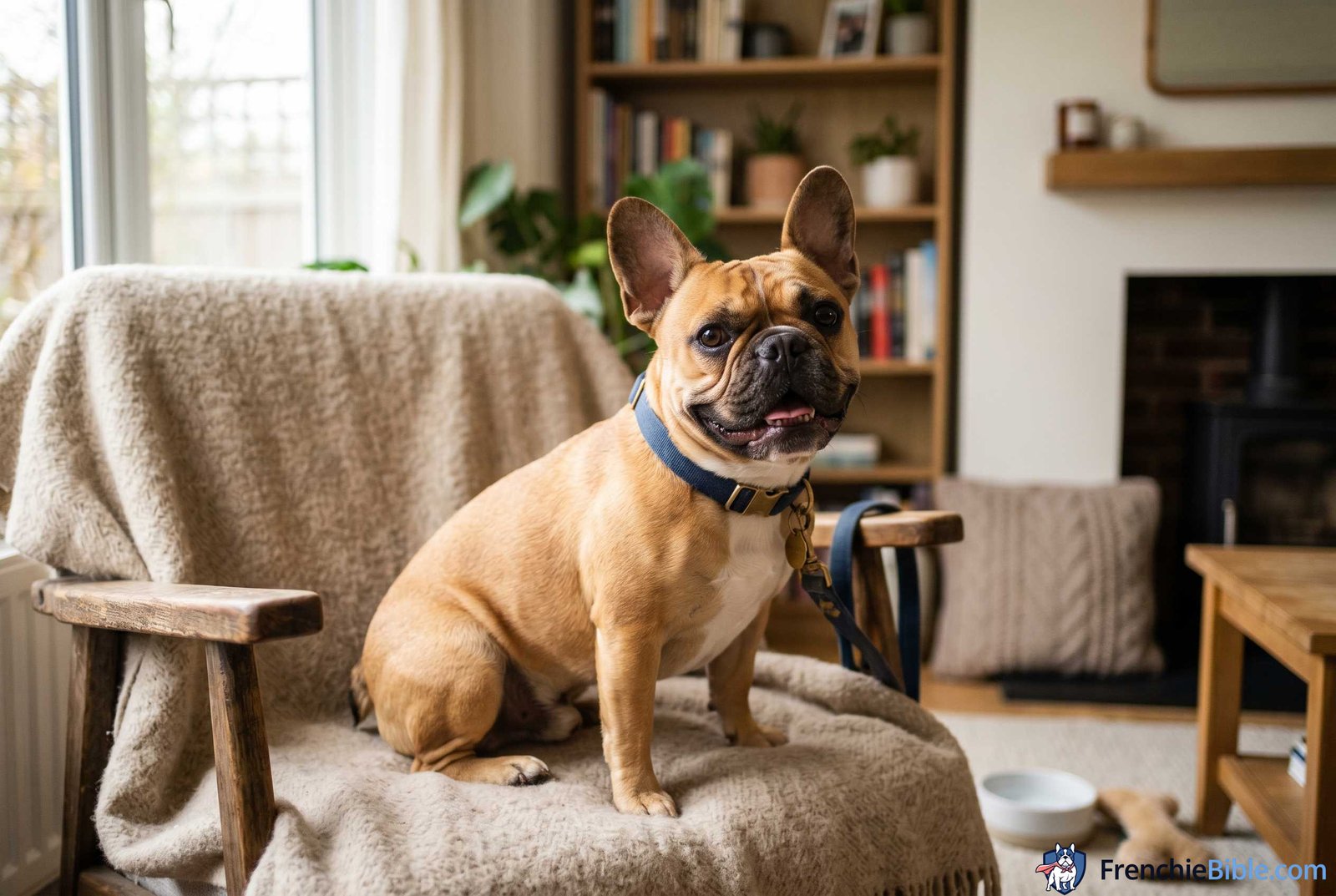
While all French Bulldogs fall under the category of small to medium companion dogs, there is considerable variation in size within the breed. A smaller, more petite female Frenchie weighing 16 pounds will naturally possess a smaller bladder capacity than a robust, large-boned male weighing 28 pounds. Genetics also play a role; some bloodlines simply mature faster in terms of sphincter control than others. If your puppy is on the smaller end of the growth chart, or was the “runt” of the litter, expect that they may require more frequent trips outside compared to a larger, faster-developing counterpart.
2. Diet and Water Intake
The foundational rule of biology applies here: What goes in must come out. The specific type of food you feed your Frenchie and the volume of their water consumption play a massive, immediate role in dictating their potty schedule.
- Wet Food vs. Dry Kibble: Canned, fresh, or raw wet dog food diets contain up to 75-80% moisture content. Puppies eating a primarily wet food diet will naturally consume far more water through their meals and will urinate more frequently and in larger volumes than those eating a strictly dry kibble diet.
- Salty Treats and Chews: Treats high in sodium (like certain jerkies or processed training treats) will make your puppy artificially thirsty, leading to a sudden spike in water intake and, consequently, an immediate need for more frequent urination.
- Gulping Water: Frenchies are notorious for drinking too fast, often slurping loudly and taking in air alongside the water. If your puppy drains an entire bowl of water in one sitting after playing, expect their bladder to fill rapidly. You will likely need to schedule a potty break within the next 20 to 30 minutes to prevent an accident.
3. Activity Level and Excitement
Physical activity stimulates the central nervous system, speeds up the heart rate, and activates the digestive system and the kidneys. When your puppy is sleeping or resting quietly in their crate, their physiological metabolism slows down significantly, and urine production decreases. This is why a puppy can hold it for 4 hours at night but only 1 hour during the day.
Conversely, when they are running frantically around the living room, playing a high-energy game of fetch, or wrestling enthusiastically with another household pet, their body processes liquids at a vastly accelerated rate. Furthermore, excitement or stress (like visitors arriving or a car ride) can trigger involuntary urination (often called submissive or excitement urination). You must absolutely always schedule an immediate potty break directly following any vigorous play session or highly stimulating event.
4. Health Conditions and Medical Interventions
If your previously well-trained puppy is suddenly having frequent accidents, or seems utterly unable to hold it for even short periods that they previously mastered, a medical issue may be the underlying culprit. Never assume behavioral regression without first ruling out medical causes. Common health conditions that drastically affect urination and defecation include:
- Urinary Tract Infections (UTIs): Exceptionally common in young puppies, particularly females, due to their anatomy and developing immune systems. Symptoms include frequent urination of very small amounts, squatting multiple times without producing much urine, licking the genital area excessively, and foul-smelling or cloudy urine.
- Crystalluria or Bladder Stones: While slightly less common in very young puppies French Bulldogs are genetically predisposed to forming certain types of bladder stones (like urate or calcium oxalate stones). These crystals act like sandpaper inside the bladder, causing severe irritation, inflammation, and an intense, constant urge to urinate.
- Gastrointestinal Upset: Diarrhea, loose stools, or an upset stomach caused by a sudden change in diet, parasites (like Giardia or Coccidia), or eating something inappropriate will dramatically and instantaneously decrease your puppy’s ability to hold their bowels.
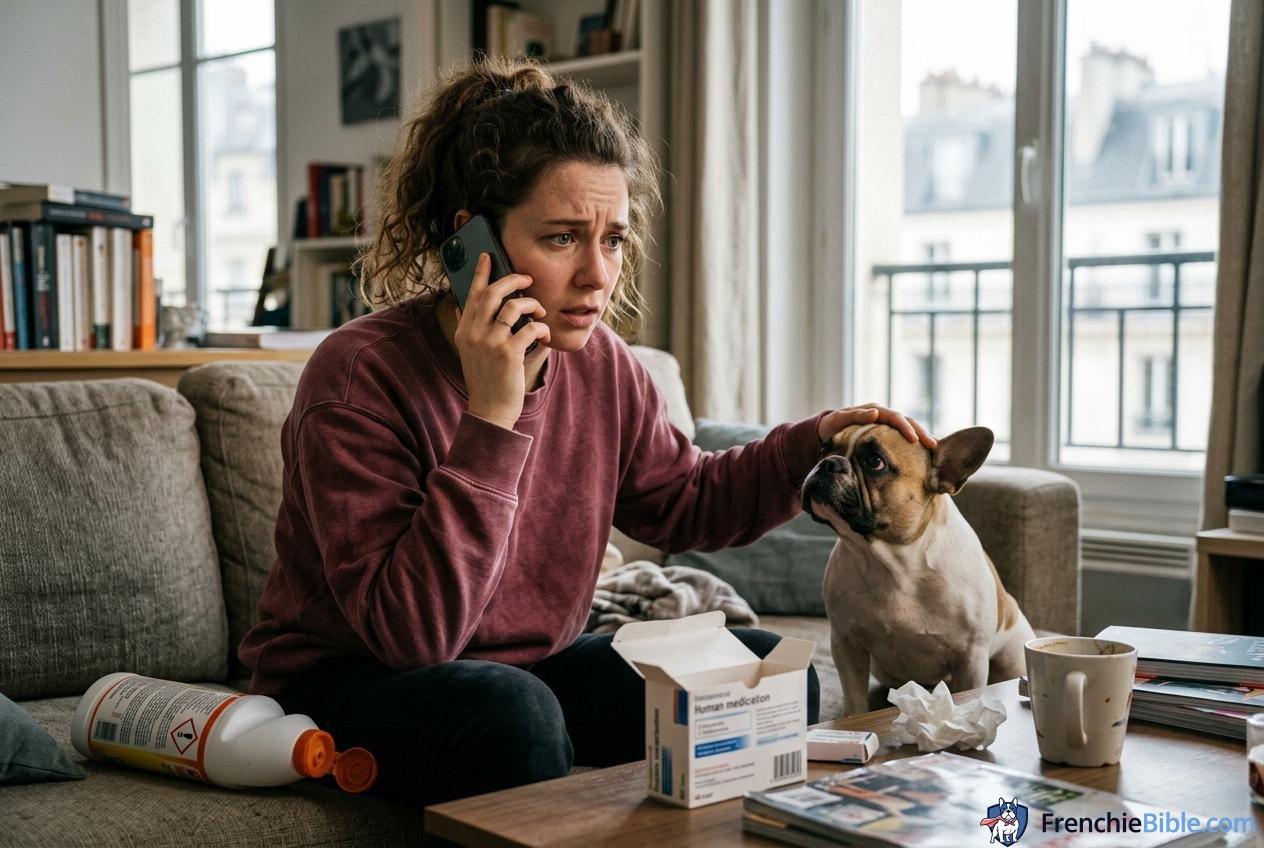
- Medications: Certain medications, specifically corticosteroids (like your veterinarian may recommend a corticosteroid medication (never use without veterinary guidance)) or diuretics, will cause profound increases in thirst and urination. If your vet prescribes these, you must adjust your potty schedule accordingly.
If you notice a sudden, inexplicable change in potty habits, schedule an appointment with your veterinarian immediately. Punishing a dog for accidents caused by a painful medical condition is counterproductive and damages the human-animal bond.
Signs Your French Bulldog Needs to Go Potty
Puppies, even very young ones, rarely just stand still, look at you, and pee without providing any prior warning. They almost always exhibit subtle (and sometimes increasingly frantic) behavioral cues that indicate their bladder or bowels have reached capacity. Learning to effectively “speak dog” and instantly recognize these physical signs is your absolute best defense against indoor accidents.
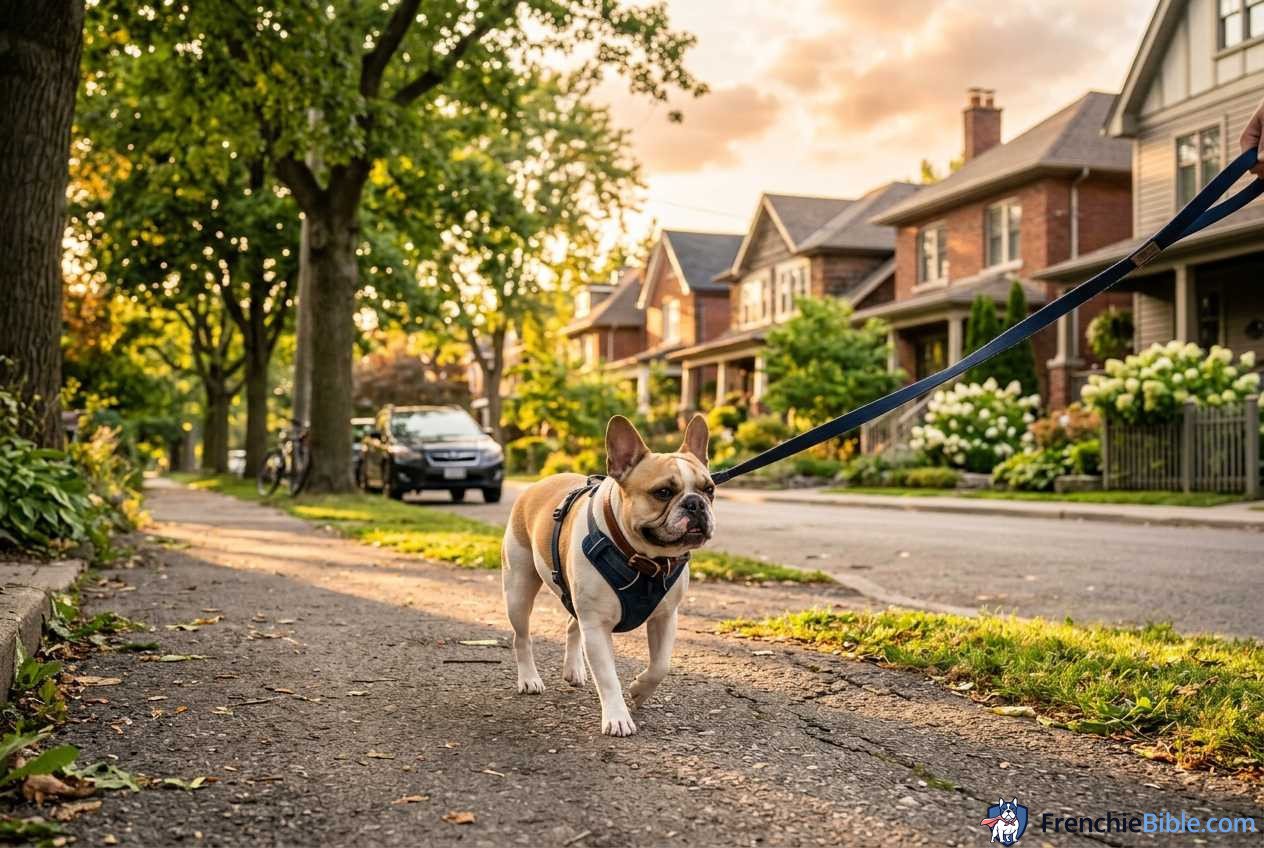
Watch closely for these common pre-potty behaviors. The moment you spot one, action must be taken immediately.
- Sniffing the Floor Intently: This is the universal, most common canine sign. If your puppy abruptly stops playing, drops a toy, and starts frantically sniffing the floor—usually moving in a circular or zig-zag pattern—they are actively searching for a suitable spot to eliminate.
- Circling and Spinning: Dogs possess an innate instinct to circle before squatting. In the wild, this behavior is used to flatten tall grass, check for snakes or insects, and ensure the area is safe before they adopt a vulnerable position. If your Frenchie starts spinning in tight circles, scoop them up immediately; you have seconds before the act occurs.
- Whining Crying, or Pacing: A puppy that is suddenly restless, unable to settle, pacing back and forth across the room, or emitting low, distressed whines is often expressing physical discomfort because their bladder is painfully full. They are trying to tell you they need relief.
- Wandering Off and Seeking Privacy: If your usually velcro-like Frenchie suddenly wanders out of the room, sneaks down the hallway, or tries to hide behind the sofa or under the dining room table, they are likely looking for a private, secluded place to potty away from their main living area.
- Sudden Changes in Play Dynamics: If they are in the middle of a highly engaging tug-of-war game and suddenly drop the rope, lose complete interest, and walk away stiffly, it’s a powerful indicator that nature is urgently calling.
- Sitting by the Door or Staring: As your training progresses and they begin to grasp that “potty happens outside,” they may walk to the specific door you usually use to exit the house and sit, stare intently at the doorknob, or gently scratch at the wood. This is the holy grail of potty training communication—reward this behavior instantly by opening the door!
When you observe any of these signs, do not hesitate. Use an enthusiastic, happy voice, say a designated cue word like “Let’s go potty!” or “Outside!”, and immediately escort (or carry, if they are very young) them to their specific outdoor potty spot.
Establishing a Consistent Potty Routine for Your Frenchie
Canines are creatures of habit. They inherently thrive on routine, structure, and predictability. Establishing a strict, uncompromising, and highly consistent daily schedule is the absolute most effective, non-negotiable strategy for potty training a French Bulldog. Over time, your puppy’s physical body—their digestion and bladder filling—will actually begin to biologically adapt and synchronize to the schedule you enforce.
Here is an expert-approved, highly detailed template for a French Bulldog puppy potty routine. You will inevitably need to adjust the exact times to seamlessly fit your personal work schedule and lifestyle, but the sequence of events and the intervals between breaks should remain rigorously consistent.
The Morning Routine
- Wake Up (e.g., 6:30 AM): The absolute moment you wake up, before you make coffee or check your phone, immediately take the puppy out of their crate and carry them directly outside. Do not let their paws touch the floor, as the stimulation of walking often triggers them to pee on the way to the door.
- The First Potty Break: Stand in their designated outdoor spot. Be incredibly boring. Do not engage in play, do not talk excitedly. Simply wait patiently for them to go. The moment they finish, praise heavily and offer a high-value treat.
- Breakfast (7:00 AM): Feed them their measured morning meal.
- Post-Meal Potty (7:20 AM): Puppies possess a strong physiological reaction called the gastrocolic reflex. Eating food stretches the stomach, which sends a rapid signal to the colon to empty itself to make room. Therefore, puppies almost always need to poop within 15-30 minutes of eating. Take them out again.
- Playtime and Training (7:30 AM – 8:00 AM): Engage in active, physical play, socialization, and basic obedience training (sit, stay, look at me).
- Post-Play Potty (8:00 AM): Because intense activity rapidly stimulates the bladder and bowel, you must take them out immediately after the play session concludes.
- Morning Nap/Crate Time (8:15 AM): Place the mentally and physically tired puppy in their crate with a safe chew toy for a crucial morning nap.
The Daytime Schedule
- Mid-Morning Break (10:30 AM): Take the puppy out of the crate and proceed immediately outside for a potty break.
- Lunch (12:00 PM): Feed their midday meal. Remember French Bulldog puppies under 6 months old should ideally be eating three separate meals a day to regulate blood sugar and digestion.
- Post-Meal Potty (12:20 PM): Outside for the obligatory post-meal potty break.
- Midday Play or Short Walk (12:30 PM): A brief walk around the block (if fully vaccinated) or indoor interactive play.
- Post-Play Potty (1:00 PM): Outside again to empty the bladder after activity.
- Afternoon Nap (1:15 PM): Back to the crate or a highly supervised, enclosed playpen.
- Mid-Afternoon Break (3:30 PM): Another crucial potty break to bridge the gap until dinner.
The Evening and Nighttime Routine
- Dinner (6:00 PM): Feed their final, measured meal of the day.
- Post-Meal Potty (6:20 PM): Outside for the evening bowel movement.
- Evening Play and Family Relaxation (6:30 PM – 8:00 PM): Supervised time interacting with the family in the living room.
- The Water Cut-off Rule (8:00 PM): This is a critical step for preventing nighttime accidents. To ensure their bladder is relatively empty overnight, physically remove access to their water bowl approximately 2 hours before their scheduled bedtime. (Note: Only do this in a climate-controlled home where the dog is not overheated or panting excessively).
- Pre-Bedtime Potty (9:45 PM): A final, slightly longer trip outside. Give them ample time to sniff and ensure they completely empty both their bladder and bowels before sleep.
- Bedtime (10:00 PM): The puppy goes into the crate for the night. The room should be dark and quiet.
- Middle of the Night (2:00 AM – Optional depending on age): For puppies under 14-16 weeks of age, you must set an alarm to take them out once during the night. Keep the lights extremely low, do not talk much or engage in play, carry them to the spot, let them potty, praise softly, and put them straight back to bed.
Crate Training and Potty Training: A Winning Combination
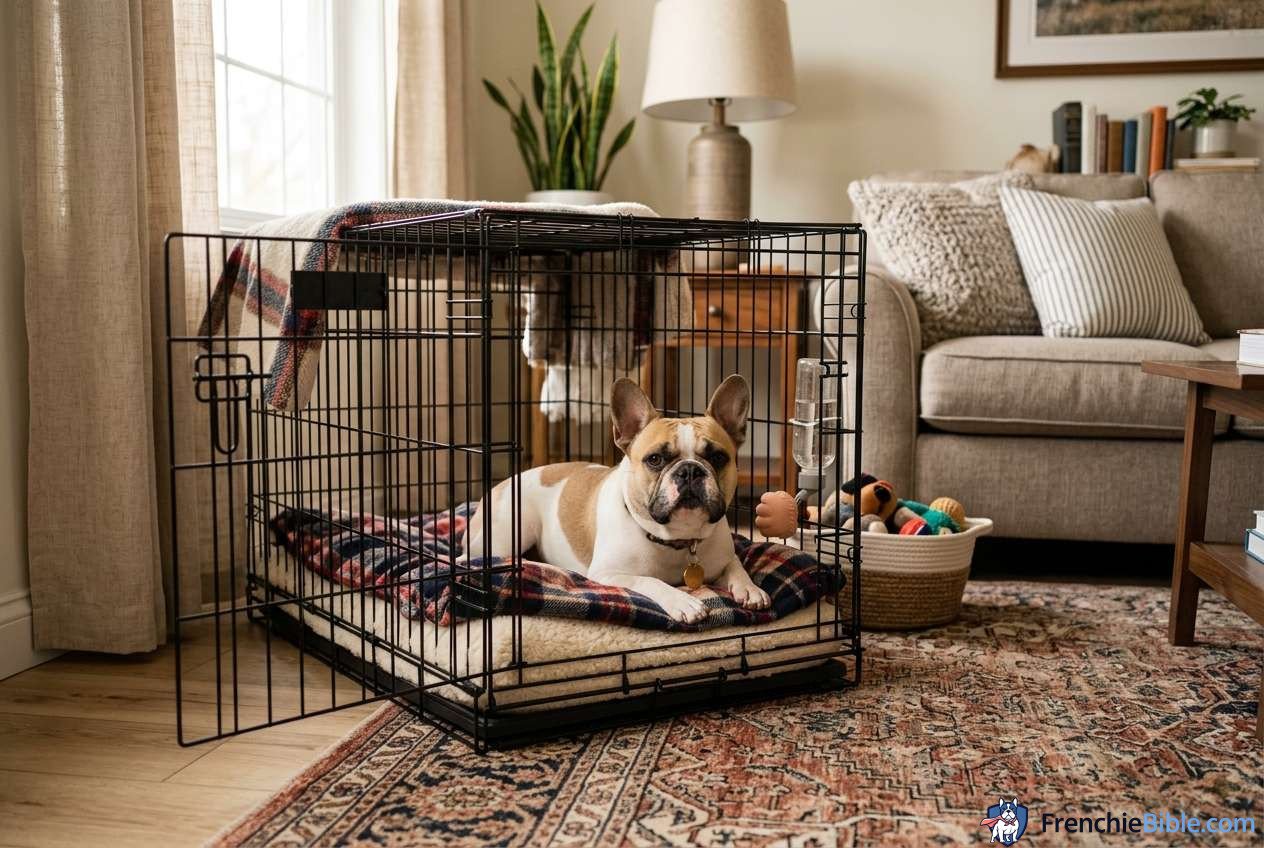
as a French Bulldog expert and breeder and behavioral expert I cannot possibly overstate the profound importance and effectiveness of crate training when it comes to housebreaking a French Bulldog. Crate training brilliantly utilizes a dog’s deep-seated, natural denning instinct. In the wild, canines naturally go to great lengths to avoid soiling the small, enclosed area where they sleep and raise their young.
By using a crate, you leverage this powerful instinct to teach your puppy bladder and bowel control. Whenever you cannot actively supervise your puppy with 100% of your undivided attention—whether you are showering, cooking dinner, or leaving the house—they should be safely secured in their crate. This entirely prevents them from wandering off and silently having an accident on the living room rug, which reinforces bad habits.
Crucial Rules for Using a Crate for Potty Training:
1. The Goldilocks Size: The crate must be precisely the right size. It should only be large enough for the puppy to stand up comfortably without hitting their head, turn around in a circle, and lie down fully extended. If the crate is too large, the puppy will simply urinate in one back corner and sleep peacefully in the opposite clean corner, entirely defeating the purpose. Use a wire crate with an adjustable divider panel so you can expand the space as the puppy grows.
2. Never Ever Use as Punishment: The crate must represent a safe, secure, and happy sanctuary. Never throw the puppy in the crate in anger after an accident. Feed them their meals inside the crate with the door open, and provide them with highly prized, safe chew toys (like a stuffed Kong) exclusively when they are inside.
3. Strictly Respect Time Limits: Never leave a puppy confined in a crate longer than their physical bladder capacity allows. An 8-week-old puppy absolutely cannot stay in a crate for 5 hours. If forced to do so, they will soil themselves out of sheer physical necessity. This is traumatic for the dog, breaks their natural denning instinct, creates a severe behavioral setback, and makes future crate training exponentially more difficult.
4. The Immediate Exit Rule: The golden, unbreakable rule of crate training: The very second you unlatch the crate door and the puppy steps out, they must go straight outside to potty. No stopping to play with a toy, no greeting other family members, no grabbing a drink of water. Pick them up or march them directly to the door.
Common Potty Training Mistakes to Avoid
Even with the absolute best intentions, love, and dedication, many owners inadvertently sabotage their own potty training efforts. French Bulldogs are intelligent but can be notoriously stubborn, meaning they will quickly exploit any inconsistencies in your training methods. Avoid these common pitfalls to ensure a smooth, frustration-free training process.
- Giving Too Much Freedom Too Soon: This is unequivocally the number one mistake new owners make. An owner will see that the puppy hasn’t had an accident for four days, assume the puppy is fully “trained,” and allow them free roam of the entire house. Predictably, the puppy wanders into a quiet guest bedroom and pees on the carpet. Until your Frenchie is at least 6 to 8 months old and has been completely accident-free for several consecutive months, their indoor access should be strictly limited. Use baby gates to keep them in the room you are currently occupying. If they are not in your direct line of sight, they should be in their crate.
- Punishing Accidents (The “Nose Rub” Myth): Never, ever rub your puppy’s nose in their mess, yell at them aggressively, spank them, or hit them with a newspaper. Doing so absolutely does not teach them that peeing inside is wrong. Instead, it teaches them to be terrified of the act of eliminating in front of you. This leads directly to puppies who become “stealth potty-ers”—they will sneak behind the sofa, under the bed, or into a closet to pee specifically to avoid your wrath. This makes them incredibly difficult, if not impossible, to train properly.
- Inconsistency in Schedule: Changing feeding times daily, waking up at 6 AM on Tuesday and 9 AM on Wednesday, and randomly altering the intervals between potty breaks deeply confuses the puppy’s biological clock. Consistency is the master key to biological regulation.
- Not Cleaning Accidents Properly: Dogs possess an olfactory system that is tens of thousands of times more sensitive than a human’s. If a puppy has an accident on the carpet, and you clean it with regular household carpet foam or soap, it may look and smell clean to you. However, the dog can still vividly smell the uric acid and urine proteins embedded in the pad. To the dog, that spot now perpetually smells like a designated bathroom, and they will return to it repeatedly. You absolutely must use an enzymatic cleaner (like Nature’s Miracle) designed specifically for pet stains. The living enzymes in these cleaners actively digest and break down the uric acid crystals, eliminating the odor entirely at a microscopic level.
- Fading the Reward Too Early: Potty training requires massive, over-the-top celebration. When your Frenchie successfully pees or poops outside, you should throw a miniature party. Give them a high-value treat (like a tiny piece of boiled chicken breast, cheese, or freeze-dried beef liver) immediately after they finish, accompanied by enthusiastic verbal praise. Many owners stop giving treats after the first few weeks, assuming the dog “knows it now.” Do not stop the rewards until the behavior is 100% solid and reliable over a period of months.
What to Do When Accidents Happen
Let us be completely realistic: accidents will happen. It is an entirely unavoidable, expected part of raising an infant animal. How you, as the leader, react to those inevitable accidents dictates how quickly your puppy will learn and progress.
If you catch them directly in the act of peeing or pooping inside:
1. Interrupt them immediately with a sharp, abrupt, but not angry, sound. A loud “Ah-ah!”, “Oops!”, or a single sharp clap of the hands works best. Your goal is to startle them just enough to cause their sphincter to tighten and stop the flow of urine, but not to terrify them.
2. Immediately scoop them up (even if they are still trickling urine) and carry them swiftly outside to their designated potty spot.
3. Place them down in the grass and calmly give your designated command, “Go potty.”
4. If they manage to finish eliminating outside, shower them with praise and reward them heavily with a treat. You are teaching them that finishing outside is what earns the reward.
5. Clean the indoor mess thoroughly with an enzymatic cleaner.
If you find an accident after the fact (even if it only happened 2 minutes ago):
1. Do absolutely nothing to the puppy. Say nothing, do not look at them angrily. It is simply too late for correction. Dogs live entirely in the present moment and associate corrections only with what they are doing at that exact second. If you drag a puppy over to a puddle they made 3 minutes ago and yell, they have zero cognitive ability to connect your anger with the puddle. They will simply view you as unpredictable and frightening.
2. Calmly put the puppy in a different room, out of sight, or in their crate.
3. Clean the mess thoroughly and meticulously with an enzymatic cleaner to destroy the odor profile.
4. Reflect critically on your management and schedule. How long had it been since they were last taken out? Did they just drink a massive bowl of water? Were you distracted by a phone call and missed their cues? Use every accident as vital data to adjust and tighten your routine. Remember: an indoor accident is almost always a failure of human management, not a failure of the dog.
Bell Training Your French Bulldog
As your Frenchie matures and begins to solidly understand the core concept that pottying happens outdoors, teaching them to ring a bell to indicate they need to go out is an incredibly effective communication strategy. French Bulldogs are intelligent but can occasionally be stubborn; providing them with a clear, undeniable tool to communicate their needs drastically reduces frustration for both dog and owner.
The Step-by-Step Guide to Bell Training:
1. Equipment: Purchase a set of doggie potty bells (often designed to hang from a doorknob) or a smart button they can press. Hang or place it by the specific door you always use for potty trips. Ensure it is low enough for your Frenchie’s nose or paw to easily reach.
2. Introduction: Before taking the puppy out, bring them to the door. Take their paw or gently guide their nose to strike the bell so it rings clearly.
3. The Cue: The exact moment the bell rings, simultaneously say your enthusiastic cue word, “Let’s go outside!” or “Potty time!”
4. Immediate Action: Instantly open the door and take them directly and purposefully to their potty spot. Do not stop for anything else.
5. Repetition: You must repeat this exact sequence every single time you take the dog out to potty for several weeks. Consistency builds the mental bridge. Eventually, your clever Frenchie will put the complex sequence together: I feel the urge to pee -> I ring this bell -> The human opens the door -> I go to my spot.
6. The “Fake Out” Warning: Frenchies are exceedingly smart and love being outdoors. Very quickly, they may realize that ringing the bell summons their human servant to open the door to the fun backyard. They may start ringing the bell just because they want to go outside and sunbathe or chase leaves. If they ring the bell, you must treat it as a potty trip. Put them on a leash, walk them directly to the boring potty spot, and stand completely still for 3 minutes. If they do not potty, say nothing, turn around, and march them straight back inside. This rigidly enforces the rule that the bell is strictly for bathroom emergencies, not a request for playtime.
Frequently Asked Questions (FAQ)
Can a French bulldog hold its pee overnight?
Yes, they absolutely can, but it is entirely dependent on their age and stage of physical development. An 8-week-old Frenchie physically cannot hold it overnight and will require at least one, possibly two, scheduled potty trips between the hours of midnight and 6 AM. By the time they reach 4 to 5 months of age, the vast majority of French Bulldogs have developed sufficient bladder capacity and sphincter control to sleep comfortably through the night (spanning 6 to 8 hours) without needing a bathroom break, provided you diligently restrict their water intake 2 hours before bedtime.
How long does it take to fully potty train a Frenchie?
Immense patience is required when housebreaking this breed. While some exceptionally quick learners or older puppies might be relatively reliable by 4 months old, it is completely normal and expected for full, reliable, accident-free potty training to take up to 6 to 8 months of age. A dog is not considered “fully potty trained” until they have gone at least two to three consecutive months without a single indoor accident in various environments. Frenchies can be notoriously stubborn and easily distracted, so unyielding consistency and high-value positive reinforcement are vital to speed up the neurological learning process.
Why is my Frenchie puppy peeing so frequently?
If your puppy is peeing significantly more frequently than their age formula dictates (e.g., a 12-week-old suddenly needing to go every 20 minutes instead of every 2 hours), there are a few primary possibilities. They may be drinking an excessive amount of water due to heat or salty treats, playing very vigorously, or experiencing acute stress or excitement. However, highly frequent urination of very small amounts is the classic, hallmark sign of a Urinary Tract Infection (UTI). If you notice them straining to pee, squatting multiple times with no output, licking their genitals constantly, or if the urine smells strong or has a pinkish hue, consult your veterinarian immediately for a urinalysis.
Should I wake my French bulldog puppy up at night to pee?
For very young puppies (those between 8 to roughly 14 weeks of age), yes, it is highly recommended to proactively wake them up before they are forced to have an accident in their crate. Set a gentle alarm for roughly 3 to 4 hours after they fall asleep. Take them out quietly, allow them to potty, and return them to the crate with minimal light and interaction. As they grow older and reach 14+ weeks, their capacity expands. At this point, you can stop setting the alarm, let them sleep, and only take them out if they actively wake up, stir, and whine to alert you that they need to go out.
Conclusion
Successfully potty training a French Bulldog puppy is a journey that demands a potent mixture of patience, extreme routine consistency, and a profound understanding of their unique physical and biological development. It is vital to remember during the stressful moments that your puppy is not having accidents out of spite or dominance; they simply possess tiny bladders, developing muscles, and are still actively trying to decode the complex rules of living in a human household.
By rigidly adhering to an age-appropriate schedule, utilizing crate training effectively and humanely, carefully managing their diet and water intake, and heavily rewarding their outdoor successes with high-value treats, you will lay an unbreakable foundation for a lifetime of excellent habits. The temporary exhaustion of sleepless nights and the inconvenience of frequent, hurried outdoor trips in the rain will pass quickly. The ultimate reward for your hard work is a clean, odor-free home and a wonderful, fully house-trained French Bulldog companion that you will cherish deeply for years to come. Stay consistent, stay positive, manage your expectations, and your little Frenchie will master potty training before you know it!
Disclaimer: We are not veterinarians and do not hold veterinary medical licenses. The information provided in this article is based on years of breeding and daily care experience and is for educational purposes only. It should not replace professional veterinary advice. Always consult with a licensed veterinarian if you have concerns about your French Bulldog’s health or before starting any new treatment.