As a French Bulldog breeder with over ten years of dedicated experience I have seen first-hand the incredible transformation that occurs when a dog learns proper impulse control. The French Bulldog is a charming, affectionate, and sometimes delightfully stubborn breed. While their comical personalities and loving nature make them fantastic companions, their enthusiasm can sometimes get the better of them. Whether it is mealtime excitement or the thrill of an impending walk, a Frenchie’s lack of impulse control can lead to chaotic situations and even safety hazards. This is where the “Wait” command becomes an absolute necessity in your training repertoire.
In this comprehensive guide, we will delve deep into teaching your French Bulldog the “Wait” command. We will focus specifically on two of the most highly arousing scenarios for any dog: mealtime and going through doorways. Mastering this command will not only improve your dog’s manners but will also significantly strengthen the bond and communication between you and your beloved Frenchie.
Related Reading: Health & Diet | Grooming & Care
Introduction to the “Wait” Command for French Bulldogs
The “Wait” command is a cornerstone of basic obedience and is vital for managing your French Bulldog’s day-to-day behavior. It essentially tells your dog to pause their current action or intention and look to you for the next instruction. Unlike a rigid “Stay” command, “Wait” is more of a temporary pause in a sequence of events.
Why Impulse Control is Crucial for Frenchies
French Bulldogs, with their robust, compact bodies and energetic bursts, can easily knock over small children or elderly individuals if they are allowed to barrel through doorways or jump enthusiastically for their food. Furthermore, impulse control is a foundational mental exercise. When you teach a Frenchie to control their urges, you are engaging their brain, which tires them out and leads to a calmer, more balanced dog. A dog that cannot control its impulses is often a stressed dog, constantly reacting to environmental stimuli rather than thinking through their actions.
Moreover, teaching impulse control ensures your dog’s safety. A Frenchie that bolts out the front door without permission is at risk of running into traffic or getting lost. A dog that resource-guards its food or lunges at the bowl can accidentally bite the hand that feeds it.
“Wait” vs. “Stay”: Understanding the Difference
It is essential to distinguish between the “Wait” and “Stay” commands. While they may seem similar, they serve different functional purposes in a dog’s life.
The “Stay” command means “do not move from this exact position until I come back to you and release you.” If you put your dog in a “Sit-Stay,” they should remain sitting in that specific spot indefinitely.
The “Wait” command, on the other hand, means “pause right there, and shortly I will either give you permission to move forward or ask you to do something else.” It implies a temporary halt. For example, “Wait” at the door means pause before crossing the threshold until I say “Okay,” at which point you can proceed through. “Wait” for your food means don’t eat until I say it’s time.
The Psychology Behind the “Wait” Command
Understanding how your French Bulldog thinks will dramatically improve your training success. French Bulldogs are intelligent but can be independent thinkers. They need to see the value in what you are asking them to do.
How French Bulldogs Think and Learn
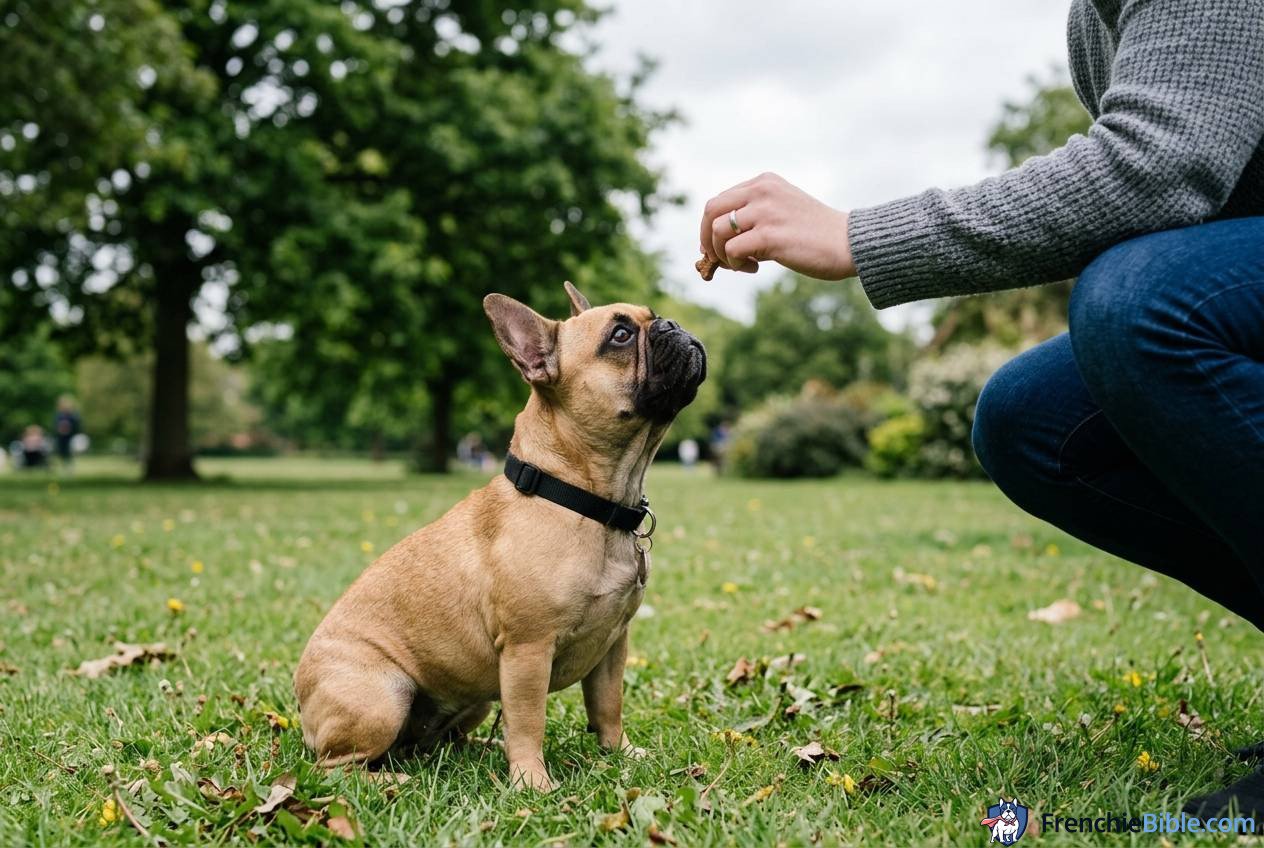
French Bulldogs learn best through clear, consistent communication and positive reinforcement. They are highly motivated by food, praise, and play. When training the “Wait” command, we are essentially teaching them a transaction: “If you control your impulse and wait, you will get the thing you want most (the food, the walk, the access to the yard).”
They do not respond well to harsh corrections or frustration. If you become angry when they break a “Wait,” they may become fearful or confused, which hinders the learning process. Patience and understanding are key. You must break down the behavior into small, achievable steps so that your Frenchie can succeed frequently.
The Role of Positive Reinforcement
Positive reinforcement is the act of rewarding a desired behavior to increase the likelihood of that behavior occurring again. In the context of the “Wait” command, the ultimate reward is often the release itself—getting to eat the food or going outside. However, during the initial training stages, using high-value training treats and enthusiastic verbal praise is crucial for marking the exact moment they make the right choice.
Step-by-Step Guide to Teaching the “Wait” Command Before Meals
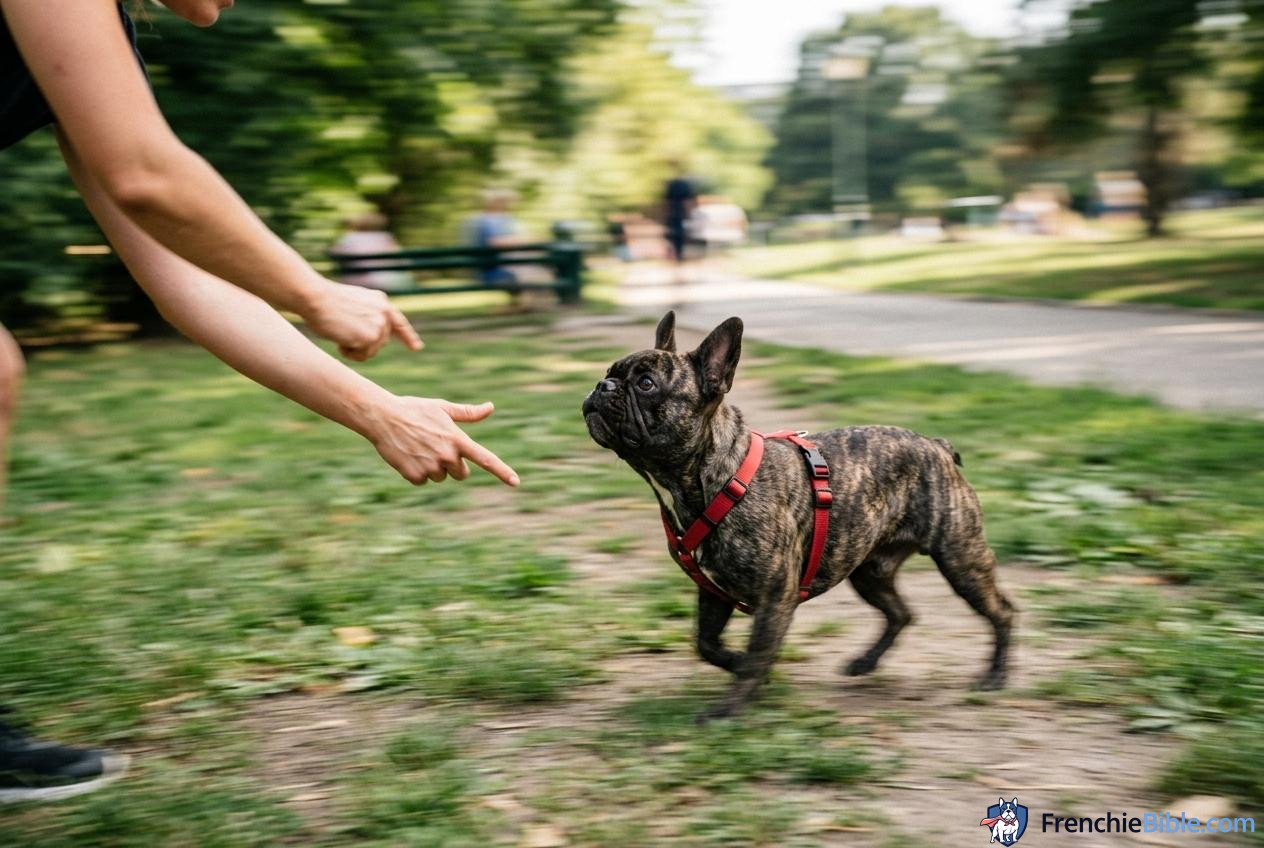
Mealtime is an excellent opportunity to practice impulse control because the motivation (hunger and food drive) is extremely high. By requiring a “Wait” before every meal, you are establishing yourself as the benevolent leader who controls access to valuable resources.
Preparing for the Training Session
Before you begin, ensure you are in a quiet environment free from distractions. Have your Frenchie’s regular meal prepared in their bowl. If your dog is overly excited, you may want to have some high-value training treats in your pocket as well. Ensure you have established a clear release word, such as “Okay,” “Free,” or “Break.” Be consistent and use the same word every time.
Step 1: Holding the Bowl and Asking for a Sit
Start by asking your French Bulldog to “Sit.” Hold the bowl of food at chest height. If your dog jumps up or breaks the sit, simply lift the bowl higher out of reach and calmly wait for them to sit again. Do not repeat the “Sit” command; just wait for them to offer the behavior. Once they are sitting calmly and giving you eye contact, proceed to the next step.
Step 2: Lowering the Bowl and Introducing “Wait”
Say your chosen cue, “Wait,” in a calm, firm, but not aggressive tone. Slowly begin to lower the bowl toward the floor.
The moment your Frenchie breaks the “Sit” or moves toward the bowl, immediately lift the bowl back up to your chest. Do not say “No,” just remove the opportunity.
Wait for them to sit again. Repeat this process. The goal is to lower the bowl an inch or two without them moving. This requires immense patience. You may have to lower and raise the bowl a dozen times before they understand that moving makes the food go away, and staying still brings the food closer.
Step 3: Releasing with a Release Word (e.g., “Okay” or “Free”)
When you can successfully place the bowl all the way on the floor while your Frenchie remains seated, pause for just one second. Then, enthusiastically say your release word, “Okay!” and gesture toward the bowl. Let them eat and praise them calmly.
In the beginning, the pause should be very brief. We want to set them up for success. If you wait too long initially, they will likely break the command.
Step 4: Increasing Duration and Difficulty
Once your French Bulldog understands the basic concept, gradually increase the difficulty.
First, increase the duration. Place the bowl on the floor and wait for three seconds, then five seconds, then ten seconds before giving the release word.
Next, increase the distance. Place the bowl on the floor, tell them to “Wait,” and take a step backward. Return to them, pause, and release. Gradually increase how far you can walk away while they wait.
Finally, add distractions. While they are waiting, drop a pen, clap your hands softly, or walk around them. This proofs the behavior and ensures they are truly focused on impulse control.
Mastering the “Wait” Command Before Going Out (Doorway Etiquette)
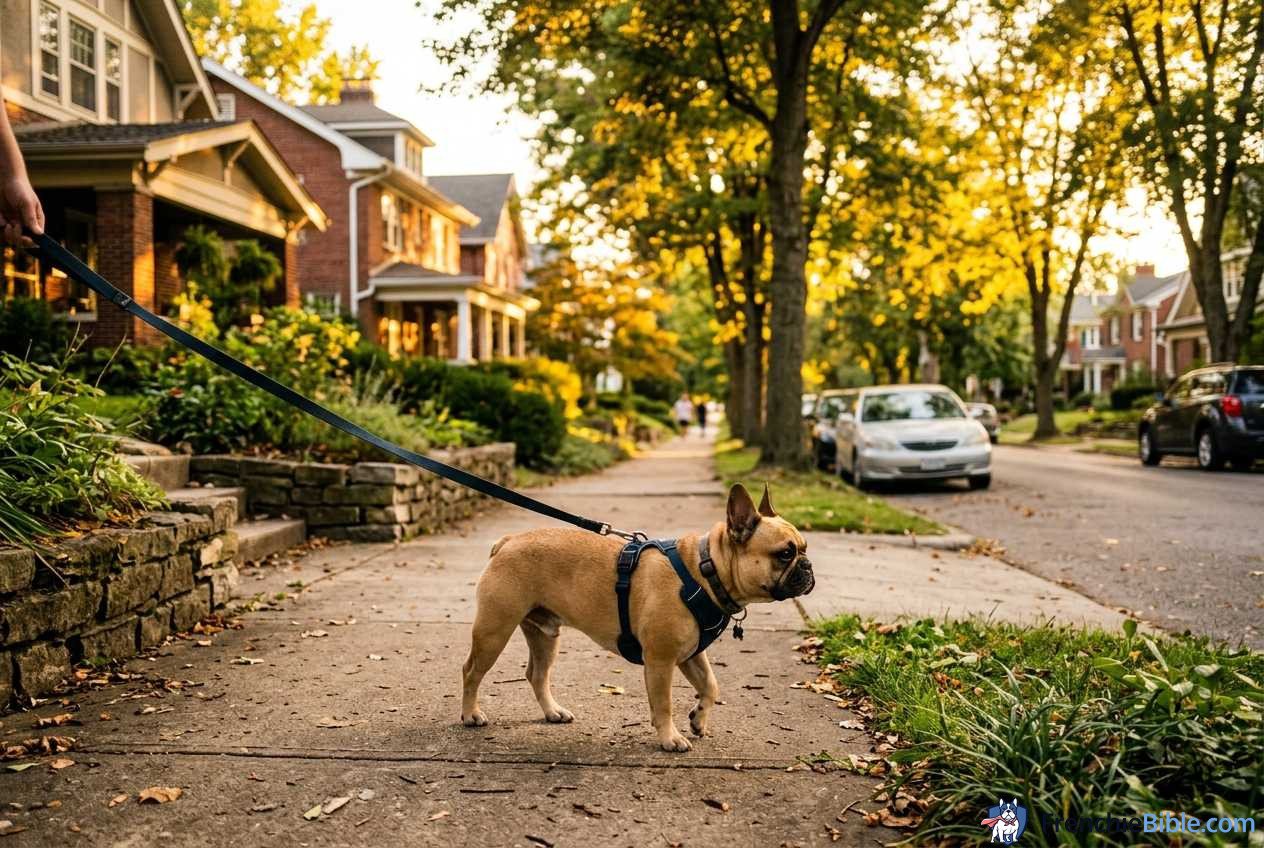
Doorway dashing is a very common issue among dogs and can be incredibly dangerous. A Frenchie running out an open door could encounter traffic, aggressive stray dogs, or get lost. Teaching a solid “Wait” at every threshold is a non-negotiable safety measure.
Why Door Dashing is Dangerous for French Bulldogs
French Bulldogs are a brachycephalic (flat-faced) breed. If they bolt outside on a hot day and run uncontrollably, they are at a high risk of heatstroke and respiratory distress. Additionally, their small stature makes them vulnerable to injury if they rush out and encounter a larger, unfriendly animal. Doorway etiquette is not just about manners; it is fundamentally about keeping your dog safe and alive.
Step 1: Approaching the Door and Asking for a Sit
Put a leash on your French Bulldog. This is crucial for safety and control during the training process. Walk to the door leading outside. Before you reach for the handle, ask your dog to “Sit.” Wait until they are sitting calmly. If they are whining, pacing, or pulling, simply stand still and wait until they settle down and offer a sit.
Step 2: The Hand on the Doorknob and the “Wait” Command
Once they are sitting, say the command “Wait.” Slowly reach your hand toward the doorknob. If your dog gets up or breaks the sit, immediately pull your hand away from the knob and stand up straight. Wait for them to sit again.
The lesson here is simple: calm behavior makes the door open; impulsive behavior makes the door stay closed.
Step 3: Opening the Door Slightly
When you can touch the doorknob without your Frenchie moving, turn the handle and crack the door open just an inch. If they lunge forward, immediately close the door. Again, do not yell; the closing door is the consequence.
Repeat this until you can open the door slightly while your dog remains seated. Gradually increase how wide you open the door. You want to reach a point where the door is fully open, and your French Bulldog is sitting patiently, looking at you rather than the great outdoors.
Step 4: Stepping Outside and the Release Cue
Once the door is fully open and your dog is waiting patiently, you step through the doorway first. This establishes leadership and shows them that you control the threshold. Turn around to face your dog, who should still be sitting inside. Pause for a moment, then give your release word, “Okay,” and invite them to step through the door with you.
If they try to rush past you, use the leash to gently block them and ask for a sit again. Consistency is everything here.
Advanced “Wait” Command Scenarios
Once your French Bulldog has mastered waiting for food and at the front door, you can apply this invaluable command to various other aspects of their life to ensure complete impulse control and safety.
Waiting in the Car Before Leashing
Many dogs go absolutely crazy when a car ride ends. Rushing out of a car door is highly dangerous, especially in busy parking lots. Apply the same principles here. When you open the car crate or the car door, your Frenchie must sit and “Wait.” You should be able to fully open the door, attach their leash calmly, and only allow them to exit when you say “Okay.” If they try to push past you, shut the door and start again.
Waiting Before Crossing the Street
During walks, the “Wait” command is vital for street safety. As you approach a curb, ask your dog to “Sit” and “Wait.” This forces them to pause, look up at you, and break their forward momentum. It ensures they do not blindly step into traffic. Only cross the street after you have checked for cars and given the release cue.
Waiting for Toys and Playtime
Impulse control should also be practiced during play. If you are playing fetch or tug-of-war, ask your Frenchie to “Wait” before you throw the toy or engage in the game. This teaches them that calm, controlled behavior is the key to unlocking the fun activities they desire. It prevents them from becoming overly frantic and nippy during playtime.
Common Mistakes to Avoid When Training Your French Bulldog
Training a French Bulldog requires patience, consistency, and a clear understanding of what you are communicating. Avoid these common pitfalls to ensure smooth and successful training.
Rushing the Process
One of the most frequent mistakes owners make is moving too fast. If you expect your Frenchie to wait for a minute with the front door wide open on the first day of training, you are setting them up for failure. Break the training down into microscopic steps. Celebrate the small victories, like them waiting for one second while you lower the food bowl an inch. Slowly build up the difficulty over weeks and months.
Using Punishment or Negative Reinforcement
As mentioned earlier French Bulldogs are sensitive souls despite their tough exterior. Yelling, smacking, or aggressively yanking the leash when they break a “Wait” will damage your relationship and make them fearful of training. If they make a mistake, the only consequence should be the removal of the reward (closing the door, picking up the food). Keep training sessions positive, upbeat, and fun.
Inconsistency with the Release Word
You must be absolutely consistent with your release word. If you use “Okay” one day, “Go” the next, and “Free” the day after, your dog will be completely confused. Pick one word and stick to it. Ensure everyone in the household uses the exact same word. Furthermore, never let your dog release themselves. If they move before you give the release cue, reset them and try again.
Troubleshooting “Wait” Command Challenges
Even with the best training plans, you will inevitably encounter roadblocks. Here is how to handle some common challenges when teaching the “Wait” command to a French Bulldog.
What to Do If Your Frenchie Lunges for the Food
If your Frenchie is highly food-motivated and continuously lunges for the bowl, you need to go back to the absolute basics. Do not even try lowering the bowl. Simply hold the bowl, ask for a sit, and reward them with a treat from your pocket for remaining seated. Once they realize that sitting gets them a reward, slowly begin lowering the bowl. If they lunge, swiftly but calmly pull the bowl away. It may take several sessions before you can even touch the floor with the bowl. Stay patient.
Handling a Highly Aroused Frenchie at the Door
Some Frenchies become so overly aroused at the prospect of a walk that they simply cannot focus. If your dog is screaming, spinning, or hyperventilating at the door, put the leash away and sit down. Wait until they have completely calmed down before trying again. You may need to practice the doorway routine randomly throughout the day when you aren’t actually going for a walk, just to desensitize them to the triggers (picking up the leash, putting on shoes).
Dealing with Stubbornness in French Bulldogs
French Bulldogs are notorious for their stubborn streaks. Sometimes, they will simply look at you, hear the command, and choose not to obey. If this happens, do not get into a battle of wills. If they refuse to sit and wait, calmly walk away. Put the food back on the counter, or take off the leash and go sit on the couch. Show them that if they choose not to participate in the training, the opportunity for the reward disappears completely. They will quickly learn that cooperation is in their best interest.
Maintaining and Proofing the “Wait” Command
Training is not a one-time event; it is a lifelong commitment. To ensure your French Bulldog’s impulse control remains sharp, you must continuously practice and reinforce the “Wait” command.
Practicing in Different Environments
Dogs are situational learners. A Frenchie that waits perfectly in your kitchen may completely forget the command when you take them to a busy park. You must “proof” the behavior by practicing the “Wait” command in a variety of environments—in the backyard, at the vet’s office, at the pet store, and on walks in different neighborhoods. Start with low distractions and gradually increase the difficulty.
Generalizing the Behavior
Make the “Wait” command a generalized part of their daily routine, not just a trick for food and doors. Ask them to wait before coming up on the couch, before jumping into the bed, or before you throw their favorite ball. By incorporating impulse control into everyday interactions, you create a well-mannered, thoughtful, and highly adaptable canine companion.
Ultimately, teaching your French Bulldog the “Wait” command is an act of love. It protects them from danger, reduces their anxiety and stress, and fosters a deep, respectful relationship between dog and owner. The time and patience you invest in this training will yield a lifetime of peaceful mealtimes, safe walks, and joyful companionship.
The Importance of Repetition and Consistency
Repetition and consistency are the twin pillars of successful dog training, especially for a breed as willful as the French Bulldog. Every time you approach a threshold or prepare a meal, you must enforce the “Wait” command. If you ask them to wait nine times out of ten, but on the tenth time you are in a rush and let them barge through the door, you have just taught them that sometimes, ignoring the rules works. This intermittent reinforcement makes the unwanted behavior (door dashing) even stronger and harder to extinguish. You must commit to enforcing the rule 100% of the time. There are no exceptions, no matter how tired or hurried you might be.
Furthermore, everyone in the household must be on the same page. If you require a “Wait” at the door, but your partner simply opens the door and lets the dog run out, the dog will quickly learn who they can take advantage of. Consistency across all family members and caregivers is non-negotiable for establishing clear, predictable boundaries for your Frenchie.
Conclusion
Mastering the “Wait” command is one of the most rewarding training endeavors you can undertake with your French Bulldog. It transcends simple obedience; it is about cultivating impulse control, ensuring safety, and building a foundation of mutual respect. By breaking the training into small, manageable steps, using positive reinforcement, and remaining incredibly consistent, you can transform a chaotic, overly enthusiastic Frenchie into a calm, focused, and impeccably mannered companion. Remember that patience is your greatest tool. Celebrate the small successes, be persistent through the setbacks, and enjoy the process of teaching and learning alongside your dog. A French Bulldog with strong impulse control is a joy to live with, safe in any environment, and truly a testament to dedicated, loving ownership.
Frequently Asked Questions (FAQ)
1. At what age should I start teaching my French Bulldog puppy the “Wait” command?
You can start teaching the basic concepts of the “Wait” command as soon as you bring your puppy home, typically around 8 weeks of age. Start with very short durations (just one or two seconds) before meals. Puppies have short attention spans, so keep training sessions brief, positive, and fun. Early training sets the foundation for lifelong good habits.
2. My Frenchie barks and whines when I ask them to wait for food. Should I give it to them to quiet them down?
Absolutely not. If you give them the food while they are barking or whining, you are directly rewarding the vocalization and impatient behavior. You must wait for a moment of complete silence and calm before giving the release word and the food. If the whining continues, calmly put the food away and try again a few minutes later when they have settled.
3. Is it okay to use physical force, like pushing my dog’s rear end down, to make them stay in a “Wait”?
No. Using physical force or intimidation is counterproductive. It can cause fear, anxiety, and distrust. French Bulldogs learn best through positive reinforcement and understanding consequences (e.g., if I get up, the food goes away). Guide them into position using treats or gentle leash pressure, but never forcefully hold them down.
4. How long should I expect my French Bulldog to hold a “Wait” at the front door?
Initially, expect them to wait for just a second or two. As their training progresses, you can gradually increase the duration. A realistic and highly practical goal is for your Frenchie to wait calmly while you open the door, step outside, check the surroundings, and then give the release cue. This usually takes anywhere from 10 to 30 seconds. The focus should be on calmness rather than extreme duration.
5. I have two French Bulldogs. Should I train them to “Wait” together or separately?
When you are first introducing the command, it is highly recommended to train them separately. Training multiple dogs at once introduces competition and significantly increases arousal and distraction levels. Once both dogs have a solid understanding of the “Wait” command individually, you can slowly start practicing with both of them together, ensuring you enforce the rules strictly for each dog.
Disclaimer: The information provided in this article is for educational and informational purposes only and is based on over a decade of personal experience in French Bulldog breeding, training, and daily care. I am not a licensed veterinarian, nor do I possess any formal veterinary or medical qualifications. The training advice, behavioral observations, and care tips shared here are drawn from practical experience and should not be construed as professional medical or veterinary advice, diagnosis, or treatment. Always consult with a licensed veterinarian or a certified animal behaviorist for any medical concerns, sudden behavioral changes, or specific health conditions regarding your dog. Relying on the information presented in this article is done entirely at your own risk.
Disclaimer: I am a French Bulldog breeding expert with over a decade of hands-on experience with this breed. I am not a veterinarian. The information in this article is for educational purposes only. Always consult your veterinarian regarding your dog’s specific health needs and care.