
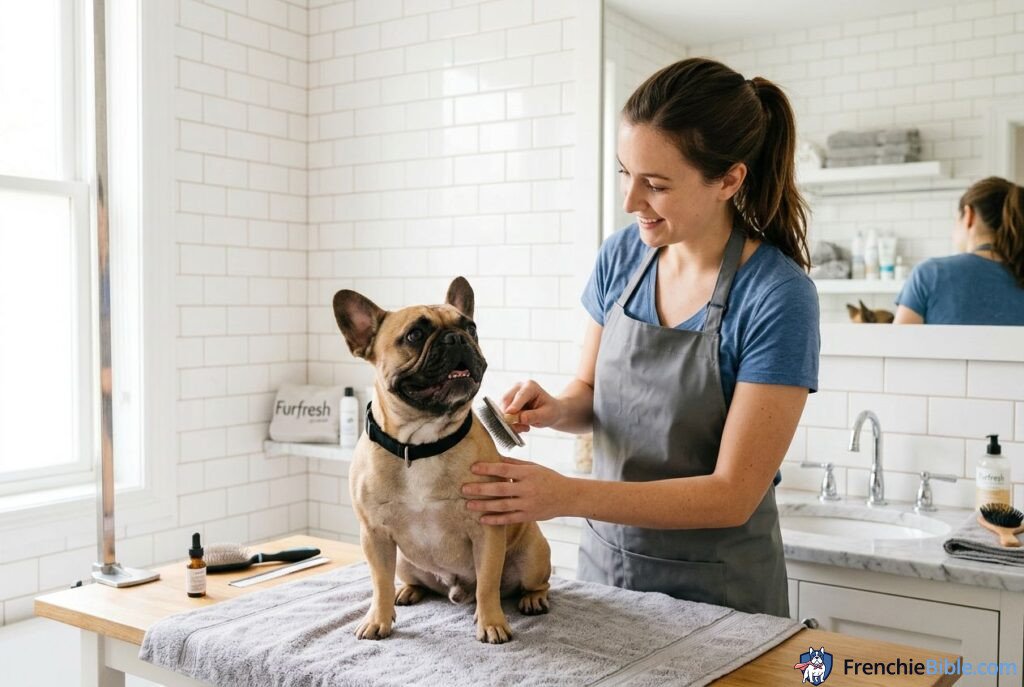
If you share your home with a French Bulldog, you are likely intimately familiar with their unparalleled stubbornness, their endlessly comical personalities, and, quite possibly, the piercing, ear-splitting scream they emit when they even see a pair of nail clippers. It is a sound that can only be described as a cross between a distressed piglet and a human toddler in absolute agony. as a French Bulldog expert and breeder and breeding expert I cannot tell you how many panicked owners have rushed into my breeding program, convinced they have severely injured their beloved bat-eared companion, only to sheepishly reveal they had simply touched the dog’s paw with a nail trimmer.
The French Bulldog scream during nail clipping is legendary within the veterinary and grooming communities. It is dramatic, it is terrifying, and it makes owners dread grooming day so much that they often delay it, leading to overgrown nails that cause serious orthopedic issues. But why exactly do they do it? Are they in excruciating physical pain, or is it pure theatrics? More importantly, how can you stop the screaming and transform nail trimming from a traumatic wrestling match into a calm, cooperative bonding experience?
Related Reading: Training & Behavior | Grooming & Care | French Bulldog Colors
In this definitive, long-form guide I will wear both my veterinary and behavioral hats to break down the psychology behind your Frenchie’s dramatic reaction. I will explain the severe physiological consequences of neglecting their pedicures, and I will introduce you to a scientifically backed, systematic desensitization protocol that will help your French Bulldog overcome their fear of nail trims once and for all.
Why Does My Frenchie Scream When Getting Nails Cut? Understanding the Drama
To fix the problem, we first must understand the root cause. When your French Bulldog screams during a nail trim, it is rarely an act of mere defiance or dominance. In the vast majority of cases, it is a genuine panic response rooted in deep fear, sensory sensitivity, or past trauma. Let us dissect the multifaceted reasons behind the infamous “Frenchie scream.”
The French Bulldog Drama Queen Persona
First and foremost French Bulldogs are a highly expressive, communicative breed. They were bred for centuries to be companion animals, sitting on the laps of lace-makers in Nottingham and later the Parisian elite. This deep-rooted history as companion animals means they are incredibly attuned to human emotions and are decidedly not shy about vocalizing their own. Unlike a stoic working breed or a livestock guardian dog that might silently endure physical discomfort, a Frenchie will let you know exactly how they feel at any given moment.
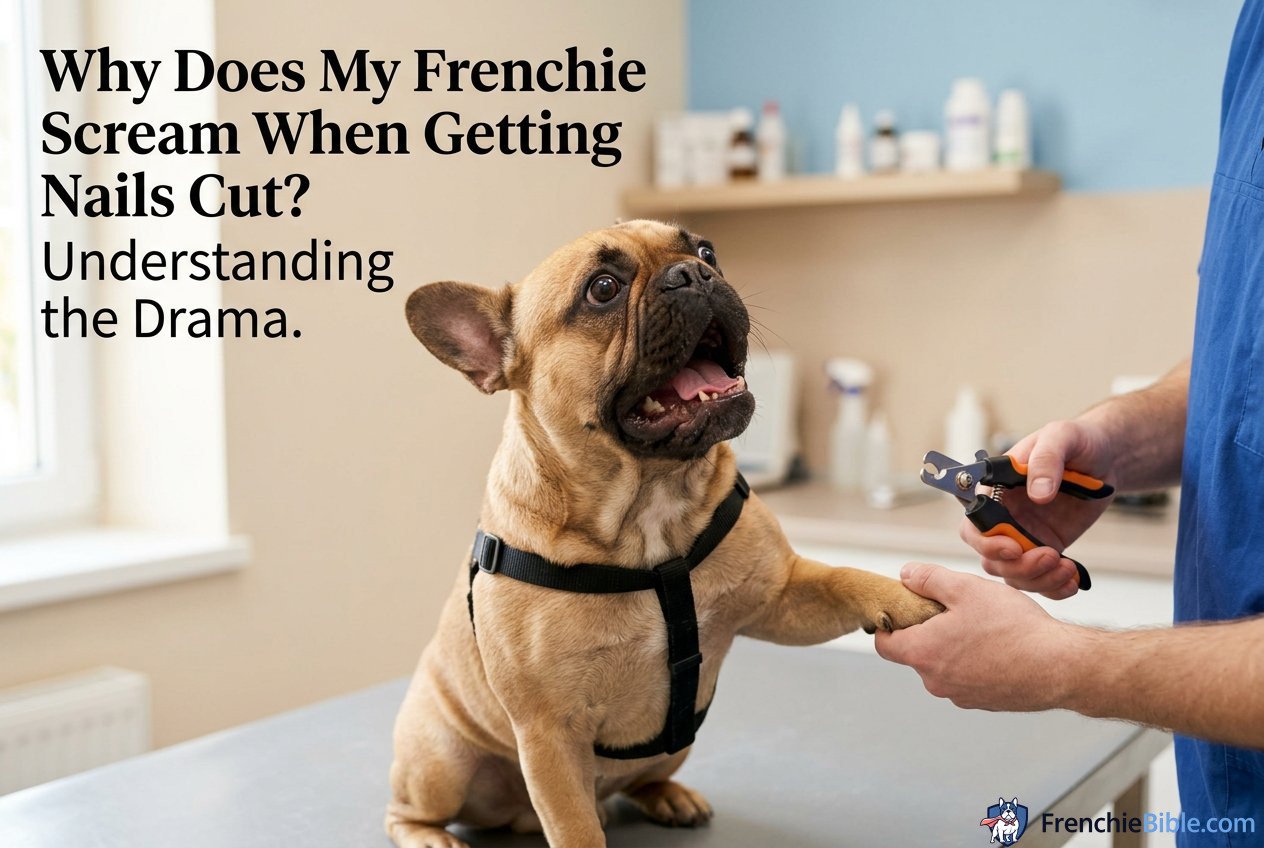
They possess a unique vocal range—from grunts and snorts to high-pitched yodels. When they feel cornered, anxious, or physically uncomfortable, they default to that high-pitched, guttural scream. In many instances, the scream happens before the clipper even makes contact with the nail. This is known as anticipatory anxiety. They are screaming because their brain is telling them to expect something terrible to happen, not necessarily because they are currently experiencing physical pain. It is the canine equivalent of a child crying before the doctor even administers a shot.
Past Trauma and Negative Associations (Classical Conditioning)
Dogs learn heavily by association, a concept known in behavioral psychology as classical conditioning. If your French Bulldog had a single severely bad experience with nail trimming in the past—perhaps a well-meaning groomer or an inexperienced owner cut the quick (the sensitive blood vessel inside the nail), causing sharp pain and bleeding—they will forever associate the sight of clippers, the smell of the grooming salon, and the handling of their paws with that traumatic event.
A Frenchie’s memory for negative, pain-inducing experiences can be surprisingly long. Furthermore, trauma isn’t only caused by cutting the quick. If they were previously held down forcefully by multiple people (a practice known as “scruffing” or forceful restraint) to get their nails clipped, the physical restraint itself becomes a massive trigger for panic. The dog learns that losing bodily autonomy leads to pain. Therefore, the scream is an evolved defense mechanism: “If I scream loud enough and fight hard enough, you will stop and let me go.”
The Anatomy of the Quick: Painful Memories
To understand the pain, we must look at the anatomy of a dog’s nail. It consists of the hard outer keratin shell (the unguis) and the inner core called the “quick” (the subunguis). The quick is a live bundle of blood vessels and extremely sensitive nerve endings. When the quick is accidentally cut, it is excruciatingly painful—akin to cutting deeply into the pink, fleshy part of a human fingernail.
French Bulldogs, particularly those with dark brindle, blue, or black coats, are highly prone to having black nails. In black nails, the quick is completely invisible from the outside, drastically increasing the risk of accidental snipping. If your dog has experienced this sharp, shocking pain, their screaming is a completely logical, self-protective response to prevent you from inflicting that pain again.
Sensory Sensitivity and Paw Handling Aversion (Hyperesthesia)
Many French Bulldogs suffer from mild hyperesthesia or general tactile sensitivity, particularly around their extremities. Their paws are packed with nerve endings designed to feel the terrain. However, some dogs simply despise having their feet touched, squeezed, or manipulated in any way.
The sensation of a traditional guillotine clipper squeezing the thick nail before it finally cuts through can feel highly unnatural and uncomfortable, generating a crushing sensation that precedes the cut. Even if it doesn’t cause outright pain, the sensory input is overwhelming. Furthermore, the loud, sharp “snip” sound of clippers can be startling to a dog with sensitive hearing, triggering an acoustic startle reflex that escalates their overall anxiety.
The Dangers of Ignoring Nail Maintenance in French Bulldogs
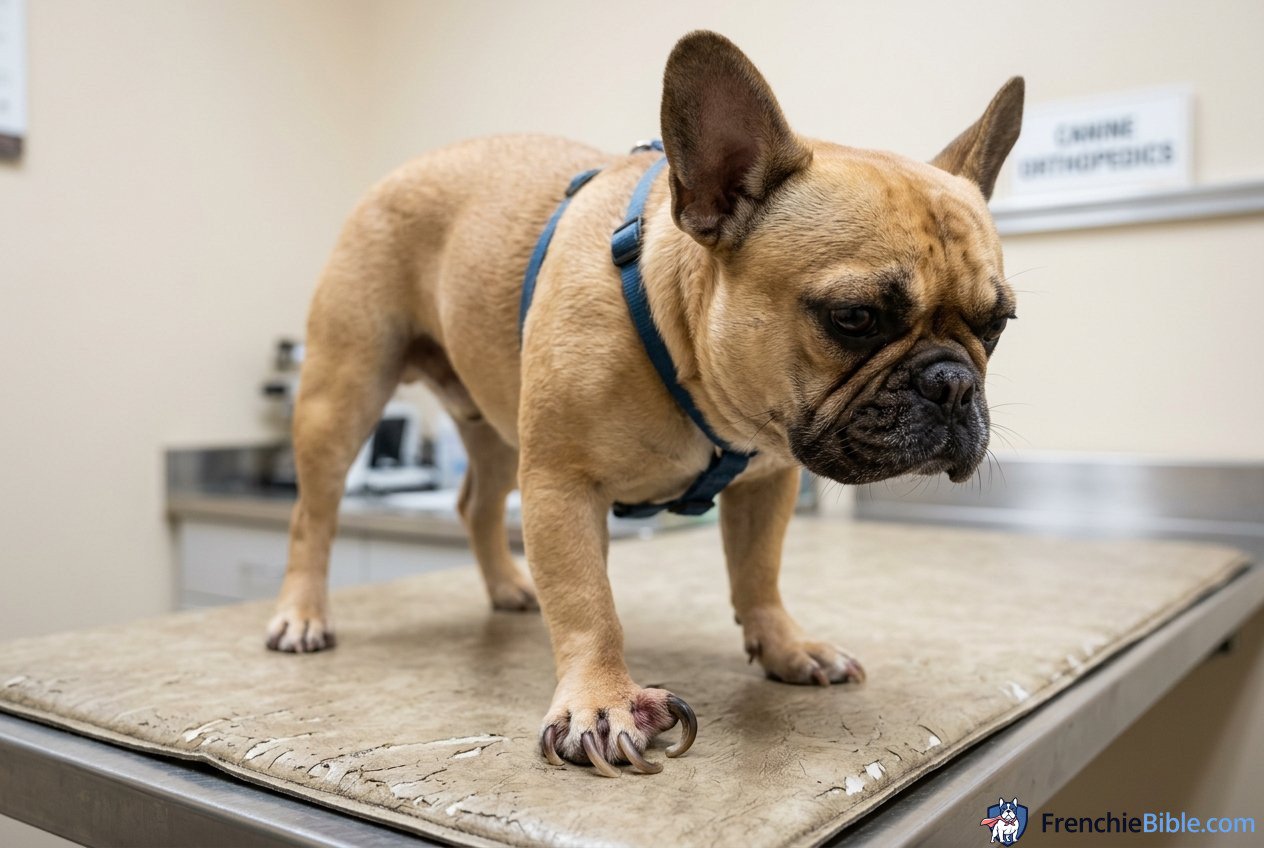
as a French Bulldog expert and breeder, one of the most frustrating and heartbreaking things I see is a French Bulldog waddling into the exam room with nails so long they resemble eagle talons. Owners often confess to me, “I can’t cut them, he screams too much, he bites, so I just let them grow.” This is a critical, sometimes devastating mistake. Overgrown nails are not just a superficial cosmetic issue; they are a severe health hazard that can drastically reduce your Frenchie’s quality of life and lifespan.
Biomechanical Issues and Joint Pain
A dog’s nails are biologically designed to provide traction while running and turning, not to bear weight while standing. When a Frenchie’s nails grow too long, they strike the hard ground with every single step. The mechanical force of the floor pushes the nail backward into the sensitive nail bed, causing chronic, throbbing pain.
To avoid this constant pain, the dog will instinctively alter their gait. They shift their weight backward onto the metacarpal and metatarsal pads of their feet, dramatically changing the angle of their joints. French Bulldogs are a chondrodysplastic breed, meaning they already suffer from a variety of genetic structural vulnerabilities, including hemivertebrae (malformed spinal bones), hip dysplasia, and patellar luxation (slipping kneecaps).
Altering their natural posture to compensate for long nails puts immense, unnatural stress on their toes, pasterns, wrists, elbows, shoulders, and spine. Over months and years, this biomechanical shift inevitably leads to early-onset osteoarthritis, joint degradation, and debilitating chronic pain. It is the canine equivalent of being forced to wear high heels that are three sizes too small, every minute of every day.
Ingrown Nails and Deep Tissue Infections
If left completely untrimmed, the nails—especially the dewclaws (the “thumbs” higher up on the inner leg)—can grow in a tight circular pattern, curling all the way around and eventually puncturing the sensitive paw pad.
An ingrown nail acts like a contaminated foreign body. It drives bacteria deep into the tissue, causing severe inflammation, excruciating localized pain, and deep abscesses. A dog with an ingrown nail will often limp heavily or refuse to walk altogether. Treating an embedded, ingrown nail is veterinary emergency. It typically requires heavy sedation or general anesthesia, surgical removal of the embedded nail fragment from the pad, thorough wound flushing, and a prolonged course of systemic antibiotics and pain management. It is a completely preventable medical crisis that stems directly from grooming neglect.
Splayed Feet and Increased Risk of IVDD
French Bulldogs are famously top-heavy, front-loaded, and lack the agility of a Border Collie. Long nails physically push their toes apart, splaying the foot out flat and destroying the structural integrity and shock-absorbing capacity of the paw. This leads to a severe loss of traction, particularly on modern smooth surfaces like hardwood, laminate, or tile floors.
A Frenchie with long, clicking nails is constantly slipping, sliding, and struggling for grip. This drastically increases their risk of acute orthopedic injuries. They are far more likely to pull a muscle, tear a cranial cruciate ligament (CCL) in their knee, or, most terrifyingly, suffer a catastrophic spinal injury. Frenchies are highly predisposed to Intervertebral Disc Disease (IVDD). A sudden slip and fall on a hard floor due to lack of nail traction can easily cause a weakened spinal disc to rupture, leading to sudden paralysis of the hind legs.
The Systematic Desensitization Method: A Step-by-Step Guide
If your Frenchie is already at the stage where they scream like a banshee at the mere sight of clippers, you cannot simply force the issue. Pinning them down, wrapping them in a towel, or muzzling them while you quickly hack away at their nails will only reinforce their deep-seated fear, damage the bond of trust between you, and guarantee that the next attempt will be infinitely worse.
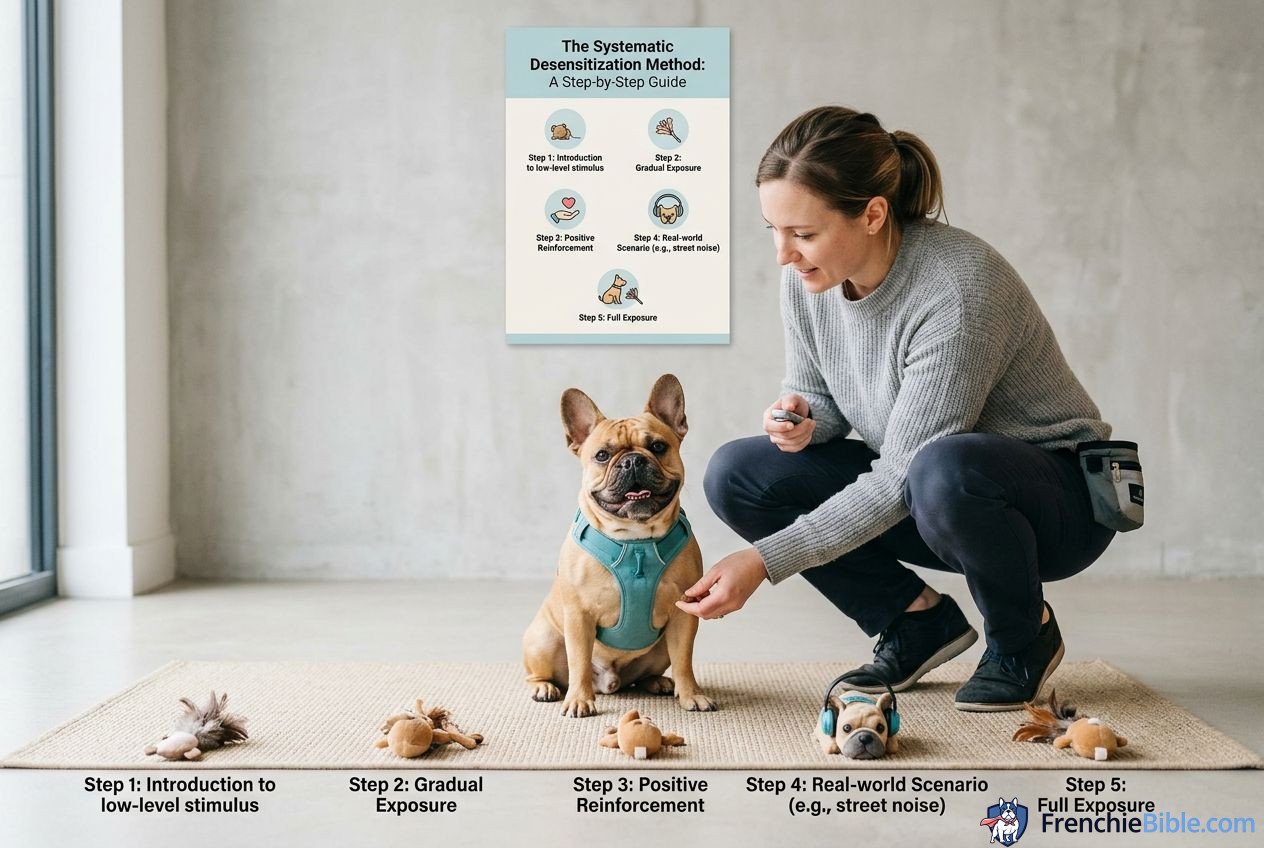
Instead, we must utilize a proven, science-based psychological protocol called Systematic Desensitization and Counter-Conditioning.
Desensitization involves gradually exposing your dog to the terrifying stimulus (paw handling, clippers, grinding sounds) at an intensity level so low that it does not trigger a fear response. Counter-conditioning involves actively changing the underlying emotional response to that stimulus from negative (fear/panic/pain) to positive (joy/food/relaxation).
This process requires immense patience, consistency, and empathy. It will not happen overnight. It may take weeks or even months of daily, highly structured five-minute sessions to rewrite your dog’s emotional brain. As an expert in canine behavior I must emphasize: there are no magical “quick fixes” or shortcuts here.
Step 1: Changing the Environment and the Tools
If your dog historically panics in the bathroom when you bring out the orange handle clippers, do not use the bathroom, and throw away the orange clippers. You need a clean slate. Buy a completely different style of nail trimmer. If you used clippers, switch to a motorized grinder (like a Dremel). If you used a grinder, switch to high-quality scissor clippers. This ensures the dog does not have immediate, ingrained negative associations with the physical tool itself. Move the training sessions to a comfortable, neutral, and relaxing location, such as the living room rug, your bed, or the sofa.
Step 2: Paw Handling Familiarity Without Tools (Consent Testing)
Before you even think about introducing the new nail tool, your Frenchie needs to learn that having their paws touched is not a threat, but rather a wonderful, rewarding experience.
1. Start when your dog is already calm and tired, perhaps after a long walk or a play session. Have them sit or lie down in a relaxed posture.
2. Reach out and briefly touch their shoulder or upper leg (a decidedly non-sensitive area). Immediately give a high-value, pea-sized treat (boiled chicken, hot dog, freeze-dried liver).
3. Over several days, gradually move your hand further down their leg. Touch the elbow, treat. Touch the forearm, treat.
4. Finally, touch the paw for half a second. Treat immediately.
5. Progress to holding the paw gently for one full second. Treat.
6. Begin to gently massage the paw pads and lightly press down on the top of the toes to naturally extend the nail. Treat continuously while doing this.
Golden Rule of Consent: If your dog pulls their paw away, tenses up, or shows whale eye (showing the whites of their eyes), you have moved too fast and crossed their threshold. Do not pull the paw back. Let them go. In the next session, go back to a less intrusive touch and build up much slower.
Step 3: Introducing the Nail Tool (Habituation)
Once your Frenchie happily and loosely offers you their paws and allows you to massage their toes, it is time to introduce the new tool.
1. Place the new clippers or grinder on the floor in the living room. Let your dog investigate it at their own pace. Every time they look at, sniff, or approach the tool, mark the behavior with a cheerful “Yes!” and give a treat.
2. Pick the tool up in your hand. Treat. Put it back down. Repeat until the act of you holding the tool causes the dog to look at you expectantly for food.
3. Hold the tool in one hand, keeping it still, while you touch their paw with your other hand. Treat.
4. If you are using a grinder (Dremel): The sound and vibration are the biggest hurdles. Turn the grinder on in the next room with the door open. Toss your dog a treat for hearing the distant hum. Gradually, over several sessions, bring the running grinder closer to the dog, treating continuously while it runs in the background.
Step 4: The Touch and Treat Phase (Counter-Conditioning)
Now, we combine the physical tool with the paw, but—and this is crucial—we still do not cut anything.
1. Gently hold your dog’s paw. Bring the clipper or grinder close and simply tap the outside shell of the nail with the metal edge.
2. The instant the tool taps the nail, say “Yes!” enthusiastically and deliver a jackpot treat (multiple treats at once).
3. Repeat this tapping process on different nails until your dog gets visibly excited when the tool taps their nail, eagerly anticipating the food reward.
4. For clippers: Squeeze the clippers in the air near the paw so they hear the mechanical “snip” sound. Say “Yes!” and treat.
5. For grinders: Turn the grinder on. Touch the smooth, non-rotating handle of the vibrating grinder to their upper leg so they feel the strange vibration without danger. Treat. Finally, touch the spinning sandpaper head to the very top edge of the nail for a split second (literally just a tap). Say “Yes!” and treat heavily.
Step 5: The First Cut – Just the Tip
When your dog is completely relaxed, breathing normally, and happily eating while the tool touches their nail, you are finally ready for the first actual cut.
1. Isolate one nail, preferably on a front paw where you have maximum visibility.
2. Shave off just the tiniest, microscopic sliver of the nail tip. Do not try to cut it short. Do not try to reach the quick. We are aiming for a 100% successful, painless, drama-free experience, not a perfect, show-ready manicure.
3. The exact moment you make the tiny cut or grind, throw a massive party. Give a handful of high-value chicken, praise them lavishly in a high-pitched voice, and end the grooming session immediately.
4. Yes, you read that correctly. Cut one single tip of one single nail, and be completely done for the day. Put the tools away. This leaves the dog with a highly positive, relieving final impression of the event. “I let them cut a nail, it didn’t hurt, and I got a mountain of chicken. That was awesome!”
Step 6: Gradual Progression and Maintenance
The next day, try to cut two nail tips using the same highly rewarding method. The following day, attempt three. Slowly and organically build up the duration of the session and the number of nails trimmed.
If at any point the dog tenses up, tries to pull away, or the screaming returns, stop immediately. You have pushed them too far, too fast. Take two steps back in the protocol for the next session to rebuild their confidence. Eventually, through sheer consistency, you will be able to trim all four paws in one sitting while your Frenchie happily relaxes and licks a treat mat.
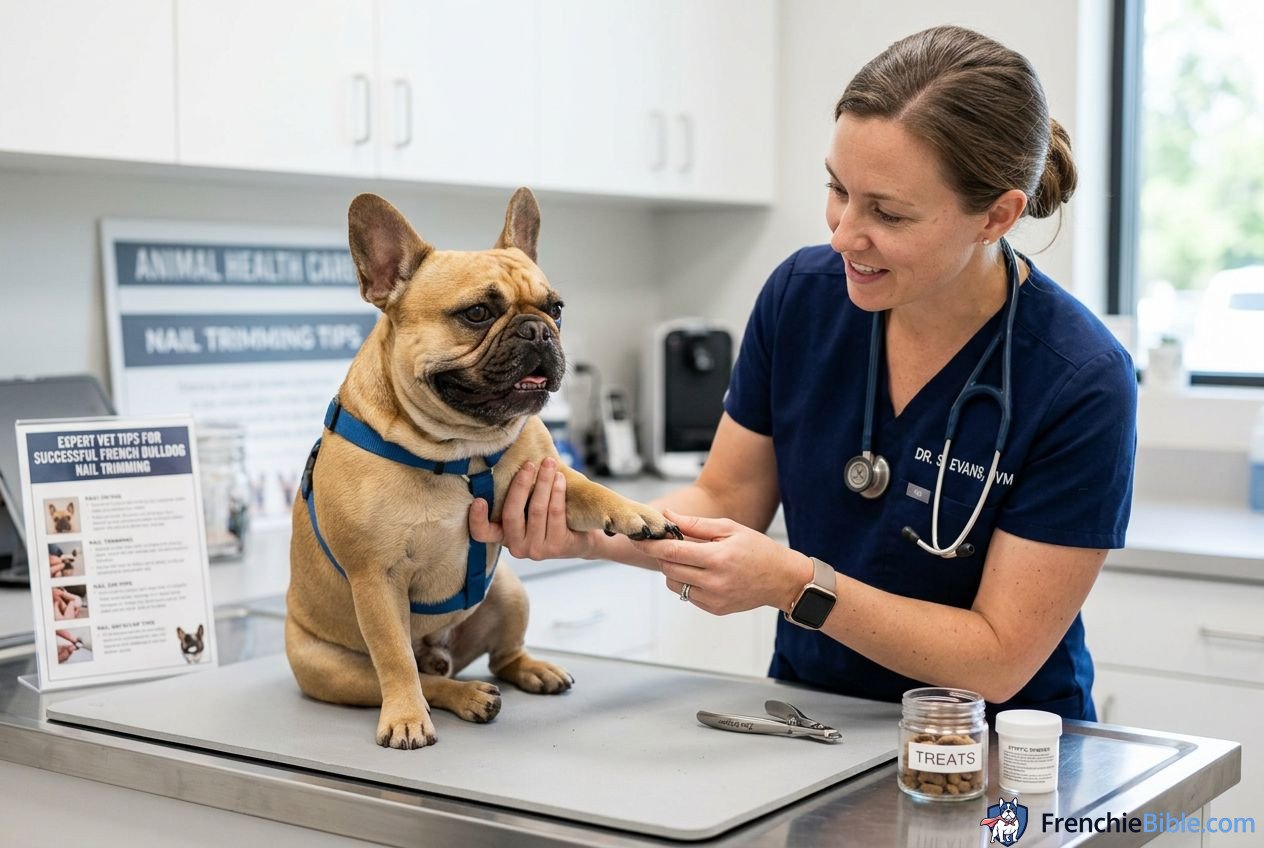
Expert Vet Tips for Successful French Bulldog Nail Trimming
Beyond the behavioral desensitization protocol, having the right physical techniques and high-quality equipment makes a world of difference when dealing with the specific anatomical quirks of the French Bulldog.
Clippers vs. Grinders (Dremel) for Frenchies
as a French Bulldog expert and breeder I strongly prefer motorized grinders (such as a Dremel Casfuy, or Wahl grinder) over traditional clippers for French Bulldogs.
Grinders work by filing the nail down slowly with a rotating sanding band. This drastically reduces the risk of accidentally hitting the quick, as you are taking off millimeters at a time rather than making one blind, committed chop. Grinders also completely eliminate the mechanical squeezing pressure and the sharp “snip” sound of clippers, both of which are massive triggers for dogs with sensory sensitivities. Furthermore, grinders leave the nail edges incredibly smooth and rounded, preventing the dog from accidentally scratching you, tearing leather furniture, or snagging their nails on carpets.
If you absolutely must use clippers, abandon the cheap guillotine-style clippers entirely. They crush the thick Frenchie nail before cutting it, causing immense pressure pain. Instead, invest in high-quality, heavy-duty, stainless steel scissor-style clippers (like Miller’s Forge) and ensure the blades are kept razor-sharp.
Finding the Quick in Dark and Light Nails
Frenchies often have a mix of white (clear) and black nails, sometimes even on the same paw.
- White/Clear Nails: These are the easiest. The quick is highly visible from the side profile as a distinct pinkish-red triangle inside the translucent nail shell. You simply cut or grind just ahead of where the pink tissue ends, leaving a small buffer zone of white nail.
- Black/Solid Dark Nails: You cannot see the quick from the outside profile. This is where most owners make painful mistakes. You must look directly at the cross-section (the bottom cut surface) of the nail as you cut or grind. Grind a very small bit at a time. Look at the center of the freshly ground tip. It will start out looking dry, white, or chalky. As you get closer to the live quick, the center of the nail will change texture and color, transforming into a dark, shiny, soft black or grayish circle (often affectionately called the “jelly bean” or “bullseye”). Stop grinding immediately when you see this shiny, soft center. If you go any further, you will draw blood.
The Right Restraint Techniques (Cooperative Care)
Never physically pin a screaming French Bulldog to the floor. Due to their brachycephalic (flat-faced) anatomy, their airways are naturally compromised. Severe stress, panic, and physical wrestling can cause them to overheat rapidly, hyperventilate, and potentially go into life-threatening respiratory distress or heat stroke.
Instead, employ “fear-free” cooperative care restraint. Have a helper hold a LickiMat (a textured silicone mat) covered in frozen peanut butter, plain Greek yogurt, or cream cheese against the wall at the dog’s nose level. While the dog is happily standing and licking the mat, stand beside them facing the same direction (do not hover over them from the front, which is intimidating canine body language). Gently pick up a paw, bending it backward at a natural angle along the dog’s body line (similar to how a farrier picks up a horse’s hoof), rather than pulling the leg unnaturally forward or outward, which strains their shoulder joints.
High-Value Treats: The Ultimate Distraction
In desensitization training, standard dry kibble will not cut it. You are asking your dog to overcome a phobia, so you must pay them accordingly. The treat must be incredibly high-value, highly pungent, and something the dog only ever gets during nail trim sessions.
Liver paste, commercial squeezy cheese, plain meat-based baby food (ensure it contains no onion or garlic powder), or tiny cubes of stinky cheese work wonders. Smearable treats are superior because the act of continuously licking is biologically soothing to dogs. Licking releases endorphins in the canine brain, which actively helps to counteract their adrenaline and anxiety.
What to Do If You Cut the Quick
Even the most seasoned veterinary professionals and master groomers occasionally make mistakes. If you accidentally cut the quick, it will bleed profusely—often looking like a crime scene—and your dog will likely yelp, flinch, and pull away.
Staying Calm is Mandatory
The single most important thing in this scenario is that you do not panic. Your Frenchie is incredibly empathetic and will instantly feed off your emotional energy. If you gasp, drop the tools, start apologizing frantically, and elevate your heart rate, you will confirm their absolute worst fear: that nail trimming is indeed a dangerous, life-threatening event. Take a deep breath. Stay perfectly calm, speak in a low, soothing, matter-of-fact voice, and immediately give the dog a massive handful of their favorite high-value treats to distract from the sting.
Using Styptic Powder
Every dog owner must have a container of styptic powder (such as Kwik Stop) open and ready on the table before starting a pedicure. Do not go looking for it after the dog starts bleeding.
If you cut the quick, take a large, generous pinch of the styptic powder and press it firmly and directly into the bleeding tip of the nail. Hold steady pressure with your finger on the powder for about 10 to 15 seconds. The powder contains a rapid clotting agent to stop the bleeding instantly, and it often contains Benzocaine, a mild topical anesthetic to numb the stinging sensation.
If you do not have styptic powder in a sudden emergency, packing the nail with cornstarch, baking flour, or pressing the nail firmly into a bar of plain soap can work as temporary substitutes, though they lack the anesthetic properties and clot slower. Once the bleeding is completely stopped, do not push your luck. Give a final jackpot of treats and end the session for the day on a calm, positive note to prevent the trauma from solidifying in their memory.
When to Seek Professional Help
There is absolutely no shame in admitting that you cannot handle your dog’s nail trims alone, especially if their anxiety has escalated to dangerous levels over the years. Your safety, and your dog’s safety, must always come first.
Veterinary Intervention and Sedation Protocols
If your French Bulldog becomes violently aggressive (biting, lunging, snapping) or goes into such a severe state of panic that their tongue turns blue or purple (cyanosis) from lack of oxygen due to struggling, stop immediately. Their brachycephalic airway is too fragile to risk the extreme stress.
In these severe cases, schedule a consultation with your veterinarian specifically to discuss grooming anxiety. We can prescribe oral pre-visit anti-anxiety medications (such as your veterinarian may recommend a anti-anxiety medication (never use without veterinary guidance) or your veterinarian may recommend a pain or anti-seizure medication (never use without veterinary guidance)) to be given at home a few hours before a trim to significantly lower their panic threshold.
For the most extreme, phobic cases where oral medications are insufficient, full, reversible chemical sedation administered in the veterinary clinic is the safest, least traumatic, and most humane option. The dog goes to sleep peacefully, the veterinary team trims the nails perfectly short and files them smooth, and the dog is reversed and wakes up with no memory of the event. This allows you to reset the clock and begin the desensitization protocol at home without the pressure of overgrown nails looming over you.
Professional Fear-Free Certified Groomers
If you prefer not to use sedation but cannot manage at home, seek out a professional dog groomer who is specifically certified in “Fear Free” or low-stress handling techniques. Standard busy grooming salons with barking dogs and fast-paced environments will only exacerbate your Frenchie’s panic.
Fear-Free certified professionals are extensively trained to read subtle canine body language, recognize signs of stress before they escalate, and use positive reinforcement rather than physical force, muzzles, or restrictive grooming loops. A good fear-free groomer will require you to book multiple short “happy visits” where the dog just eats treats on the grooming table before they ever attempt a nail trim. They will take their time, use lick mats, and respect your dog’s boundaries, acting as a crucial partner in rehabilitating your dog’s fear.
Frequently Asked Questions (FAQ)
Q: How often should I realistically be trimming my French Bulldog’s nails?
A: As a general rule of thumb, you should hear absolutely no “clicking” sound when your Frenchie walks across hard floors like tile or wood. The nails should not touch the ground when the dog is standing still. For most French Bulldogs, depending on their diet and activity level, this means trimming or grinding the nails every 2 to 4 weeks. If the nails are already severely overgrown, the quick will have grown out with the nail. In this case, you will need to grind the tips slightly once a week to encourage the sensitive quick to naturally recede back into the toebed over time.
Q: Will walking my Frenchie on concrete or asphalt naturally file their nails down so I don’t have to trim them?
A: Walking on abrasive surfaces like pavement can certainly help maintain the length of the nails to some degree, but it is rarely enough to replace actual, targeted trimming. This is especially true for a low-energy, brachycephalic breed like the French Bulldog, who shouldn’t be taking exhaustive walks, particularly in warm weather. Furthermore, walking strictly on concrete does absolutely nothing to file down the dewclaws (the thumbs), which do not touch the ground and will easily become overgrown, curled, and ingrown if ignored.
Q: Can I use a canine scratch board instead of clippers or grinders?
A: Yes, absolutely! A scratch board (essentially a flat wooden board covered in heavy-grit sandpaper) is a fantastic, stress-free alternative for dogs that are completely terrified of the handling associated with clippers and grinders. You can easily train your Frenchie, using clicker training and treats, to naturally paw and scratch at the board, effectively filing their own front nails down on their own terms. It empowers the dog and turns grooming into a fun trick. However, the limitation of scratch boards is that it is significantly harder to teach a dog to file their back feet, and impossible to file their dewclaws using this method.
Q: My French Bulldog is still a young puppy. How do I prevent this screaming fear from developing in the first place?
A: Prevention is exponentially easier than behavioral rehabilitation. Start handling your puppy’s paws on the very first day you bring them home. When they are sleepy on your lap, gently massage their toes, touch their nails, and examine their paw pads. Introduce them to the sight and sound of clippers or the gentle hum of a grinder while feeding them delicious treats. Clip tiny, microscopic tips off their nails weekly, even if they don’t strictly need trimming, just to build a positive, predictable, routine association. Reward heavily. A puppy that learns nail trims equal liver paste will grow into an adult dog that runs toward the clippers.
Q: Why do my French Bulldog’s nails seem so much thicker and harder to cut than my previous dogs?
A: Frenchies are built like small, dense tanks. They have robust, thick bone structures and strong, sturdy feet designed to support their muscular, compact bodies. Their nails anatomically reflect this heavy-duty build and tend to be significantly thicker, denser, and tougher than the nails of finer-boned breeds like Poodles or Chihuahuas. This density is another major reason why a high-quality, powerful rotary Dremel is often much more effective and comfortable for the dog than traditional clippers, which can struggle to slice cleanly through the dense keratin, causing a painful crushing sensation instead.
By fundamentally understanding the psychological roots behind your French Bulldog’s fear, committing to the slow but highly effective systematic desensitization protocol, and employing the right fear-free tools and techniques, you can successfully transform nail trimming from a screaming nightmare into a cooperative, stress-free routine. Remember, patience is your greatest and most necessary asset. Work strictly at your individual dog’s pace, celebrate the small victories, and never hesitate to seek professional veterinary or behavioral help if you feel overwhelmed. Your Frenchie’s long-term health and happiness depend on those healthy paws!
Disclaimer: We are not veterinarians and do not hold veterinary medical licenses. The information provided in this article is based on years of breeding and daily care experience and is for educational purposes only. It should not replace professional veterinary advice. Always consult with a licensed veterinarian if you have concerns about your French Bulldog’s health or before starting any new treatment.