Introduction: The Secret to a Healthy Happy Frenchie Face
as a French Bulldog expert and breeder, breeding expert, and passionate advocate for the brachycephalic breeds I have spent years examining, treating, and adoring these unique dogs. One of the most common reasons Frenchie owners bring their beloved companions into my breeding program is for dermatological issues, specifically focusing on the face. I frequently encounter distressed owners with dogs suffering from red, inflamed, intensely itchy, and sometimes foul-smelling facial folds.

The quintessential charm of a French Bulldog lies undoubtedly in their expressive, smushed faces, adorned with adorable, deep wrinkles and a distinctive, short snout. These features are the hallmark of the breed and what makes them so universally beloved. However, these very features that melt our hearts are also breeding grounds for a host of dermatological issues, most notably severe fungal and bacterial infections.
Related Reading: Training & Behavior | Frenchie Puppy Guide | Best Food for Frenchies
Understanding the unique anatomy of your Frenchie and adopting a rigorous, proactive grooming routine is not just about keeping them looking cute or smelling fresh; it is a fundamental aspect of their overall health, comfort, and well-being. The deep crevices of their wrinkles trap moisture, dirt, food particles, dead skin cells, and tears, creating a perfect, dark, and warm microenvironment for opportunistic yeast and bacteria to thrive. Similarly, their snouts are highly prone to severe dryness, cracking, and a condition known as hyperkeratosis, which can lead to intense discomfort, pain, bleeding, and secondary infections.
In this comprehensive, deep-dive guide, we will explore the world of French Bulldog facial care from a breeder’s perspective. We will examine the physiological and anatomical reasons behind their high susceptibility to facial infections, outline the critical differences between wrinkle pastes and snout balms, dissect the essential ingredients to look for (and those to stringently avoid), and provide a curated, medically sound list of the best products available on the market today. Furthermore I will provide an exhaustive step-by-step tutorial on how to properly clean and protect your Frenchie’s face, behavioral tips to make grooming a positive experience, along with holistic preventative strategies encompassing diet and environment to ensure your furry companion remains healthy, comfortable, and completely infection-free.
The Unique Anatomy of a French Bulldog’s Face: Why Wrinkle Care is Non-Negotiable
To truly appreciate the absolute importance of daily facial care in French Bulldogs, one must first understand their unique anatomy and how they evolved to have these features. Frenchies are a brachycephalic breed, a term derived from Greek meaning “short head.” This anatomical structure results in several distinctive physiological features that require highly specialized attention from their owners.
The Evolution and Structure of Brachycephalic Faces
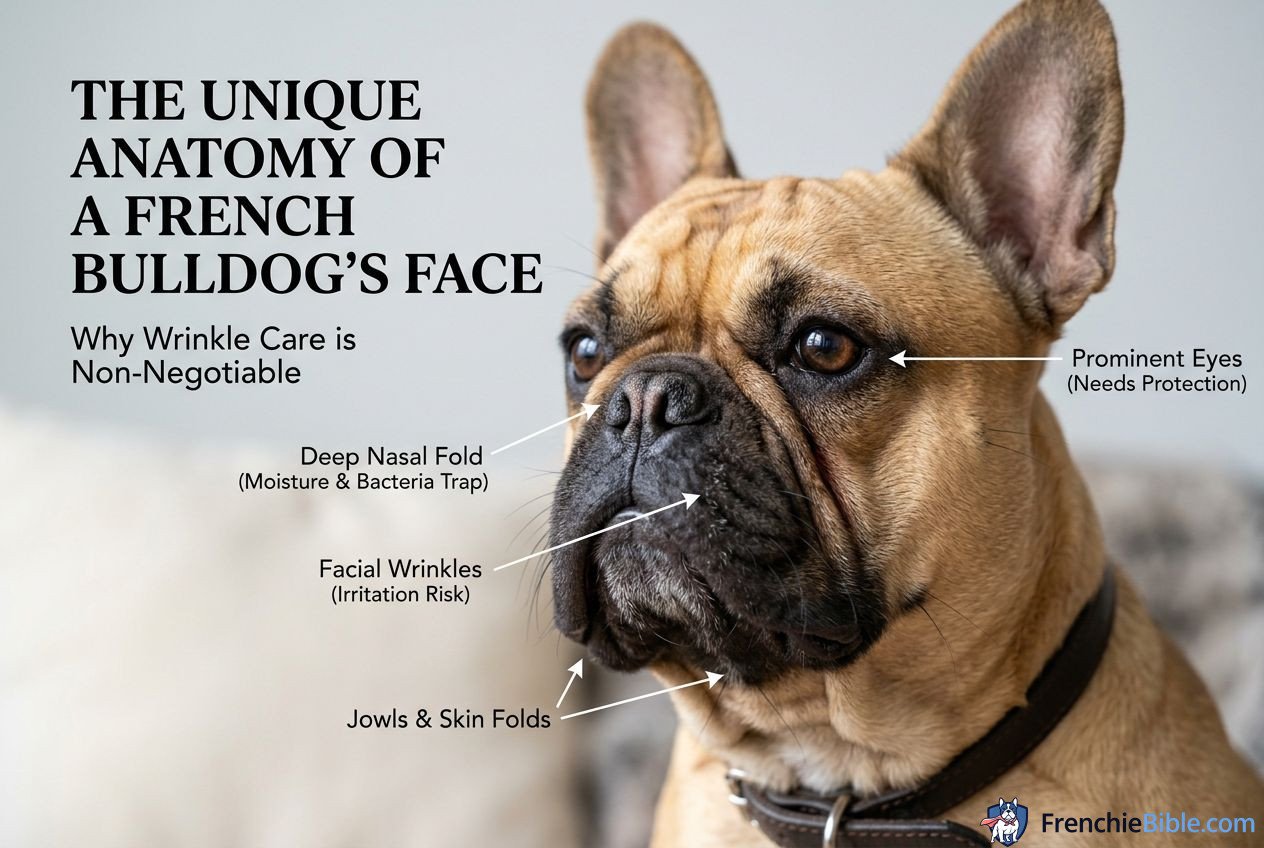
The French Bulldog’s skull is significantly shortened compared to other dog breeds, yet they possess the same amount of skin and facial tissue as a dog with a standard muzzle. Because the underlying bone structure is compressed, this excess skin has nowhere to go but to fold over itself. This genetic trait, selectively bred over generations for aesthetic appeal, results in the deep facial wrinkles, the prominent “nose rope” (the heavy fold of skin sitting directly above the nose), and the deep pockets under the eyes.
While visually appealing, this compacted anatomy severely compromises the natural ventilation of the skin. In a standard dog, the skin is stretched taut over the muzzle, allowing air to circulate freely, evaporating any incidental moisture and keeping the skin dry and healthy. In a Frenchie, the skin is heavily folded, creating deep valleys where air cannot penetrate.
The Adorable but Problematic Facial Folds
These deep folds are particularly prominent around the nose and under the eyes, and they act as magnets for moisture and debris. The problem arises when these folds remain persistently damp. This moisture accumulation can originate from numerous daily sources:
- Excessive Tearing (Epiphora): Frenchies are highly prone to excessive tearing due to their prominent eyes, shallow eye sockets, and often, anatomical abnormalities in their tear ducts (such as imperforate puncta or entropion). This constant production of tears runs directly down into the facial folds, keeping them perpetually wet.
- Saliva and Drool: Due to their lip structure and potential breathing efforts, drool from panting, playing, or eating can easily accumulate in the lower folds around the mouth and jowls.
- Environmental Moisture: High humidity, rain, dew from morning grass, or even just messy drinking from a water bowl can leave the folds saturated.
- Sweat and Sebum Production: Like all dogs Frenchies produce natural oils (sebum) to protect their skin and hair. In the confined, unventilated spaces of their wrinkles, these oils build up rapidly.
- Trapped Debris: Food crumbs, dust, pollen, and dirt easily become lodged deep within the folds during normal daily activities.
When these dark, warm, and oxygen-deprived folds remain moist and filled with organic matter, they become a literal incubator for microorganisms. The lack of airflow prevents the area from drying out naturally, allowing naturally occurring yeast and bacteria populations to explode to pathogenic levels.
The Susceptibility and Vulnerability of the Frenchie Snout
The Frenchie’s snout is another critical area of concern that requires targeted care. Due to their brachycephalic nature, their nasal passages are compressed, and their snouts are often thrust forward, exposing them constantly to harsh environmental elements. Frenchies, along with Pugs and Bulldogs, are notorious for developing a painful condition known as nasal hyperkeratosis.
Nasal hyperkeratosis occurs when the body produces excessive amounts of keratin, the tough protein that makes up hair, nails, and the outer layer of skin. This overproduction causes the skin on the nose to thicken drastically, dry out, and form a hard, crusty, rough layer that looks almost like a dry sponge or bristles.
This condition is absolutely not just a cosmetic issue. A dry, cracked, and hyperkeratotic nose can be agonizingly painful for your dog. It can significantly impair their sense of smell, which is the primary way they interpret and interact with the world around them. A dog with a compromised sense of smell can become anxious or disoriented.
More importantly from a medical perspective, the deep cracks and fissures in a severely dry snout provide direct entry points for environmental bacteria and fungi. What starts as dry skin can rapidly escalate into a deep tissue infection (pyoderma) that requires systemic antibiotics and long-term veterinary care. A healthy dog’s nose should be naturally moist, smooth, and slightly cool to the touch. When the protective barrier of the nose is compromised, immediate intervention with a high-quality snout balm is necessary.
The Microbiology of the Wrinkles: Understanding Fungal and Bacterial Infections
as a French Bulldog expert and breeder I cannot emphasize enough the importance of recognizing the microbiology at play on your dog’s skin. The skin is not a sterile environment; it is home to a vast microbiome of microscopic organisms. In a healthy dog, these organisms live in a balanced state of harmony. However, the unique anatomy of the French Bulldog’s facial folds constantly threatens this balance.

The Primary Culprits: Yeast and Bacteria
The primary culprits behind the chronic and painful facial infections in French Bulldogs are specific types of yeast and bacteria that thrive in warm, moist environments.
- Yeast Infections (Malassezia pachydermatis dermatitis): Yeast is a type of fungus that naturally and normally resides on the skin and in the ears of all dogs in extremely small, controlled numbers. However, when the environment changes—specifically, when it becomes overly warm, dark, and moist like the inside of an uncleaned wrinkle—the yeast populations explode, resulting in a fungal infection. Yeast infections are highly characteristic. They are usually accompanied by a distinct, pungent, musty odor that many owners describe as smelling like corn chips, old cheese, or dirty socks. The skin becomes greasy, inflamed, hyperpigmented (turning dark brown or black), and causes intense, maddening itching for the dog.
- Bacterial Infections (Canine Pyoderma): Bacterial infections often occur either secondary to a yeast infection or when the skin barrier is physically broken down due to the dog scratching or due to maceration (the softening and breaking down of skin resulting from prolonged exposure to moisture). Staphylococcus pseudintermedius is the most common bacteria involved in these infections. Bacterial infections typically present with severe redness, swelling, localized heat, pus-filled bumps (pustules), crusting, and a distinctively foul, rotting, or metallic smell.
- Mixed Infections (The Double Threat): In my years of breeding practice, it is incredibly common for Frenchies to suffer from mixed infections, where both pathogenic yeast and bacteria are proliferating simultaneously. The yeast creates inflammation that damages the skin barrier, paving the way for bacteria to invade, and vice versa. This complicates the treatment significantly and requires a comprehensive, multi-pronged approach utilizing specific antifungal and antibacterial agents.
Recognizing the Warning Signs of a Skin Infection
Being highly vigilant and observing your dog’s face daily is your first line of defense. Catching an infection early makes treatment exponentially easier. Look out for the following warning signs:
- Erythema (Redness and Inflammation): The skin inside the folds, around the edges of the wrinkles, or on the snout appears angry, bright red, swollen, and puffy.
- Unpleasant Odor: A strong, unusual smell emanating from the face is often the very first clinical sign of a yeast or bacterial overgrowth. A healthy dog’s face should not have a strong odor.
- Abnormal Discharge (Exudate): You may notice a brown, yellow, greenish, or white discharge oozing from deep within the wrinkles. This can manifest as a crusty buildup or a slimy, slippery substance.
- Alopecia (Hair Loss): The constant friction of the swollen folds rubbing against each other, combined with the infection attacking the hair follicles, can cause noticeable hair loss around the affected areas.
- Pruritus (Intense Itching and Rubbing): Your Frenchie may constantly and obsessively rub their face against furniture, carpets, the grass, or your legs in a desperate attempt to relieve the intense itchiness. They may also scratch their face violently with their paws, which is extremely dangerous as it can cause corneal ulcers if they accidentally scratch their eye, and it introduces bacteria from their paws directly into the facial infection.
- Crusty Scaly, or Flaky Skin: The skin may appear dry, crusty, flaky, or thickened (lichenification), particularly around the edges of the folds or extensively on the snout.
- Pain Sensitivity, and Behavioral Changes: Your dog may flinch, pull away, whine, or even snap when you try to touch, pet, or clean their face. A dog in chronic pain may also become lethargic or lose their appetite.
The Vicious Cycle of Moisture Heat, and Infection
The development of facial infections in French Bulldogs operates as a relentless, vicious cycle. It begins with their anatomical genetic predisposition—the deep, unventilated folds.
Moisture (from tears, saliva, environment) inevitably accumulates in these deep crevices, immediately creating a warm, highly humid, micro-environment. This environment acts as an incubator, allowing the natural, baseline flora of yeast and bacteria to rapidly overgrow.
As these microorganisms multiply exponentially, they produce toxic byproducts and enzymes that severely irritate and damage the skin cells, causing intense inflammation. This inflammatory response by the dog’s immune system leads to further fluid production (serous exudate) leaking into the fold, which ironically adds more moisture to the environment, further accelerating the growth of the pathogens.
Furthermore, the intense itching caused by the infection forces the dog to scratch and rub, physically breaking the protective epidermal skin barrier and allowing secondary, deeper bacterial infections to take hold. Breaking this destructive cycle absolutely requires meticulous, daily cleaning, exhaustive and thorough drying, and the consistent application of protective, medically formulated barriers like high-quality wrinkle pastes and snout balms.
Wrinkle Paste vs. Snout Balm: Understanding the Critical Differences
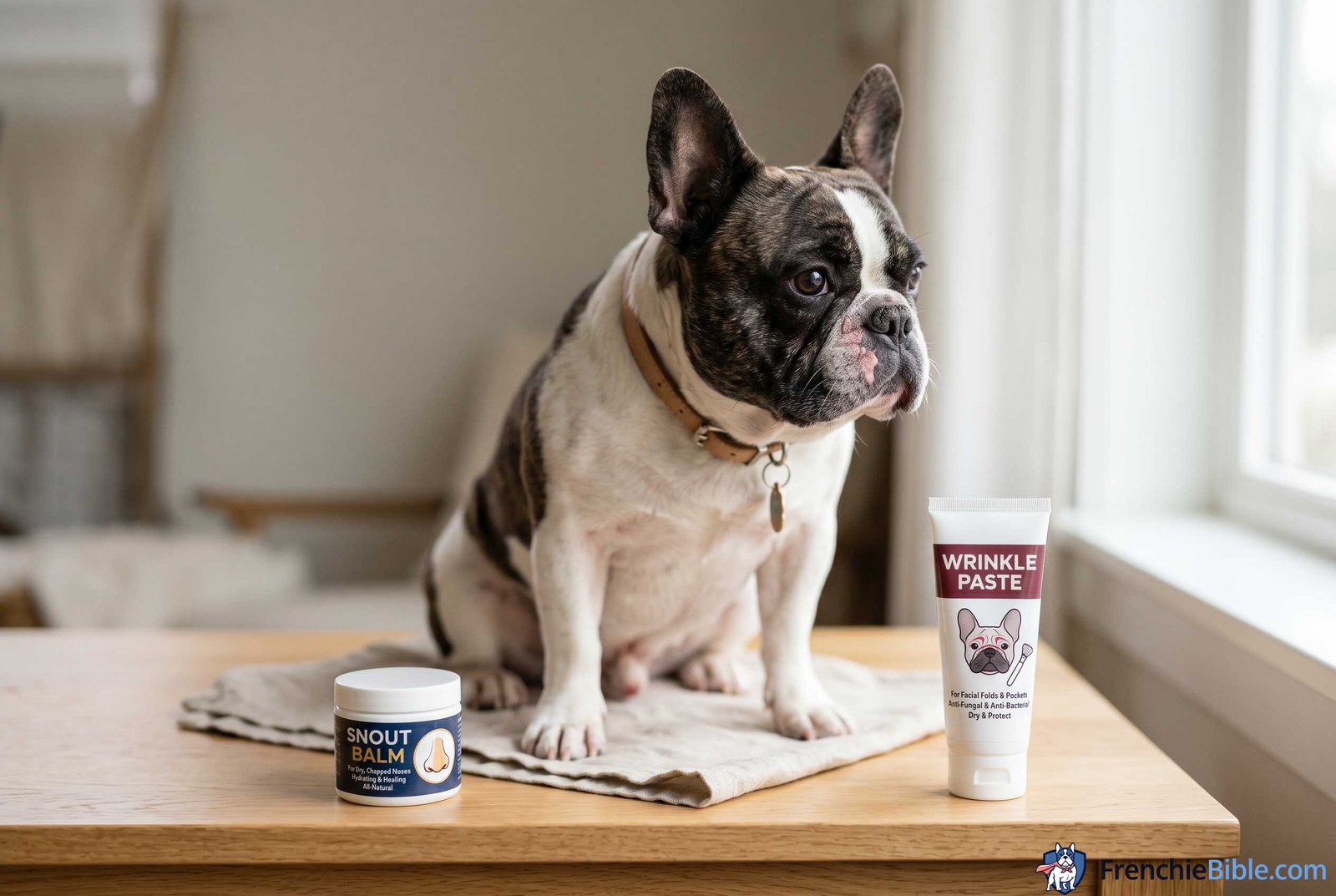
A very common point of confusion among new and even experienced Frenchie owners is the difference between wrinkle paste and snout balm. Walk into any pet store, and you’ll see dozens of small tins and tubes. While both are absolutely essential tools in your dog grooming arsenal, they serve distinctly different physiological purposes, are formulated with entirely different textures, and utilize different active ingredients.
The Specific Role of Wrinkle Paste
Wrinkle paste is highly specialized and specifically designed to address the unique, challenging environment of the deep facial folds. Its primary, critical functions are:
- Creating an Impenetrable Water-Repellent Barrier: A high-quality wrinkle paste acts primarily as a physical, hydrophobic shield. It forms a thick, dense, water-resistant layer on the skin deep inside the fold. This barrier actively prevents external moisture (tears, saliva, drinking water) from penetrating the skin and recreating that damp, infection-friendly environment.
- Soothing Severe Inflammation: Pastes are heavily loaded with soothing, calming ingredients like zinc oxide, shea butter, or high-concentration aloe vera to calm irritated, bright red skin, reduce swelling, and provide immediate physical relief to the dog.
- Combating Microorganisms (Antimicrobial Action): Many premium wrinkle pastes are formulated with natural antibacterial and antifungal agents (like coconut oil, neem oil, or specific plant extracts) to actively help control and suppress the populations of yeast and bacteria residing in the folds.
- Preventing Chafing and Friction: The paste provides a thick, lubricating layer that significantly reduces the mechanical friction between the heavy folds of skin rubbing against each other, preventing chafing, micro-abrasions, and subsequent irritation.
Wrinkle pastes are typically very thick, creamy, dense, and highly opaque (often stark white due to zinc oxide). They are intentionally designed not to absorb quickly. Instead, they are designed to stay put exactly where you apply them, sitting on top of the skin inside the fold to provide long-lasting, heavy-duty protection throughout the day.
The Specific Purpose of Snout Balm
Snout balm, on the other hand, is formulated specifically for the exposed, delicate, and often damaged skin of the nose leather. Its primary physiological functions are:
- Deep Penetrating Moisturization: Snout balms are packed with highly emollient, penetrating ingredients like varied botanical oils, rich butters, and natural waxes. These ingredients are designed to soak deeply into the epidermis to hydrate severely dry, cracked, and thirsty skin.
- Cellular Healing and Tissue Repair: They almost always contain ingredients that actively promote skin healing, cellular regeneration, and elasticity, which is absolutely crucial for treating conditions like hyperkeratosis and repairing deep, painful fissures.
- Environmental and Sun Protection: Many high-quality snout balms include natural sunscreens (like certain seed oils) to protect the sensitive, often unpigmented areas of the nose from damaging UV rays, windburn, and extreme cold.
- Softening and Exfoliating Crusts: For dogs suffering from severe hyperkeratosis, specialized snout balms help chemically and physically soften the thick, hardened, crusty layers of excessive keratin, allowing them to gently and safely slough off naturally over time without causing bleeding.
Snout balms are usually much thinner, waxier, smoother, and more transparent than wrinkle pastes. They are specifically designed to melt on contact with the dog’s body heat and be rapidly absorbed deep into the skin tissues rather than just sitting superficially on top of it.
Can You Use Them Interchangeably in a Pinch?
While in an absolute emergency, using one product for the other is marginally better than leaving the area completely untreated, as a French Bulldog expert and breeder, it is highly recommended to use the specific product designed for the specific anatomical area to achieve actual clinical results.
Using a rapidly absorbing snout balm deep inside a wet wrinkle will likely not provide the necessary, thick, water-repellent barrier required to keep tears out, and could potentially make the fold too greasy, actually trapping environmental debris and dirt. Conversely, using a thick, opaque wrinkle paste on a dry snout will not provide the deep, penetrating moisturization needed to heal cracked skin at a cellular level, and the thick, paste-like nature can be highly uncomfortable for the dog to have smeared across their nose, often leading them to desperately rub it off.
Deep Dive into Key Ingredients: What to Look For and What to Strictly Avoid
When selecting a wrinkle paste or snout balm for your highly sensitive French Bulldog, the ingredient list on the back of the tin is your most important guide. Do not be swayed by cute packaging; read the label. as a French Bulldog expert and breeder I strongly advocate for natural, organic ingredients whenever clinically possible, while firmly recognizing the proven efficacy of certain safe, scientifically established compounds.
Harnessing Nature: Natural Antifungal and Antibacterial Properties
Look for products that harness the potent power of nature to safely combat localized infections without the use of harsh, systemic antibiotics:
- Coconut Oil (Cocos nucifera): An absolute powerhouse ingredient in canine skincare. It is highly moisturizing, absorbs well, and crucially contains high levels of lauric acid and caprylic acid. These medium-chain fatty acids have scientifically proven, potent antibacterial, antiviral, and antifungal properties, making it excellent for suppressing yeast.
- Hemp Seed Oil (Cannabis sativa): Exceptionally rich in essential fatty acids (Omega-3 and Omega-6 in a perfect ratio), it helps dramatically reduce systemic and localized inflammation and promotes rapid cellular healing. It also possesses mild natural antibacterial properties and strengthens the skin’s natural lipid barrier.
- Neem Oil (Azadirachta indica): An ancient Ayurvedic remedy with incredibly strong, broad-spectrum antifungal, antibacterial, antiviral, and anti-inflammatory properties. It is a highly effective, natural treatment for stubborn yeast infections and acts as a mild natural insect repellent.
- Calendula Extract (Calendula officinalis): Derived from marigold flowers, calendula is a potent natural anti-inflammatory, antiseptic, and astringent. It deeply soothes irritated skin, reduces swelling, and rapidly promotes wound healing and tissue regeneration.
- Chamomile Extract (Matricaria chamomilla): Widely known for its profound calming properties, chamomile helps significantly reduce redness, swelling, and the intense sensation of itching. It is incredibly gentle and perfect for sensitive facial skin.
- Jojoba Oil (Simmondsia chinensis): Not actually an oil, but a liquid wax that closely mimics the natural sebum produced by a dog’s skin. It is highly moisturizing, non-comedogenic (won’t clog pores), and helps regulate oil production in the folds.
Soothing Hydrating, and Healing Agents
These ingredients are vital for repairing the damaged skin barrier, locking in hydration, and providing immediate physical comfort:
- Shea Butter (Vitellaria paradoxa): An exceptional, dense moisturizer that deeply hydrates, softens, and conditions the skin. It contains high concentrations of vitamins A and E and has notable anti-inflammatory properties.
- Vitamin E (Tocopherol): A powerful, essential antioxidant that helps protect the skin cells from free radical damage, promotes rapid healing of fissures, and acts as a natural preservative for the balm itself.
- Aloe Vera (Aloe barbadensis miller): Provides immediate, profound cooling relief to hot, inflamed, angry skin. It hydrates deeply and contains enzymes that help speed up the healing process of micro-abrasions.
- Zinc Oxide: A highly common and incredibly effective active ingredient in premium wrinkle pastes (and human diaper rash creams). Zinc oxide is unmatched in its ability to create a thick, physical, highly water-repellent barrier. It also possesses strong astringent and soothing properties, rapidly calming irritated skin. Veterinary Note: Zinc oxide is perfectly safe for dogs in topical applications, but care should be taken that they do not ingest massive quantities of it.
- Beeswax (Cera alba): Acts as a highly effective natural humectant, drawing moisture into the skin while simultaneously providing a breathable, protective physical layer that locks that moisture in and protects against environmental irritants.
Toxic Harsh, or Irritating Ingredients to Steer Clear Of
You must rigorously avoid products containing the following ingredients, as they can cause severe irritation, painful contact dermatitis, allergic reactions, or even systemic toxicity in dogs:
- Artificial Fragrances and Perfumes (Parfum): These are a leading cause of severe contact dermatitis and allergic reactions in dogs. A dog’s sense of smell is incredibly acute; strong artificial scents right on their face can be overwhelming and stressful. Always opt for strictly unscented products or those very mildly, naturally scented with safe, heavily diluted botanical extracts.
- Parabens (e.g. Methylparaben Propylparaben Butylparaben): These are cheap, synthetic preservatives that have been linked in numerous studies to endocrine (hormone) disruption and potential long-term health risks. There is no place for them in high-quality pet care.
- Sulfates (e.g. Sodium Lauryl Sulfate – SLS Sodium Laureth Sulfate – SLES): Harsh, industrial-grade foaming detergents commonly found in cheap shampoos and wipes. They aggressively strip the skin of its essential natural lipid oils, leading to severe dryness, micro-cracks, and intense irritation.
- Petroleum Jelly (Mineral Oil / Vaseline): While it does technically create a barrier, petroleum jelly is a byproduct of crude oil refining. It is completely occlusive—it does not allow the skin to breathe or exchange gases. It can aggressively trap heat, sweat, and existing bacteria inside the fold, essentially creating a greenhouse effect for infections. Furthermore, it offers absolutely zero nutritional, hydrating, or healing benefits to the skin tissues.
- Alcohols (e.g. SD Alcohol Isopropyl Alcohol): Extremely astringent, drying, and incredibly painful when applied to already sensitive, inflamed, or micro-abraded skin. They strip the moisture barrier entirely.
- Tea Tree Oil (Melaleuca Oil) – Use with Extreme Caution: While highly effective against bacteria and fungi, tea tree oil MUST be properly and heavily diluted. In high concentrations, it is highly neurotoxic to dogs. I generally advise owners to avoid it in facial products altogether to eliminate any risk of accidental ingestion or eye irritation.
Veterinary Top Recommendations: The Best Wrinkle Pastes for French Bulldogs
Based on extensive clinical efficacy, rigorous ingredient safety analysis, and overwhelmingly positive long-term outcomes in my breeding experience, here are my definitive top recommendations for French Bulldog wrinkle pastes.
1. Squishface Wrinkle Paste
This product is arguably considered the gold standard within the French Bulldog and English Bulldog communities, and for excellent reason. Squishface Wrinkle Paste is scientifically formulated specifically for the unique needs of wrinkly breeds.
- Pros: It is incredibly, almost unbeatably effective at creating a durable, long-lasting, water-repellent barrier. The thick, dense consistency ensures it stays exactly in place for a long time, even on highly active dogs. It contains a very simple, limited ingredient list, making it exceptionally ideal for allergy-prone dogs. The primary active ingredient is Zinc Oxide, which provides excellent soothing, astringent, and protective properties. Furthermore, it is renowned for its ability to actively help fade and remove dark tear stains over time by preventing the porphyrins in tears from oxidizing on the fur.
- Cons: The very thick, stark white paste can be slightly messy to apply initially and will leave a highly visible white residue in the dog’s folds (though many owners don’t mind this as it confirms the product is present). It is also on the more expensive side of the spectrum.
- Veterinary Verdict: Highly recommended as the premier daily preventative measure and for actively treating mild to moderate fungal or bacterial irritation. The limited ingredient profile and heavy barrier action make it a clinical favorite.
2. Natural Dog Company Wrinkle Balm
This balm is a truly fantastic, all-natural, holistic alternative to heavy zinc pastes. It comes in a convenient tin or a very handy twist-up stick, making precise application relatively easy.
- Pros: It is densely packed with deeply healing, 100% organic ingredients including hemp seed oil, shea butter, coconut oil, rosemary extract, and calendula. It operates differently than Squishface; it not only protects the fold but actively sinks in to heal and nourish the irritated skin at a cellular level. It has a very pleasant, light, natural herbal scent and absorbs relatively well without leaving a heavy, crusty white residue. It possesses very strong natural antifungal properties.
- Cons: Because it is structurally softer and oilier than a traditional zinc paste, the physical barrier it creates may not last quite as long in dogs that suffer from severe, constant tearing. It may require more frequent application.
- Veterinary Verdict: An absolutely excellent choice for routine, daily maintenance, for dogs with highly sensitive skin, or for owners who strictly prefer organic, plant-based remedies. Highly effective against early-stage yeast proliferation.
3. Petpost Bulldog Wrinkle Cream
Petpost is a well-established, trusted brand in specific bulldog care, and their wrinkle cream provides a highly solid, reliable choice.
- Pros: It features a balanced formulation containing high-quality coconut oil and soothing aloe vera, providing an excellent equilibrium of moisturization and cooling relief. It is significantly creamier and easier to spread than the thicker zinc pastes, which can be immensely helpful if your dog’s wrinkles are currently very sensitive, painful, or inflamed, as it requires less pressure to apply.
- Cons: The physical barrier effect is slightly less pronounced and durable than Squishface, so it may need to be applied more frequently throughout the day for dogs with heavy tear production.
- Veterinary Verdict: A very strong, reliable mid-range option for daily prophylactic cleaning and light to moderate environmental protection.
4. Bodhi Dog Wrinkle Paste
Bodhi Dog offers an excellent organic, completely plant-based paste that heavily focuses on natural, botanical healing.
- Pros: Made entirely from high-grade plant-based ingredients, it is a phenomenal choice for eco-conscious owners. It contains a rich blend of shea butter, jojoba oil, and soothing aloe vera. It provides a highly decent moisture barrier and excels at helping to rapidly soothe redness and acute inflammation.
- Cons: The consistency can be slightly temperamental; it can vary depending on the ambient temperature, sometimes becoming a bit soft or runny in very warm weather, making application slightly messy.
- Veterinary Verdict: A very strong contender for owners specifically seeking a purely organic, vegan option that relies on botanical efficacy rather than mineral barriers.
Veterinary Top Recommendations: The Best Snout Balms for French Bulldogs
When it comes to aggressively treating and preventing painful nasal hyperkeratosis and keeping that vital snout healthy, moist, and functional, these are my definitive top clinical picks.
1. Natural Dog Company Snout Soother
This is, without a doubt, the undisputed, heavyweight champion of snout balms. It is specifically, medically formulated to aggressively manages hyperkeratosis and severely dry, cracked noses.
- Pros: An incredibly rich, deeply hydrating, powerhouse formula containing organic hemp seed oil, shea butter, coconut oil, grapeseed oil, jojoba oil, and chamomile. Crucially, it contains natural SPF elements to protect the delicate nose leather from sun damage. It is clinically highly effective at rapidly softening and aiding in the removal of thick, crusty hyperkeratosis over a surprisingly short period.
- Cons: It is inherently quite oily and rich. If your dog immediately rubs their nose vigorously on the carpet or furniture after application, it might leave a temporary small grease mark.
- Veterinary Verdict: The absolute best, most effective product on the market for healing severely damaged, cracked snouts. It is a mandatory staple in my breeding program’s pharmacy.
2. The Blissful Dog Frenchie Snout Butter
This exceptional product is uniquely tailored specifically for the physiological needs of French Bulldogs and other extreme brachycephalic breeds.
- Pros: It utilizes an intensely rich, proprietary blend of shea butter, olive oil, castor oil, and avocado oil specifically designed for maximum, deep-tissue moisturization. It is highly effective at keeping the nose incredibly soft, supple, and healthy. Furthermore, the packaging often features delightful, breed-specific Frenchie designs, adding a touch of charm.
- Cons: While excellent, it may require slightly more frequent, repetitive application than the heavy-duty Snout Soother for the absolute most severe, advanced cases of deeply fissured hyperkeratosis.
- Veterinary Verdict: A truly fantastic, highly reliable daily maintenance balm specifically designed to prevent dryness and cracking long before it ever starts.
3. Burt’s Bees for Dogs Paw & Nose Lotion
A highly reliable, very accessible, and gentle option from an internationally trusted, natural brand.
- Pros: Formulated heavily with soothing chamomile and rosemary extract, it is exceptionally gentle. It is formulated as a lighter lotion rather than a heavy, dense wax or balm, making it incredibly quick to absorb completely into the skin. It is widely available in most pet stores and is very budget-friendly.
- Cons: Because it is a much lighter, water-based lotion, it is simply not as clinically effective for aggressively treating severe, established hyperkeratosis or deeply cracked, bleeding noses. It lacks the heavy staying power of wax-based balms.
- Veterinary Verdict: A very good, affordable option for dogs with only very mild, occasional nasal dryness or for puppies needing simple preventative maintenance.
The Definitive Step-by-Step Guide: How to Clean and Protect Your Frenchie’s Face
Having the absolute best, most expensive products in the world is completely useless if your application technique is flawed. In fact, a sloppy, rushed, or incorrect cleaning routine can actually do significantly more harm than good by physically pushing dirt deeper into the fold apex or by leaving the area dangerously moist. Here is the exact, exhaustive protocol I teach all my French Bulldog clients.
Step 1: Gathering Your Supplies and Preparation
Before you even touch your dog, gather absolutely everything you need in one place so you do not have to leave your dog unattended or break their concentration. You will need:
- Unscented, hypoallergenic dog wipes. (I highly recommend wipes specifically designed for eyes/wrinkles containing chlorhexidine or your veterinarian may recommend a antifungal medication (never use without veterinary guidance) if your vet has recommended them, otherwise, plain, high-quality, water-based wipes without harsh chemicals).
- Abundant soft, clean, dry tissues, high-quality cotton pads, or a very soft, highly absorbent dry microfiber cloth.
- Your chosen, high-quality Wrinkle Paste.
- Your chosen, high-quality Snout Balm.
- High-value Treats! (Absolutely crucial for counter-conditioning and positive reinforcement).
Step 2: The Meticulous Cleaning Process
The primary goal here is to carefully remove dirt, deeply trapped debris, tear stains, and built-up sebaceous oils gently, without causing any micro-abrasions to the delicate skin.
- Setting the Stage: Have your dog sit or stand comfortably in a well-lit, quiet area. Approach them calmly. Offer a small, high-value manages immediately to create a positive association with the process.
- The Gentle Exposure: Take an unscented dog wipe. Gently, but firmly, use your thumb and forefinger to lift and separate the wrinkle fold (start with the heavy nose rope or the deep pockets under the eye) to fully expose the skin deep down at the base of the crevice.
- The Sweeping Action: Gently press the wipe into the fold. Wipe the inside of the fold, moving smoothly from the inside corner (near the medial canthus of the eye or base of the nose) outward. Be exceptionally thorough but incredibly gentle. Do not scrub harshly. Scrubbing causes micro-tears in the skin, which bacteria will immediately colonize.
- Inspect and Repeat: Look closely at the wipe. If it comes away very dirty, brown, or smells foul, discard it. Use a completely fresh wipe and repeat the sweeping process until the wipe comes away completely clean. Never use a dirty wipe on a different eye or fold, as this spreads infection.
- Comprehensive Coverage: Ensure you systematically clean all the major folds on the face, paying special, focused attention to the extremely deep crevices around the nose, the deep pockets directly under the eyes, and the folds around the lower jowls where saliva collects.
Step 3: Thorough Drying (The Single Most Critical Step)
Read this carefully: This is the step where 90% of owners fail. Applying any paste or balm over a damp, wet wrinkle will instantly seal the moisture deep inside, creating a perfect, anaerobic greenhouse environment for yeast to explode. The fold MUST be absolutely, completely, bone dry before proceeding.
- The Drying Technique: Take a clean, dry tissue, thick cotton pad, or your soft cloth. Gently lift the fold wide open again.
- Dab Do Not Rub: Thoroughly and gently dab and press the cloth deep inside the fold until it has absorbed all residual moisture from the wipe or tears. Do not rub vigorously; rubbing wet skin causes severe maceration and damage. Just dab and press firmly.
- The Finger Test: Run your clean, dry pinky finger gently deep inside the apex of the fold. If it feels even microscopically damp, sticky, or cool, take a fresh dry tissue and dry it again. Do not proceed until it feels like dry paper.
Step 4: Applying the Wrinkle Paste Barrier
Now that the fold is impeccably clean and completely dry, it is time to apply the protective barrier.
- Dosage: Take a small amount of your chosen wrinkle paste on your clean finger (about the size of a small pea for each major fold, adjusting based on the dog’s size and fold depth).
- Targeted Application: Gently lift the fold wide open. Apply the paste directly to the skin deep inside the crevice, aiming for the deepest part of the “V”.
- Even Distribution: Use your finger to gently spread the paste evenly, ensuring you coat the entire surface area inside the fold, both the top and bottom walls. You are aiming for a thin, even, protective layer, not a huge, globby clump that will trap dirt.
- Frequency Guidelines: For healthy dogs on preventative maintenance, apply once a day (usually in the morning). If your dog is currently battling active irritation, redness, or an infection, you must clean and apply the paste twice a day until the clinical signs completely resolve.
Step 5: Nourishing with Snout Balm
Finally, give that crucial olfactory organ some much-needed love and protection.
- Nose Prep: If the nose is visibly dirty with mud or food, gently wipe it clean with a damp cloth and gently pat it dry.
- Balm Application: Take a small amount of snout balm. If using a chapstick-style applicator, you can swipe it directly across the nose. If using a tin, scoop a small amount out with your finger.
- Massage it In: Gently rub and massage the balm completely into the nose leather, ensuring you cover the top dorsal surface, the front, and the side edges. Focus heavily on aggressively massaging it into any particularly dry, crusty, or cracked areas to help soften the keratin.
- The Distraction Tactic: Dogs will instinctively and immediately try to lick the interesting-smelling balm off their nose. While the high-quality balms recommended above are non-toxic, if they lick it off, it cannot heal the tissue. Immediately after applying, distract your dog with a high-value chew treat, a complex puzzle toy, their dinner, or immediately take them for a brisk walk to keep them occupied and allow the balm to soak deep into the epidermis for at least 5-10 minutes.
- Application Frequency: For severe hyperkeratosis, apply 2-3 times daily. Once the nose is healthy, smooth, and soft, reduce application to 2-3 times a week for ongoing maintenance.
Comprehensive Holistic Prevention Strategy: Beyond Topical Balms and Pastes
While highly effective topical treatments are a crucial component, preventing chronic facial infections in French Bulldogs requires a comprehensive, holistic approach that addresses the dog’s internal health, immune system, and physical environment.
Diet and Nutrition: The Foundation of Healthy Skin
A dog’s dermatological health is a direct, visible reflection of their internal health and diet. Many chronic skin issues, particularly recurring yeast overgrowth (Malassezia), are severely exacerbated by poor nutrition, heavily processed foods, or underlying food allergies. Yeast feeds heavily on sugars and carbohydrates.
- High-Quality Low-Carb Protein: Ensure your Frenchie is eating a premium, biologically appropriate diet rich in high-quality, named protein sources (e.g., specific chicken, beef, salmon, venison). Diets heavily laden with cheap carbohydrates (corn, wheat, soy, excessive potatoes) provide massive amounts of sugar that fuel yeast overgrowth from the inside out. Consider low-carb kibble, gently cooked, or properly balanced raw diets under veterinary supervision.
- Essential Omega Fatty Acids: Omega-3 and Omega-6 fatty acids are absolutely essential structural components for maintaining a strong, impermeable skin barrier and drastically reducing systemic inflammation. Consider adding a high-quality, marine-sourced fish oil, krill oil, or specialized dermatological supplement to their daily diet.
- Probiotics and Gut Health: Over 70% of a dog’s immune system resides in their gastrointestinal tract. A robust, healthy gut microbiome is absolutely essential for a strong immune system capable of fighting off skin infections. High-quality, canine-specific probiotic supplements can be incredibly beneficial, especially for dogs historically prone to yeast infections, as they introduce beneficial bacteria that outcompete the pathogenic yeast.
- Identifying and Avoiding Allergens: Frenchies as a breed are highly genetically predisposed to severe food allergies and intolerances, most commonly reacting to chicken, beef, dairy, wheat, or soy. If your dog suffers from relentless, chronic skin issues despite impeccable hygiene, consult your veterinarian immediately about initiating a strict 8-12 week hypoallergenic elimination diet (using novel proteins or hydrolyzed diets) to identify and permanently eliminate potential food triggers.
Strategic Environmental Management
Carefully controlling your dog’s physical environment can significantly reduce the risk and severity of infections.
- Humidity and Temperature Control: Pathogenic yeast thrives in warm, highly humid environments. If you live in a tropical or humid climate, utilize air conditioning and consider running a dehumidifier in the rooms where your dog sleeps or spends the vast majority of their time.
- Environmental Allergy Management (Atopy): Environmental allergies (reactions to pollen, dust mites, mold spores, grass) cause intense systemic itching. When the dog scratches their face due to allergies, they damage the skin in the folds, leading directly to secondary bacterial infections. Keep your home meticulously clean, utilize HEPA air purifiers, wash the dog’s bedding weekly in hot water, and wipe their paws and face with a damp cloth every time they come inside from the grass to remove contact allergens.
- Managing Drinking Habits: Some Frenchies are exceptionally messy, enthusiastic drinkers, plunging their entire face into the bowl and leaving their facial folds saturated with water every single time they drink. Consider investing in a specialized “no-spill” or “slow-waterer” bowl specifically designed with a floating disk to minimize splashing and keep the face significantly drier.
The Importance of Regular Veterinary Care
Never underestimate the immense value of professional, proactive veterinary care. Your vet is your partner in your dog’s health.
- Routine Dermatological Exams: During annual or bi-annual check-ups, your veterinarian can utilize specialized tools to spot the very early microscopic signs of infection or identify anatomical abnormalities that may severely predispose your dog to future problems.
- Prompt Aggressive Treatment: If you notice severe redness, significant swelling, purulent discharge (pus), a profoundly foul odor, or if your dog is in obvious pain, and it does not improve within 48 hours of your routine cleaning, seek veterinary attention immediately. Your dog may require prescription medicated wipes (containing chlorhexidine/your veterinarian may recommend a antifungal medication (never use without veterinary guidance)), potent topical antibiotic/antifungal ointments, or systemic oral medications. Delaying treatment allows the infection to penetrate deeply, leading to severe deep pyoderma or dangerous systemic infection.
- Surgical Intervention (Cheiloplasty/Fold Resection): In very severe, medically refractory cases where the facial folds are excessively deep, heavy, and causing relentless, chronic, unmanageable infections that severely impact the dog’s quality of life despite impeccable medical management, your veterinarian or veterinary surgeon may discuss advanced surgical options. Procedures such as a facial fold resection (essentially a canine face-lift to remove the excess skin) can dramatically improve airflow, permanently eliminate the deep crevices, and permanently manages the chronic infection risk.
Frequently Asked Questions (FAQ)
To ensure you have all the information you need, here are detailed answers to the most common questions I receive in my practice regarding Frenchie facial care.
1. How often should I truly clean my French Bulldog’s wrinkles?
For the vast majority of healthy Frenchies, cleaning the wrinkles thoroughly once a day (ideally in the morning or evening as a routine) is perfectly sufficient for preventative maintenance. However, if your dog is highly prone to heavy tearing, drooling, or is currently experiencing an active bout of irritation or infection, you must clean and dry them twice a day until resolved. Always, without exception, follow up a cleaning with exhaustive drying and the application of a wrinkle paste.
2. My Frenchie absolutely hates having their face cleaned and fights me. What can I do?
This is incredibly common. Desensitization, immense patience, and positive reinforcement are the absolute keys. Start very slowly. Do not force them. Touch the face gently with a dry finger and immediately reward with a very high-value manages (like a tiny piece of boiled chicken). Gradually progress over days to lifting the fold, treating. Then introducing a dry tissue, treating. Then a wipe. Keep sessions to 1-2 minutes, highly positive, and end on a good note. Never force the issue or hold the dog down if they are highly stressed or panicking; this will only make them aggressive. Consult a certified positive reinforcement dog trainer if you are struggling.
3. Can I just use regular baby wipes to clean the wrinkles? It’s cheaper.
as a French Bulldog expert and breeder I strongly advise against it. Human baby wipes are formulated for human skin pH, which is different from a dog’s skin pH. More importantly, many commercial baby wipes contain artificial fragrances, harsh preservatives, alcohol, or other chemicals that can severely irritate a dog’s highly sensitive facial skin. Stick strictly to unscented wipes specifically formulated for veterinary use, or simply use a soft, clean cloth barely dampened with warm water.
4. Is it normal for my Frenchie’s wrinkles to smell a little bit?
A very faint, natural “dog” odor is normal, but a strong, foul, musty, sour, or “cheesy/Fritos” smell is absolutely abnormal and is a clear, definitive clinical indicator of a rapidly proliferating yeast or bacterial infection. If you notice a strong, unpleasant odor, immediately increase the frequency of your cleaning routine, ensure you are drying perfectly, and consult your veterinarian if the smell persists for more than a few days.
5. My dog licks the snout balm off the second I apply it. Is this dangerous?
If you are using a high-quality, completely all-natural, organic snout balm (like the specific brands recommended in this article), it is generally not dangerous or toxic if they lick a small amount off, as the ingredients are food-grade. However, if they lick it all off, it cannot physically perform its job of healing the nose. This is why the “distraction tactic” mentioned earlier (feeding them, walking them, giving a chew toy immediately after application) is absolutely critical to allow the balm time to absorb into the dermis.
6. Can I use human diaper rash cream (like Desitin) as a wrinkle paste?
While some human diaper rash creams do contain zinc oxide (which is the active, helpful ingredient), many also contain heavy artificial fragrances, petroleum jelly bases, or other additives that are absolutely not ideal or safe for dogs, especially near their eyes and mouth where they might ingest it. It is always significantly safer and more clinically effective to use a product specifically formulated and pH-balanced for canine use.
7. Why is my Frenchie losing hair specifically around their nose rope and eyes?
Hair loss (alopecia) directly around the facial folds is almost always a sign of either chronic, mechanical friction (the heavy folds rubbing against each other constantly) or an underlying, active dermatological infection (yeast or bacteria attacking the hair follicles). The constant moisture, inflammation, and irritation damage and kill the hair follicles. Improving your cleaning routine, keeping the area bone dry, using a lubricating barrier paste, and having your vet manages any underlying infection usually allows the hair to fully regrow over a few months.
8. Will wrinkle paste manages my dog’s tear stains?
Wrinkle pastes, particularly heavy zinc oxide pastes like Squishface, do not “cure” the physiological cause of tearing (which could be anatomical or allergic). However, they are highly effective at preventing and removing the stains. Tear stains are caused by porphyrins (iron-containing molecules in tears) oxidizing when exposed to air and light on the fur, turning it brown/red. The thick paste creates a physical barrier so the tears slide off rather than soaking into the fur, preventing new stains from forming, while the slight astringent properties can help lighten existing stains over time.
9. At what age should I start this grooming routine with my Frenchie puppy?
Start immediately on the day you bring them home (typically around 8 weeks old). Puppies may not have deep folds or severe issues yet, but you are not cleaning for medical reasons at this stage; you are training. Getting an 8-week-old puppy accustomed to having their face, folds, ears, and paws touched, wiped, and manipulated gently with lots of manages is infinitely easier than trying to wrestle a stubborn, strong 30-pound adult dog who has a painful infection and has never had their face cleaned before.
Conclusion: A Commitment to Their Comfort
Caring for a French Bulldog is a unique privilege, but it comes with specific, non-negotiable responsibilities. Their face requires immense dedication, daily consistency, and the correct, high-quality tools. Their adorable wrinkles and distinctive snouts are genetically prone to dermatological issues that can rapidly and significantly impact their overall quality of life, turning a happy dog into a miserable, itchy one.
By deeply understanding the complex anatomy of your dog, remaining highly vigilant to recognize the early clinical signs of infection, and implementing a rigorous, unyielding daily grooming routine using premium wrinkle pastes and healing snout balms, you can ensure your Frenchie’s face remains healthy, comfortable, beautifully clean, and always kissable. Remember the golden rule of veterinary dermatology: proactive prevention is always vastly easier, significantly cheaper, and infinitely kinder to your dog than treating a severe, established infection. Always partner closely with your veterinarian to develop the absolute best, most effective care plan tailored specifically to your individual dog’s unique needs.
Disclaimer: We are not veterinarians and do not hold veterinary medical licenses. The information provided in this article is based on years of breeding and daily care experience and is for educational purposes only. It should not replace professional veterinary advice. Always consult with a licensed veterinarian if you have concerns about your French Bulldog’s health or before starting any new treatment.