

Bringing a French Bulldog puppy into your home is a monumental decision, one that requires careful thought, financial preparation, and most importantly, finding the right source. as a French Bulldog expert and breeder and a passionate advocate for the breed’s health, I have witnessed both the immense joy these dogs bring to families and the devastating heartbreak caused by unethical breeding practices. The Frenchie is currently one of the most popular dog breeds in the world, and unfortunately, this immense popularity has led to an explosion of backyard breeders, puppy mills, and unscrupulous individuals looking to make a quick profit at the expense of the dogs’ well-being.
Navigating the landscape of French Bulldog breeders can be incredibly daunting. How do you distinguish between someone who genuinely cares about the preservation and improvement of the breed and someone who is simply running a commercial puppy factory? The answer lies in knowing exactly what to look for—the “green flags” that indicate a responsible, ethical breeder, and the “red flags” that should send you running in the opposite direction. Furthermore, a truly reputable breeder isn’t just trying to sell you a puppy; they are interviewing you just as rigorously as you are interviewing them.
Related Reading: Training & Behavior | Frenchie Puppy Guide | Best Food for Frenchies
In this comprehensive guide, we will explore the critical 10 green and red flags of a reputable French Bulldog breeder. We will delve deep into the signs of ethical breeding, expose the deceptive tactics of irresponsible breeders, and outline the specific, probing questions a good breeder will—and must—ask you before entrusting you with one of their beloved puppies. Our goal is to equip you with the knowledge to make an informed, compassionate decision that benefits both your future family member and the breed as a whole.
The French Bulldog Breeding Crisis: Why Reputation Matters More Than Ever
Before we dive into the specific flags, it is essential to understand why finding a reputable breeder is so critical when it comes to French Bulldogs. Unlike many other breeds, Frenchies are predisposed to a wide array of genetic health conditions due to their unique anatomy.
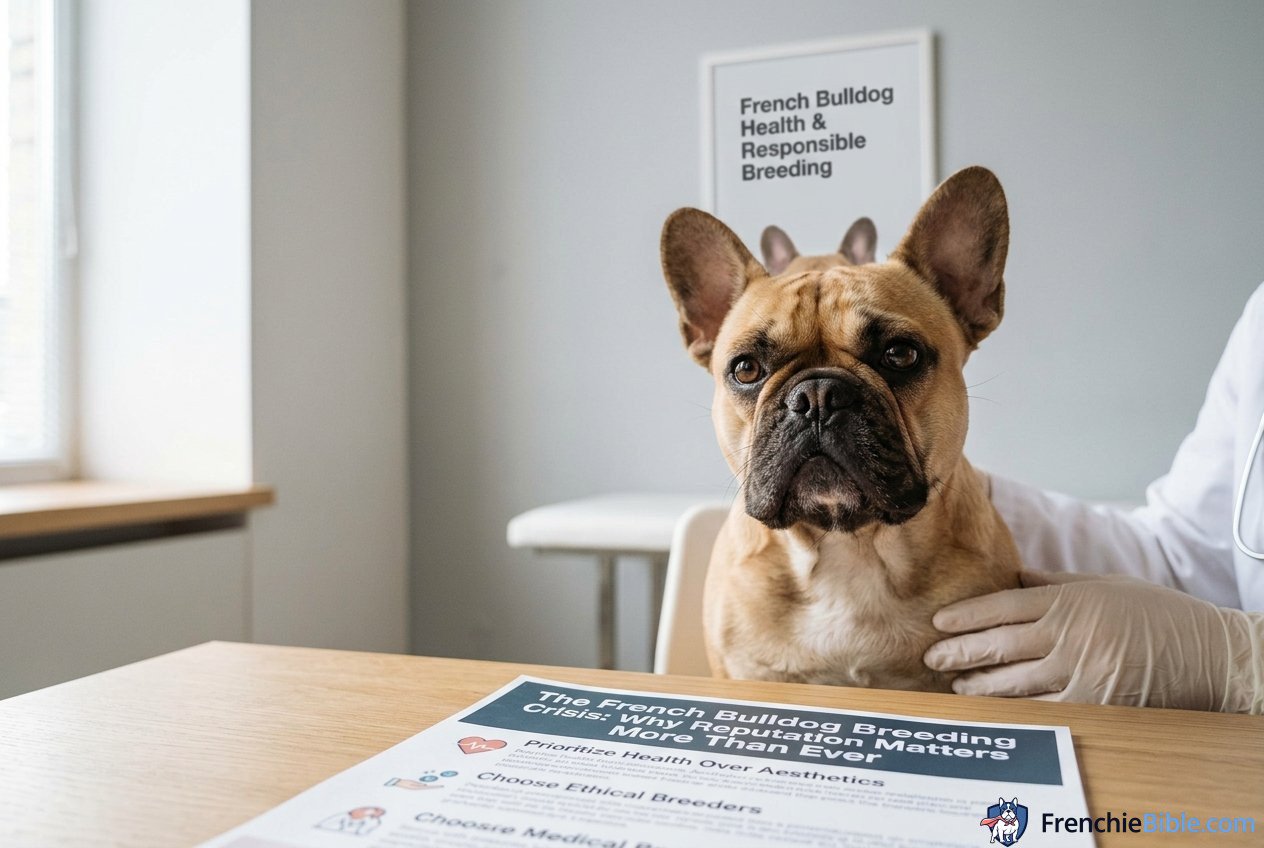
As a brachycephalic (flat-faced) breed, they are inherently prone to Brachycephalic Obstructive Airway Syndrome (BOAS), which can severely restrict their breathing. Their compact, dwarfed structure (chondrodysplasia) makes them highly susceptible to spinal issues like hemivertebrae and Intervertebral Disc Disease (IVDD). Additionally, they frequently suffer from joint dysplasia, severe skin allergies, and eye conditions.
Ethical breeding is not simply about putting two cute dogs together and hoping for the best. It requires an extensive understanding of canine genetics, meticulous health testing, and a commitment to breeding away from structural defects. Irresponsible breeding exacerbates these health issues, leading to a lifetime of suffering for the dog and astronomical veterinary bills for the owner—often running into the tens of thousands of dollars for airway surgeries and spinal treatments.
A reputable breeder’s primary goal is the betterment of the breed; they strive to produce puppies that are healthier, more structurally sound, and possess better temperaments than the generation before them. When you choose to buy from a backyard breeder, a pet store, or a puppy mill, you are directly funding practices that harm the breed. Therefore, learning to identify the green and red flags is not just about protecting your wallet—it is about protecting the future of the French Bulldog.
The 5 Green Flags: Hallmarks of an Ethical Breeder
When evaluating a potential breeder, these five green flags indicate that you are dealing with a professional who prioritizes the health and welfare of their dogs above all else. Finding a breeder with these qualities requires patience, but the reward is a healthier, happier puppy.
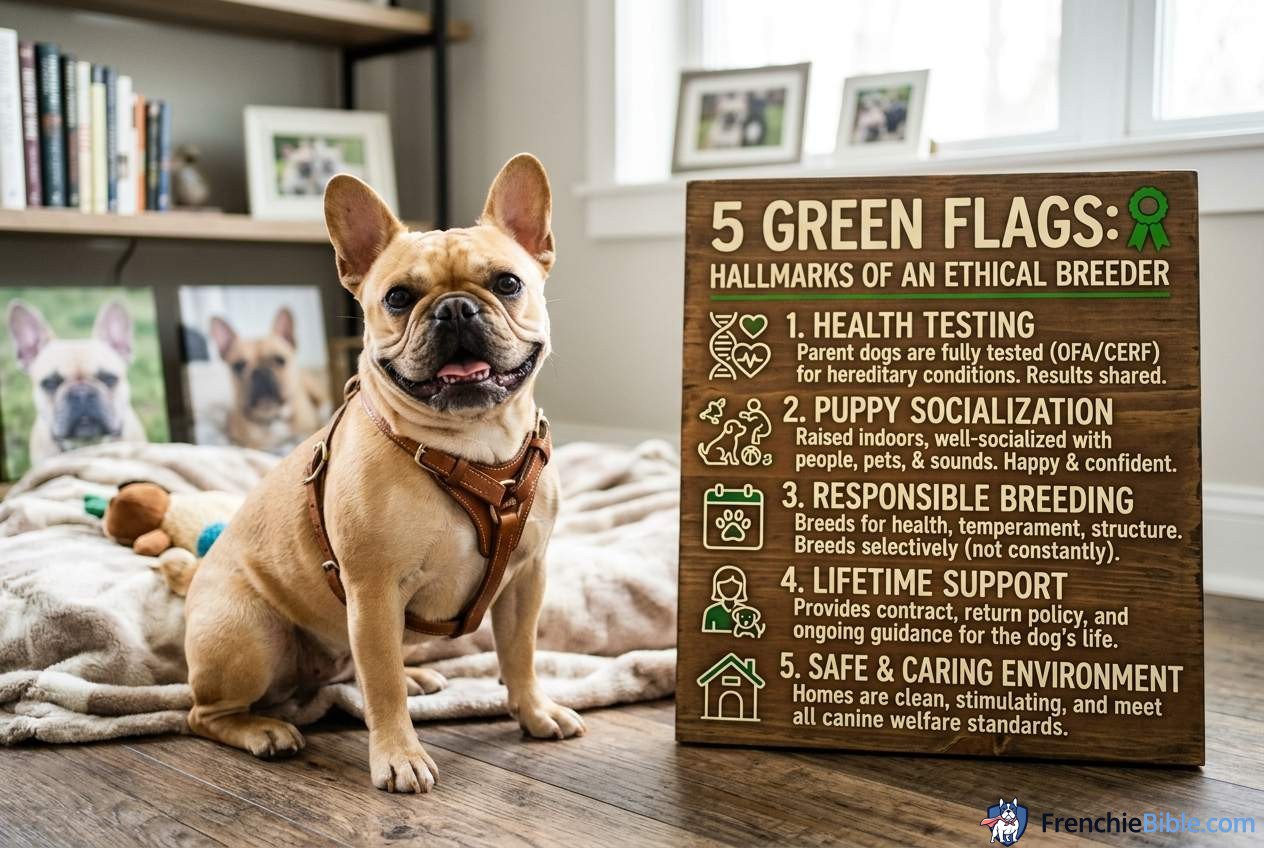
1. Extensive and Transparent Health Testing (OFA, CHIC, DNA)
The absolute most important green flag is comprehensive health testing. A reputable French Bulldog breeder does not rely on a standard vet check-up to declare their dogs “healthy.” A veterinarian looking at a dog in an exam room cannot see its genetic makeup or the subtle structural defects hiding in its joints or spine. Ethical breeders utilize advanced diagnostic testing to screen for genetic diseases and structural abnormalities common to the breed before breeding ever occurs.
Look for breeders who perform testing recommended by national breed clubs, such as the French Bull Dog Club of America (FBDCA). This includes:
– Orthopedic Foundation for Animals (OFA) Evaluations: Screening for hip dysplasia, elbow dysplasia, patellar luxation (slipping kneecaps), and cardiac issues.
– Spinal Radiographs: Frenchies are prone to spinal anomalies like hemivertebrae and butterfly vertebrae. A good breeder will x-ray their breeding stock’s spines to ensure they are structurally sound before breeding.
– Tracheal Hypoplasia Screening: Checking the diameter of the trachea to ensure it is wide enough for proper breathing.
– DNA Testing: Testing for hereditary conditions such as Juvenile Hereditary Cataracts (JHC), Degenerative Myelopathy (DM), Hyperuricosuria (HUU), and Cystinuria (Type 3).
– CHIC Certification: Dogs that have completed the recommended breed-specific health testing can receive a Canine Health Information Center (CHIC) number. This is the gold standard for health testing.
A reputable breeder will not only perform these tests but will proudly display the results and provide official documentation. They will register their dogs’ results in public databases like OFA, allowing you to independently verify the health history of the puppy’s lineage. If a breeder says, “My dogs are healthy, they’ve never been to the vet,” that is a severe misunderstanding of genetic health and a massive red flag in disguise.
2. Transparency, Openness, and Welcoming Facilities
An ethical breeder has nothing to hide. While they must protect their young, unvaccinated puppies from infectious diseases like Parvovirus, a reputable breeder will eventually allow, and even encourage, you to visit their home or breeding facility once it is safe to do so.
When you visit, you should observe:
– Cleanliness and Odor: The environment should be meticulously clean, free of feces, overwhelming urine smells, or chemical masking odors.
– Integration into the Home: The dogs should be treated as beloved family members, living inside the home rather than isolated in outdoor kennels, basements, or stacked cages.
– Happy, Well-Adjusted Dogs: The adult dogs and puppies should be bright, alert, and friendly, showing no signs of extreme fear, aggression, lethargy, or neglect. The mother dog (dam) may be protective, but she should not be overly aggressive or completely shut down.
If distance prevents a physical visit, a reputable breeder will gladly offer comprehensive video tours, live video calls (FaceTime, Zoom), and frequent updates showing the puppies in their living environment. They will be entirely transparent about where and how the puppies are raised from day one.
3. A Deep Focus on Temperament and Early Socialization
Health is paramount, but temperament is equally crucial. A French Bulldog should be affectionate, playful, adaptable, and even-tempered. Reputable breeders understand that a puppy’s behavioral development begins long before they leave for their new home at 8 to 10 weeks of age.
Look for breeders who employ structured socialization protocols, such as:
– Early Neurological Stimulation (ENS): Gentle handling exercises performed in the first few weeks of life to improve neurological development, cardiovascular performance, and stress tolerance.
– Early Scent Introduction (ESI): Introducing novel scents to stimulate cognitive development and olfactory awareness.
– Exposure to Everyday Stimuli: Introducing the puppies to various sounds (vacuums, doorbells, thunder recordings, children playing), surfaces (carpet, tile, grass, wood), and experiences (car rides, grooming tools, nail clippers) in a safe, controlled manner.
– Interaction with People and Other Animals: Ensuring the puppies are handled lovingly by different people of various ages and safely interact with other well-balanced adult dogs within the breeder’s household.
A breeder who invests time in these early socialization protocols is setting their puppies up for success, ensuring they transition smoothly into their new homes as confident, well-adjusted companions ready to take on the world.
4. Comprehensive Contracts, Health Guarantees, and Return Policies
A green flag that separates true professionals from casual backyard breeders is the paperwork. A reputable breeder will require you to sign a detailed, legally binding contract that outlines the responsibilities of both parties.
Key elements of a solid contract include:
– Health Guarantee: A guarantee covering severe genetic or congenital defects for a specified period (typically 1 to 2 years, sometimes extending to the dog’s lifetime for specific conditions). It should clearly state the remedies available (e.g., financial reimbursement for medical care up to the purchase price, or a replacement puppy) if a genetic issue arises.
– Spay/Neuter Agreement: Most reputable breeders sell their pet-quality puppies with a strict spay/neuter clause or on limited registration (meaning the dog cannot be bred, and any offspring cannot be registered with kennel clubs like the AKC). This protects their bloodlines, prevents their dogs from falling into the hands of backyard breeders, and ensures the dog is kept solely as a beloved pet.
– Return-to-Breeder Clause (Lifetime Commitment): This is perhaps the most significant green flag of all. An ethical breeder demands that if, at any point in the dog’s life—whether it’s three months or thirteen years down the line—you can no longer care for the dog, it must be returned to them. They will never allow one of their dogs to end up in an animal shelter or a rescue organization. They consider themselves responsible for the lives they bring into this world, from birth until death.
5. Extensive Knowledge of the Breed Standard, History, and Health Issues
When you speak to a reputable breeder, their passion and knowledge should be immediately apparent. They are not just selling dogs; they are lifelong students and guardians of the French Bulldog breed.
They should be able to:
– Discuss the Breed Standard: They should know the official breed standard inside and out and be able to articulate how their breeding program strives to meet it, focusing on correct conformation, movement, and structure.
– Acknowledge Health Risks: A good breeder will never claim that French Bulldogs are an exceptionally healthy breed with no issues. They will openly discuss the common health challenges (brachycephalic airway syndrome, spinal issues, allergies) and explain specifically what they are doing to mitigate these risks in their breeding lines.
– Provide Mentorship: They do not disappear once the check clears. A reputable breeder considers you part of their extended family and serves as a lifelong mentor. They are available to answer questions, provide guidance on diet, training, grooming, and veterinary care for the entire life of the dog.
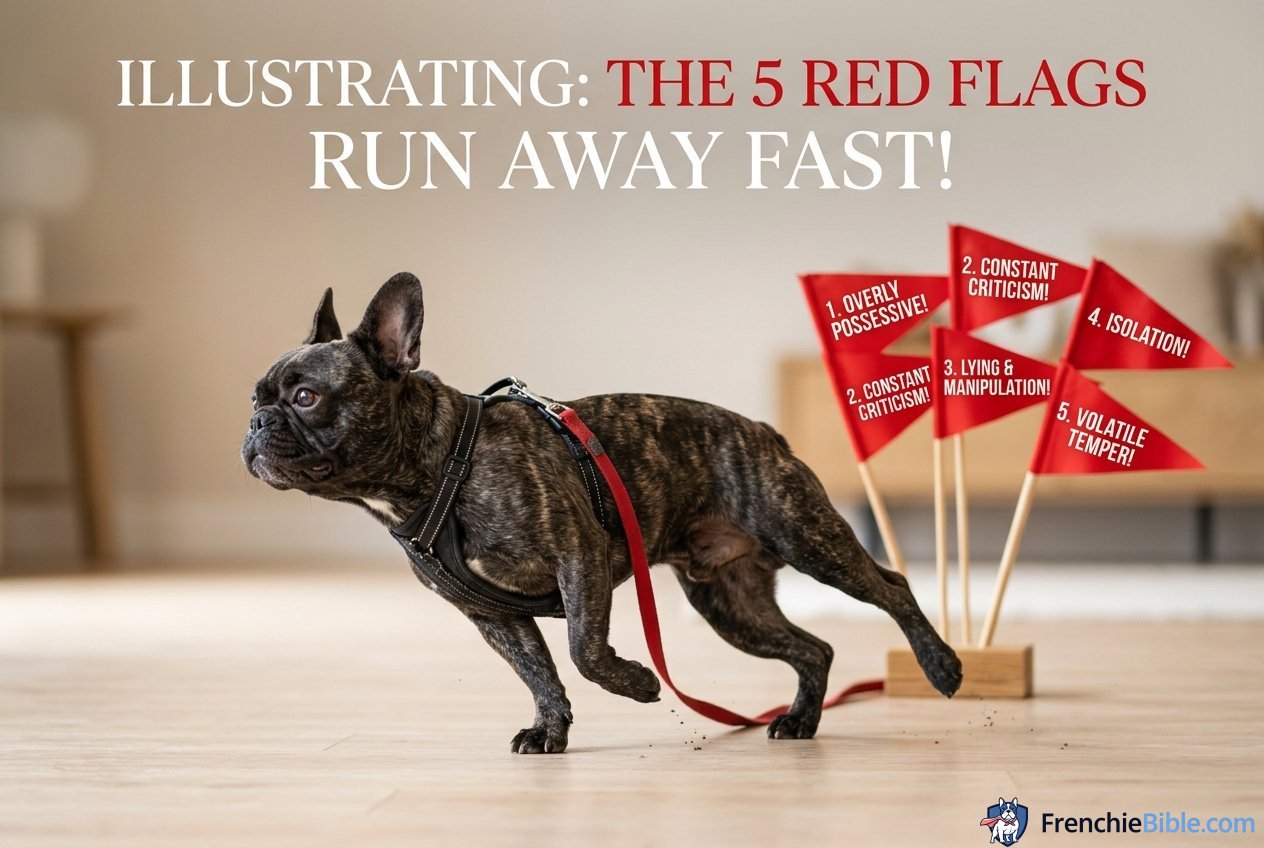
The 5 Red Flags: Run Away Fast!
Unfortunately, the high demand for Frenchies has flooded the market with unethical sellers looking to capitalize on the breed’s popularity. If you encounter any of these five red flags, halt the transaction immediately. Do not be tempted to “rescue” a puppy from a bad breeder by buying it, as this only funds them to continue their cruel practices.
6. Prioritizing “Rare” Colors and Fads Over Health and Structure
This is currently the biggest crisis facing the French Bulldog breed and the most glaring red flag you will encounter. The breed standard, as defined by major kennel clubs, recognizes specific colors: brindle, fawn, white, and brindle and white. Colors such as blue, merle, lilac, Isabella, chocolate, and black-and-tan are considered “fad” or “exotic” colors.
The Red Flag: Breeders who aggressively market “rare” or “exotic” colors, “fluffy” coats, or “hairless” Frenchies, often charging exorbitant prices (sometimes upwards of $10,000 to $30,000) for these dogs. Their marketing focuses entirely on the dog’s appearance rather than its health or temperament.
Why is this dangerous? To produce these non-standard colors or coat types, breeders often have to heavily inbreed, utilizing a highly limited gene pool, or introduce other breeds entirely (like Chihuahuas or Pomeranians to get the “fluffy” gene, or other breeds to introduce the merle pattern). This reckless breeding prioritizes superficial traits over health, respiratory function, and structural soundness.
The merle gene, in particular, is extremely problematic. When two merle dogs are bred together (a “double merle” breeding), it carries a high risk of producing puppies with severe congenital defects, including deafness, blindness, and microphthalmia (abnormally small eyes). Furthermore, dogs bred for dilute colors (like blue or lilac) are highly prone to Color Dilution Alopecia (CDA), a condition causing severe hair loss and chronic skin infections. If a breeder’s primary marketing angle is the rare color of the dog, walk away immediately.
7. Always Having Puppies Available (The Puppy Mill/Backyard Breeder Warning)
Ethical breeding takes an immense amount of time, planning, and resources. Reputable breeders carefully plan their litters, researching pedigrees and often waiting years for the right pairing. They allow their female dogs ample time to recover physically and mentally between litters, and usually only have one or two litters a year.
The Red Flag: A breeder who constantly has puppies available year-round, advertises multiple litters born on the same day, or allows you to “click and add to cart” on their website with a credit card.
This is the classic hallmark of a high-volume breeding operation (a puppy mill) or a backyard breeder who is overbreeding their females purely for profit. Female dogs in these environments are treated as breeding machines, living in deplorable conditions and receiving minimal veterinary care.
Furthermore, good breeders typically have a waitlist; their puppies are often spoken for before the pregnancy is even confirmed. If you can get a puppy immediately with no waiting period, no application, and no screening process, you are almost certainly dealing with an unethical source.
8. Refusal to Show the Parents or the Living Environment
Transparency is a green flag; secrecy is a massive red flag.
The Red Flag: The breeder refuses to let you see the mother (the dam) of the litter, or they insist on meeting you in a parking lot, a gas station, a park, or a neutral location to deliver the puppy. They make endless excuses about why you cannot see where the puppies are raised (“for the puppies’ safety,” “we are remodeling,” “my husband doesn’t like strangers in the house”).
While the father (the sire) might not live on the premises (reputable breeders often use outside studs to improve their lines), the mother should absolutely be there with her puppies until they are weaned. Observing the mother gives you critical insight into her temperament, her size, her structural health, and how she interacts with her offspring.
If a breeder hides the mother or the facility, they are likely hiding horrific living conditions, sick dogs, or the fact that they are simply a broker reselling puppies from a puppy mill. Brokers pose as breeders online, utilizing slick websites and stolen photos, but they never actually bred the dogs themselves.
9. Pressure Sales Tactics and a Total Lack of Screening
Acquiring a puppy should be a careful, considered process, not a high-pressure timeshare presentation or a used car negotiation.
The Red Flag: The breeder pressures you to make a deposit immediately, using manipulative tactics like, “I have three other families looking at this puppy right now, you need to send a deposit via Zelle in the next ten minutes or you’ll lose him.”
Furthermore, they ask you absolutely zero questions about yourself, your living situation, or your ability to care for a high-maintenance breed like the French Bulldog. All they care about is whether your payment will clear. A reputable breeder cares deeply about where their puppies go. If they are willing to hand a dog over to a complete stranger with no questions asked and no contract, they do not care about the dog’s future well-being.
10. Unwillingness to Provide Documentation or Vague Health Claims
In the world of dog breeding, documentation is the proof of a breeder’s claims. Words mean nothing without the paperwork to back them up.
The Red Flag: The breeder claims their dogs are “health tested” but cannot provide OFA certificates, DNA panels, or veterinary records. They offer a “vet check” but refuse to provide the contact information for their veterinarian so you can verify the visit. They do not offer a written contract or health guarantee, relying instead on a handshake, text messages, or vague verbal promises.
Without official documentation, a breeder’s claims are entirely meaningless. Never accept excuses like “the paperwork got lost in the mail,” “the OFA website is down,” or “the tests are pending but the puppy is totally fine.” An ethical breeder will have a folder full of paperwork ready to hand you.
The Interrogation: What a Reputable Breeder WILL Ask YOU
A true hallmark of an ethical breeder is their rigorous screening process. They view their puppies as their children, and they are entrusting you with a precious life. Therefore, they want to ensure the puppy is going to a safe, loving, and permanent home.
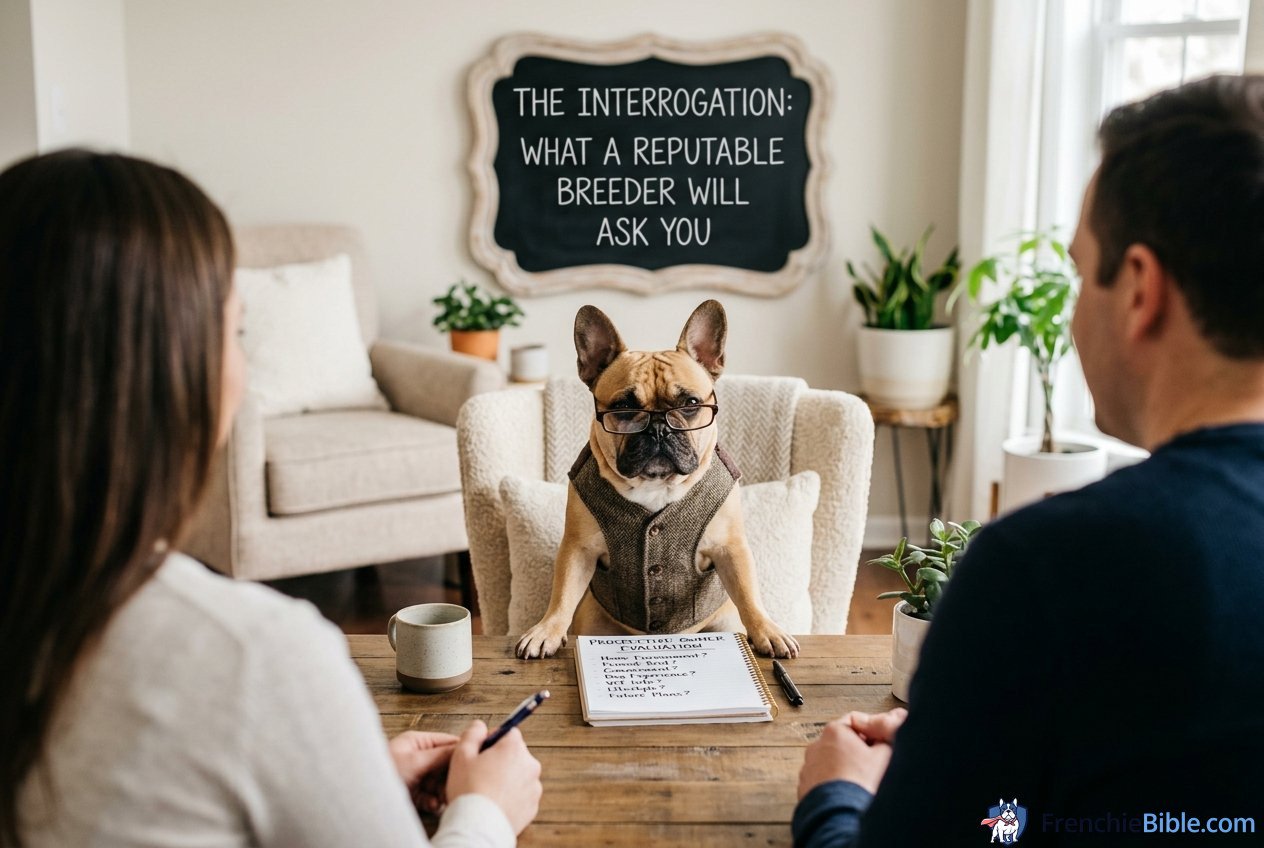
Be prepared to be interviewed. A reputable breeder will likely require you to fill out an extensive application questionnaire and undergo phone or in-person interviews. Here are the critical questions a reputable French Bulldog breeder will ask you, and why they ask them:
1. “Describe your current living situation and lifestyle in detail.”
They need to know if your home environment is physically and practically suitable for a Frenchie.
– Do you live in an apartment or a house? Frenchies can thrive in apartments due to their lower exercise needs, but the breeder needs to know you are committed to taking them out for regular, gentle walks.
– Do you have a fenced yard? If not, how do you plan to exercise the dog and handle potty training safely?
– Are there stairs in your home? Due to their severe spinal risks (IVDD), excessive stair climbing, jumping on and off furniture, and rough play can be catastrophic for Frenchies. They may ask how you plan to manage this (e.g., using baby gates, installing dog ramps).
– Do you rent or own? If you rent, they will almost certainly demand a letter from your landlord or a copy of your lease proving that dogs (and specifically French Bulldogs) are allowed on the property and that you have paid any necessary pet deposits.
2. “Who lives in the household, and what are their ages?”
Frenchies are generally excellent, affectionate family dogs, but breeders need to ensure safety for both the puppy and the residents.
– Do you have young children? Puppies are fragile, and Frenchie puppies are easily injured by well-meaning but clumsy toddlers. The breeder will want to know if you understand how to teach children to respect the dog’s boundaries to prevent accidental injuries.
– Does everyone in the household agree to getting a puppy? A puppy should never be a surprise gift for a spouse or a child. The breeder needs to ensure all family members are fully on board with the immense responsibility and work required.
– Are there other pets in the home? They will want to know the ages, breeds, and temperaments of your current pets to ensure they will get along with a new puppy.
3. “What are your working hours, and how long will the dog be left alone daily?”
French Bulldogs are notoriously prone to separation anxiety. They are companion animals bred to be with their humans; they are not independent dogs content to be left alone all day.
– Do you work long hours away from home? If the dog will be left alone for 8 to 10 hours a day without a break, a reputable breeder will likely deny your application.
– What is your plan for the dog while you work? They will look for proactive answers like utilizing a professional dog walker, enrolling the dog in a reputable doggy daycare, coming home for lunch, or working from home entirely.
4. “Are you financially prepared for the lifetime costs of a French Bulldog?”
This is a critical, often uncomfortable, but necessary question because French Bulldogs are incredibly expensive to maintain compared to other breeds.
– Are you aware of the potential health issues and their associated costs? The breeder will want to know that you have the financial means to handle unexpected veterinary emergencies. BOAS surgery to widen nares and shorten the soft palate can cost $3,000 to $6,000. Spinal surgery for IVDD can easily exceed $10,000. Allergy management (medications, specialized diets, immunotherapy) can cost hundreds of dollars a month for the dog’s entire life.
– Do you plan to purchase comprehensive pet insurance? Most reputable breeders highly recommend or even mandate in their contract that you carry comprehensive pet insurance for the lifetime of the dog to ensure you never have to make a life-or-death decision based on finances.
5. “What is your previous experience with dogs, specifically brachycephalic breeds?”
Frenchies are not like Golden Retrievers or standard mixed breeds. Their flat faces and unique anatomy require highly specialized care and awareness.
– Have you owned a dog before? If yes, what happened to it? If it passed away, what were the circumstances? If you surrendered it to a shelter, be prepared to explain why, and expect intense scrutiny.
– Do you understand the dangers of heat exhaustion? Breeders need to know that you understand a Frenchie cannot be left outside in the heat, cannot be aggressively exercised in warm weather, and requires strict temperature control (air conditioning). They can die of heatstroke in a matter of minutes in conditions other dogs would find mildly uncomfortable.
– Are you prepared for the grooming needs? While they have short hair, Frenchies require daily cleaning of their facial folds and tail pockets to prevent severe yeast and bacterial infections.
6. “What are your specific plans for this puppy?”
The breeder needs to ensure your goals align with the puppy’s potential and their breeding program’s guidelines.
– Are you looking for a family pet, a conformation show dog, a performance dog (agility, obedience), or do you intend to breed? As mentioned, most reputable breeders will only sell pet-quality dogs on limited registration with strict spay/neuter contracts. If you state that you want to breed the dog “just once so my kids can experience the miracle of birth,” or “to make back the money I spent on him,” a reputable breeder will immediately reject your application.
7. “Do you agree to return the dog to me if you can no longer care for it?”
As highlighted in the green flags section, this is non-negotiable for an ethical breeder.
– The breeder will explicitly ask for your commitment to this clause. They need absolute reassurance that you will contact them first if a major life change (divorce, severe illness, financial ruin, relocation overseas) forces you to give up the dog. This ensures the dog is safely rehomed and never enters the overburdened shelter system.
8. “Can you provide veterinary and personal references?”
A thorough breeder will not just take your word for it; they will verify your claims.
– Veterinary Reference: If you currently own or previously owned pets, they will ask for your vet’s contact information. They will call the vet to check your history of providing consistent preventative care (annual exams, core vaccines, heartworm/flea prevention) and your willingness to treat illnesses promptly.
– Personal References: They may ask for friends, neighbors, or colleagues who can vouch for your character, responsibility, and suitability as a pet owner.
How to Find a Reputable French Bulldog Breeder
Finding a breeder who exhibits all the green flags and rigorously avoids the red flags takes time, dedication, and intensive research. Here is the best path forward to ensure you find an ethical source:
- Start with National Breed Clubs: Begin your search with the official breed club in your country. In the United States, this is the French Bull Dog Club of America (FBDCA). They maintain a breeder directory of members who have signed a strict code of ethics and commit to specific health testing standards. Similar organizations exist internationally, such as the French Bulldog Club of England.
- Attend Local Dog Shows: Attend local dog shows sanctioned by major kennel clubs (like the American Kennel Club or the United Kennel Club). This is an excellent opportunity to meet breeders in person, observe their dogs in the ring, assess temperaments, and build relationships. Good breeders are often deeply involved in the conformation show world, as showing is how they evaluate their breeding stock against the standard.
- Seek Veterinary Recommendations: Ask your local veterinarian, especially those who specialize in reproductive medicine (theriogenologists) or have extensive experience with brachycephalic breeds, for recommendations. Vets know which breeders consistently bring in healthy, well-socialized litters and which ones bring in sick puppies.
- Be Prepared to Wait and Pay for Quality: Accept the reality that finding a healthy, ethically bred French Bulldog is not an instant process. You will likely need to submit an application, pass an interview, join a waitlist, and wait 6 to 12 months, or sometimes longer, for the right puppy to be born. Furthermore, ethical breeding is extraordinarily expensive; be prepared to pay a premium price for a puppy backed by extensive health testing and a solid guarantee.
Conclusion
The journey to bringing a French Bulldog into your life should not be rushed. It must be characterized by immense patience, thorough research, and an unwavering commitment to supporting ethical practices. By learning to recognize the green flags of comprehensive health testing, absolute transparency, and lifelong commitment, and by staunchly avoiding the red flags of fad colors, high-volume breeding, and secrecy, you can ensure that you are making a responsible, compassionate choice.
Remember that a reputable breeder’s rigorous questions, lengthy applications, and seemingly intrusive interviews are not meant to insult you or make the process difficult for the sake of it. Rather, they are a profound testament to the breeder’s love for their dogs. When a breeder interrogates you about your lifestyle, your finances, and your knowledge of the breed’s unique challenges, they are proving their ultimate dedication to placing their precious puppies in the best, safest, and most permanent homes possible.
By choosing to support these ethical breeders and turning your back on puppy mills and backyard operations, you are not only securing a healthier, happier, and longer-lived companion for your family, but you are also actively contributing to the preservation and betterment of the magnificent French Bulldog breed.
Frequently Asked Questions (FAQ)
Q: How much should I expect to pay for a French Bulldog from a reputable breeder?
A: Prices vary significantly by geographic region, the specific bloodlines, and the breeder’s investment in their program, but generally, you should expect to pay between $3,500 and $7,000 for a pet-quality French Bulldog from a fully health-tested, ethical breeding program. The high cost reflects the expenses of ethical breeding, including extensive health testing, reproductive vet services (progesterone testing, artificial insemination), emergency C-sections (which are almost always required for Frenchies), and high-quality care. If a puppy is listed for $1,500, it is highly likely a scam, a stolen dog, or a severely unhealthy backyard-bred puppy. Conversely, if a puppy is listed for $10,000+ purely because it is a “rare color” or “fluffy,” it is a product of unethical breeding practices focused on profit over health.
Q: Why do reputable breeders require a deposit, and is it refundable?
A: Reputable breeders often require a deposit (or reservation fee) once an application is approved, a pregnancy is confirmed via ultrasound, or puppies are born. This secures your place on the waitlist and shows your serious commitment. Whether it is refundable depends entirely on the breeder’s specific contract. Often, deposits are non-refundable if you simply change your mind or buy a puppy elsewhere, as the breeder has turned away other qualified homes. However, deposits may be transferable to a future litter, or refundable if the breeder cannot provide a puppy of your preferred gender or color from the current litter. Always read the contract carefully before sending any money.
Q: Is it okay to buy a French Bulldog online and have it shipped to me via cargo?
A: You should never buy a puppy from a website that has a “shopping cart” feature allowing immediate purchase, as these are invariably puppy mills or brokers. However, reputable breeders do occasionally sell to out-of-state or international buyers whom they have rigorously vetted. Regarding shipping, a reputable breeder will never ship a brachycephalic dog alone in the cargo hold of an airplane. The temperature fluctuations, stress, and lack of monitoring in cargo are highly dangerous and often fatal for flat-faced breeds. Instead, a reputable breeder will require you to fly in-cabin to pick up the puppy yourself, or they will employ a trusted, professional “flight nanny” to accompany the puppy in the passenger cabin to your local airport.
Q: Can I negotiate the price with a reputable breeder?
A: No. Ethical breeders invest thousands of dollars into their breeding programs before a puppy is even born. They pay for OFA and DNA testing, expensive stud fees, reproductive veterinary care, premium nutrition, emergency C-sections, and round-the-clock neonatal care. The price reflects the immense cost, time, and emotional effort required to breed ethically and responsibly. Trying to haggle or ask for a “discount” is considered deeply insulting to their hard work and is a very quick way to get your application denied and be blacklisted by the breeder.
Q: If I buy a dog on “limited registration,” does that mean it’s not a purebred or is of lower quality?
A: Not at all. “Limited registration” (a term utilized by the American Kennel Club and other registries) means the dog is absolutely a purebred, its lineage is fully documented, and it is of excellent quality, but it is not authorized for breeding. Any offspring produced by a dog on limited registration cannot be registered with the kennel club. Reputable breeders use limited registration to protect their carefully curated bloodlines from backyard breeders and to ensure the puppy goes to a loving home solely to be a companion pet. A dog on limited registration can still participate in many dog sports, such as agility, obedience, and rally, but cannot compete in conformation shows.
Q: Should I adopt a french bulldog from a rescue instead of buying from a breeder?
A: Adopting from a breed-specific rescue is a wonderful, highly commendable option. Many Frenchies end up in rescues because their owners were unprepared for their medical costs or behavioral needs. However, rescued Frenchies often come with unknown genetic histories and pre-existing medical conditions (like severe allergies or spinal issues) that require immediate and ongoing financial investment. If you are prepared for potential medical challenges and want to give a dog a second chance, rescue is excellent. If you are looking for a puppy with a known genetic history, health guarantees, and a predictable temperament to stack the deck in favor of a long, healthy life, purchasing from a reputable, ethical breeder is the appropriate path. Both are valid choices, provided you are making an informed decision and avoiding puppy mills and backyard breeders entirely.
Q: What is BOAS, and why should I ask the breeder about it?
A: BOAS stands for Brachycephalic Obstructive Airway Syndrome. It is a complex respiratory condition affecting flat-faced dogs, characterized by stenotic nares (pinched nostrils), an elongated soft palate, and everted laryngeal saccules. These anatomical abnormalities severely restrict the dog’s ability to breathe, exercise, and regulate its body temperature. You must ask the breeder what they are doing to breed away from BOAS. A reputable breeder should be selecting for wider nares, slightly longer muzzles, and better respiratory function in their breeding stock. They should also be able to discuss the breathing status of the puppy’s parents and grandparents.
Q: Why do French Bulldogs need C-sections, and is it a sign of unhealthy dogs?
A: Over 80% of French Bulldogs require Cesarean sections to deliver puppies. This is due to a combination of the breed’s large head size, broad shoulders, and the relatively narrow pelvis of the mother, making natural birth extremely difficult and often fatal for both the mother and the puppies. While some argue this makes the breed inherently unnatural, within the context of the current breed standard, C-sections are standard veterinary practice to ensure the safe delivery of the litter. An ethical breeder plans and budgets for these surgeries, working closely with a reproductive veterinarian to schedule the C-section at the safest possible time. They do not view it as a negative, but rather a necessary step in responsible Frenchie breeding.
Disclaimer: We are not veterinarians and do not hold veterinary medical licenses. The information provided in this article is based on years of breeding and daily care experience and is for educational purposes only. It should not replace professional veterinary advice. Always consult with a licensed veterinarian if you have concerns about your French Bulldog’s health or before starting any new treatment.