Disclaimer: The information provided in this article is intended for educational and informational purposes only. It does not constitute professional veterinary advice. Always consult with a licensed veterinarian before initiating any new training, exercise, or health regimen for your pet, particularly for brachycephalic breeds like French Bulldogs, which have unique anatomical and respiratory needs.
Introduction to French Bulldog Leash Training
Bringing home a French Bulldog puppy is an incredibly exciting experience filled with cuddles, playtime, and the beginning of a lifelong bond. However, as any experienced Frenchie owner or breeder will tell you, these adorable dogs come with their own set of unique quirks and challenges. One of the earliest and most vital hurdles you will face is leash training. Specifically, getting your French Bulldog puppy accustomed to wearing a collar or harness without putting up a fight.
Related Reading: Health & Diet | Frenchie Puppy Guide
French Bulldogs are famously known for their stubborn streak, endearing but challenging. When you first introduce a strange, restrictive object like a collar or harness to their body, their natural instinct might be to freeze, scratch at it frantically, or perform what is affectionately known as the “Frenchie Plant”—refusing to move entirely.
As a specialized veterinarian and breeding expert, I have witnessed countless owners struggle with this fundamental step. The key to success lies in understanding the physiological and psychological makeup of the French Bulldog. Because of their brachycephalic (flat-faced) anatomy, the choice between a collar and a harness is not just a matter of preference; it is a matter of health and safety.
In this comprehensive guide, we will explore the nuances of leash training a French Bulldog puppy. From selecting the perfect, anatomically correct gear to utilizing positive reinforcement techniques that bypass their stubbornness, this article will equip you with the knowledge to make leash training a stress-free, enjoyable experience for both you and your puppy.
Understanding Your French Bulldog Puppy’s Reluctance
Before we delve into the “how-to” of leash training, it is crucial to understand the “why.” Why do French Bulldog puppies often react so negatively to collars and harnesses? Recognizing the root causes of their resistance will help you approach training with empathy and patience.
The Sensorial Overload of New Gear
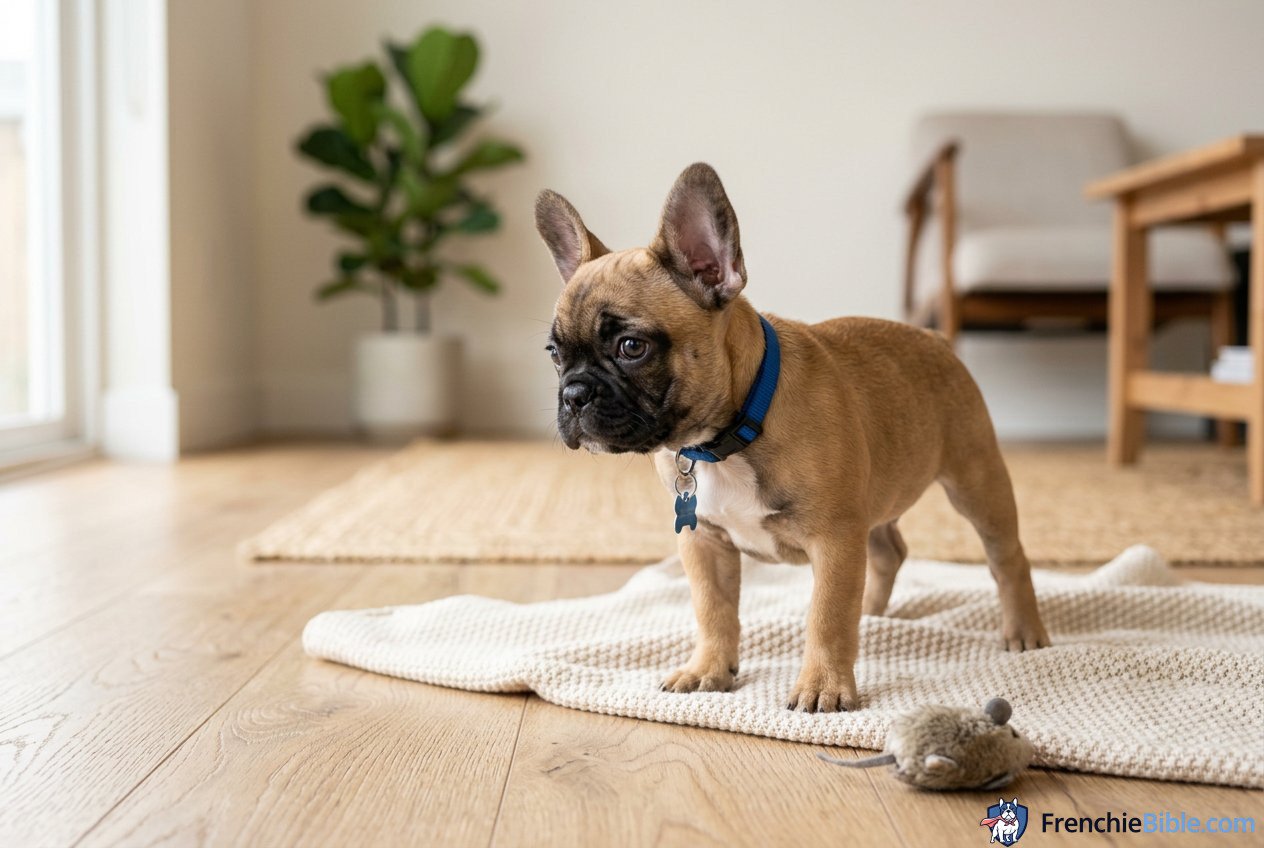
Puppies explore the world primarily through their senses of smell and taste. To a young Frenchie, a collar or harness is a completely foreign concept. It is an unnatural pressure around their neck, chest, or shoulders. The material might feel stiff against their soft puppy fur, the buckles might make strange clicking noises, and the overall sensation is restrictive.
When you suddenly strap a harness onto a puppy who has spent their entire life unencumbered, it can trigger a mild panic response. They might feel trapped or immobilized. This sensory overload is often the primary reason they scratch at the gear, roll around on the floor trying to get it off, or simply freeze in place.
Brachycephalic Anatomy and Breathing Concerns
French Bulldogs belong to the brachycephalic family, characterized by their shortened skulls, flat faces, and compressed upper respiratory systems. This unique anatomy often results in Brachycephalic Obstructive Airway Syndrome (BOAS). They naturally have narrower tracheas (windpipes), elongated soft palates, and smaller nostrils (stenotic nares).
Because of this delicate respiratory structure, anything that places pressure on a Frenchie’s neck can be uncomfortable, distressing, and potentially dangerous. If a puppy has previously experienced even a moment of breath restriction from a collar, they will quickly associate the gear with discomfort and fight against it in the future. Their reluctance is not always stubbornness; sometimes, it is a survival instinct.
The Famous Frenchie Stubborn Streak
While their anatomy plays a significant role, we cannot ignore the classic French Bulldog temperament. Frenchies are intelligent, affectionate, and fiercely independent. They were bred to be companion dogs, which means they are highly attuned to human emotions but also quite opinionated about what they want to do.
If a Frenchie decides they do not want to participate in an activity—like wearing a harness—they will employ passive resistance. They are not typically aggressive in their refusal; instead, they will simply sit down, look at you with those big, soulful eyes, and refuse to budge. Overcoming this stubbornness requires making the training process more appealing than their desire to resist. It demands high-value rewards and a game-based approach rather than forceful compliance.
Collar vs. Harness: Which is Best for a French Bulldog Puppy?
One of the most frequently asked questions in veterinary clinics is whether a French Bulldog should wear a collar or a harness. For this specific breed, the answer is remarkably straightforward, but it requires a detailed explanation to ensure the dog’s long-term health.
Why Harnesses are the Preferred and Mandatory Choice
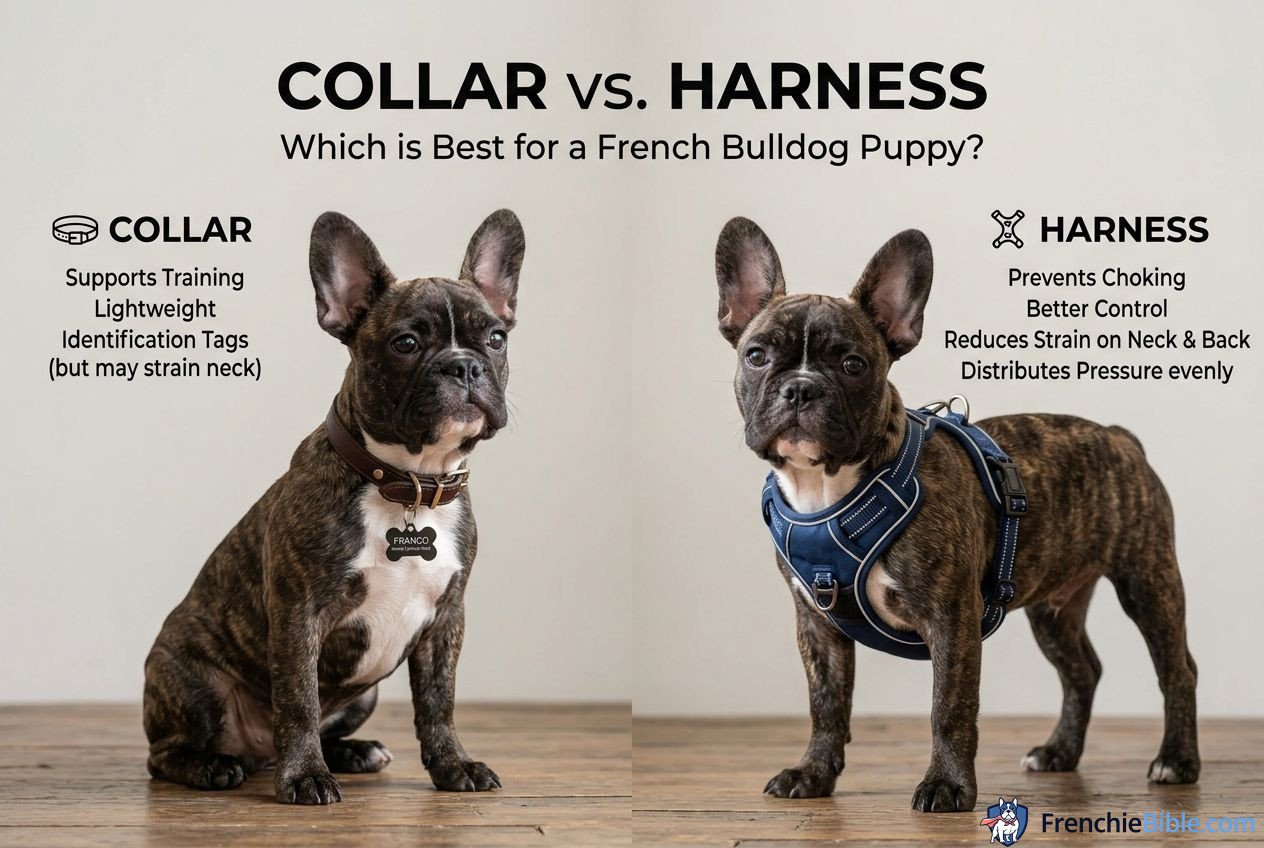
From a veterinary and structural standpoint, a well-fitting harness is absolutely mandatory for walking a French Bulldog. As previously mentioned, their brachycephalic anatomy makes their airways incredibly vulnerable.
When a Frenchie wears a collar and pulls on the leash, or if the owner gives a sudden tug, all the pressure is localized directly on the trachea. Over time, this repeated trauma can cause the cartilage rings of the trachea to weaken and collapse, a condition known as tracheal collapse. It can also exacerbate existing BOAS symptoms, leading to chronic coughing, gagging, and severe respiratory distress.
Furthermore, French Bulldogs are prone to cervical (neck) spine issues, such as Intervertebral Disc Disease (IVDD). Pressure on the neck from a collar can compress the spinal cord, leading to pain, nerve damage, and in severe cases, paralysis.
A harness, on the other hand, distributes the force of a pull across the dog’s chest, shoulders, and back—areas that are structurally robust and capable of handling the pressure without compromising the airway or the spine.
When to Use a Collar
Does this mean your French Bulldog should never own a collar? Not necessarily. Collars still have a functional role, but not for leash attachment during walks.
Collars are excellent for holding identification tags. Even if your puppy is microchipped, a physical ID tag with your contact information is crucial in case they get lost. A lightweight, flat collar is perfectly safe for a Frenchie to wear around the house or in a secure yard, provided it is not attached to a leash.
When selecting a collar for ID purposes, ensure it is a breakaway collar or one that fits loosely enough to slip off if it gets caught on something, preventing accidental strangulation.
Selecting the Right Harness for a Frenchie
Not all harnesses are created equal, and French Bulldogs have uniquely shaped bodies—broad chests, thick necks, and relatively narrow waists. Finding a harness that fits their “barrel” shape without chafing their armpits or restricting their shoulder movement is critical.
Look for a harness with a “Y-shape” or “V-shape” front. These designs sit low on the chest, well below the neck and trachea, ensuring zero pressure is placed on the airway even if the dog pulls. Avoid harnesses that cut straight across the chest (horizontal straps), as these can restrict shoulder extension and alter their natural gait. Additionally, choose a harness made of soft, breathable, and padded material to prevent skin irritation, as Frenchies often have sensitive skin.
Step 1: Introducing the Gear Indoors
The biggest mistake new owners make is buying a harness, immediately strapping it onto the puppy, clipping the leash, and expecting to go for a walk. This approach almost guarantees resistance. Leash training must begin indoors, in a quiet, familiar environment where the puppy feels completely safe.
Creating Positive Associations
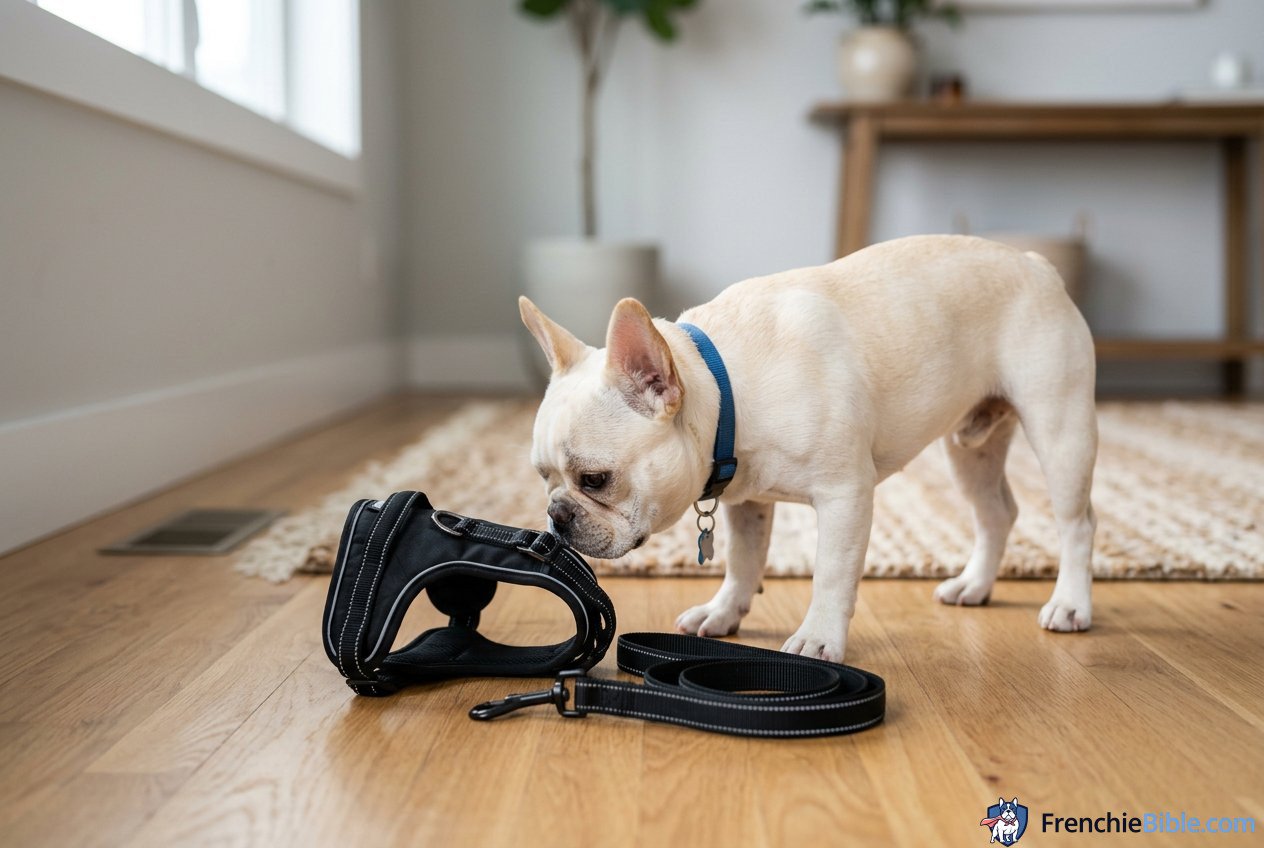
The goal of the first step is to change the puppy’s perception of the collar or harness from “scary, restrictive object” to “the best thing in the world.” We do this through classical conditioning—pairing the sight and presence of the gear with high-value rewards.
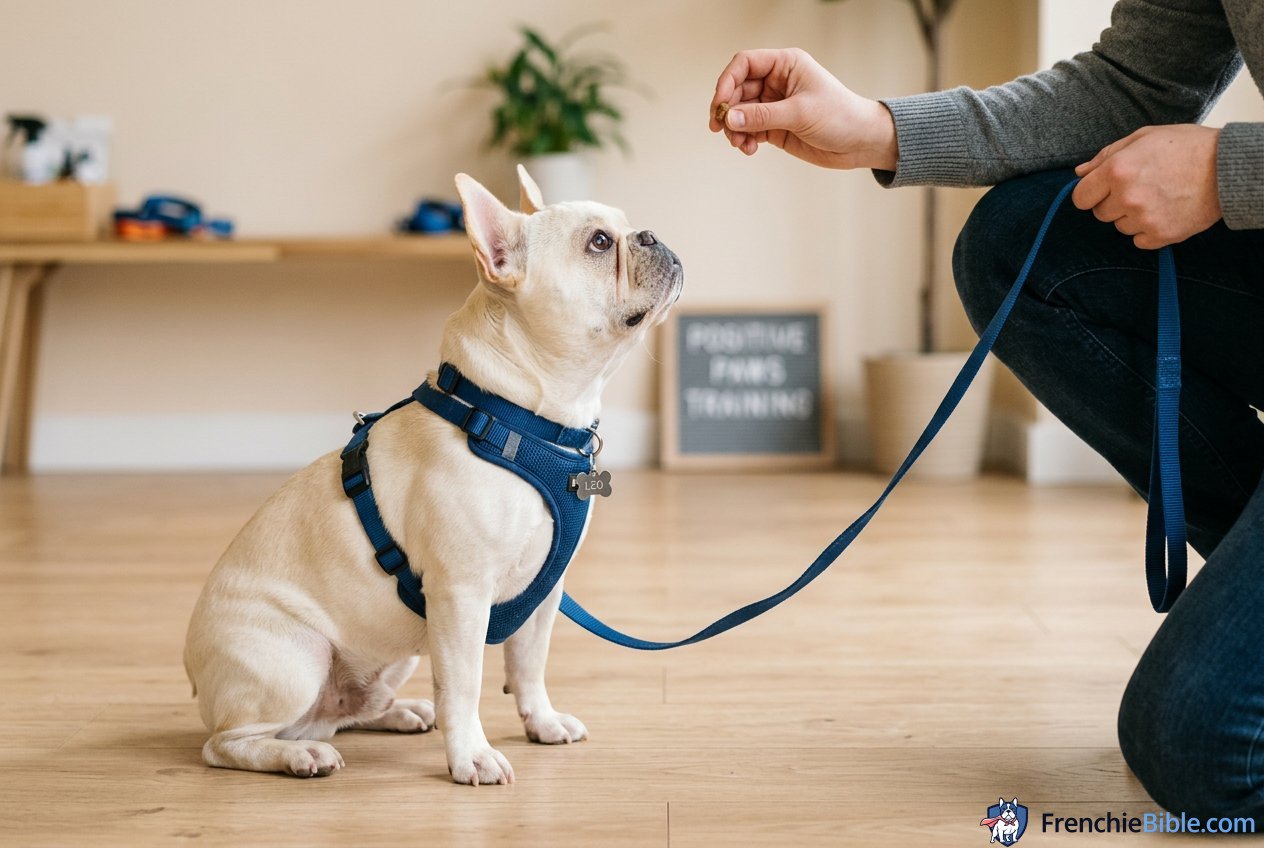
Start by simply placing the harness on the floor in the living room. Let your puppy investigate it on their own terms. When they look at it, sniff it, or walk toward it, immediately praise them enthusiastically (“Yes!” or “Good boy/girl!”) and give them a highly desirable treat (e.g., a tiny piece of boiled chicken, freeze-dried liver, or a lick of dog-safe peanut butter).
Repeat this process several times a day for a few days. Do not attempt to put the harness on them yet. You want the puppy to think, “Every time this object appears, I get delicious food.”
The “Touch and Treat” Method
Once the puppy is comfortable with the harness being in the room and is actively seeking it out for treats, you can move to the next phase.
Hold the harness in your hand. Present it to the puppy. When they touch it with their nose, say “Yes!” and reward. Next, gently touch the harness to their side or shoulder for one second, say “Yes!” and reward. Remove the harness immediately.
Gradually increase the duration the harness touches their body. Touch it to their chest, their back, and their neck. If at any point the puppy backs away or looks uncomfortable, you have moved too fast. Take a step back and decrease the intensity of the contact. The puppy should always remain relaxed and eager for the treat.
Putting the Gear On for the First Time
When your Frenchie is completely unfazed by the harness touching their body, it is time to put it on. This requires patience and a strategic approach.
If you are using a step-in harness, place treats on the floor to guide their paws into the loops. If you are using an over-the-head harness (which is often better for Frenchies), hold a treat through the neck opening so the puppy has to voluntarily push their head through the hole to get the food. Do not force the harness over their head; let them do the work.
Once the harness is in place, do not immediately buckle it. Let it drape over them for a few seconds while continuously feeding them treats. Then, take it off.
Repeat this until they are comfortable pushing their head through. Finally, clip the buckles. The sound of the click can be startling, so give a jackpot of treats (several treats in a row) the moment you clip the buckle.
Step 2: Desensitization to Wearing the Gear
Congratulations, the harness is on! But the training is far from over. Now, your puppy needs to learn how to exist and move normally while wearing it.
Short, Supervised Sessions
The first time the harness is fully secured, leave it on for no more than one or two minutes. You want to remove the harness while the puppy is still having a good time, rather than waiting for them to get frustrated and try to chew it off.
During these brief sessions, keep the puppy actively engaged. If you just stand there, they will realize they are wearing something strange and start to fuss.
Distracting with Play and Meals
The best way to desensitize a Frenchie to the harness is distraction. As soon as you clip the buckle, initiate a highly engaging game. Bring out their favorite squeaky toy, a flirt pole, or a tug rope. Play enthusiastically. The goal is to make them so focused on the game that they forget they are wearing the harness.
Another incredibly effective technique is to associate the harness with mealtime. Put the harness on right before you set down their food bowl. French Bulldogs are notoriously food-motivated. The excitement of eating will override the strange sensation of the harness. As soon as they finish eating, take the harness off. This creates a powerful association: Harness equals dinner.
Gradually increase the time they wear the harness around the house from two minutes to five, then ten, then twenty minutes. Let them wander around dragging the gear. Supervise them closely to ensure the harness doesn’t get caught on furniture. By the time you introduce the leash, wearing the harness should feel like a second skin to them.
Step 3: Introducing the Leash
Only after your French Bulldog is completely comfortable wearing the harness indoors should you introduce the leash. The leash introduces a new dynamic: tethering and restriction of movement, which can trigger a new wave of resistance.
Letting the Leash Drag
Attach a lightweight, thin leash to the harness while you are indoors. Do not hold the other end. Let the leash drop to the floor and allow your puppy to drag it behind them as they walk around the house.
This allows them to feel the slight weight and the sensation of something trailing behind them without the added stress of you pulling on it. Make sure you supervise them during this step so the leash doesn’t wrap around chair legs or cause them to trip.
If the puppy turns around and tries to bite or play with the leash, do not scold them. Instead, redirect their attention to a more appropriate toy. Wiggle a stuffed animal or offer a chew toy. You want to teach them that the leash is boring and not a chew toy.
Picking Up the Leash
Once the puppy is ignoring the dragging leash, pick up the handle. Do not pull or attempt to guide them yet. Just hold the handle loosely and follow your puppy wherever they decide to go in the house.
Keep the leash slack (shaped like a ‘J’). If the puppy stops, you stop. If they walk to the kitchen, you follow them to the kitchen. Reward them periodically for moving forward while you are holding the leash. This teaches them that you holding the leash does not equal an immediate loss of freedom.
Step 4: First Steps in Leash Training
Now it is time to start communicating through the leash and teaching your Frenchie to walk with you, rather than you just following them.
The “Follow Me” Game
Begin in a low-distraction environment, like your living room or a quiet hallway. Hold the leash with slack and hold a handful of high-value treats in the hand closest to the dog.
Take one step backward, make a kissing sound or say their name enthusiastically to get their attention, and say “Let’s go!” As soon as the puppy takes a step toward you, say “Yes!” and give them a treat.
Take two steps backward, call them, and reward when they follow. You are essentially luring them to follow your movement. Keep the energy light, fun, and engaging.
Rewarding Forward Movement
Once the puppy is eagerly following you backward, turn around and start walking forward. Hold a treat near your leg (the side you want them to walk on). Take a few steps. If the puppy walks alongside you without pulling, reward them continuously. “Step, step, treat. Step, step, treat.”
You are building a reinforcement zone right next to your leg. The puppy will quickly learn that walking beside you with a loose leash is a highly profitable activity.
Keep these initial indoor walking sessions very short—about three to five minutes. French Bulldogs have short attention spans and can tire easily. You want every session to end on a positive note before they lose interest.
Overcoming Common Leash Training Resistance in Frenchies
Despite your best efforts with positive reinforcement, you will likely encounter some classic French Bulldog resistance. Knowing how to handle these moments calmly is crucial.
The “Frenchie Plant” (Refusing to Move)
This is the most iconic Frenchie move. You put the leash on, step outside, and they simply sit or lie down, refusing to move a single muscle. Pulling or dragging them is the worst thing you can do; it will only make them dig their heels in deeper and could harm their neck, even with a harness.
When the Frenchie plant happens, stop and wait. Do not look at them, do not talk to them, and keep tension off the leash. Often, if they see they aren’t getting a reaction, they will eventually stand up to investigate something. The exact second they move forward, say “Yes!” and reward generously.
Alternatively, you can use the environment to motivate them. Walk to the end of the leash (without pulling), crouch down, and act incredibly interested in a leaf or a spot on the grass. Your Frenchie’s natural curiosity will often overcome their stubbornness, and they will walk over to see what you are looking at. Reward them when they arrive.
Pulling or Lunging
While less common in the very early stages, your puppy will eventually realize the outdoors is exciting and may try to pull toward a smell or another dog.
If you allow them to pull and reach their destination, you have taught them that pulling works. The moment the leash goes tight, stop dead in your tracks. Become a tree. Do not pull back, just anchor yourself.
Wait for the puppy to realize they aren’t getting anywhere. Eventually, they will look back at you or take a step backward, causing the leash to go slack. The moment the leash is loose, praise them and resume walking. Consistency is key here; if you stop every single time the leash is tight, they will learn that a loose leash is the only way to move forward.
Biting the Leash
Some puppies view the leash as an interactive tug toy. If your Frenchie starts biting the leash, do not pull back, as this engages their tug drive and makes it a game.
Instead, carry a dedicated tug toy with you. When they bite the leash, stop walking. Offer the toy as a trade. Say “Drop it” (if they know the command) or simply wait for them to release the leash to grab the toy. When they take the toy, play with them for a moment, then resume the walk.
You can also try soaking a portion of the leash in a bitter apple spray (a safe, foul-tasting deterrent) before the walk to discourage biting.
Advanced Tips for French Bulldog Leash Training
As your puppy progresses, keep these breed-specific considerations in mind to ensure their safety and continued success.
Understanding Their Pace and Limitations
French Bulldogs are not endurance athletes. They are low-energy, heavy-boned dogs with compromised airways. Their walking pace will naturally be slower, more methodical, and punctuated with frequent stops to sniff.
Do not expect a Frenchie to trot briskly beside you for miles. Leash walks for this breed are more about mental stimulation (sniffing) and bathroom breaks than intense cardiovascular exercise. Let them set the pace. If they are panting heavily, slowing down significantly, or looking distressed, the walk is over. Pick them up and carry them home if necessary.
Weather Considerations for Frenchies
Leash training heavily depends on the weather, as French Bulldogs are extremely sensitive to temperature extremes.
Heat: Due to BOAS, Frenchies cannot pant efficiently to cool themselves down. They are highly susceptible to heatstroke, which can be fatal in minutes. Never leash train or walk a Frenchie in the heat of the day. Stick to early mornings or late evenings when the pavement is cool and the sun is down. If the temperature is above 75°F (24°C) with high humidity, keep walks incredibly short and prioritize indoor training.
Cold: Because they have a single, short coat and low body fat, Frenchies get cold quickly. If you are leash training in winter, invest in a well-fitting dog sweater or coat. If it is raining, they may absolutely refuse to walk (another classic Frenchie trait). Do not force it; practice indoor leash walking instead.
Socialization on the Leash
Leash training is also an opportunity for socialization. However, on-leash greetings with other dogs can be stressful. French Bulldogs, with their flat faces, lack a tail to wag, and stiff posture, are often misread by other dog breeds, which can lead to tension.
Focus on teaching your puppy to be neutral around distractions. Reward them for looking at another dog and then looking back at you, rather than dragging you over to say hello. Not every walk needs to be a social event; the primary goal is a calm, connected walk with you.
Frequently Asked Questions (FAQs)
At what age should I start leash training my French Bulldog puppy?
You can begin the foundational steps of leash training—creating positive associations with the harness indoors—as soon as you bring your puppy home (typically around 8 weeks of age). Formal outdoor leash walking should only begin after your veterinarian has cleared them, usually a week or two after their final round of puppy vaccinations (around 16 weeks of age), to prevent exposure to dangerous diseases like Parvovirus.
Why does my Frenchie sound like they are choking when on a leash?
If your Frenchie sounds like they are choking, gagging, or snorting excessively on the leash, it is a clear sign that their airway is restricted. This is often caused by using a collar instead of a harness, or using a poorly fitted harness that rides up onto their neck. It may also indicate severe Brachycephalic Obstructive Airway Syndrome (BOAS). Immediately switch to a well-fitted, Y-shaped harness. If the breathing issues persist even with a harness and zero pulling, consult your veterinarian for an airway evaluation.
Can a French Bulldog wear a collar all the time?
A French Bulldog can wear a lightweight, breakaway collar indoors or in a fenced yard solely for the purpose of carrying identification tags. However, they should never wear a collar when attached to a leash, tied out, or left completely unsupervised in a crate, as it poses a strangulation and airway hazard.
How long should leash training sessions last for a puppy?
Puppies have notoriously short attention spans. Leash training sessions should be frequent but very brief. Aim for 3 to 5 minutes per session, 2 to 3 times a day. If you push the session too long, the puppy will become frustrated, tired, and resistant, undermining your training efforts. Always end the session on a positive note while they are still engaged.
What is the best type of harness for a French Bulldog?
The best harness for a French Bulldog is one that completely avoids the neck and trachea. Look for a “Y-shape” or “V-shape” harness that sits low on the chest. It should be highly adjustable to accommodate their broad chest and narrower waist, made of soft, padded material to prevent underarm chafing, and ideally, have a back-clip attachment for general walking to minimize tangling. Step-in harnesses or dual-clip (front and back) harnesses can also work well, provided they do not restrict shoulder movement.
Conclusion
Leash training a French Bulldog puppy requires a blend of veterinary understanding, specialized breed knowledge, and infinite patience. By recognizing their anatomical limitations and respecting their sometimes-stubborn nature, you can transform leash training from a daily battle into a rewarding bonding experience.
Always prioritize their respiratory health by strictly using a well-fitted harness, start the desensitization process indoors, and utilize high-value positive reinforcement. Remember that the “Frenchie Plant” is not a personal insult; it is merely an opportunity for you to practice your patience and lure them back into a walking rhythm.
With consistency, empathy, and the right gear, your French Bulldog will soon view their harness and leash as the key to exciting adventures by your side, ensuring a lifetime of safe and happy walks.