Disclaimer: I am a French Bulldog specialist and experienced breeder, but this article is for informational and educational purposes only. It does not replace professional veterinary advice. Always consult your local veterinarian for your dog’s specific health needs, especially if you suspect an ear infection or ruptured eardrum.
Look at a French Bulldog, and what’s the first thing you notice? Those iconic, massive, upright “bat ears.” They are the hallmark of the breed, giving Frenchies their alert, comical, and overwhelmingly cute expression. But With my background in French Bulldog breeding who has spent over a decade specializing in this breed, I look at those ears and see something else: a giant, open funnel for dust, dirt, allergens, and moisture.
Related Reading: Training & Behavior | Frenchie Puppy Guide | Best Food for Frenchies
French Bulldog ear cleaning isn’t just an optional part of grooming; it is a critical medical necessity. Because their ear canals are wide open and exposed to the elements, they are highly susceptible to building up dark, waxy “gunk,” which serves as the perfect breeding ground for yeast and bacterial infections. If you don’t clean your Frenchie’s ears correctly—and regularly—you are almost guaranteeing a future filled with painful infections, expensive vet bills, and a very unhappy dog.
However, doing it wrong is just as dangerous as not doing it at all. I have seen countless well-meaning owners accidentally pack debris deeper into the ear canal or, worse, damage the delicate tympanic membrane (eardrum) by using Q-tips improperly. In this comprehensive guide, I’m putting on my vet hat to walk you through the exact, step-by-step process of cleaning your French Bulldog’s ears safely, effectively, and without causing trauma.
Understanding the Frenchie Ear Canal
Before we start pouring liquids into your dog’s head, you need to understand the anatomy of a canine ear. The human ear canal is a relatively straight horizontal tube. The canine ear canal is shaped like the letter “L.”
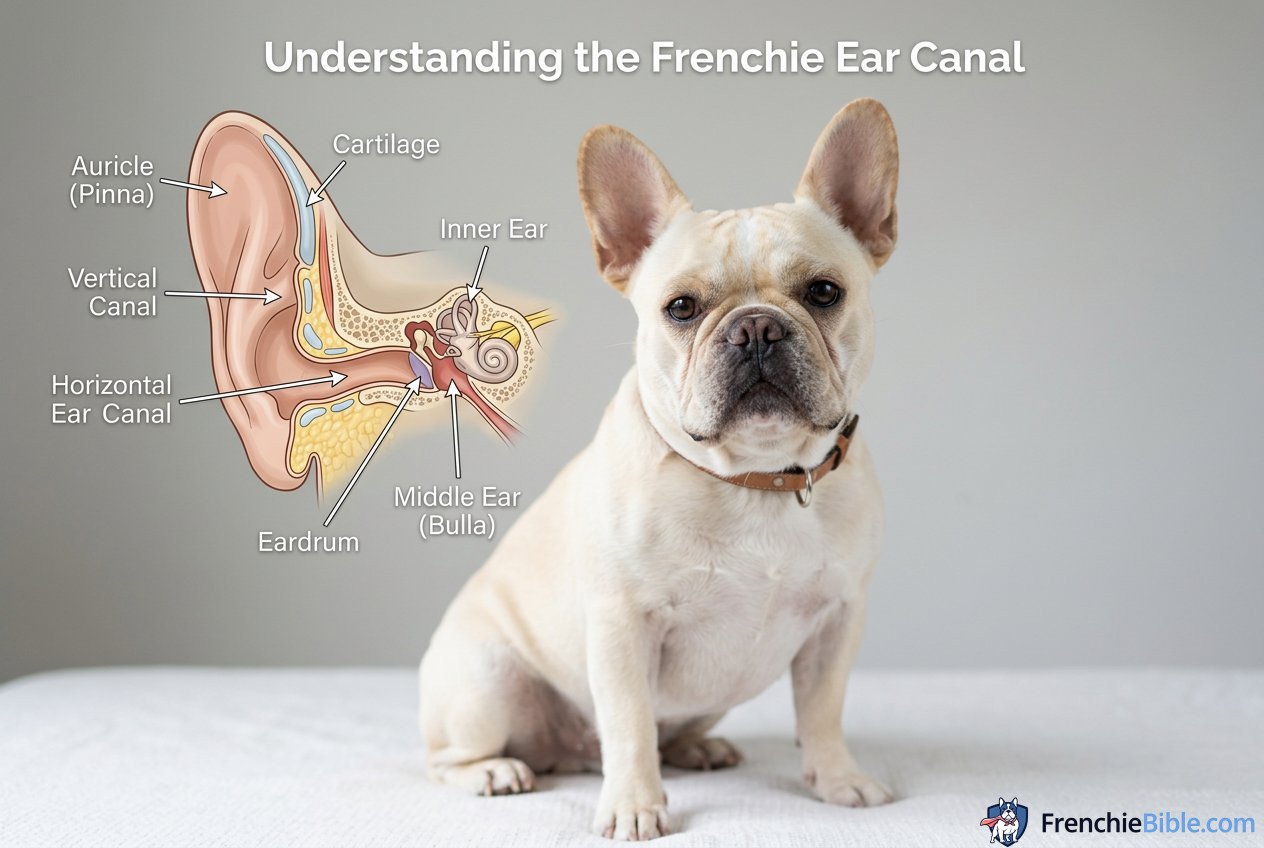
- The Vertical Canal: This goes straight down from the opening you can see on the outside.
- The Horizontal Canal: At the bottom of the vertical drop, the canal makes a sharp 90-degree turn inward toward the skull, ending at the eardrum.
This “L” shape is an evolutionary design flaw when it comes to keeping the ear clean. Gravity pulls wax, debris, and moisture down the vertical canal, but there is no natural way for it to easily escape the horizontal canal. It just sits there at the bottom, trapped in a dark, warm, and often moist environment. Throw in a Frenchie’s tendency for environmental and food allergies (which cause inflammation and overproduction of wax), and you have a recipe for chronic otitis externa (outer ear infections).
What Does Healthy vs. Unhealthy Ear Gunk Look Like?
Not all ear wax is an emergency, but knowing the difference between normal accumulation and a brewing infection will save your dog a lot of pain.
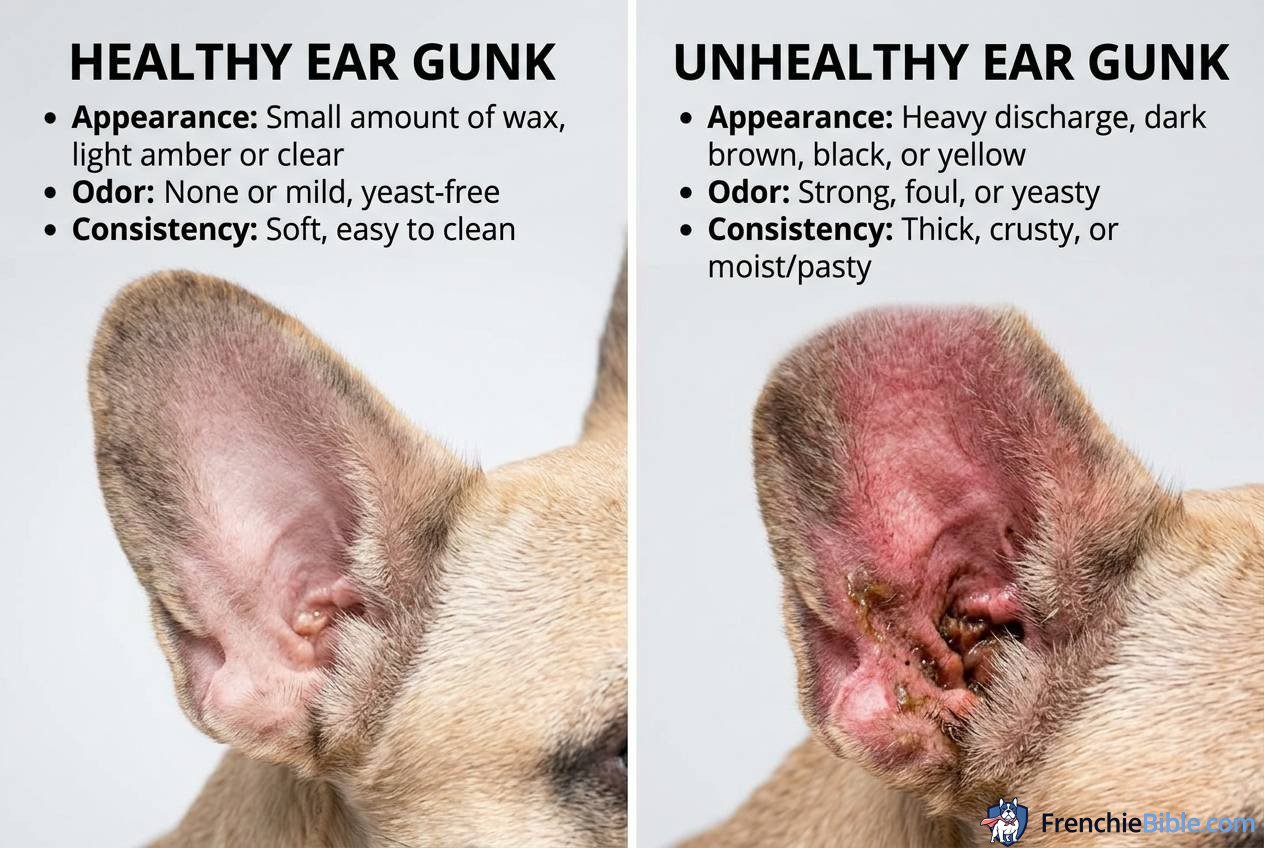
Healthy Frenchie Ears:
– Light pink skin on the inside flap (pinna).
– A small amount of pale yellow or light brown wax.
– No noticeable odor.
– The dog is comfortable when the ear is massaged.
Warning Signs (Time for the Vet, NOT just a cleaning):
– Dark Coffee Ground Debris: This is the classic signature of ear mites.
– Thick, Dark Brown/Black Smelly Discharge: This sweet, pungent smell usually indicates a severe yeast infection (Malassezia).
– Yellow or Green Pus: Indicates a severe bacterial infection.
– Redness, Swelling, and Heat: The ear flap is hot to the touch and bright red.
– Pain: The dog cries, pulls away, or snaps when you touch the base of the ear.
– Head Shaking and Scratching: Frantic scratching at the ear or constantly tilting the head to one side.
Crucial Vet Rule: If your dog exhibits any of the warning signs above, do not clean the ear. Bring them to the vet. If the eardrum is ruptured due to deep infection, pouring standard ear cleaner into the ear can cause permanent deafness or neurological damage. We must look down the canal with an otoscope first.
Gathering Your Supplies
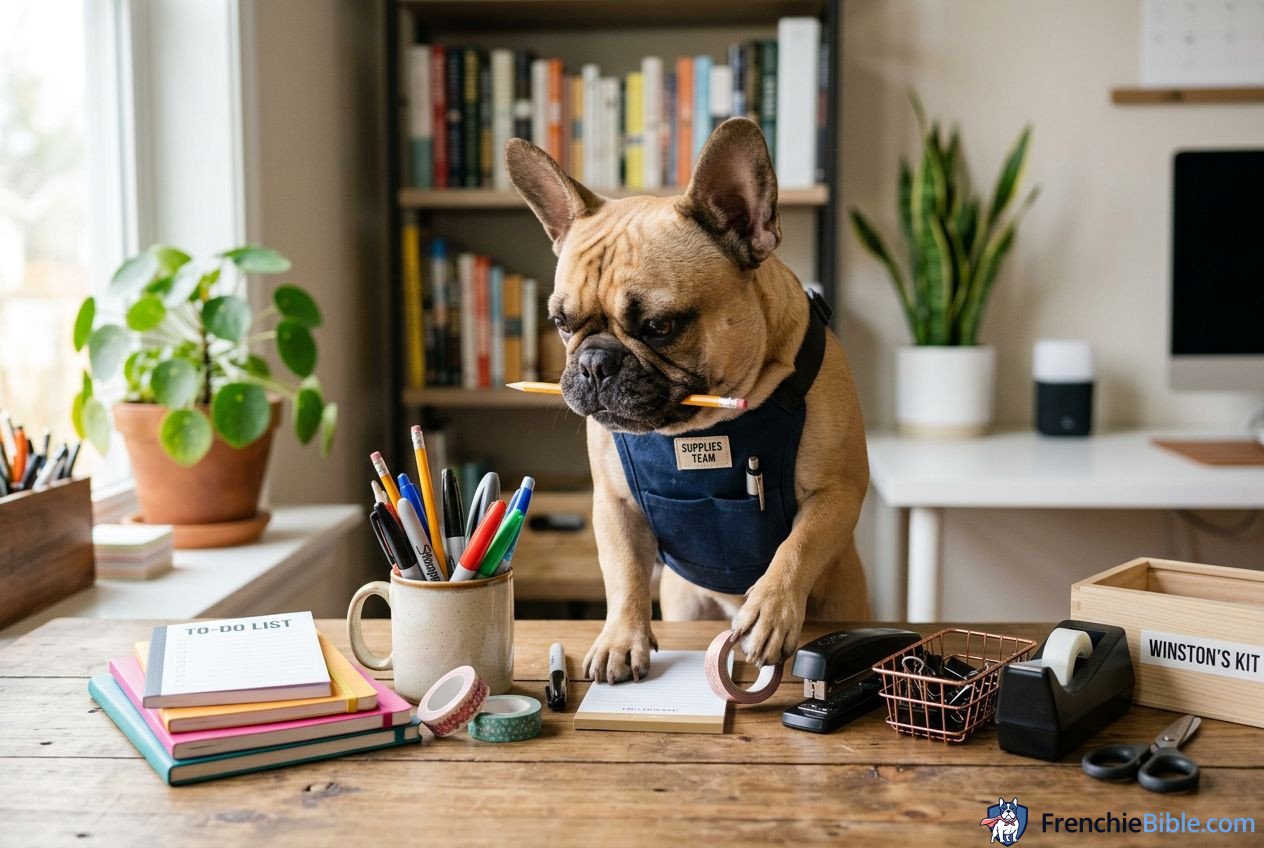
To clean your Frenchie’s ears like a pro, you need the right tools. Throw away the Q-tips right now.
1. The Right Ear Cleanser
Do not use water, alcohol, or hydrogen peroxide. Water creates a moist environment for yeast. Alcohol and peroxide burn inflamed skin and dry it out excessively.
You need An Experienced Breedererinary-approved canine ear cleanser. Look for one that contains:
– Salicylic acid or Lactic acid: To gently exfoliate and break down thick wax.
– Drying agents: To ensure no moisture is left behind.
– My Breeder/Vet Recommendations: your veterinarian may recommend a specific ear cleaning solution, Virbac, or TrizEDTA.
2. Cotton Balls or Gauze Squares
Stock up on large, organic cotton balls or non-woven medical gauze squares. These are safe, soft, and won’t leave irritating fibers behind.
3. High-Value Treats
Ear cleaning feels weird. Your Frenchie will probably hate it at first. Having high-value treats (like boiled chicken, freeze-dried liver, or a lick mat covered in dog-safe peanut butter) is essential for creating a positive association.
4. A Towel
Things are going to get messy. When the dog shakes their head, cleanser and ear gunk will fly.
The Step-by-Step Vet Cleaning Technique
Now for the main event. Here is the exact protocol my technicians and I use in the clinic to clean Frenchie ears safely.
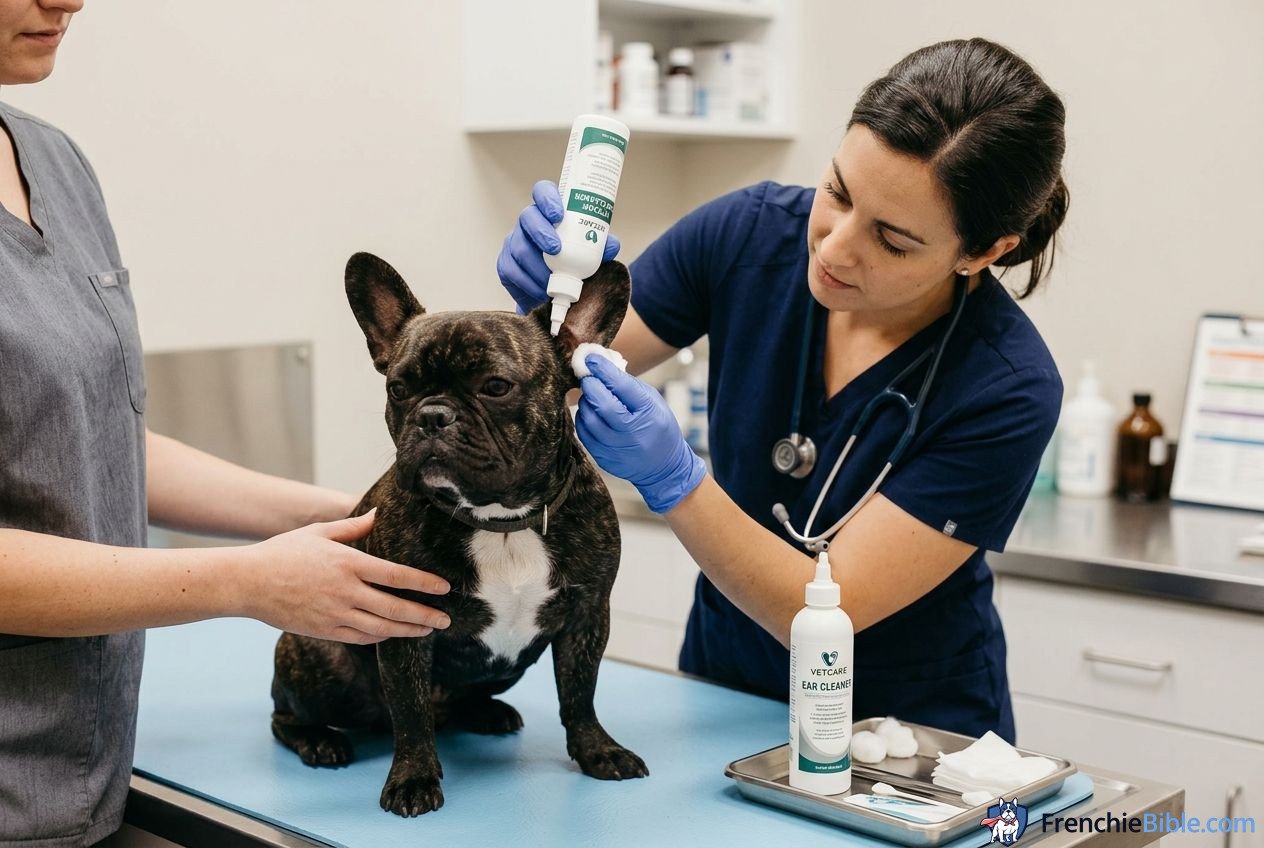
Step 1: Set the Scene and Restrain Gently
Don’t corner your dog when they are hyper. Wait until they are calm and sleepy. Place them on a stable surface, like a couch or grooming table. If your Frenchie is wiggly, have a partner hold them securely by gently hugging their chest and controlling their head. Offer a lick mat or a steady stream of treats.
Step 2: Flood the Ear Canal
This is the part most owners get wrong. They put a few drops of cleaner onto a cotton ball and wipe the outside flap. That does absolutely nothing for the L-shaped canal where the infection brews.
– Lift the ear flap (pinna) straight up to straighten out the vertical canal.
– Insert the tip of the ear cleanser bottle just slightly into the opening. (Do not jam it down!).
– Give the bottle a firm, generous squeeze. You want to literally flood the ear canal until you see the liquid pooling near the top.
Step 3: The “Squish” Massage
Keep holding the ear flap up with one hand so the dog can’t shake their head yet. With your other hand, massage the base of the ear (where the ear meets the jaw/skull).
– You should hear a distinct “squishing” or “sloshing” sound.
– Massage firmly but gently for 20 to 30 seconds.
– This action breaks up the thick, stuck-on debris at the bottom of the horizontal canal and floats it up to the surface.
Step 4: The Shake-Out
Step back and let go of the ear. Your Frenchie will aggressively shake their head. This is exactly what you want! The centrifugal force of the head shake pulls the loosened debris and liquid up and out of the deep L-canal into the upper folds of the ear where you can reach it. Have your towel ready to catch the flying liquid.
Step 5: The Wipe Out
Take a cotton ball or gauze square, wrap it around your index finger, and gently wipe out the liquid and brown gunk from the visible parts of the ear flap and the opening of the canal.
– The Golden Rule: Only go as deep as your finger can comfortably reach. NEVER stick anything further down.
– If the cotton ball comes out filthy, repeat the flushing and massaging process until the cotton ball comes out mostly clean.
Step 6: Dry and Reward
Use a dry cotton ball to gently dab away any excess moisture from the ear flap. Give your Frenchie a jackpot of treats and heavy praise. Repeat the entire process on the other ear.
The Danger of Q-Tips (Cotton Swabs)
I cannot stress this enough: keep Q-tips out of your Frenchie’s ears. When you use a Q-tip, you might think you are scraping wax out, but the reality is you are acting like a ramrod in a cannon. You are pushing the majority of the wax and debris deeper into the horizontal canal, compacting it against the eardrum.
Over time, this compacted wax forms a solid plug, leading to severe pain, chronic infection, and potentially a ruptured eardrum. Q-tips should only be used by veterinarians who are visualizing the canal with an otoscope. Stick to your finger and a cotton ball.
How Often Should You Clean Your Frenchie’s Ears?
Frequency depends heavily on your individual dog’s physiology, environment, and medical history.
- The Average Frenchie: A healthy Frenchie with no history of ear infections usually needs their ears cleaned every 2 to 4 weeks.
- The Allergy-Prone Frenchie: Dogs with environmental or food allergies produce excessive amounts of wax and inflammation. These dogs may need weekly cleanings as a preventative measure.
- Post-Bath/Swimming: Always flush the ears with a drying cleanser after your dog has a bath or goes swimming. Trapped water is the number one cause of sudden yeast infections.
- During Active Treatment: If your vet prescribes ear drops for an active infection, they will likely instruct you to clean the ear first, wait 15 minutes, and then apply the medication. Medication cannot penetrate a thick wall of wax; it must be applied to clean tissue.
Conclusion: A Labor of Love
Cleaning your French Bulldog’s ears might not be the most glamorous part of dog ownership, but it is one of the most vital. By understanding their unique anatomy, ditching the Q-tips, and utilizing the “flush and massage” technique, you can prevent painful infections and keep your Frenchie happy, healthy, and hearing clearly. Remember, if you ever see signs of pain, foul odor, or dark discharge, put the cleaner down and call your vet. Your prompt action can save their hearing.
Frequently Asked Questions (FAQs)
1. My Frenchie hates having their ears cleaned and tries to bite. What should I do?
If your dog is showing aggression during ear cleaning, they are likely in pain. Stop immediately and visit your veterinarian to check for an active infection or ruptured eardrum. If health issues are ruled out, it’s a behavioral issue. You will need to slowly desensitize them using counter-conditioning, starting by just touching the ear and rewarding with high-value treats, gradually working up to applying the liquid over several weeks.
2. Can I use baby wipes to clean my French Bulldog’s ears?
Baby wipes are okay for wiping the very outer flap of the ear (the pinna) to remove surface dirt, but they are completely ineffective for actual ear cleaning. They cannot reach the horizontal canal where the dangerous debris and yeast hide, and they do not contain the drying agents necessary to prevent infections. You must use a liquid ear flush.
3. Why do my Frenchie’s ears smell like corn chips or old cheese?
That distinct “Fritos” or cheesy smell is the classic odor of a yeast infection (Malassezia). Yeast thrives in dark, warm, moist environments. If you smell this, a simple cleaning is no longer enough; you need to see your vet for a cytology test and prescription antifungal medication.
4. Is it normal for my Frenchie’s ears to be hot to the touch?
While the ears hold blood vessels and can regulate temperature, ears that are noticeably hot, bright red, and swollen are a clear sign of severe inflammation. This is often an allergic reaction or an acute infection. This warrants a prompt veterinary visit.
5. Should I pluck the hairs inside my Frenchie’s ears?
Unlike Poodles or Schnauzers, French Bulldogs generally do not grow excessive hair deep inside the ear canal. You do not need to pluck their ear hairs. Plucking can cause micro-trauma to the skin, which actually invites bacterial infections. Leave the fine hairs alone unless specifically instructed otherwise by your vet.