Disclaimer: The information provided in this comprehensive guide is intended for educational and informational purposes only. While I draw upon my extensive experience as a specialized French Bulldog veterinarian and breeder, this content should never substitute for professional veterinary advice, diagnosis, or treatment. Always consult with your primary veterinarian to tailor a health and vaccination plan specifically for your Frenchie’s unique medical history and lifestyle.
Welcome to the definitive guide on French Bulldog vaccinations. Whether you are bringing home a squishy-faced eight-week-old puppy or adopting a mature, loving adult Frenchie, safeguarding their health is your absolute top priority. As a veterinarian who has dedicated years to the nuances of this charming yet medically complex breed, and as a breeder who has guided countless puppies into healthy adulthood, I cannot emphasize enough the life-saving importance of a proper vaccination schedule.
Related Reading: Training & Behavior | Frenchie Puppy Guide | Best Food for Frenchies
French Bulldogs are a brachycephalic (flat-faced) breed with unique physiological traits that can sometimes make them more vulnerable to respiratory illnesses and other complications. Because of their unique genetic makeup and susceptibility to certain health issues, preventing disease before it strikes is not just a recommendation—it is a necessity. Vaccines are the most effective tool we have to protect your Frenchie from highly contagious, debilitating, and potentially fatal diseases.
In this exhaustive 3000+ word guide, we will break down exactly what vaccines your French Bulldog needs, when they need them, and why. We will explore the differences between core and non-core vaccines, dive into the specific timeline from their first weeks of life through their golden senior years, discuss potential side effects, and even touch upon advanced concepts like titer testing. By the end of this article, you will have the knowledge and confidence of a seasoned Frenchie parent, ready to work hand-in-hand with your vet to give your dog the longest, healthiest life possible.
Understanding Why Vaccinations Are Crucial for French Bulldogs
Before we dive into the specific schedule, it is vital to understand the “why” behind vaccinations. When a puppy is born, they receive maternal antibodies through their mother’s milk (colostrum) in the first few days of life. This natural immunity is incredible, but it is temporary. As the puppy grows, these maternal antibodies gradually fade, typically dropping to vulnerable levels between 6 and 16 weeks of age.
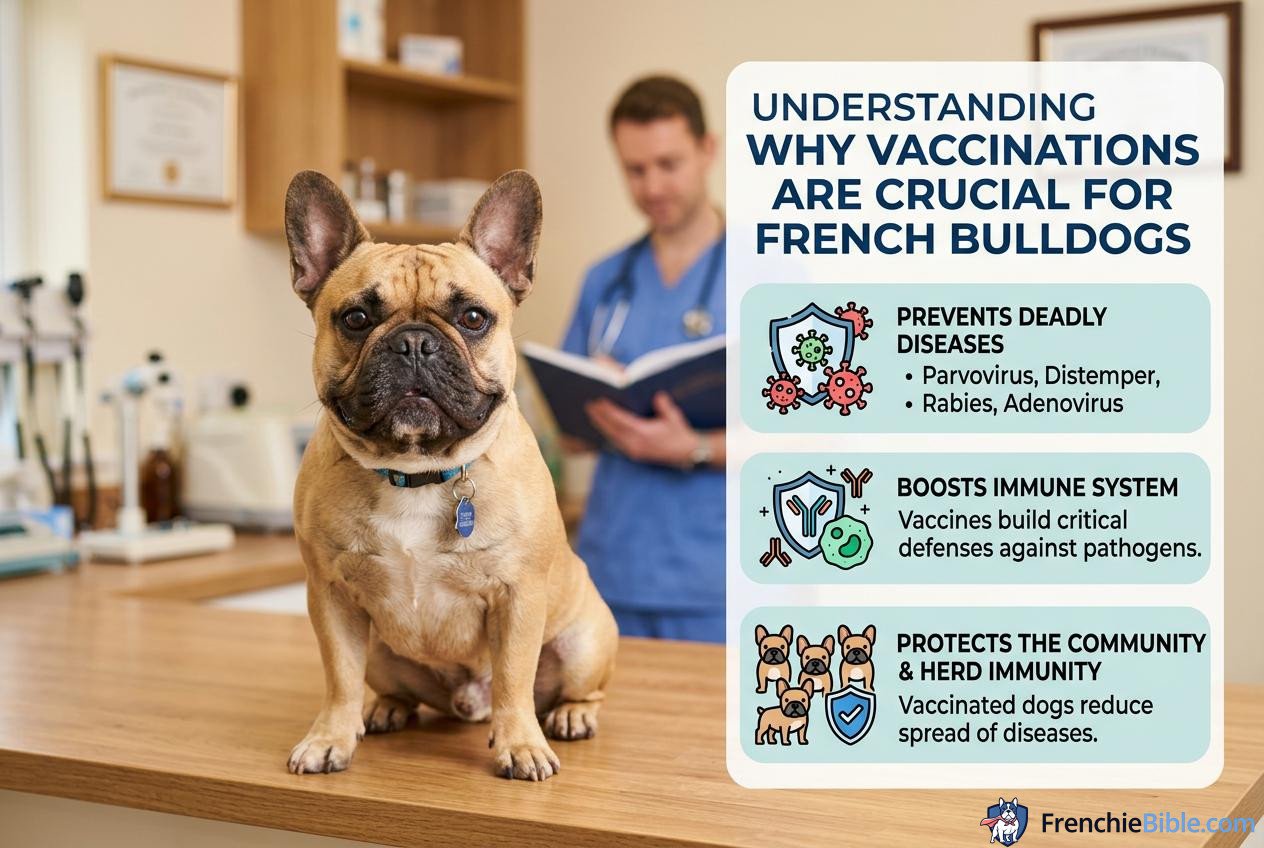
This creates a “window of susceptibility.” During this time, the maternal antibodies are low enough that the puppy can catch a disease, but they might still be high enough to interfere with the effectiveness of a vaccine. This is exactly why puppies require a series of vaccinations rather than just one shot. We give multiple doses to ensure we successfully stimulate the puppy’s own immune system the moment the mother’s protection wears off.
The Unique Immune System of Frenchies
While French Bulldogs have the same basic immune system as any other dog breed, their physical structure means they handle illness differently. A respiratory infection that causes a mild cough in a Golden Retriever can rapidly become life-threatening pneumonia in a French Bulldog due to their narrow airways, elongated soft palates, and stenotic nares. Preventing respiratory pathogens like Bordetella, Canine Influenza, and Canine Distemper is absolutely critical for brachycephalic breeds.
Core vs. Non-Core Vaccines
Veterinary immunologists classify canine vaccines into two distinct categories: Core and Non-Core. Understanding this distinction helps you avoid both under-vaccinating and over-vaccinating your Frenchie.
Core Vaccines: These are the essential vaccines that every dog, regardless of their location, lifestyle, or breed, must receive. They protect against diseases that are globally endemic, highly contagious, and have high mortality rates. For French Bulldogs, core vaccines include:
- Canine Parvovirus (CPV)
- Canine Distemper Virus (CDV)
- Canine Adenovirus type 2 (CAV-2, protecting against Hepatitis)
- Rabies
Non-Core (Lifestyle) Vaccines: These are recommended based on your dog’s specific lifestyle, geographic location, and risk of exposure. A Frenchie living in a high-rise city apartment who only walks on pavement has a different risk profile than a Frenchie living on a farm near wooded areas. Non-core vaccines include:
- Bordetella Bronchiseptica (Kennel Cough)
- Leptospirosis
- Lyme Disease
- Canine Influenza (Dog Flu)
Now, let’s map out exactly when your French Bulldog should receive these vital protections.
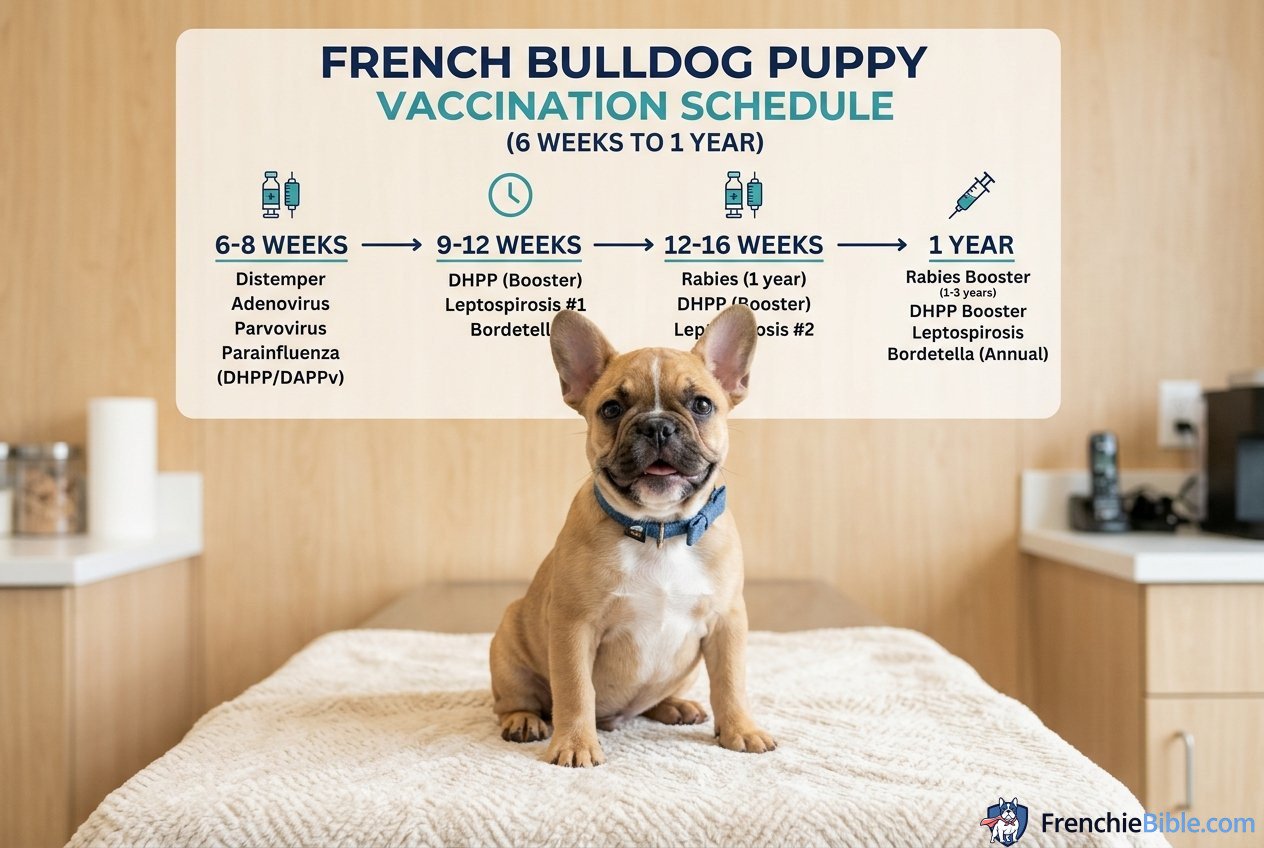
The French Bulldog Puppy Vaccination Schedule (6 Weeks to 1 Year)
The first year of your Frenchie’s life is a whirlwind of growth, training, and veterinary visits. Adhering strictly to the puppy vaccination schedule is the most important foundation you can build for their long-term health.
6 to 8 Weeks: The First Line of Defense
Ideally, your Frenchie puppy is still with their breeder at 6 weeks of age, but they will likely receive their first round of vaccines right around the time they go to their forever home (typically 8 weeks).
What they need:
- DAPPv (or DHPP): This is a combination vaccine covering Distemper, Adenovirus (Hepatitis), Parvovirus, and Parainfluenza. It is the absolute cornerstone of puppy protection.
- Fecal Exam & Deworming: While not a vaccine, puppies at this age universally need deworming to clear out intestinal parasites inherited from the mother.
Breeder Tip: Always ask your breeder for the exact medical records. Do not accept a verbal “they’ve had their shots.” You need the sticker labels from the vaccine vials showing exactly what was administered and on what date.
10 to 12 Weeks: Building Immunity
By the time your puppy is 10 to 12 weeks old, maternal antibodies are rapidly dropping. It is crucial to boost the immune system now.
What they need:
- DAPPv Booster: The second dose of the core combination vaccine.
- Bordetella (Optional but recommended): If your puppy will be attending puppy kindergarten, going to a groomer, or playing in areas with other dogs, the Bordetella vaccine is highly recommended. Given the respiratory vulnerabilities of Frenchies, I consider this almost a core vaccine for the breed.
- Leptospirosis & Lyme (Optional): Discuss these with your vet based on your geographic location. If you live in an area with high tick prevalence (Lyme) or wildlife/rodent activity (Lepto), starting these series now may be appropriate.
A Note on Socialization vs. Safety: At this age, your puppy is not fully protected. Avoid high-traffic dog areas like dog parks, pet store floors, and public sidewalks. Socialize them in controlled environments with fully vaccinated adult dogs known to you.
14 to 16 Weeks: Completing the Puppy Series
This is the final stretch of the initial puppy series. By 16 weeks, the maternal antibodies should be completely gone, and the puppy’s immune system must be fully capable of defending itself.
What they need:
- DAPPv Final Booster: The third and usually final dose of the core puppy series. Some vets recommend a final dose at 18-20 weeks for high-risk breeds, so consult your doctor.
- Rabies (Core): This is legally required in almost all jurisdictions. It is a vital vaccine for public health and the safety of your pet. It is usually given at 16 weeks, never earlier than 12 weeks.
- Lifestyle Boosters: The second doses of Leptospirosis, Lyme, or Canine Influenza if you opted to start those series at 12 weeks.
6 Months: The Rabies Milestone
In some regions or depending on specific veterinary protocols, the initial Rabies vaccine might be delayed to 6 months, or a booster might be required. Always follow local laws regarding Rabies vaccination, as proof is required for licensing, travel, and boarding.
At the 6-month mark, your Frenchie should also be spayed or neutered (depending on your vet’s recommendation for the breed), and this is an excellent time for a comprehensive health check.
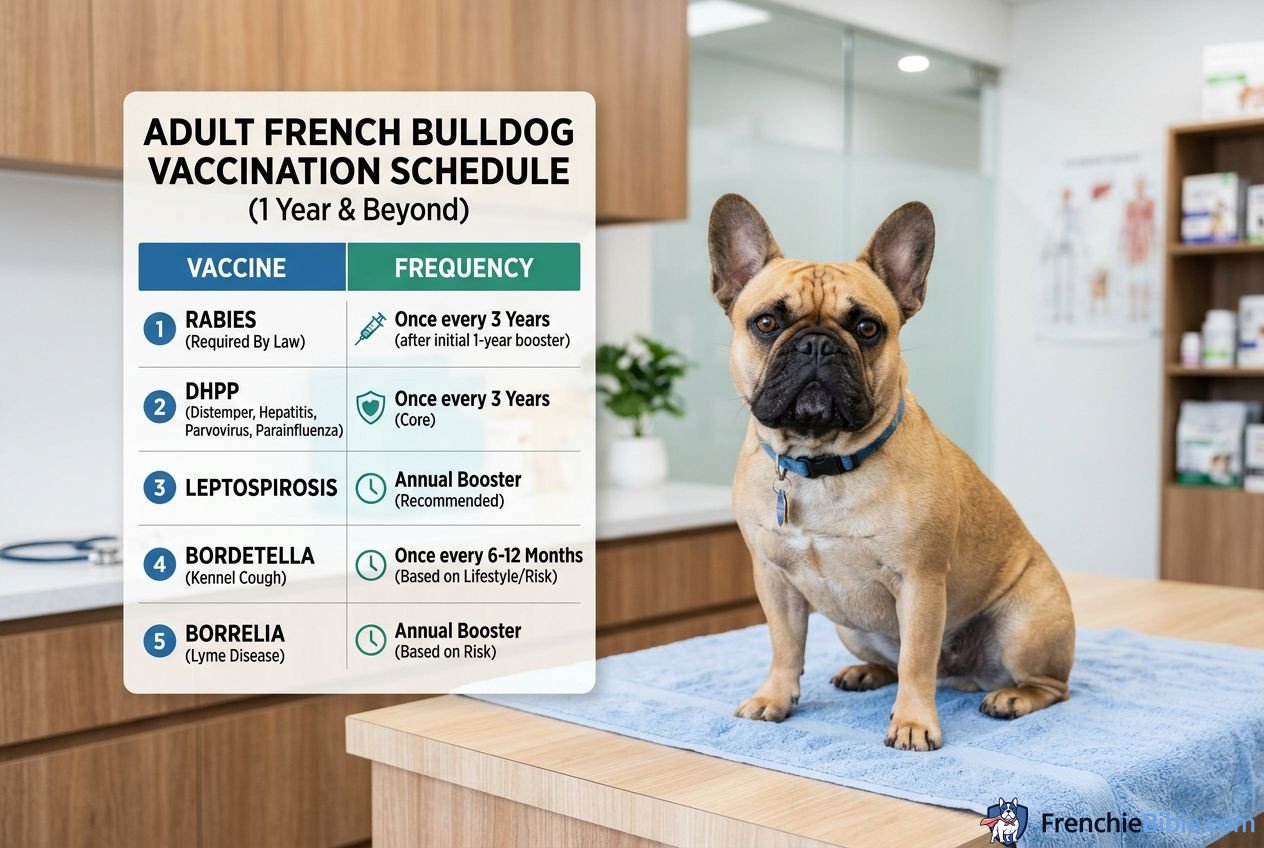
Adult French Bulldog Vaccination Schedule (1 Year and Beyond)
Congratulations, your Frenchie has survived puppyhood! But vaccinations do not stop at one year of age. The immune system requires periodic “reminders” to maintain high levels of protective antibodies.
The 1-Year Boosters
Exactly one year after the final puppy shots (so when your dog is roughly 16 months old), they need their first adult boosters.
What they need:
- DAPPv Booster: This “one-year booster” solidifies the immunity built during puppyhood.
- Rabies Booster: The first adult Rabies booster is required one year after the puppy shot. Depending on the specific vaccine brand used and local laws, this shot will be valid for either 1 or 3 years.
- Lifestyle Boosters: Annual boosters for Bordetella, Leptospirosis, Lyme, and Canine Influenza, if your dog’s lifestyle still warrants them.
Every 1 to 3 Years: Maintaining Protection
After the 1-year booster, the schedule shifts based on modern veterinary immunology guidelines (such as those from the American Animal Hospital Association – AAHA).
- Core Vaccines (DAPPv): Modern research shows that immunity from the core DAPPv vaccine lasts much longer than one year. The standard recommendation is now to booster the DAPPv vaccine every 3 years for adult dogs.
- Rabies: Depending on local laws and the vaccine used, Rabies is given every 1 or 3 years. You must maintain a valid Rabies certificate.
- Non-Core Vaccines: Unlike core vaccines, the immunity provided by non-core vaccines like Bordetella, Leptospirosis, and Canine Influenza is short-lived. If your dog needs these vaccines, they must be boostered every 1 year (and sometimes every 6 months for Bordetella if the dog is frequently boarded).
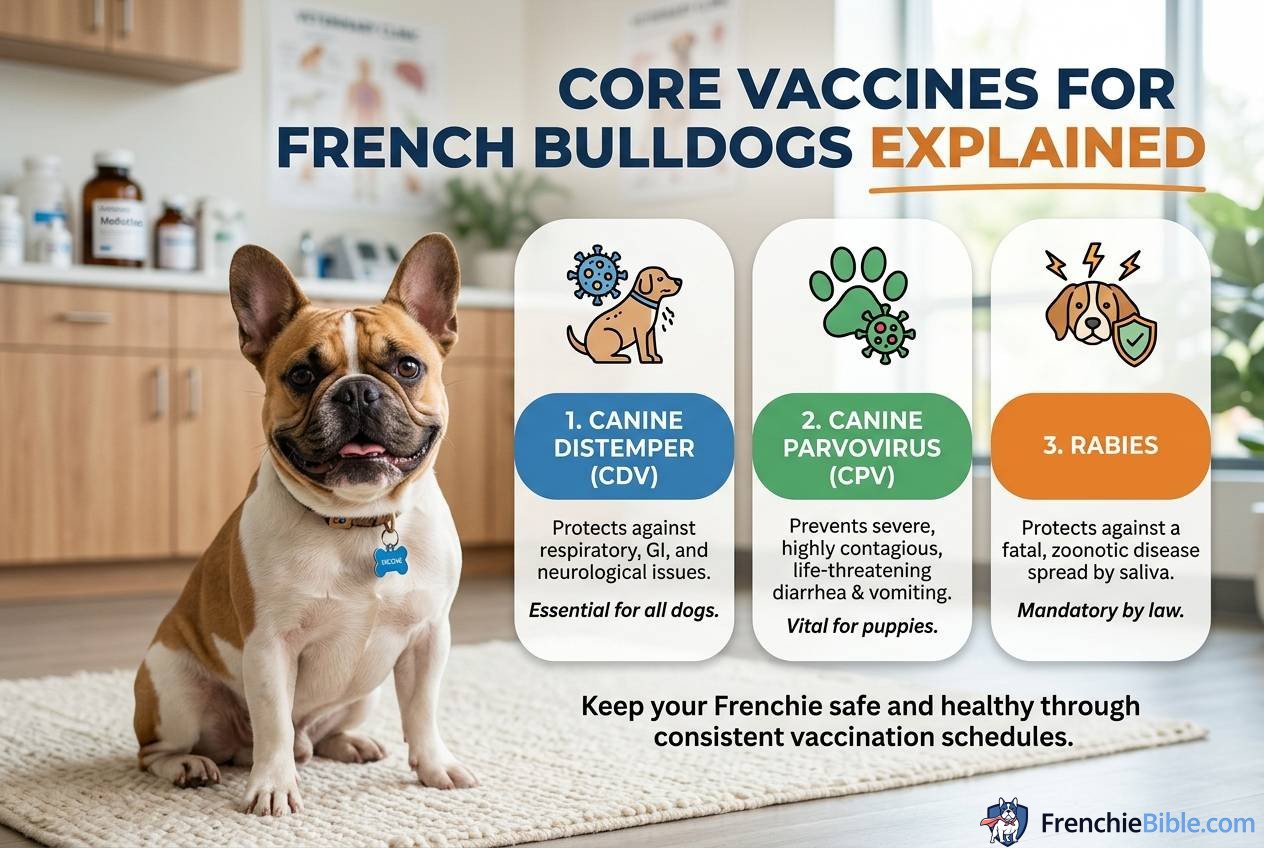
Core Vaccines for French Bulldogs Explained
To be an informed Frenchie owner, you should understand exactly what these vaccines are protecting your dog against. Let’s break down the core diseases.
Canine Parvovirus
Parvovirus is a highly contagious, extremely resilient virus that attacks the gastrointestinal tract and the immune system. It is spread through contact with infected feces and can survive in the environment for months or even years.
Symptoms: Severe, bloody diarrhea, intractable vomiting, lethargy, loss of appetite, and rapid dehydration.
Why it’s critical for Frenchies: Parvo is incredibly lethal, especially to puppies. The dehydration occurs so rapidly that small, compact breeds like Frenchies can succumb within days if not aggressively treated in a veterinary hospital. Vaccination is nearly 100% effective at preventing this nightmare.
Canine Distemper Virus
Distemper is a relative of the human measles virus. It is airborne and highly contagious, attacking the respiratory, gastrointestinal, and eventually the nervous system.
Symptoms: It often starts with a cough, fever, and thick yellow discharge from the eyes and nose. As it progresses to the neurological phase, it causes seizures, muscle twitching, and paralysis.
Why it’s critical for Frenchies: Any disease that heavily impacts the respiratory tract is dangerous for a Frenchie. The thick nasal discharge can completely block their already narrow airways, making breathing incredibly difficult. Survival rates for Distemper are low, and survivors often have permanent neurological damage.
Canine Adenovirus (Hepatitis)
Canine Adenovirus Type 1 causes infectious canine hepatitis, a severe disease affecting the liver, kidneys, spleen, and lungs. The vaccine usually uses Adenovirus Type 2 (which causes respiratory illness) because it cross-protects against Type 1 with fewer side effects.
Symptoms: Fever, abdominal pain, vomiting, diarrhea, jaundice (yellowing of the gums and eyes), and “blue eye” (corneal edema).
Why it’s critical for Frenchies: Liver failure is a devastating condition for any dog. Protecting against Adenovirus is a standard, essential part of the core combination vaccine.
Rabies
Rabies is a fatal viral disease that affects the central nervous system of all mammals, including humans. It is primarily transmitted through the bite of an infected animal (bats, raccoons, skunks, foxes).
Symptoms: Behavioral changes (unusual aggression or extreme shyness), excessive drooling, difficulty swallowing, staggering, seizures, and eventual paralysis and death.
Why it’s critical for Frenchies: Rabies is 100% fatal once symptoms appear. Vaccination is a strict legal requirement globally to protect public health. Even if your Frenchie is an indoor dog, bats can enter homes, and interactions with wildlife can happen unexpectedly.
Non-Core (Lifestyle) Vaccines for French Bulldogs
As a Frenchie specialist, I evaluate these lifestyle vaccines carefully. While no one wants to over-vaccinate, failing to protect a dog with a specific risk profile is equally dangerous.
Bordetella Bronchiseptica (Kennel Cough)
Bordetella is the primary bacterial culprit behind Canine Infectious Respiratory Disease Complex (CIRDC), commonly known as kennel cough. It is highly contagious and spreads rapidly in areas where dogs congregate.
Why Frenchies often need it: If a Golden Retriever gets kennel cough, it sounds like a goose honk for a week. If a French Bulldog gets kennel cough, the inflammation in their narrow trachea and elongated soft palate can cause severe respiratory distress, require oxygen therapy, or develop into life-threatening pneumonia. If your Frenchie goes to dog parks, daycare, groomers, or boarding facilities, this vaccine is essential.
Leptospirosis
Leptospirosis is a bacterial infection transmitted through the urine of infected wildlife (rats, mice, raccoons, deer) that contaminates soil and standing water.
Why Frenchies might need it: If you live in an urban environment with a heavy rat population, or if you take your Frenchie hiking where they might drink from puddles or streams, the Lepto vaccine is highly recommended. Leptospirosis causes severe kidney and liver failure and is zoonotic (meaning it can be transmitted from your dog to you).
Lyme Disease
Lyme disease is a tick-borne illness caused by the bacterium Borrelia burgdorferi.
Why Frenchies might need it: If you live in the Northeast, Upper Midwest, or Pacific Coast of the United States (or other globally endemic areas) and your Frenchie spends time in wooded or tall grass areas, this vaccine should be considered alongside year-round strict tick prevention medication. Lyme disease causes painful arthritis, fever, and can lead to severe kidney complications.
Canine Influenza (Dog Flu)
Dog flu is a highly contagious viral respiratory infection. Like human flu, different strains circulate (e.g., H3N8, H3N2).
Why Frenchies might need it: Similar to Bordetella, any respiratory virus is exceptionally dangerous for a brachycephalic breed. Outbreaks of dog flu occur periodically. If your area is experiencing an outbreak, or if your dog is frequently boarded, your vet may strongly recommend this vaccine.
Potential Side Effects and Reactions to Vaccines
A common concern among French Bulldog owners is the risk of vaccine reactions. It is true that vaccines, like any medical intervention, carry some risk of side effects. However, the risk of your dog dying from Parvovirus or Distemper is exponentially higher than the risk of a severe vaccine reaction.
Common Mild Reactions
It is completely normal for your Frenchie to feel a bit “under the weather” for 24 to 48 hours after receiving vaccinations. The immune system is working hard to process the vaccine and build antibodies.
Common, mild, and acceptable reactions include:
- Mild lethargy or sleeping more than usual.
- A slight decrease in appetite.
- Mild tenderness or a small, firm bump at the injection site.
- A low-grade fever.
If these symptoms last longer than two days, you should contact your veterinarian.
Severe Allergic Reactions (Anaphylaxis)
While rare, severe allergic reactions to vaccines can occur, and they usually happen within minutes to a few hours after the injection. French Bulldogs, being somewhat prone to allergies generally, should be monitored closely after vet visits.
Seek IMMEDIATE emergency veterinary care if you observe:
- Facial swelling (puffy eyes, swollen muzzle).
- Hives or severe itchiness over the body.
- Vomiting or diarrhea within an hour of the vaccine.
- Difficulty breathing, excessive panting, or pale gums.
- Collapse, severe weakness, or unsteadiness.
Breeder Tip: If your Frenchie has ever had an allergic reaction to a vaccine, you must inform your vet before any future vaccinations. The vet may alter the vaccine protocol, split vaccines up so they aren’t given on the same day, or pre-medicate the dog with an antihistamine like diphenhydramine before administering the shots.
How to Care for Your Frenchie After Vaccination
- Keep it low-key: Don’t plan a massive hike or a trip to the dog park right after a vet visit. Let them rest on the sofa.
- Monitor closely: Keep an eye on them for the first few hours to watch for any signs of an allergic reaction.
- Don’t panic over a bump: A small, painless lump at the injection site is a common inflammatory response. It should disappear within a few weeks. If it grows, becomes painful, or persists for more than a month, have your vet check it.
Titer Testing: An Alternative to Over-Vaccination?
In recent years, many proactive dog owners have expressed concerns about “over-vaccination,” questioning whether administering core vaccines every three years is truly necessary if the dog’s immune system already has sufficient antibodies.
This is where titer testing comes into play.
What is Titer Testing?
A titer test is a simple blood test that measures the concentration (or “titer”) of specific antibodies in your dog’s bloodstream. By drawing blood and analyzing it, the laboratory can determine if your Frenchie still has a protective level of immunity against Parvovirus, Distemper, and Adenovirus.
If the titer levels are high enough, it proves the dog’s immune system remembers the disease and is prepared to fight it off. Therefore, revaccinating for those specific diseases that year is medically unnecessary.
Is Titer Testing Right for Your Frenchie?
As a specialist, I am a strong advocate for titer testing for adult French Bulldogs (after they have completed their puppy series and their 1-year boosters).
- Pros: It prevents unnecessary stimulation of the immune system, reduces the risk of vaccine reactions, and provides peace of mind that your dog is actively protected.
- Cons: Titer testing is usually more expensive than simply giving the vaccine, and it requires drawing blood. Also, titer tests are generally not accepted for Rabies (which is legally mandated) or for non-core vaccines like Bordetella, which provide short-lived immunity that titers cannot accurately measure for long-term protection.
If you choose this route, you would titer test for DAPPv every 1 to 3 years. If the test shows low immunity, you booster the vaccine. If it shows high immunity, you skip the vaccine and test again later.
Conclusion
Navigating the world of canine vaccinations can feel overwhelming, but it is one of the most profound responsibilities of French Bulldog ownership. By understanding the unique vulnerabilities of the brachycephalic airway, distinguishing between core and non-core needs, and adhering to a scientifically backed schedule, you are building an invisible fortress of health around your beloved companion. Work closely with a trusted veterinarian, keep meticulous records, and never hesitate to ask questions. Your Frenchie’s long, vibrant life depends on it.
Frequently Asked Questions (FAQs)
Q1: My French Bulldog is purely an indoor dog and uses pee pads on an apartment balcony. Do they still need vaccines?
Yes, absolutely. Core diseases like Parvovirus and Distemper are incredibly hardy. You can track Parvovirus into your apartment on the bottom of your shoes. Additionally, Rabies vaccination is a legal requirement regardless of the dog’s lifestyle, as bats or other wildlife can occasionally enter homes.
Q2: Is it safe for my Frenchie to get multiple vaccines on the same day?
For most healthy dogs, yes. However, because Frenchies can have sensitive immune systems, some veterinarians and owners prefer to split vaccinations, giving one or two shots and then returning two weeks later for the rest. This minimizes the burden on the immune system and makes it easier to identify the culprit if an allergic reaction occurs. Discuss “splitting vaccines” with your vet.
Q3: Can my fully vaccinated Frenchie still get Kennel Cough (Bordetella)?
Yes, they can. The Bordetella vaccine is much like the human flu shot; it protects against the most common strains of the bacteria, but it does not cover every possible pathogen that causes the “kennel cough” syndrome. However, if a vaccinated dog does catch it, the symptoms are usually significantly milder and resolve much faster than in an unvaccinated dog, which is crucial for Frenchies to prevent pneumonia.
Q4: I adopted an adult French Bulldog with no medical records. What should I do about vaccines?
Your veterinarian will likely treat your dog as if they have never been vaccinated. They will typically administer a single dose of the DAPPv core combination vaccine and a Rabies vaccine. Some vets may recommend a DAPPv booster 3 to 4 weeks later to ensure a robust immune response, followed by a transition to the standard adult 1-year and 3-year schedule. Alternatively, your vet could run a titer test first to check for existing immunity before deciding to vaccinate.
Q5: How much do puppy vaccinations usually cost for a French Bulldog?
Costs vary wildly depending on your geographic location and the specific clinic. Generally, you can expect each set of puppy shots (the office visit plus the vaccines) to cost between $75 and $150. Given that puppies need 3 to 4 visits, the total cost for the first year of vaccines will likely range from $250 to $600. Remember, this cost is minimal compared to the thousands of dollars required to hospitalize a puppy with Parvovirus.