Disclaimer: I am a French Bulldog specialist and breeder with over 10 years of experience, but this article is for informational and educational purposes only. It is not a substitute for professional veterinary or certified behavioral advice. Always consult a qualified veterinarian or a certified dog behaviorist if your dog is exhibiting aggressive behaviors that could endanger itself, other animals, or humans.
As a French Bulldog specialist and breeder with over a decade of clinical and behavioral experience, I often hear panicked owners ask, “Why does my sweet French Bulldog suddenly attack other dogs?” Frenchies are known for their clownish, affectionate nature, making it shocking when they lunge or snap at a fellow canine. The truth is, while French Bulldogs are companion animals, they have a complex psychological and genetic background that can sometimes lead to aggression—specifically, same-sex aggression, which is surprisingly common, especially among females.
Related Reading: Health & Diet | Frenchie Puppy Guide
In this comprehensive guide, we will dive deep into the psychology, genetics, and environmental triggers behind French Bulldog dog-on-dog aggression. We will explore why same-sex aggression occurs, how to recognize the early warning signs before a fight breaks out, and the actionable steps you can take to manage and correct this behavior. Whether you are a novice owner dealing with a suddenly reactive puppy or an experienced handler navigating a multi-dog household, this guide will provide you with the clinical insights and practical training techniques needed to restore peace.
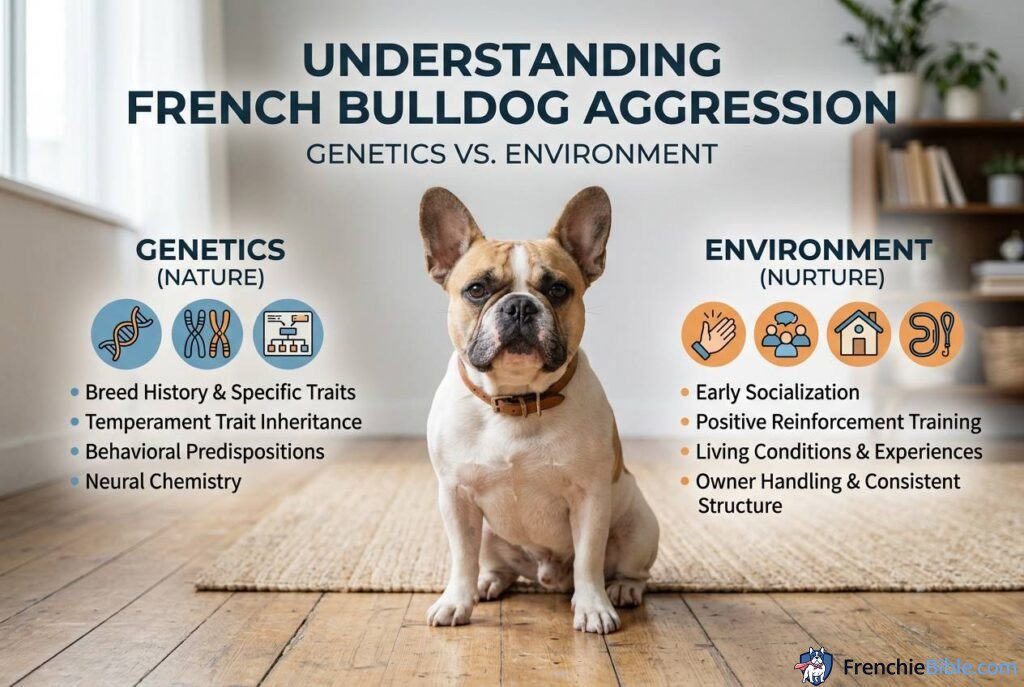
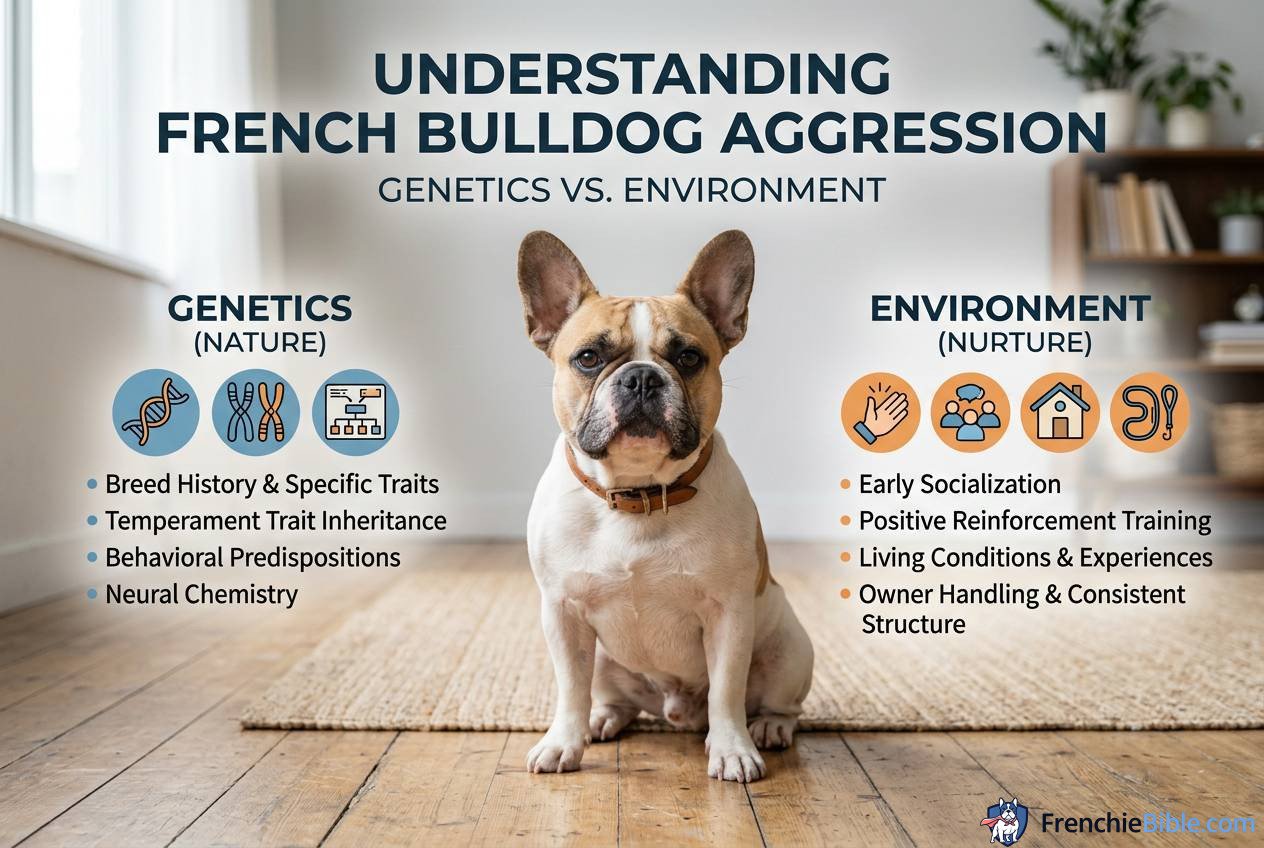
Understanding french bulldog aggression: Genetics vs. Environment
To effectively address aggression in French Bulldogs, we must first understand where it comes from. Aggression is rarely a random act; it is usually a manifestation of underlying stress, fear, resource guarding, or instinctual drives.
The Bulldog Lineage: A Stubborn Streak
French Bulldogs are descendants of the English Bulldog, a breed originally utilized for bull-baiting. While generations of selective breeding have softened the Frenchie into a loving companion, that historical tenacity and stubbornness remain in their DNA. When a Frenchie decides they don’t like another dog, their stubborn nature makes it difficult to redirect their focus. They are not easily intimidated, meaning that if they feel challenged, they are more likely to stand their ground rather than retreat.
Fear-Based Aggression: The Lack of Early Socialization
One of the primary causes of aggression in French Bulldogs is fear resulting from inadequate early socialization. The critical socialization window for puppies is between 3 and 14 weeks of age. If a Frenchie is not exposed to a variety of dogs in a positive, controlled manner during this period, they may view unfamiliar dogs as a threat later in life. Fear-based aggression often looks like defensive posturing: barking, lunging, and snapping to keep the perceived threat at a distance.
Resource Guarding: Protecting What’s Theirs
Frenchies form intense, velcro-like bonds with their owners. This loyalty can sometimes cross the line into possessiveness, leading to resource guarding. A French Bulldog may attack another dog if they perceive that dog is getting too close to their food, their favorite toy, or, most commonly, their owner. This behavior is rooted in anxiety and a perceived need to protect high-value resources.
Same-Sex Aggression in French Bulldogs
While any Frenchie can show aggression under the wrong circumstances, same-sex aggression (SSA) is a specific and prevalent issue within the breed. This occurs when a dog exhibits hostility primarily towards dogs of the same sex.

Why Are Female French Bulldogs Particularly Prone to SSA?
In my years of breeding and consulting, the most intense cases of same-sex aggression I encounter involve two female French Bulldogs living in the same household. Female-on-female aggression is notoriously difficult to manage. But why?
In canine packs, females often compete more fiercely for status and breeding rights. While domestic dogs don’t form true “packs” in the wolf sense, female Frenchies can be highly competitive over resources, including owner attention and physical space. When two females reach social maturity (usually between 1 to 3 years of age), tensions can escalate rapidly. Unlike male altercations, which often involve a lot of noise and posturing but end quickly once dominance is established, female fights tend to be silent, intense, and aimed at inflicting serious harm. Females are less likely to back down, holding grudges that make peaceful coexistence incredibly challenging.
Male-on-Male Aggression: Testosterone and Territory
Male same-sex aggression is also common, though it often stems from different triggers. Intact (unneutered) males are heavily influenced by testosterone, making them more competitive, territorial, and prone to challenging other intact males. They may engage in posturing, mounting, and fighting to establish dominance or in the presence of a female in heat. Neutering can reduce hormonally driven aggression, but it is not a cure-all if the aggression has become a learned behavior.
Recognizing the Early Warning Signs of an Attack
French Bulldogs are not great communicators when it comes to body language. Their lack of a long tail, their cropped-looking ears (bat ears), and their squished faces (brachycephalic structure) make it hard for other dogs—and their owners—to read their signals. A Frenchie might be giving warning signs that are easily missed until the moment they snap.
The “Whale Eye” and Hard Stare
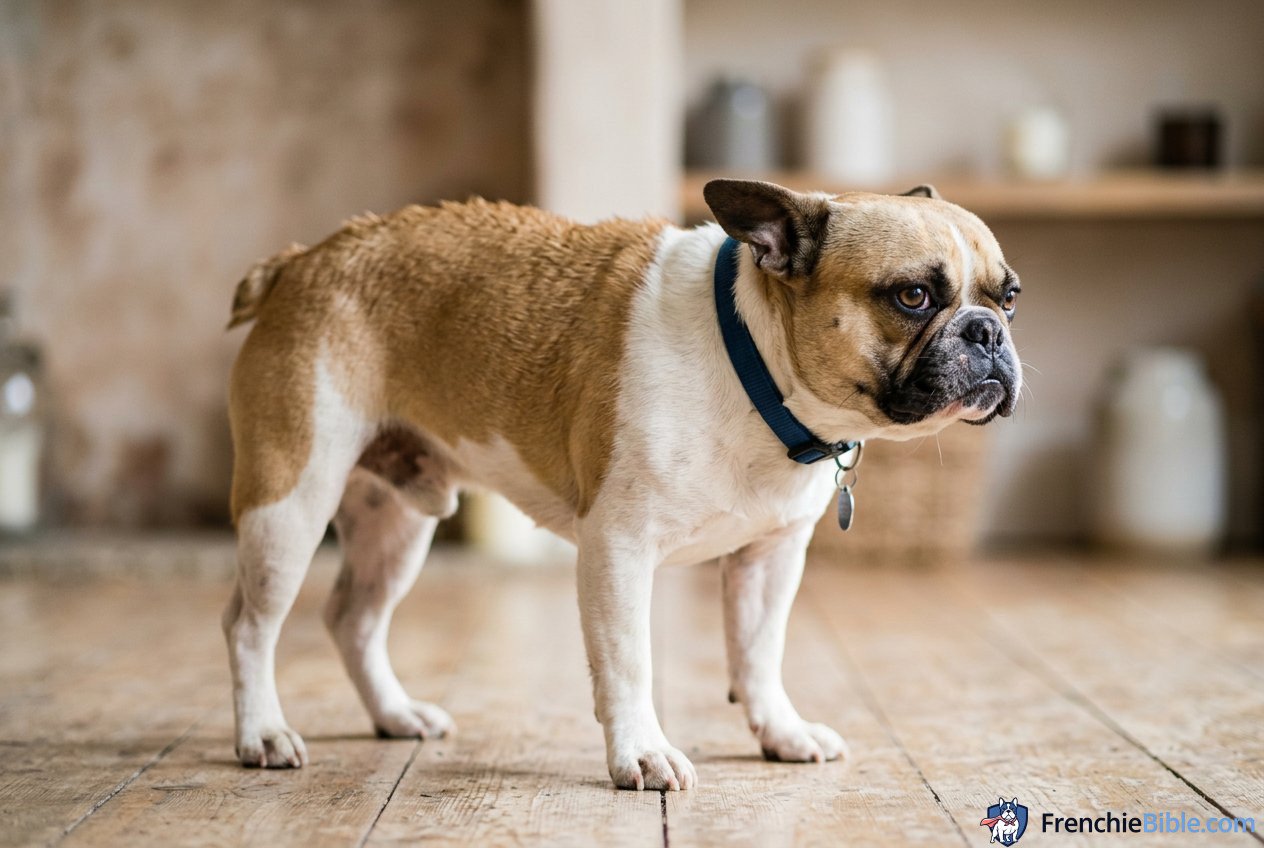
One of the first signs of escalating tension is the hard stare. The Frenchie will lock eyes with the target dog, becoming completely still. You may notice “whale eye,” where the whites of their eyes are visible as they turn their head slightly away but keep their gaze fixed.
Stiff Body Posture and Raised Hackles
A relaxed Frenchie has a loose, wiggly body. An aggressive or highly aroused Frenchie will become rigid. Their weight shifts forward, their ears pin back tightly, and the hair along their spine (hackles) may stand up. This piloerection is an involuntary response to adrenaline, indicating that the dog is highly stimulated and ready for action.
Low Growling and Lip Licking
Because of their short snouts, Frenchies often make snorting and grunting noises that can be mistaken for growling. However, a true aggressive growl is typically low and sustained. Additionally, nervous behaviors like rapid lip licking or yawning out of context can indicate that the dog is uncomfortable and nearing their breaking point.
How to Manage and Prevent Dog-on-Dog Aggression
If your French Bulldog is showing signs of aggression towards other dogs, immediate intervention is required to ensure safety and prevent the behavior from becoming deeply ingrained.
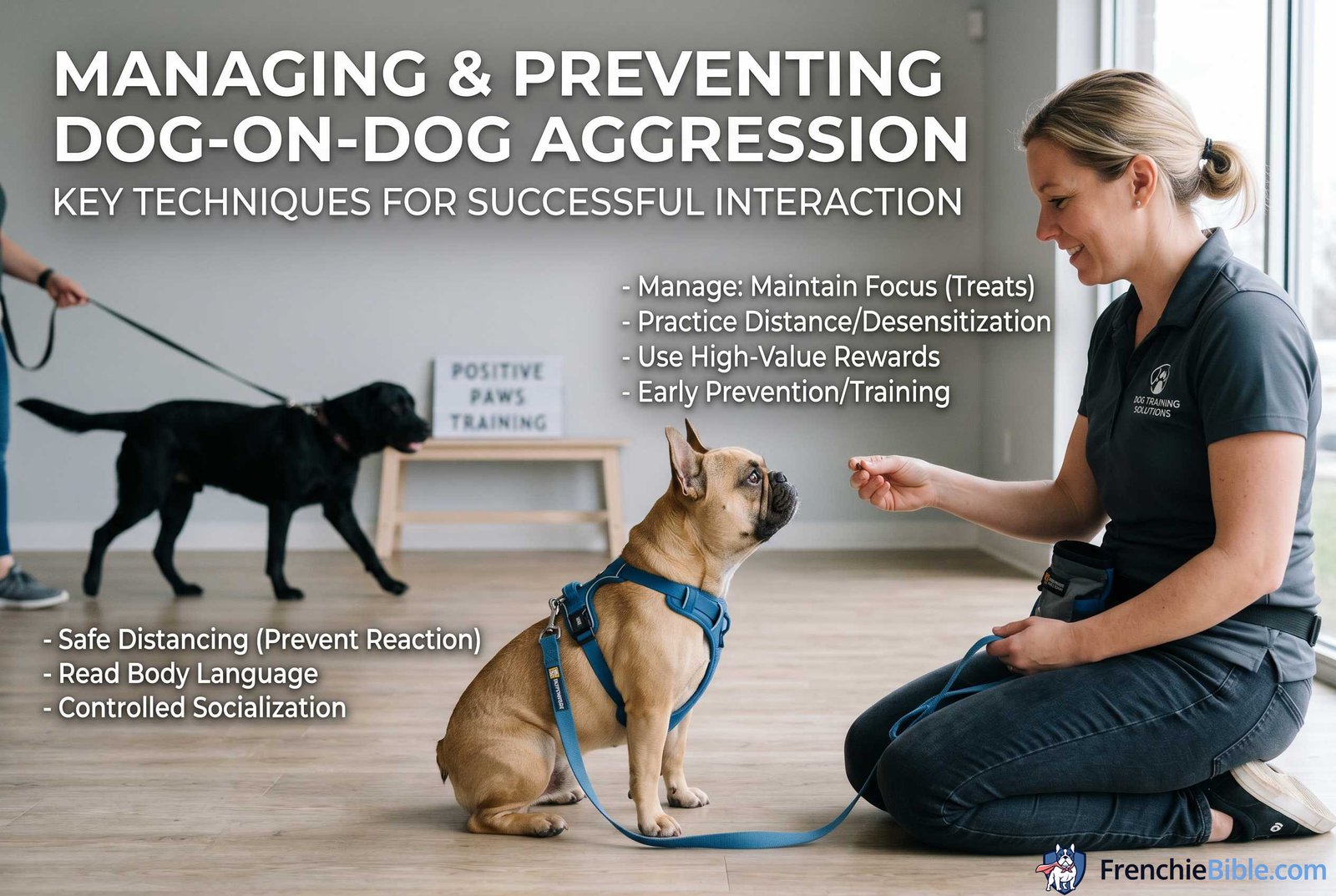
1. Consult a Professional
The very first step is to rule out medical issues. Pain from conditions common to the breed, such as Intervertebral Disc Disease (IVDD) or skin allergies, can cause a normally sweet dog to lash out. Once your vet clears them of pain, engage a certified veterinary behaviorist or a positive reinforcement trainer experienced with bulldog breeds.
2. Implement Strict Management
Management means preventing your dog from practicing the aggressive behavior. If your Frenchie attacks other dogs on walks, they should be muzzled (using a basket muzzle specifically designed for brachycephalic breeds so they can pant and breathe easily) and walked in low-traffic areas.
If dealing with same-sex aggression within the home, you must implement a “crate and rotate” system. This means the dogs are never loose in the house together; when one is out, the other is securely crated or in a separate room behind a sturdy baby gate. Never leave high-value items like bones or food bowls lying around, as these are major triggers.
3. Desensitization and Counter-Conditioning (CC&D)
This is the gold standard for changing an aggressive emotional response. The goal is to change the Frenchie’s association with other dogs from negative (fear/anger) to positive.
– Find the Threshold: Determine the distance at which your dog notices another dog but does not react (e.g., 50 feet away).
– Treat and Praise: Whenever another dog appears at this safe distance, immediately feed your Frenchie high-value treats (like boiled chicken or hot dogs).
– Remove the Trigger: When the other dog is gone, the treats stop.
Over time, your dog will learn that the presence of another dog means delicious food is coming, changing their emotional state from aggressive to expectant and calm. Gradually, over weeks or months, you can decrease the distance.
4. Spaying and Neutering
While altering your dog is not a magic fix for aggression, it can significantly reduce hormonally driven conflicts, particularly in males. Discuss the optimal timing for spaying or neutering with your veterinarian, keeping in mind the dog’s developmental stage and specific behavioral issues.
5. Obedience and Impulse Control Training
A Frenchie that lacks impulse control is more likely to act out aggressively. Strengthening basic obedience commands—such as “Leave It,” “Look at Me,” and a solid “Stay”—gives you tools to redirect their attention before an attack occurs. Reward your dog heavily for making good choices, like looking at another dog and then looking back at you for guidance.
The Reality of Multi-Dog Households with Frenchies
If you are planning to add a second dog to a home with a French Bulldog, prevention is key. As a general rule, to minimize the risk of same-sex aggression, it is always recommended to pair a male with a female. Opposite-sex pairings have a significantly higher success rate for peaceful coexistence.
When introducing a new dog, do so on neutral territory. Take them for a parallel walk together before bringing the new dog into the house. Keep interactions short, positive, and heavily supervised. Never rush the process; a slow integration over several weeks is the best way to ensure long-term harmony.
Conclusion
Seeing your beloved French Bulldog display aggression towards other dogs can be heartbreaking and stressful. However, understanding that this behavior often stems from fear, resource guarding, or genetic predispositions—such as same-sex aggression—is the first step towards resolving it. By recognizing the early warning signs, implementing strict management to ensure safety, and utilizing positive reinforcement training techniques like counter-conditioning, you can help your Frenchie navigate the world with less stress and more confidence. Remember, patience is paramount; behavior modification takes time, but with consistent effort, your Frenchie can learn to be a calm and well-adjusted companion.
Frequently Asked Questions (FAQs)
1. Can a female French Bulldog live peacefully with another female?
While it is possible, it is statistically the most difficult pairing. Female-on-female aggression is common and can be severe. If you currently have a female Frenchie, bringing a male into the home is strongly recommended over another female to minimize conflict.
2. Should I punish my Frenchie for growling at another dog?
No. Growling is your dog’s way of communicating that they are uncomfortable and need space. If you punish the growl, you remove their warning system. The next time they feel threatened, they may bypass growling and go straight to biting. Instead, create distance between your dog and the trigger and work on counter-conditioning.
3. Are French Bulldogs naturally aggressive dogs?
No, French Bulldogs are not naturally aggressive; they are bred to be companion animals. However, due to their bulldog heritage, they can be stubborn and possessive. Aggression usually stems from poor socialization, fear, pain, or resource guarding rather than an inherently “mean” temperament.
4. Can an older Frenchie be socialized to like other dogs?
Yes, but the process is much slower than with a puppy. An older dog has deeply ingrained habits. You cannot force them to be “social butterflies,” but through patient desensitization and counter-conditioning, you can teach them to be neutral and calm in the presence of other dogs.
5. How do I break up a fight between two French Bulldogs safely?
Never step into the middle of a dog fight or grab their collars, as you risk a severe redirection bite. The safest methods include making a loud noise (like an air horn) to startle them, tossing a heavy blanket over them to cause confusion, or the “wheelbarrow method,” where two people simultaneously grab the back legs of each dog and pull them backward and apart.