
Disclaimer: The information provided in this article is for educational and informational purposes only. While I am an experienced breeder and veterinary professional, this content should not replace professional veterinary advice, diagnosis, or treatment. Always consult with a licensed veterinarian regarding your dog’s specific health needs.
In my decade of clinical practice as a veterinary professional and French Bulldog breeder, one of the most heartbreaking scenarios I witness is the “new puppy visit” that turns into a medical nightmare. An excited family brings in their 8-week-old Frenchie, bursting with joy, only for me to discover the puppy has a severe heart murmur, giardia, a raging upper respiratory infection, and structural deformities. When I ask where they got the puppy, the story is almost always the same: a flashy website, a quick transaction in a parking lot, or a local pet store.
Related Reading: Training & Behavior | Frenchie Puppy Guide | Best Food for Frenchies
They unknowingly bought from a Puppy Mill or a Backyard Breeder (BYB).
French Bulldogs are currently one of the most popular dog breeds in the world. Unfortunately, this massive demand has created a highly lucrative black market for unethical breeding. Unscrupulous individuals mass-produce these dogs in horrific conditions, prioritizing profit over the health, structure, and temperament of the animals. If you are looking to add a Frenchie to your family, your most critical task is learning how to navigate this minefield. Today, I am going to teach you exactly how to spot puppy mills and backyard breeders instantly, so you can protect your heart, your wallet, and the future of this beautiful breed.
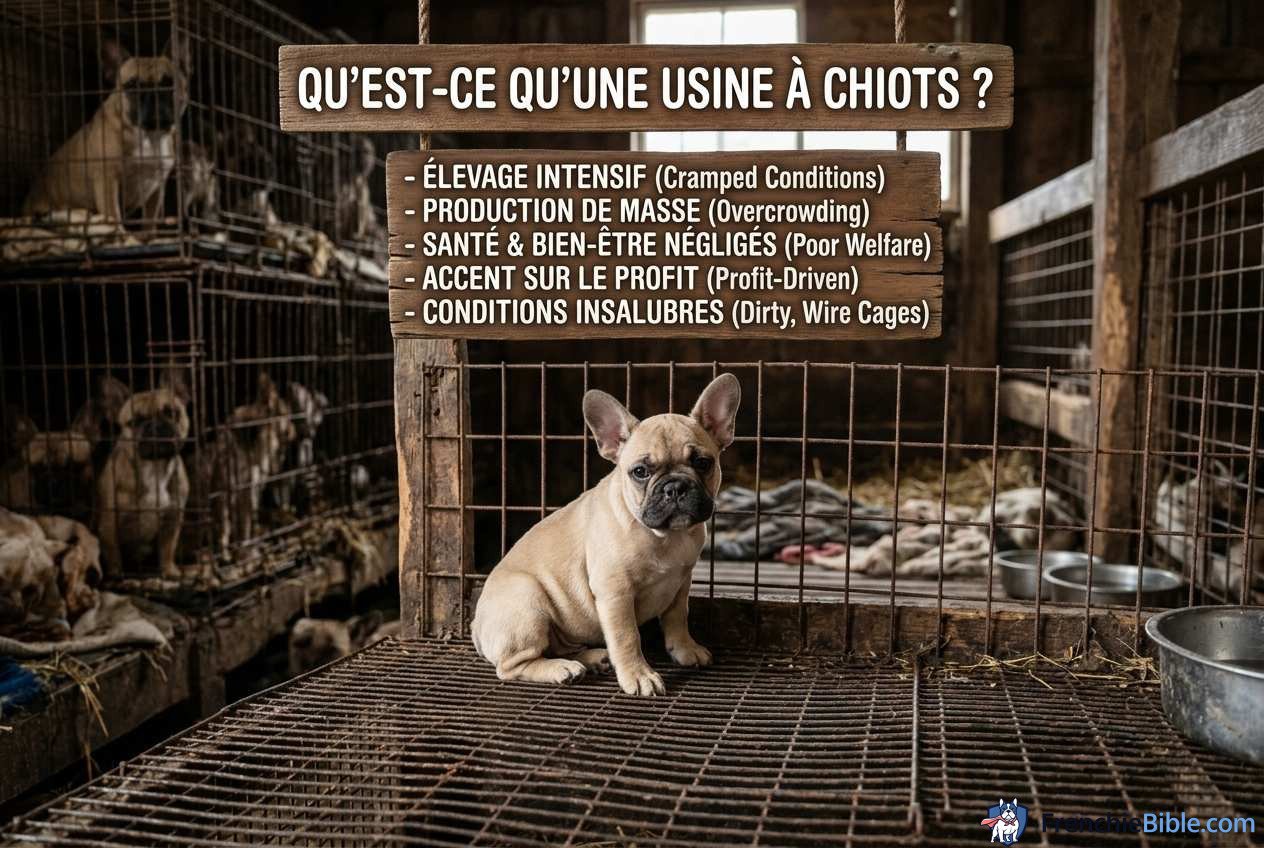
What is a Puppy Mill?
A puppy mill is a large-scale commercial dog breeding facility where profit is given absolute priority over the well-being of the dogs. Breeding females are confined in wire cages for their entire lives, forced to produce litter after litter until their bodies fail. They receive little to no veterinary care, no socialization, and live in squalor. The puppies are taken from their mothers far too early and shipped across the country to be sold.
What is a Backyard Breeder (BYB)?
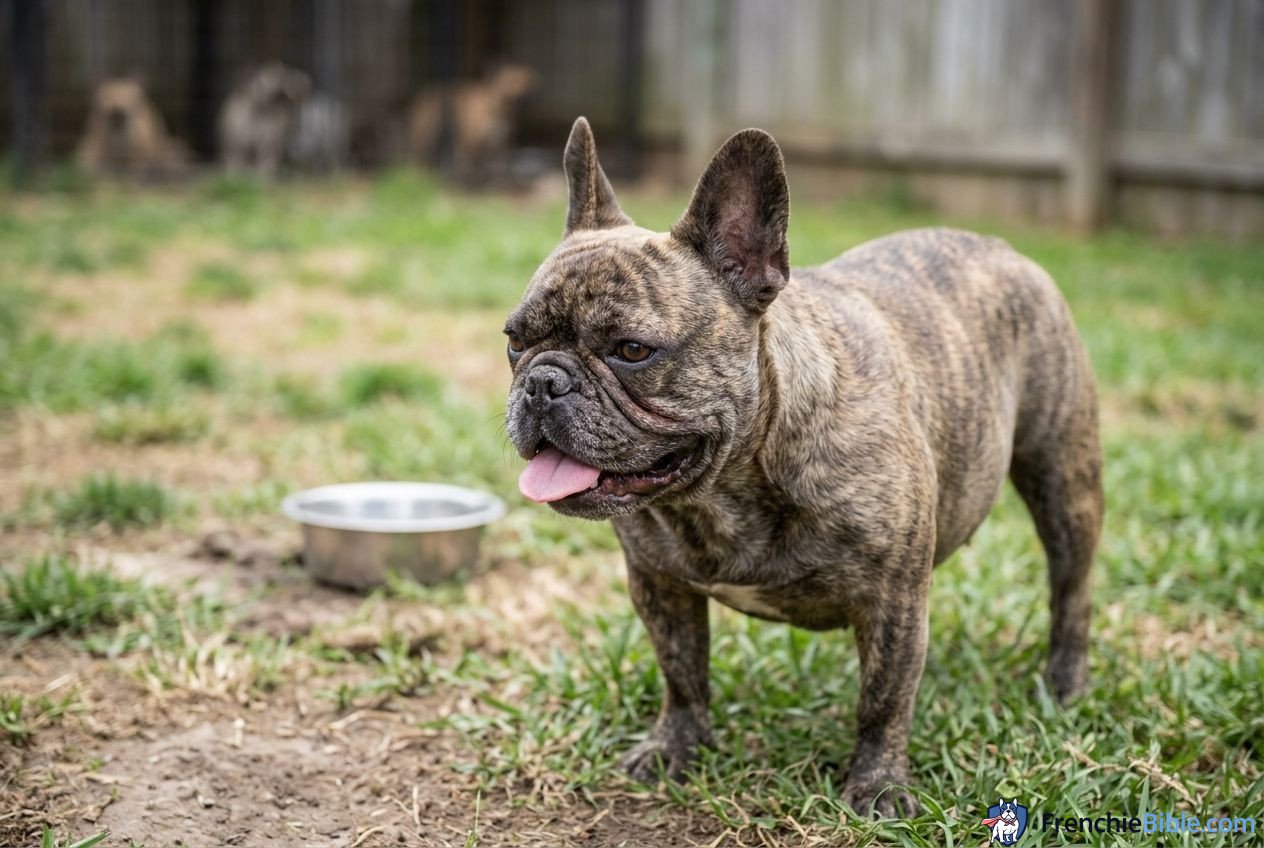
A backyard breeder is usually an amateur who breeds their personal pets with little to no understanding of genetics, breed standards, or health testing. They might breed their female “just once so she can experience motherhood” or to make some extra cash. While they may love their dogs and keep them inside the home, their ignorance is dangerous. By failing to perform critical genetic and orthopedic health testing, BYBs perpetuate devastating hereditary diseases like Intervertebral Disc Disease (IVDD) and severe Brachycephalic Obstructive Airway Syndrome (BOAS).
The Ultimate Checklist: How to Spot Unethical Breeders
As a buyer, you must act as an investigative journalist. Here are the glaring red flags that scream Puppy Mill or Backyard Breeder.
Red Flag 1: They Have Multiple Litters and Breeds Available Immediately
Ethical preservation breeders do not breed for high volume. Because French Bulldogs require intensive care, artificial insemination, C-sections, and 24/7 monitoring during the neonatal stage, a reputable breeder will only have 1 to 3 litters a year.
If you go to a website and they have a “Shopping Cart” feature, multiple litters available right now, or they breed 4 different popular breeds (like Frenchies, Goldendoodles, Pugs, and Pomeranians), run. This is a massive puppy mill operation or a puppy broker.
Red Flag 2: No Proof of OFA Health Testing
This is the most critical question you can ask: “Can I see the OFA (Orthopedic Foundation for Animals) health certificates and DNA panels for both the sire (father) and dam (mother)?”
A backyard breeder will respond with: “The parents have been checked by our local vet and are perfectly healthy.” A basic vet check is NOT health testing. Genetic health testing involves specialized DNA swabs to check for hereditary diseases, and OFA testing involves X-rays of the hips and spine, cardiac exams by a cardiologist, and patella evaluations. If they cannot produce these official documents, they are blindly breeding, and you are playing genetic roulette with your puppy.
Red Flag 3: They Focus on “Rare” or “Exotic” Colors
The official breed standard for French Bulldogs includes Fawn, Cream, Brindle, White, and Pied. Ethical breeders breed for health, structure, and adherence to this standard.
Backyard breeders and puppy mills know that uneducated buyers will pay top dollar for “rare” colors. If a breeder is heavily marketing “Fluffy,” “Isabella,” “Lilac,” “Merle,” or “Blue” Frenchies and charging astronomical prices ($10,000+), they are breeding for money, not health. These exotic colors, particularly Merle and Blue, are closely linked to severe health issues like deafness, blindness, and Color Dilution Alopecia (hair loss and skin infections).
Red Flag 4: They Won’t Let You See Where the Dogs Live
A reputable breeder will be proud of where they raise their puppies. They will invite you to their home or, at the very least, offer an extensive live video call (like FaceTime) to show you the whelping box, the mother interacting with her pups, and the cleanliness of their environment.
If the breeder insists on meeting you in a Walmart parking lot, at a gas station, or ships the puppy via a third-party nanny without ever showing you the living conditions via live video, you are likely dealing with a puppy mill hiding their horrific facilities.
Red Flag 5: The Pet Store Trap
With very few exceptions, reputable breeders NEVER sell their puppies to pet stores. Ethical breeders want to know exactly who is buying their puppies. They screen buyers rigorously, ask for references, and ensure the puppy is going to a safe, loving home.
If you see a French Bulldog in a glass cage at a retail pet store, it came from a commercial puppy mill. No matter what the store clerk tells you about their “USDA-certified breeders,” understand that USDA standards for commercial breeding are shockingly low and allow dogs to live their entire lives in wire cages slightly larger than their bodies.
Red Flag 6: No Spay/Neuter Contract or Return Policy
An ethical breeder’s responsibility to their puppies lasts a lifetime. They will require you to sign a strict contract stipulating that you will spay/neuter the pet and that you will NEVER surrender the dog to a shelter. If, at any point in the dog’s life, you can no longer care for it, the breeder requires the dog to be returned to them.
Puppy mills and BYBs just want your cash. Once the transaction is done, they disappear. They offer no lifetime support, no return policy, and do not care if the dog ends up in a shelter two years later.
How to Find a Truly Ethical French Bulldog Breeder
Finding a responsible breeder takes time and patience. Expect to be placed on a waitlist for 6 to 12 months. Here is how you find them:
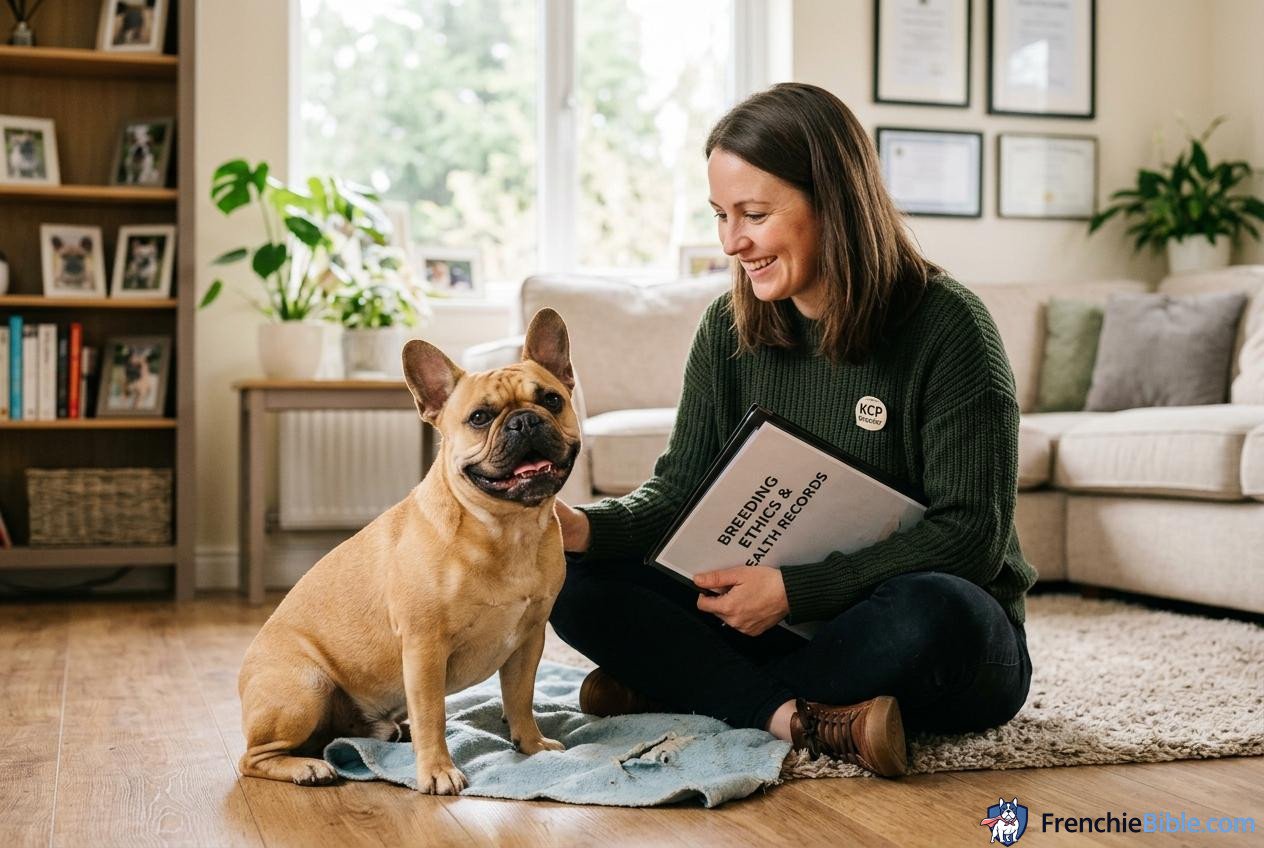
- Check the French Bull Dog Club of America (FBDCA): Look for breeders who are members in good standing with the national breed club.
- Attend Local Dog Shows: Go to AKC conformation shows in your area and speak to the exhibitors. These people are dedicated to preserving the breed standard.
- Ask for Veterinary References: Ask the breeder for the contact information of their reproductive veterinarian and call them to verify the breeder’s standing.
- Prepare to be Interviewed: A good breeder will ask you more questions than you ask them. They will want to know about your work schedule, your living situation, your vet history, and your financial ability to care for a brachycephalic breed.
Conclusion
Bringing a French Bulldog into your life is a massive financial and emotional investment. Buying a “cheap” puppy from a backyard breeder or supporting a cruel puppy mill guarantees that the cycle of suffering continues. The initial $2,000 you might save upfront will easily evaporate when you are faced with a $6,000 BOAS surgery or an $8,000 IVDD spinal emergency before the dog’s second birthday.
Be patient, demand proof of health testing, and refuse to support unethical breeding practices. Your future Frenchie—and your wallet—will thank you.
Frequently Asked Questions (FAQs)
1. Is it safe to buy a French Bulldog puppy online?
It is extremely risky. The internet is flooded with scam websites and puppy brokers acting as middlemen for puppy mills. Never send money without thoroughly verifying the breeder, seeing OFA health certificates, and doing a live FaceTime call to see the puppies and the mother in the home.
2. The breeder said the mother is “unavailable” to meet. Is this normal?
No, this is a massive red flag. While the father (stud) may live out of state, the mother should always be on-site with her puppies. If the breeder makes excuses as to why you cannot see the mother, it is highly likely they are a puppy broker selling dogs from a mill.
3. What is a “Puppy Broker”?
A broker is a middleman who buys entire litters from commercial puppy mills at wholesale prices and resells them to the public at a massive markup. They often have highly polished websites that look like legitimate breeding programs, but they are just flipping mass-produced, poorly bred puppies.
4. My local breeder’s puppies are AKC registered. Does that mean they are high quality?
No. AKC registration simply means that the puppy’s parents were both purebred French Bulldogs. It is essentially a birth certificate. It does NOT guarantee health, structure, temperament, or ethical breeding practices. Backyard breeders and puppy mills heavily use AKC registration as a selling point to mask their lack of health testing.
5. I suspect a breeder I visited is operating a puppy mill. What should I do?
If you witness dogs in deplorable conditions, overcrowded cages, or suffering from untreated medical issues, leave immediately and report the facility to your local animal control, the ASPCA, and the Humane Society. Do not buy a puppy to “save” it; this only puts money in the abuser’s pocket and allows them to breed more dogs.