As a French Bulldog breeder with over a decade of experience I have dedicated a significant portion of my life to understanding, improving, and caring for this incredible breed. French Bulldogs are affectionate, comical, and endlessly charming companions. However, their unique physical structure comes with specific challenges, the most critical being their inability to regulate body temperature as efficiently as other breeds.
When you compare a French Bulldog to popular breeds like Labradors or Golden Retrievers, the differences in their anatomical design are stark. While a Labrador can play fetch for hours on a sunny afternoon and a Golden Retriever can hike up a mountain trail with ease, a French Bulldog can succumb to heatstroke after just fifteen minutes of moderate exercise on a warm day.
Related Reading: Training & Behavior | Grooming & Care | French Bulldog Colors
Why does this happen? The answer lies deep within their anatomy, specifically their thermoregulation system and their respiratory tract. In this comprehensive guide, we will delve into the biological mechanisms of how dogs cool themselves, compare the anatomical structures of French Bulldogs against those of Labradors and Golden Retrievers, and provide essential, actionable advice for keeping your Frenchie safe from the devastating effects of heatstroke.
Introduction to Canine Thermoregulation
To understand why French Bulldogs struggle with heat, we must first understand how dogs, in general, regulate their body temperature. Unlike humans, who rely on millions of sweat glands distributed across our skin to cool down through evaporation, dogs have a completely different biological mechanism.
How Dogs Cool Down: Panting and Paw Pads
Dogs possess a very limited number of sweat glands, which are primarily located on the pads of their paws and, to a microscopic extent, on their noses. While these glands do secrete moisture, they play a negligible role in overall body cooling. They are more functional for improving traction and leaving scent markers.
The primary method dogs use to regulate their internal temperature is panting. Panting is a highly efficient mechanism that involves rapid, shallow breathing. When a dog pants, they draw cooler air in over the moist surfaces of their tongue, mouth, throat, and nasal passages. The moisture on these surfaces evaporates, pulling heat away from the blood vessels lining the respiratory tract. The cooled blood then circulates back into the body, lowering the core temperature.
The Role of Surface Area and Body Shape
Another factor in thermoregulation is the physical shape and surface area of the dog. Dogs lose heat through vasodilation, a process where blood vessels near the surface of the skin expand. This allows warm blood from the core to flow closer to the surface, where the heat can radiate off into the environment. Dogs with larger surface areas relative to their body weight can dissipate heat more effectively than those with compact, stocky builds.
Why the Breed Differences Matter
When we look at different dog breeds, we see a vast array of shapes, sizes, and facial structures. These physical characteristics are the result of generations of selective breeding designed to enhance certain traits for specific jobs or aesthetic preferences. A Labrador Retriever was bred to retrieve game from icy waters and run through dense fields. Their bodies are optimized for stamina, weather resistance, and efficient respiration. In contrast, the French Bulldog was bred purely for companionship. Their distinctive physical features—the flat face, the compact body, the heavy bone structure—were selected for their unique appearance, not for athletic performance or respiratory efficiency.
The Anatomy of the French Bulldog: A Brachycephalic Challenge
The fundamental reason French Bulldogs struggle so profoundly with heat regulation is their head shape. French Bulldogs belong to a category of dogs known as brachycephalic breeds.
What Does Brachycephalic Mean?
The term “brachycephalic” comes from the Greek words “brachy,” meaning short, and “cephalic,” meaning head. Brachycephalic dogs have been selectively bred to have a shortened skull, giving them their characteristic flat-faced appearance. Other brachycephalic breeds include Pugs English Bulldogs Boston Terriers, and Shih Tzus.
While the bones of their skull have been drastically shortened through generations of breeding, the soft tissues inside their head and throat have not diminished proportionately. Imagine taking the respiratory tract of a standard-sized dog and compressing it into a space half the size. The result is a crowded, obstructed airway that significantly impairs the dog’s ability to breathe and, consequently, to cool down.
This anatomical reality is often referred to as Brachycephalic Obstructive Airway Syndrome (BOAS). BOAS is a complex condition characterized by several specific anatomical abnormalities that work together to restrict airflow.
Elongated Soft Palate and Its Impact on Airflow
The soft palate is the fleshy tissue at the back of the roof of the mouth, separating the nasal cavity from the oral cavity. In a dog with a normal muzzle length, the soft palate ends just before the epiglottis (the flap that covers the windpipe during swallowing).
In many French Bulldogs, the soft palate is too long for their shortened skull. Because it has nowhere else to go, the excess tissue extends backward and hangs down into the airway. When the dog breathes in, this elongated tissue can be pulled into the opening of the larynx (the voice box), partially blocking the flow of air. This is what causes the characteristic snorting, snoring, and snuffling sounds that many people mistakenly find “cute.” In reality, these sounds are the audible struggle of a dog trying to pull air past a physical obstruction.
Stenotic Nares (Narrowed Nostrils)
If you look at the nose of a Labrador and then look at the nose of a French Bulldog, the difference is immediate and striking. Labradors have wide, open nostrils that allow for massive volumes of air to be drawn in effortlessly.
Many French Bulldogs suffer from stenotic nares, a condition where the nostrils are pinched, slit-like, or overly narrow. The cartilage that forms the structure of the nose is weak or malformed, causing the nasal openings to collapse inward when the dog inhales. Breathing through stenotic nares is akin to trying to breathe through a cocktail straw while running on a treadmill. The resistance to airflow is immensely high, requiring the dog to exert significantly more effort just to get enough oxygen.
Hypoplastic Trachea (Narrowed Windpipe)
The trachea, or windpipe, is the tube that carries air from the throat down into the lungs. In some French Bulldogs, the trachea does not develop to a normal diameter relative to the dog’s size. This condition is called a hypoplastic trachea. A narrowed windpipe creates a severe bottleneck in the respiratory system. Even if the dog manages to pull air past their stenotic nares and elongated soft palate, the volume of air that can actually reach the lungs is restricted by the small diameter of the trachea.
Everted Laryngeal Saccules
The laryngeal saccules are small pouches of tissue located just in front of the vocal cords in the larynx. Due to the chronic increased effort required to breathe against the resistance caused by stenotic nares and an elongated soft palate, a negative pressure vacuum is created in the airway. Over time, this constant negative pressure literally sucks the laryngeal saccules outward, causing them to turn inside out (evert) and bulge into the airway. This further obstructs the already compromised opening to the trachea, compounding the breathing difficulties.
The Anatomy of Labradors and Golden Retrievers: Built for Efficiency
To truly appreciate the respiratory struggles of the French Bulldog, we must compare them to breeds that represent the anatomical standard for canine efficiency: the Labrador Retriever and the Golden Retriever.
Mesocephalic Head Shape and Efficient Panting
Labradors and Golden Retrievers possess a mesocephalic head shape. This means they have a medium-length muzzle and a skull that is proportionate in length and width. This natural, unexaggerated head shape is the ideal design for a canine respiratory system.
Because their skulls are not artificially shortened, the soft tissues within their airways fit perfectly. Their soft palates do not overhang the larynx, their tracheas are appropriately wide, and their airways are clear and unobstructed. When a Labrador needs to cool down, they open their mouths wide, extend their long tongues, and pant rapidly and effortlessly. The air flows smoothly over the extensive surface area of their elongated muzzle and tongue, maximizing evaporative cooling.
Large Nasal Cavities and Turbinates
The length of a dog’s muzzle is directly correlated to the size of their nasal cavity. Inside the nasal cavity is a complex network of bony structures called turbinates, which are covered in highly vascularized mucous membranes.
In a mesocephalic breed like a Golden Retriever, the nasal cavity is long and spacious. The turbinates provide a massive surface area. When the dog inhales, the incoming air is filtered, warmed, and humidified. More importantly for thermoregulation, when the dog exhales, moisture condenses on the turbinates, conserving water, while heat is efficiently transferred from the blood vessels to the expelled air.
In a brachycephalic breed like the French Bulldog, the nasal cavity is severely compressed. The turbinates are crowded, twisted, and sometimes fused together. This drastic reduction in surface area completely undermines the efficiency of the nasal cooling mechanism. They simply do not have enough internal real estate to effectively dissipate heat through their noses.
The Double Coat: Insulation Against Heat and Cold
Both Labradors and Golden Retrievers possess a dense double coat, consisting of a soft, insulating undercoat and a longer, weather-resistant outer coat. While it may seem counterintuitive, this double coat actually aids in thermoregulation. The undercoat traps a layer of air against the skin, which acts as insulation against both extreme cold and extreme heat. The outer coat reflects the sun’s rays and prevents the dog’s skin from absorbing direct radiant heat.
French Bulldogs, on the other hand, have a single, short coat. While this means they do not require extensive grooming, it also means they lack the natural insulation provided by a double coat. The dark skin of many Frenchies can easily absorb heat from the sun, causing their internal temperature to rise more quickly than a coated breed.
The Cooling Process: French Bulldog vs. Labrador/Golden Retriever
Now that we understand the anatomical differences, let’s look at how these differences play out in real-time when the dogs are exposed to heat and exercise.
The Mechanics of Panting in a Mesocephalic Dog
Imagine a Golden Retriever playing in the park on an 80-degree day. As the dog’s internal temperature begins to rise from exertion, their brain signals the need to cool down. The dog begins to pant.
Because their airway is wide open and unobstructed, the air flows in and out with zero resistance. The dog can pant at a rapid rate, moving a massive volume of air over the large surface area of their tongue and elongated respiratory tract. The evaporative cooling process works flawlessly. The dog’s core temperature stabilizes, and they can continue playing, pausing occasionally for a drink of water. Their anatomical design supports sustained physical activity in moderate heat.
The Mechanics of Panting in a French Bulldog
Now, place a French Bulldog in the same 80-degree environment with the same level of activity. As the Frenchie’s core temperature rises, they too begin to pant. However, this is where the system completely breaks down.
The Frenchie tries to pull air through their narrow, slit-like nostrils (stenotic nares). They immediately encounter massive resistance. They try to breathe through their mouth, but their elongated soft palate is flapping against their larynx, partially blocking the opening. The air that does make it past the palate must squeeze through a narrowed windpipe (hypoplastic trachea).
Because the airway is obstructed, the Frenchie cannot move a sufficient volume of air to achieve effective evaporative cooling. Despite their rapid panting, their core temperature continues to rise.
The Vicious Cycle of Overheating in Brachycephalic Breeds
This is where a deadly biological cycle begins. Because the dog is not cooling down, their brain signals them to pant harder and faster. The increased effort of breathing against the severe resistance in their airway generates friction and inflammation.
The soft tissues of the palate and larynx become swollen and engorged with blood due to the extreme effort. This swelling further narrows the already compromised airway. As the airway narrows, the dog must work even harder to breathe, which generates even more inflammation and swelling.
Furthermore, the physical exertion of struggling to breathe generates internal muscular heat, adding to the dog’s core temperature. They are caught in a terrifying downward spiral: the harder they try to cool down, the more they physically heat themselves up and the more they choke off their own air supply.
This vicious cycle can escalate from moderate discomfort to a life-threatening crisis in a matter of minutes. While the Golden Retriever is happily regulating their temperature, the French Bulldog is suffocating and experiencing a catastrophic spike in core body temperature, leading directly to heatstroke.
Factors Beyond the Face: Body Composition and Thermoregulation
While the brachycephalic airway is the primary culprit, it is not the only anatomical feature that puts French Bulldogs at a disadvantage compared to sporting breeds. Their overall body composition also plays a significant role.
Muscle Mass and Heat Generation
French Bulldogs are incredibly muscular, dense, and heavily boned for their small size. They are often described as “little tanks.” Muscle tissue generates a tremendous amount of heat when it contracts during activity. Because Frenchies have such a high ratio of muscle mass to their overall size, they generate internal heat very quickly when they move, play, or become excited.
In contrast, while Labradors are also muscular, their muscle mass is distributed over a much larger frame, and their highly efficient respiratory system easily dissipates the heat generated by those muscles.
Fat Distribution and Insulation
Many French Bulldogs carry a layer of subcutaneous fat, which contributes to their sturdy, robust appearance. Fat acts as a powerful insulator. While this insulation is helpful in the winter, it traps the internal heat generated by their muscles during the summer, making it even harder for the dog to cool down. It is absolutely crucial to keep your French Bulldog at a lean, healthy weight. An overweight Frenchie is at an exponentially higher risk for severe respiratory distress and heatstroke.
Size and Surface Area-to-Volume Ratio
Physics plays a role in thermoregulation. Smaller, compact objects have a lower surface area-to-volume ratio than larger, elongated objects. Because the French Bulldog is exceptionally compact, they have less skin surface area available to radiate heat away from their core relative to their total body mass. Their stocky build literally holds onto heat.
Recognizing the Signs of Overheating and Heatstroke in French Bulldogs
As a Frenchie owner, your most critical responsibility during the warmer months is constant vigilance. Because their thermoregulation system is so flawed, you cannot rely on the dog to know their own limits. They will often push themselves to play long after their bodies have begun to overheat. You must be the one to recognize the signs and intervene immediately.
Early Warning Signs
Heat exhaustion can transition to heatstroke incredibly fast in this breed. You must be hyper-aware of the early warning signs, which indicate that the dog’s cooling system is beginning to fail.
- Excessive Heavy Panting: This is often the first sign. The panting will sound louder, more desperate, and raspier than their normal breathing. You may hear a distinct “roaring” or wheezing sound from their throat as the tissues begin to swell.
- Enlarged Spatulate Tongue: The tongue will hang far out of the mouth and appear wider and flatter than usual as the blood vessels dilate in a desperate attempt to lose heat.
- Bright Red Gums and Tongue: The mucous membranes in the mouth will turn a vivid, dark red or even purple. This indicates severe distress and an attempt by the body to push blood to the surface.
- Thick Ropy Saliva: As the dog pants heavily, they lose moisture. Their saliva will change from clear and watery to thick, sticky, and ropy, often forming long strings that hang from their jowls.
- Restlessness and Pacing: The dog may appear agitated, unable to settle down, and constantly moving in a frantic attempt to find a cool spot.
Advanced Signs of Heatstroke
If the early warning signs are missed or ignored, the dog will quickly progress to full-blown heatstroke, a life-threatening medical emergency.
- Lethargy and Weakness: The frantic pacing will give way to extreme weakness. The dog may refuse to walk, stumble, or appear drunken and uncoordinated.
- Vomiting and Diarrhea: The extreme heat damages the lining of the gastrointestinal tract, leading to vomiting and often bloody diarrhea.
- Collapse and Unconsciousness: The dog’s internal organs are beginning to shut down. They will collapse, become unresponsive, and may experience seizures.
- Pale or Blue Gums: This is a sign of catastrophic failure. Blood flow is no longer reaching the extremities, and the dog is severely hypoxic (lacking oxygen).
Why Frenchies Hide Their Discomfort
It is vital to understand the temperament of the French Bulldog. They are incredibly stoic, people-pleasing dogs. They thrive on interacting with their owners and will often ignore their own physical distress to continue playing a game of fetch or following you around the yard. They do not have a built-in “off switch” when it comes to heat. You must be the parent, monitor their condition, and force them to rest before they reach the point of crisis.
Proactive Measures: How to Keep Your French Bulldog Cool
Preventing heatstroke is infinitely easier and safer than trying to treat it. Caring for a French Bulldog requires a proactive, defensive approach to temperature management.
Environmental Management: Indoor and Outdoor
Your home must be a safe haven. Air conditioning is not a luxury for a French Bulldog owner; it is an absolute necessity. During the summer months, the indoor temperature should be kept cool, ideally below 74°F (23°C).
If you do not have central air conditioning, you must provide window units or portable AC units in the rooms where the dog spends their time. Fans are not sufficient. Fans cool humans because we sweat; the moving air evaporates the sweat and cools our skin. Because dogs do not sweat, blowing warm air on a hot dog does nothing to lower their core temperature.
When outdoors, your Frenchie must always have access to deep, heavy shade. Never leave a French Bulldog outside unattended in warm weather, even in a shaded yard. The ambient humidity and temperature can rise quickly, and if the dog becomes stressed or over-excited by a passing squirrel or neighbor, they can overheat in minutes.
Safe Exercise Routines During Warmer Months
The way you exercise a French Bulldog must change drastically depending on the season.
- Timing is Everything: During the summer, all walks and outdoor play must be restricted to the coolest parts of the day—early morning before the sun rises high, or late evening after the sun has set.
- The Pavement Test: Before walking your dog, place the back of your hand flat on the asphalt or concrete. If it is too hot for you to comfortably hold your hand there for seven seconds, it is too hot for your dog’s paws. Not only can hot pavement burn their pads, but the heat radiating up from the ground will also rapidly increase their body temperature.
- Limit Duration and Intensity: A 30-minute brisk walk that is perfectly safe in November can be deadly in July. Keep summer walks short, slow, and focused on potty breaks rather than cardiovascular exercise. Avoid strenuous games of fetch or prolonged running.
- Indoor Enrichment: Instead of physical exercise outdoors, focus on mental enrichment indoors. Puzzle toys, snuffle mats, training sessions, and interactive games in the air-conditioned house will tire your Frenchie out safely without risking their health.
Cooling Gear and Accessories
Investing in high-quality cooling gear can provide a valuable layer of protection, provided it is used correctly.
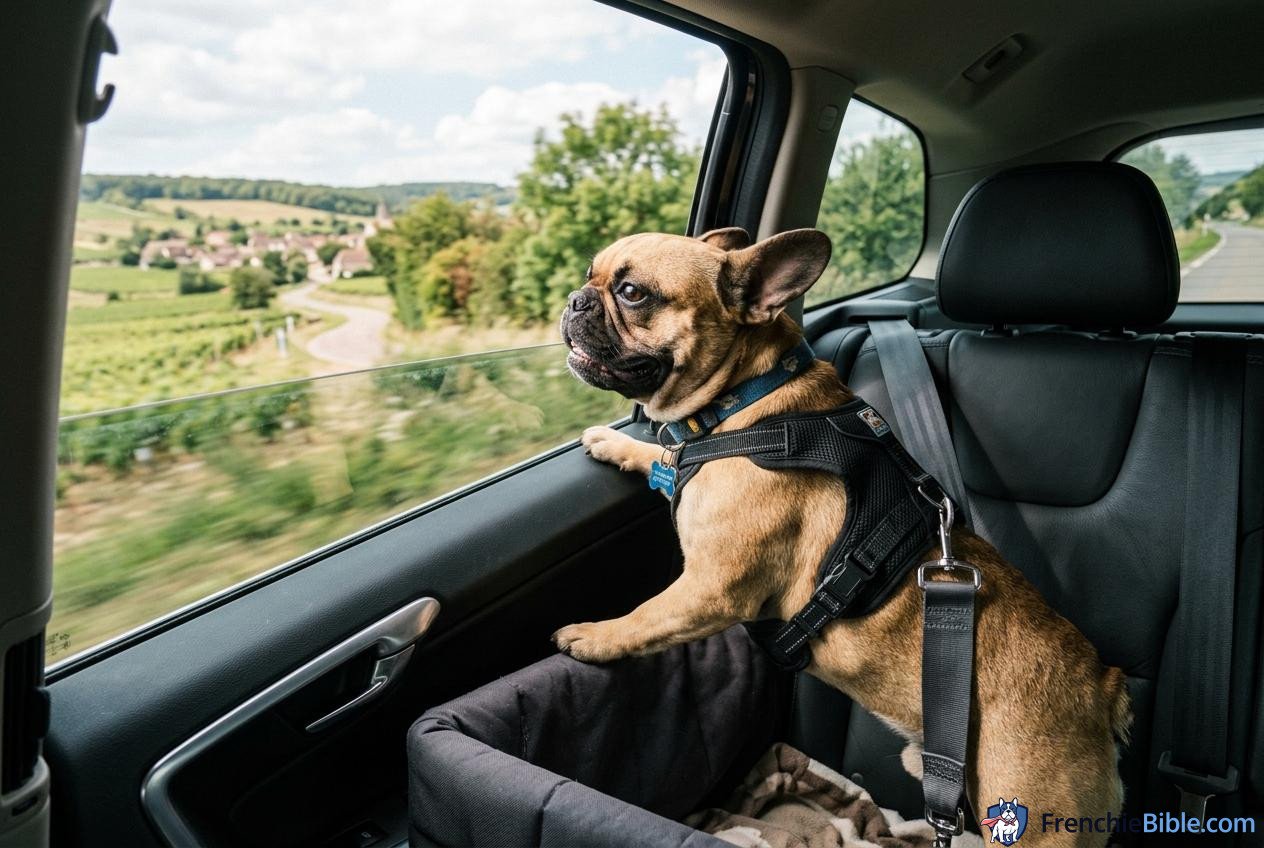
- Cooling Mats: These are mats filled with pressure-activated cooling gel. They provide a comfortable, cool surface for the dog to lie on. Place them in their favorite resting spots indoors or bring them along for car rides.
- Cooling Vests and Bandanas: These garments are soaked in cold water, wrung out, and placed on the dog. As the water evaporates, it draws heat away from the dog’s body. These can be helpful for short outings, but you must monitor them carefully. Once the water dries out, the vest acts as an insulating layer, trapping heat and making the dog hotter. You must constantly re-wet the vest to maintain the cooling effect.
- Elevated Beds: Beds raised off the floor allow air to circulate completely underneath the dog, preventing the buildup of trapped heat that occurs with standard plush beds.
Hydration Strategies
Proper hydration is critical for maintaining blood volume and supporting the panting mechanism.
- Always Available: Fresh, cool water must be accessible 24/7. Consider adding ice cubes to the bowl during the day.
- Travel Bowls: Never leave the house without a collapsible travel bowl and a bottle of fresh water. Offer small amounts of water frequently during walks or outings.
- Moisture-Rich Foods: Incorporating wet food, bone broth, or a small amount of water into their daily meals can help increase their overall fluid intake.
Emergency Response: What to Do If Your French Bulldog Overheats
Despite your best efforts, emergencies can happen. If you recognize the signs of overheating, you must act immediately. Every second counts. Do not wait to see if the dog recovers on their own.
Immediate Cooling Techniques
- Remove from Heat: Immediately move the dog into an air-conditioned environment. If that is not possible, find the deepest shade available.
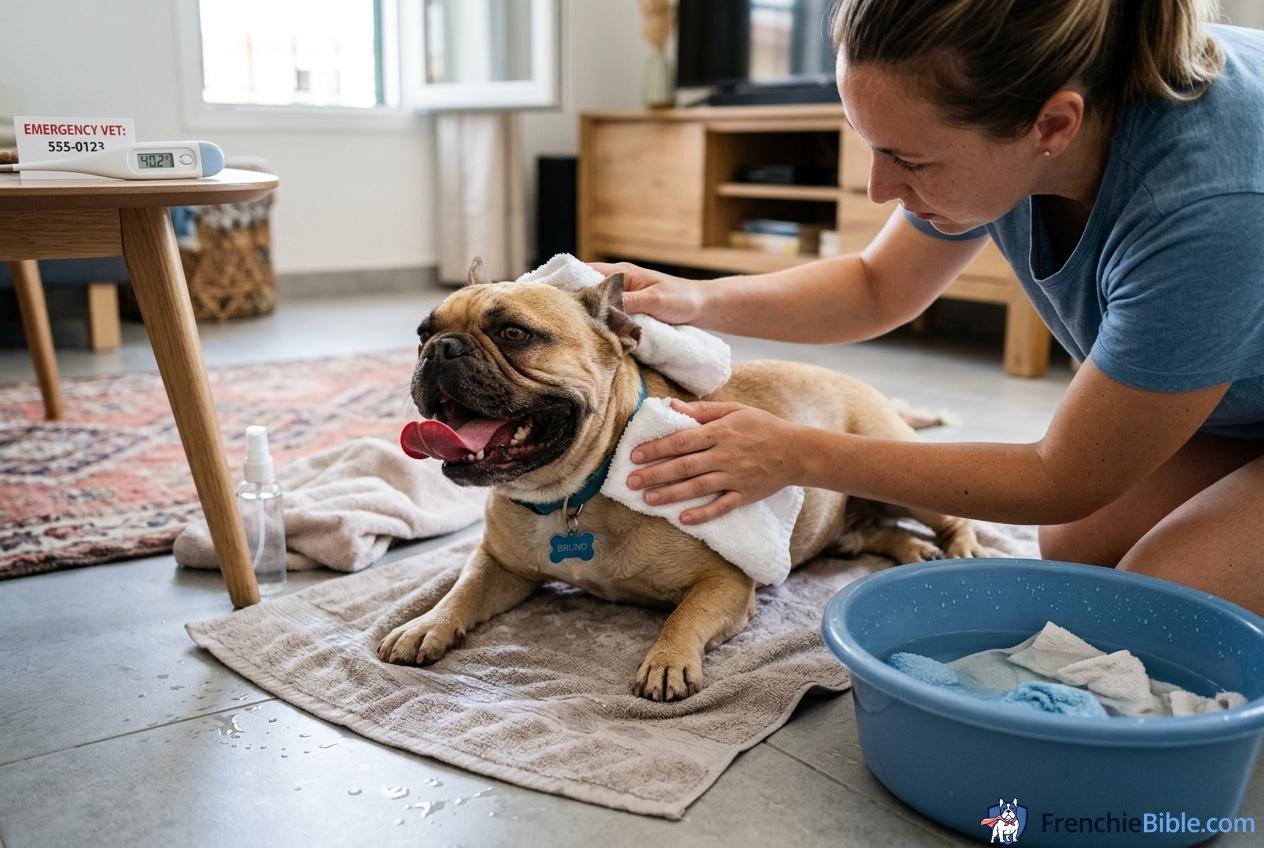
- Apply Cool Water: Wet the dog thoroughly with COOL, not ice-cold, water. Focus the water on the areas where blood vessels are closest to the surface: the groin, the armpits, the belly, and the neck. You can use a hose on a gentle setting, wet towels, or pour water from a bottle.
- Increase Airflow: Once the dog is wet, place them directly in front of a fan or the car’s air conditioning vents. The moving air combined with the wet coat will significantly accelerate evaporative cooling.
- Offer Small Sips: Offer the dog cool water to drink, but do not force them. Allow them to take small, frequent sips. Do not let them gulp a massive amount of water at once, as this can cause vomiting, further complicating their breathing.
- Monitor Temperature: If you have a rectal thermometer, check their temperature. A normal temperature is between 101°F and 102.5°F (38.3°C – 39.1°C). If the temperature is 104°F (40°C) or higher, it is a critical emergency. Stop active cooling when the temperature reaches 103°F (39.4°C) to prevent the dog from becoming hypothermic, as their body will continue to cool down.
What Not to Do
- DO NOT Use Ice Water: This is a common and incredibly dangerous mistake. Plunging an overheated dog into ice water or applying ice packs causes massive vasoconstriction. The blood vessels at the surface of the skin shrink violently, trapping the super-heated blood in the core of the body, cooking the internal organs and accelerating death. Always use cool, room-temperature water.
- DO NOT Cover with Wet Towels: While wiping a dog with a wet towel is fine, leaving a wet towel draped over the dog’s back is dangerous. The towel will quickly absorb the dog’s body heat and, without airflow to evaporate the moisture, it will act like a hot sauna blanket, trapping the heat against the skin.
Seeking Professional Veterinary Care
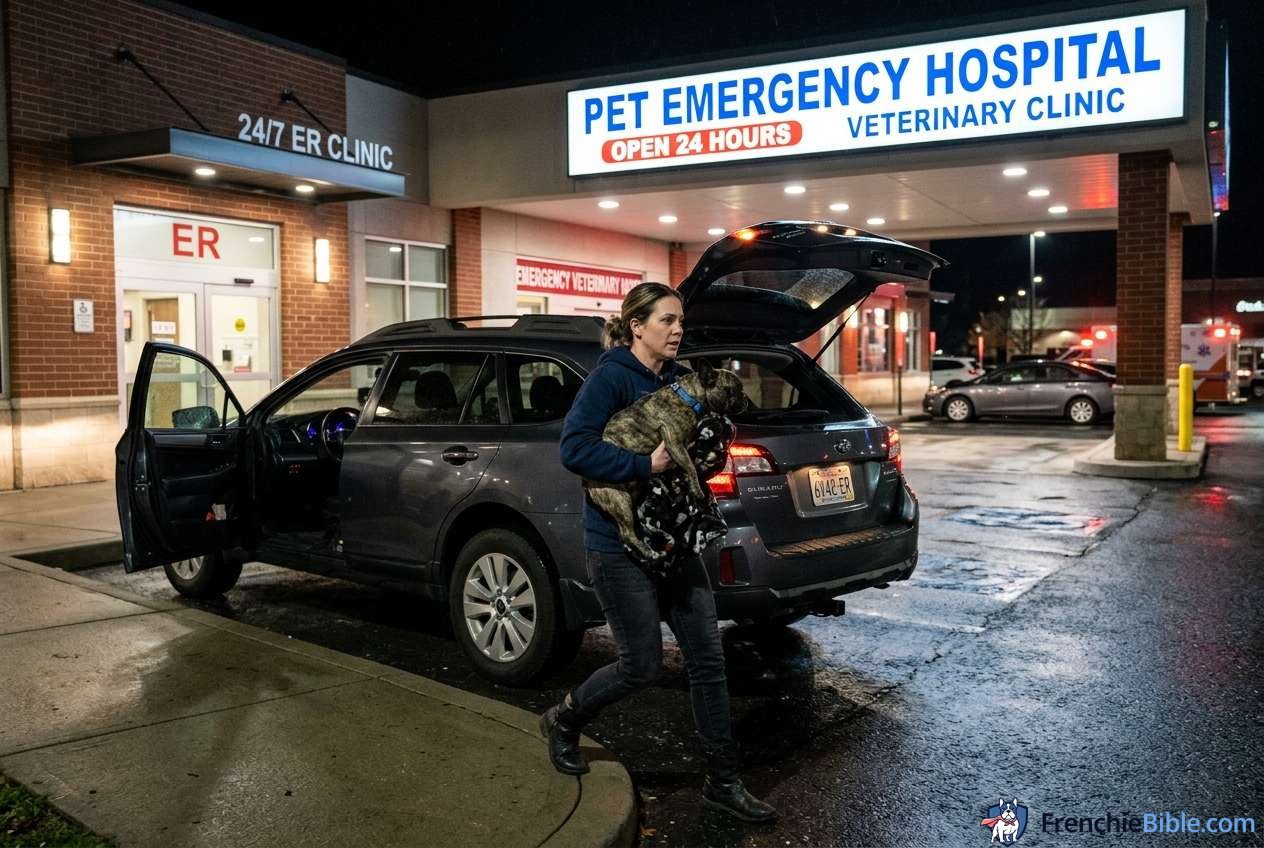
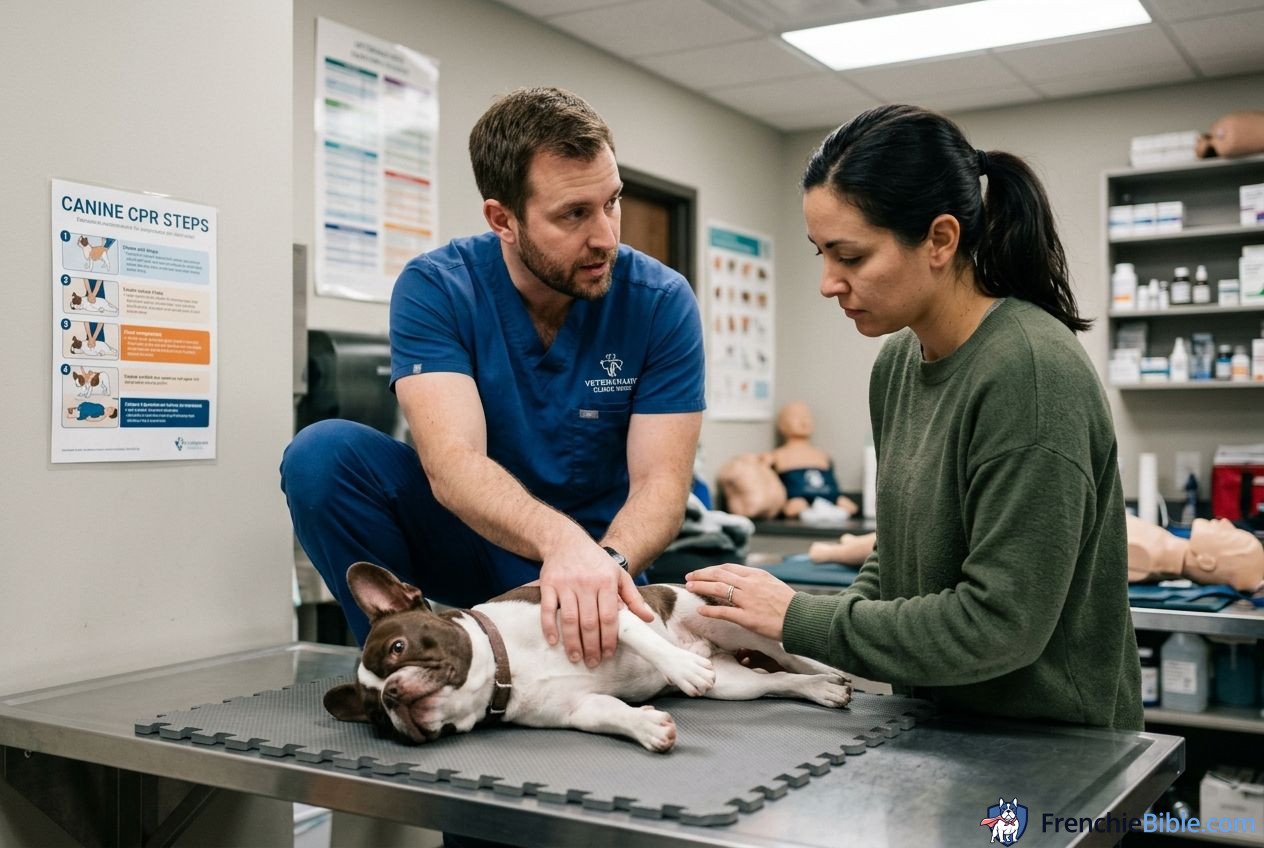
Heatstroke is a complex, systemic crisis. Even if you manage to cool the dog down and they appear to recover, you MUST take them to the nearest emergency veterinary clinic immediately.
Heatstroke can cause severe, delayed damage to the internal organs, including the kidneys, liver, brain, and gastrointestinal tract. This damage may not be apparent for hours or even days after the event. A dog that has suffered heatstroke may also develop blood clotting disorders. Only a veterinarian can run the necessary blood work, administer intravenous fluids, provide oxygen therapy, and monitor for these life-threatening secondary complications. Do not risk your dog’s life by skipping this crucial step.
Ethical Breeding and the Future of the French Bulldog
As a breeder I feel a profound responsibility to address the systemic issues plaguing the French Bulldog breed. The extreme anatomical features that make them so susceptible to heatstroke and respiratory distress are not accidental; they are the result of human choices in breeding.
The standard for the French Bulldog calls for a short face, but the pursuit of increasingly exaggerated, “ultra-flat” faces has pushed the breed to the brink of physiological collapse. It is entirely possible to breed beautiful, structurally sound French Bulldogs with muzzles that are slightly longer, nares that are wide and open, and airways that allow them to breathe freely and live active lives.
The Importance of Health Testing
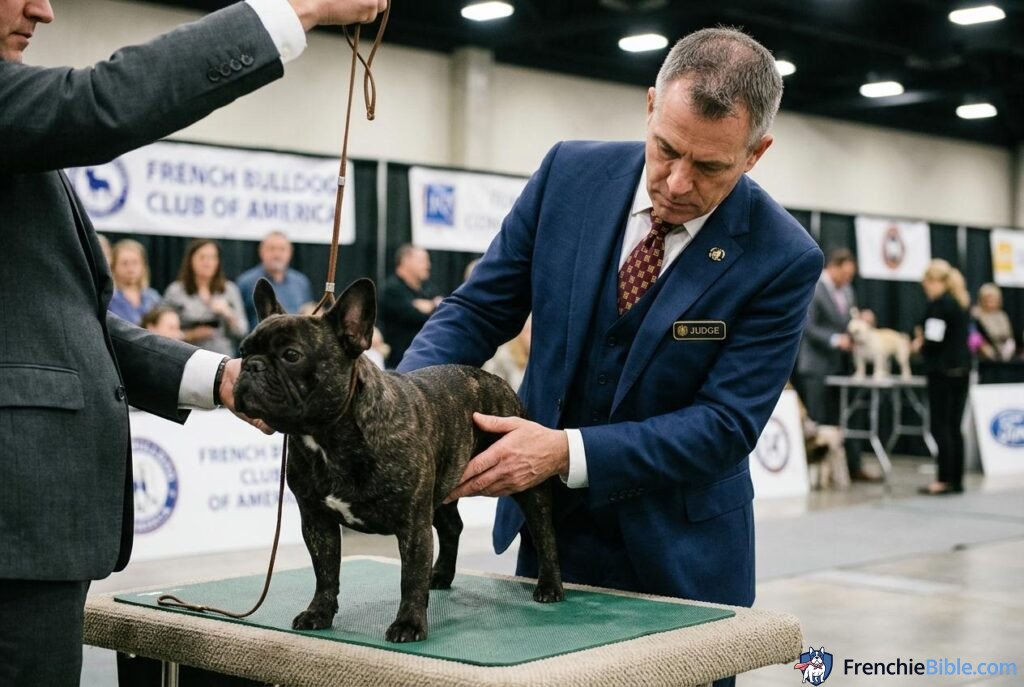
Responsible breeding must prioritize function and health over extreme aesthetics. This requires rigorous health testing. Ethical breeders utilize techniques like Respiratory Function Grading (RFG) to assess the severity of BOAS in their breeding dogs. Dogs that exhibit moderate to severe respiratory distress, require surgical intervention to open their airways, or struggle with normal physical activity should never be bred, regardless of how “perfect” they look according to a show standard.
We must select for dogs with longer, more open nasal structures, adequate tracheal diameters, and soft palates that fit their skulls. By making health the primary metric of a successful breeding program, we can slowly shift the population genetics away from the extreme phenotypes that cause so much suffering.
Selecting for Better Airways
When prospective owners are searching for a French Bulldog puppy, they must educate themselves on what a healthy dog looks and sounds like. A French Bulldog should not snore constantly while awake. They should not struggle to breathe after a short walk. When you visit a breeder, observe the parents. Are their nostrils wide and open? Do they breathe quietly? Can they play without turning purple or gasping for air? If the answer to these questions is no, walk away.
By refusing to purchase puppies from breeders who produce dogs with extreme, compromised anatomy, the public can exert massive pressure on the market and demand healthier, better-bred French Bulldogs.
The Role of the Responsible Owner
Owning a French Bulldog is a unique commitment. It requires an acceptance of their physical limitations and a willingness to adapt your lifestyle to protect them. You cannot treat a French Bulldog like a Labrador Retriever. They require constant supervision, temperature-controlled environments, and proactive management of their physical activity.
However, the reward for this extra care is the companionship of one of the most loving, deeply devoted, and entertaining breeds in the world. By understanding their anatomy, recognizing the dangers of their flawed thermoregulation system, and taking the necessary precautions, you can ensure that your French Bulldog lives a long, comfortable, and happy life by your side.
Frequently Asked Questions (FAQs)
Q1: Can my French Bulldog eventually build up a tolerance to the heat if I slowly expose them to it?
Absolutely not. You cannot train a dog out of a severe anatomical defect. The physical structure of their airway physically prevents them from cooling down efficiently. Exposing them to heat will not build tolerance; it will only increase their risk of suffering a fatal heatstroke. You must always manage their environment to keep them cool.
Q2: Should I get the BOAS surgery (nares and soft palate reduction) for my Frenchie to help them breathe better in the summer?
If your French Bulldog exhibits signs of BOAS, such as loud snoring, exercise intolerance, regurgitation, or severe panting after minimal exertion, you should consult with a experienced surgeon. Widening the stenotic nares and shortening an elongated soft palate can significantly improve their quality of life and reduce their risk of respiratory crises. However, surgery does not completely eliminate the risk of heatstroke, as they remain a brachycephalic breed. It improves their baseline breathing, but they will still require careful temperature management.
Q3: Is it safe to take my French Bulldog swimming to cool off?
While some French Bulldogs enjoy wading in shallow water, they are notoriously poor swimmers. Their dense, heavy bodies and large heads make them sink incredibly fast, and their short snouts make it very difficult for them to keep their airway above the water line while swimming. A Frenchie can drown in a matter of seconds. If you allow your dog near a pool or lake, they must wear a high-quality, properly fitted canine life jacket at all times, and you must be in the water with them or within an arm’s reach. Never leave them unattended near water.
Q4: My Frenchie loves to sunbathe. Is it safe to let them lay in the sun inside the house?
Sunbathing indoors behind a glass window is generally safe as long as the ambient temperature inside the house is cool (air-conditioned). However, you should still monitor them. If they begin to pant heavily while sunbathing, move them out of the direct sunlight. Their dark skin can still absorb heat, and their compact bodies hold onto it, so short, supervised sunbathing sessions are best.
Q5: What is the ideal temperature range for a French Bulldog?
French Bulldogs are most comfortable in temperatures between 60°F and 72°F (15°C – 22°C). Once the temperature rises above 75°F (24°C), you must begin taking precautions, limiting exercise, and ensuring they have access to cool areas. Temperatures above 80°F (26°C) combined with high humidity are highly dangerous and require strict indoor air-conditioning.
Disclaimer
The information provided in this article is for educational and informational purposes only, based on over ten years of experience in French Bulldog breeding, behavior, and daily care. I am not a licensed veterinarian, and I hold no formal medical or veterinary qualifications. The content discussed herein regarding canine anatomy, thermoregulation, and heatstroke prevention should never be construed as professional veterinary advice, diagnosis, or treatment. Every dog is unique, and medical emergencies such as heatstroke require immediate, professional medical intervention. Always consult with a licensed, qualified veterinarian regarding any concerns about your dog’s health, breathing issues, or before making decisions related to surgical procedures or emergency care.