
Disclaimer: I am a veterinary professional and breeder with over 10 years of experience, but the information provided in this article is for educational purposes only. It does not replace professional veterinary advice, diagnosis, or treatment. Always consult with your local veterinarian before making changes to your dog’s diet or supplement routine, especially if they have underlying health conditions.
Step into any veterinary clinic with a French Bulldog, and there is a high probability the owner is going to bring up one of two things: skin problems, or stomach problems. As a Frenchie specialist and a breeder with over a decade of clinical experience, I can tell you that the French Bulldog digestive system is notoriously delicate. If you share your home with one of these affectionate, bat-eared clowns, you probably know exactly what I mean. You’ve experienced the room-clearing flatulence, the unpredictable soft stools, and the rumbling, gurgling stomach noises that sound like a washing machine on the spin cycle.
Related Reading: Training & Behavior | Frenchie Puppy Guide | Best Food for Frenchies
For years, owners have asked me, “Doc, are probiotics good for French Bulldogs? Can they actually stop the gas and fix the diarrhea?” The short answer is an absolute, resounding yes. But the long answer—understanding how they work, which ones to choose, and when to use them—is the key to finally getting your Frenchie’s gut health under control. Let’s dive deep into the world of the canine microbiome and discover the ultimate solution for your Frenchie’s digestive woes.
Understanding the French Bulldog Gut Microbiome
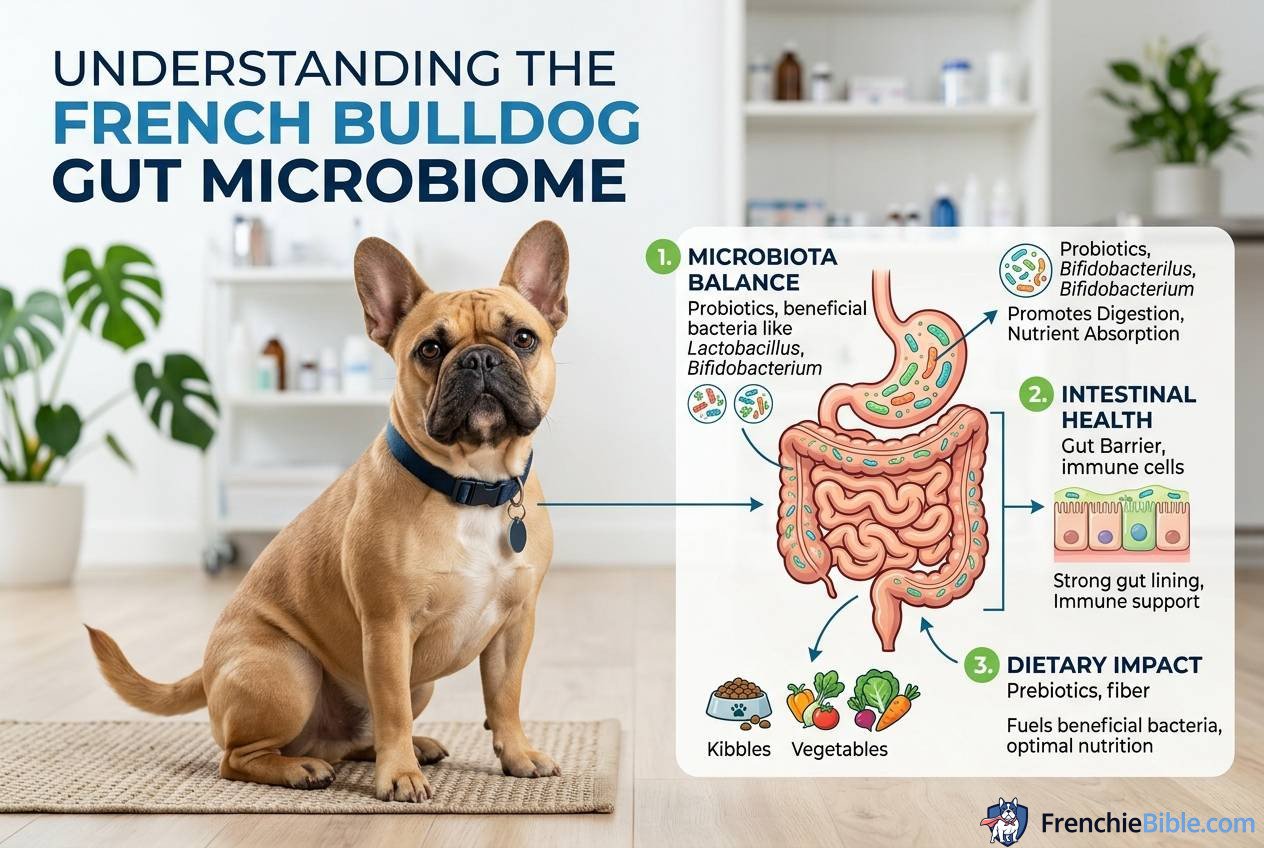
Before we can fix the problem, we need to understand the environment we are working with. The gastrointestinal tract of your French Bulldog is not just a tube that processes food; it is a complex, bustling ecosystem.
The Bacterial Balancing Act
Inside your Frenchie’s gut live billions of microorganisms, primarily bacteria, but also fungi and viruses. This community is known as the microbiome. In a perfectly healthy dog, there is a harmonious balance between “good” bacteria (the beneficial microbes that aid in digestion and support the immune system) and “bad” bacteria (pathogenic microbes that can cause illness).
When this balance is disrupted—a condition known as dysbiosis—the bad bacteria overrun the good. For French Bulldogs, dysbiosis is incredibly common. Their genetics, combined with their propensity for allergies and stress, make their microbiome highly unstable. This instability is the root cause of the foul gas, the soft, pudding-like stools, and the chronic gastrointestinal distress that plagues so many dogs of this breed.
Why Frenchies are Prone to Digestive Distress
Why are Frenchies specifically so susceptible to gut issues?
1. Anatomical Structure: Frenchies are brachycephalic (flat-faced). Because they struggle to breathe efficiently, they often gulp massive amounts of air when eating or panting. This aerophagia leads to severe bloating and flatulence.
2. Food Sensitivities: French Bulldogs have a high rate of food allergies (often to common proteins like chicken or beef). When an allergen enters the gut, it causes inflammation, which destroys the mucosal lining and kills off beneficial bacteria.
3. Stress and Anxiety: Frenchies are Velcro dogs; they attach deeply to their owners and can suffer from separation anxiety. Stress triggers the release of cortisol, which directly alters the gut microbiome and speeds up gut motility, leading to diarrhea.
How Probiotics Benefit French Bulldogs
So, where do probiotics fit into this picture? Probiotics are live, beneficial bacteria and yeasts that, when administered in adequate amounts, confer a health benefit to the host. Essentially, you are sending in microscopic reinforcements to help the good guys win the war in your dog’s gut.

Curing the “Frenchie Farts” (Flatulence)
Let’s talk about the elephant in the room: the gas. Frenchie flatulence is legendary, but it isn’t something you just have to live with. Gas is produced when undigested food ferments in the colon. Bad bacteria produce foul-smelling sulfur gases during this fermentation process.
By introducing high-quality probiotics for French Bulldogs, you populate the gut with bacteria that efficiently break down carbohydrates and proteins before they reach the colon to ferment. Furthermore, specific probiotic strains actually consume the gases produced by other bacteria. The result? A dramatic reduction in both the frequency and the toxicity of your dog’s flatulence.
Firming Up Soft Stools and Diarrhea
Soft stools are a nightmare for Frenchie owners, especially those living in apartments. Diarrhea occurs when food moves too quickly through the digestive tract, preventing the intestines from absorbing water. Probiotics help regulate gut motility (the speed at which food moves). They produce short-chain fatty acids (SCFAs), such as butyrate, which provide energy to the cells lining the colon, helping them heal from inflammation and efficiently absorb water. This turns soft, unformed puddles into firm, healthy, pick-up-able logs.
Boosting the Immune System and Skin Health
Here is a secret that many pet owners don’t realize: roughly 70% to 80% of your dog’s immune system resides in their gut. The gut wall acts as a barrier, preventing toxins, allergens, and bad bacteria from leaking into the bloodstream (a condition known as “leaky gut”).
When a Frenchie has a healthy microbiome, their immune system is robust. Because French Bulldogs are so prone to environmental allergies (Atopic Dermatitis) and itchy skin, using probiotics can actually reduce their scratching. By calming the immune response in the gut, you lower systemic inflammation, which directly leads to healthier skin, fewer hot spots, and a shinier coat.
Choosing the Right Probiotic for Your French Bulldog
As a veterinarian, I get frustrated walking through pet stores because the shelves are lined with cheap, ineffective probiotic supplements. Not all probiotics are created equal, and giving your dog a random jar off the shelf won’t solve their issues. You need to look for specific criteria.
CFU Count (Colony Forming Units)
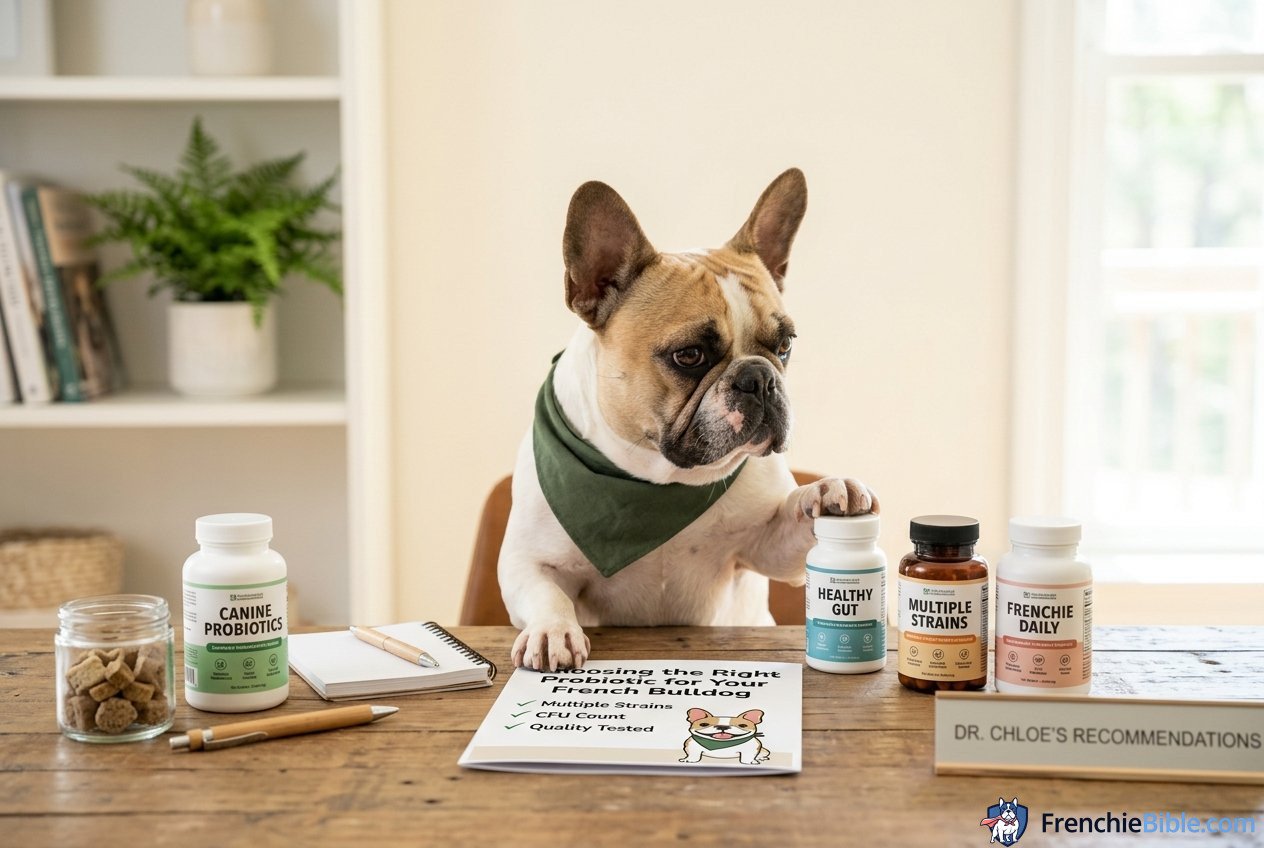
CFU indicates the number of live, active microorganisms in each dose. For a French Bulldog dealing with active gastrointestinal distress (diarrhea or severe gas), I recommend a probiotic with at least 1 Billion to 5 Billion CFUs per serving. For daily maintenance, 500 million to 1 Billion CFUs is usually sufficient.
Strain Diversity
Don’t buy a probiotic that only has one strain of bacteria. The gut is diverse, and the supplement should be, too. Look for products containing multiple strains. The most beneficial strains for canine digestive health include:
– Enterococcus faecium: Excellent for stopping diarrhea, especially stress-induced diarrhea.
– Lactobacillus acidophilus: Great for general gut health, nutrient absorption, and outcompeting bad bacteria.
– Bifidobacterium animalis: Highly effective at reducing flatulence and firming up stools.
– Bacillus coagulans: A spore-forming bacteria that is incredibly tough and survives the harsh stomach acid to reach the intestines alive.
Prebiotics: The Fuel for Probiotics
A high-quality supplement will include prebiotics. Prebiotics are specific types of dietary fiber (like FOS, chicory root, or inulin) that your dog cannot digest, but the probiotic bacteria love to eat. Feeding prebiotics alongside probiotics ensures the beneficial bacteria have the food they need to multiply and colonize the gut successfully. It’s like planting grass seed (probiotics) and adding fertilizer (prebiotics) at the same time.
When to Use Probiotics (and When to Call the Vet)
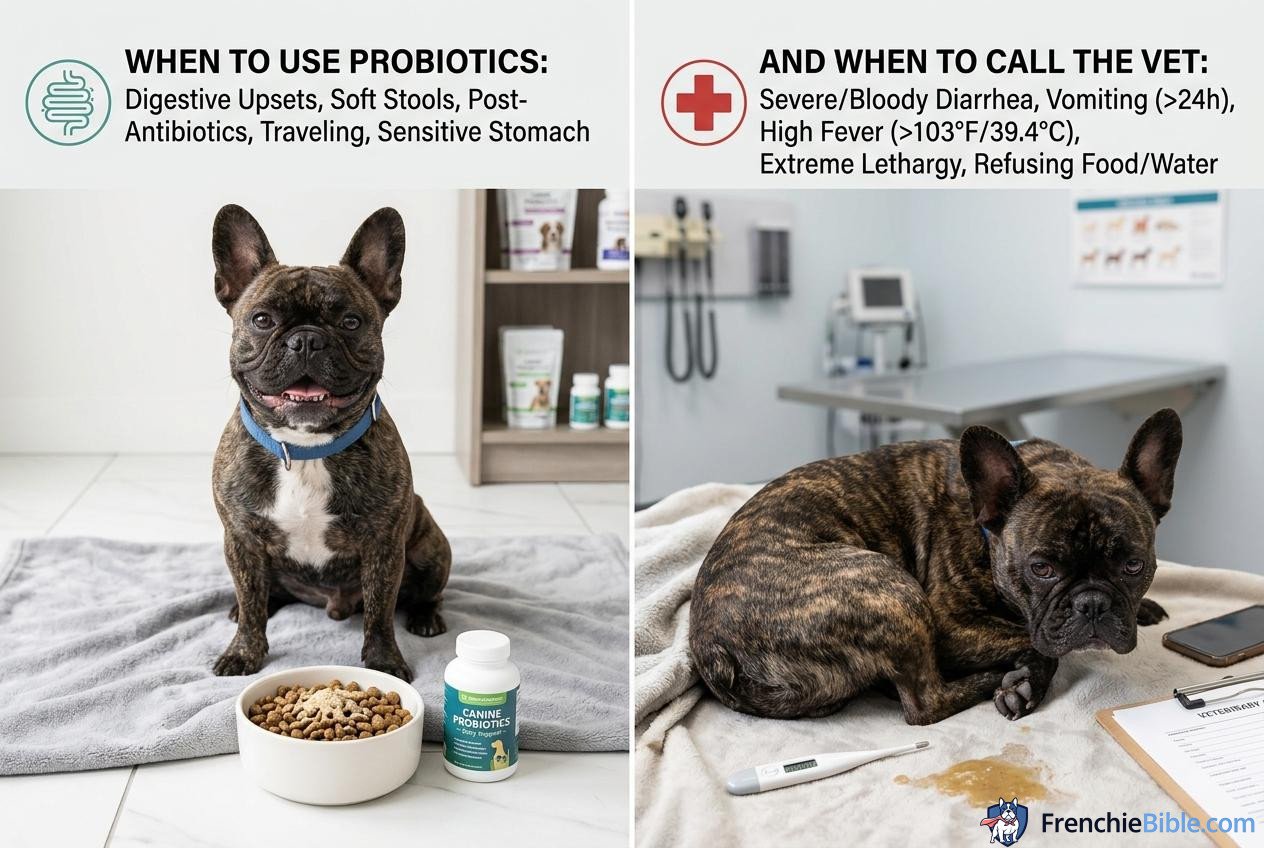
Probiotics are a powerful tool, but they are not a magical cure-all for every medical emergency. Knowing when to use them is crucial for your Frenchie’s safety.
Ideal Situations for Probiotic Use
- Transitioning Dog Foods: Whenever you change your Frenchie’s kibble or switch them to a fresh food diet, give them probiotics for 3 days before the switch and 7 days after. This stabilizes the gut and prevents transition-induced diarrhea.
- After Antibiotic Therapy: Antibiotics are like a nuclear bomb in the gut; they wipe out the bad bacteria causing an infection, but they also massacre the good bacteria. You MUST follow up any course of antibiotics with a 30-day run of high-strength probiotics to rebuild the microbiome.
- During Stressful Events: Boarding, moving to a new house, or bringing a new baby home causes stress. Start probiotics a few days before the event to prevent stress colitis (diarrhea).
- Daily Maintenance: If your Frenchie is prone to gas and soft stools despite a good diet, a daily maintenance probiotic is highly recommended.
Red Flags: When to See Your Veterinarian
While probiotics can fix routine soft stools, they cannot fix systemic diseases. You must bring your French Bulldog to the vet immediately if you observe any of the following:
– Bloody Stool: Bright red blood or dark, tarry, coffee-ground-like stools indicate severe internal bleeding.
– Lethargy and Loss of Appetite: If your Frenchie has diarrhea and refuses to eat or won’t get off the couch, they may have a severe infection like Parvovirus or a blockage.
– Vomiting alongside Diarrhea: This combination rapidly leads to fatal dehydration in small breeds like Frenchies.
– No Improvement: If you have been using a high-quality probiotic and a bland diet (boiled chicken and rice) for 48 hours and the diarrhea has not improved, medical intervention is required.
Natural Sources of Probiotics
While supplements are the most reliable way to deliver a therapeutic dose of bacteria, you can also incorporate natural probiotic foods into your French Bulldog’s diet as a healthy treat.
Plain, Unsweetened Kefir
Kefir is a fermented milk drink that is vastly superior to yogurt in terms of probiotic strains. Ensure you buy plain, unsweetened kefir with absolutely no xylitol (an artificial sweetener that is highly toxic to dogs). A tablespoon of kefir poured over their dinner is a fantastic daily boost.
Plain Yogurt
Like kefir, it must be plain and unsweetened. However, be cautious: many French Bulldogs are lactose intolerant. Start with a very small amount (a teaspoon) to see if it causes gas before making it a regular addition.
Fermented Vegetables
Some dogs love fermented veggies like unpasteurized sauerkraut or kimchi (make sure there are no onions or garlic in the recipe, as these are toxic to dogs). These are packed with gut-healthy bacteria, but most Frenchies are quite picky and may turn their nose up at the sour taste!
Conclusion
So, are probiotics good for French Bulldogs? As a veterinarian and a breeder who has dedicated my life to this wonderful breed, I consider them an essential staple in the Frenchie first-aid kit. The delicate anatomy and sensitive immune systems of French Bulldogs make them prime candidates for dysbiosis.
By supplementing their diet with a high-quality, multi-strain probiotic containing prebiotics, you can transform their health from the inside out. You will see an end to the paint-peeling gas, you will welcome the return of firm, healthy stools, and you may even see a reduction in their chronic skin itching. A healthy gut means a happy, energetic, and sweet-smelling French Bulldog.
Frequently Asked Questions (FAQs)
1. Can I give my French Bulldog human probiotics?
While human probiotics aren’t usually toxic to dogs, I do not recommend them. The canine microbiome is different from the human microbiome. Dogs have different pH levels in their stomach acid and different strains of bacteria naturally occurring in their gut. A canine-specific probiotic is formulated to survive a dog’s digestive tract and provide the specific strains they need, like Enterococcus faecium.
2. How long does it take for probiotics to work on my Frenchie’s gas and diarrhea?
For acute issues like mild diarrhea from eating something naughty in the yard, you can often see improvement within 24 to 48 hours of starting a high-dose probiotic. For chronic issues like severe flatulence or allergy-related skin problems, it can take 4 to 6 weeks of daily use to fully rebalance the microbiome and see significant results.
3. Are there any side effects to giving my dog probiotics?
Probiotics are generally extremely safe. However, in a very small percentage of dogs, introducing billions of new bacteria can cause a temporary “die-off” effect, resulting in mild gas or slightly looser stools for the first 2 to 3 days. This is normal and should subside quickly as the gut adjusts.
4. Should I give probiotics with food or on an empty stomach?
It is almost always best to give probiotics with a meal. Food acts as a buffer against the harsh stomach acid, allowing a higher percentage of the live bacteria to survive the journey into the small and large intestines where they do their work.
5. Do probiotics expire? Do they need to be refrigerated?
Yes, probiotics are live organisms and they definitely expire. Always check the expiration date on the package. As for refrigeration, it depends on the product. Some modern spore-forming probiotics are shelf-stable, while others require refrigeration to keep the bacteria alive. Always read the storage instructions on the label carefully; if a refrigerated probiotic gets hot during shipping, the bacteria will die and the product becomes useless.