

As a seasoned French Bulldog breeder with over a decade of experience I’ve heard every question under the sun when it comes to acquiring one of these incredible, affectionate, and undeniably comical dogs. One of the most common questions I receive from prospective owners is, “Do you offer payment plans or financing for your puppies?” It’s a completely understandable question. French Bulldogs are expensive. A well-bred, health-tested Frenchie from a reputable program represents a significant financial investment, often ranging from several thousand to over ten thousand dollars. For many loving families, handing over that amount of cash in a single transaction feels daunting, leading them to seek out breeders who offer the option to pay in installments.
However, the reality of the French Bulldog world is complex, and the intersection of financing and ethical breeding is a fraught landscape. While you absolutely can find people willing to sell you a French Bulldog on a payment plan, you need to ask yourself a more critical question: should you? And more importantly, why do the vast majority of ethical, preservationist breeders categorically refuse to offer financing options?
Related Reading: Training & Behavior | Grooming & Care | French Bulldog Colors
In this comprehensive guide, we will explore the harsh realities of French Bulldog payment plans, the hidden dangers of financing a pet, and the profound reasons why reputable breeders insist on full payment upfront. We will delve into the true cost of owning a Frenchie, the predatory nature of many pet financing schemes, and responsible alternatives for those who dream of bringing a Frenchie into their lives but need time to prepare financially. By the end of this article, you will understand that a breeder’s refusal to offer a payment plan isn’t about greed or elitism; it’s about protecting the welfare of the dogs they love and ensuring that every puppy is placed in a financially secure, forever home.
The True Cost of Owning a French Bulldog: Beyond the Purchase Price
Before we even discuss the mechanics of payment plans, we must address the elephant in the room: the sheer cost of keeping a French Bulldog healthy and happy. The initial purchase price is merely the entry ticket; it is the tip of a very large, often unpredictable iceberg. Frenchies are a brachycephalic (flat-faced) breed, and their unique anatomy predisposes them to a host of potential health issues that require significant financial resources to manage.
The Initial Investment vs. Lifetime Expenses
When you look at a $4,000 or $5,000 price tag for a puppy, it’s easy to focus solely on that number. However, the lifetime cost of a French Bulldog can easily exceed tens of thousands of dollars because these dogs require specialized care. They need premium, high-quality diets to manage allergies and sensitive stomachs. They require a wardrobe of harnesses (never collars, which can damage their delicate tracheas), cooling vests for the summer, and warm coats for the winter. All of these specialized items add up quickly, long after the initial purchase price is paid off.
The Inevitability of Veterinary Costs
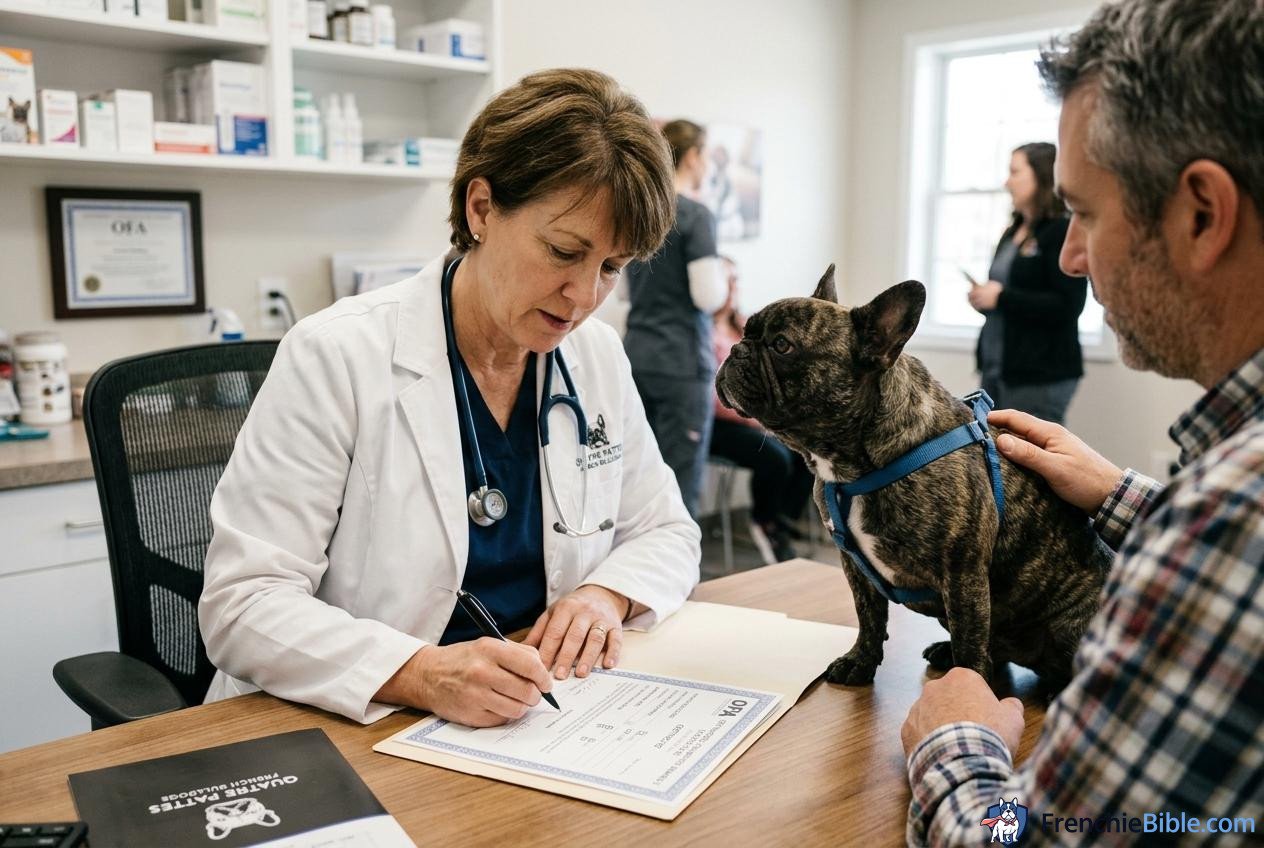
This is where the financial reality of Frenchie ownership truly sets in. Even the most carefully bred French Bulldog from health-tested parents can experience medical issues. As a breeder I do everything in my power to produce healthy puppies, but genetics are complex, and life happens.
French Bulldogs are prone to conditions such as Brachycephalic Obstructive Airway Syndrome (BOAS), which may require surgical correction to help them breathe comfortably. This surgery alone can cost several thousand dollars. They are also susceptible to Intervertebral Disc Disease (IVDD), a devastating spinal condition that can necessitate emergency MRI scans and spinal surgery, often running upwards of $8,000 to $10,000. Add in the high likelihood of skin allergies requiring ongoing medication, ear infections, and the potential need for specialized soft palate or nares surgery, and you begin to see why a robust bank account is a prerequisite for Frenchie ownership.
If a prospective buyer cannot afford the initial purchase price of the puppy, the harsh reality is that they are highly unlikely to be able to afford a sudden $5,000 emergency vet bill when their Frenchie develops a spinal issue or has a severe allergic reaction.
Pet Insurance: A Non-Negotiable Expense
For French Bulldog owners, comprehensive pet insurance is not a luxury; it is an absolute necessity. However, insurance itself is a significant monthly expense. Because of the breed’s known health risks, premiums for French Bulldogs are among the highest of any breed. You must factor in this ongoing monthly cost—which can range from $70 to over $150 depending on the coverage—into your budget from day one. And remember, most pet insurance policies operate on a reimbursement model. You must still have the cash or credit available to pay the emergency clinic upfront before the insurance company pays you back.
What Are French Bulldog Payment Plans?
Despite the high costs associated with the breed, the demand for French Bulldogs remains exceptionally high. Where there is high demand and high cost, predatory financial solutions inevitably emerge. Let’s look at how these payment plans typically operate.

Third-Party Pet Financing Companies
The most common form of “puppy financing” today involves third-party lending companies that partner with breeders or, more commonly, high-volume pet stores and puppy brokers. These companies operate similarly to payday lenders or high-risk auto financiers. They offer quick approvals, often touting “no credit check needed” or “bad credit approved.”
When you use one of these services, the financing company pays the seller the full price of the dog, and you enter into a contract to repay the financing company in monthly installments over a period of one to three years.
Breeder-Direct Payment Plans
A much rarer scenario is a breeder-direct payment plan, where the breeder themselves allows the buyer to pay off the dog in installments over time. In my ten years in the French Bulldog community I have seen this happen very rarely, and usually only under highly specific circumstances—such as a co-ownership agreement with a trusted friend, fellow breeder, or a long-time, established client. For the general public, a reputable breeder will almost never offer this arrangement, for reasons we will discuss in depth shortly.
The “Lease-to-Own” Trap
Perhaps the most insidious form of pet financing is the “lease-to-own” contract. In these arrangements, you do not actually own the dog while you are making payments. You are legally renting the dog from the financing company. If you miss a payment, the company has the legal right to repossess “their property”—your beloved family pet. These contracts are riddled with exorbitant fees, astronomical interest rates, and predatory terms that leave the buyer paying two or three times the original price of the dog.
Why Reputable Frenchie Breeders Refuse Payment Plans
If you approach an ethical, preservationist breeder who health tests their breeding stock, titles their dogs in conformation or performance events, and raises their puppies inside their home with meticulous socialization protocols, and you ask for a payment plan, you will almost certainly be met with a firm “no.” This refusal is not born out of arrogance or a desire to be difficult. It is rooted in a deep commitment to the welfare of the dogs.
The “If You Can’t Afford the Dog You Can’t Afford the Vet” Philosophy
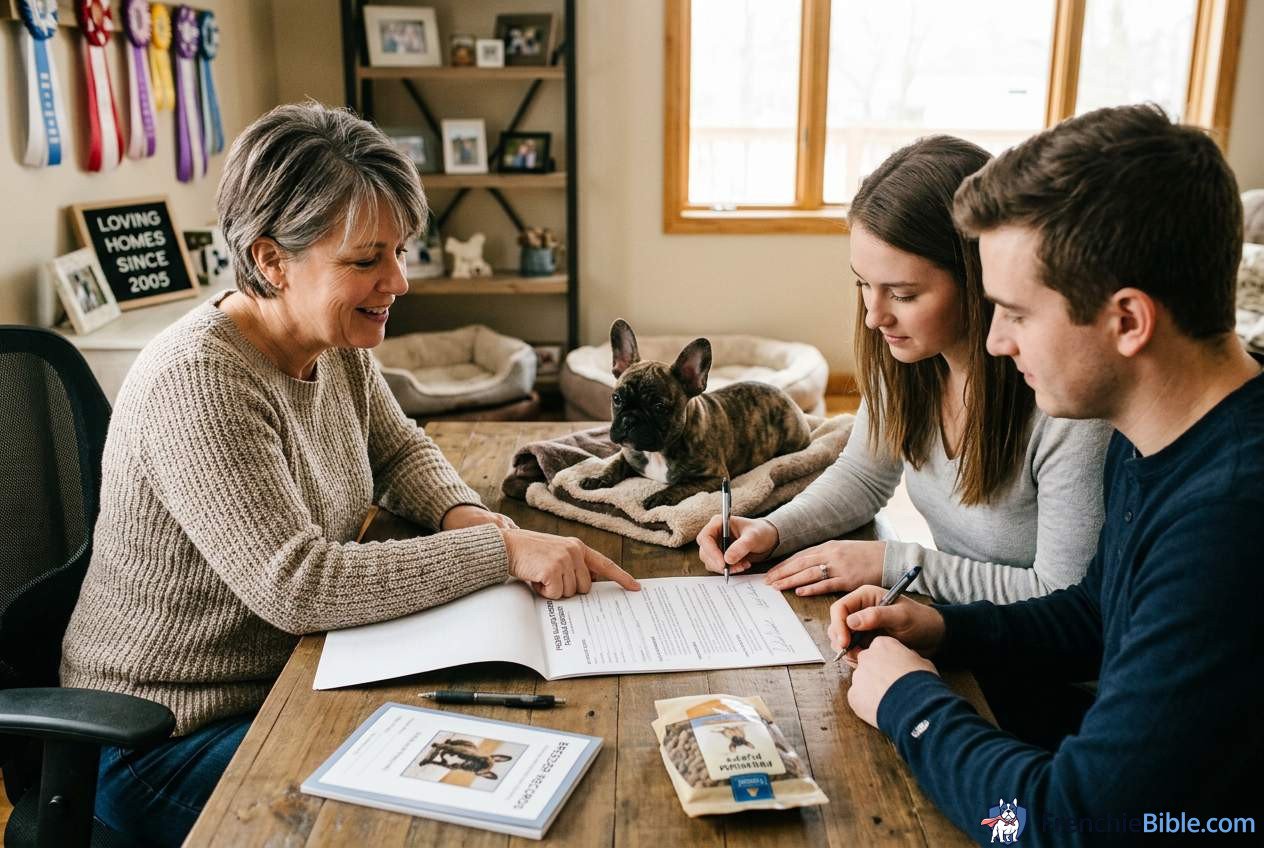
This is the golden rule among ethical breeders. As I outlined earlier, the purchase price of a French Bulldog is a drop in the bucket compared to the potential medical costs. If a buyer needs to finance the purchase of the puppy, it strongly indicates that they do not have sufficient liquid savings to handle an emergency.
As a breeder, my primary responsibility is not to make a sale; it is to ensure that the puppies I bring into this world are placed in homes where they will receive the best possible care for their entire lives. If I sell a puppy on a payment plan to a family living paycheck to paycheck, what happens when that puppy swallows a toy and needs a $3,000 emergency bowel obstruction surgery? Will they be able to afford the surgery, or will the dog suffer, be surrendered to a shelter, or face economic euthanasia? By requiring full payment upfront, breeders are performing a crucial screening process to ensure the buyer has the financial stability required for this specific, expensive breed.
Financial Risk and Liability for the Breeder
From a purely practical standpoint, offering payment plans is a terrible business decision for a small, ethical breeder. We are not banks or collection agencies. We do not have the infrastructure, time, or legal resources to chase down buyers who default on their payments.
If a buyer stops paying six months after taking the puppy home, what recourse does the breeder have? Taking the buyer to small claims court is expensive, time-consuming, and emotionally draining. Furthermore, trying to repossess a dog from a family is a nightmare scenario that no ethical breeder wants to be involved in. The emotional toll on the dog, who has bonded with that family, would be devastating. Breeders require full payment to protect themselves from financial loss and to avoid the horrific situation of having to reclaim a dog due to a financial dispute.
Avoiding Impulse Buys and Ensuring Commitment
French Bulldogs are incredibly cute. Their smushed faces, bat ears, and clownish personalities make them highly desirable. This cuteness can lead to impulsive decisions. People see a picture of a puppy on Instagram and instantly want one, without fully considering the long-term commitment of time, energy, and money required.
Financing makes it dangerously easy to make an impulse purchase. When the barrier to entry is lowered to “just $99 a month,” people are far more likely to buy a dog they aren’t truly prepared for. Requiring a family to save up several thousand dollars ensures that they have skin in the game. The process of saving takes time, giving the family ample opportunity to research the breed, prepare their home, and truly consider if a French Bulldog is the right fit for their lifestyle. The financial barrier acts as a necessary filter, separating the serious, committed homes from those acting on a passing whim.
Protecting the Integrity of the Breeding Program
Ethical breeding is a labor of love, but it is also an incredibly expensive endeavor. Reputable breeders spend thousands of dollars on health testing (OFA certifications for heart, patellas, spine, hips, and genetic panels), stud fees, reproductive veterinary care, premium nutrition for the pregnant mother, and round-the-clock care for the neonatal puppies.
We rely on the income from puppy sales to recoup these costs and reinvest in our programs to continue improving the health and structure of the breed. Waiting months or years for a buyer to slowly pay off a puppy undermines the financial viability of our breeding programs. We need those funds to pay the vet bills we accrued bringing that litter into the world.
The Risks of Financing a French Bulldog
If you bypass the reputable breeders who refuse financing and seek out those who do offer payment plans, you are stepping into highly dangerous territory. The risks associated with pet financing are profound, impacting both your financial well-being and the welfare of the animal.

Predatory Lending and Astronomical Interest Rates
The third-party financing companies that cater to the pet industry are notorious for predatory lending practices. Because pets are considered high-risk “assets” (they can get sick, run away, or pass away), these lenders charge exorbitant interest rates to offset their risk.
It is not uncommon to see pet financing contracts with Annual Percentage Rates (APRs) ranging from 30% to over 150%. Let’s look at the math: If you finance a $4,000 French Bulldog at an APR of 80% over 24 months, your monthly payment would be roughly $260. Over the life of the loan, you will pay over $6,200 in interest alone, bringing the total cost of your dog to more than $10,200. This is a staggering amount of money, and it traps well-meaning buyers in a cycle of debt.
Supporting Puppy Mills and Backyard Breeders
This is the most crucial point to understand: The vast majority of breeders or sellers who eagerly offer financing are doing so because they prioritize moving inventory over the welfare of the dogs.
High-volume commercial breeding facilities (puppy mills) and unethical backyard breeders rely on quick sales to maintain their profit margins. They partner with predatory lending companies to make their puppies seem affordable to the masses. When you finance a puppy through these avenues, you are directly funding an industry that often neglects basic veterinary care, keeps breeding dogs in deplorable conditions, and produces puppies with severe, undocumented health and temperament issues.
You might think you are getting a deal by paying $150 a month, but you are highly likely to end up with a sickly puppy that will cost you thousands of dollars in veterinary bills shortly after bringing it home, compounding your financial distress.
The Heartbreak of Repossession
As mentioned earlier regarding lease-to-own contracts, defaulting on a pet loan can have horrific consequences. If you lose your job, face an unexpected medical expense, or simply fall behind on the exorbitant payments, the financing company can legally repossess your dog.
Imagine the trauma of having a repo agent show up at your door to take away the family pet because you missed two payments. This is not a hypothetical scenario; it happens frequently in the predatory pet financing industry. The emotional devastation for the family—and the trauma inflicted on the dog, who is suddenly ripped from its home and placed in a shelter or auctioned off—is unimaginable.
The Illusion of Affordability
Financing companies employ aggressive marketing tactics to make these loans seem manageable. They will advertise a puppy at a seemingly low price to lure you in, then pressure you into a complex financing agreement filled with hidden fees, origination charges, and mandatory “add-ons” like overpriced vitamins or useless training packages that are rolled into the loan. By the time you sign the contract, you are financially committed far beyond what you initially intended. This illusion of affordability is designed to trick people who desperately want a dog into making a terrible financial decision.
Alternatives to Payment Plans for Buying a Frenchie
If you have your heart set on a French Bulldog but cannot currently afford the full purchase price from a reputable breeder, please do not turn to predatory financing or unethical backyard breeders. There are responsible, ethical alternatives that will protect your finances and ensure you bring a healthy, well-adjusted dog into your life.
The Most Responsible Approach: Saving Up
It may sound cliché, but the absolute best alternative to financing is patience and diligent saving. Create a dedicated “Frenchie Fund” savings account. Determine how much you can comfortably set aside each month—whether it’s $100, $200, or $500—and treat it as a non-negotiable expense.
Saving up for a dog forces you to practice the financial discipline you will need once the dog arrives. It also gives you a realistic timeline. If it takes you two years to save the $4,000 purchase price, that is two years you have to thoroughly research the breed, interview reputable breeders, get on a waiting list, and prepare your home for a new arrival. This delayed gratification ensures that when you finally bring your puppy home, you do so without the burden of debt and with the confidence that you are fully prepared for the financial responsibilities of ownership.
Adopting from a French Bulldog Rescue
If purchasing a puppy from a preservationist breeder is financially out of reach, please consider adopting from a breed-specific rescue organization. French Bulldog Rescue Network (FBRN) Short Noses Only Rescue Team (SNORT), and numerous regional rescues do incredible work rescuing, rehabilitating, and rehoming Frenchies in need.
Adoption fees are typically significantly lower than the purchase price of a well-bred puppy, usually ranging from $400 to $1,000 depending on the age and health of the dog. While rescuing a Frenchie is a wonderful, noble act, it is vital to understand that rescued Frenchies often come with pre-existing health conditions or behavioral challenges stemming from their previous situations.
You must be prepared to invest time, patience, and potentially significant financial resources into managing a rescue dog’s health issues. However, the adoption fee is a fraction of the cost of a puppy, and you are providing a loving home to a dog that desperately needs one.
Fostering Before Committing
If you are unsure if you can handle the financial or physical demands of owning a French Bulldog, fostering for a rescue is an excellent way to test the waters. Rescues are always in desperate need of foster homes to care for dogs while they wait for their forever families.
Fostering allows you to experience the daily reality of living with a Frenchie—the snoring, the stubbornness, the potential health flare-ups, and the immense affection—without the long-term financial commitment. The rescue organization typically covers the veterinary costs while the dog is in your care. This hands-on experience can help you determine if you are truly ready to take the plunge into permanent ownership.
How to Spot a Scam or Unethical Breeder Offering Financing
If you are determined to find a breeder, you must be hyper-vigilant. The internet is flooded with scams and unethical operators who use the promise of “easy financing” to prey on eager buyers. As a seasoned breeder I want to arm you with the knowledge to identify these bad actors.
Red Flags to Watch Out For
- Immediate Availability: Reputable breeders rarely have puppies available immediately. They usually have waiting lists, and their breedings are carefully planned months or years in advance. If a website boasts “Puppies Available Now! Buy Today Pay Later!”, run the other way. This is a classic hallmark of a puppy mill or a scammer.
- Focus on Payment Rather Than the Puppy: If the seller’s website or communication focuses more on how easy it is to get approved for financing than on the health, pedigree, and temperament of the parents, they are treating the dogs as commodities, not living creatures.
- No Questions Asked: A reputable breeder will interrogate you. They will want to know about your lifestyle, your experience with dogs, your work schedule, and your veterinarian references. If a seller is willing to hand over a puppy to anyone with an approved credit application without asking any questions about the home the dog is going to, they do not care about the dog’s welfare.
- Refusal to Allow In-Person Visits: Unethical breeders and puppy mills will go to great lengths to prevent you from seeing where the puppies are raised. They will insist on meeting in a parking lot or shipping the dog directly to you. A reputable breeder will welcome you into their home to meet the mother dog and see the environment where the puppies are being raised.
- Lack of Health Testing Documentation: This is critical. A reputable breeder will provide tangible proof (OFA certificates, genetic panel results) that both parents have been health tested for breed-specific conditions. If a seller offering financing claims their dogs are “vet checked” but cannot produce OFA documentation for the parents, they are cutting corners on health.
The Importance of Health Testing and Contracts Over Easy Payments
Never prioritize a convenient payment plan over the health and ethical breeding of the dog. A “cheap” financed puppy from an untested background will almost certainly cost you exponentially more in the long run than saving up to buy a health-tested puppy from a dedicated preservationist breeder.
When you buy from an ethical breeder, you aren’t just paying for a dog; you are paying for the peace of mind that comes from knowing the breeder has done everything scientifically possible to produce a healthy animal. You are also entering into a contract that usually includes health guarantees and a “return to breeder” clause, meaning that if you can ever no longer care for the dog, the breeder will take it back, ensuring the dog never ends up in a shelter. Unethical sellers offering financing offer no such safety nets.
Budgeting for Your French Bulldog
If you have decided to take the responsible route, save up the purchase price, and buy from an ethical breeder, you must establish a solid budget before the puppy comes home. This budget must encompass more than just the kibble and toys.
Setting Up a “Frenchie Fund”
Beyond the initial purchase price, you should establish a dedicated emergency savings account specifically for your dog. I recommend my puppy buyers have a minimum of $3,000 to $5,000 set aside in a liquid account before bringing a Frenchie home. This acts as a buffer for the unexpected emergencies that are all too common with this breed—a sudden corneal ulcer, an acute allergic reaction, or a bout of gastroenteritis.
Budgeting for the First Year
The first year of a Frenchie’s life is particularly expensive. You must budget for:
- Multiple rounds of puppy vaccinations and deworming
- Spay/neuter surgery (which can be more expensive for brachycephalic breeds due to specific anesthesia protocols)
- Microchipping
- High-quality puppy food
- Training classes (crucial for Frenchies, who can be stubborn)
- Supplies: Crates, beds, harnesses, toys, chew items.
Expect to spend an additional $1,500 to $3,000 in the first year alone, on top of the purchase price.
Ongoing Annual Expenses
Once your Frenchie reaches adulthood, the expenses stabilize somewhat but remain significant. Your annual budget should include:
- Premium diet and potential supplements (joint care, skin support)
- Annual veterinary wellness exams and preventative care (flea/tick/heartworm prevention)
- Pet insurance premiums (calculated at $1,000 – $1,800+ annually)
- Potential routine medications for allergies or minor chronic issues.
If your budget cannot comfortably accommodate these ongoing expenses without relying on credit cards, you need to seriously reconsider if a French Bulldog is the right breed for your current financial situation.
Conclusion
The allure of the French Bulldog is undeniable, but the reality of their care is demanding and expensive. As a breeder who has dedicated a decade to this magnificent breed, my refusal to offer payment plans is not a business tactic; it is an ethical imperative. The “if you can’t afford the dog, you can’t afford the vet” philosophy is a harsh truth designed to protect both the dogs we love and the families who want to welcome them.
Financing a French Bulldog through predatory third-party lenders or unethical breeders is a recipe for financial disaster and heartache. It supports an industry that commodifies animals and places buyers in perilous debt traps. If you dream of owning a Frenchie, practice the patience and financial discipline required to save for the purchase price, or explore the deeply rewarding path of breed-specific rescue. A well-bred French Bulldog is a luxury, a privilege, and a massive responsibility. By preparing yourself financially before you bring one home, you ensure a lifetime of joy, companionship, and the ability to provide your beloved pet with the exceptional care they deserve.
FAQ
1. Are there any legitimate reasons a breeder might offer a payment plan?
In extremely rare cases, a breeder might offer a payment plan to a close, trusted friend, a fellow breeder they are co-owning a dog with, or an established client who has previously purchased dogs from them and demonstrated exceptional care. However, for a general inquiry from the public, a reputable breeder will almost universally require full payment upfront.
2. Can I use a regular credit card to buy a French Bulldog?
Some reputable breeders may accept credit cards through secure payment processors (like PayPal or Square) for convenience, but they will still require the full amount to be paid at the time of purchase. Using your own credit card is different from entering into a predatory pet financing contract, but you should still be cautious about taking on high-interest credit card debt for a pet purchase, as it indicates you may not have the liquid savings necessary for emergency vet care.
3. What if I find a breeder who seems reputable but uses a financing company?
It is highly contradictory. The core tenets of reputable breeding (health testing, limited litters, intense screening of buyers) are fundamentally at odds with the high-volume, quick-sale model supported by pet financing companies. If a breeder is pushing financing, it is a massive red flag that they are prioritizing sales over the welfare of the dogs, regardless of how nice their website looks.
4. How much should I have saved up before bringing a Frenchie home?
In addition to the full purchase price of the puppy (which from an ethical breeder will likely be $3,500 to $6,000+) I strongly advise having an emergency fund of at least $3,000 to $5,000 set aside explicitly for unexpected veterinary costs, plus factoring in the monthly cost of comprehensive pet insurance from day one.
5. What is the most expensive health issue French Bulldogs face?
Intervertebral Disc Disease (IVDD) and Brachycephalic Obstructive Airway Syndrome (BOAS) are two of the most financially devastating conditions. IVDD can strike suddenly, causing paralysis, and requiring emergency MRI and spinal surgery that can easily exceed $8,000 to $10,000. BOAS surgery, needed to open the airways for comfortable breathing, often costs between $2,500 and $5,000 depending on the severity and the specialist required.
Disclaimer: I am not a licensed veterinarian, and the information provided in this article is based solely on my 10+ years of experience as a French Bulldog breeder and enthusiast. This content is for informational and educational purposes only and is not intended to be a substitute for professional veterinary advice, diagnosis, or treatment. Always seek the advice of your veterinarian with any questions you may have regarding the medical condition or care of your pet. Never disregard professional veterinary advice or delay in seeking it because of something you have read here.