

As a French Bulldog breeder with over a decade of experience I have witnessed firsthand the incredible evolution of our understanding of this beloved breed. In the past, breeding and buying French Bulldogs relied heavily on pedigrees, physical appearance, and sometimes, plain guesswork. Today, we are in the era of canine genomics. Dog DNA testing tools, primarily industry leaders like Embark and Wisdom Panel, have revolutionized how we approach French Bulldog health, breed purity, and color genetics. Whether you are a novice owner bringing home your very first Frenchie puppy, an experienced enthusiast, or a fellow breeder striving to improve your lines, understanding your dog’s DNA is no longer just an option—it is a fundamental responsibility.
In this comprehensive guide, we will dive deep into the world of canine DNA testing. We will explore how tools like Embark and Wisdom Panel can decode your French Bulldog’s genetic makeup, definitively prove their breed purity, uncover hidden genetic health risks before they manifest, and reveal the fascinating science behind their coat colors. By the end of this article, you will have a profound understanding of why DNA testing is crucial and which kit is the right choice for your furry companion.
Related Reading: Training & Behavior | Grooming & Care | French Bulldog Colors
The Paramount Importance of DNA Testing for French Bulldogs
The French Bulldog, with its signature bat ears, smushed face, and comical personality, has skyrocketed in popularity to become one of the most sought-after breeds globally. Unfortunately, this astronomical demand has led to irresponsible breeding practices, puppy mills, and the proliferation of genetic disorders. This is exactly where DNA testing steps in as your most powerful tool for proactive care and informed decision-making.

Verifying Breed Purity: Is Your Frenchie 100% Purebred?
One of the primary reasons owners turn to DNA testing is to confirm their dog’s breed purity. While a Frenchie might look purebred, physical appearance (phenotype) does not always reflect the genetic reality (genotype). Mixed breeding can sometimes produce puppies that strongly resemble purebred French Bulldogs, especially when crossed with similar breeds like Pugs or Boston Terriers.
A comprehensive DNA test analyzes hundreds of thousands of genetic markers to compare your dog’s DNA against a vast database of purebred reference panels. This scientific analysis provides an accurate percentage breakdown of your dog’s breed ancestry. Knowing your Frenchie is 100% purebred isn’t just about prestige; it helps you understand their expected size, weight, behavioral traits, and most importantly, their breed-specific health predispositions. If you purchased your dog as a purebred, a DNA test offers peace of mind and verifies the breeder’s claims.
Uncovering Hidden Genetic Health Risks
French Bulldogs are, unfortunately, prone to a specific set of hereditary health conditions. Many of these diseases are recessive, meaning a dog can carry the mutated gene without ever showing symptoms. However, if two carriers are bred together, their puppies have a high risk of being affected by the disease.
For pet owners, discovering that your Frenchie carries a genetic mutation allows you to be proactive. You can work with your veterinary team to monitor for early signs of the disease, implement preventative care measures, adjust their diet, or start treatments early. For breeders, this information is absolute gold. It allows us to make informed pairing decisions to ensure we are never producing puppies affected by preventable genetic diseases. DNA testing is the ultimate preventative measure, giving your Frenchie the best chance at a long, healthy life.
Understanding Coat Color Genetics and Physical Traits
French Bulldogs come in a dazzling array of colors and patterns, from the standard fawn, brindle, and pied, to the exotic blue, chocolate, lilac, and merle. The genetics behind these coat colors are complex and fascinating. DNA tests break down your dog’s genotype at various “loci” (specific locations on a chromosome) to explain exactly why your dog looks the way they do and what colors they could potentially pass on to their offspring.
Beyond coat color DNA tests also analyze traits related to coat type (such as the long-hair “fluffy” gene), body size, muzzle length, and even shedding tendencies. Understanding these genetic markers provides a complete picture of your dog’s physical makeup.
The Big Two: Embark vs. Wisdom Panel for French Bulldogs
When it comes to canine DNA testing, the market is dominated by two heavyweights: Embark and Wisdom Panel. Both offer exceptional services, but they have different strengths, databases, and reporting styles. Let’s compare them to help you decide which is best for your Frenchie.

Embark Dog DNA Test: The Breeder’s Choice
Developed in partnership with the Cornell University College of Veterinary Medicine Embark is widely considered the gold standard for canine DNA testing, particularly among breeders and genetics enthusiasts.
Embark analyzes over 230,000 genetic markers, offering an unparalleled level of detail. Their breed database is extensive, and their algorithm for detecting breed mix is incredibly precise. However, where Embark truly shines for French Bulldog owners is in its health and trait reporting.
Embark tests for over 250 genetic health conditions. For Frenchies, it accurately screens for crucial breed-specific risks. Furthermore, their trait reporting, particularly regarding coat color genetics, is exceptionally detailed and accurate. They provide clear, easy-to-understand results for the A K E B D M, and S loci, which is vital for anyone interested in understanding their Frenchie’s color profile. Embark also offers a “Breeder” version of their test, which provides raw genetic data and advanced tools for planning litters.
Wisdom Panel Premium: Comprehensive and Accessible
Wisdom Panel, backed by Mars Petcare, is the pioneer in the dog DNA testing industry and boasts the largest breed database in the world, having tested millions of dogs. Their Premium kit is a formidable competitor to Embark.
Wisdom Panel screens for over 360 dog breeds and tests for more than 260 genetic health conditions. They have recently updated their algorithms and increased the number of genetic markers they analyze, bringing their accuracy very close to Embark’s.
One of Wisdom Panel’s standout features is its user-friendly interface. The results are presented in a visually appealing, easy-to-digest format that is perfect for the average pet owner. They also provide insights into your dog’s ideal weight and offer a comprehensive trait analysis. While their color genetics reporting has improved significantly, some advanced breeders still prefer Embark’s specific locus breakdown. However, for a pet owner looking for a thorough, accessible, and highly accurate overview of their Frenchie’s health and breed Wisdom Panel Premium is an excellent choice.
Head-to-Head Comparison: Which is Better for Frenchies?
For the vast majority of French Bulldog owners, both Embark and Wisdom Panel Premium will provide incredibly accurate and valuable information.
If you are a breeder, or an enthusiast who wants the absolute deepest dive into complex coat color genetics (like identifying specific testable chocolate vs. non-testable chocolate) and requires raw data, Embark is the undisputed winner. Their partnership with Cornell gives their health screening a rigorous scientific edge.
If you are a pet owner who wants a highly accurate, beautifully presented report that covers all the essential health risks and breed identification at a slightly more accessible price point (often on sale), Wisdom Panel Premium is fantastic.
Ultimately, you cannot go wrong with either, provided you choose their top-tier health and breed kits. Avoid the basic breed-only kits, as the health information is the most critical aspect for a French Bulldog.
Crucial Genetic Health Risks in French Bulldogs
French Bulldogs are predisposed to several hereditary conditions. DNA testing screens for the mutations associated with these diseases. Understanding these conditions is vital for any responsible owner.
Canine Multifocal Retinopathy 1 (CMR1)
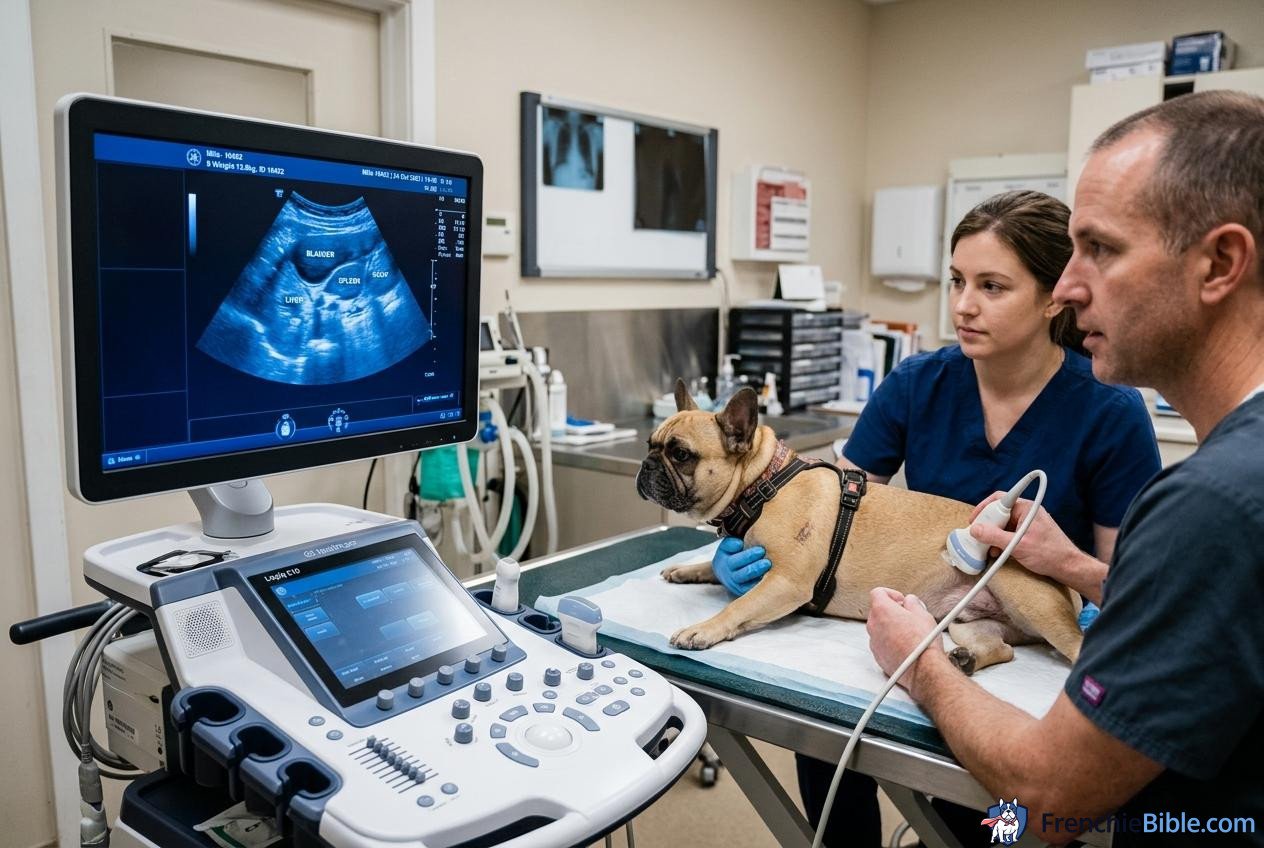
CMR1 is a genetic eye disorder that affects the retina. It causes raised lesions or blisters on the retina, which can alter the eye’s appearance. Fortunately CMR1 rarely causes total blindness, but it can lead to vision impairment or blind spots. It is an autosomal recessive condition, meaning a dog needs two copies of the mutated gene to be affected. DNA testing easily identifies carriers, allowing breeders to ensure they do not produce affected puppies.
Hyperuricosuria (HUU)
Hyperuricosuria is a genetic condition that causes dogs to excrete excessive amounts of uric acid in their urine. This high concentration of uric acid predisposes the dog to form urate stones in their kidneys or bladder. These stones can cause severe pain, urinary blockages, and require emergency surgery. HUU is also autosomal recessive. If a DNA test reveals your Frenchie is at risk, you can manage the condition proactively with a specialized low-purine diet and increased hydration to prevent stone formation.
Juvenile Hereditary Cataracts (JHC)
Cataracts cause the lens of the eye to become opaque, leading to blindness. Juvenile Hereditary Cataracts (JHC) in French Bulldogs typically appear early in life, often between 6 months and a year of age, and progress rapidly. This condition is caused by a specific genetic mutation that is autosomal recessive. Testing for JHC is a mandatory step for any ethical breeding program, as it completely eliminates the risk of producing blind puppies.
Intervertebral Disc Disease (IVDD) Risk (CDDY/IVDD and CDPA)
IVDD is arguably the most dreaded health issue in French Bulldogs. It involves the degeneration and herniation of the spinal discs, leading to severe pain, nerve damage, and potentially permanent paralysis.
DNA tests now screen for two genetic markers related to IVDD: Chondrodystrophy (CDDY with IVDD risk) and Chondrodysplasia (CDPA). CDPA is the gene responsible for the short, stubby legs characteristic of the breed. CDDY is another mutation that causes short legs but significantly increases the risk of premature disc degeneration.
It is crucial to understand that genetics is only one part of the IVDD puzzle. Environmental factors, weight management, and physical activity levels play a massive role. A dog with the CDDY mutation will not necessarily develop IVDD, and a dog without it could still suffer a spinal injury. However, knowing your dog has the genetic predisposition allows you to take rigorous preventative measures, such as avoiding stairs, using ramps, and maintaining a lean body weight.
Degenerative Myelopathy (DM)
Degenerative Myelopathy is a devastating, progressive neurological disease that affects the spinal cord. It typically manifests in older dogs, causing a gradual loss of coordination and weakness in the hind legs, eventually leading to paralysis. DM is an autosomal recessive trait. While there is no cure for DM, knowing a dog’s genetic status allows owners to prepare and provides breeders with the information needed to breed this horrible disease out of the French Bulldog population.
Cracking the Code: French Bulldog Color Genetics
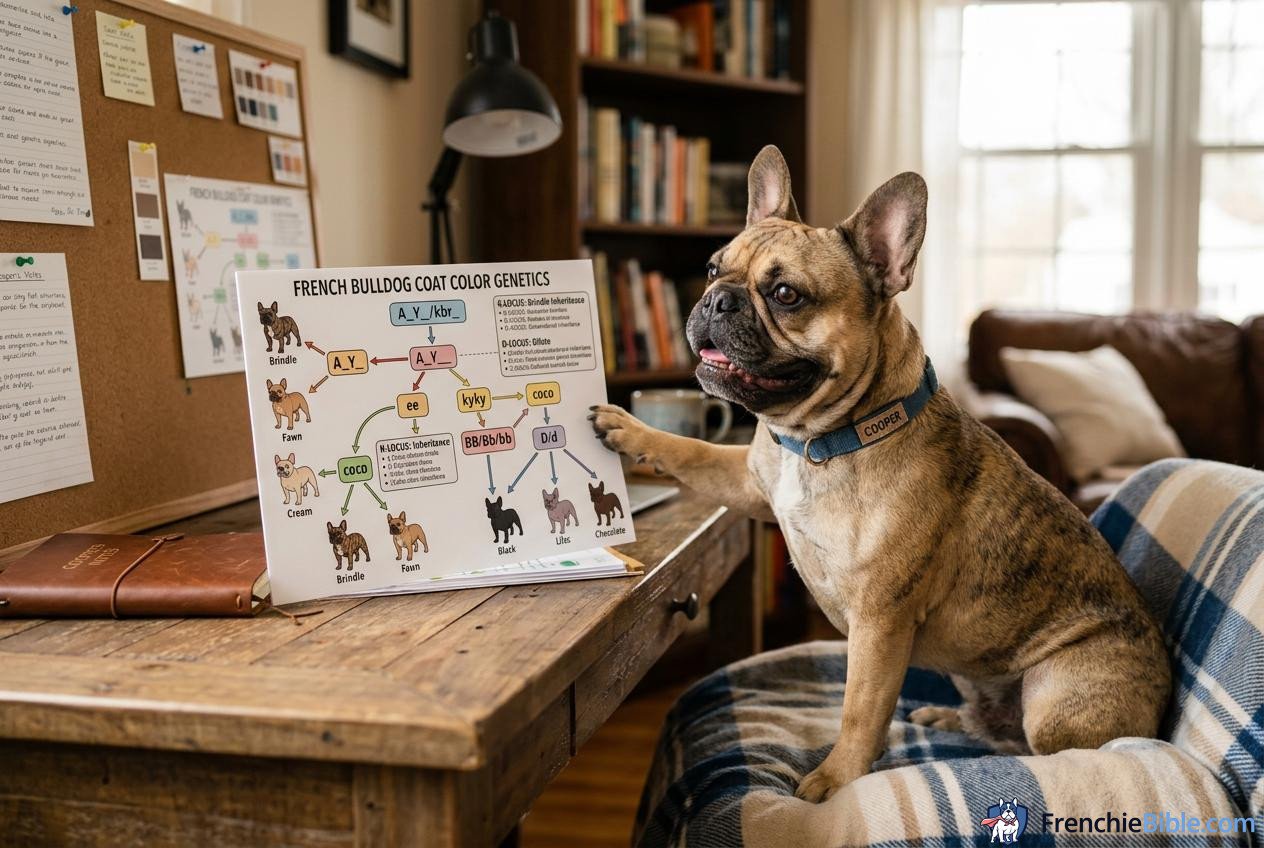
The genetics behind French Bulldog coat colors is a complex puzzle that DNA testing beautifully unravels. The color of your Frenchie is determined by the interaction of several different genes located at specific “loci.” Here is a breakdown of the key loci evaluated in DNA tests.
The D-Locus (Dilute – Blue Frenchies)
The D-locus controls the dilution of pigment. The dominant allele ‘D’ produces full, dense pigment (like standard black). The recessive allele ‘d’ causes pigment dilution. A Frenchie must inherit two copies of the recessive ‘d’ gene (genotype d/d) to express the dilute color. This turns a genetically black dog into a “Blue” (grey) Frenchie. It also turns a chocolate dog into a “Lilac” or “Isabella.”
The B-Locus (Brown/Liver – Chocolate Frenchies)
The B-locus determines whether a dog can produce black pigment. The dominant ‘B’ allele allows for black pigment. The recessive ‘b’ allele modifies black pigment to brown (often called chocolate, liver, or cocoa in Frenchies). A dog must be ‘b/b’ to be a visually chocolate Frenchie. It’s important to note that Frenchies have a specific “cocoa” gene (sometimes labeled on tests separately from standard B-locus chocolate) that causes a darker Frenchie-specific chocolate color.
The E-Locus (Extension – Cream and Fawn)
The E-locus is the “extension” gene, which determines if a dog can produce black hair at all. The dominant ‘E’ allows for a black mask or black hairs (brindle). The recessive ‘e’ allele completely restricts the production of dark pigment in the coat. A dog that is ‘e/e’ will be solid Cream or an apricot/light fawn color, regardless of what their other color genes say. They cannot have a black mask or brindle striping. The E-locus also includes the ‘Em’ allele, which is responsible for the classic black mask seen on many fawn Frenchies.
The K-Locus (Dominant Black)
The K-locus is the boss of coat color. The dominant ‘KB’ allele causes solid black pigmentation, overriding the A-locus (which controls fawn and sable). A dog with one or two ‘KB’ alleles will be solid colored (black, or blue/chocolate if diluted). The ‘ky’ allele is recessive; a ‘ky/ky’ dog allows the A-locus to show through, resulting in fawn, sable, or tan points. The ‘kbr’ allele causes the brindle pattern.
The A-Locus (Agouti – Fawn Sable Tan Points)
The A-locus is only visible if the dog is ‘ky/ky’ on the K-locus. It controls the distribution of light and dark pigment on individual hairs and across the body. The ‘Ay’ allele produces the classic Fawn or Sable color. The ‘at’ allele produces the striking “Tan Points” pattern (like a Doberman), seen in Black and Tan Blue and Tan, etc. The ‘a’ allele is recessive solid black, though rare in Frenchies.
The M-Locus (Merle Pattern)
The Merle gene creates a mottled, patchy pattern of diluted and fully pigmented areas. It is an incomplete dominant gene. A dog only needs one copy of the merle allele (‘M/m’) to have a merle coat. Breeding two merle dogs together (‘M/M’, or double merle) is highly unethical and strongly discouraged, as it significantly increases the risk of severe deafness and blindness in the puppies. DNA testing is crucial for identifying “cryptic” or “phantom” merles—dogs that carry the merle gene but do not visually display the pattern, which could lead to accidental double merle breedings.
The S-Locus (White Spotting/Pied)
The S-locus controls the amount of white spotting on the dog. The ‘S’ allele produces a solid colored dog with minimal to no white. The recessive ‘sp’ allele causes the “Pied” or piebald pattern—large, random patches of white across the body. A dog must be ‘sp/sp’ to be a true pied Frenchie.
How to Swab and Test Your Frenchie at Home
Conducting a DNA test on your French Bulldog is an incredibly simple, painless process that you can do from the comfort of your own home.
- Order Your Kit: Purchase your chosen kit (Embark or Wisdom Panel) online. Ensure you select the version that includes both Breed and Health screening.
- Activate Your Kit: When the box arrives, go online and activate your specific kit’s barcode on the manufacturer’s website. This links the physical swab to your account.
- Prepare Your Frenchie: It is crucial that your dog has not eaten or shared water with another dog for at least two hours prior to testing. This prevents contamination from food particles or another dog’s DNA.
- Swab the Cheek: Open the sterile swab provided in the kit. Gently but firmly rub the bristle end against the inside of your Frenchie’s cheek and along their gums for about 30 to 60 seconds. You want to collect cheek cells, not just saliva.
- Secure and Mail: Carefully place the swab back into the provided protective tube or pouch, ensuring you do not touch the bristles. Seal it securely in the prepaid envelope and drop it in the mail.
- Wait for Results: Processing typically takes 2 to 4 weeks. You will receive an email notification when your Frenchie’s comprehensive genetic report is ready to view online.
The Long-Term Value of Genetic Testing
Investing in a DNA test for your French Bulldog provides lifelong value. It transforms you from a reactive pet owner into a proactive advocate for your dog’s health. By understanding their genetic predispositions, you can tailor their diet, exercise routine, and veterinary care to their specific needs.
If your test reveals a risk for IVDD, you can immediately implement spine-saving lifestyle changes. If it shows a risk for HUU, you can monitor their urinary health. If you discover your dog is 100% purebred, you have peace of mind. The knowledge gained from a simple cheek swab empowers you to provide the absolute highest quality of care for your beloved companion, ensuring you spend as many happy, healthy years together as possible.
Frequently Asked Questions (FAQs) About french bulldog dna testing
FAQ 1: Can a DNA test tell me if my French Bulldog is purebred?
Yes, absolutely. Both Embark and Wisdom Panel have extensive databases of purebred French Bulldog DNA. They compare your dog’s genetic markers to this database to definitively confirm if your dog is 100% French Bulldog or if they have other breeds mixed into their ancestry.
FAQ 2: At what age can I DNA test my French Bulldog puppy?
You can DNA test a puppy at any age, even right after birth. Because you are testing their permanent genetic code, the results will not change as they grow. However, if the puppy is still nursing, it is crucial to separate them from their mother and littermates for at least 1-2 hours before swabbing to prevent cross-contamination from the mother’s milk or siblings’ saliva.
FAQ 3: Are Embark and Wisdom Panel 100% accurate?
While no medical or genetic test is 100.00% flawless, both Embark and Wisdom Panel are incredibly accurate, generally boasting accuracy rates over 99% for breed identification and genetic mutation screening. They use state-of-the-art microarray technology and are backed by rigorous scientific research.
FAQ 4: Will a DNA test tell me if my Frenchie will definitely develop IVDD?
No. A DNA test screens for genetic markers associated with a higher risk of IVDD (like CDDY and CDPA). It tells you if your dog has a genetic predisposition. It does not guarantee that your dog will or will not suffer a spinal injury. Environmental factors, weight, and lifestyle play a massive role in whether a dog with the genetic risk actually develops the disease.
FAQ 5: Should I test a rescue French Bulldog?
Testing a rescue Frenchie is highly recommended. Because you likely do not have access to a rescue dog’s pedigree or parental health history, a DNA test provides a vital baseline for their healthcare. It confirms their breed mix and flags any immediate genetic health risks your vet should be aware of, allowing you to provide the best possible care for your adopted companion.
Disclaimer: Please note that I am a passionate French Bulldog breeder and enthusiast with over 10 years of experience, but I am not a licensed veterinarian. I do not hold any medical qualifications. All the information provided in this article regarding DNA testing, genetic conditions, and health risks is based on extensive breeding experience, breed standard research, and personal knowledge. This content is for educational and informational purposes only and should NEVER be used as a substitute for professional veterinary advice, diagnosis, or medical treatment. If you have any concerns regarding your French Bulldog’s health, genetics, or interpretation of DNA test results, you must consult with a licensed and qualified veterinarian.