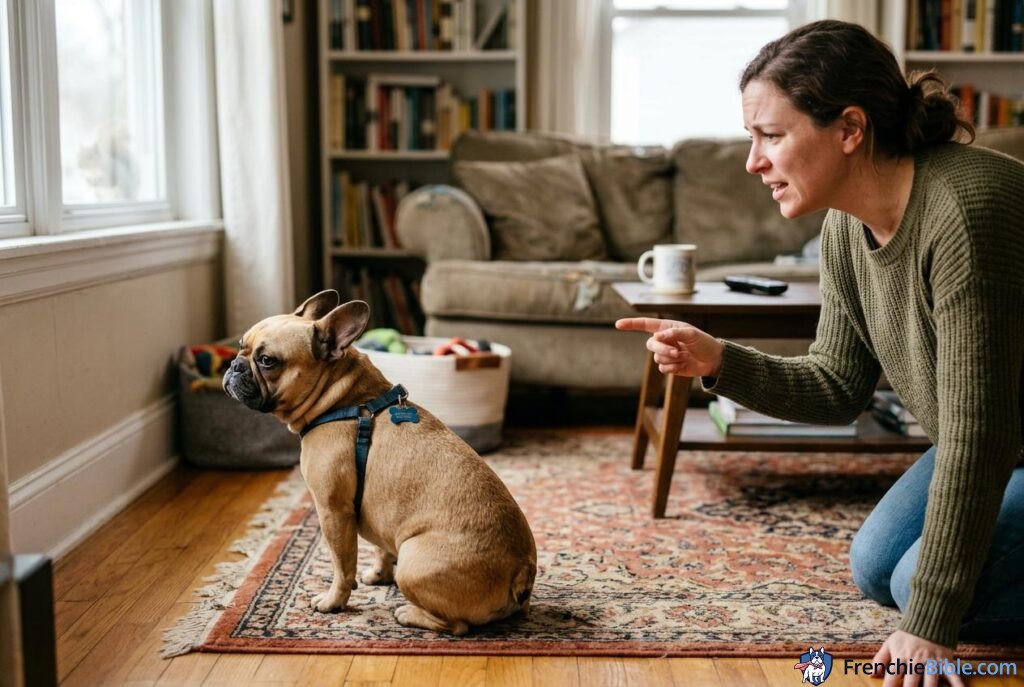
Every French Bulldog owner has been there. You walk into the living room, and time seems to slow down as you lock eyes with your adorable Frenchie mid-squat. They are caught in the act of pooping indoors. Panic sets in. Do you yell? Do you grab them? Do you just watch in defeat? as a French Bulldog expert and breeder and breeding expert I hear this story constantly. Knowing exactly how to react in this crucial split second can make the difference between a fully potty-trained dog and a lifetime of hidden accidents under the dining table.
This comprehensive guide will walk you through the precise steps to correctly interrupt your French Bulldog when they are pooping indoors, how to seamlessly transition them to the appropriate outdoor spot, and the psychological and biological factors behind their bathroom behaviors. Our goal is not just to clean up a mess, but to build a foundation of understanding, trust, and flawless potty training.
Related Reading: Health & Diet | Grooming & Care
The Critical Moment: What Not to Do
Before we dive into the correct protocols, it is paramount to address the common mistakes owners make when catching their Frenchie pooping indoors. Your reaction dictates their future behavior.
Do Not Yell or Scream
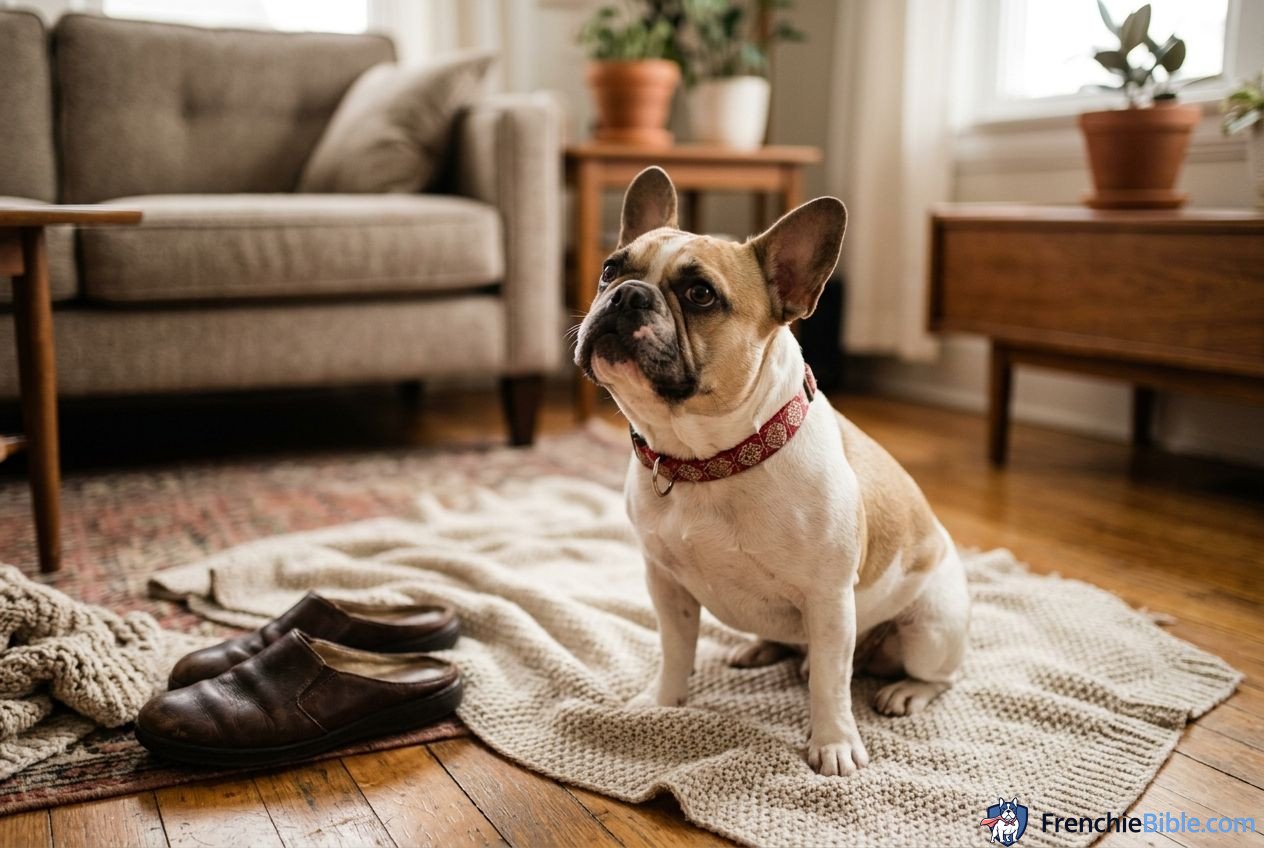
French Bulldogs, despite their sturdy appearance and occasionally stubborn demeanor, are remarkably sensitive dogs. They thrive on positive reinforcement and are acutely attuned to their owner’s emotions. If you yell, scream, or act aggressively when catching them mid-squat, you will not teach them that pooping inside is bad. Instead, you will teach them that pooping in front of you is dangerous. This leads directly to a dog that hides to do their business—under beds, behind sofas, or in unoccupied rooms.
Never Rub Their Nose in It
This is an archaic and highly detrimental training myth. Rubbing a dog’s nose in their feces does absolutely nothing to communicate where they should actually be pottying. It only creates fear, confusion, and a deep mistrust of you. It damages the human-animal bond, which is the cornerstone of any successful training endeavor.
Do Not Punish After the Fact
If you find a pile of poop that was left five minutes ago or five hours ago, the window for correction has completely closed. Dogs associate consequences with the exact action they are performing at that very second. Punishing them after the fact will only make them fearful of you, as they cannot connect your current anger with an action they performed in the past. Clean it up thoroughly using an enzymatic cleaner and vow to supervise them better.
The Correct Protocol: How to Interrupt a Frenchie Pooping Indoors
When you catch your French Bulldog actively pooping or beginning to squat, you have a golden opportunity for effective training. Here is the step-by-step method to handle the situation like a pro.

Step 1: The Startle Not Scare Technique
The moment you see the squat or the telltale tail lift, you need to interrupt the behavior instantly. The goal is to startle them enough to stop the physical action, but not so much that you terrify them.
- The Sound: Use a firm, sharp, and unexpected sound. A loud clap, a sharp “Ah-ah!”, or a firm “No” works best. Do not use their name in a negative tone, as you want their name to always mean positive things.
- The Energy: Keep your energy assertive but calm. Avoid frantic movements. The sudden noise is usually enough to cause their sphincter to tighten reflexively, pausing the act.
Step 2: The Immediate Scoop and Run
Once they pause, you must act with lightning speed. You cannot hesitate or slowly walk over to them.
- Small Pups: If it’s a puppy, scoop them up gently but securely under their chest and belly. Carrying them often naturally prevents them from continuing to poop.
- Adult Dogs: If scooping isn’t practical, immediately clip on their leash or grab their collar (gently) and hustle them toward the door. Use an urgent, encouraging voice like “Let’s go outside! Quick, quick!”
Step 3: Guiding to the Designated Spot
Rush them directly to their designated outdoor potty area. Do not stop to put on your shoes if it means losing the moment.
- Consistency is Key: Always take them to the exact same spot in the yard. The scent of their previous bathroom trips will act as a powerful trigger to encourage them to finish the job.
- Be Patient: Once outside, give them time. The interruption may have temporarily halted their urge. Stand quietly in their potty spot for at least five to ten minutes. Do not play with them or distract them. This is business time.
Step 4: The Celebration
If your Frenchie successfully finishes their business outside after being interrupted indoors, this is cause for major celebration.
- High-Value Rewards: Immediately offer high-value treats (like small pieces of boiled chicken, freeze-dried liver, or their absolute favorite training treat). The reward must happen within three seconds of them finishing.
- Verbal Praise: Use an enthusiastic, high-pitched voice. “Good potty! Yes! Good dog!”
- Physical Affection: Give them gentle pats and rubs. Make sure they know they just did the most amazing thing in the world.
Step 5: The Cleanup Operation
Once your dog has successfully gone outside and been rewarded, you can return indoors to deal with the initial mess.
- Confine the Dog: Place your Frenchie in their crate, a playpen, or another room while you clean. You do not want them associating the cleanup process with play or attention.
- Enzymatic Cleaners Are Mandatory: This is non-negotiable. Standard household cleaners will mask the smell to your nose, but your dog’s highly sensitive olfactory system will still detect the uric acid and pheromones left behind. If they smell it, they will return to that spot to soil again. Use a specialized pet odor enzymatic cleaner, follow the instructions carefully, and saturate the area to break down the biological matter completely.
Why Do French Bulldogs Poop Indoors? Identifying the Root Cause
Interrupting and redirecting is only half the battle. To stop indoor pooping permanently, you must understand why it is happening in the first place. French Bulldogs don’t soil their living space out of spite; there is always a biological, behavioral, or environmental reason.
Medical Issues
as a French Bulldog expert and breeder, my first rule is to always rule out medical issues before assuming a problem is purely behavioral.
- Gastrointestinal Distress: Frenchies are notorious for sensitive stomachs. Food allergies, sudden diet changes, parasites (like Giardia or roundworms), or bacterial infections can cause sudden urgency and diarrhea, giving them no time to signal they need to go out.
- Orthopedic Pain: French Bulldogs are prone to spinal issues like Intervertebral Disc Disease (IVDD) and hip dysplasia. If posturing to poop outside in the cold or on uneven ground is painful, they may choose the soft living room rug instead.
- Medication Side Effects: Certain medications, such as steroids or antibiotics, can increase bowel movements or urgency.
If the indoor pooping is a sudden change in an otherwise house-trained dog, or if the stool is loose, bloody, or excessively foul-smelling, schedule veterinary exam immediately.
Incomplete Potty Training
Many owners assume a dog is fully potty trained before they actually are. True housebreaking requires months of flawless consistency.
- Too Much Freedom Too Soon: Puppies and newly adopted dogs should not have free roam of the house. They need to earn space gradually. If they are out of your sight, they have the opportunity to sneak off and poop. Use baby gates, crates, and tethering (attaching their leash to your belt) to maintain 100% supervision.
- Ignoring the Signals: Frenchies have subtle cues when they need to go. Sniffing the ground intently, circling, sudden restlessness, or pacing near a door are classic signs. If you miss these signals, the accident is on you, not the dog.
- Inconsistent Schedules: Dogs are creatures of habit. They need to be fed on a strict schedule so their bowel movements become predictable. If you free-feed (leave food out all day), you will have unpredictable poop times.
Anxiety and Stress
French Bulldogs are companion animals bred to be close to their humans. They can be prone to anxiety, which can manifest as inappropriate elimination.
- Separation Anxiety: If the pooping only happens when you leave the house, it is likely a symptom of separation anxiety. The stress of being alone causes a physiological response that leads to voiding the bowels.
- Environmental Changes: Moving to a new house, introducing a new baby or pet, or even rearranging the furniture can stress a sensitive Frenchie and cause a regression in potty training.
- Fear of the Outdoors: Some Frenchies may be afraid of loud noises (traffic, construction, thunderstorms) or aggressive neighborhood dogs. If the outside world is terrifying, they will hold it until they are back inside their safe zone.
Weather Aversion
Let’s face it: French Bulldogs are not rugged, all-weather dogs. They have short coats, no undercoat, and their brachycephalic (flat-faced) anatomy makes temperature regulation difficult.
- Rain and Cold: Many Frenchies absolutely despise going out in the rain or snow. They will step outside, feel the cold wet grass, and immediately turn back, holding their poop until they are warm inside.
- The Solution: You may need to invest in a waterproof dog coat or shovel a patch of grass down to the dirt. In severe weather, training them to use indoor pee pads or a synthetic grass patch in a covered patio might be a necessary compromise.
Establishing a Foolproof Potty Schedule
Prevention is the ultimate goal. A structured schedule minimizes the chances of you ever needing to catch them in the act again.
Age-Appropriate Expectations
Puppies have tiny bladders and bowels. A general rule of thumb is that a puppy can hold it for one hour per month of age, plus one. (A 3-month-old puppy can hold it for roughly 4 hours max). However, this varies wildly when they are awake, active, or have just eaten.
The Mandatory Potty Times
Take your French Bulldog out to their designated spot during these critical transitions:
- First Thing in the Morning: The moment they wake up, before you even make coffee.
- Immediately After Eating: Food stimulates the gastrocolic reflex, which prompts the bowels to move. Take them out within 10-15 minutes after every meal.
- After Intense Play or Exercise: Physical activity gets the digestive tract moving.
- After Waking from a Nap: Just like in the morning, waking up triggers the need to go.
- Last Thing Before Bed: Ensure their system is empty before settling down for the night.
- At Least Every 2-3 Hours for Puppies: Even if they don’t seem like they need to go, offer the opportunity.
Advanced Strategies for Stubborn Frenchies
If you have ruled out medical issues, established a strict routine, and are using positive reinforcement, but your Frenchie is still occasionally sneaking off to poop indoors, you need to tighten your management strategies.
The “Umbilical Cord” Method
This is a highly effective technique for dogs that are prone to sneaking away. Attach a 6-foot leash to your dog’s harness and clip the other end to your belt or loop it around your wrist. Your dog goes where you go. If you are cooking, they are in the kitchen. If you are watching TV, they are on the rug next to you. This guarantees 100% supervision. The moment they start to sniff or circle, you are right there to interrupt and guide them outside.
Crate Training as a Tool Not a Punishment
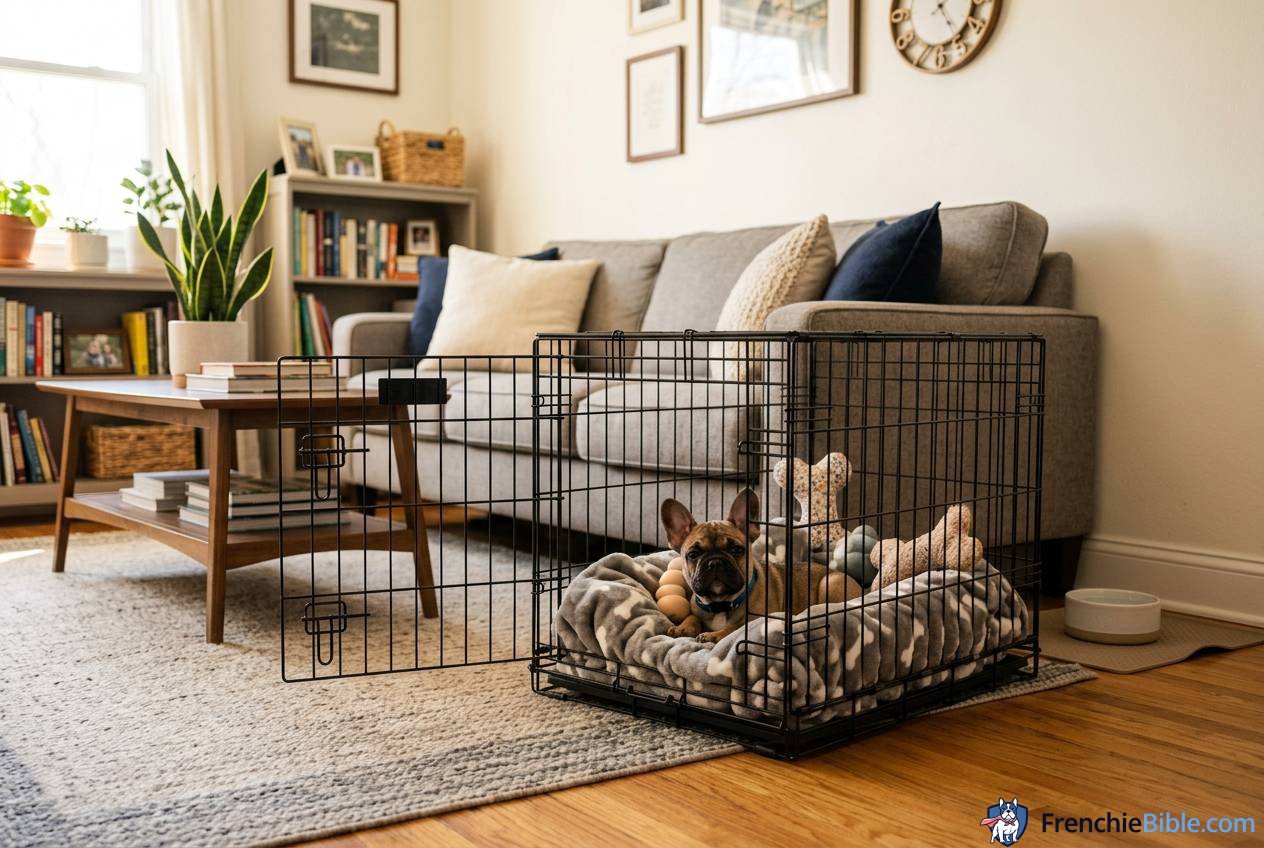
Dogs are naturally den animals and prefer not to soil the area where they sleep. A properly sized crate (just large enough to stand up, turn around, and lie down comfortably) utilizes this instinct. When you cannot actively supervise your Frenchie (e.g., when you are showering, running errands, or sleeping), they should be in their crate. This prevents the opportunity for indoor accidents. Ensure the crate is a positive, comfortable space, never a place of banishment.
Bell Training
Teaching your French Bulldog to ring a bell when they need to go out gives them a clear, audible way to communicate with you. Hang a bell on the door handle. Every time you take them out to potty, take their paw, ring the bell, and immediately say “Outside!” and open the door. Over time, they will associate the bell with the door opening and will begin to ring it themselves when nature calls.
Frequently Asked Questions (FAQ)
Q: My Frenchie poops inside right after we come back from a 30-minute walk. Why?
A: This is incredibly common. Walks are highly stimulating. Your dog is busy sniffing other dogs, exploring new scents, and watching the environment. They get so distracted they forget they need to poop. The moment they come back to the boring, familiar environment of the house, they suddenly realize they have to go.
Solution: Before the walk, stand in their designated boring potty spot until they go. Use the walk as the reward for pooping. If they don’t poop, take a short walk, bring them back, put them in their crate for 10 minutes, and try the boring potty spot again.
Q: How long does it typically take to fully potty train a French Bulldog?
A: Every dog is different, but French Bulldogs can sometimes take a bit longer than other breeds due to a mix of stubbornness and sensitive digestion. Expect it to take anywhere from 4 to 6 months of consistent, daily training for them to be highly reliable. Some dogs aren’t fully trustworthy until they are close to a year old. Consistency is the only way to speed up the process.
Q: Is it okay to use pee pads?
A: As a professional I generally discourage pee pads unless you live in a high-rise apartment, have mobility issues, or the dog is elderly/incontinent. Pee pads teach the dog that it is acceptable to eliminate inside the house on soft, square surfaces. This often leads to confusion, and they may start using rugs, bathmats, or clothes left on the floor. If you must use indoor options, try a synthetic grass patch to help them differentiate between “grass” and “carpet.”
Q: My older, previously house-trained Frenchie has started pooping indoors again. What should I do?
A: Any sudden regression in a mature, trained dog warrants an immediate veterinary visit. This is very rarely a behavioral “spite” issue. It is almost always medical (cognitive decline, loss of bowel sphincter control, gastrointestinal disease, or severe arthritis). Once An Experienced Breeder clears them, you must go back to basics, treating them like an 8-week-old puppy with strict supervision and scheduling.
Q: Should I restrict my Frenchie’s water intake to prevent accidents?
A: Never restrict water to prevent accidents, unless specifically instructed by your veterinarian for a medical reason (like right before a surgery). Dogs need constant access to fresh water to maintain proper kidney function and hydration, especially brachycephalic breeds that are prone to overheating. You can, however, pick up the water bowl about two hours before their final bedtime potty break to help them hold it through the night. Do not restrict water during the day.
Conclusion
Catching your French Bulldog pooping indoors is undoubtedly frustrating, but it is also the most critical moment for effective training. By shifting your mindset from punishment to immediate redirection, you utilize their natural learning processes. Remember the core principles: interrupt with a startle (not fear), guide them outside immediately, reward heavily for success, and clean thoroughly with enzymatic cleaners. Coupled with a strict schedule, 100% supervision, and a proactive approach to their physical health, you can guide your Frenchie toward flawless bathroom habits and a happier, cleaner home. Be patient, be consistent, and remember that training is a journey you take together.
Disclaimer: We are not veterinarians and do not hold veterinary medical licenses. The information provided in this article is based on years of breeding and daily care experience and is for educational purposes only. It should not replace professional veterinary advice. Always consult with a licensed veterinarian if you have concerns about your French Bulldog’s health or before starting any new treatment.