As someone who has spent the last decade deeply immersed in the world of French Bulldogs—raising, breeding, and sharing my everyday life with these incredible, comical, and sometimes frustrating little companions—I can tell you firsthand that French Bulldog potty training is one of the most frequent, urgent, and stressful topics new owners ask me about. We all absolutely adore their bat ears, their squishy, expressive faces, and their hilariously stubborn personalities that make them so unique. But it is exactly that same famous Frenchie stubbornness that can make housebreaking a French Bulldog feel like an endless marathon rather than a quick sprint.
Over the years I’ve watched countless puppy parents—both first-timers and experienced dog owners—pull their hair out over indoor accidents, ruined rugs, and the sheer exhaustion of middle-of-the-night potty breaks. I’ve been exactly where you are! Through years of trial, error, observing behavioral patterns, and successfully raising multiple litters of Frenchie puppies from birth to adulthood I’ve noticed a very distinct pattern. Most potty training struggles don’t happen because the dog is untrainable; they happen because of a handful of easily avoidable human errors.
Related Reading: Health & Diet | Grooming & Care
Today I am going to pull back the curtain and share the 10 most common potty training mistakes French Bulldog owners make. More importantly I will provide you with the exact, step-by-step strategies you can use to fix these mistakes, get your Frenchie fully housebroken, and restore peace and cleanliness to your home.
Why is French Bulldog Potty Training Sometimes So Uniquely Difficult?
Before we dive deep into the specific mistakes, it is crucial to understand why this specific breed can be so challenging to potty train compared to, say, a Golden Retriever or a Poodle. Understanding their biology and psychology will give you the patience you need.
First Frenchies are notoriously stubborn and independent thinkers. They were bred to be companions, yes, but they also have a strong will. If they don’t see the immediate value or reward in doing something—like walking out into the cold rain just to pee when the living room rug is warm and soft—they simply won’t do it. They need a compelling reason to follow your rules.
Secondly, and perhaps more importantly from a physical standpoint French Bulldog puppies have extremely small bladders and fast metabolisms. During their first few months of life, they physically cannot hold their bladder or bowels for very long, no matter how much they might want to please you. When the urge hits, it hits fast and urgently. Combine a tiny, fast-filling bladder with a strong, stubborn will, and you have a recipe for frequent Frenchie potty accidents if you aren’t exceptionally vigilant and structured.
Let’s get into the top 10 mistakes and how to correct your course immediately.
Mistake 1: Giving Your Frenchie Too Much Freedom Too Soon
This is arguably the number one mistake I see new Frenchie parents make, and it sets the stage for a nightmare of housebreaking issues. You bring your adorable, wrinkly new Frenchie puppy home, and naturally, you want them to explore their new kingdom. You let them waddle around the living room, into the kitchen, down the hallway, and into the bedrooms. They are so cute exploring! However, giving a puppy free roam of the house is setting them up for massive failure.
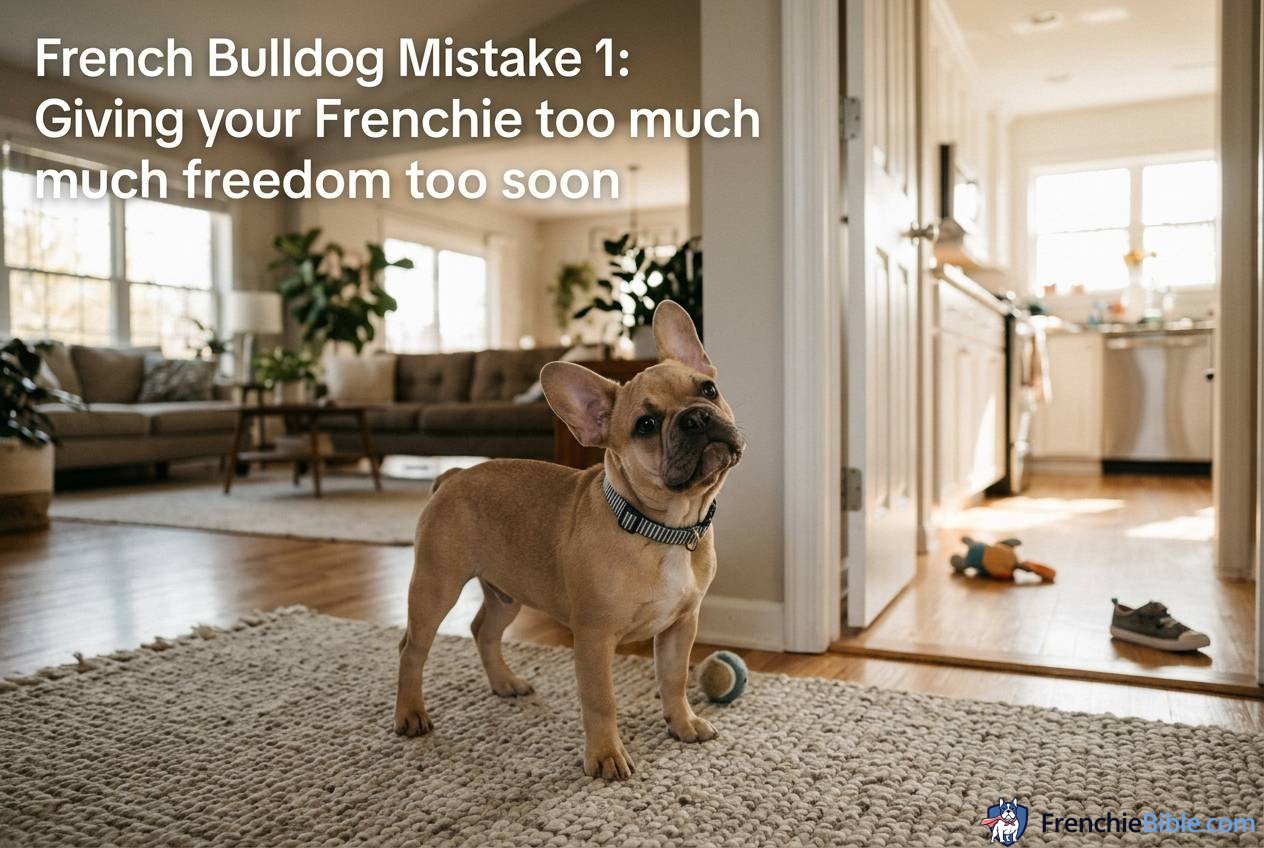
To a tiny puppy, a large human house is basically an infinite, indoor bathroom. If they wander off into the guest bedroom, pee quietly in the corner of a rug, and you don’t catch them in the act, they have just learned a terrible, self-rewarding habit. They learned that the guest bedroom is a safe, acceptable place to relieve themselves.
The Fix: Strategic Confinement and Management
Until your French Bulldog is 100% reliably housebroken (which takes months, not weeks), they must earn their freedom. When you cannot give your Frenchie your undivided, eyes-on attention, they should be in a confined, safe space.
Your best tools are a high-quality wire crate or a sturdy exercise playpen. Dogs have a natural denning instinct; they instinctively do not want to soil their immediate sleeping and eating area. By keeping them in a properly sized crate (just big enough to stand up, turn around, and lie down comfortably), you leverage this natural instinct to help them “hold it.”
When they are out of the crate or pen, they must be supervised. A fantastic method I use constantly is the “Umbilical Cord” method. Take a 6-foot leash and tether your Frenchie to your belt loop while you walk around the house doing chores, cooking, or watching TV. Because they are physically attached to you, they cannot sneak off to another room to have a potty accident. As your French Bulldog proves they are reliable over consecutive weeks, you can gradually increase their freedom, one room at a time.
Mistake 2: Lacking a Strict Unwavering Routine and Schedule
French Bulldogs, like most dogs, absolutely thrive on predictable routines. Their internal clocks and digestive systems function like well-oiled machines when they are fed, played with, and let out on a strict schedule. If you are free-feeding your Frenchie (leaving a massive bowl of kibble out all day for them to graze on) or taking them outside at random, unpredictable times whenever you happen to remember, potty training will take months longer than it needs to, and accidents will be frequent.
The Fix: Implementing the “Clockwork” Routine
You must create a rigid daily schedule for your Frenchie and stick to it religiously.
First, address the feeding schedule. Feed your Frenchie at the exact same times every day (typically 3 times a day for young puppies, transitioning to 2 times a day as adults). Put the food bowl down, and take it up after 15 to 20 minutes, regardless of whether they finished it or not. What goes in on a schedule comes out on a schedule! By controlling when they eat and drink, you can predict with incredible accuracy when they will need to go to the bathroom.
You also need a strict, proactive schedule for potty breaks. You cannot wait for a young puppy to tell you they need to go; you must anticipate it. For a young Frenchie puppy, this means taking them to their designated potty spot outside:
– Immediately upon waking up in the morning
– Immediately after waking up from every single nap
– Within 10 to 15 minutes after eating a meal
– Immediately after drinking a large amount of water
– Immediately after vigorous playtime or a training session
– Every 1 to 2 hours in between these events, just to be safe
It sounds exhausting, and it is, but this intense management in the first few months prevents a lifetime of bad habits.
Mistake 3: Missing the Subtle Silent “Potty Dance” Cues
Many new owners mistakenly believe their Frenchie will clearly communicate when they need to go out. They expect the dog to walk to the front door, sit down, and let out a polite bark. While some fully trained adult dogs might do this, puppies absolutely do not. In the beginning, their signals are incredibly subtle and easy to miss. If you are engrossed in scrolling on your phone, cooking dinner, or watching a movie, you will miss the cues, and the indoor accident will be your fault, not the puppy’s.
The Fix: Becoming Fluent in Frenchie Body Language
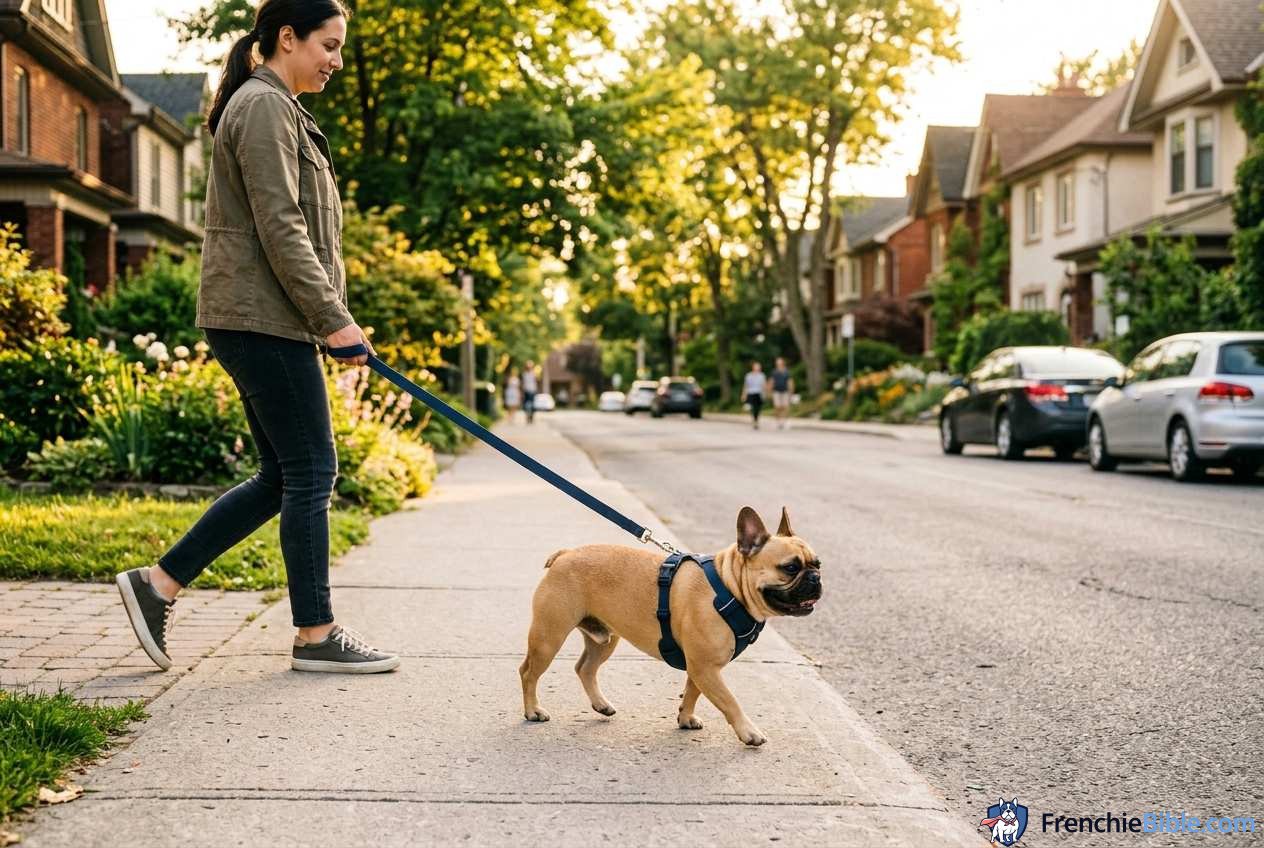
You need to become a keen observer of your dog’s specific body language. Learn to read the “potty dance.” Common, subtle potty cues in French Bulldogs include:
– Suddenly stopping play or dropping a toy and wandering away from the interaction
– Intense, focused sniffing of the floor, especially in corners or on soft surfaces like rugs
– Pacing nervously or walking in tight circles in a specific spot (this usually means a bowel movement is imminent)
– Whining softly, panting lightly, or pacing near the perimeter of the room or near a doorway
– Staring at you intently with a slight posture change
The very second you see any of these behaviors, do not hesitate. Scoop your Frenchie up mid-sniff and carry them briskly to their designated potty spot outside. Don’t wait for them to walk there themselves, as they might squat on the way!
Mistake 4: Punishing Accidents After the Fact
This is a heartbreaking mistake that sets back training severely. Imagine this scenario: You walk into the hallway and find a puddle of urine that happened ten minutes ago. In frustration, you drag your Frenchie over to the puddle, scold them loudly, point your finger, or worse, employ the outdated and cruel method of pushing their nose near it.
Stop doing this immediately. This is an incredibly harmful training method that completely destroys trust.
Dogs live entirely in the present moment. They do not have the cognitive ability to connect a punishment right now with an action they performed ten minutes ago. When you punish them after the fact, they do not think, “Oh, my human is angry because I peed on the rug earlier.” Instead, they think, “My human has suddenly become terrifying, angry, and unpredictable in the presence of pee.”
What happens next is disastrous for potty training. They become terrified of the bodily function of eliminating in front of you. They will start hiding behind the sofa, under the bed, or in closets to pee in secret, making housebreaking a Frenchie infinitely harder because you can no longer supervise them effectively.
The Fix: Focus on Interruption and Positive Reinforcement
If you find an accident after it has already happened, take a deep breath. Roll up a newspaper, and playfully tap yourself on the head for not watching your dog closely enough! Then, clean it up quietly and thoroughly. Do not say a word to the dog.
If you catch them exactly in the very act of squatting indoors, you have a window of opportunity. Give a sharp, interrupting noise like “Ah-ah!” or clap your hands loudly to startle them (the goal is to interrupt the flow, not to terrify them). Immediately scoop them up—even if they are mid-stream—and carry them outside to their designated potty spot to finish. When they finish the job outside, throw a massive, enthusiastic party with treats, high-pitched praise, and affection. Teach them what you want them to do, rather than punishing what you don’t want them to do.
Mistake 5: Not Cleaning Accidents Properly (The Scent Trap)
When a Frenchie potty accident happens on our favorite carpet, our first instinct is to grab whatever multi-purpose household cleaner we have under the sink. We scrub it with bleach, ammonia-based cleaners, or strongly scented floor soaps. It smells fresh and clean to our human noses, so we assume the problem is solved.
This is a massive oversight. A dog’s sense of smell is tens of thousands of times more sensitive than ours. Standard household cleaners only mask the scent; they do not break down the uric acid crystals present in dog urine. To your Frenchie, even after you’ve scrubbed it with bleach, that spot still reeks of urine. To their canine brain, that lingering scent is a giant, glowing neon sign that says, “This is the established bathroom area! Pee here again!”
The Fix: The Magic of Enzymatic Cleaners
To truly break the cycle of repeated indoor accidents in the same spot, you absolutely must use a high-quality enzymatic cleaner specifically formulated for pet urine and feces.
Enzymatic cleaners are different. They contain live biological enzymes and beneficial bacteria that actually eat, digest, and completely destroy the proteins and uric acid crystals in the pet waste.
When an accident happens, first blot up as much of the liquid as possible with paper towels. Do not scrub, as this pushes it deeper into the carpet pad. Then, completely saturate the area with the enzymatic cleaner. You need it to soak down as deeply as the urine did. Let it sit and air dry for the specific time recommended on the bottle (often 10-15 minutes, or sometimes requiring it to dry completely over 24 hours). This chemical breakdown is the only way to completely remove the scent marker and prevent your Frenchie from returning to the scene of the crime.
Mistake 6: Stopping Rewards Too Early (The Motivation Drop-off)
Many Frenchie owners start off incredibly strong with their training. For the first two weeks, every time the puppy pees outside, they are rewarded with a piece of chicken and a celebratory dance. The puppy learns quickly! But after a few weeks of success, human laziness sets in. The owner stops bringing treats outside, assuming the dog “gets it now,” and expects a simple “good boy” or a pat on the head to suffice as a reward.
Remember what I mentioned earlier about French Bulldogs being stubborn and needing high motivation? If the paycheck suddenly stops coming, they might decide that holding their bladder and walking outside into the cold wind just isn’t worth the effort anymore. Why go outside for free when they can comfortably pee on the warm rug inside?
The Fix: Sustained High-Value Reinforcement
You must keep the high-value rewards flowing for a much longer period than you think is necessary. I’m talking about the “good stuff”—tiny pieces of boiled chicken breast, bits of hot dog, or freeze-dried liver. This special treat should be something they only get for going potty outside.
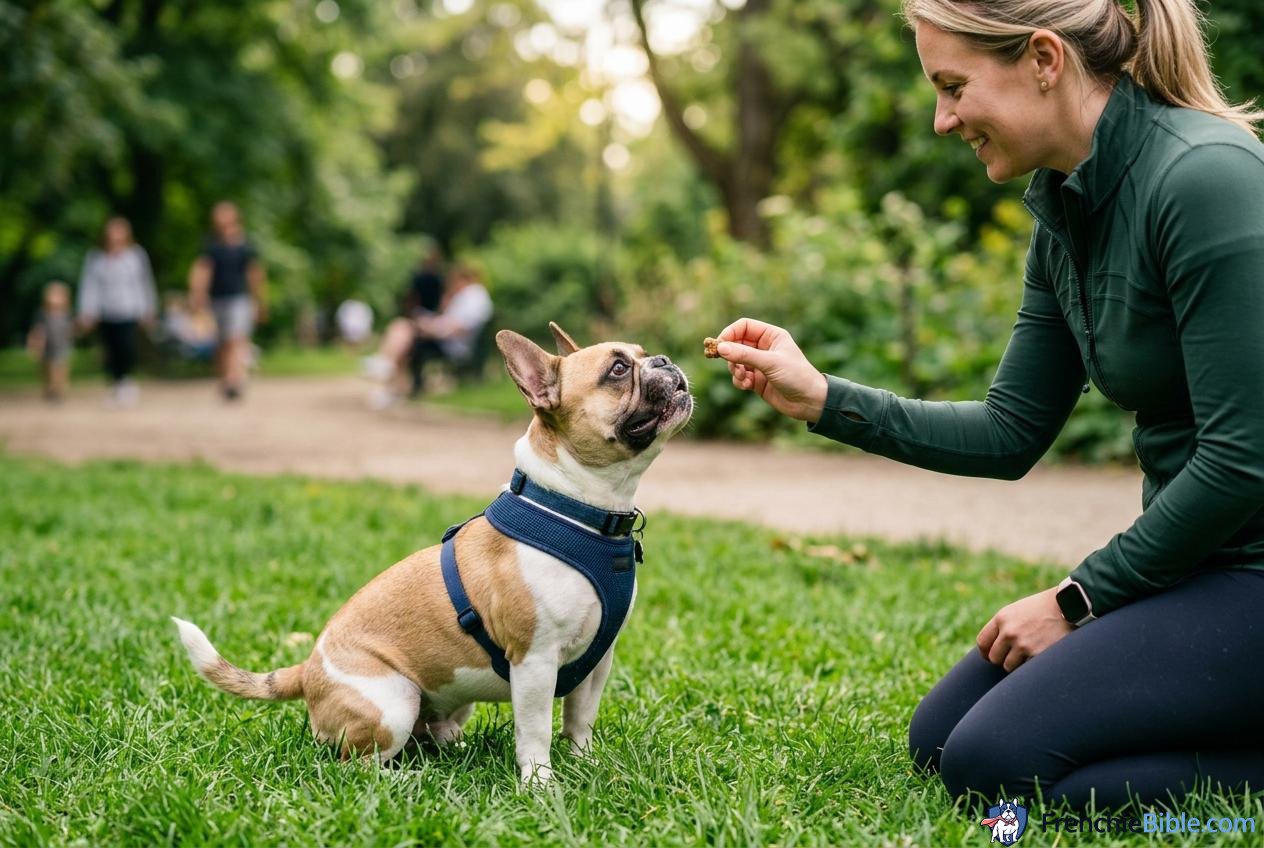
Crucially, the treat must be given immediately after they finish eliminating, while you are still standing outside in the potty area. Do not wait until you walk back inside the house to give them the treat, or they will mistakenly associate the reward with the act of running back indoors, not the act of going potty. Continue this high-value reward system until your Frenchie is completely, flawlessly trained for several consecutive months. Only then can you begin to slowly, intermittently phase out the food treats in favor of real-life rewards (like getting to go for a walk or play a game).
Mistake 7: Using Puppy Pads Incorrectly (Creating Confusion)
Puppy pee pads are a highly debated topic within the dog breeding and training community. While I acknowledge they can be a necessary evil for specific situations—such as people who live in high-rise apartments without easy outdoor access, or owners who work incredibly long hours—using them incorrectly is a massive trap that severely delays true housebreaking.
When you use paper or cloth pee pads on the floor, you are actively teaching your Frenchie that it is perfectly acceptable to go to the bathroom inside the house, specifically on a soft, square, absorbent surface. Later, when you decide you want them to transition to going exclusively outside on the grass, they are thoroughly confused. You changed the rules! Furthermore, many Frenchies start generalizing the texture. They begin confusing your expensive Persian rugs, bathroom bathmats, or dropped towels for pee pads.
The Fix: Transitioning to Realistic Surfaces
If you can avoid pee pads entirely and train your puppy to go outside on the grass or dirt from day one, do it. It is always faster and cleaner in the long run.
However, if you absolutely must use an indoor potty option due to your living situation I highly recommend transitioning away from cloth/paper pads and moving to a “grass patch” system. These are trays that hold either real, hydroponically grown grass or high-quality synthetic turf. By using a grass patch indoors or on a balcony, you are teaching the puppy that grass is the appropriate texture for the bathroom, regardless of location. This makes the eventual transition to the great outdoors much smoother and more intuitive for them.
Mistake 8: Unsupervised Backyard Time (The “Out of Sight” Error)
Opening the back sliding door and letting your Frenchie out into the fenced yard by themselves while you stay inside, drink coffee, and check emails is a huge mistake during the active potty training phase.
Why is this detrimental? First, you have no actual idea if they went to the bathroom. Frenchies are easily distracted; they might spend ten minutes chasing a blowing leaf, barking at a squirrel, or chewing on a stick, completely forgetting why they went outside. Second, because you aren’t out there with them, you aren’t present to reward them the very second they finish the job.
They eventually come back inside, you falsely assume they are “empty,” and five minutes later, they relieve themselves on your carpet.
The Fix: Active Participation and Leashed Potty Breaks
You must go outside with your Frenchie every single time during the training phase. Yes, even in the rain, snow, or early morning cold.
Put them on a leash, even if you have a securely fenced backyard. Take them directly to the specific, boring corner of the yard you want them to use as their permanent bathroom area. Stand still like a tree. Don’t play with them, don’t talk to them, don’t engage. Make it incredibly boring. Give them your potty command (e.g., “Go potty,” “Do your business”).
When they finally focus and go to the bathroom, praise them enthusiastically and give them their high-value treat immediately. Then, as an additional reward, you can take the leash off and let them have free time to play and explore the yard. This teaches them that the fun backyard playtime only begins after the potty business is handled.
Mistake 9: Assuming They Are “Fully Trained” Too Fast (The Honeymoon Phase)
You’ve worked hard, and you’ve gone three glorious weeks without a single indoor accident. You celebrate, pack up the heavy wire crate, put away the smelly training treats, and give your Frenchie full run of the entire house while you go to work. Boom. You come home to find a pile of poop in the formal dining room.
French Bulldogs (and puppies of all breeds) go through developmental stages, fear periods, and behavioral regressions. Assuming a young puppy is 100% reliably, permanently housebroken after just a few good weeks is a recipe for immense disappointment and setbacks.
The Fix: Guarded Optimism and Long-Term Consistency
True potty training is about building long-term, hardwired habits, and that takes months of unyielding consistency. I do not consider a Frenchie fully, reliably housebroken until they meet two strict criteria:
1. They have gone at least 3 to 4 consecutive months without a single indoor accident.
2. They have learned and consistently utilize a way to clearly signal to me that they need to go out (such as sitting by the door, whining softly at the exit, or ringing a potty bell).
Until both of those milestones are met, keep your guard up. Maintain the feeding schedule, continue utilizing the crate or playpen when unsupervised, keep the treats handy by the door, and do not give them full freedom of the house prematurely. Slowly expand their world only as they earn it through consistent reliability.
Mistake 10: Letting Frustration Take Over (The Emotional Toll)
Let’s be honest: potty training is exhausting, dirty, and deeply frustrating work. Waking up at 3:00 AM to stand in the freezing rain while your stubborn Frenchie just stares at you blankly, refusing to pee, is enough to test anyone’s sanity. It is incredibly easy to lose your temper, sigh loudly, complain to your partner, or get visibly angry.
However French Bulldogs are highly intuitive, sensitive dogs that heavily feed off their owner’s emotional state. If you are stressed, angry, impatient, and physically tense every single time you take them outside for a potty break, they will quickly associate the outdoors, and the specific act of going potty, with negativity, anxiety, and your anger.
This creates a terrible cycle. The dog becomes too stressed to relax their bladder outside while you are glaring at them. They will “hold it” out of anxiety until you finally bring them back inside. Once they are back inside the safe, warm, stress-free environment of the living room, they finally relax… and pee on the floor.
The Fix: Cultivating Extreme Patience and Positivity
Patience is the single greatest tool in your dog training arsenal. You must constantly remind yourself that they are essentially infants. They are not having indoor accidents to spite you, to make you angry, or to be dominant. They are having accidents because their physical bodies are still developing, and they are still trying to figure out how to communicate and live by strange human rules.
You must act as a calm, confident, and overwhelmingly positive guide. Keep all potty breaks calm and upbeat. Use a happy, encouraging tone of voice, even when you are internally exhausted. If they don’t go outside after 10 minutes, simply say “Let’s go back in,” calmly place them in their crate for 15 minutes, and try again. Never let them see your frustration.
My Top Tips for Ultimate Frenchie Housebreaking Success
After raising so many of these wonderful, exasperating, lovable dogs, here is my condensed, proven formula for Frenchie potty training success:
- Crate Training is Absolutely Non-Negotiable: Make the crate a happy, comfortable, safe den. Never use it as a punishment. It is your most vital management tool to prevent accidents when you cannot supervise.
- Employ the “Umbilical Cord” Method Daily: When your Frenchie is out of the crate but you are busy, leash them to your belt. If they are attached to you, they cannot sneak away to make a mistake.
- Use High-Value Bribery Ruthlessly: Keep a sealed jar of the smelliest, tastiest, most irresistible treats right by the exit door. Pay them handsomely for a job well done outside.
- Enzymatic Cleaners Are Your Only Option: Throw out your regular carpet shampoos for pet messes. Invest heavily in a gallon of high-quality enzymatic cleaner and use it religiously on every single accident.
- Unwavering Patience and Rigid Consistency: Stick to your routine through rain, snow, or fatigue. Your consistency is what builds their habit.
With time, unyielding consistency, and a whole lot of high-value treats, your French Bulldog will figure it out. Despite their stubborn streak, they are highly intelligent dogs, and they genuinely do want to please their families—you just have to make it crystal clear, and highly rewarding, for them to do so!
FAQs about French Bulldog Potty Training
1. How long does it realistically take to fully potty train a French Bulldog?
Every individual dog is different, and much depends on your consistency. However, on average, expect it to take anywhere from 4 to 6 months of strict, consistent training to feel confident that your Frenchie is mostly housebroken. Complete, bulletproof reliability—where the dog can easily hold it for standard adult hours and will proactively alert you consistently without fail—can often take up to a full year of maturity. Be patient; it is a marathon, not a sprint.
2. My French Bulldog was doing so well for weeks, and now they are suddenly having accidents inside again out of nowhere. Why is this happening?
Behavioral regression is extremely common in puppies, especially as they enter adolescence (typically around 6 to 9 months of age). It is like they momentarily forget their training. Regression can also be triggered by environmental factors: changes in your work schedule, moving to a new home, stress from visitors, or even the onset of cold, rainy winter weather (which Frenchies hate). When regression happens, do not panic or get angry. Simply go back to basics. Treat them exactly like an 8-week-old puppy again: implement a tighter schedule, drastically increase your supervision, bring back the high-value treats, and increase crate time until they get back on the right track.
3. Should I be waking my Frenchie puppy up in the middle of the night to go potty?
Yes, absolutely, at least for the first few weeks or months. A young puppy physically cannot hold their bladder all night. A very reliable rule of thumb in the veterinary and breeding world is that a puppy can hold their bladder for one hour per month of age, plus one. Therefore, a 2-month-old (8-week-old) puppy can generally hold it for a maximum of 3 hours at night. Set an alarm on your phone, quietly take them out (keep lights low and don’t play), reward them calmly when they go, and put them straight back into their crate to sleep. As they grow older and larger, you can gradually extend the time between these nighttime breaks until they are sleeping through the night.
4. My Frenchie absolutely refuses to go potty outside if it is raining, snowing, or cold. What do I do?
This is classic French Bulldog behavior! Frenchies famously despise inclement weather. They have thin coats and do not tolerate cold or wet conditions well. To help them, you can purchase a warm, waterproof coat or sweater for them to wear on potty breaks. Try to find or create a covered area outside, such as under an awning, a large dense tree, or a patio umbrella, where the rain isn’t hitting them directly. Most importantly, you must out-stubborn them. Put them on a leash, take an umbrella and a heavy coat for yourself, and wait it out. Do not bring them back inside until they go. When they finally surrender and go potty in the rain, give them an absolute jackpot of treats to show them that braving the bad weather is highly rewarding.
5. How do I effectively teach my French Bulldog to actively tell me they need to go outside?
Bell training is an exceptionally effective communication method for Frenchies. Purchase a strand of potty bells and hang them on the handle of the door you exclusively use for potty breaks. Every single time you take them out, right before you open the door, take their paw and gently ring the bell, then immediately open the door and enthusiastically say your potty cue, like “Let’s go potty!” Over a few weeks of this consistent repetition, they will learn the association that the sound of ringing the bell magically causes the door to open to the bathroom area. Crucial warning: Ensure you only use the bell for genuine potty trips. If they ring it and you let them out to just play in the sun, they will quickly learn to abuse the system to get outside playtime!
Disclaimer: We are not veterinarians and do not hold veterinary medical licenses. The information provided in this article is based on years of breeding and daily care experience and is for educational purposes only. It should not replace professional veterinary advice. Always consult with a licensed veterinarian if you have concerns about your French Bulldog’s health or before starting any new treatment.