
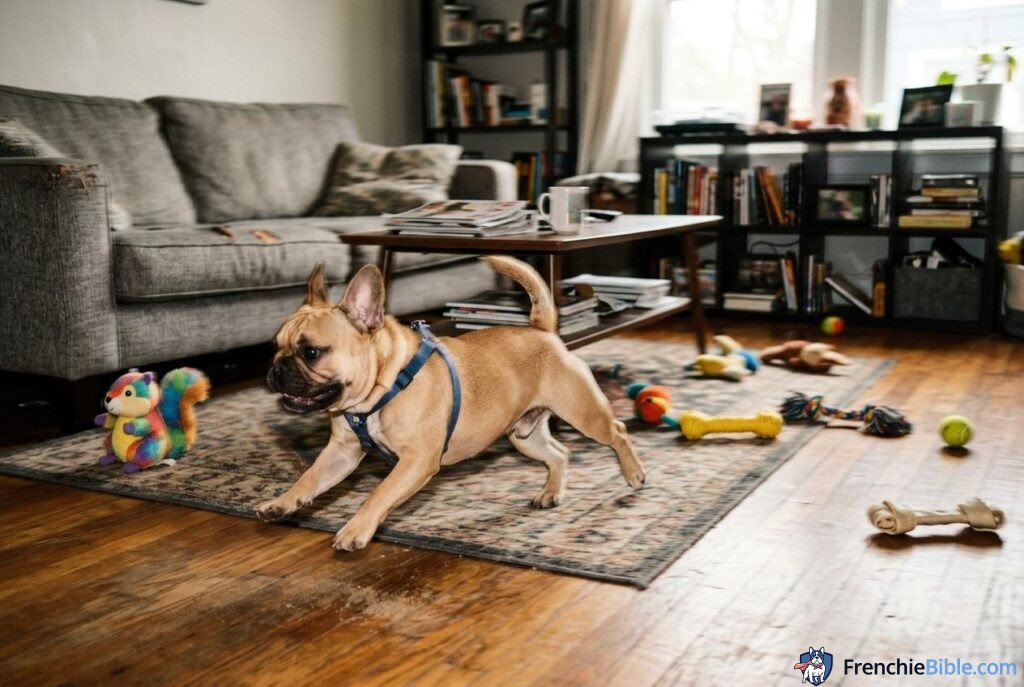
If you are a French Bulldog owner, few things are as frustrating and perplexing as finding a wet spot on your favorite sofa or right in the middle of your bed. You might think your Frenchie is acting out of spite, forgetting their potty training, or simply being lazy. However, as a French Bulldog expert and breeder and French Bulldog breeding expert I can assure you that peeing on soft, elevated surfaces like beds and couches is rarely about revenge or laziness. In many cases, it is a complex behavioral issue known as territorial marking, often intertwined with anxiety, medical conditions, or a lack of clear boundaries.
In this comprehensive, expert-level guide, we will dive deep into the psyche of the French Bulldog. We will explore the root causes behind why your Frenchie is peeing on the bed or sofa, how to definitively distinguish between territorial marking and genuine house-training regression, and the exact, step-by-step protocols you need to implement to stop this behavior permanently.
Related Reading: Health & Diet | Grooming & Care
Understanding the French Bulldog Psyche: Why Do They Mark?
French Bulldogs are a unique breed. They were bred to be companion animals, which means they are highly attuned to their owners, their environment, and the social dynamics within the household. They thrive on routine and close contact with their humans. However, this intense bond can also make them susceptible to stress, separation anxiety, and territorial insecurities.

What is Territorial Marking?
Territorial marking is an instinctive behavior in dogs used to communicate with other animals and establish boundaries. When a dog marks, they are leaving a scent message that says, “I was here,” “This is my space,” or “I am feeling insecure and need to surround myself with my own scent.”
Unlike a full voiding of the bladder (which is done to relieve physical pressure), marking usually involves depositing small amounts of urine on specific objects. While male dogs are more notorious for marking (often by lifting their leg), female French Bulldogs are entirely capable of marking as well, especially if they are dominant, anxious, or unspayed.
Why the Bed and the Sofa?
You might wonder why your Frenchie chooses the bed or the sofa instead of the floor. From a canine perspective, the bed and the sofa are the most “high-value” pieces of real estate in your home.
- Scent Concentration: These pieces of furniture smell the most like you. If your French Bulldog is feeling anxious or insecure, surrounding themselves with your scent—and adding their own to it—provides a sense of comfort and security. By mixing their scent with yours, they are reaffirming their place in the family unit.
- Elevation and Status: In the dog world, elevation can sometimes correlate with status. A dog that is allowed on the bed or sofa might view themselves as an equal or even a leader in the household hierarchy. Marking these elevated areas is a way of claiming ownership over the prime territory.
- Absorbency: Soft, absorbent materials soak up urine quickly, which traps the scent effectively. To a dog, a soft duvet or a plush sofa cushion is the perfect canvas for a scent message that will last.
Differentiating Between Marking Potty Accidents, and Medical Issues
Before you can correct the behavior, you must identify the cause. as a French Bulldog expert and breeder, my first rule of thumb is always to rule out medical issues before assuming a problem is purely behavioral.
1. Medical Causes (The Vet’s Perspective)
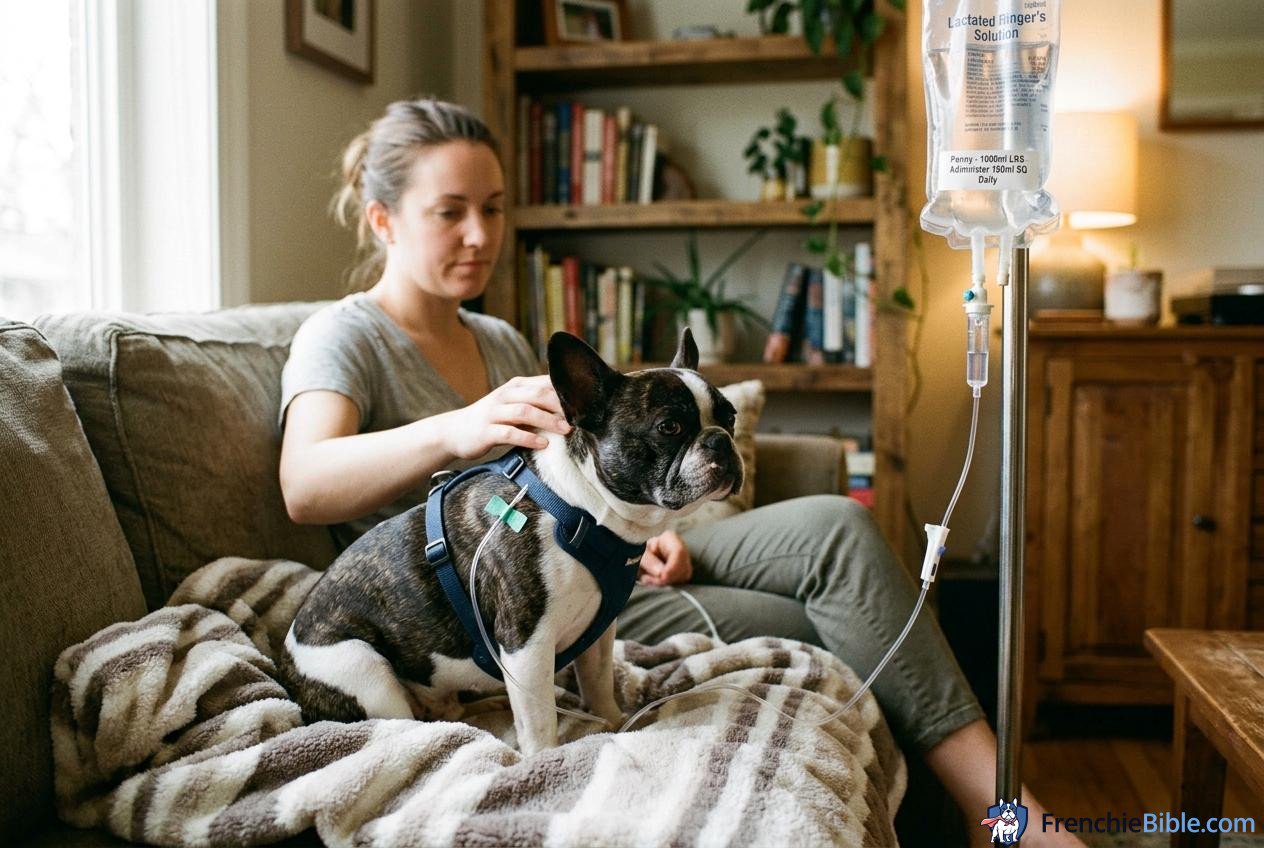
If a previously house-trained French Bulldog suddenly starts peeing on the bed or sofa, you must schedule veterinary exam. Several medical conditions can cause inappropriate urination:
- Urinary Tract Infections (UTIs): This is the most common medical culprit. A UTI causes sudden, intense urges to urinate, leading to accidents before the dog can make it outside. The urine may smell foul, be cloudy, or contain traces of blood.
- Bladder Stones or Crystals: French Bulldogs can be prone to developing crystals or stones in their bladder, which irritate the bladder wall and cause frequent urination.
- Incontinence: Weakened sphincter muscles, often seen in older dogs or sometimes as a complication after spaying (spay incontinence), can lead to urine leakage, especially when the dog is relaxed or sleeping on the bed/sofa.
- Kidney Disease or Diabetes: These systemic diseases cause increased thirst (polydipsia) and increased urination (polyuria), making it difficult for the dog to hold it.
- Spinal or Neurological Issues: French Bulldogs are prone to Intervertebral Disc Disease (IVDD). Nerve damage from spinal issues can lead to a loss of bladder control.
Action Step: Collect a fresh urine sample and take your Frenchie to the vet for a urinalysis and a thorough physical exam. Only once your dog has a clean bill of health should you proceed with behavioral modifications.
2. House-Training Regression
Sometimes, what looks like marking is actually a breakdown in potty training. How can you tell the difference?
- Volume of Urine: Potty accidents usually involve emptying the entire bladder. The spot will be large. Marking typically involves smaller, frequent squirts.
- Location: Potty accidents often happen near doors, in hidden corners, or on rugs. Marking is deliberately placed on significant objects, vertical surfaces, or areas smelling strongly of other pets/people (like the bed or sofa).
- Body Language: A dog needing to potty will often sniff around, circle, and act urgently. A marking dog might boldly walk up to the sofa, sniff a specific spot, and quickly lift a leg or squat.
3. Psychological and Behavioral Triggers for Marking
If your vet has ruled out medical issues and you are confident your dog knows where they are supposed to potty, you are likely dealing with behavioral marking. Common triggers for French Bulldogs include:
- Anxiety and Stress: Changes in the household (moving, a new baby, a new pet, a change in your work schedule) can trigger severe anxiety in Frenchies. Marking is a coping mechanism.
- Intact Hormones: Unneutered males and unspayed females are hormonally driven to mark their territory, especially when female dogs in the neighborhood are in heat.
- New Scents: Did you buy a new sofa? Did a guest sleep in your bed? Did you bring home shopping bags? New smells can trigger a dog to mark over them to “claim” the new item.
- Lack of Leadership/Boundaries: If your Frenchie does not see you as the clear leader, they may take it upon themselves to claim the territory and manage the household, resulting in marking.
Step-by-Step Correction Protocol: Stopping the Marking
Correcting territorial marking on beds and sofas requires a multi-pronged approach: intense cleaning, restricting access, re-establishing leadership, and addressing underlying anxiety.
Step 1: The Eradication of Scent (Enzymatic Cleaning)
Dogs have an olfactory system that is tens of thousands of times more sensitive than ours. If you clean a urine stain on your sofa with standard household cleaners, bleach, or vinegar, it might smell clean to you, but your Frenchie can still smell the uric acid. If it smells like a bathroom, they will use it as a bathroom.
The Solution: You MUST use a high-quality enzymatic cleaner designed specifically for pet urine (e.g. Nature’s Miracle Anti-Icky-Poo, or Rocco & Roxie).
- How to use it: Soak the affected area thoroughly. The enzymes need to penetrate just as deeply as the urine did—into the sofa cushions or the mattress itself. Let it sit for the time recommended on the bottle (often 15-30 minutes) so the enzymes can literally eat the odor-causing bacteria. Blot (do not rub) the excess moisture and let it air dry completely.
- Blacklight Inspection: Purchase an inexpensive UV blacklight. Turn off the lights in your bedroom and living room and scan the bed and sofa. Urine stains will glow yellow/green. Treat every spot you find.
Step 2: Absolute Restriction of Access
This is the hardest step for many Frenchie owners, but it is non-negotiable. Until the marking behavior is 100% resolved, your dog loses all privileges to the bed and the sofa. Period.
- The Bedroom: Close the bedroom door. If your French Bulldog is used to sleeping with you, this will be an adjustment. They must sleep in a crate or a designated dog bed on the floor. If they cry, you must ignore it. Giving in reinforces the crying.
- The Living Room: When you are not actively sitting on the sofa and supervising your dog, block access to the sofa. You can use baby gates to keep them out of the living room, or place upside-down laundry baskets, aluminum foil, or a ScatMat on the sofa cushions to make them unappealing.
- Umbilical Cord Training: When your dog is in the same room as the sofa or bed, tether them to you with a 6-foot leash. If they are attached to your waist, they cannot sneak off to mark the furniture.
Step 3: Re-establish the “Nothing in Life is Free” (NILIF) Protocol
French Bulldogs are stubborn and smart. If they think they run the house, they will mark the house. The NILIF protocol gently but firmly reminds them that you are the provider of all good things, and they must earn them.
- Sit for Everything: Your Frenchie must sit before getting their food, before having the leash put on, before going out the door, and before being petted.
- Control the Resources: Toys should not be left scattered around. You bring out the toys, you initiate playtime, and you put the toys away.
- Earning Affection: Don’t lavish free affection on a dog that is exhibiting dominant marking behavior. Petting should be a reward for calm, submissive behavior, not an entitlement.
Step 4: Spaying or Neutering
If your French Bulldog is still intact (not spayed or neutered), having the procedure done is one of the most effective ways to reduce or eliminate hormonally-driven marking.
- Males: Neutering reduces the testosterone levels that drive the urge to mark, roam, and compete. While neutering an older dog won’t instantly erase a deeply ingrained habit, it significantly reduces the biological urge, making behavioral training much easier.
- Females: Spaying prevents the hormonal fluctuations of the heat cycle, which often trigger marking behavior and crankiness.
Always consult your veterinarian about the best age to spay or neuter your specific French Bulldog, taking into account their overall health, joint development, and specific behavioral issues.
Step 5: Supervision and Interruption
You cannot punish a dog for an accident you find after the fact. If you walk into the bedroom and find a wet spot on the duvet, it is too late for correction. Yelling at your Frenchie or shoving their nose in it will only make them afraid of you, increasing their anxiety, which in turn leads to more marking.
- Catch Them in the Act: You must supervise your dog closely enough to catch them right as they are about to mark. Watch for the warning signs: intense sniffing, circling, or suddenly hopping onto the sofa with a focused look.
- The Interruption: The moment they begin to squat or lift a leg, interrupt them immediately with a sharp, firm sound. An “Ah-ah!”, a loud hand clap, or a firm “No!” is sufficient. The goal is to startle them enough to stop the flow of urine, not to terrify them.
- The Redirection: Immediately scoop them up (or grab their leash) and hustle them outside to their designated potty area.
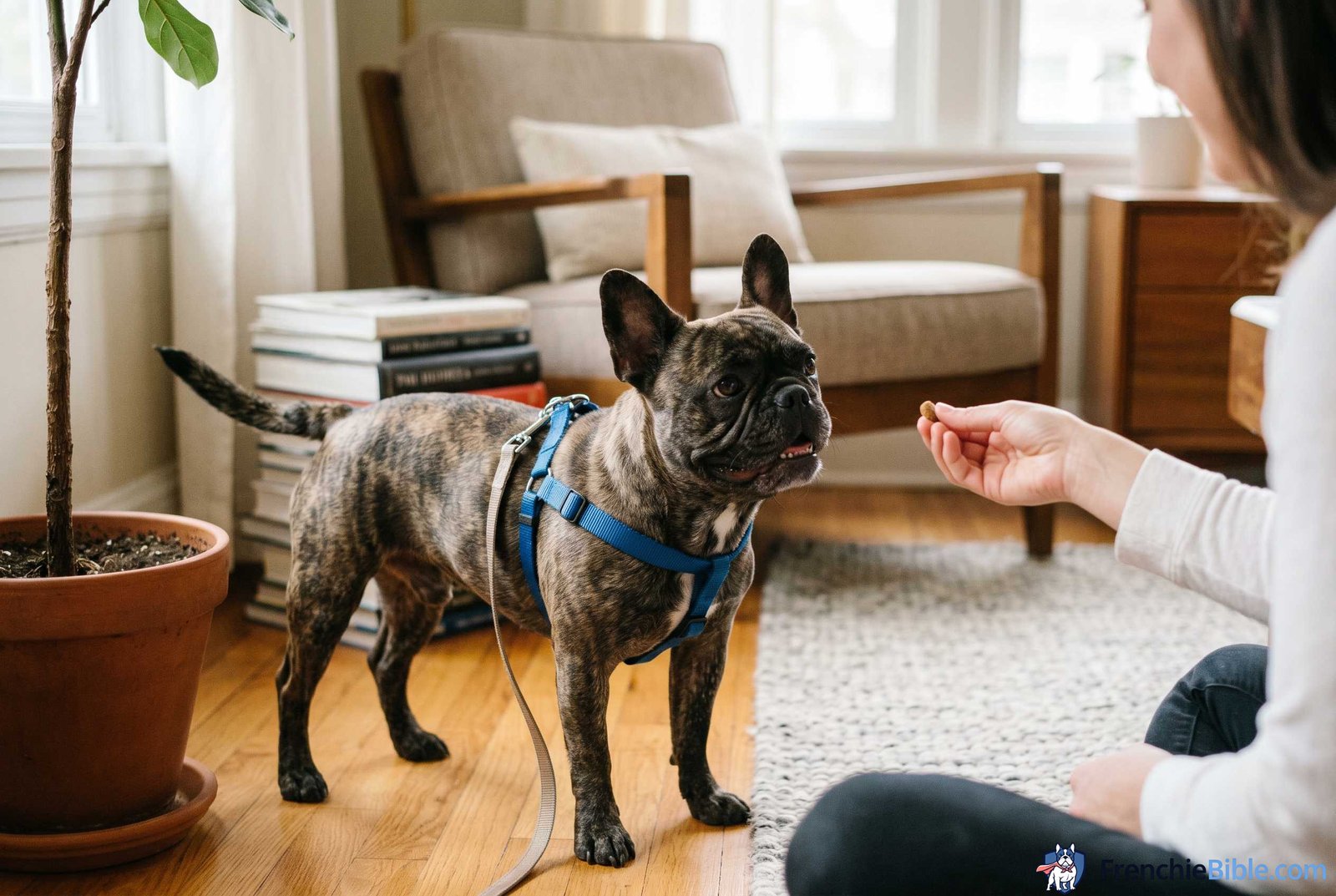
- The Reward: If they finish peeing outside, praise them enthusiastically and give them a high-value treat (like a tiny piece of boiled chicken or cheese). You are creating a clear contrast: peeing on the sofa gets a startling interruption; peeing on the grass gets a party.
Step 6: Addressing Underlying Anxiety
Since French Bulldogs are prone to anxiety, treating the emotional root cause is vital for long-term success.
- Exercise and Mental Stimulation: A tired dog is a good dog. Frenchies don’t need marathons, but they do need daily walks and mental stimulation. Use puzzle toys, snuffle mats, and short, positive obedience training sessions to tire out their brains.
- Desensitization: If the marking started because of a specific trigger (e.g., a new baby, a new roommate), you need to slowly and positively desensitize the dog to that trigger. Associate the new person or thing with treats and praise.
- Calming Aids: In severe cases of anxiety, you may need to use tools to help lower your Frenchie’s baseline stress. Options include Adaptil (dog-appeasing pheromone) diffusers, anxiety wraps (like a Thundershirt), or calming supplements containing L-Theanine or Zylkene. Consult your vet before starting any supplements. In extreme cases, your vet might prescribe anti-anxiety medication (like your veterinarian may recommend a anti-anxiety medication (never use without veterinary guidance) or your veterinarian may recommend a anti-anxiety medication (never use without veterinary guidance)) alongside a behavioral modification plan.
Crate Training: Your Secret Weapon
If your Frenchie is marking the furniture when you are not home or when you are asleep, crate training is an absolute necessity.

Dogs are den animals by nature, and they instinctively avoid soiling the area where they sleep. A properly sized crate leverages this instinct.
- Size Matters: The crate should be just large enough for your Frenchie to stand up, turn around, and lie down comfortably. If it is too large, they will pee in one corner and sleep in the other.
- Positive Association: Never use the crate as a punishment. Feed them their meals in the crate, hide high-value treats inside, and give them a special chew toy that they only get when crated.
- The Routine: When you cannot supervise your dog with 100% attention, they go in the crate. This prevents them from rehearsing the bad behavior of jumping on the sofa and marking it.
What NOT to Do: Common Mistakes Owners Make
When dealing with a frustrating issue like urine on the bed, it is easy to lose your temper. However, reacting poorly will sabotage your training efforts. As a behavioral expert I strongly advise against the following:
- Rubbing Their Nose in It: This is an outdated, cruel, and completely ineffective method. It does not teach the dog not to pee inside; it only teaches them that you are unpredictable and dangerous. It destroys the bond of trust.
- Yelling or Hitting: Physical punishment or screaming will escalate a Frenchie’s anxiety. Since anxiety is a primary driver of marking, punishing them will actually increase the likelihood of them marking again.
- Using Ammonia-Based Cleaners: Urine contains ammonia. If you clean a urine stain with an ammonia-based cleaner, you are literally telling your dog, “This is the bathroom.” Always use enzymatic cleaners.
- Inconsistency: If you let your dog on the sofa on Monday, but yell at them for being on the sofa on Tuesday, you are confusing them. Dogs need black-and-white rules. Until the marking is cured, the furniture is completely off-limits.
Reintroducing the Bed and Sofa (Slowly)
Once your French Bulldog has gone at least 4 to 6 weeks with zero marking incidents inside the house (while their access to furniture was restricted), you can begin a very slow, highly supervised reintroduction.
- By Invitation Only: Your Frenchie is never allowed to jump on the bed or sofa of their own free will. They must sit beside the furniture and wait for you to explicitly invite them up (e.g., patting the cushion and saying “Up”).
- Short Sessions: Initially, only allow them on the furniture for 5-10 minutes while you are actively sitting with them and petting them.
- No Sleeping: Do not let them fall asleep on the bed or sofa during the reintroduction phase. Being asleep drops their inhibitions, and waking up groggy might lead to an accident.
- Immediate Removal for Bad Behavior: If they start sniffing intensely, digging at the cushions, or showing any dominant behavior, immediately tell them “Off” and remove them from the furniture.
- Crate at Night: Even when reintroducing daytime sofa access, it is highly recommended to continue crating your Frenchie at night, or having them sleep in their own dog bed on the floor, to prevent middle-of-the-night marking.
Case Study from the Clinic: “Buster the Bed Wetter”
To illustrate these points, let’s look at a case I handled recently. Buster was a 3-year-old, neutered male Frenchie. His owners were distraught because Buster had started peeing on their expensive down comforter every afternoon.
The Assessment: Medical tests came back clear. Buster didn’t have a UTI. When analyzing the household, we found the trigger: the owners had recently started working longer hours, and they had hired a new dog walker who came in the afternoons.
The Diagnosis: Buster was suffering from a combination of separation anxiety (owners gone longer) and territorial insecurity (a stranger coming into the house). He was marking the bed—the place that smelled most like his owners—to soothe his anxiety and assert his presence against the “intruder” (the dog walker).
The Treatment Plan:
1. Deep Clean: The comforter was dry-cleaned, and the mattress was treated with enzymatic cleaner.
2. Bedroom Ban: Buster was banned from the bedroom completely. The door was kept shut.
3. Crate/Pen: Buster was moved to a comfortable, secure ex-pen in the kitchen during the day.
4. Dog Walker Adjustment: We asked the dog walker to spend the first 10 minutes of every visit tossing high-value treats to Buster before touching his leash, changing the association from “intruder” to “treat dispenser.”
5. Mental Fatigue: The owners started using puzzle feeders for all of Buster’s meals to tire out his brain.
The Result: Within two weeks, the marking stopped entirely. Buster grew to love his dog walker, and his anxiety decreased. After two months of zero accidents Buster was allowed back in the bedroom, but only under direct supervision, and he was required to sleep in his own dog bed on the floor.
Conclusion: Patience Persistence, and Leadership
Dealing with a French Bulldog that marks the bed or sofa is a test of patience. It requires you to act as a calm, confident leader. Remember that your Frenchie is not trying to be malicious; they are communicating a physical need, an emotional stressor, or a misunderstanding of the household hierarchy.
By ruling out medical issues, thoroughly eliminating odors, strictly managing their environment, and providing clear, consistent leadership, you can correct this behavior. It takes time, and you cannot cut corners on the protocol, but you can reclaim your furniture and restore harmony to your home.
Frequently Asked Questions (FAQ)
My female French Bulldog is peeing on the sofa. I thought only males marked territory?
This is a common misconception. Female dogs, especially those that are unspayed, dominant, or anxious, are very prone to territorial marking. The motivations (anxiety, claiming space, hormonal fluctuations) are exactly the same as in males.
How long does it take to break a dog of marking in the house?
It depends on how deeply ingrained the habit is and how strictly you adhere to the correction protocol. If you catch it early and immediately restrict access and use enzymatic cleaners, it can be resolved in a few weeks. If the dog has been marking for years, it may take months of strict management and crate training to rewire their brain.
Belly bands for male Frenchies—do they work?
Belly bands (male wraps that catch urine) are a management tool, not a training solution. They are excellent for preventing damage to your furniture while you are in the process of training, or for elderly dogs with incontinence. However, if you just put a belly band on and change nothing else, the dog will continue attempting to mark; the urine just goes into the diaper instead of the sofa. They must be used in conjunction with active behavioral training.
I cleaned the bed sheets in the washing machine, but my Frenchie peed there again. Why?
Standard laundry detergent does not break down the uric acid crystals in dog urine. While the sheets smell fresh to you, your dog can still smell the urine. You must add an enzymatic laundry booster (specifically made for pet odors) to your wash cycle, or pre-soak the sheets in an enzymatic cleaner before washing them.
Does punishing my dog for marking help show them who is boss?
Absolutely not. Punishing a dog after the fact only teaches them to fear you. If a dog is marking out of anxiety, punishing them increases their anxiety, which leads to more marking. Leadership is shown through controlling resources, requiring obedience for rewards (NILIF), and remaining calm and consistent, not through intimidation or physical punishment.
Disclaimer: We are not veterinarians and do not hold veterinary medical licenses. The information provided in this article is based on years of breeding and daily care experience and is for educational purposes only. It should not replace professional veterinary advice. Always consult with a licensed veterinarian if you have concerns about your French Bulldog’s health or before starting any new treatment.